Tag Archives: Recordings

Algeria on Shortwave – Then and Now

Many thanks to SWLing Post contributor Dan Greenall, for sharing the following guest post:


Algeria on Shortwave – Then and Now

by Dan Greenall

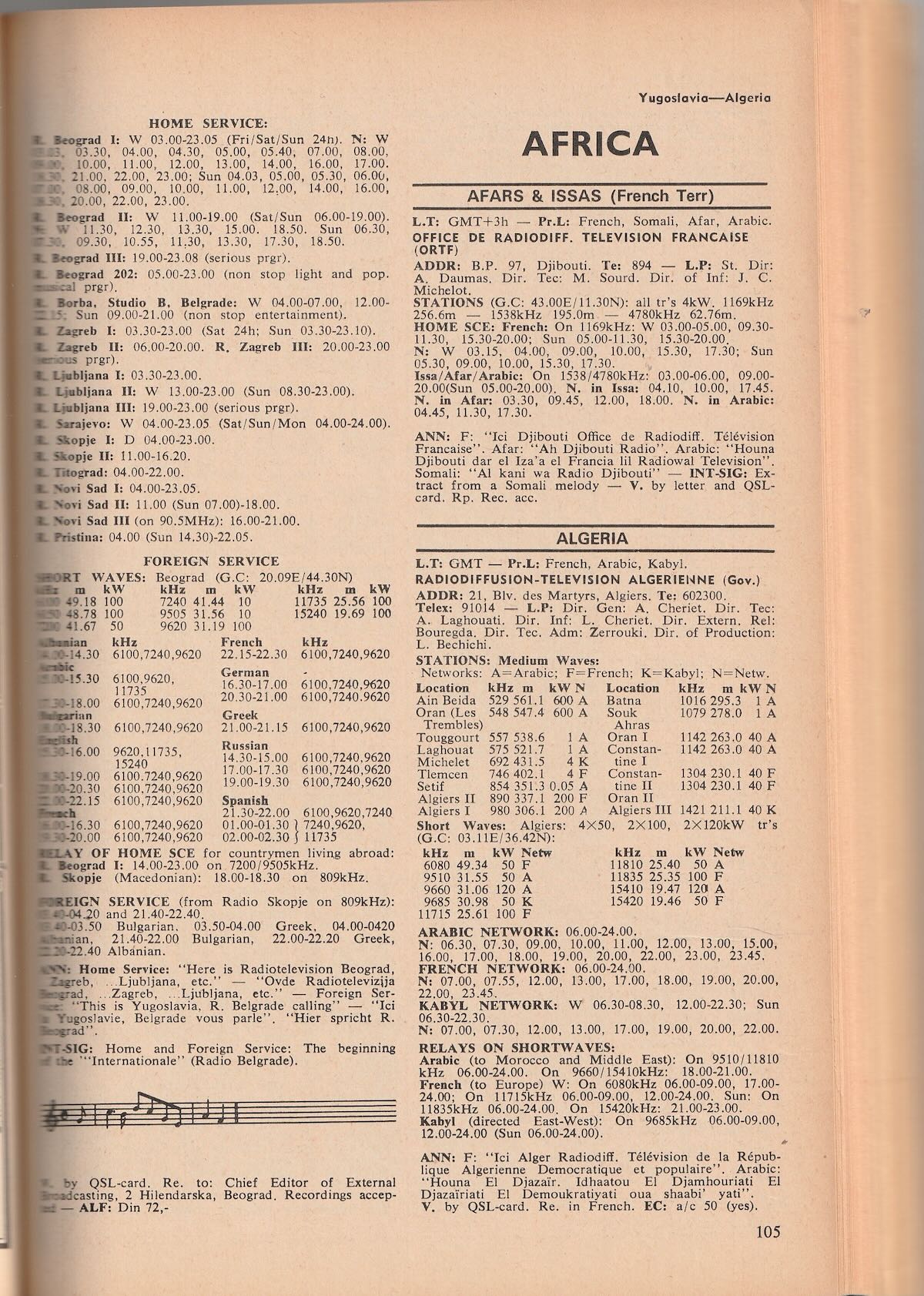
In the early 1970s, Radiodiffusion-Television Algerienne ran a modest shortwave service (no English) mainly for North Africa, the Middle East, and Europe. A copy of their schedule from the 1972 World Radio TV Handbook is shown.

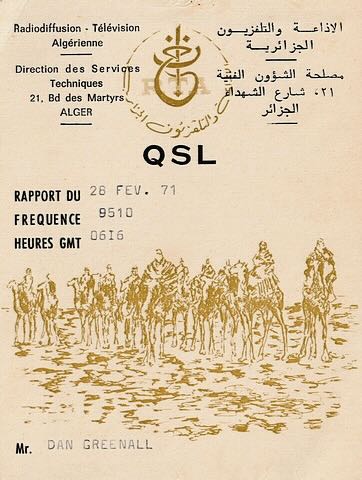
As a fledgling DXer in 1971, I was fortunate to hear their signal on 9510 kHz from my listening post in southern Ontario, Canada. Even better, they responded to my request for a QSL with this attractive card.

Fast forward a quarter century to 1996. The international service of Radio Algiers could be heard at times here in eastern North America on 15160 kHz with broadcasts that included English. Here is a brief recording from November 3 of that year that I am lucky to have saved.

In July 2022, two new 300 kW transmitters located at Ouargla and Bechar were put on the air after several years of planning. These were to be used for the Radio Coran service in Arabic, but in May 2023, Ifrikya FM (the African Voice) was born with the objective of providing a pan-African voice by broadcasting educational, informative, and cultural programming from an African perspective.

Although there is no English, they can be spotted on shortwave on 13640 and 13855 kHz after their 1900 UTC sign on. If you can hear the same programming on these two frequencies, you will know you have them.

Here are two recordings made on October 19, 2025 using a KiwiSDR near Sao Paulo, Brazil. They were made one hour apart, the first at 2000 UTC and the second at 2100 hours.

13855 was noticeably stronger than 13640 on this receiver.

Vatican Radio – Then and Now

Many thanks to SWLing Post contributor Dan Greenall, who shares the following post:


When I began shortwave listening back in 1969, Vatican Radio was one of the first stations I came across. That same year, the late Dr. Richard E. Wood authored a book called “Shortwave Voices of the World” in which he writes some notes about the station that you can read here [PDF].

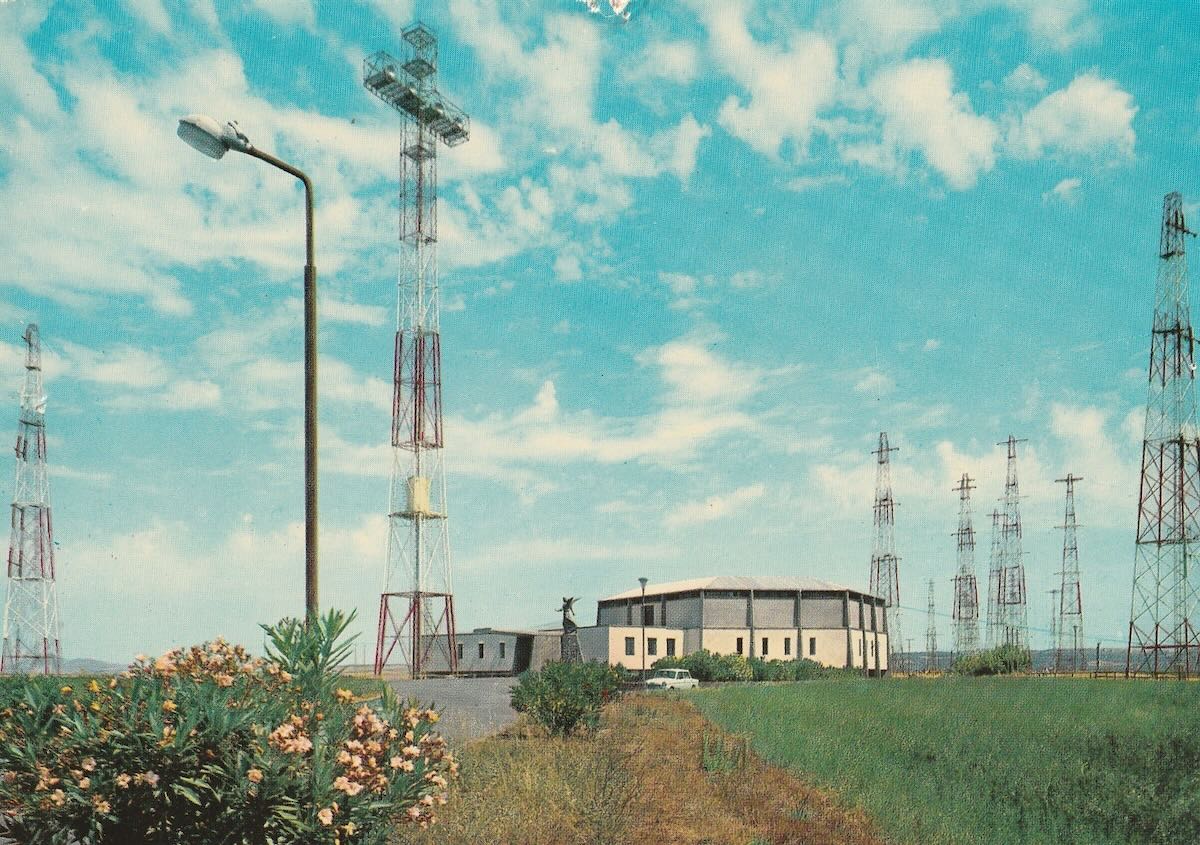
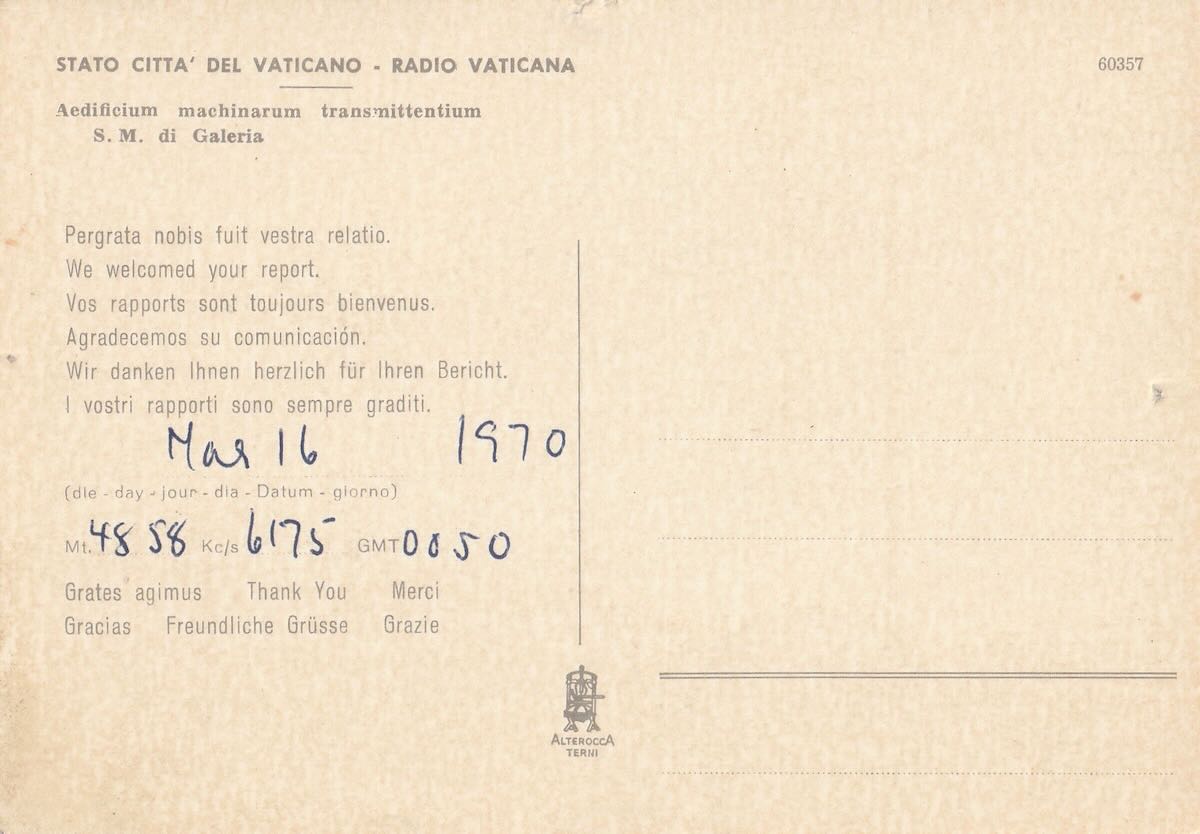
In fact, Vatican Radio was established in 1931 by none other than Guglielmo Marconi. It wasn’t until sometime after World War 2 that the present-day transmitter site was set up at Santa Maria di Galeria. A nice view of it is pictured on this 1970 QSL card.

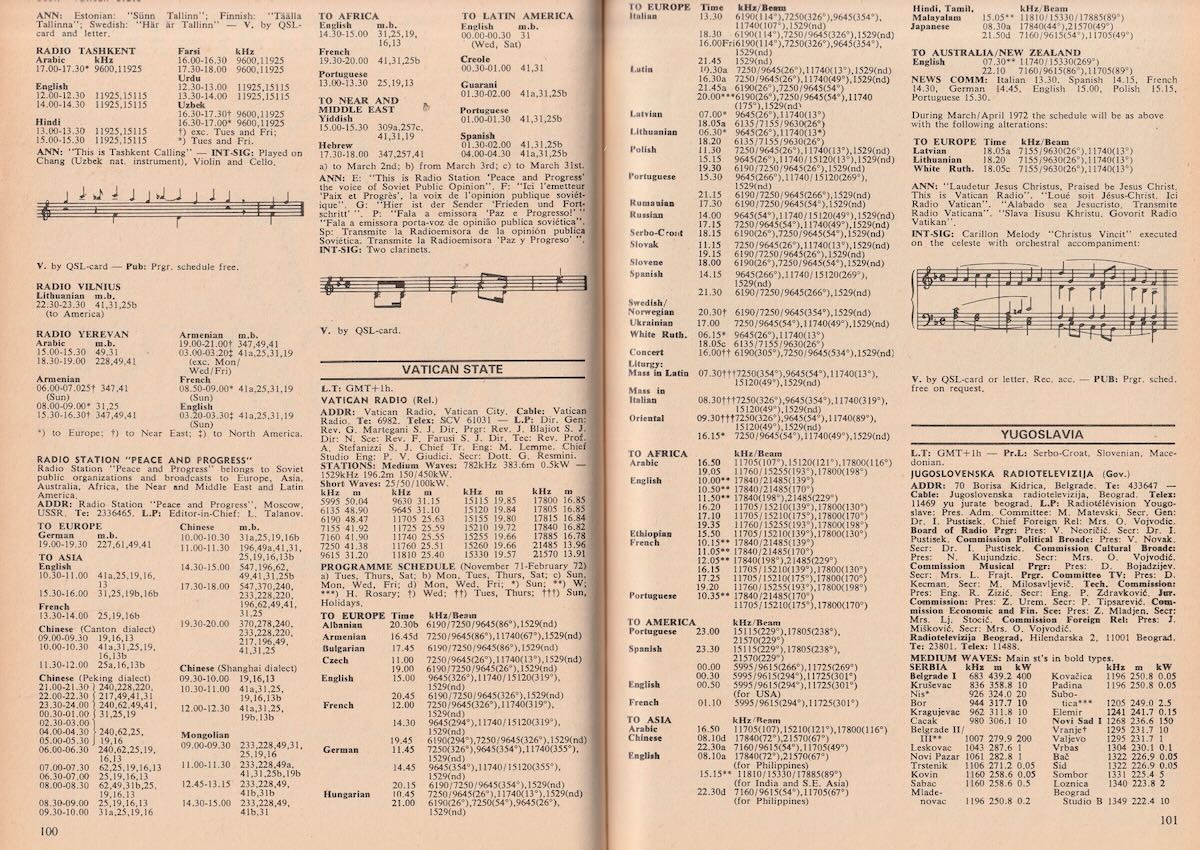
By the early 1970’s, short English language broadcasts to North America were still included in their schedule as you can see from these pages in the 1972 World Radio TV Handbook [click to enlarge].

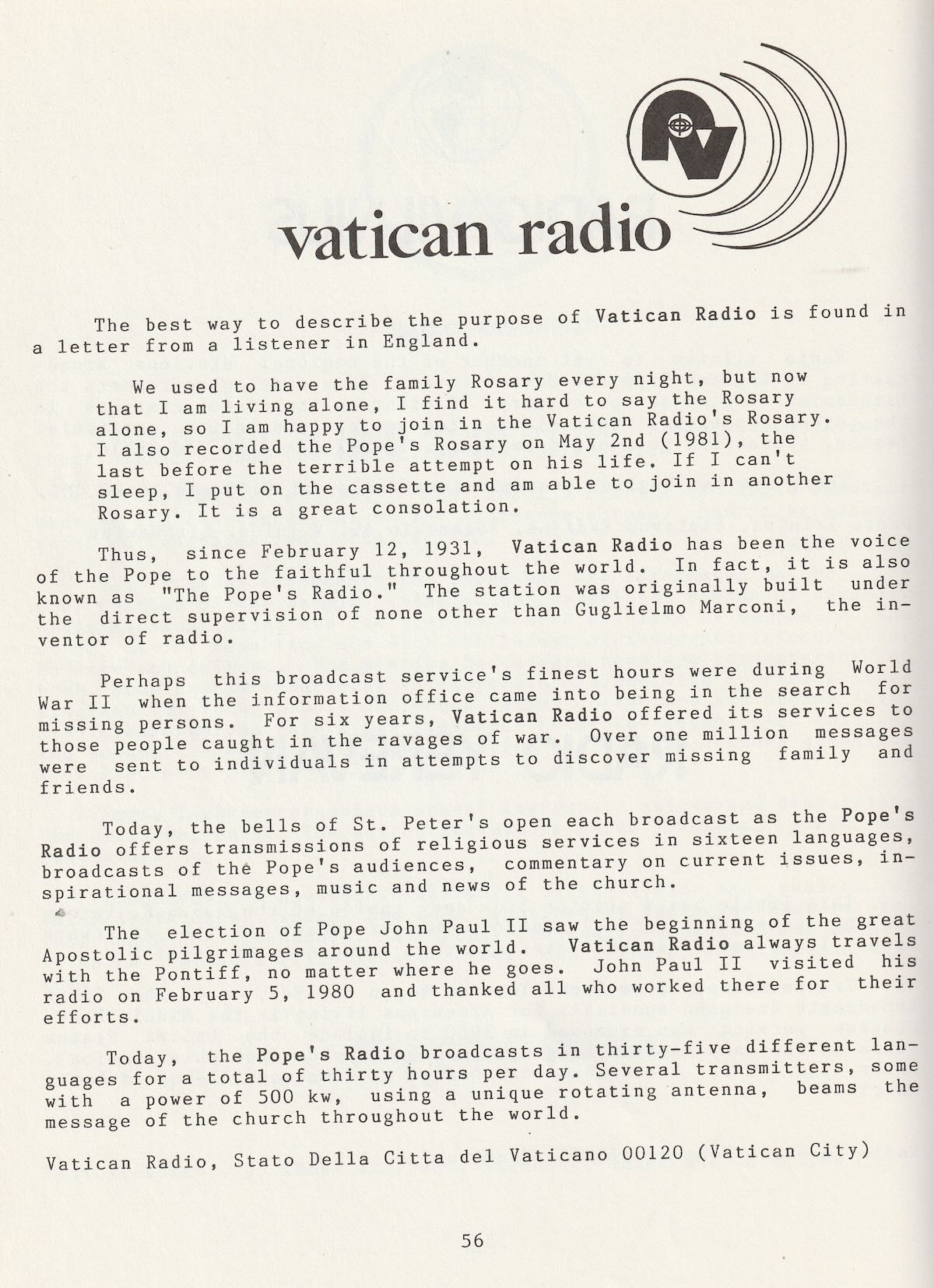
In 1983, Ken MacHarg, a former host of the DX Partyline on HCJB, was the author of a now out-of-print book entitled “Tune In The World”. Read Ken’s comments about Vatican Radio here.

Though their published interval signal (see WRTVH) was “Christus Vincit”, Vatican Radio could also be recognized by the bells of St. Peter’s, which you will hear in this recording from 1971 that I made from my listening post in Ontario, Canada: https://archive.org/details/vatican-radio-1971

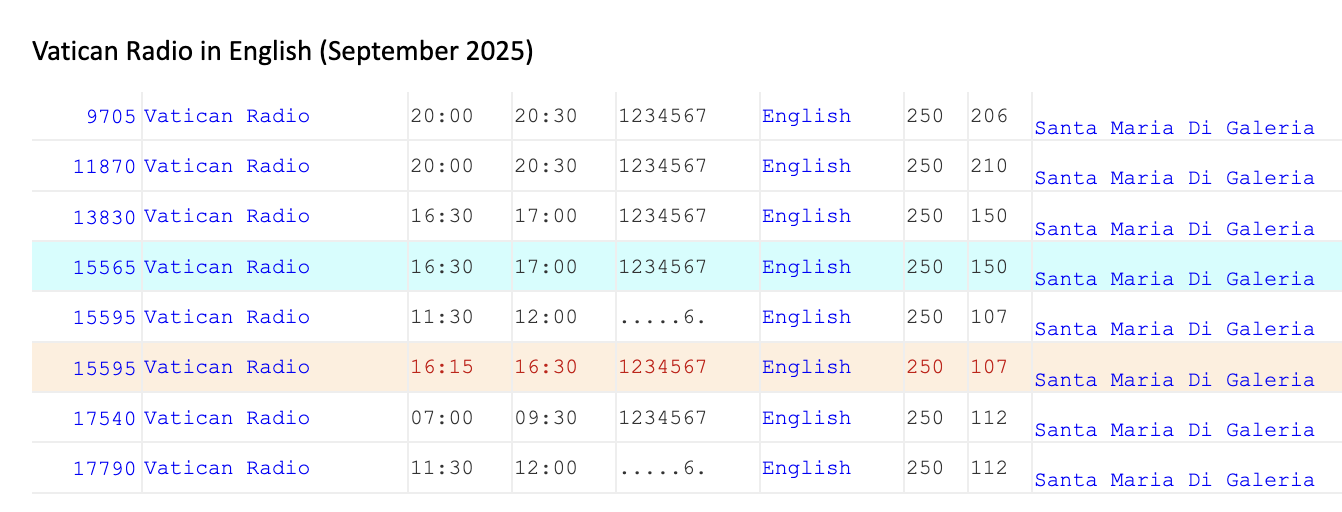
In more recent times, I have read that shortwave broadcasts to North and South America, as well as Europe, ended in 2012. In addition, English language shortwave transmissions to Asia ended in 2017, though they could still be found online. A list of their current English language broadcasts, as found on short-wave.info is shown here:

Here is a recording made August 11, 2025 using a remote SDR in the UK, complete with “Christus Vincit” interval signal, as they began their African service on 9705 kHz.

Also included is a recording from September 30, 2025, as they ended a transmission on 15595 kHz.

TWR Swaziland / Eswatini – Then and Now

Many thanks to SWLing Post contributor Dan Greenall, who shares the following post:

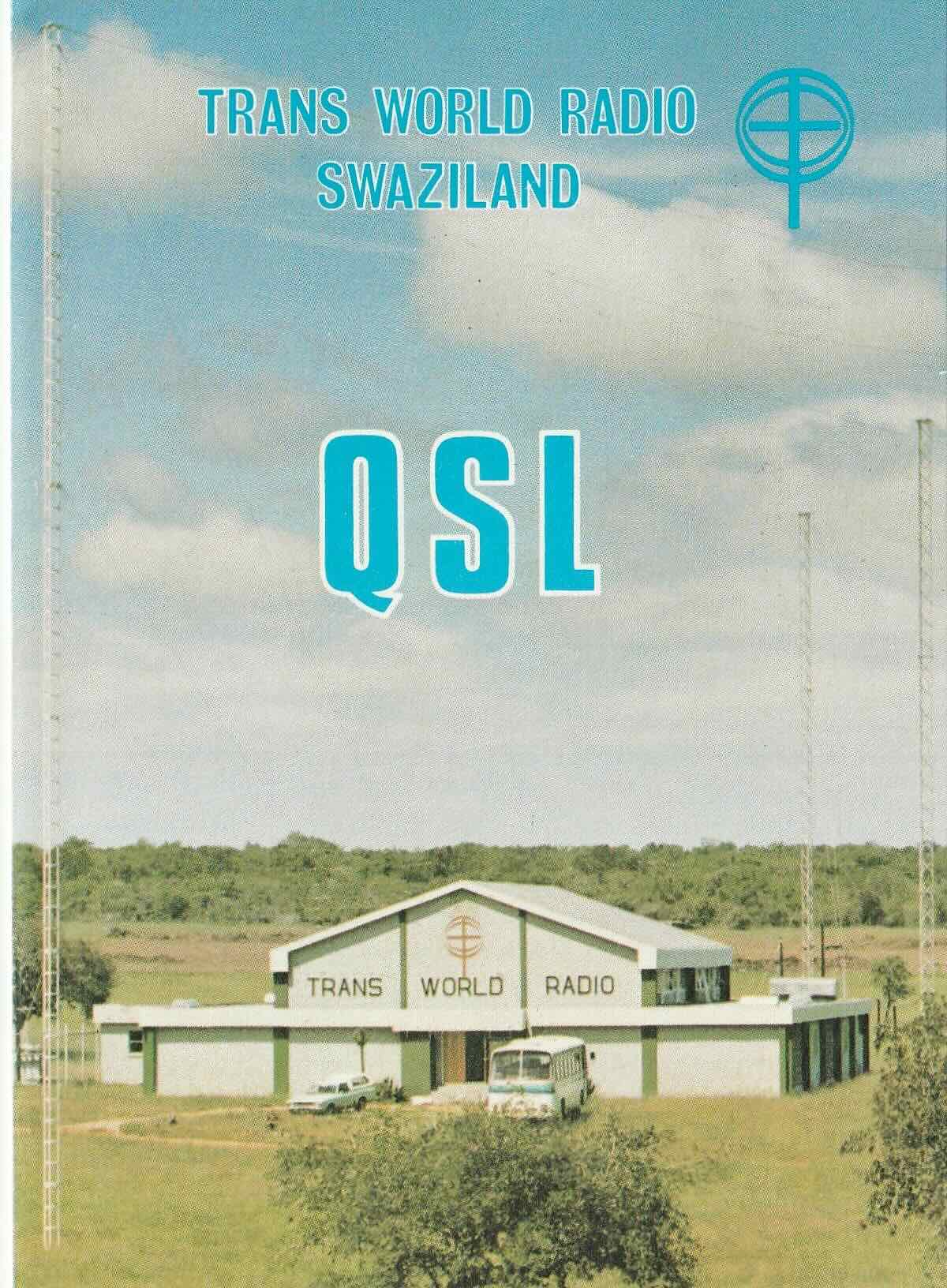
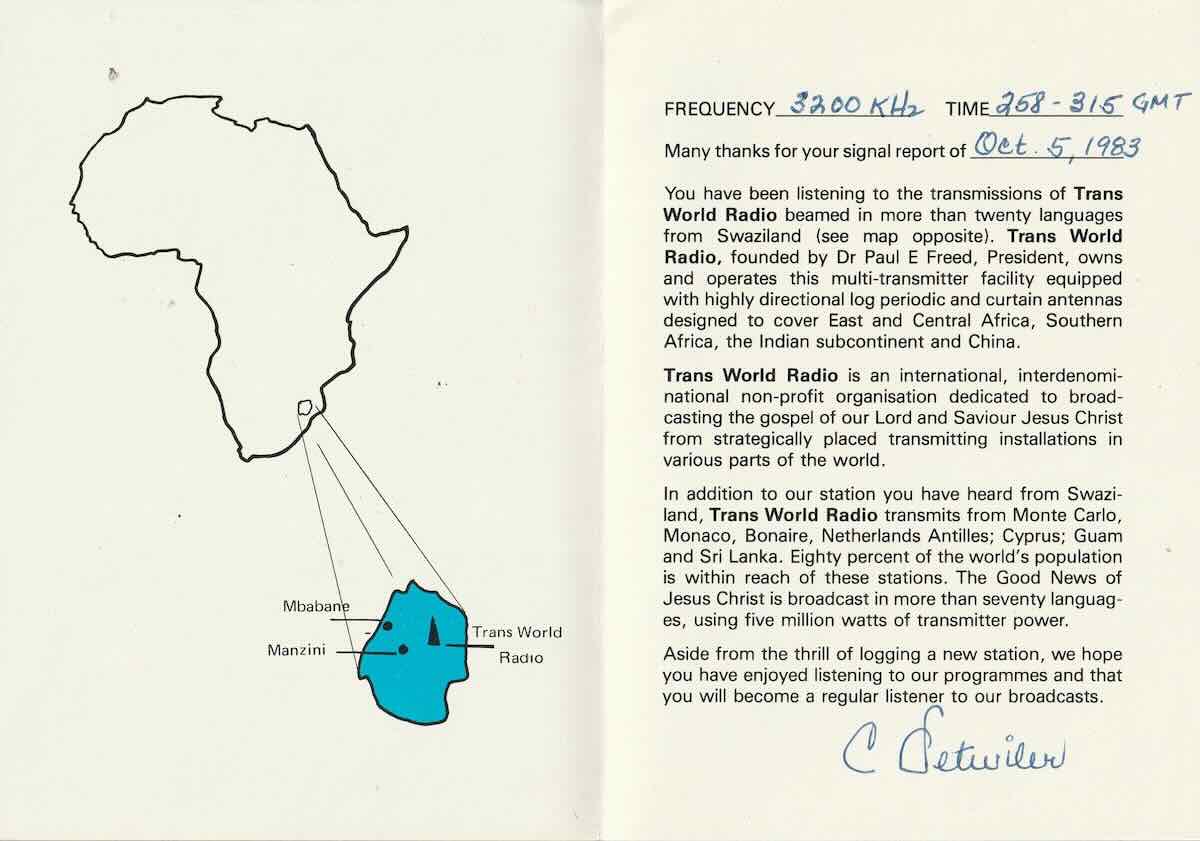
Much to the delight of DXers, Trans World Radio began broadcasting from the African country of Swaziland over 50 years ago. According to the 1975 World Radio TV Handbook, they had four 30 kW transmitters to conduct initial testing in the 90, 60, 49, and 41 metre bands. Their interval signal, played on hand bells, reportedly comes from the song “We’ve a Story to Tell the Nations” and has a music box feel to it. It would pause frequently for an ID in English. This recording was made on November 2, 1996, on 4750 kHz just prior to 0400 UTC sign-on: https://archive.org/details/trans-world-radio-swaziland-1996

Today, the station is still on the air and follows the same format as in years past, except for the name of their country, which changed to Eswatini in 2018.

I chose a Kiwi SDR in neighboring South Africa to make this recent recording, on August 21, 2025 around 1359 UTC on 9585 kHz, leading up to the start of a program in the Portuguese language.

KBS World Radio – Then and Now

Many thanks to SWLing Post contributor Dan Greenall, who writes:

Back in the 1980’s, KBS World Radio was known as Radio Korea, and they could be heard quite well at times here in eastern North America. Even with modest receiving equipment, their familiar interval signal, that included regular ID’s in English and Korean, made it fairly easy to spot.

The recording here (circa 1983) was made in Brantford, Ontario, Canada, using a Panasonic RF-3100 portable receiver and a long wire antenna. As a bonus, this station offered a variety of colorful QSL cards to its listeners.

Today, KBS World Radio from Seoul in the Republic of Korea continues to offer programs via shortwave in several languages including English. Transmitter power up to 250 kw is used so they should be audible in most parts of the world. “Sign on” is strikingly similar using the same interval signal with bi-lingual ID’s and opening music.

They also use some of the same frequencies, including 9570 and 15575 kHz, that they have broadcast on for decades. This recording was made using a remote SDR in Hong Kong on August 14, 2025 on 15575 kHz around 1300 hours UTC.

“The Rarest DX In The World” – A 33 RPM Journey Through 1960s Shortwave

Many thanks to SWLing Post contributor Bruce, who writes:

Hi Thomas,

I came across this item on eBay and then found a copy on YouTube:

Enjoy!

– Bruce F.

Wow–what a nostalgic treat! Thank you for sharing, Bruce!

The eBay seller listed all of the broadcasters on the recording:

Side “A”

    1. RadioNepal, Kathmandu, Nepal [00:00]
    2. Radio Thailand, Bangkok,Thailand [04:10]
    3. Fiji Broadcasting Commission, Suva, Fiji[07:09]
    4. Voice of Kenya, Nairobi, Kenya [09:53]
    5. Radiodiffusion du Togo, Lome, Togo [11:57]
    6. Sierra Leone Broadcasting Service, Freetown, Sierra Leone [16:55]
    7. Radiodiffusion-Television Belge, Brussels, Belgium [18:27]

Side “B”

    1. RadioVietnam, Saigon, South Vietnam [00:00]
    2. Radio Hong Kong, HongKong [3:45]
    3. Radio Wewak (VL9CD), Wewak, Papua New Guinea[04:19]
    4. Voice of Tarawa /Gilbert & Ellice IslandsBroadcasting Service (VTW2), Tarawa [07:35]
    5. Radio CookIslands, Rarotonga, Cook Islands [12:36]
    6. Radio Mauritania,Nouakchott, Mauritania [16:22]
    7. Radio Andorra, Roc Des Anellettes, Andorra [18:01]

I’m wondering if any readers have a copy of this record and can share a photo of the jacket notes. I haven’t been able to find a clear image of the back cover online. I’m interested in finding out who produced the album—any information would be appreciated!

Dan Shares Recordings of the Golden Days of European Shortwave Listening

Many thanks to SWLing Post contributor Dan Greenall, who shares the following guest post:


Europe on shortwave in the 1970’s

by Dan Greenall

During the golden years of shortwave listening, many European countries had an international shortwave service and broadcast programs to North America (where I live) in English. As a result, these stations were usually among the first that a newcomer to the hobby would find.  However, since there was no internet or e-mail, schedules often had to be found in the various club bulletins and hobby magazines.  QSLs arrived through the postal system and could often take months to arrive.

I soon developed the habit of making a brief recording of each station as additional “proof of reception,” and many of these have survived to this day.  These were typically made by placing the microphone directly in front of the speaker of my receiver.  In recent years, they have been uploaded to the Internet Archive, and links to some of them from the early 1970s can be found here.

[Note that each title links to the Archive.org page where you can find more information and QSLs.]

Radio Moscow

Deutsche Welle, Cologne 

Radio Berlin International 

Belgian Radio

Radio Belgrade

RAI, Rome

ORTF, Paris

IBRA Radio via Radio Trans Europe in Portugal

Radio Sofia Bulgaria

Austrian Radio

Radio Prague

Radio Denmark

Radio Luxembourg

Vatican Radio

Radio Sweden

Trans World Radio Monte Carlo

Radio Kiev

Radio Free Europe

Radio Nordsee International

Mexico on Shortwave – Then and Now

by Dan Greenall

Back in the early 1970’s, a wide variety of Mexican stations could be heard on shortwave as evidenced by the loggings columns in the SPEEDX club’s monthly bulletins. Examples from this time period can be found here:

https://www.worldradiohistory.com/Speedx.htm

As well, the late Dr. Richard E. Wood wrote about what was available to be heard from Mexico in the 1971 Communications Handbook on page 18. You can read this here:

A brief recording of La RH, Radio Tricolor (in Spanish) on 11880 kHz from Mexico City can be found here:

The official international broadcaster, Radio Mexico, was known to issue colorful station pennants like the one pictured. Click here to listen to their ID’s in Spanish (though they did use some English) by a female and male announcer, likely on 21705 kHz (one of the many frequencies they used).

Currently, the only station broadcasting from Mexico on shortwave is Radio Educacion, XEPPM, from Mexico City on 6185 kHz. This recording was made on July 10, 2025 using a remote SDR close to the transmitter to ensure the best overall quality. The QSL attached is one received by my (then) 12 year old son in 1994.