Tag Archives: RFI

QRM-busting: Rob’s practical approach to tackling unwanted radio noise

Our good friend Rob Wagner (VK3BVW) over at the  Mount Evelyn DX Report has posted an excellent article on how to deal with man-made radio interference (QRM/RFI) in our homes and neighborhoods. This has been a frequent topic here on the SWLing Post (indeed, as recently as Thursday).

I’ve copied an excerpt from his article below, but I highly recommend reading his entire post which includes practical ways you can investigate and mitigate RFI within your home and neighborhood:

Mount Evelyn is a semi-urban, semi-rural location, about 45 kilometres east of Melbourne, the southeastern part of Australia. When we retired eight years ago to this lovely mountain region known as the Yarra Ranges, noise levels on the shortwave bands were quite manageable. At times, it might rise to perhaps an S3, but hanging a variety of antennas cut for a mix of bands and erected in different directions certainly allowed for some flexibility and control over the local man-made noise.

Previously, we lived in a highly urbanized environment where 24-hour S9 noise levels prohibited any SWL or Ham activity from home. But moving to more spacious living at Mount Evelyn allowed me to drag out the radios, string up those wire antennas and really enjoy again the hobby that was such a part of my youth.

But over the past 12 months, I have noticed an increase in local man-made noise around here. The level of general electrical hash on the bands has increased markedly. At certain times of the day, the S-meter is rising to between 5 and 7. And it is not always predictable when the noise levels will rise and fall.

A few weeks ago, the local electric company decided to do a major overhaul of some power poles and wires in an area not far from here. So, the entire region was without power for about seven hours. Fantastic, I thought! I’ll hook up the Yaesu FTDX3000 to the 12v sealed lead acid battery and do some daytime DXing right here in the shack in a totally noise-free environment. Once the lights went off, I fired up the rig and tuned the bands in search of weak signal DX delights.

Err….well, not to be! Indeed, the results were somewhat underwhelming! It was disappointing just how much man-made interference was evident on the shortwave bands, even though such a large area around Mount Evelyn was without power. The hash was still registering a steady 3 on the S-meter. Certainly, it was better than when the mains power is in regular operation. But in the past, when the power had been off, the noise dropped right away, and battery-powered DXing from the radio shack was a real pleasure. But alas, not on this occasion!

So, I began thinking about why this was so. What is going on here?[…]

Click here to read the full article at The Mount Evelyn DX Report. 
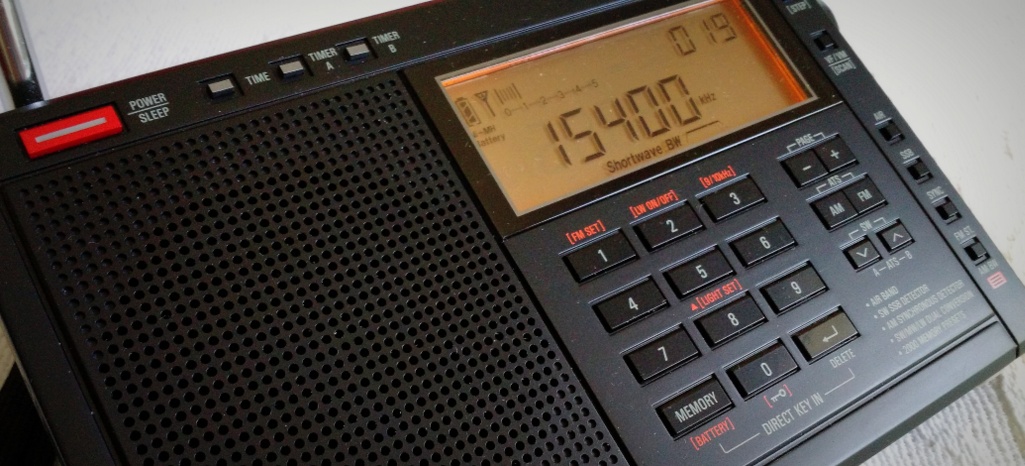
Can’t receive anything on your new shortwave radio–? Read this.

This morning, I received a question from Andrew, an SWLing Post reader in the UK.  Andrew writes:

May I ask a question please? I am very much a newbie to this. I am not really interested in FM, but I would like to listen to international stations on SW, utilities stations, amateur broadcasts and if possible, local airports, aircraft on air band.

I have just purchased a Tecsun PL-680 and have tried it inside my home with the telescopic and wire aerial that came with it, plugged into the antenna port and clipped to a point near the ceiling. All inside the house and the wire aerial did improve the reception, but I get hardly and channels either during the day or night.

Grateful for your detailed advice on what I need to do exactly to improve the number of stations I can receive.

Kind regards
Andrew

Thank you for your question, Andrew, and I hope you don’t mind that I share it here on the SWLing Post as I receive this question so frequently from new shortwave radio enthusiasts.

Of course, a number of things could be affecting your shortwave radio reception and there is, of course, the possibility the receiver is faulty–however, this is very unlikely. Let’s talk about what is most likely the culprit:

Radio Frequency Interference (RFI)

RFI is quite often the elephant in the listening room. It’s not always immediately obvious–especially if you’re new to shortwave listening.

RFI (also known as QRM) is radio noise that is created locally and often concentrated in our homes and neighborhoods. RFI deafens our shortwave radios by overwhelming the receiver with strong spurious signals. Even if you can’t hear the noise, it could still be overwhelming your receiver from a different portion of the band.

RFI can emanate from most any modern electronic or digital device in your home: televisions, power supplies, dimmer switches, smart appliances, and even computer hard drives. Honestly, most any device could be the culprit.

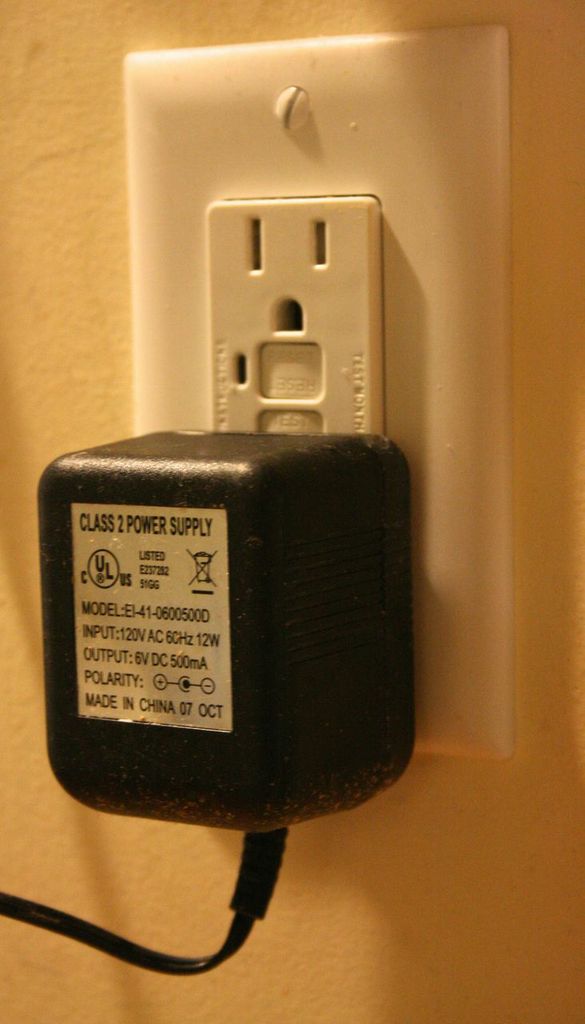
These “Wall Wart” type adapters can create a lot of RFI

RFI can also be caused by power line noises outdoors which have a much larger noise footprint and typically require intervention from your local utilities company/municipality.

In all likelihood, though, it’s a noise inside your home.

There’s a quick way to determine if RFI is the culprit:

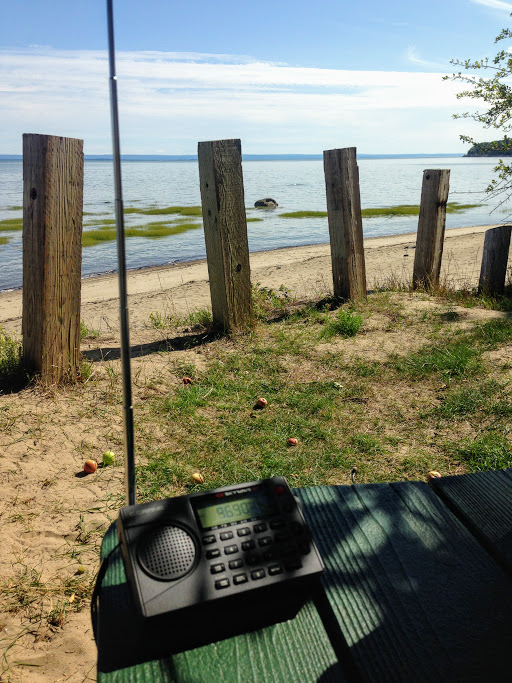
Take your radio outdoors, away from the noise

Depending on where you live, this might only require walking with your radio to the far end of your garden/yard, or it might require hopping in your car and visiting a local park. The idea is to find a spot far removed from houses and buildings, outdoor lighting, and even power lines if possible.

Once you find a listening spot, turn on your portable and tune through some of the popular shortwave radio bands.

If in the late afternoon or evening, I like tuning through either the 31 meter band (9,400–9,900 kHz), 41 meter band (7,200–7,450 kHz) and, if late evening, the 49 meter band (5,900–6,200 kHz). Jot down the frequencies where you hear stations and perhaps even make notes about the signal strength. Then go back home and see if you can receive as many stations. Shortwave stations change frequencies often, but if you listen from home at the same time the following evening, the radio landscape should be similar.

My guess is that you’ll hear many more stations in the field than you can from within your home.

Living with RFI

Sadly, RFI is just a fact of life in this century. It’s very hard to escape, especially for those of us living in dense urban areas. This is one of the reasons I’m such a big fan of taking radios to the field.

There are things you can do to improve reception and I would encourage you to read through this post from our archives (the first two points in the article directly address RFI). Do your best to track down sources of noise and eliminate them.

If you find that, even in the field, your shortwave receiver can’t receive stations with the antenna fully extended, then it may indeed be an issue with the radio itself and you might need to send it back to the manufacturer or retailer if it’s within the return window.

Post readers: If you have other suggestions, feel free to comment!


Do you enjoy the SWLing Post?

Please consider supporting us via Patreon or our Coffee Fund!

Your support makes articles like this one possible. Thank you!

Take the field and abandon the radio noise!

The most common complaint I hear from new SWLing Post readers is that they can’t hear stations from home on their receivers and transceivers. Nine times out of ten, it’s because their home environment is inundated with man-made electrical noises often referred to as QRM or RFI (radio frequency interference).

RFI can be debilitating. It doesn’t matter if you have a $20 portable radio or a $10,000 benchmark transceiver, noise will undermine both.

What can you do about it?

Since we like to play radio at home, we must find ways to mitigate it. A popular option is employing a good magnetic loop receive antenna (check out this article). Some readers find noise-cancelling DSP products (like those of bhi) helpful when paired with an appropriate antenna.

But the easiest way to deal with noise is to leave it behind.

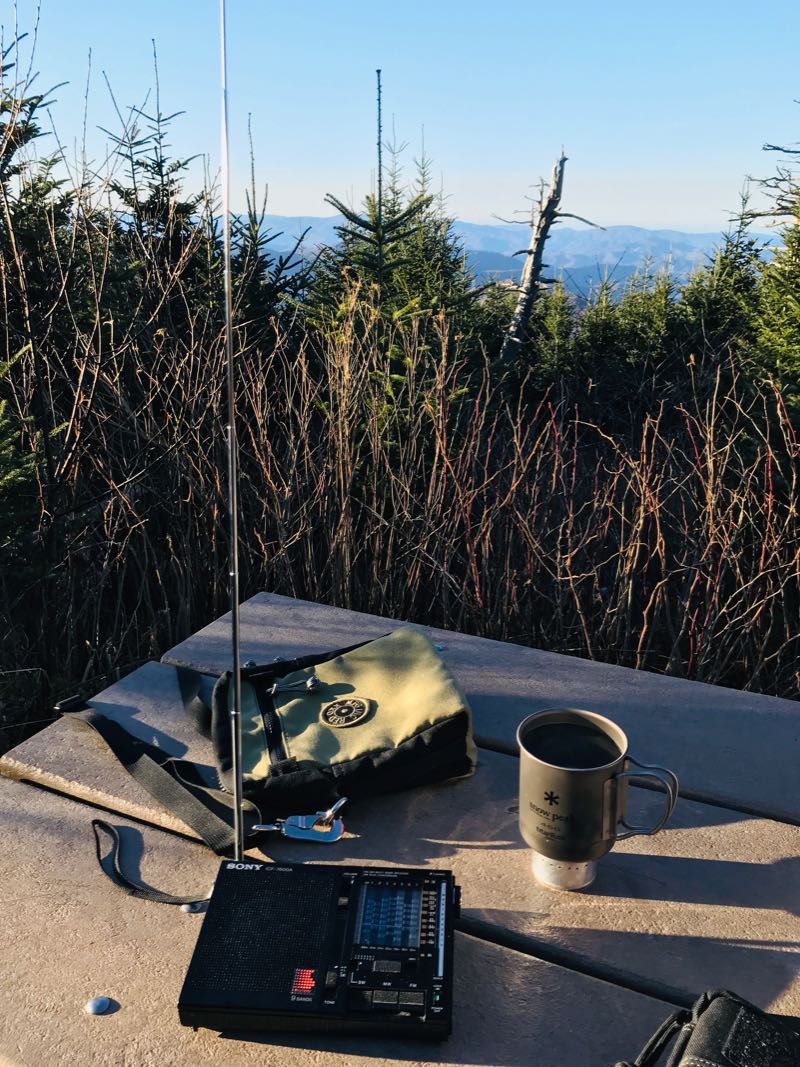
Take your radio to a spot where man-made noises aren’t an issue.

Field radio

If you’ve been reading the SWLing Post for long, you’ll know how big of a fan I am of taking radios to the field–both transceivers and receivers. Not only do I love the great outdoors, but it’s the most effective way to leave RFI in the dust.

Sunday was a case in point (hence this post).

Let’s be clear: I blame Hazel…

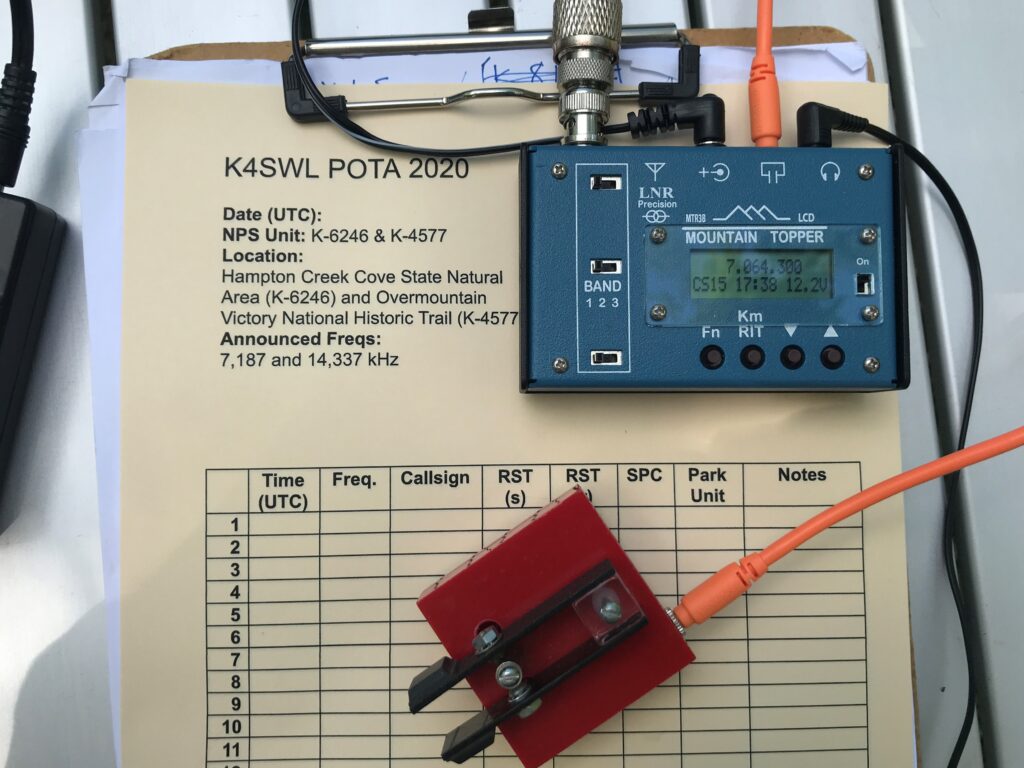
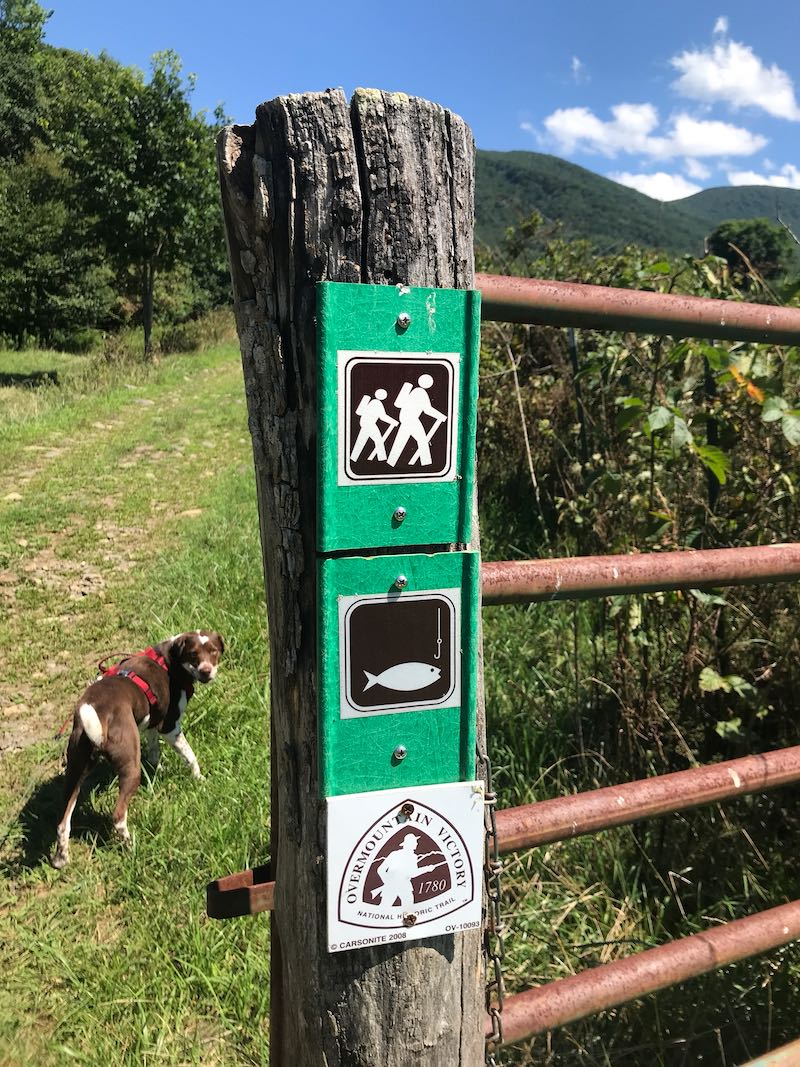
Last week, I did a Parks on the Air (POTA) activation of Hampton Creek Cove State Natural Wildlife Area in Tennessee. It’s a beautiful area with a fantastic hiking trail (the Overmountain Victory Trail) in a relatively remote/rural area.

About 5 minutes before Hazel’s cow patty fun.

My family had a great time at the site–we enjoyed a picnic and I played radio–but Hazel (our trusty canine companion) decided to roll in a cow patty during our hike. Hazel thought it smelled wonderful. Her family? Much less so. And all five of us were staring at a two hour car ride together.

Fortunately, my wife had a bottle of bio-degradable soap we use while camping, so I washed Hazel in Hampton Creek. (Turns out, Hazel didn’t mind that nearly as much as getting washed at home in the tub.)

In all of the commotion I forgot to take my EFT Trail-Friendly antenna out of the tree. Doh!

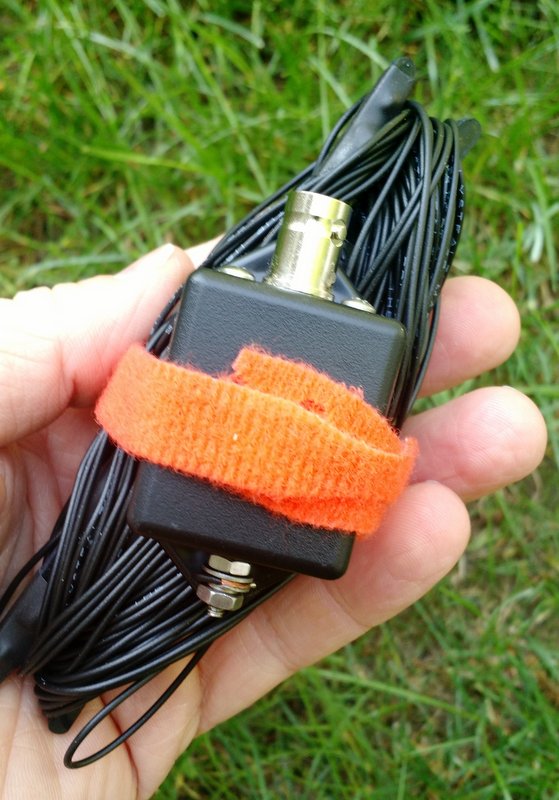
The EFT Trail-Friendly antenna is incredibly compact and quite easy to deploy.

The EFT is my favorite field antenna for POTA activations. It works so well and is resonant on 40, 20 and 10 meters. With an ATU, I can also tune any bands in between. I’ve deployed this antenna at least 130 times in the field and it was still holding up.

I was bummed. Hampton Creek is nearly a four hour round-trip from my home. Was it worth the trip to rescue my antenna?

Fast-forward to Sunday: my amazing wife actually suggested we go back to Hampton Creek Cove on Sunday and also check out nearby Roan Mountain State Park. Would my antenna still be in the tree? Hopefully.

Whew! Still hanging out!

Fortunately, my antenna was still hanging there in the tree as I left it the week before. I was a little concerned the BNC end of the antenna may have gotten wet, but it was okay.

Mercy, mercy, so little noise…

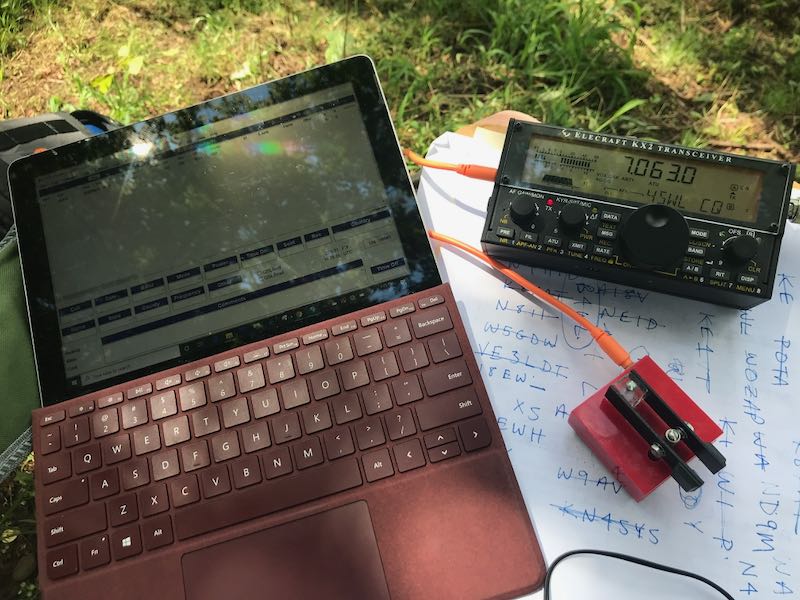
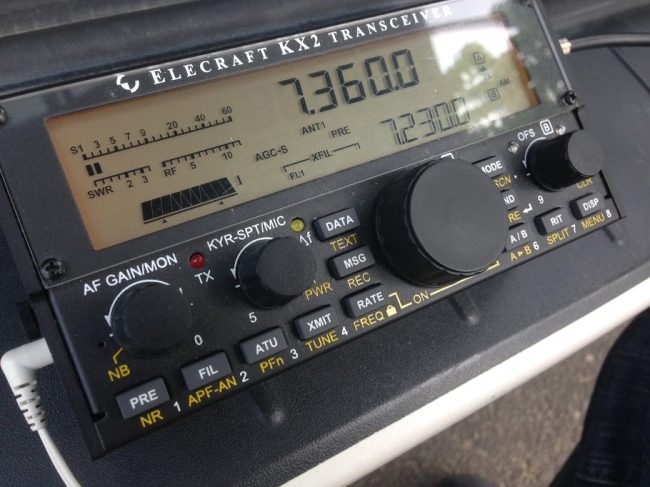
I turned on my Elecraft KX2 and plugged in the antenna. Oddly, there was very little increase in the noise level after plugging in the antenna. That worried me–perhaps the antenna got wet after all? I visually inspected the antenna, then pressed the “tune” button on the KX2 and got a 1.4:1 SWR reading. Then I tuned around the 40 meter band and heard numerous loud stations.

What was so surprising was how quiet the band was that day (this time of year the 40M band is plagued with static crashes from thunderstorms).

Also, there were no man-made electrical noises to be heard.  This allowed my receiver to actually do its job. It was such a pleasure to operate Sunday–no listening fatigue at all. Later on, we set up at Roan Mountain State Park and did an activation there as well. Again, without any semblance of RFI.

When I’m in the field with conditions like this, I always tune around and listen to HF broadcast stations for a bit as well. It’s amazing how well weak signals pop out when the noise floor is so incredibly low.

It takes ten or so minutes to set up my POTA station in the field, but if you have a portable shortwave radio, it takes no time at all. None. Just extend the telescoping antenna and turn on the radio.

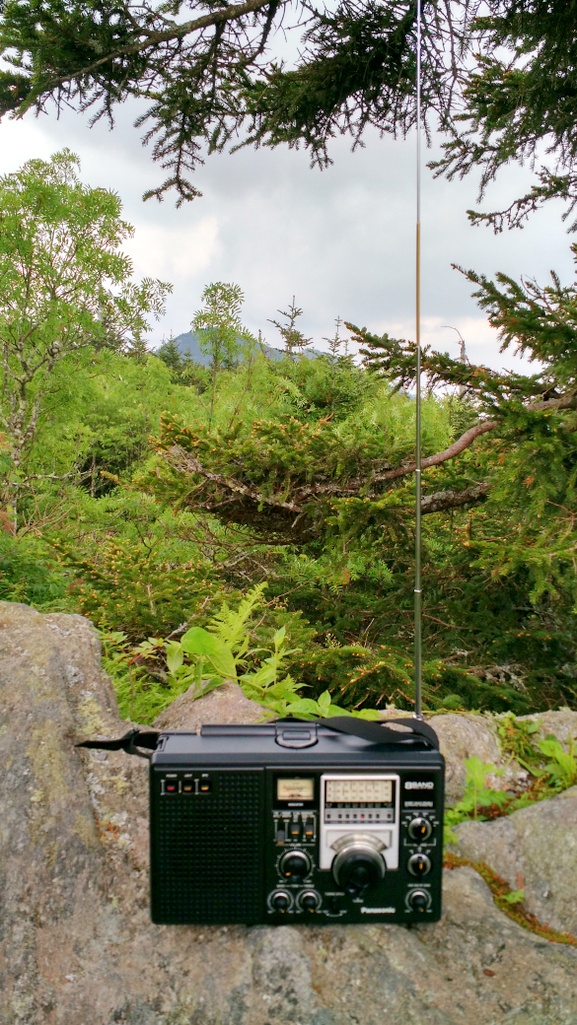
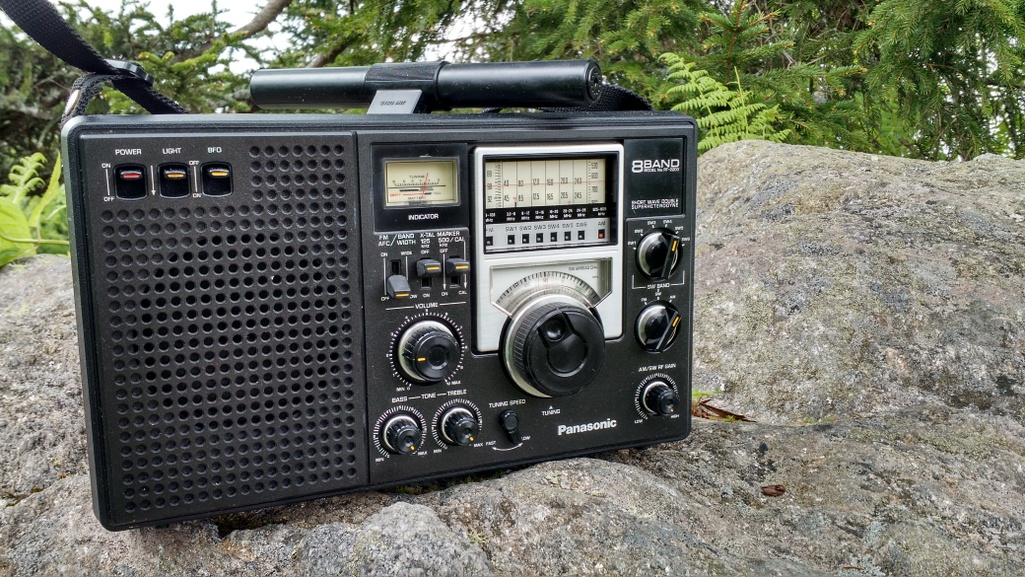
Or in the case of the Panny RF-2200 use its steerable ferrite bar antenna!

If you’re battling radio interference at home, I would encourage you to survey your local area and find a noise-free spot to play radio. It could be a park, or it could be a parking lot. It could even be a corner of your property. Simply take a portable radio outside and roam around until you find a peaceful spot with low-noise conditions. It’s the most cost-effective way to fight RFI!

Post readers: Do you have a favorite field radio spot? Do you have a favorite field radio? Please comment!

Also, check out these articles:

Radio Taboo: An amazing community radio station in rural Cameroon

Radio Taboo (Source: Issa Nyaphaga)

Many thanks to SWLing Post contributor, Alan Roe, who shares this Radio France International article and interview with Issa Nyaphaga, the tour de force behind Radio Taboo.

Here’s a video of the interview:

Click here to view on YouTube.

Thank you so much for sharing this, Alan.

Some of our initial radios received by Radio Taboo.

Readers: what Alan didn’t know is that I’ve been working with Issa via Ears To Our World and can confirm that this station is having a most positive impact on its community!

I was originally introduced to Issa via one of ETOW’s long-time supporters and friends a couple years ago.

At ETOW, we wanted to help establish more Radio Taboo listener groups, so we sent an initial batch of radios to be used in this very rural and remote part of Cameroon.

The radio we sent to Radio Taboo is the Tecsun GR-88 (or “Green-88”). This radio used to be branded by Grundig as the FR200, but Grundig no longer markets this model so we purchase them from Tecsun.

In fact, in a recent email to friends and supporters of Radio Taboo, Issa shared the following photo and noted:

“This man next to me is one of the first beneficiaries of the crank radios donated by Thomas Witherspoon, the founder of “Ears To Our World” a U.S. non-profit. They donated a dozen of these radios to some Radio Taboo’s listers. Radios made it in the Cameroon this week.”

I should mention it’s a logistical challenge to get radios to this part of the world (especially in the summer when the roads are nearly impassable due to rains) but we’re looking into a service that might be able to help in the future with a much larger donation of radios.

Alan, thanks again for sharing this story and giving me an opportunity to tell about our first-hand experience working with Radio Taboo!

Check out the full article about Radio Taboo at Radio France International by clicking here.

Click here to check out the Radio Taboo website.

Due to RFI budget cuts “The Sound Kitchen” leaves shortwave

Many thanks to Mike Terry on the WRTH Facebook page, who notes that RFI’s “The Sound Kitchen” will no longer broadcast on shortwave.

From The Sound Kitchen‘s latest post:

For our DX enthusiast and shortwave listener friends: I am sad to announce we no longer have a shortwave frequency; we have severe budget constraints which no longer permit us to broadcast via shortwave.

But you can still hear us on World Radio Network. As you know, we now broadcast only 1 hour per day, Monday – Friday, from 14:00 to 15:00 UTC/GMT.

For North America: WRN broadcasts the quotidian RFI English programme three times a day from Monday to Friday, from 06:00 to 06:59, from 10:00 to 10:59 and from 16:00 to 16h59 UTC/GMT.

http://babcock.media/world-radio-network/networks/english-north-america/

For Africa and Asia: WRN broadcasts the quotidian RFI English programme three times a day from Monday to Friday, from 06:00 to 06:59, from 10:00 to 10:59 and from 16:00 to 16h59 UTC/GMT.

http://babcock.media/world-radio-network/networks/english-africa-asia/

For Europe: WRN broadcasts the quotidian RFI English programme three times a day from Monday to Friday, from 07:00 to 07:50, from 12:00 to 12:59 and from 20:00 to 20:59 UTC/GMT.

http://babcock.media/world-radio-network/networks/english-europe/

In Paris, you can hear us on World Radio Paris (http://www.worldradioparis.fr/) on DAB+, Monday to Friday from 15:00 to 15:59 UTC/GMT as well as Tuesday through Saturday from 07:00 to 07:59 UTC/GMT.

Click here to read the full post.

Arcing can produce nasty broadband radio interference

On this trip to Québec, indoor listening has been more productive than listening from our balcony.

I mentioned in a previous post that, this year, QRM levels here at the condo in Québec are higher on our balcony than they are inside the building.

I think I found the source.

A couple weeks ago, on my morning walk, I passed underneath some high voltage power lines about 1 km from the condo. I noticed the sound of arcing coming from a pole nearby. No doubt, something metal–a staple, a cable, a pin, etc.–is the culprit.

I pulled out my smart phone and made this short video. If you turn up the volume, you might hear the noise especially at the end of the clip.:

I took a portable radio back to the site later and heard the same broadband noise I heard from the condo.

Although we only rent this condo a couple months a year, I’ll try to report the noise to the Hydro Québec. I know that our utility company in the States must follow up with requests like this and do their best to eliminate unintentional sources of RFI. These issues can also be an indication of something in the system failing, so power companies can actually be quite grateful for the feedback.

If you have persistent broadband noise at home, check out some of the trouble shooting tutorials at K3RFI’s website for a little guidance.

Despite all of this noise, I’m pleased I can still receive a few of my favorite shortwave stations. And, of course, escape to the KiwiSDR network and hit the field from time to time!

No worries, though, I’ll be back at my home station soon and can once again enjoy a relatively RFI-free radio space!

Post readers: Have you ever been plagued with power line noise? What did you do about it? Any tips? Please comment!

Do you enjoy the SWLing Post?

Please consider supporting us via Patreon or our Coffee Fund!

Your support makes articles like this one possible. Thank you!

Can’t escape the noise? Take an impromptu DXpedition via the KiwiSDR network!

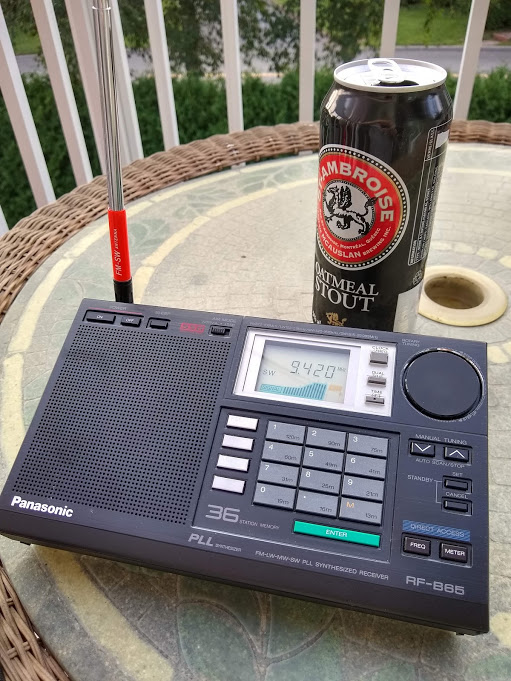
While I love the Panasonic RF-B65, the Voice of Greece and a St. Ambroise Oatmeal Stout: this combo can’t fight the persistent radio interference here at the condo.

Some of you might recall that I’m spending the months of August and September in a condo near Québec City, Canada. We love it here, though it does present some radio challenges. Unlike our rural/remote mountain home in the States, I’ve always had to cope with QRM (manmade radio interference) here at the condo. Not surprising.

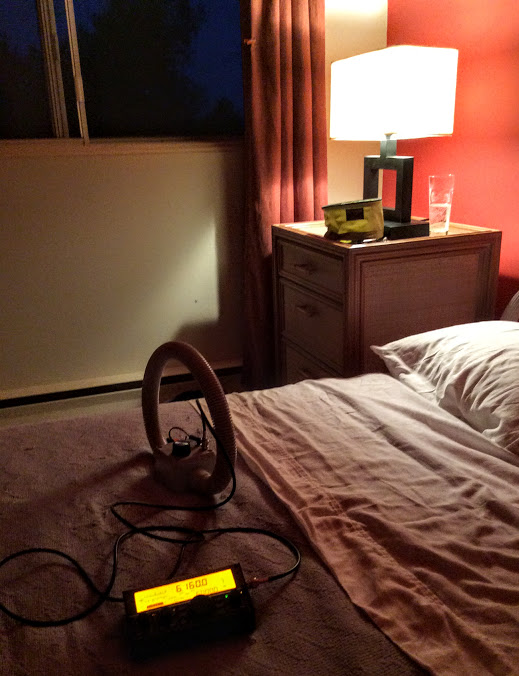
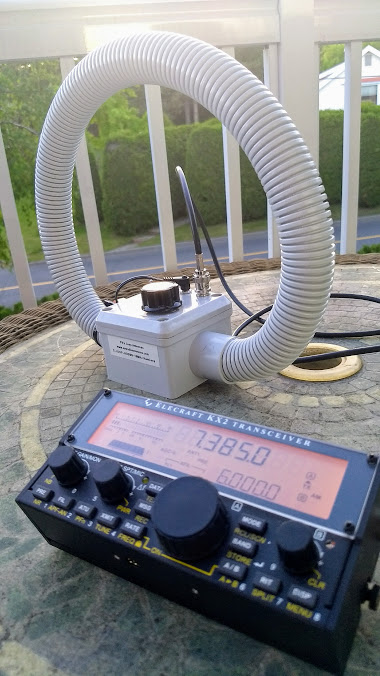
I typically bring my PK Loop antenna–it helps lower the noise a tad and is easy to take out on our balcony for optimal reception. Lately, though, the QRM has been even worse on the balcony than inside the condo (more on that in a future post).

Some North American and European stations punch through the noise when propagation is favorable (especially the Voice of Greece and Radio Romania International) but there have been evenings where nothing could penetrate the wall of noise.

One way I escape the noise, of course, is to take my radio to a picturesque remote location for the afternoon or evening. It’s amazing the number of signals you can pull out of the ether when the noise floor is so low.

Back at the condo, though, there’s no easy way to escape the noise.

Or is there?

Impromptu DXpeditions

Perhaps 21st century problems require 21st century solutions.

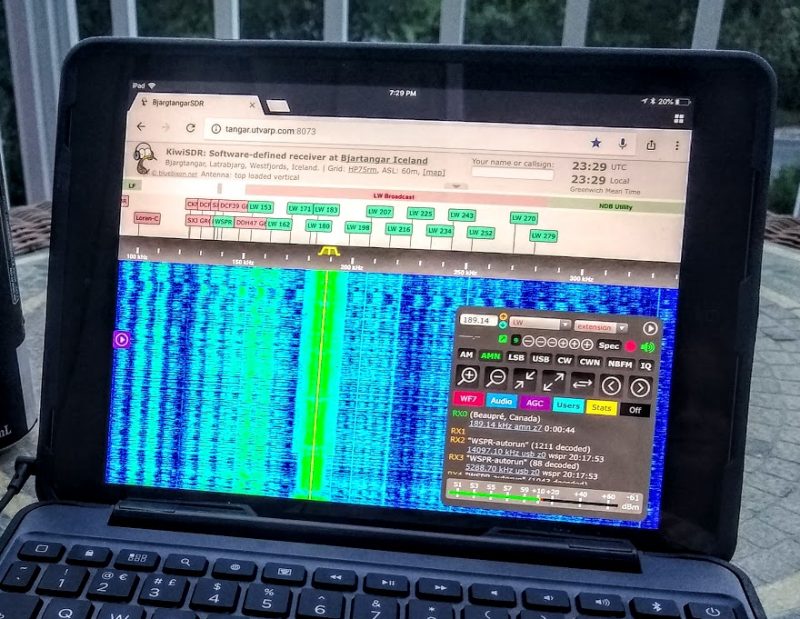
This year–especially here at the condo–I’ve spent a great deal of time exploring the KiwiSDR network.

For those of you not familiar, the KiwiSDR is a self-hosted WebSDR which operates much like a mini U Twente WebSDR. KiwiSDR owners install their SDRs at home–or in other favorable locations–then share control of their SDR with the world via the the Internet.

Like the U Twente WebSDR, KiwiSDRs allow multiple simultaneous users to control the SDR independently of each other. Each KiwiSDR can allow up to four simultaneous guests (the U Twente WebSDR can allow hundreds of simultaneous users, but it’s also a university-supported bespoke SDR with fantastic bandwidth!).

Over the past few years, the KiwiSDR network has grown almost exponentially. There are Kiwi SDRs on every continent save Antarctica (someone remedy that, please!).

Each red pin represents a KiwiSDR installation.

Other than the fact that the SDR audio is piped through the Internet–and you can’t walk outside and adjust the antenna–there is no difference between using a KiwiSDR remotely or locally.

In fact, the KiwiSDR only has a web browser-based application, there is no downloadable application for local use. So quite literally, the experience of controlling and using a KiwiSDR locally or globally is identical.

And it’s so much fun! I browse the KiwiSDR network via the map above, select an interesting location, and virtually travel there for an impromptu DXpedition. I can travel to India, Italy, Japan, New Zealand, or Hawaii via the network and be back in time for dinner here in Canada without breaking a sweat or even using frequent flyer miles!

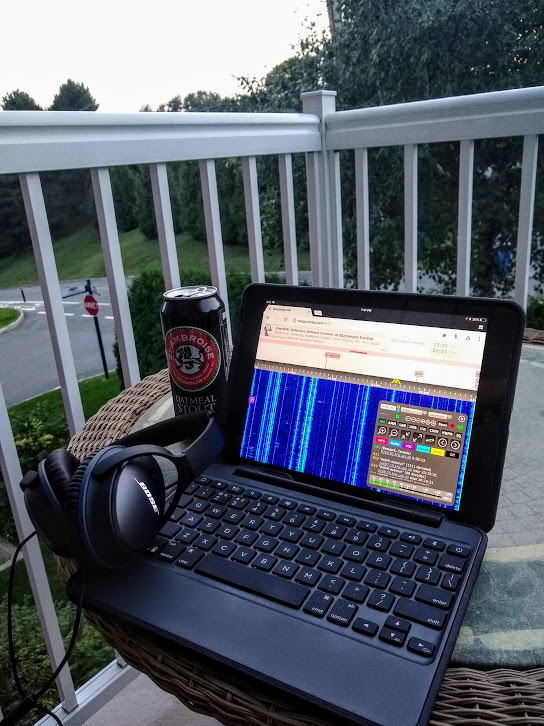
I’ve found that the combo above makes for an immersive experience. I use Bose Quiet Comfort noise-cancelling headphones paired with my iPad Air (which I have enclosed in a Zagg Rugged Book). With a reasonable Internet connection, it truly feels like I’m there.

Of course, you don’t need an iPad, or any special equipment. The KiwiSDR application works with pretty much any computer, tablet or smart phone that has a web browser. For the best experience, however, I would suggest connecting a good external speaker, bluetooth speaker or headphones.

I know many of you are thinking, “But Thomas! This isn’t real radio!”

But I would argue that it is real radio! It’s a real radio, connected to a real antenna that you’re simply controlling via the Internet with a web-based SDR application. Instead of the audio going through a sound card into your headphones, it’s going into a soundcard, piped through the Internet, then into your headphones.

Give it a try! You might find an impromptu DXpedition is the perfect remedy to your QRM and RFI blues!

Post readers: Any heavy KiwiSDR users out there?  Or do you oppose using WebSDRs? What are your thoughts? Please comment!

Do you enjoy the SWLing Post?

Please consider supporting us via Patreon or our Coffee Fund!

Your support makes articles like this one possible. Thank you!