Shortwave listening and everything radio including reviews, broadcasting, ham radio, field operation, DXing, maker kits, travel, emergency gear, events, and more
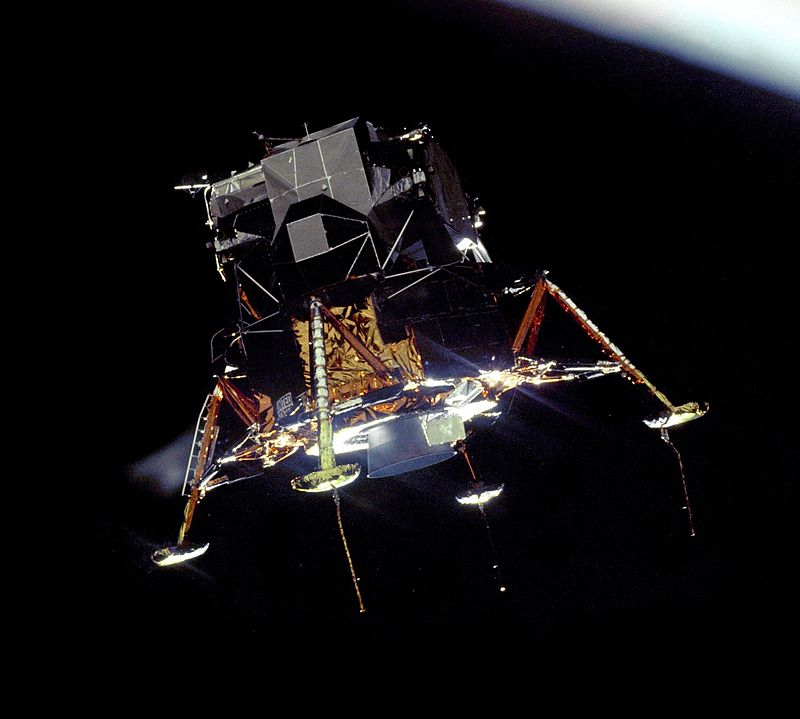
One of our frequent contributors, Tom Laskowski, has digitally converted numerous magnetic tape recordings from his personal collection to share with the archive. Tom made the following recording of the Voice of America on July 20, 1979 at 0500 UTC on the 31 meter band.
Tom notes:
The first 4:30 is from a VOA newscast that aired before the main part of the program.
The main recording was presented on the 10th anniversary of the Apollo 11 moon landing. I enjoy listening to this every year on the landing anniversary.
I’ve enjoyed listening to this 10th anniversary presentation as we, today, celebrate the 50th anniversary of the moon landing::
[Update:] Tom also shares another recording that marks this anniversary:
I thought this might be [another] appropriate file to upload considering we are marking the 50th anniversary of Apollo 11. I recorded this program thirty years ago on July 20, 1989 [5.975 MHz at 0400 UTC] the 20th anniversary of the Apollo 11 moon landing. Omnibus takes a look back at the historic Apollo mission and how and why it happened:
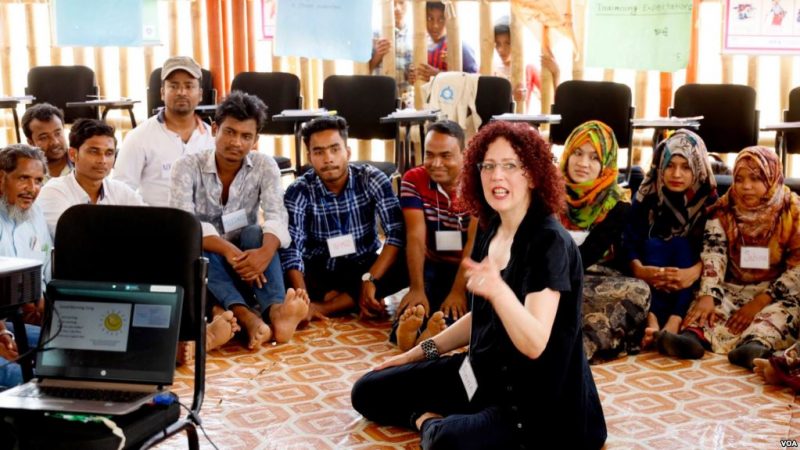
Anna Matteo of Learning English teaches Rohingya teachers
VOA’s Learning English program is bringing its decades’ long expertise of teaching foreign audiences the English language to refugee camps in Bangladesh. Learning English is VOA’s multimedia source of news and information for millions of English learners worldwide.
At the end of March, a VOA Learning English team travelled to the Rohingya refugee camps in Cox’s Bazar, Bangladesh, to train 100 English teachers using a range of multimedia materials. The training program includes follow-up virtual classroom sessions, as well as VOA Learning English content accessible at the camp’s learning centers and though mobile devices.
The United Nations High Commissioner for Refugees invited VOA to provide six days of intensive training on teaching techniques and methods for selected teachers. The teachers, in turn, will use the acquired knowledge to train another 3,000 of their colleagues in order to provide English lessons for refugees in the camp. The refugees requested this training during a visit by VOA Director Amanda Bennett at the Cox’s Bazar camps last year.
Rahma Rashid Toki, one of the selected teachers, told the VOA Learning English team he was ready to quit on the first day of training. By the end of the course, Toki commented: “When I came to the first day of training, I felt nervous. I decided I will not continue. Already I had applied to leave. But my P.O. (personnel officer) would not accept my application to leave. He said to me that this training is important and necessary. Now that the training is finished, I realize it’s really important for me and my students!”
Francis Nath a UN Education Associate at Cox’s Bazar who assisted with the training, said “you can see the [teachers’] level of English competency improve dramatically by the second day.”
VOA’s Learning English service uses clear and simple vocabulary to teach American English on radio, television, Internet, and mobile.
Learning English began as Special English, which VOA launched in 1959. Special English newscasts and features were a primary fixture of VOA’s international shortwave broadcasts for more than half a century. In 2014, the line of products was expanded to include more English teaching materials, and the service became known as Learning English.
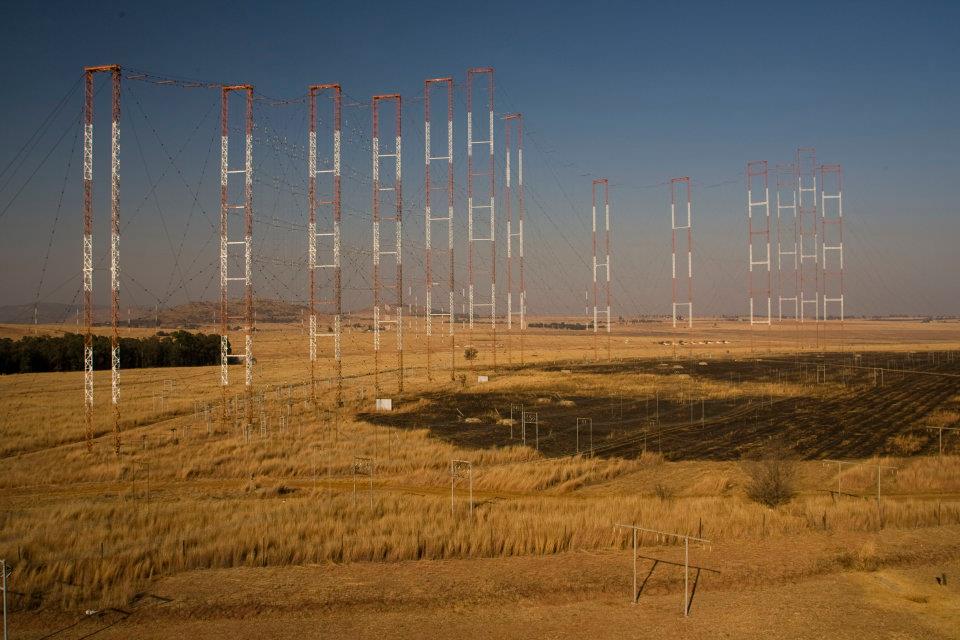
Many thanks to SWLing Post contributor, Gaétan Teyssonneau, who notes that Channel Africa will end their shortwave service on March 31, 2019. The Meyerton Shortwave Station is closing which will effectively end Channel Africa’s shortwave service but also end Africa relays for a number of other major international broadcasters.
“It is confirmed that Sentech of South Africa is ending SW broadcast from 31 March 2019. So Channel Africa (Old Radio RSA), BBC, NHK, VOA, AWR. Deutche Welle & South Africa Radio League etc.broadcasting via Meyerton transmitting site will be only in memory shortly informs Jeff White in the AWR Wavescan program of 24th Feb 2019. (Via Jose Jacob)
Meyerton Short Wave Broadcasting Relay station is operated by SENTECH in South Africa, the signal distributor for the South African broadcasting sector. The organisation began operations in 1992 as the signal distributor of the SABC. Sentech now operates as a commercial enterprise.”
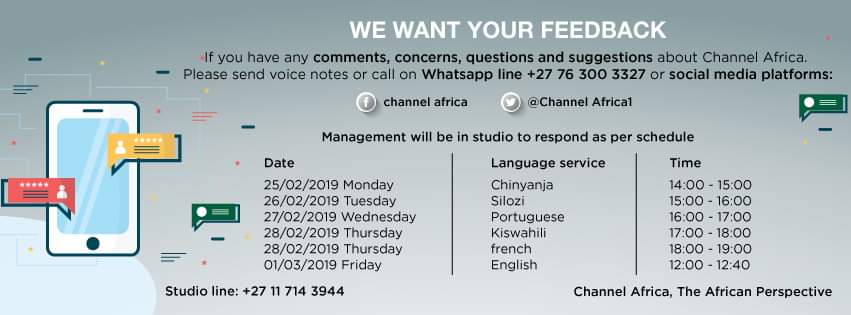
Channel Africa is asking for your feedback and will even have management live in-studio on the dates below:
Voice Of America Museum Sets 75th Anniversary Events
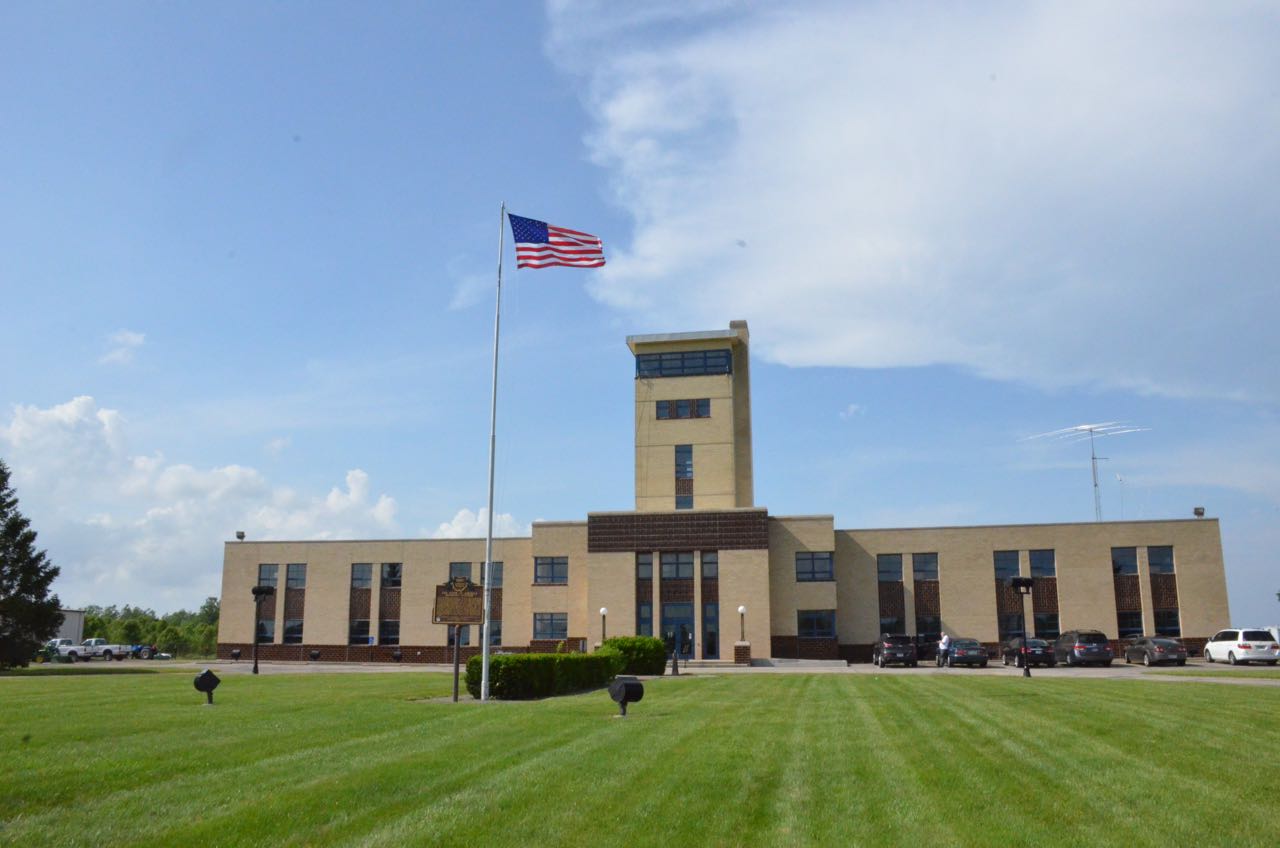
The National Voice of America Museum of Broadcasting will celebrate the 75th anniversary of West Chester Township’s Bethany Station with yearlong programs highlighted by a presentation by VOA White House Bureau Chief Steve Herman on March 6.
Events include a talk by Rod Serling biographer Nicholas Parisi; a program on sound effects from the golden age of radio; a “Hamvention” by the West Chester Amateur Radio Association; and a free four-part series of programs called “The Voice of Truth in America: Celebrating 75 Years of the VOA Bethany Station” with the MidPointe Library System.[…]
The anniversary events include:
Feb. 17: “The Imagination of Rod Serling: A Conversation with Nick Parisi,” by the author of Rod Serling: His Life, Work, and Imagination published last year.
March 6: “Covering the White House and the World” by Steve Herman, VOA White House Bureau Chief.
April 6: “History of the VOA-Bethany Station and the VOA Museum Today” presentation by museum director Jack Dominic at MidPointe Library West Chester Township.
April 9: “Theater of the Mind: Sound Effects During Radio’s Golden Age” with Mike Martini, president of the museum’s Media Heritage Collection.
May 16-19: “Hamvention Nights at the VOA Museum” with the West Chester Amateur Radio Association.
June 5: “There’s a Radio in My Cell Phone!,” a children’s STEM (Science, Technology, Engineering and Mathematics) event at MidPointe Library Liberty Township.
July 11: “Stealth Antennas for Amateurs Living in HOAs.”
Aug. 25: Big Band music at MidPointe Library West Chester Township.
Sept. 21: The fourth annual VOA Museum “75 Years of Rockin’ the Radio” fundraiser.
Oct. 18-20: “Jamboree on the Air” with West Chester Amateur Radio Association and area scouting organizations at the museum.
[…]The museum is open Saturdays and Sundays 1-4 p.m. at 8070 Tylersville Road. General admission is $5 for adults and $1 for children. Museum events are listed at the VOA Museum website.
Effective immediately, the Broadcasting Board of Governors (BBG), an independent U.S. government agency that employs thousands of talented journalists, storytellers, and media professionals, is now the U.S. Agency for Global Media (USAGM).
The U.S. Agency for Global Media is a modern media organization, operating far beyond the traditional broadcast mediums of television and radio to include digital and mobile platforms. The term “broadcasting” does not accurately describe what we do. The new name reflects our modernization and forward momentum while honoring our enduring mission to inform, engage and connect people around the world in support of freedom and democracy.
We recognize the overdue need to communicate the evolving, global scope of our work as well as our renewed, urgent focus on the agency’s global priorities, which reflect U.S. national security and public diplomacy interests. USAGM is an independent federal agency that provides accurate, professional, and objective news and information around-the-globe in a time of shifting politics, challenging media landscapes, and weaponized information. Our identity and name will now address these realities.
The decision to change our name was a result of thorough research and extensive consultation with numerous internal and external stakeholders, including the BBG Board of Governors, agency staff and leadership at all levels, the five networks, Congress, the Administration, and interagency colleagues.
As with the BBG, the U.S. Agency for Global Media encompasses five networks: the Voice of America (VOA), Radio Free Europe/Radio Liberty (RFE/RL), the Office of Cuba Broadcasting (Television and Radio Martí), Radio Free Asia (RFA), and the Middle East Broadcasting Networks (MBN). These networks collectively reach an unduplicated weekly audience of 278 million people in 59 languages and in more than 100 countries. Insulated by a firewall from political influence, these networks will continue to deliver truth and professional journalism to people living in some of the world’s most closed societies.
Now more than ever, people around the world need access to the truth. USAGM continues to tell the truth, and illuminate the world like no other news organization in the world.
Event to be held on 74th anniversary of VOA-Bethany Station dedication
Whether you engaged in dance parties in the 50s, sock-hopped through the 60s, or grooved to music of the 70s, chances are that radio provided the music of the moment.
It also meant a lifeline of accurate Voice of America news, features and music for people living in war-torn or oppressed countries.
The National Voice of America Museum of Broadcasting in West Chester will host its second annual fundraiser, “Rock the Radio” dinner-and-dance party on Saturday, Sept. 22 from 5:30 to 10:30 p.m. at the VOA museum in West Chester. Blue Stone Ivory, Cincinnati’s premier horn-driven classic rock band, will provide music from the Cold War era to help celebrate the 74 th anniversary of the VOA-Bethany Station.
“We’ll have a cocktail reception in the museum, a fabulous dinner and irresistible dance music that will keep people tapping their toes or entice them out onto the dance floor,” said Jack Dominic, museum executive director. “Funds go toward museum renovation to make the first floor accessible to people of all abilities.”
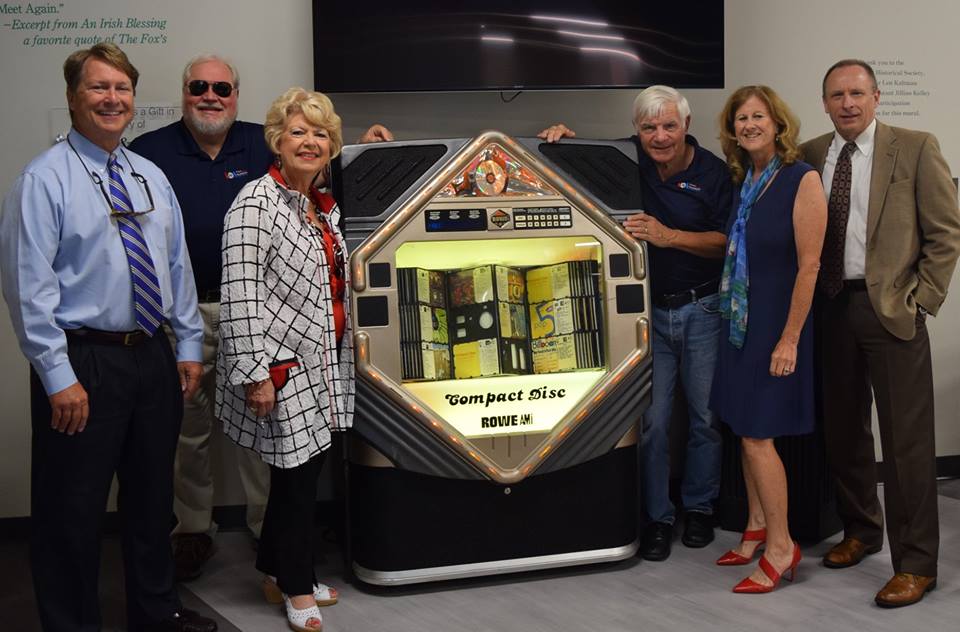
The National Voice of America Museum of Broadcasting gala committee. From left, back row: Greg Stevens, Chris Wunnenberg; Jack Dominic; Karl Ulrich. Front row: Patti Alderson and Melinda Zemper
The evening also includes the official opening of the museum’s new main exhibit hall and a private viewing of a Cold War exhibit supported by the U.S. Coast Guard’s alumni association for the USS Courier. The Courier was a floating Voice of America radio station stationed off the coast of Greece near the Panama Canal Zone from 1952-1964. It was tasked to defeat Soviet jamming near VOA target areas and contained a barrage balloon that held its medium-wave antenna aloft.
“Here in the U.S., we remember radio as entertainment, but it was a crucial way the Voice of America communicated throughout World War II and the Cold War to our troops and allies overseas and to people who lived in countries without a free press,” said Ken Rieser, president of the VOA museum board. “We want to recognize our nation’s commitment to tell the truth in media and educate people in countries where media is censored about what was going on in the world.”
Cost is $150 per person or $300 per couple, with various levels of sponsorship available for individuals, businesses and organizations. Sponsors so far include: Patti and Dick Alderson; Barbara and Larry Kellar; Mr. Mechanic; Oak Tree Communications; Sebaly, Shillito and Dyer; and Greg and Diane Stevens; Gary and Dee West; and Chris and Sandie Wunnenberg.
Sponsorship levels are: Platinum, $10,000; Gold, $8,000; Silver, $5000; and Bronze, $1,000. Sponsor recognition ranges run from free gala tickets, inclusion in the printed program, billing in all public relations and signage, recognition from the podium, logo inclusion on the museum website, and tables for 10 guests.
For 50 years, the VOA-Bethany Station transmitted Voice of America broadcasts to countries worldwide that lacked a free press, first in Europe during World War II and to South America during the Cold War. It was decommissioned by the federal government in 1994.
The iconic art deco building has been developed into the National VOA Museum of Broadcasting with the help of the entire community, mostly with volunteer labor. The Smith Family Foundation recently awarded the museum a $5,000 grant for education, event programming and exhibit development.
The museum is open Saturdays and Sundays from 1 to 4 p.m. at 8070 Tylersville Road. Museum general admission is $5 for adults and $1 for children. The museum recently added three new docents, but is still accepting more docent volunteers.
For more information about gala sponsorships, tickets, or to volunteer, email [email protected] , call Dominic at (513) 777-0027, or go to www.voamuseum.org.
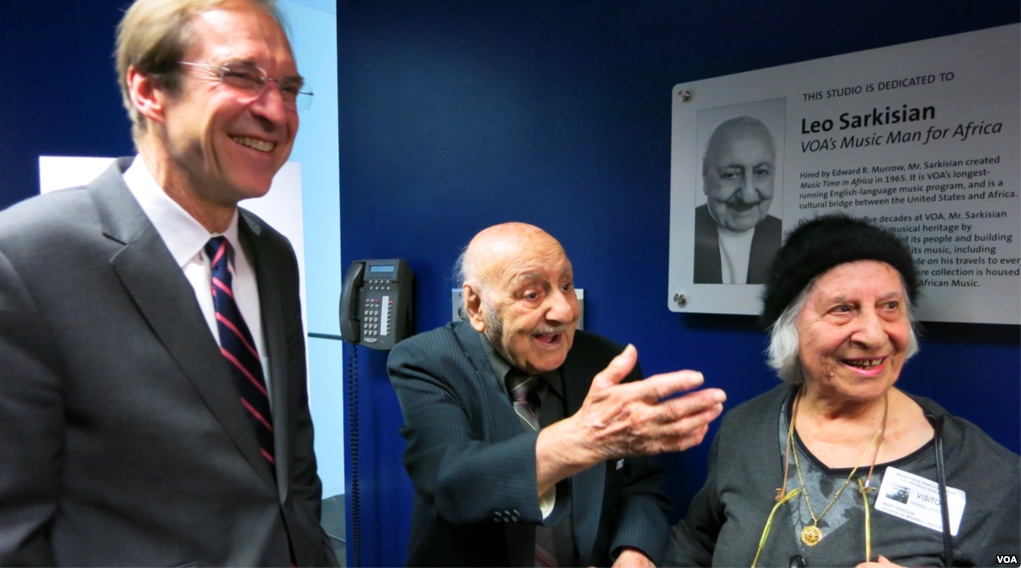
FILE – Leo Sarkisian, center, his wife, Mary, and VOA Director David Ensor smile during a celebration that followed the renaming of VOA Studio 23 in Sarkisian’s honor, Jan. 29, 2014. (Source: VOA News)
In February 2013, Leo Sarkisian and his sweet wife, Mary, invited me to their home and studio in Maryland and I recorded what turned into a 3+ hour audio interview.
Sitting with him, time seemed to disappear as I was absorbed by stories about his travels and experiences. He was so kind and gracious–he even insisted that I walk away with one of his amazing drawings which I’ve since framed for my office.
Leo passed away on June 8, 2018 at the age of 97. Rest in peace, Leo.
Leo Sarkisian, the creator and longtime producer of The Voice of America’s “Music Time in Africa,” has died. He was 97.
Known by his fans as the “Music Man of Africa,” Sarkisian spent a half-century traveling Africa, listening to local musicians and capturing their performances. Those recordings became the basis of VOA’s longest-running English program.
“Leo always left you feeling like you were special. He didn’t treat anyone less or greater based on their social standing or age or anything, it seemed. He was a true gentleman and optimist and lover of the beautiful things in life,” said Heather Maxwell, an ethnomusicologist who succeeded Sarkisian as the host of “Music Time in Africa.”
Meeting Murrow
Sarkisian arrived in Africa as a soldier in the U.S. Army. In 1961, a fateful encounter changed the course of his life. Edward R. Murrow, newly minted as the director of the U.S. Information Agency, came to Sarkisian’s apartment in Conakry, Guinea, and asked if he’d like to join The Voice of America. Four years later, he went on the air with “Music Time in Africa.”
He spent the next 47 years traveling the continent with his wife, Mary, whom he married in 1949. Together, they met thousands of local musicians and gave their art a global stage.
Sarkisian’s travels put him at the vanguard of African music. Maxwell said a favorite recording from Sarkisian’s collection was of Nigerian musician Fela Kuti, before he developed the Afrobeat style that would become his world-famous trademark.
Sarkisian was himself a musician and artist. He sketched performers, audience members and dignitaries. Some of his illustrations can be found in “Leo Sarkisian’s Faces of Africa,” a collection of portraits of people he met in his travels.
But his greatest legacy will perhaps be the original collection of about 10,000 recordings that he curated, representing every African country. In 2014, the University of Michigan acquired the collection from VOA on long-term loan. Their work involves digitizing the collection and preserving it for generations to come.
When asked what African music meant to him, Sarkisian said, “It’s been my entire life. It’s from my childhood right up to today, and maybe into the future. I’ll still be doing my art, and I’ll be dancing with my music. What else? It is passion.”
Sarkisian’s parents emigrated to the U.S. from Turkey in the early 1900s, according to The Washington Post. Born in 1921, Sarkisian studied art and drew maps for the Army, the Post reported.
Sarkisian lived by Murrow’s “last three feet” motto, Maxwell said. That meant the most important part of communication, even across international borders, came from a personal, human connection.
“We still care about Africa,” Sarkisian said in 2012. “We care about them. We love the African culture. And in turn, of course, we have their love, also. And that is the satisfaction of our work.”
Leo and Mary Sarkisian, after spending most of their lives living in Africa, settled in Boston. Leo Sarkisian died June 8 and will be buried in North Andover, Massachusetts, with full military honors.