Many thanks to SWLing Post contributor and noted political cartoonist, Carlos Latuff, who shares the following illustrated radio listening report of a recent BBC Emergency Radio Service broadcast.
 Carlos notes:
BBC Emergency Radio Service

Many thanks to SWLing Post contributor and noted political cartoonist, Carlos Latuff, who shares the following illustrated radio listening report of a recent BBC Emergency Radio Service broadcast.
Carlos notes:
BBC Emergency Radio Service
Many thanks to SWLing Post contributor and noted political cartoonist, Carlos Latuff, who shares the following illustrated radio listening report of a recent BBC ERS broadcast.
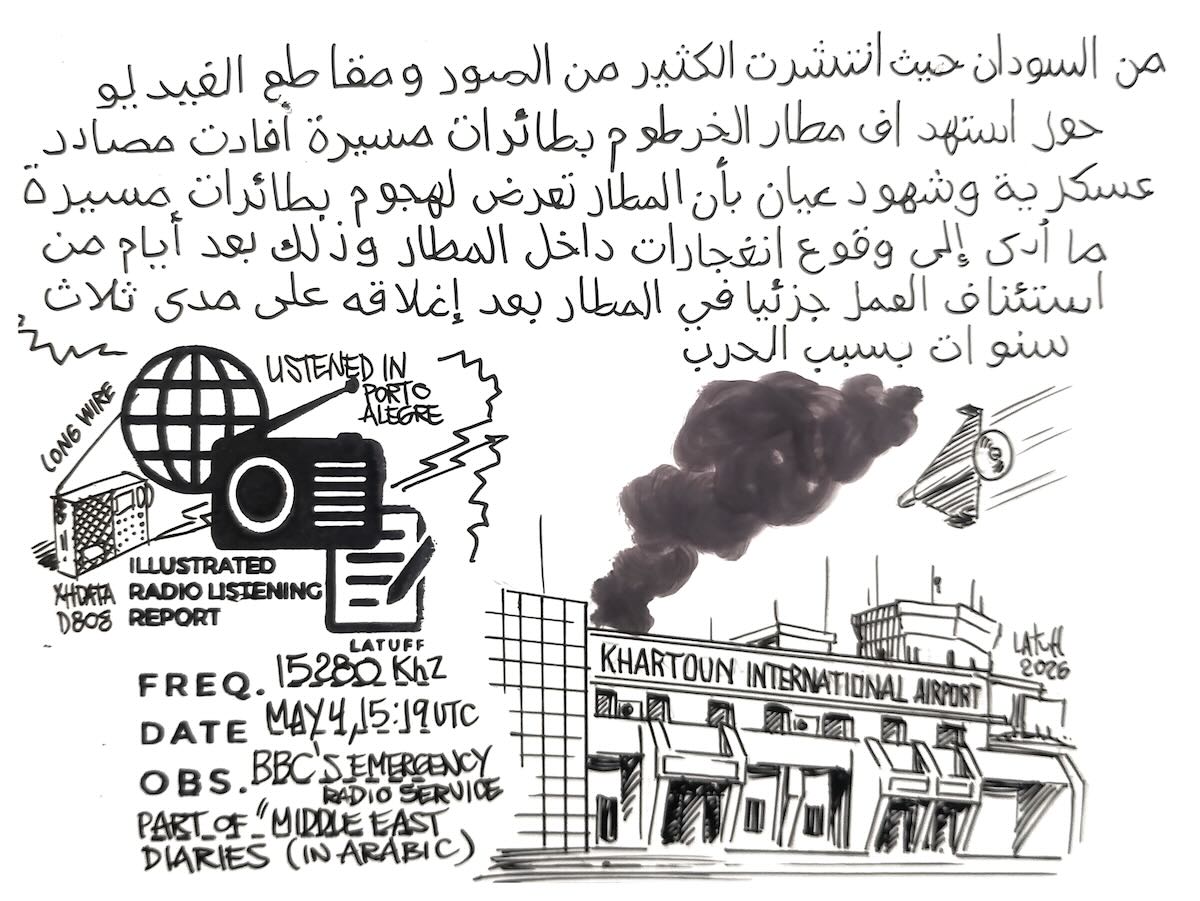
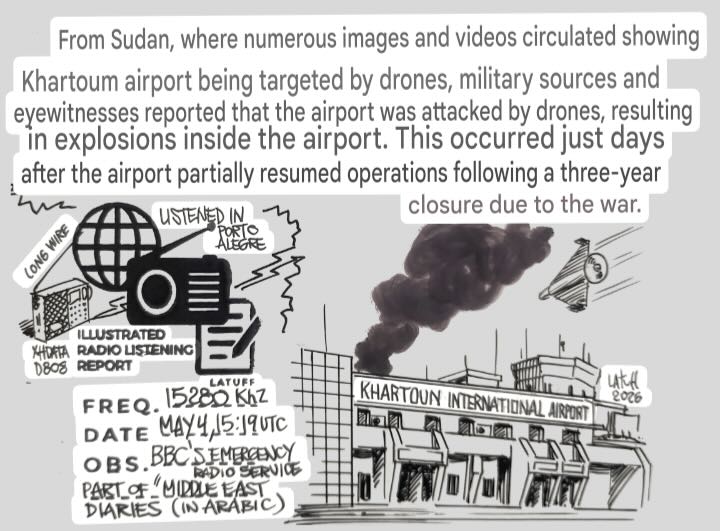 Carlos notes:
BBC Emergency Radio Service
 Many thanks to SWLing Post contributor, Dennis Dura, who shares this bit of radio nostalgia made real. Nearly 50 years after the iconic TV series WKRP in Cincinnati first aired, the call letters have officially returned—this time on a real FM station in Cincinnati. The new WKRP(FM) launched on 97.7 MHz, even featuring a familiar voice from the original show to mark its debut.
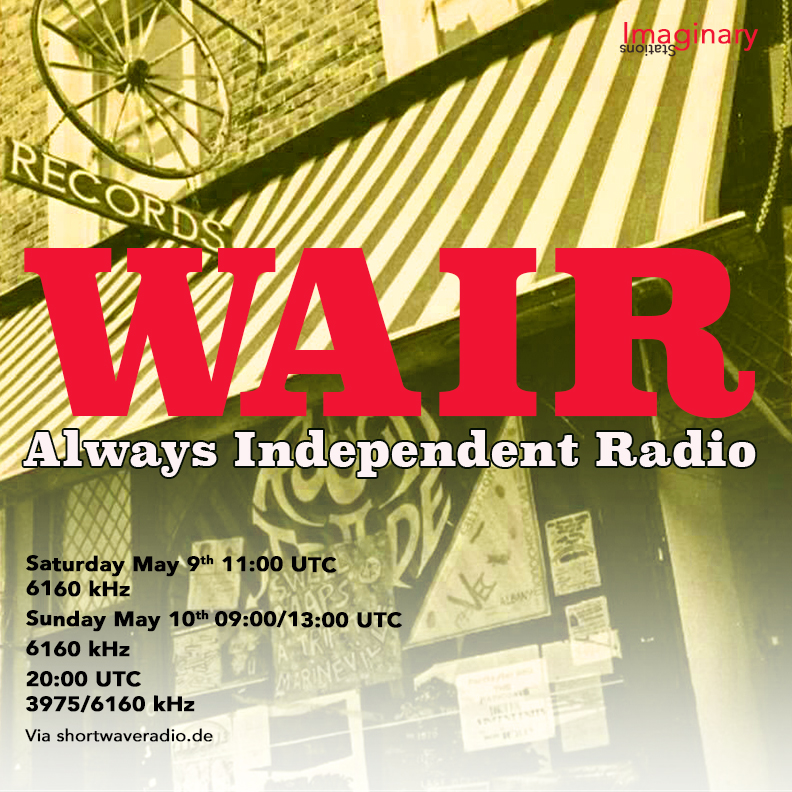
Hi to all SWLing Post community. Here’s news of what Imaginary Stations will be bringing to the ionosphere this week.
Thanks to Shortwave Gold, we have a transmission called WAIR – Always Independent Radio Featuring the sounds of indie, alternative and post -punk goodness. The show is on Saturday 9th May at 1100 hrs UTC on 6160 kHz and then again on Sunday 10th May at 0900/1300 UTC on 6160 kHz and 2000 hrs on 3975 kHz/6160 kHz. Tune in to WAIR for 60 minutes of independent sounds!

Then on Wednesday, May 13th (0200 UTC on 9395 kHz) via WRMI, we have a transmission called WORD. Explore through the shortwaves, a musical theme with songs about words and letters, books, libraries, acronyms, verbs, adverbs and if we can book them in the studio, the shortwave debut of the band Kevin Commas and The Semantics (Wichita’s premier word rock band). Word is the word!
For more information on all our shows, please write to us at [email protected] and check out our old shows at our Mixcloud page here.
FastRadioBurst23
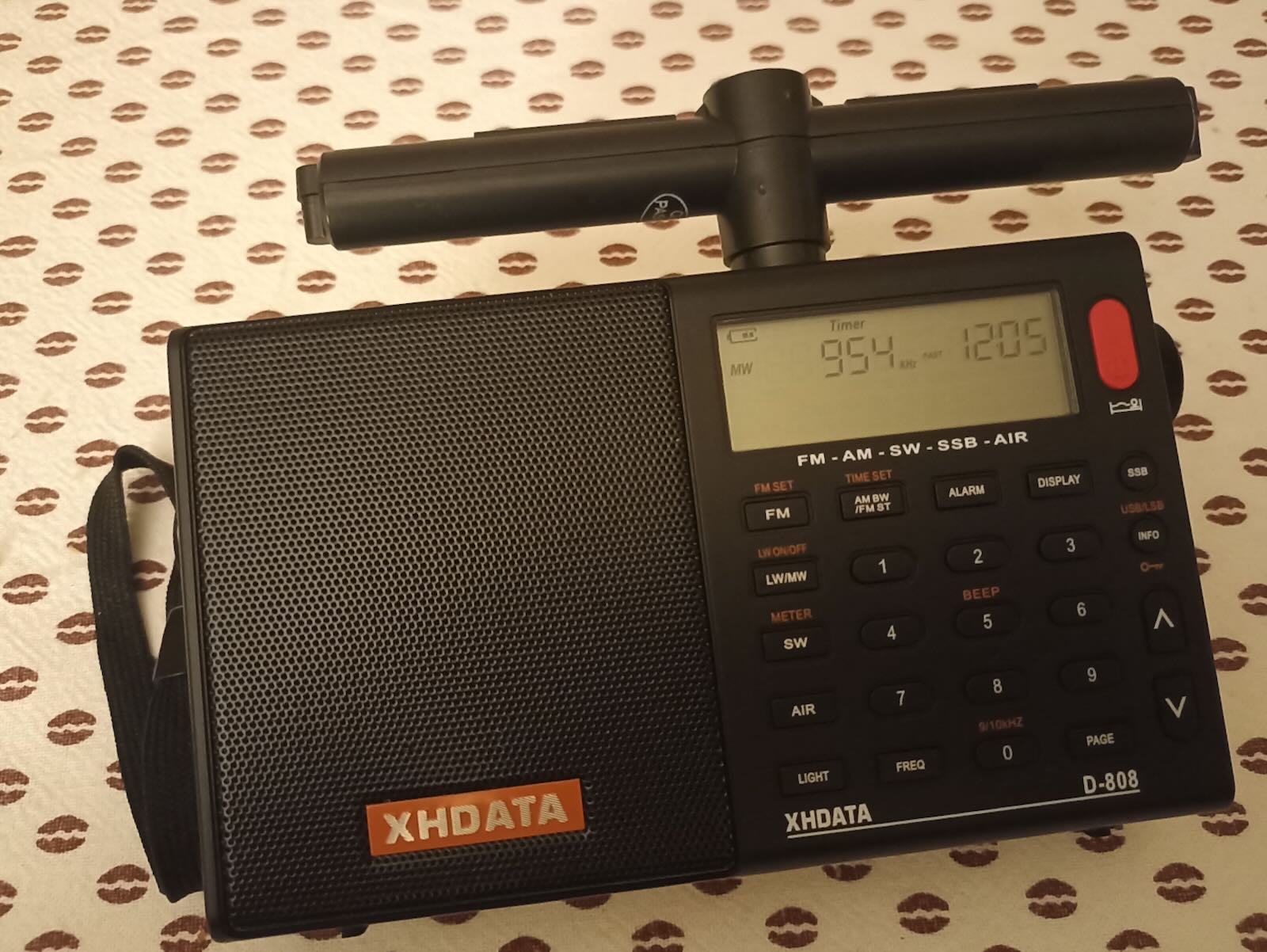 Many thanks to SWLing Post contributor Alfredo (EA4IMN), who writes:
Hi Thomas,
Greetings from EA4IMN. I recently purchased an XHDATA D-808, and got puzzled by the absence of an external jack for the LW/MW antenna. Inspired by previous work, I set to add this feature to my unit.
My journey was overall straightforward, but not without some hacking required, so I’m sharing my experience here, in case it helps others. (I have briefly documented this on another forum, but here you are the abridged version of the story.)
First, let’s start with a pic of the pristine PCB:
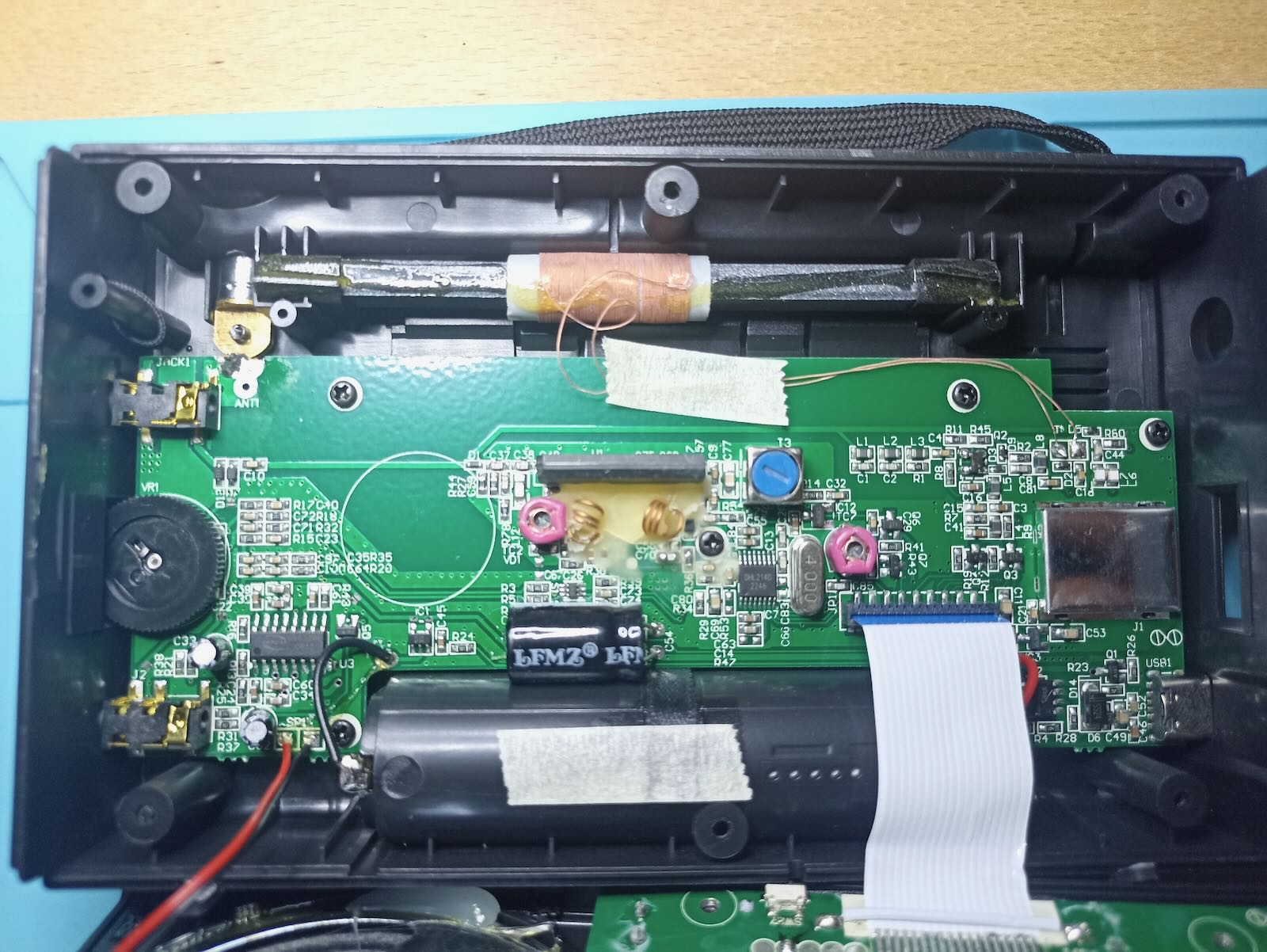
It’s a recent unit, and I observe it has minor differences even from some USB-C variants I could find on YouTube. I assume XHDATA keeps tweaking the inner design, and that’s not documented.
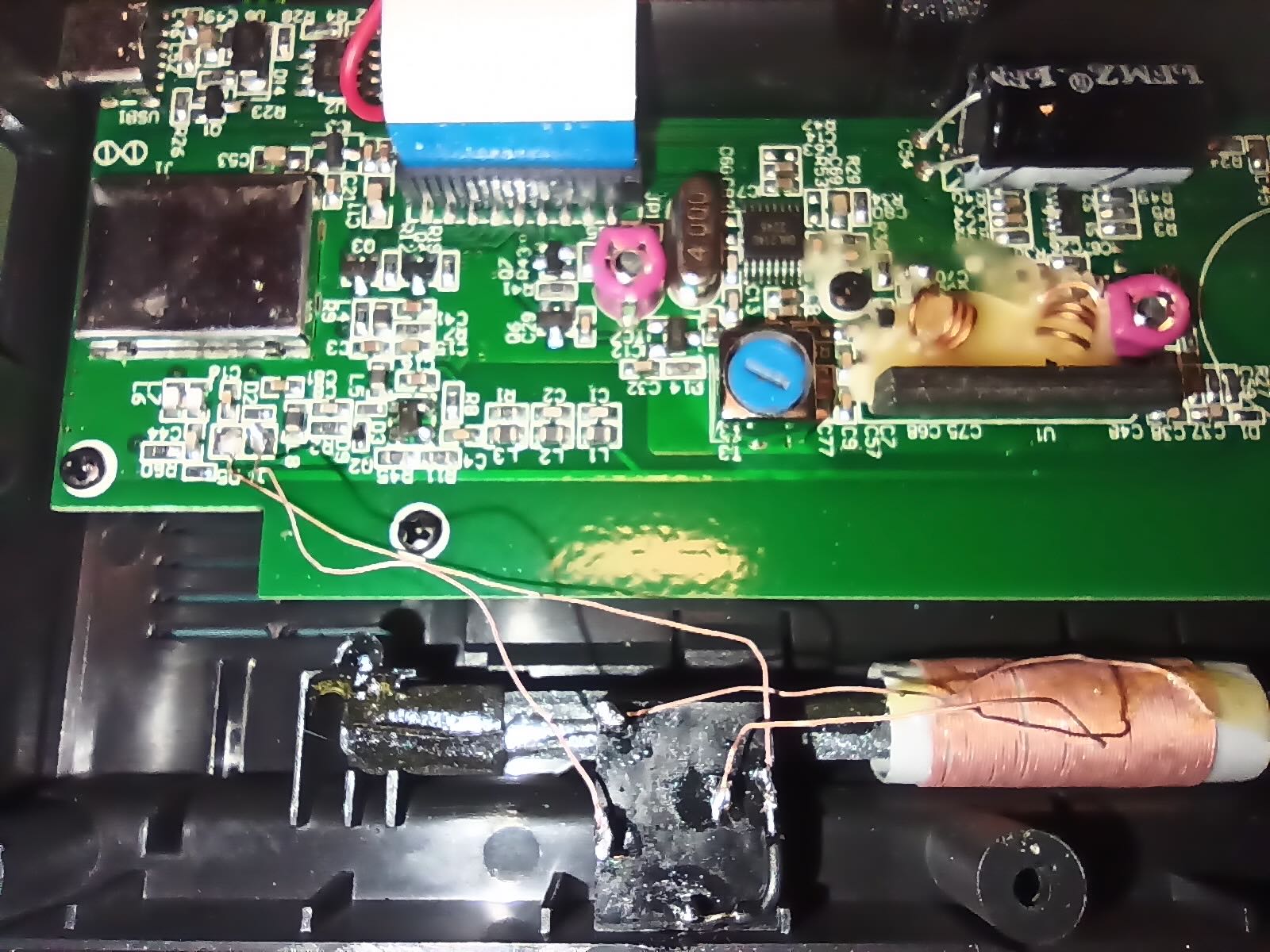
In the “external MW Jack” picture [above], you can see how I added a 5-pin female jack. Interestingly, I could entirely reuse the litz wires that came with the internal ferrite antenna. It works as follows:
Since I wanted to be able to also connect a long-wire, it was crucial to correctly identify the “hot” pad on the PCB, so that it would be wired to the tip of the jack (and not to the sleeve). It turns out that, on my unit, the squared pad was connected to GND.
I recommend anyone wishing to do this mod to verify the pad layout on their unit, since the PCBs keep changing. This is how to do it:
Also, I recommend soldering the sleeve and ring pins (you can see a black wire in my picture): some ferrite antennas come with a stereo jack where the ring is floating, so the added wire makes sure all jacks are treated as mono, by shorting ring and sleeve.
Now… closing the unit was an issue: the 5-pin jack I just added clashed with the display! I had to get creative in a few ways:
In the end, it all looked good to me, as depicted in the “Final result” photo:
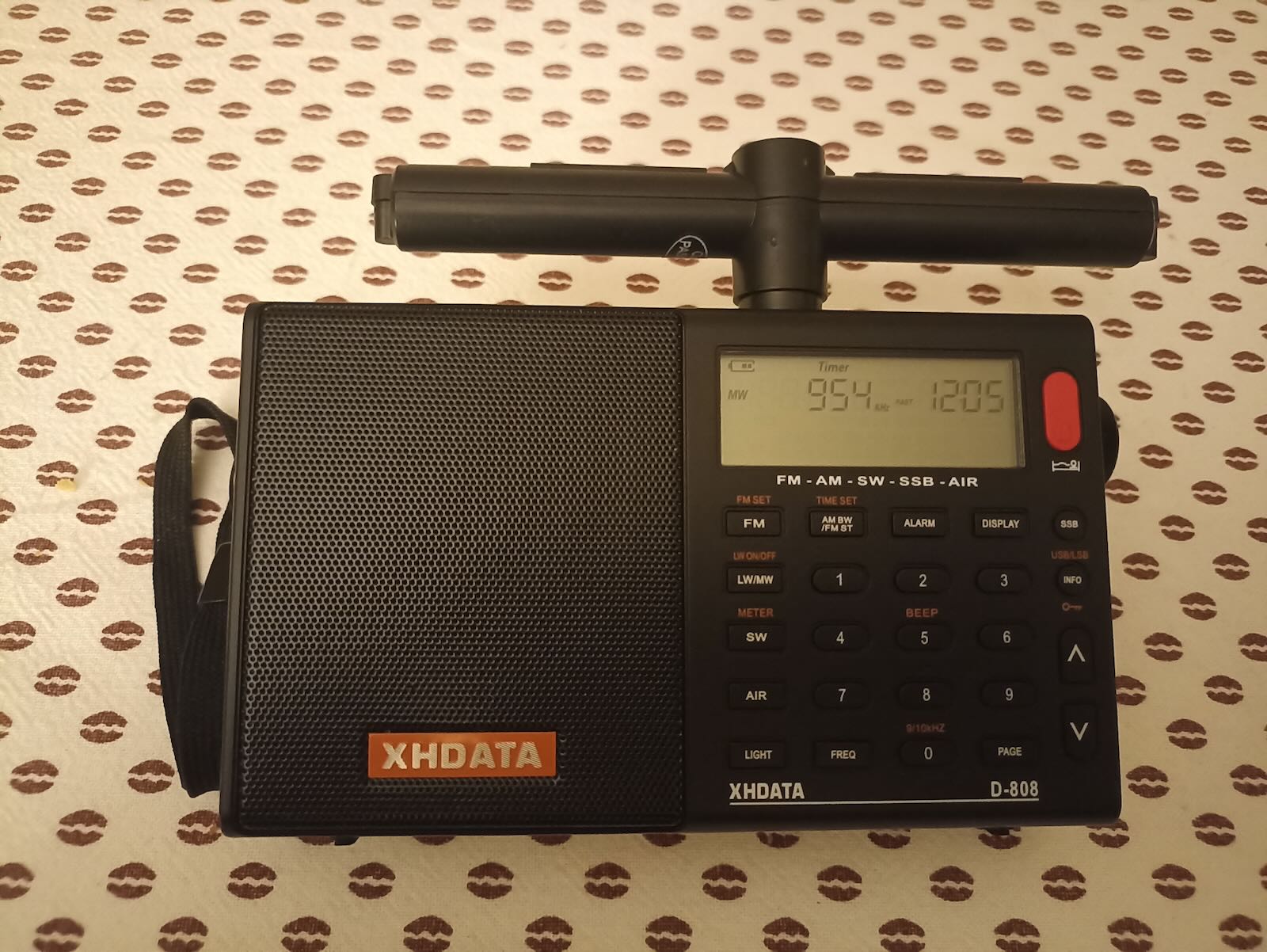
Admittedly, the external ferrite antenna in the picture performs roughly the same as the internal one. But at this point, it’s just a matter of plugging another jack and keep experimenting!
73
 I wasn’t able to attend the Winter SWL Fest this past weekend due to my travel schedule. As in years past, my good friend David Goren invited me to record a “Meet the Archivist” segment for his annual Shortwave Shindig live event.
Unfortunately, there were some technical difficulties this year, and the segment wasn’t able to be played during the live event. However, David recently shared a SoundCloud link with me, and I’m happy to pass it along here on the SWLing Post.
It’s always a lot of fun to be part of this—many thanks to David for including me again!
Feel free to listen to the embedded recording below:
Many thanks to SWLing Post contributor and noted political cartoonist, Carlos Latuff, who shares the following illustrated radio listening report of a recent BBC broadcast.
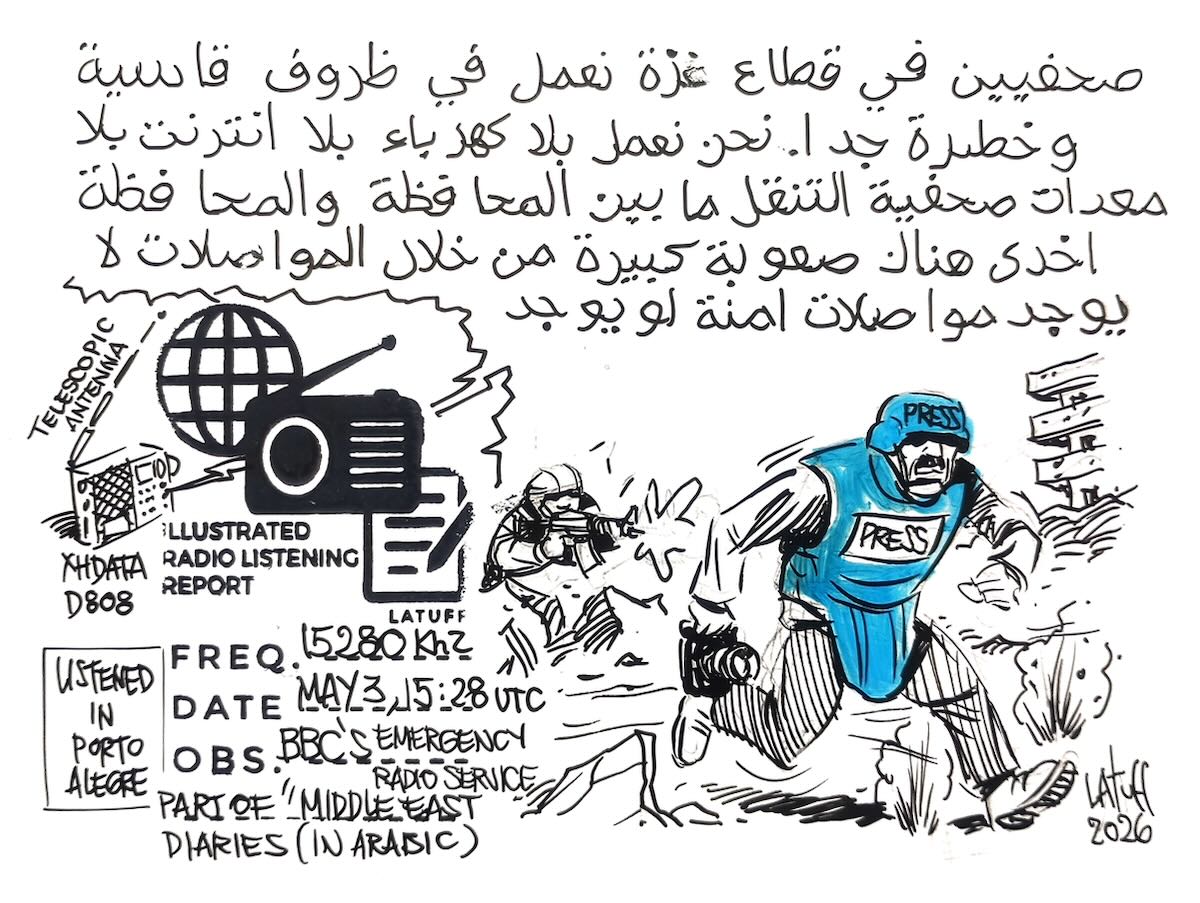
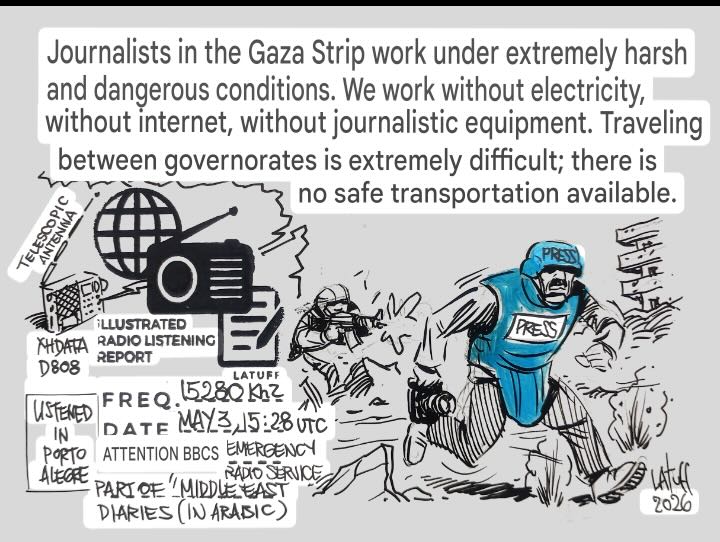
Carlos notes:
BBC Emergency Radio Service: