Author Archives: Thomas

The Giant Antennas of Shanghai Coast Radio Station (XSG)

Many thanks to SWLing Post contributor, Michael (BD4AAQ) who shares the following guest post:

Shanghai Coast Radio Station (XSG):

Those Giant Antennas!

The 17th of May is the World Telecommunication Day. It is also the open day of Shanghai Coast Radio Station. On this day, a group of amateur radio operators were invited to visit the transmission facility, a huge antenna farm, of the radio station, located on Chongming Island of Shanghai, the third largest island in China.

Google Satellite Photo

The transmission site of Shanghai Coast Radio Station is as shown below in the map of Chongming Island. Other sites of the station include a central control/receive station in Zhangjiang, a receive station on Hengsha Island and some VHF base stations in a number of other locations. All these locations in Shanghai, linked via cable and microwave connection, form Shanghai Coast Radio Station, also known by its callsign as XSG.

(Google map of transmitter location for Shanghai Coast Radio Station. Note the antenna farm on the left.)

Presentation by Station Officials

Fifteen or so local hams were cordially invited to have a tour of the station. The radio enthusiasts were greeted by station representatives, including Mr Wan, Mr Wang, Mr Zhou and Mr Niu (BH4BFS), who also gave them an overview of the coast radio station’s history and development. 
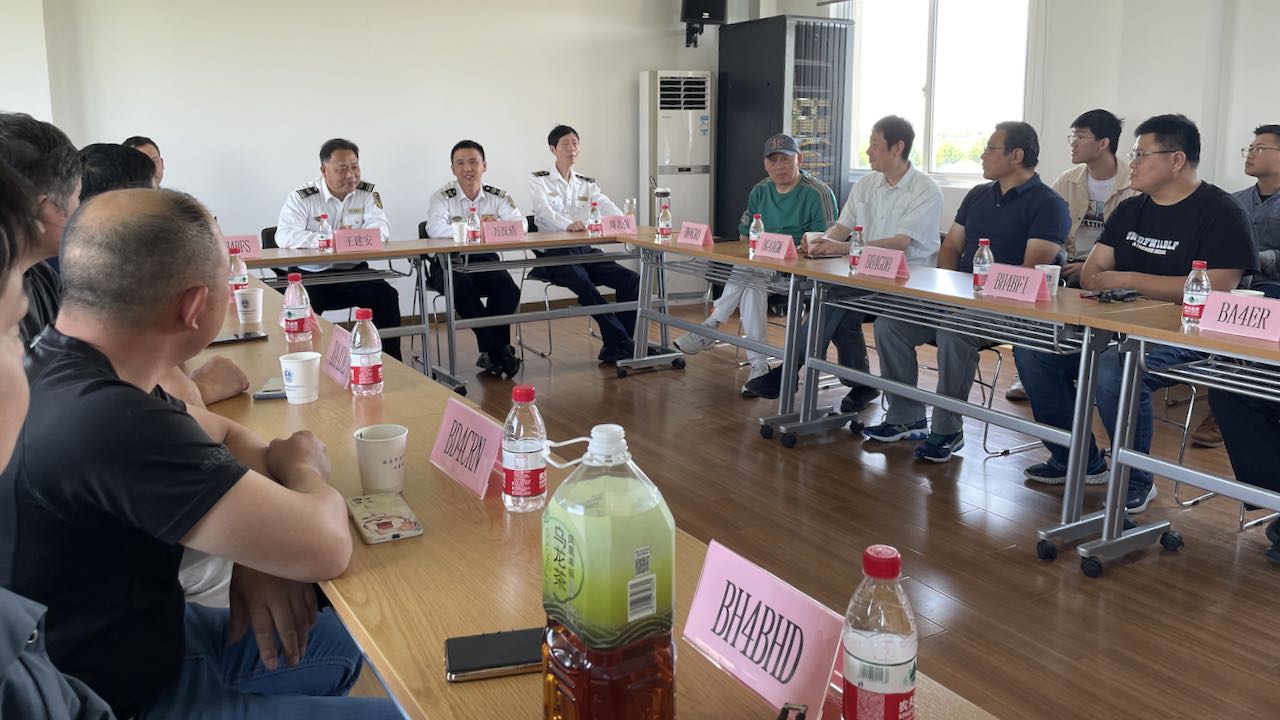
Antenna Farm

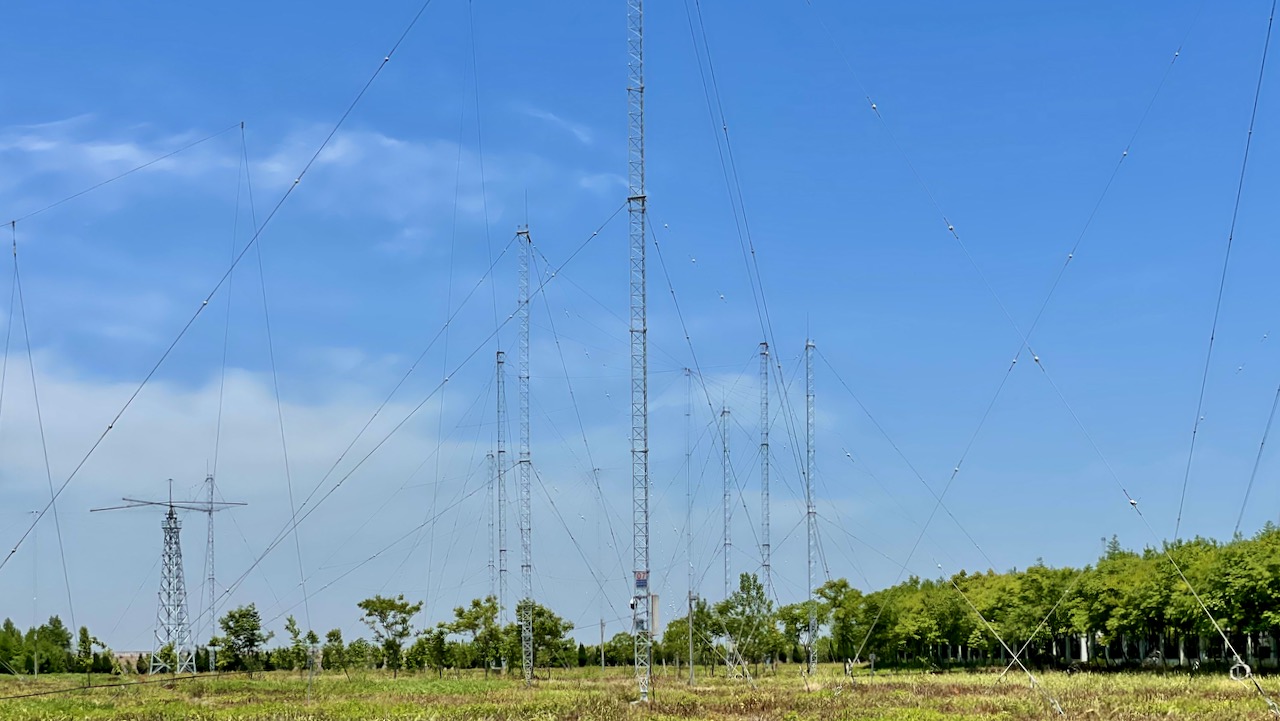
Mr Wang then showed the visitors around the antenna farm. Many of us, myself included, saw and were deeply impressed with these huge antennas for the first time! Indeed, many professional radio facilities and operators of similar coast radio stations work quietly around the globe and around the clock to provide for distress, navigational, business and personal communications needs of ships!

[Click on images to enlarge.]

The antennas cover a wide range of frequencies, from MF, HF, to VHF and UHF. Many of them are, however, shortwave (HF) antennas.

Transmitter Room
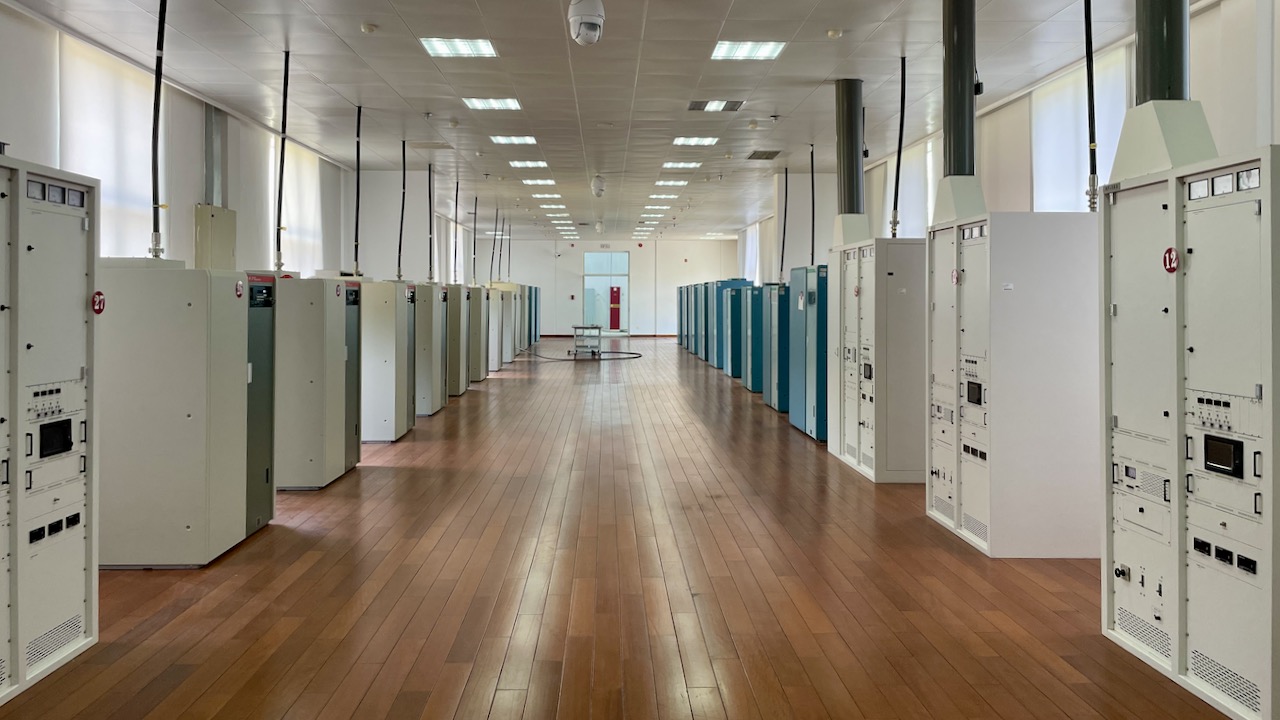
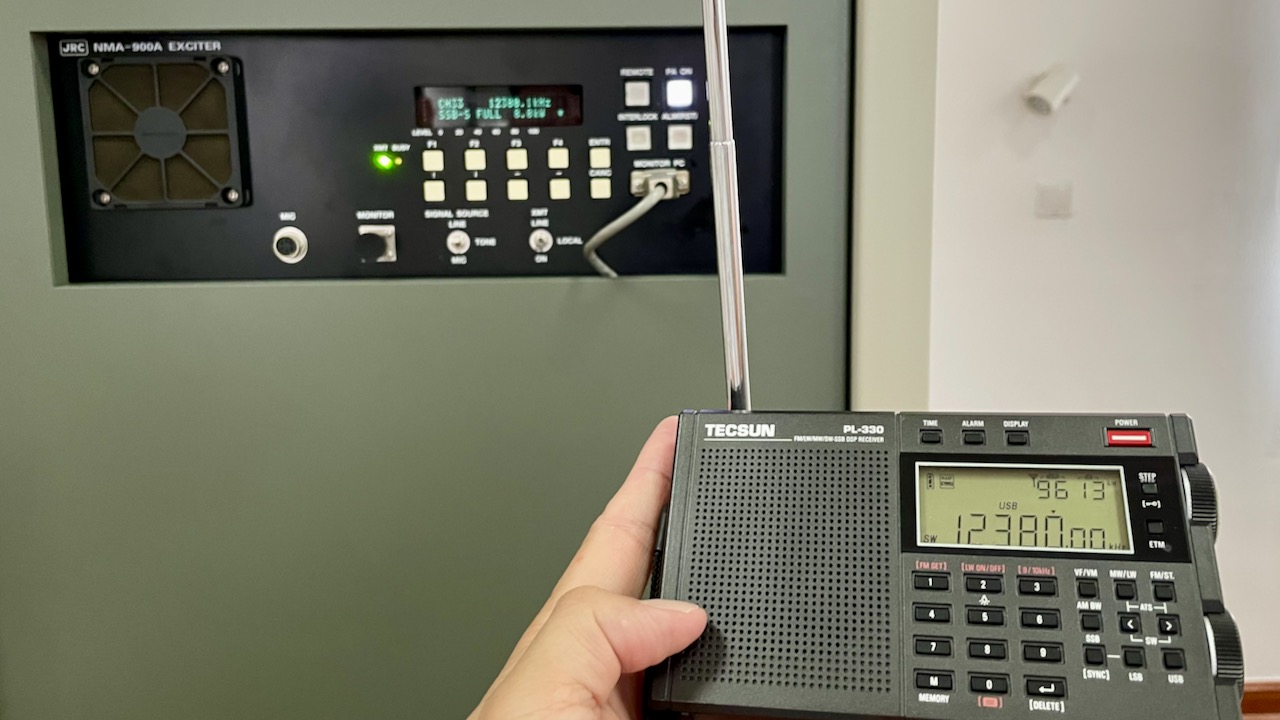
(I placed a Tecsun PL-330 radio near the transmitter at 12380.1 kHz (weather fax). The signal strength, in dbu, is 96. Given the margin of error of the receiver’s display, that’s probably as high as it could go.)

Shanghai Coast Radio Station (XSG) operates on a wide range of frequencies. Its HF frequencies include 4207.5, 4209.5, 4215.5, 4369, 6312, 6326, 6501, 8414.5, 8425.5, 8770, 8806, 12577, 12637.5, 13176, 13188, 16804.5, 16898.5 and 17407 kHz. Of particular note is that they have kept a CW frequency of 8665 kHz for general broadcast of information on a 24 hour basis.

The station’s VHF phone service covers 25 nautical miles of the coast. Its MF NAVTEX covers 250 nautical miles of the coast. And its HF phone and weather fax and HF NAVTEX extend to 1,000 nautical miles.

History and Current Status

Founded in 1905, Shanghai Coast Radio Station has been around 119 years. The XSG callsign has since remained in use.

China has in place DSC watch and NAVTEX broadcast in coast stations (including XSG) in accordance with GMDSS requirements. Among services provided by XSG are Radio Telephony (RT), Narrow Band Direct Printing (NBDP), “Voice of the East China Sea Coast” (voice broadcast on 161.600 MHz and 8806 kHz) and marine radio weather fax. The station is without a doubt one of the largest coast radio stations in the Asia Pacific region and plays an essential role in the region’s marine safety and communications.

QSL Cards

Shanghai Coast Radio Station issues QSL cards in Chinese and English, traditionally in paper form and nowadays electronically.
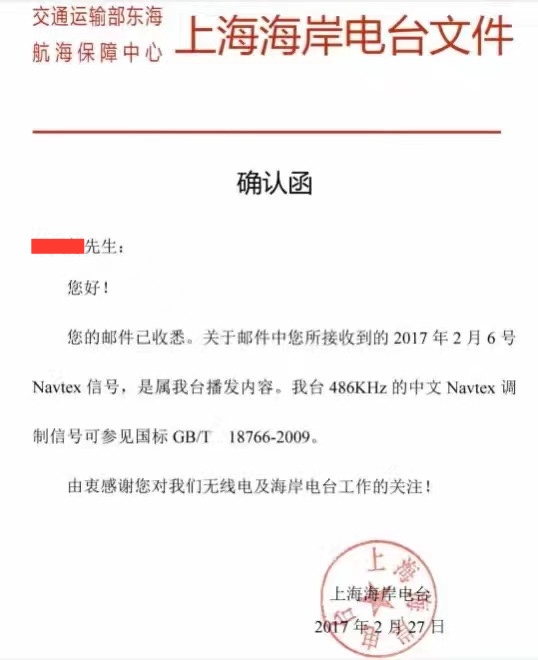
(This is an electronic QSL card issued to a Shanghai listener, who received their signal over the radio. Examples of QSL cards in English can be found online.)

Show Room

[Click on images to enlarge.]

Ham Station

Mr Niu of Shanghai Coast Radio Station, one of the tour’s organisers, is a ham himself with callsign BH4BFS. According to him, there are intentions to start a ham radio station within the establishment, possibly incorporating the letters XSG. However, there is much work to be done to make it happen. An amateur radio station with overlapping callsigns with a professional one would be really charming.
Radio World: WRTH “lives on” and new digital option

Many thanks to SWLing Post contributor, David Iurescia, who shares the following article from Radio World: 

“World Radio Television Handbook” Lives On

With its comprehensive listing of radio/television stations worldwide, including their frequencies and general program content, the “World Radio Television Handbook” has been an essential companion for broadcasting listeners and radio professionals.

So when publisher Nicholas Hardyman announced that the 2022 edition of the WRTH would be the last, many reacted in horror — but not the folks at Germany’s Radio Data Center.

[…]Because books are hard to update, Radio Data Center also offers the WRTH WebApp. It is an online version of the WRTH’s content that is easy for Radio Data Center to update on a regular basis.

“An electronic product like the WebApp doesn’t have the same problems as a book that has to be printed and shipped, because it’s available online anywhere,” said Gunter.

Click here to read the full article at Radio World.

Email prompts Bill to pull his regenerative receiver off the shelf!

Many thanks to SWLing Post contributor, Bill Meara who shares the following article from the excellent SolderSmoke Podcast blog:


2014 “Off the Shelf” Regen Comes Off the Shelf (Two Videos)

Walter KA4KXX spotted an error in the schematic of my 2014 “Off the Shelf” regen receiver: The source resistor on the MPF-102 should be 2200 ohms, not 2.7 ohms. See:

https://soldersmoke.blogspot.com/2014/09/schematic-for-off-shelf-regen.html

Walter’s e-mail caused me to take this old receiver off the shelf. In this video you can listen to it in action on the shortwave broadcast bands. In a second video I put it on the 40 meter ham band and listen to some SSB.

Read this post and more on the SolderSmoke Daily News!

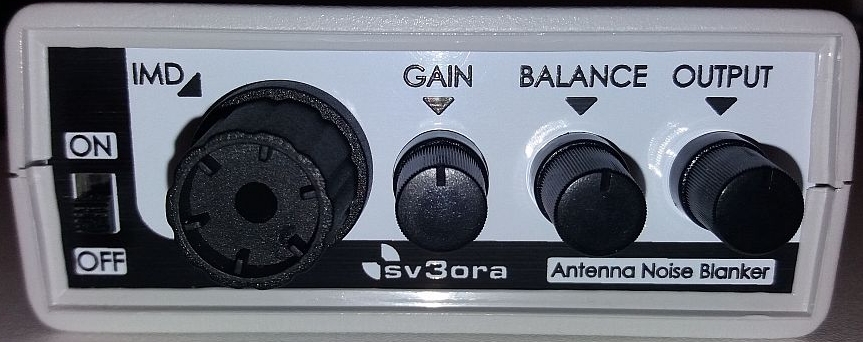
Kostas presents the NR-1 Noise Blanker!

Many thanks to SWLing Post contributor, Kostas (SV3ORA), for sharing the following post which originally appeared on his website:

Update (19 Dec 2024): ELISYS  now sells Kostas’ NR-1 noise blanker and ships worldwide. Check it out by clicking here.


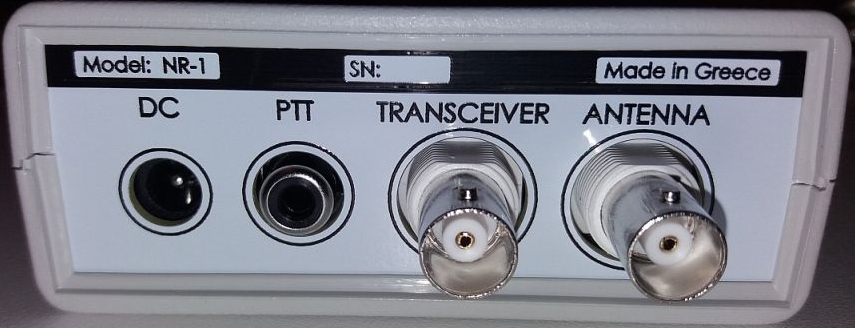
The NR-1, a revolutionary noise blanker that works directly on the antenna!

I designed my own noise blanker because:

    • I was tired of that HF noise that could not be beaten otherwise.
    • I wanted to remove it before it gets into my transceiver.
    • I could not install a separate “noise” antenna/coaxial for diversity.
    • I wanted to remove noise interference from any direction.

NR-1 is a revolutionary Noise Blanker which is the result of two-years of development and extensive testing by Kostas sv3ora.

NR-1 works directly at the antenna. This has significant advantages over the classic noise blankers which work at the intermediate stages of the receivers. It does not require a second “noise” antenna for its operation.

Furthermore, it is not based on cutting-off of amplifiers, unlike common noise blankers
do.

Because of these, the NR-1 is superior, compared tocommon internal Noise blankers of radios:

    • NR-1 removes noise before it even reaches the receiver. Thus, the front-end RF
      stages of the receiver are unaffected by noise, unlike a common noise blanker
      which removes the noise after it has first passed through the internal circuits
      of the receiver.
    • NR-1 removes high-level, high-repetition-rate noises that common noise blankers
      usually cannot cope with.
    • NR-1 is not affected by strong near-by signals. Instead, common noise blankers
      perform poorly when there are strong near-by signals and they distort the signal of the station we want to listen.
    • NR-1 can be used by many radios. Because it is an external device, it can be
      connected to various radios/receivers without the need to modify them.
    • NR-1 has a built-in 8-band preselector and helps eliminate intermodulation (birdies)
      caused by strong local medium and shortwave stations, on RF direct sampling
      radios (eg IC-7300). The preselector is relatively wideband and does not affect
      the sensitivity or the waterfall spectrum in the amateur radio bands.
    • NR-1 has built-in variable gain preamplifier and variable attenuator. Preamplification is
      particularly useful in the high frequency bands, where some radios have limited
      sensitivity. Variable attenuation helps to reduce band noise for more
      comfortable listening to mid/high strength stations.

Comparison of the NR-1 with other noise removal systems (eg. QRM eliminator, X-phase etc):

    • NR-1 does not require a second (noise) antenna/coaxial-line to operate. Unlike QRM
      eliminators, NR-1 does not require an additional “noise” antenna and
      therefore no second coaxial cable out of the shack. The main transmit and
      receive antenna you are already using is sufficient.
    • NR-1 is easy to set up. In contrast, QRM eliminators require systematic testing of
      various noise antennas in different locations to perform satisfactorily.
    • NR-1 removes noise from every direction simultaneously. In contrast, QRM
      eliminators, depending on the noise antenna setup and their configuration,
      remove noise from one direction only each time. If the noise originates or
      “travels” through cables and reaches the antenna from different
      directions, QRM eliminators do not perform well.
    • NR-1 removes more than one noise source simultaneously because its principle of
      operation is not related to the phase of the noise.
    • NR-1 does not require constant adjustment. Once set for one band, it usually does not need to be reset. In contrast, QRM eliminators require resetting every few tens of KHz or so.

Kostas has documented all the details of the NR-1 for his own future reference in his page.

He has also created some YOUTUBE videos as demonstrations of the operation and the effectiveness of this antenna noise blanker.

Photos from Hamvention 2024

I once again attended Four Days in May and the Dayton Hamvention this year–it was an amazing event and I believe attendance was at a record level (over 35,000 attendees!). 

I stayed quite busy speaking with readers of the SWLing Post and QRPer.com. I really appreciate all of the kind words and support–it was great meeting so many of you. I was so busy this year, I didn’t have quite the opportunity to take as many photos as I have in the past, but I still managed to snap quite a few.

The following photos were all taken at the 2024 Hamvention and the Four Days in May QRPARCI Conference.

Photo Gallery

Click to view the entire photo album–> Continue reading

Radio Piko: A New Shortwave Radio Station in Finland Broadcasting with 10 Legal Watts of Power!

Many thanks to SWLing Post contributor, Kris Partidge, who notes that there’s a new shortwave radio station in: Radio Piko! The station is run by a hobbyist and transmits music, old time radio shows, and interviews. The station uses fixed frequencies and announces broadcasts on the website a day before.

Radio Piko even has a few test transmissions this weekend, per their website:

May 25 & 26, 2024 TEST TRANSMISSIONS:
1500-1600 UTC 9770 (Norway, Denmark)
1800-1900 UTC 5980 (Finland)
1900-2000 UTC 3990 (Finland, Sweden, Estonia)

Also, “Random tests on 3990, 5980 or 9770 [kHz]at random times.”

For more info about Radio Piko, including the summer schedule, check out their website: https://radiopiko.fi/ I recommend reading the FAQs.

At 10 watts, this will be seriously weak DX for those living outside of Finland. I, for one, love the format of pre-1950s music and shows. I may have to listen via a nearby KiwiSDR!

Note that this station only plans to be on the air until August 11, 2024.

Still time to earn an Indy 500 Special Event Certificate!

Indy 500 Special Event Station: You Can Still Earn a Certificate!

by Brian D. Smith, W9IND

Not every Indianapolis 500 goes the full distance. Seven of the 107 races run since 1911 have been shortened by rain, notably the 1976 event that covered only 255 miles.
In the same spirit, the Indianapolis Motor Speedway Amateur Radio Club has decided to amend its usual policy of awarding a certificate only to those who work or tune in W9IMS during all three of the year’s special events. For 2024 only, contacts with two separate W9IMS special events – and that includes reception reports – will be sufficient to qualify for the Checkered Flag Award.

Extenuating circumstances prompted the decision for the revision. The first special event of the year, commemorating the IndyCar Grand Prix, took place May 5-11, but that was also the week of the strongest geomagnetic storm in two decades. The hyperactive sun zapped HF amateur radio frequencies, often making it difficult to even hear, let alone work W9IMS.

So if you missed W9IMS during the first race of 2024, for whatever reason, you now have a second chance at a certificate if you act fast. Catch W9IMS between now and the end of Race Day – 11:59 p.m. Sunday, May 26 (Indy time) or 0359 UTC Monday, May 27 – then repeat the feat during the Brickyard 200 NASCAR race during the week of July 15-21, and you’ll meet the new award criteria.

Of course, if you managed to bag W9IMS two weeks ago, you can clinch the Checkered Flag Award in the coming days. But you’ll still probably want to chase a Brickyard 200 contact in July, since W9IMS is offering unique and collectible QSL cards for each special event of 2024.

Tips on finding W9IMS:
Check DX Summit (www.dxsummit.fi) for spots listing the current frequency or frequencies of W9IMS. You can customize your search by typing “W9IMS” in the box at upper right.

Go to the W9IMS web page (www.w9ims.org) and look for the heading, “2024 Operating Schedule.” Click on the Indianapolis 500 link, which opens into a weeklong schedule of individual operators and their reserved time slots. Although operators frequently get on the air at unscheduled times, your odds of snaring the station improve significantly during hours with a listed op.

Prime time for weeknight operations is 6 to 10 p.m. in Indy (2200-0200 UTC) and sometimes at least 2 hours longer. That’s also your most likely shot at finding W9IMS activate on two bands – typically 20 and 40 meters. Preferred frequencies are 14.245 and 7.245 MHz, often varying by several kHz due to QRM. Other bands (especially 80 and 15 meters) are possible but rare.
Remember that the published schedule can be shortened by adverse circumstances, such as local thunderstorms, a lack of calling stations and, as we discovered earlier this month, solar flares! Don’t wait till the final hour to look for W9IMS.

But if you still haven’t worked W9IMS by Sunday night, you may find it more advantageous for stations like yours. Toward the end of the special event, W9IMS ops often call for “only stations that haven’t worked us this week” or switch to contest-style operations, exchanging only signal reports to put more contacts in the log.

Keep in mind that both hams and SWLs are eligible for QSL cards and the certificate. So if your ham station isn’t able to work the station by Sunday night, you can create an SWL report by copying down details of other W9IMS contacts – such as date, frequency, UTC, and a few of the stations you heard W9IMS working. SWL reports count as credits too, although the certificate may not feature your callsign.

The current weather forecast calls for thunderstorms on Sunday (Race Day). If the race is postponed, W9IMS will likely extend its operation through the new Race Day.