Shortwave listening and everything radio including reviews, broadcasting, ham radio, field operation, DXing, maker kits, travel, emergency gear, events, and more
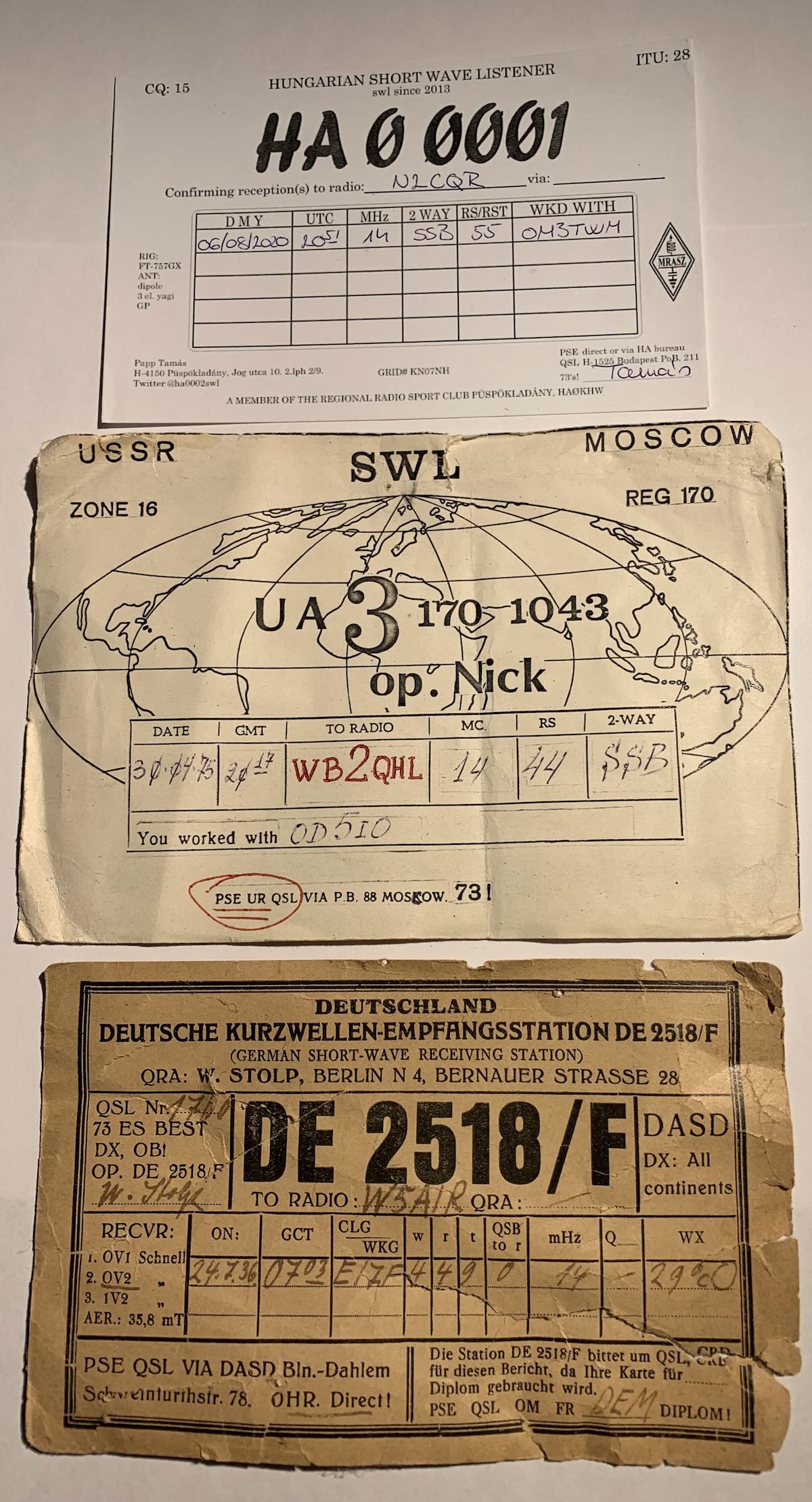
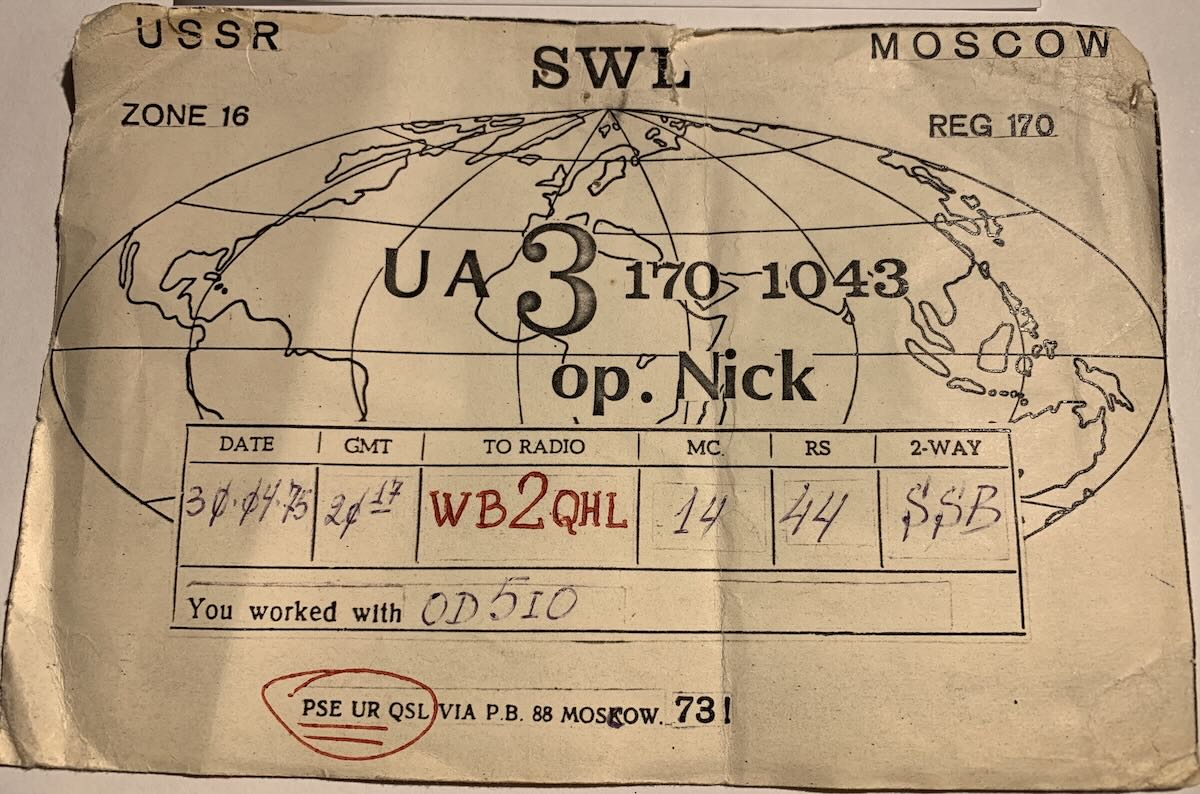
The middle one is from my youth. in 1975 Nick in Moscow USSR heard my contact with OD5IO. I didn’t remember the contact with Lebanon. It turns out that the operator was K4NYY (who is now a silent key. See https://www.qrz.com/db/K4NYY/?mlab=).
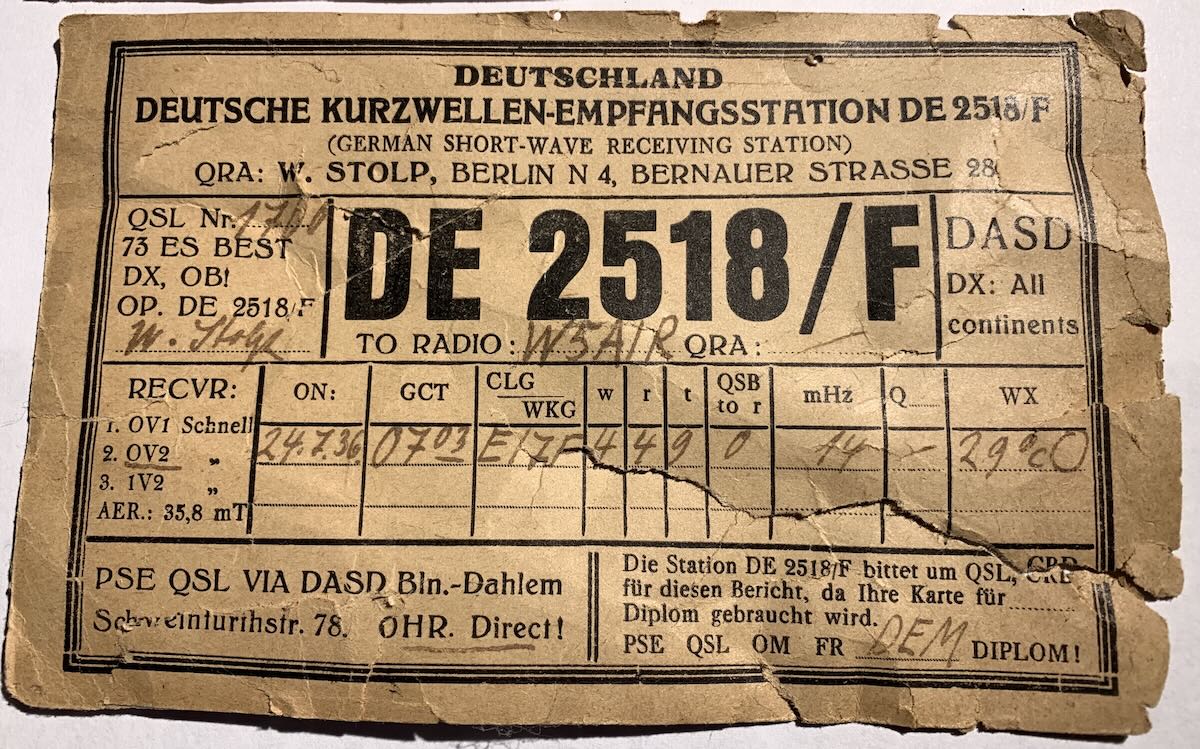
The bottom one pre-dates me by more than twenty years. It comes from Berlin in 1936. W5AIR was heard working EI7F. on 20 meter CW. Does anyone have any info on this SWL?
Many thanks to SWLing Post contributor, Alan Roe, who shares his B-23 (version 2.0) season guide to music on shortwave. Alan provides this amazing resource as a free PDF download:
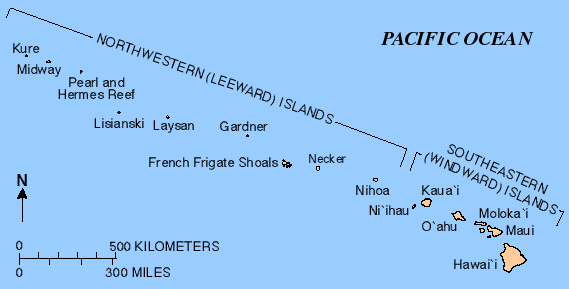
I wondered if there was any chance of confirming what exactly I had heard way back then, so I recently decided to try a little bit of detective work. My first contact was with Nick England, K4NYW, who runs a “hobby” website about U.S. Navy communications in the 1950’s and 1960’s. He was good enough to put me in contact with a Midway navy vet, Charles E. “Chuck” Kinzer, who writes:
“…it could be a “long count” test for one of the transmitters at the Naval Communication Unit transmitter site where I worked.
When I was there (1966-1968) they installed two log periodic fixed antennas, one pointing generally east (Washington DC) and the other generally west (toward Vietnam).
Each was connected to an AN/FRT-39 10 KW transmitter. And for the most part, always connected to the same two transmitters. (We had an antenna patch panel and could mix and match most any transmitter to most any antenna.) It is my understanding that they were used by the Security Group on Eastern Island (one of the two Midway Islands which are Sand and Eastern). They were set up for single sideband voice. (Most of the other AN/FRT-39s were set up for multiplexed TTY tones on both sidebands with suppressed carrier. 16 channels on each sideband.)
From time to time, they would tell us they wanted to do a “long count” and we would set the power level of one of the transmitters. As they did the count, we would set the power level of the peaks of the voice close to the maximum transmitter power. You could see the various meters flail up and down to near maximum along with the voice. This would be mainly the “PA Plate Current”, “PA Plate RF”, and PA Output” meters on the 10 KW final.
We couldn’t hear the voice, just see the meter activity. It would help if the person knew the frequency. If it was NOT an amateur radio frequency, it might have been one of those long count tests on one of those Navy transmitters. ….”over 50 years ago” sounds reasonable for that exercise. I assume the usage of that particular transmitter/antenna setup lasted to the end of the Vietnam war, at least.
Incidentally, when this was first set up, we had instructions to put X transmitter on Y antenna and so forth when they started testing the two new antennas. They would ask to do a “long count” test where we would set the power levels. Then shortly after they would start shouting into the microphone raising the power level too high and the transmitter would trip off. We asked them exactly what they were trying to do and, for secrecy I guess, they would not tell us. After a while, they figured out they were using the two antennas backwards. For example, they were trying to transmit east off the back side of the west facing antenna. These were VERY good antennas and very little power was wasted in the envelope going backwards.
I don’t know if this helps. Rather amazing that there is a recording existing like this. You never know what is going to pop out of the woodwork.”
Chuck later added that he might ask someone else for a little help. In the 1970’s, I used to own a guide to utility stations by Joerg Klingenfuss, that had lots of great frequency information, but sadly, I decided to part with it a number of years ago.
Please listen to the audio file of the transmission above from 1971, maybe some readers might weigh in with their thoughts on this? Please feel free to comment.
Best of luck and outstanding DX receptions to everyone.
Thanks for sharing, Istvan! A number of SWLs here in the SWLing Post community truly enjoyed participating in the past! Click here for all contest details.
Please support this website by adding us to your whitelist in your ad blocker. Ads are what helps us bring you premium content! Thank you!

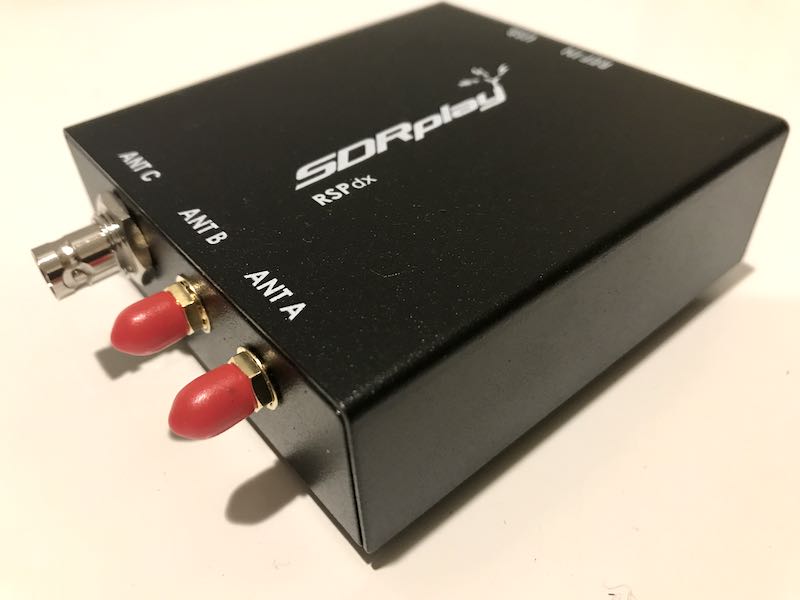 Hat tip to the RTL-SDR Blog for this tip: