Author Archives: Thomas

Guest Post: Switching a Remote Antenna, Low Noise Amplifier, and an Antenna and Audio Between Two Radios

Many thanks to SWLing Post contributor, Bill Hemphill, who shares the following guest post:


Remote Antenna Switching Remote Low Noise Amplifier Switching and Switching an Antenna and Audio Between Two Radios

by Bill Hemphill, WD9EQD

Remote Antenna Switching

I have two YouLoop Antennas.  I had been placing them at right angles to each other.  I would then put one of them on the AirSpy software defined radio.  But manually switching from one antenna to the other was a real pain.  If only there were a way to electrically switch between the two antennas.

It would be nice to place the antennas remotely from the radio (and computers) and then have some sort of remote switch that would select an antenna and then a single feed line to the radio.  It was research time.

The YouLoop and the Airspy both use SMA connectors.  An SMA switch would be required.  A little research and I came across the following small board that can switch between two SMA antennas:
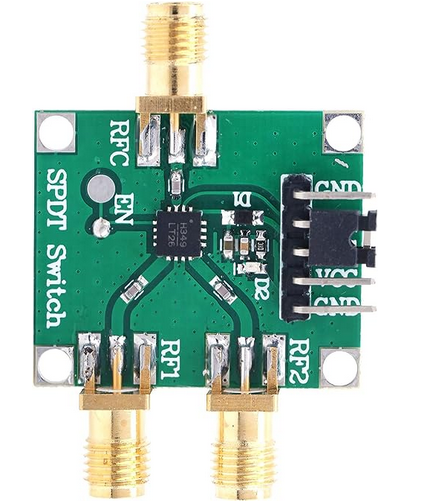
From Amazon Description:  50 Ohms RF Switch Module, 3-5V Remote Wireless RF Switch Single Pole Double Throw Board Input Output Impedance for DIY Electric Doors (HMC349)

This board is perfect for RECEIVE only projects.  Apply 5V to the board and then 5V to the VCC (control pin) to switch from RF1 to RF2.

Now that I had the SMA switch module, a way to actually do the switch remotely was required.  Maybe WI-Fi or Bluetooth module would do the trick.  I found a nice Wi-Fi module on Amazon that looked like it would do the trick:
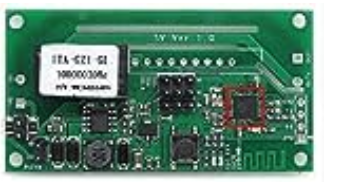
Amazon Description:  DIYmalls SV Safe Low Voltage WiFi Wireless Switch Module DC 5V-24V Phone APP Remote Control Smart Home for Amazon Alexa Google Assistant

But do I really want to use a phone app to switch antennas.  Further investigation discovered a really neat module that uses a Car Fob type control:
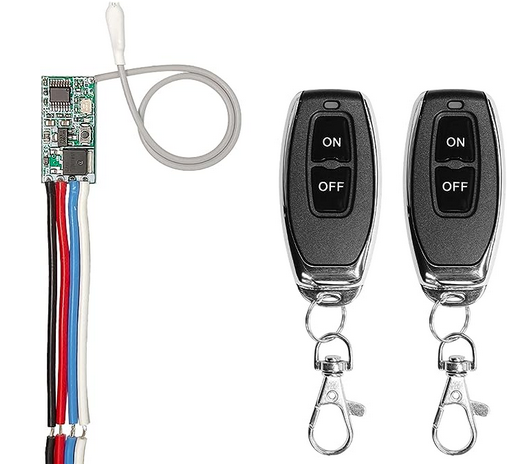
Amazon Description:  RODOT Mini Relay Wireless Switch, 433Mhz Remote Control Relay Switch, DC 6V 12V 24V 1CH Channel Relay Wireless Secure RF Transmitter and Receiver kit, Momentary Toggle Latched Mode

BIngo!!  I could just press a button and switch antennas.  But a problem quickly arose.  I hadn’t fully read the description of the RODOT switch:

The blue output wire is ALWAYS Vcc (input voltage)! The device only switches the ground.

So the RODOT switches the ground but the HMC349 uses positive voltage to switch.  OOPS.  Next step was to place a latching relay to take the on/off ground and convert it to on/off positive.  Again, another nice board was found:
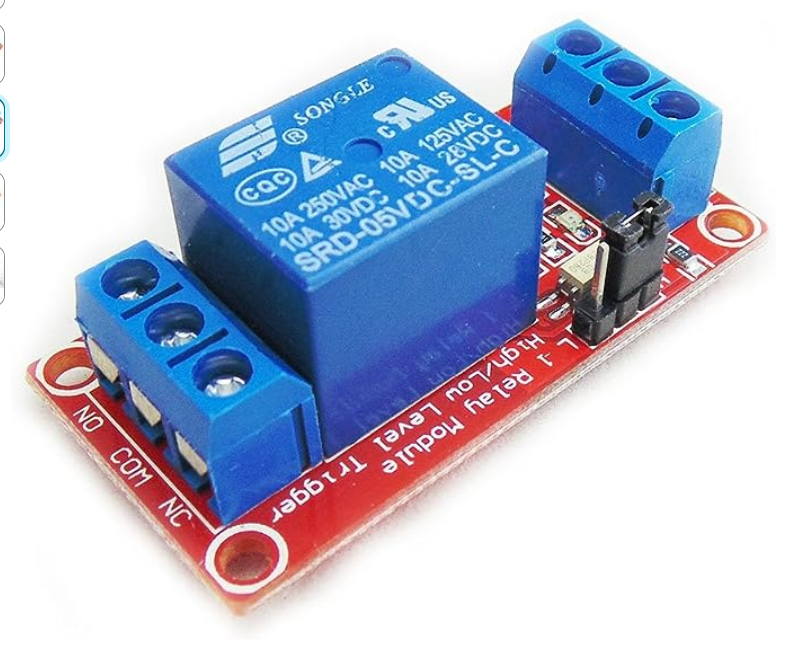
Amazon Description:  HiLetgo 2pcs 5V One Channel Relay Module Relay Switch with OPTO Isolation High Low Level Trigger

The nice thing about the Relay Module is that it can be latched either High or Low, so the RODOT switching ground can be used to latch the relay and then provide a positive voltage to the HMC349 antenna switch.

All modules are powered by 5V.  There are other modules available that use higher voltages.  But I wanted to be able to use a 5V power source for everything.

I learned a quick lesson on the first layout I did. I had directly connected the antenna cables to the HMC349 module.  A quick accidental side yank on one of the antenna cables and the SMA connector tore off the board.  A replacement board and some quick wiring and I had a workable antenna switch that with the press of the car fob button, either antenna could be selected.

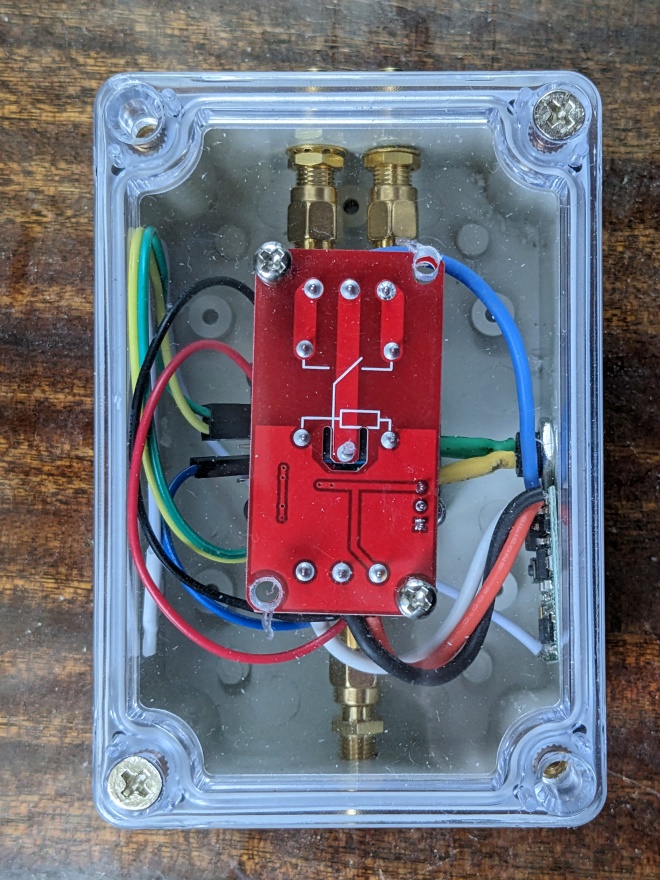
I found a nice small plastic box that allowed for the HMC349 module to be suspended between SMA bulkhead connectors.  By using bulkhead connectors, there is no strain placed on the HMC349 connectors. The relay module was attached to the box lid.  The modules are mounted using brass standoffs.  The finished box is about 3”x4”x 2” high.  Either battery or a 5V wall module can be used to power it.
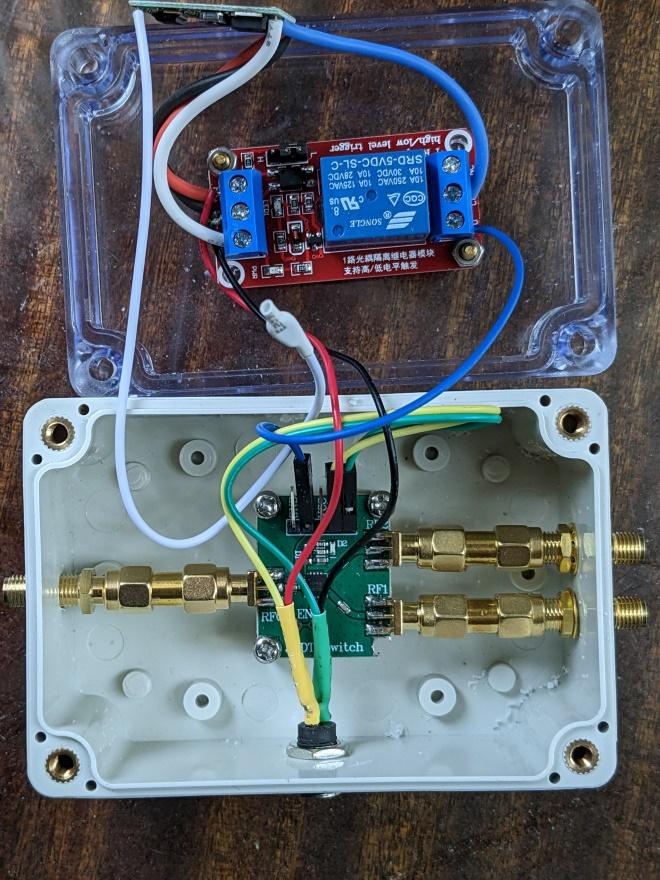
Overall, I’m quite pleased with the results.  I find that sometimes switching antennas (and their orientation) can make a big improvement in the signals.  Other times, there’s very little difference.

Remote Low Noise Amplifier along with Antenna Switching

Now that the antennas can be switched, it would be nice if a Low Noise Amplifier could be switched in and out of the circuit.  Something like the Lana HF Barebones LNA made by NooElec:
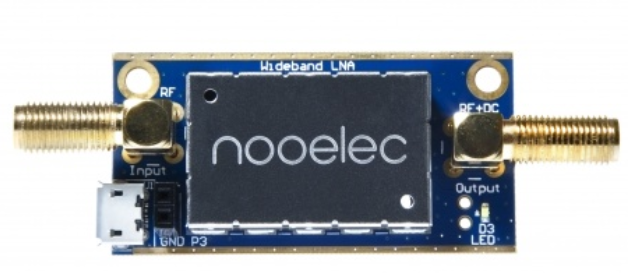
For testing purposes, I first did a quick layout of just using one antenna with the ability to switch the LNA in and out.  Note:  I took a gamble on hooking the antenna cables directly to the HMC349 modules.  Luckily, the SMA connects didn’t tear off the boards.
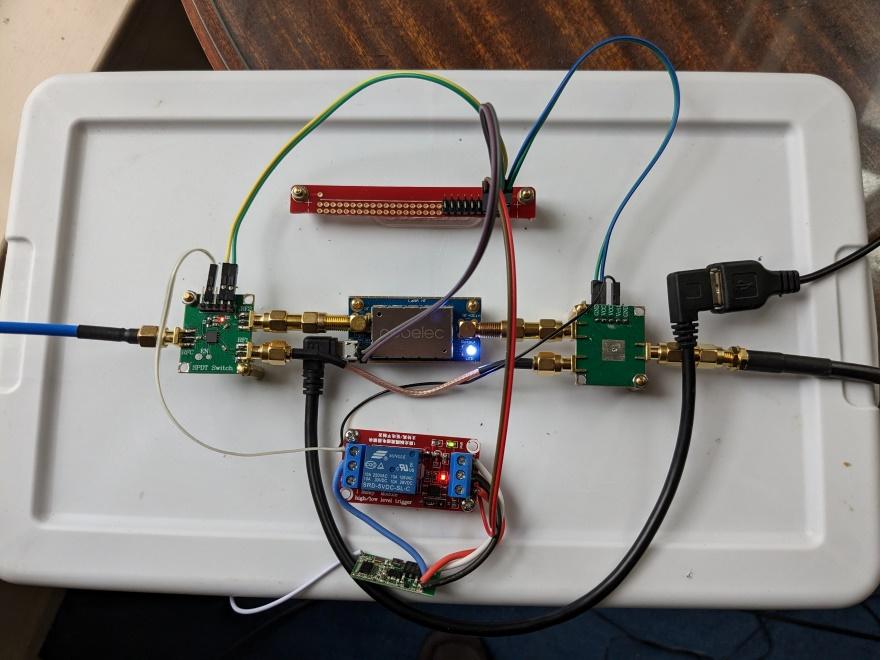
Two HMC349 modules are used.  The first module selects the bypass or the LNA.  Likewise, the second module also selects either the bypass or LNA.  Note that the second module is turned upside down so that the switches match up when activated.  Two modules were used so that the LNA is totally switched out of the circuit. Continue reading
Radio Waves: Old Time Radio Book, AM to Digital, and Radio in Maui, and Nationwide Emergency Alert Test in October

Radio Waves:  Stories Making Waves in the World of Radio

Welcome to the SWLing Post’s Radio Waves, a collection of links to interesting stories making waves in the world of radio. Enjoy!

Many thanks to SWLing Post contributors Mike, David Iurescia, Rich Dalton, and Dennis Dura for the following tips:


Former Downriver music educator pens book on history of old-time radio (News-Herald)

Brian Rogers is an adventurer of sorts. He’s what you might call a renaissance man. Born in Buffalo, New York, Rogers has been a part of the fabric of the Detroit area since his family moved here in 1943.

Since then he’s been a music educator, choir and band director, speech therapist, paralegal and a freelance writer.

You could say that everything Rogers has pursued, both vocational and otherwise, has centered on the art of communication. And the affable educator and author certainly honed his literary skills through the revised edition of his new book “Adventures in Old Time Radio.”

It is 146 pages and 50 chapters of brief excerpts and articles on the evolution of radio from its inception in the 1920s through 1960.

Rogers, a longtime Allen Park resident who now lives in Dearborn with his wife, Clara, was inspired to compile the book out of his love for, and activity in, the shortwave radio community and as a columnist for the Great Lakes Monitor. [Continue reading…]

Click here to purchase this book from Amazon via our affiliate link and support the SWLing Post at no extra cost to you! 

Crawford Will Flip an Alabama AM to All-Digital (Radio World)

Crawford Broadcasting is going to give all-digital HD Radio a try on an AM station in Alabama.

On Sept. 1 the Christian broadcaster will flip WYDE in Birmingham to the MA3 mode; only listeners with HD Radio receivers will be able to hear the AM signal after that, though the same content will be available on two local FMs. Two other AMs in the country currently operate in all-digital.

“We’d like to give all-digital AM a try and see how it performs,” said Director of Engineering Cris Alexander. “The timing is right for us.”

The FCC approved the use of all-digital AM in 2020. WYDE airs at 1260 kHz with a 5 kW signal by day and 41 Watts at night.

“That particular station is ideally situated for an all-digital move,” said Alexander, who also is technical editor of Radio World Engineering Extra. [Continue reading…]

Radio and Maui: A Failure To Communicate? (Jacobs Media Strategies)

The morbidly funny video from the 1960’s classic “Cool Hand Luke” became a popular meme well before there was an Internet. You see it pop up when organizations or people on the same team (or in a relationship) suffer a serious breakdown in communication. Suffice it to say, this is a common condition.

When we look at what happened in Maui, we have a human tragedy that is off the charts. By the time this is all set and done, we will likely be looking at hundreds of people dead, upwards of $6 billion in funds to restore the damage, and incalculable pain and suffering. When weather disasters happen, widescale damage is often unavoidable. And the wildfires that swept through Lahaina fit that definition. But could the damage in human, financial, and property costs have been mitigated or decreased?

Maui is a place where many of us have been on vacation. Looking at the photos, it is unimaginable just how extensive the damage is. And in the aftermath, there are questions – lots of them – about what went wrong. [Continue reading…]

Hawaii Puts AM Radio to Work on Maui

The state has acquired four portable emergency advisory radio systems

Emergency officials in Hawaii will use AM broadcast equipment to help communicate with the public during the ongoing wildfire recovery efforts on Maui.

The State of Hawaii Emergency Management Agency has purchased four RadioSTAT portable emergency advisory stations from Information Station Specialists in Michigan, which also makes specialized systems for applications such as Traveler’s Information Stations and Highway Advisory Radio.

The Wireline Competition Bureau of the Federal Communications Commission last week granted the state an emergency authorization to use the stations immediately at four locations including a checkpoint and police and fire stations. They can be used on 1620, 1650, 1670 or 1700 kHz. [Continue reading…]

FEMA and FCC Plan Nationwide Emergency Alert Test for Oct. 4, 2023 (FEMA)

Test Messages Will be Sent to All TVs, Radios and Cell Phones

WASHINGTON — FEMA, in coordination with the Federal Communications Commission (FCC), will conduct a nationwide test of the Emergency Alert System (EAS) and Wireless Emergency Alerts (WEA) this fall.

The national test will consist of two portions, testing WEA and EAS capabilities. Both tests are scheduled to begin at approximately 2:20 p.m. ET on Wednesday, Oct. 4.

The WEA portion of the test will be directed to all consumer cell phones. This will be the third nationwide test, but the second test to all cellular devices. The test message will display in either English or in Spanish, depending on the language settings of the wireless handset.

The EAS portion of the test will be sent to radios and televisions. This will be the seventh nationwide EAS test.

FEMA and the FCC are coordinating with EAS participants, wireless providers, emergency managers and other stakeholders in preparation for this national test to minimize confusion and to maximize the public safety value of the test.

The purpose of the Oct. 4 test is to ensure that the systems continue to be effective means of warning the public about emergencies, particularly those on the national level. In case the Oct. 4 test is postponed due to widespread severe weather or other significant events, the back-up testing date is Oct. 11.

The WEA portion of the test will be initiated using FEMA’s Integrated Public Alert and Warning System (IPAWS), a centralized internet-based system administered by FEMA that enables authorities to send authenticated emergency messages to the public through multiple communications networks. The WEA test will be administered via a code sent to cell phones.

This year the EAS message will be disseminated as a Common Alerting Protocol (CAP) message via the Integrated Public Alert and Warning System-Open Platform for Emergency Networks (IPAWS-OPEN).

All wireless phones should receive the message only once. The following can be expected from the nationwide WEA test:

  • Beginning at approximately 2:20 p.m. ET, cell towers will broadcast the test for approximately 30 minutes. During this time, WEA-compatible wireless phones that are switched on, within range of an active cell tower, and whose wireless provider participates in WEA, should be capable of receiving the test message.
  • For consumers, the message that appears on their phones will read: “THIS IS A TEST of the National Wireless Emergency Alert System. No action is needed.”
  • Phones with the main menu set to Spanish will display: “ESTA ES UNA PRUEBA del Sistema Nacional de Alerta de Emergencia. No se necesita acción.”

WEA alerts are created and sent by authorized federal, state, local, tribal and territorial government agencies through IPAWS to participating wireless providers, which deliver the alerts to compatible handsets in geo-targeted areas. To help ensure that these alerts are accessible to the entire public, including people with disabilities, the alerts are accompanied by a unique tone and vibration.

Important information about the EAS test:

  • The EAS portion of the test is scheduled to last approximately one minute and will be conducted with the participation of radio and television broadcasters, cable systems, satellite radio and television providers and wireline video providers.
  • The test message will be similar to the regular monthly EAS test messages with which the public is familiar. It will state: “This is a nationwide test of the Emergency Alert System, issued by the Federal Emergency Management Agency, covering the United States from 14:20 to 14:50 hours ET. This is only a test. No action is required by the public.

Do you enjoy the SWLing Post?

Please consider supporting us via Patreon or our Coffee Fund!

Your support makes articles like this one possible. Thank you!

Japan’s Longest Day: August 15, 1945

Many thanks to SWLing Post contributor, Fred Waterer, who writes:

At Noon on August 15, 1945, Emporer Hirohito spoke to his nation by radio for the first time, ever. The intrigue surrounding the recording of his speech and the effort to get it on the air would be worthy of a Hollywood film. When word started getting out that the broadcast would be made, fanatics who wanted to keep fighting staged an attempted coup. An NHK (Japan Radio Corporation) engineer had a gun to his head as an officer attempted to hijack the station at 5am. His coolness under pressure saved his life. He also temporarily severed the line to the transmitter, just in case the officer changed his mind about killing him.

Meanwhile at the palace, the NHK recording engineers had recorded two versions of the speech. The recordings (and the engineers) were hidden overnight, as was the Emporer, in the labyrinth of the palace. Coup leaders searching for the disks to destroy them failed. Eventually troops loyal to the Emporer took control of the situation, with many of the coup plotters killing themselves. At noon, the recordings were in the NHK studios and were broadcast as scheduled.

The actual broadcast:

In 1967 a film about these events was made in Japan, called Japan’s Longest Day and starring the great Toshiro Mifune.

The recording scene:

Looks like quite a film!

Thank you for sharing this, Fred.

Can you help Bob identify this mystery signal?

Many thanks to SWLing Post contributor, Bob (K7ZB), who shares the following note and recording: 

Hi Thomas,

I recently started using an SDRplay RSP1A with their new software release SDRconnect.

Quite a nice piece of work and my first foray into SDR after 60 years of analog radio (K7ZB).

Today I was listening to WWV on 10MHz and it was being interfered with a strange type of digital signal that pretty much covered the band.

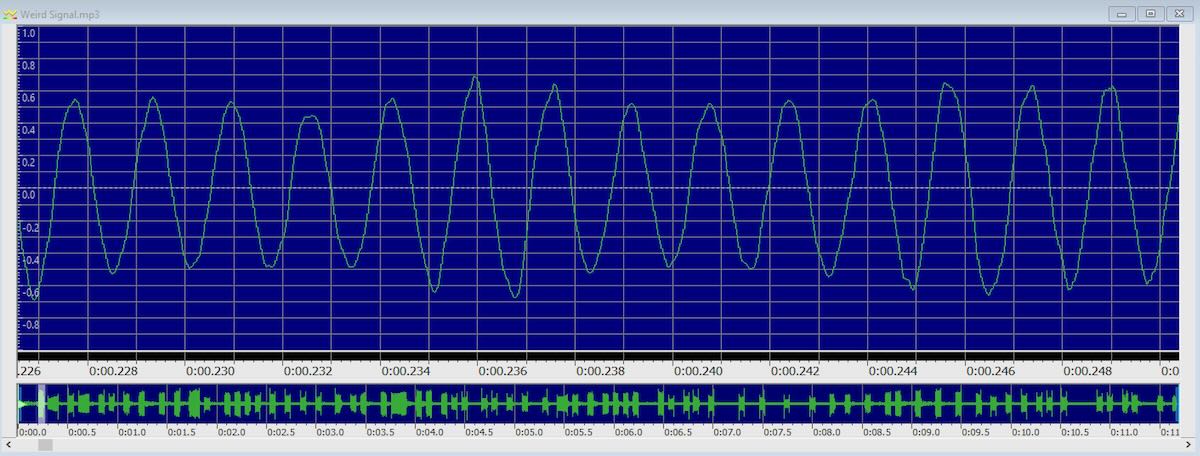
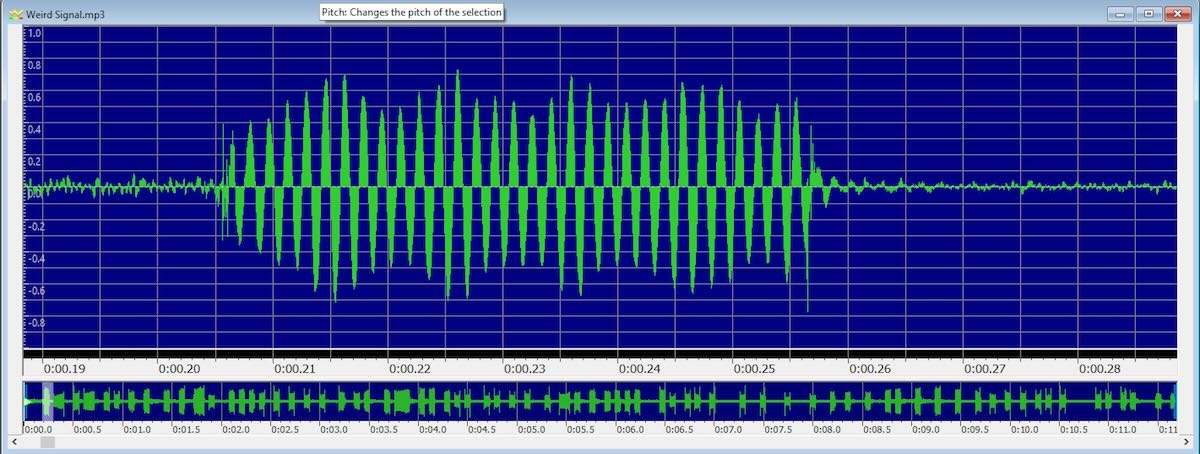
I finally tracked it down to 9.979MHz, recorded it and sent it to a friend who did a bit of audio analysis on it by expanding out the signal to look at individual bursts.

I certainly don’t recognize the modulation although it sounded like a form of CW in burst mode.

I am just curious if you have any insight on this signal or where I might go to find out more about it.

Thanks,

Bob
K7ZB
Gilbert, AZ

Post readers: Can you identify this signal? If so, please comment and thank you in advance!

Paul’s short recording of Marconi Radio International

Many thanks to SWLing Post contributor, Paul Jamet, who writes:

Hi Thomas,

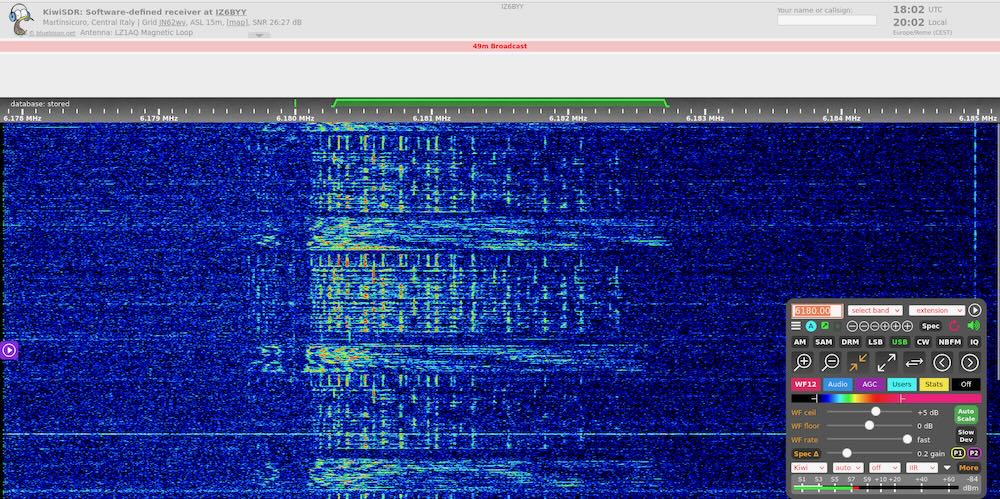
I tried in vain to pick up Radio Marconi International … And I’m not the only one! I’ve used several SDR kiwis installed in Italy, and only one has enabled me to listen to this station, which has only a very weak transmitter.

Here’s the audio file below [RMI signing on at 18hOO UTC] and a snapshot of the screen of my PC (see above):


Kind regards.

Paul JAMET
Radio Club du Perche

Thank you for sharing this recording, Paul!

KiwiSDR 2 on the horizon…

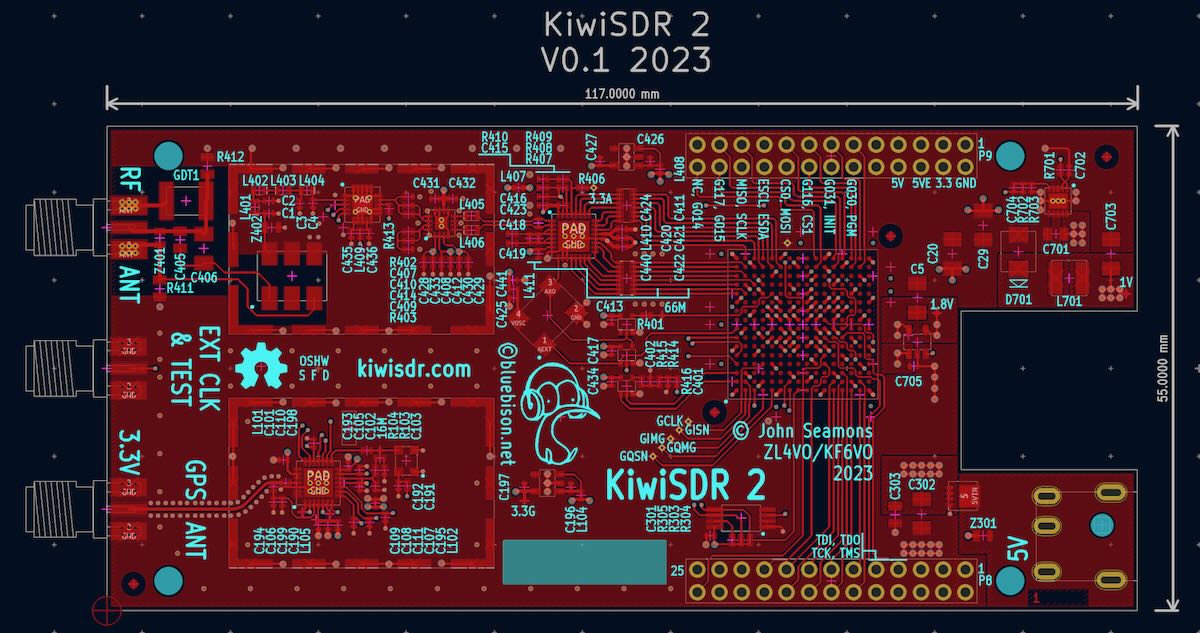
A number of SWLing Post readers have shared a link to this post by KiwiSDR creator John Seamons on the KiwiSDR forum. In it, he (somewhat reluctantly) describes a new version 2 of the KiwiSDR that is in the works.

Image source: KiwiSDR Forum

John writes:

I don’t like to announce something before it’s ready. But my hand is being forced.

So please consider this a pre-announcement. There are no guarantees.

The PCB and bill-of-materials (BOM) are finished and ready for prototype construction.

The problem is I don’t know WHO is going to build this or HOW. So I don’t know WHEN it might be available. And most importantly I don’t know what it might COST.

If YOU have specific ideas about these questions please email me. I’m especially interested in full-service manufacturing and distribution outside of China.

KiwiSDR 2 Goals:

Minimal changes. Fastest time-to-market with lowest possible risk. BUT since the PCB is going to be re-spun fix some of the known limitations that don’t add too much risk:

    • New RF front-end:
      •   Balanced input via balun transformer
      •   Digital attenuator (per the advisory group: pSemi PE4312, 0 – 31.5 dB, 0.5 dB steps)
      •   Gas discharge tube (GDT) across input in addition to TVS diodes
      •   Static drain resistors (100K) from input connections to ground
    • External ADC clock brought out on third SMA connector
      •   Self test loopback mode using a short cable between this SMA and antenna input
    • New GPS chip to replace current one which is now EOL
    • Reverse polarity protection (via P-FET) on 5V DC input
      •   TVS diode across 5V input

I have an email advisory group. Many, many other changes and additions were considered and deferred. They have been put onto a list for the future.

Additional info as things progress.

Thank you.

Readers: If you have suggestions for John regarding a manufacturing and distribution facility outside of China, please connect with him on the KiwiSDR forum.

In my opinion, the KiwiSDR has been the most accessible and effective web-based SDR platform out there. I’m looking forward to version 2 and hope it becomes a reality in the near future.

Luke discovers a treasure trove of CIDX newsletters! (And I believe everyone should join the CIDX!)

Many thanks to SWLing Post contributor, Luke Perry, who writes:

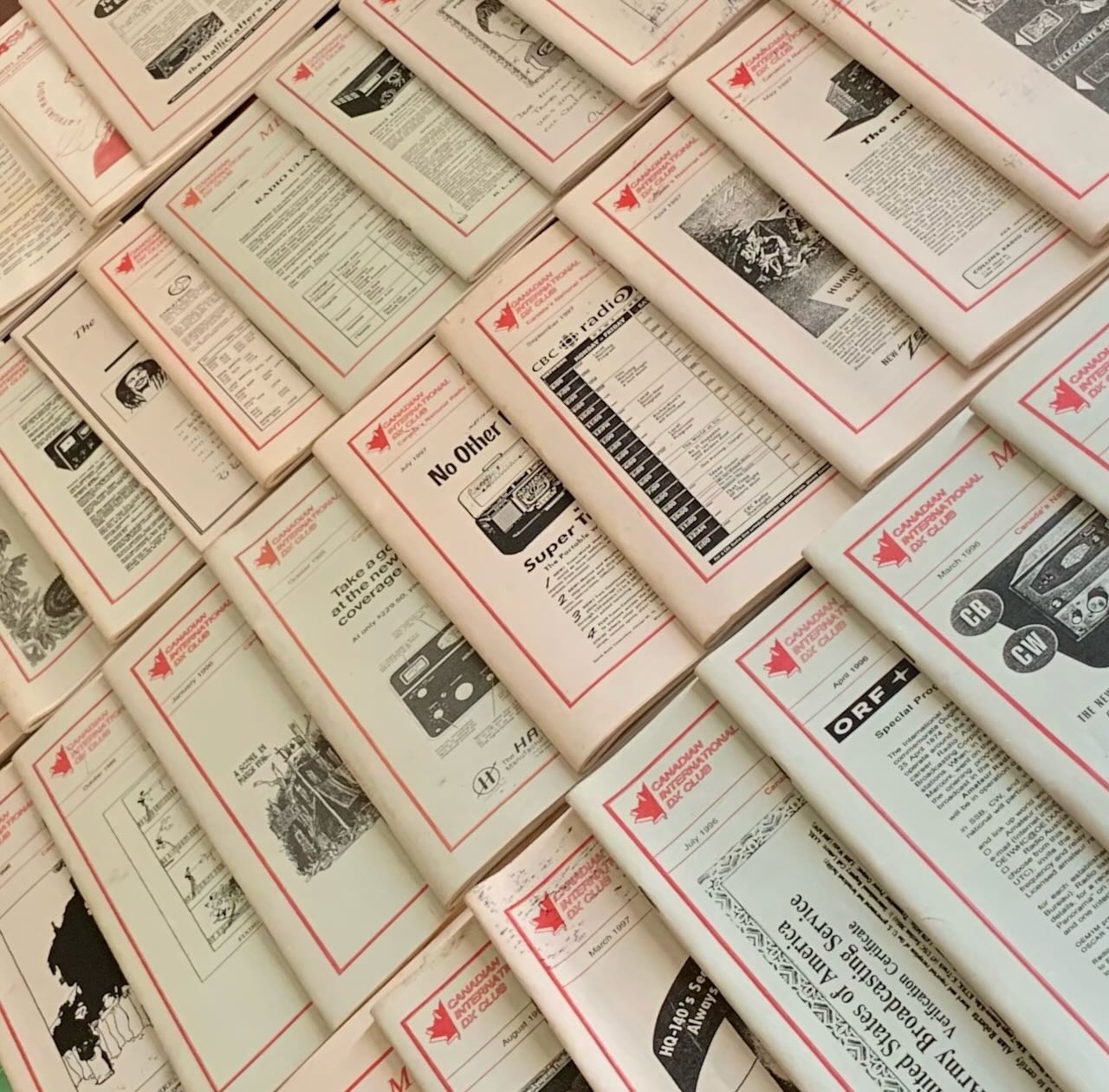
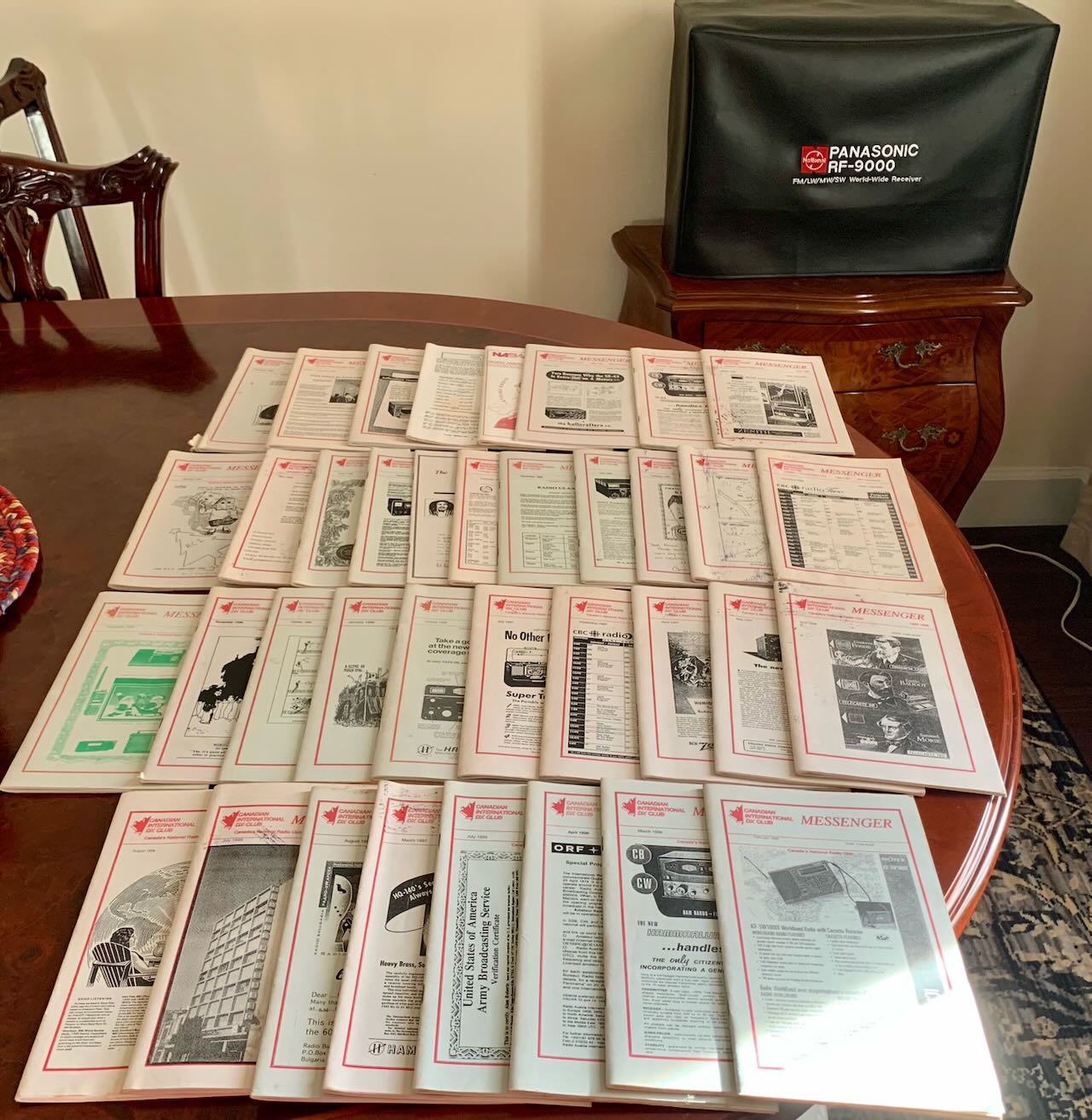
Hi Thomas, thought that you and your readers would enjoy my recent “find.” I came across an old copy of the “Messenger”, which was a magazine put out monthly by the Canadian International DX Club.

While looking for the current garbage bill I was shuffling through my file of bills and receipts, and lo and behold I came across one copy……how it ever got in there I have no idea. Anyway it sparked a lot of nostalgia and remember how excited I used to be when a new copy arrived in the mail.

I knew that I had more, but had no idea where as I tend to not throw things away, especially anything associated with electronics or cars. After a day or so of brainstorming I had an idea of where they might be, and lo and behold there they were.

They mostly date from the mid-90’s right before the internet basically killed off “zines” like this. Oh well.. progress marches on.

Anyway, I hope that people can enjoy the pictures and maybe have some insight or memories of the club and/or the guy who ran it. I believe that his name was Sheldon.

Take care,
Luke Perry

Wow–what a treasure trove you unearthed there, Luke! I could spend hours looking through those copies!

Join the CIDX!

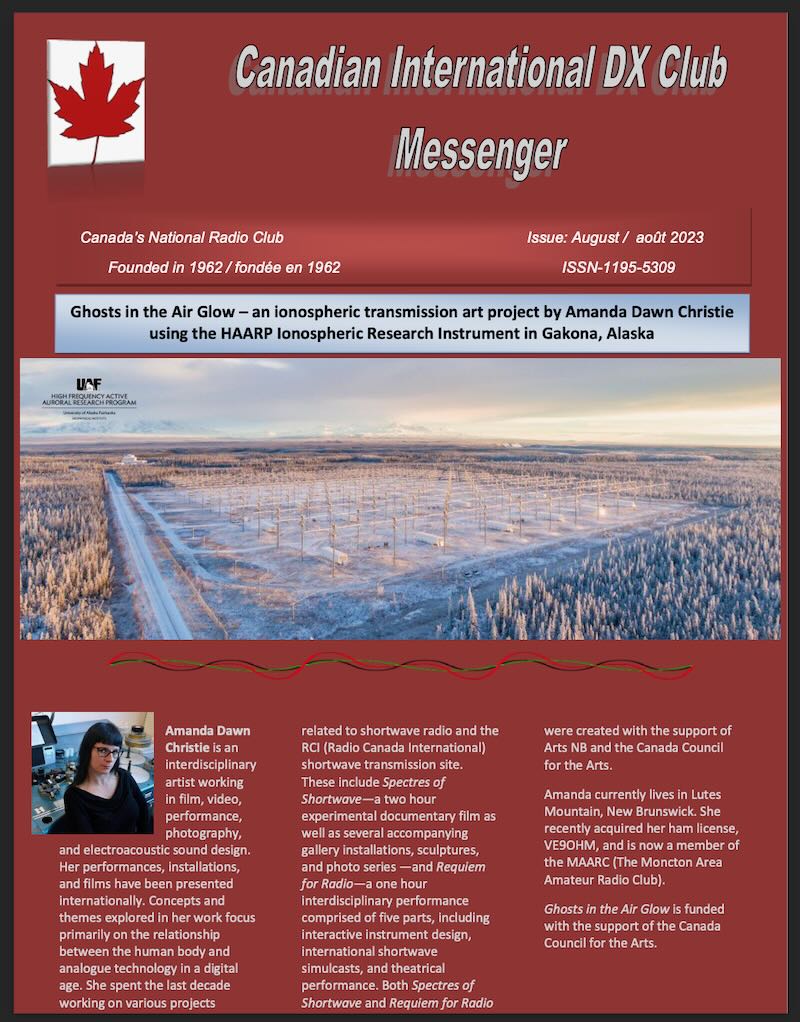
I have good news for you: The Canadian International DX Club (CIDX) is very much alive and well! Check out the cover of the the August ’23 issue of the Messenger above.

Here’s an article I posted about the CIDX in the past and how much I enjoy the Messenger. And yes, Sheldon Harvey is still at the helm along with some other amazing, devoted volunteers. I’m a member and I’d encourage everyone else to become one, too. It’s one of the best deals in the world of radio.

The Messenger is now in digital format only, but I actually prefer it this way since I’ve so little room to store printed material these days.

For more information about joining the CIDX–only $10 per year or $25 for three years–click here!

Thanks again, Luke, for sharing this!