Shortwave listening and everything radio including reviews, broadcasting, ham radio, field operation, DXing, maker kits, travel, emergency gear, events, and more
Many thanks to SWLing Post contributor, Bob (K7ZB), who shares the following note and recording:
Hi Thomas,
I recently started using an SDRplay RSP1A with their new software release SDRconnect.
Quite a nice piece of work and my first foray into SDR after 60 years of analog radio (K7ZB).
Today I was listening to WWV on 10MHz and it was being interfered with a strange type of digital signal that pretty much covered the band.
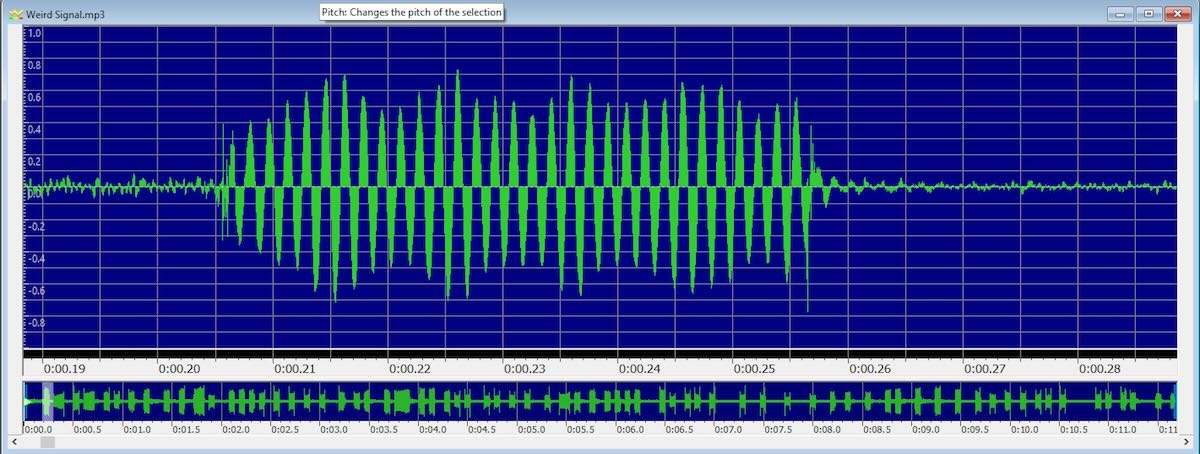
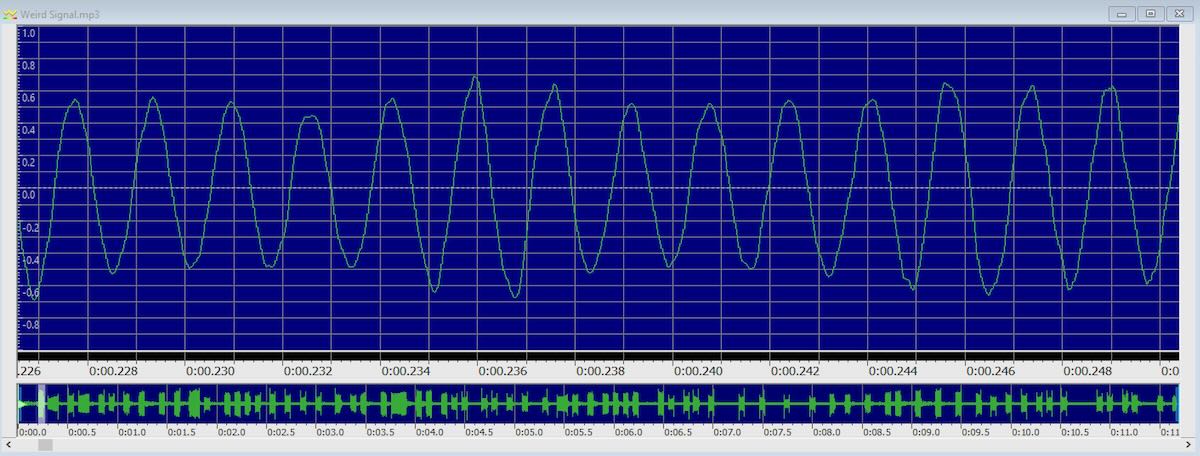
I finally tracked it down to 9.979MHz, recorded it and sent it to a friend who did a bit of audio analysis on it by expanding out the signal to look at individual bursts.
I certainly don’t recognize the modulation although it sounded like a form of CW in burst mode.
I am just curious if you have any insight on this signal or where I might go to find out more about it.
Thanks,
Bob
K7ZB
Gilbert, AZ
Post readers: Can you identify this signal? If so, please comment and thank you in advance!
Many thanks to SWLing Post contributor, Paul Jamet, who writes:
Hi Thomas,
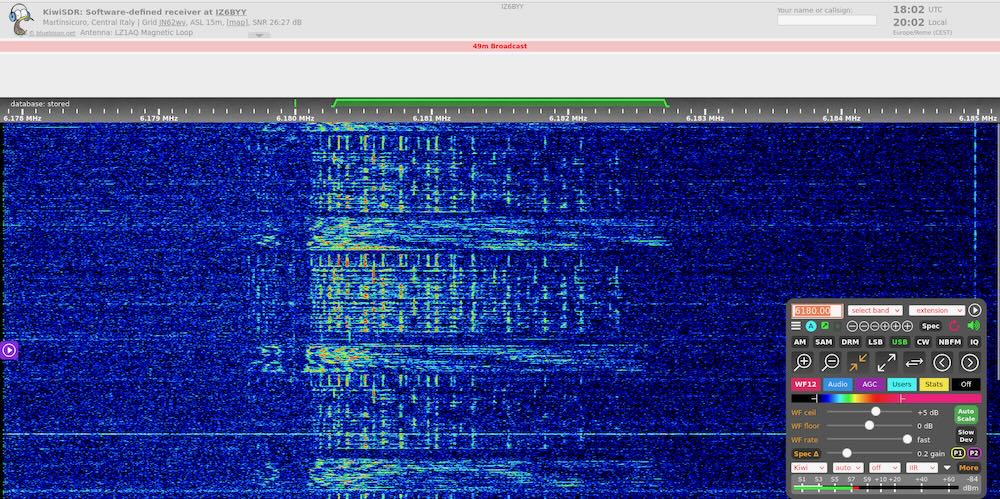
I tried in vain to pick up Radio Marconi International … And I’m not the only one! I’ve used several SDR kiwis installed in Italy, and only one has enabled me to listen to this station, which has only a very weak transmitter.
Here’s the audio file below [RMI signing on at 18hOO UTC] and a snapshot of the screen of my PC (see above):
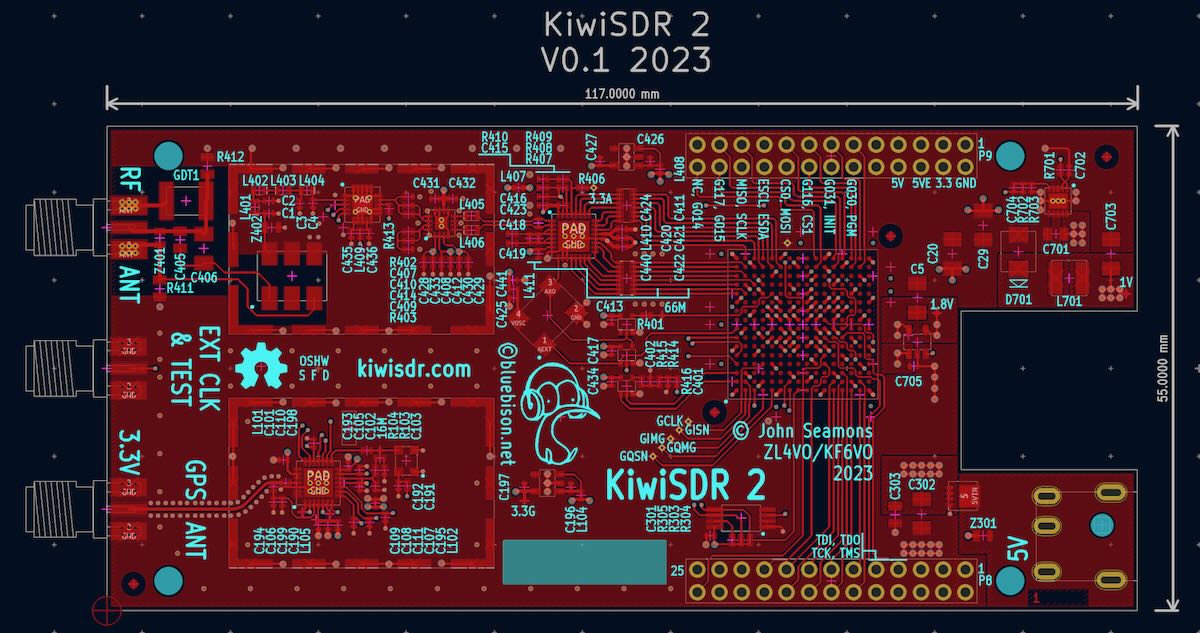
A number of SWLing Post readers have shared a link to this post by KiwiSDR creator John Seamons on the KiwiSDR forum. In it, he (somewhat reluctantly) describes a new version 2 of the KiwiSDR that is in the works.
Image source: KiwiSDR Forum
John writes:
I don’t like to announce something before it’s ready. But my hand is being forced.
So please consider this a pre-announcement. There are no guarantees.
The PCB and bill-of-materials (BOM) are finished and ready for prototype construction.
The problem is I don’t know WHO is going to build this or HOW. So I don’t know WHEN it might be available. And most importantly I don’t know what it might COST.
If YOU have specific ideas about these questions please email me. I’m especially interested in full-service manufacturing and distribution outside of China.
KiwiSDR 2 Goals:
Minimal changes. Fastest time-to-market with lowest possible risk. BUT since the PCB is going to be re-spun fix some of the known limitations that don’t add too much risk:
New RF front-end:
Balanced input via balun transformer
Digital attenuator (per the advisory group: pSemi PE4312, 0 – 31.5 dB, 0.5 dB steps)
Gas discharge tube (GDT) across input in addition to TVS diodes
Static drain resistors (100K) from input connections to ground
External ADC clock brought out on third SMA connector
Self test loopback mode using a short cable between this SMA and antenna input
New GPS chip to replace current one which is now EOL
Reverse polarity protection (via P-FET) on 5V DC input
TVS diode across 5V input
I have an email advisory group. Many, many other changes and additions were considered and deferred. They have been put onto a list for the future.
Additional info as things progress.
Thank you.
Readers: If you have suggestions for John regarding a manufacturing and distribution facility outside of China, please connect with him on the KiwiSDR forum.
In my opinion, the KiwiSDR has been the most accessible and effective web-based SDR platform out there. I’m looking forward to version 2 and hope it becomes a reality in the near future.
Many thanks to SWLing Post contributor, Luke Perry, who writes:
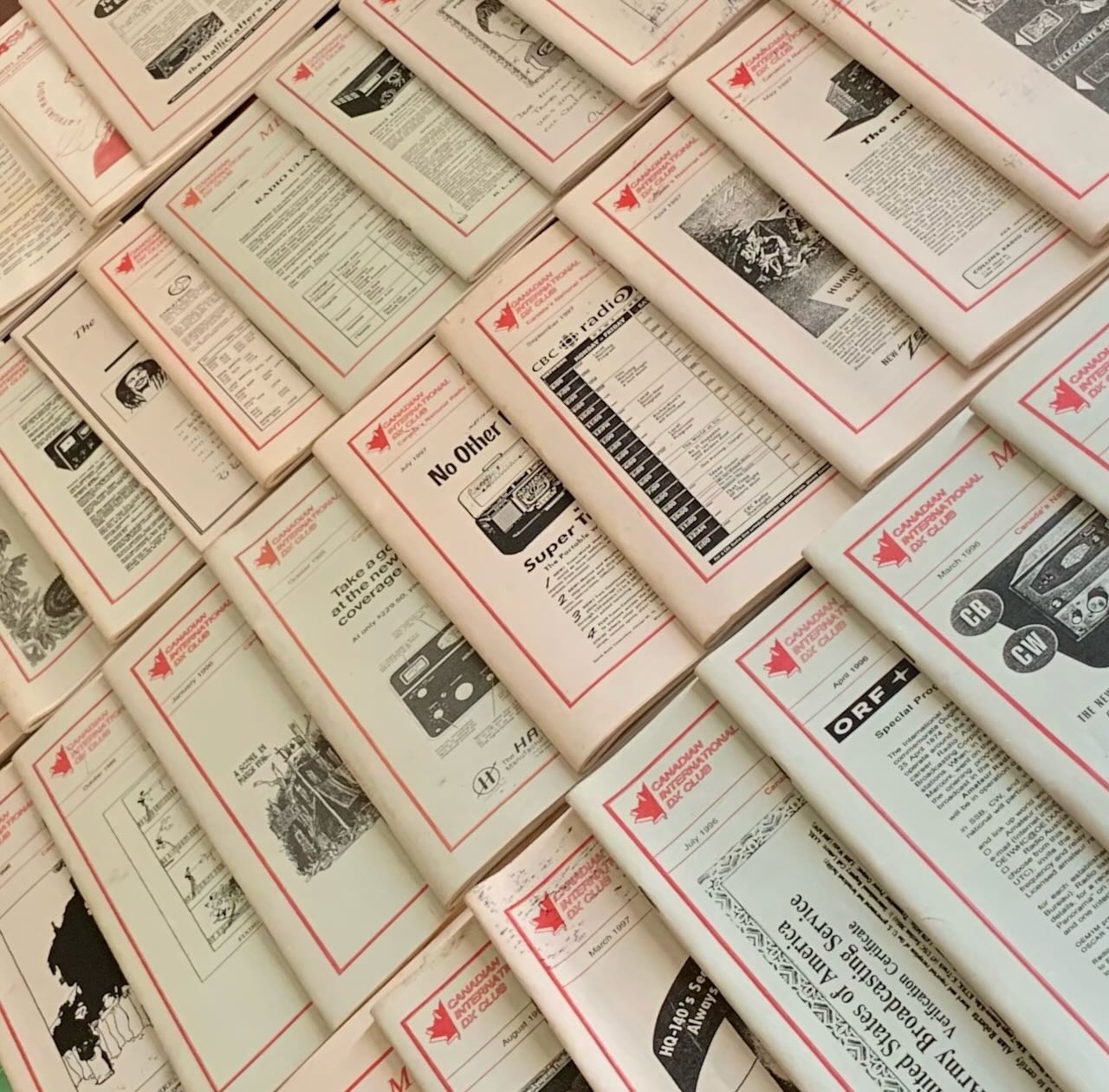
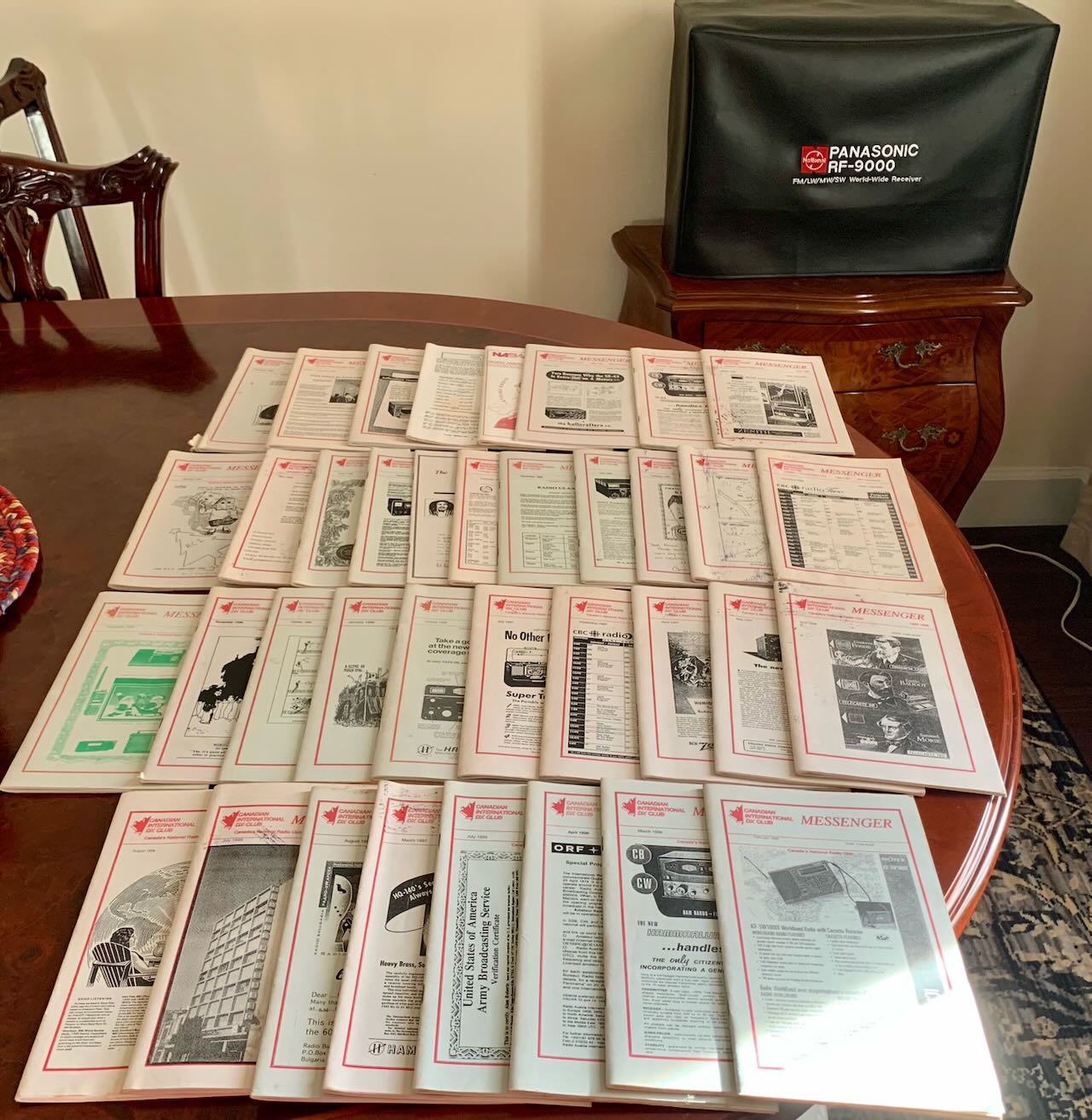
Hi Thomas, thought that you and your readers would enjoy my recent “find.” I came across an old copy of the “Messenger”, which was a magazine put out monthly by the Canadian International DX Club.
While looking for the current garbage bill I was shuffling through my file of bills and receipts, and lo and behold I came across one copy……how it ever got in there I have no idea. Anyway it sparked a lot of nostalgia and remember how excited I used to be when a new copy arrived in the mail.
I knew that I had more, but had no idea where as I tend to not throw things away, especially anything associated with electronics or cars. After a day or so of brainstorming I had an idea of where they might be, and lo and behold there they were.
They mostly date from the mid-90’s right before the internet basically killed off “zines” like this. Oh well.. progress marches on.
Anyway, I hope that people can enjoy the pictures and maybe have some insight or memories of the club and/or the guy who ran it. I believe that his name was Sheldon.
Take care,
Luke Perry
Wow–what a treasure trove you unearthed there, Luke! I could spend hours looking through those copies!
Join the CIDX!
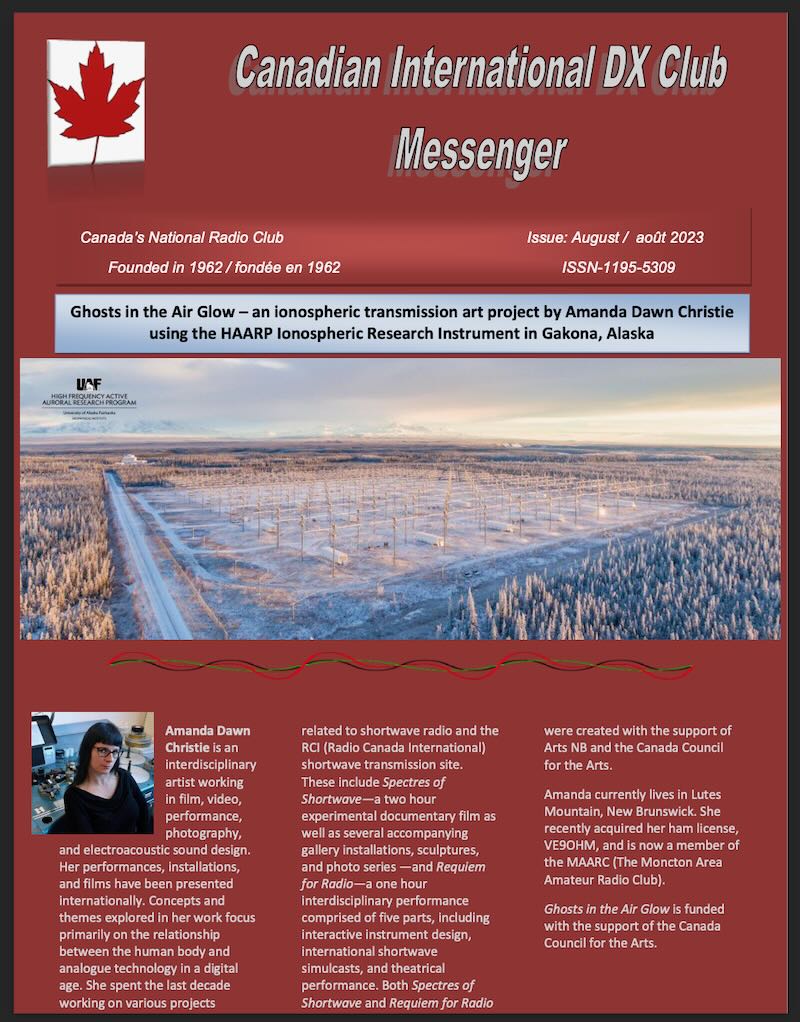
I have good news for you: The Canadian International DX Club (CIDX) is very much alive and well! Check out the cover of the the August ’23 issue of the Messenger above.
Here’s an article I posted about the CIDX in the past and how much I enjoy the Messenger. And yes, Sheldon Harvey is still at the helm along with some other amazing, devoted volunteers. I’m a member and I’d encourage everyone else to become one, too. It’s one of the best deals in the world of radio.
The Messenger is now in digital format only, but I actually prefer it this way since I’ve so little room to store printed material these days.
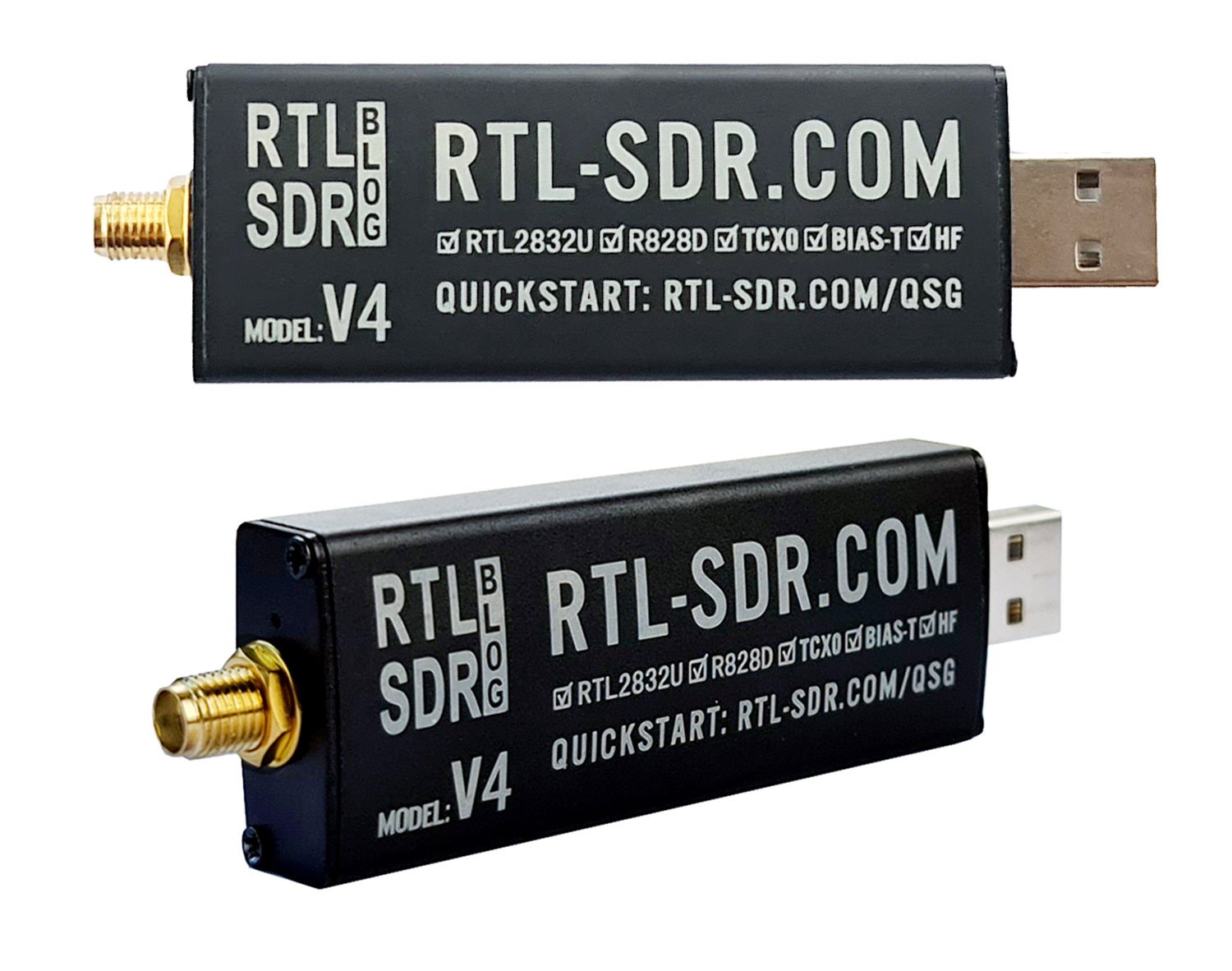
We’re happy to announce the first release of our new RTL-SDR Blog V4 dongle which is based on the R828D tuner chip. The pricing is US$39.95 for the V4 dongle with antenna set, and US$29.95 for the dongle only, including free shipping to most countries.
Currently we are only shipping this model from our warehouse in China and the initial production batch is small and so we are limited in stock. However, now that we have confirmed that production of the first small batch of V4 has gone very well, we will be ramping up production, and stocking Amazon USA within 1-2 months as well.
The V4 comes with several improvements and changes that are listed below.
Improved HF Reception. Now uses a built in upconverter instead of using a direct sampling circuit. This means no more Nyquist folding of signals around 14.4 MHz, improved sensitivity, and adjustable gain on HF.
Improved filtering. The V4 makes use of the R828D tuner chip, which has three inputs. We triplex the SMA input into three bands, HF, VHF and UHF. This provides some isolation between the three bands, meaning out of band interference from strong broadcast stations is less likely to cause desensitization or imaging.
Improved Filtering x2. In addition to the triplexing, we are also making use of the open drain pin on the R828D, which allows us to add simple notch filters for common interference bands such as broadcast AM, broadcast FM and the DAB bands. These only attenuate by a few dB, but may still help.
Improved phase noise on strong signals. Due to an improved power supply design, phase noise from power supply noise has been significantly reduced.
Less heat. Due to the improved power supply design the V4 uses slightly less current and generates slightly less heat compared to the V3.
Cheaper price! The price of the R860 chip which is used in the V3 and most other RTL-SDR brands increased significantly at the beginning of 2023 which is part of the reason as to why RTL-SDR dongles have been increasing in price recently. For the V4 we are making use of an existing stockpile of R828D chips which are now priced cheaper than new productions of the R860. In a time when high inflation keeps pushing prices up this is incredibly welcome.
There are some other minor changes including a new bias tee LED and a small cutout hole in the enclosure so it’s easy to tell when the bias tee is on.
Of course the same innovations that we brought in with the V3 are still implemented such as the sleek conductive black metal enclosure which works as a shield and doubles as a heatsink, a thermal pad to sink heat away from the PCB, 1PPM TCXO, SMA connector, USB noise choking and improved ESD protection.
August 15 marks 70 years since the start of KBS WORLD Radio. For the past 70 years, KBS WORLD Radio grew and evolved with the development of Korean history, through the Korean War, the democratization of Korea and the rapid economic growth that South Korea has seen.
And to celebrate our 70th anniversary, we have prepared a special #InDepthNewsAnalysis with three public media experts to look back on the past 70 years of KBS WORLD Radio, to discuss the role of public international media and also how the next 70 years to come.
Engineer Ron Schadt says people have become way too reliant on cell phones
An interesting story from CBS News about the fires in Maui. If you read through it, nothing worked. Sirens didn’t work, cell phones were sketchy or not working at all, no electricity, etc. etc. If you read through the entire story, near the end is one line: “Emergency management had to resort to radio to communicate with the victims of the fires.”
Well, well, interesting that what we have been saying all along is really true, the oldest form of contacting people is still the most reliable and unfortunately, because people are so attached to their stupid phones, radio has to be “resorted to.” This little section of this article needs to get to these senators and congressmen who are on this AM in every car movement. [Continue reading…]
Radio broadcasting using amplitude modulation — or AM — has been used commercially for greater than 100 years. Its heyday generally ranged for decades from the 1930s through the 1970s as its programming content transitioned from dramas and comedies to popular music to talk programs, with the latest news mixed into each format. Advancements in technology has arguably rendered AM radio virtually obsolete. Why save AM radio from extinction?
Save AM Radio? Why?!?
The waning popularity of terrestrial AM radio technology is not so much the reason as to its potential extinction. Rather, the reason is due to the technology of electric vehicles — and because rental car companies such as Hertz have been increasing the number of electric vehicles in their fleets, the days of listening to AM radio in rental vehicles may be numbered.
The electric motors which power the drive wheels in order to propel electric vehicles also tend to generate electromagnetic interference with the reception of AM broadcast radio directly through the receiver. That interference can result in annoyances which range from buzzing, distortion, and fading of the signal itself to static and sounds of crackling instead of clear reception. Streaming audio of programs from AM radio stations — as well as the reception of FM stations — remain unaffected.
Always seeking to save time and money, eight of 20 of the leading carmakers in the world have removed AM broadcast radio from their electric vehicles; and manufacturers of electric vehicles are considering eliminating the option of tuning in to AM radio in their vehicles. Engineers have not found an easy way to eliminate the aforementioned interference without adding excessive weight to the car or increasing the cost of the vehicle…. [Continue reading…]
Preserving Broadcast History (NAB)
Join NAB and the Library of American Broadcasting Foundation (LABF) on Wednesday, August 23 at 2 p.m. ET for the first of a two-part series to learn the importance of documenting and preserving broadcast history for future generations.
Part One: The “Preserving Broadcast History” webinar will provide guidance for broadcasters on how to catalog your station’s history, best practices for creating an inventory and where to store this data and information. A Q-and-A will follow the webinar.
Featuring:
Jack Goodman, co-chair, LABF
April Carty-Sipp, executive vice president, Industry Affairs, NAB
Laura Schnitker, Ph.D., C.A., curator, Mass Media and Culture, University of Maryland’s Special Collections and University Archives
Mike Henry, reference specialist, University of Maryland’s Special Collections and University Archives
Costa Rica is one of the most visited countries in Latin America. I only visited there once, for three weeks in May-June 1990 when the country was just beginning to become a major international eco-tourism destination. Visitors were few and prices very affordable. Except for a short trip to the Monteverde cloud forest, we spent all our time in the central valley, staying in San José and nearby Heredia. Rather than nature, our visit focused on cultural and historical sites … and a lot of radio stations.
Since the 19th century, Costa Rica has been one of the most literate and educated countries in Latin America. That quality is reflected in its radio broadcasting industry, which has always been very professional. Curiously that’s even reflected in station verifications. Almost every Costa Rican shortwave station that I’ve verified had a professionally printed QSL card.
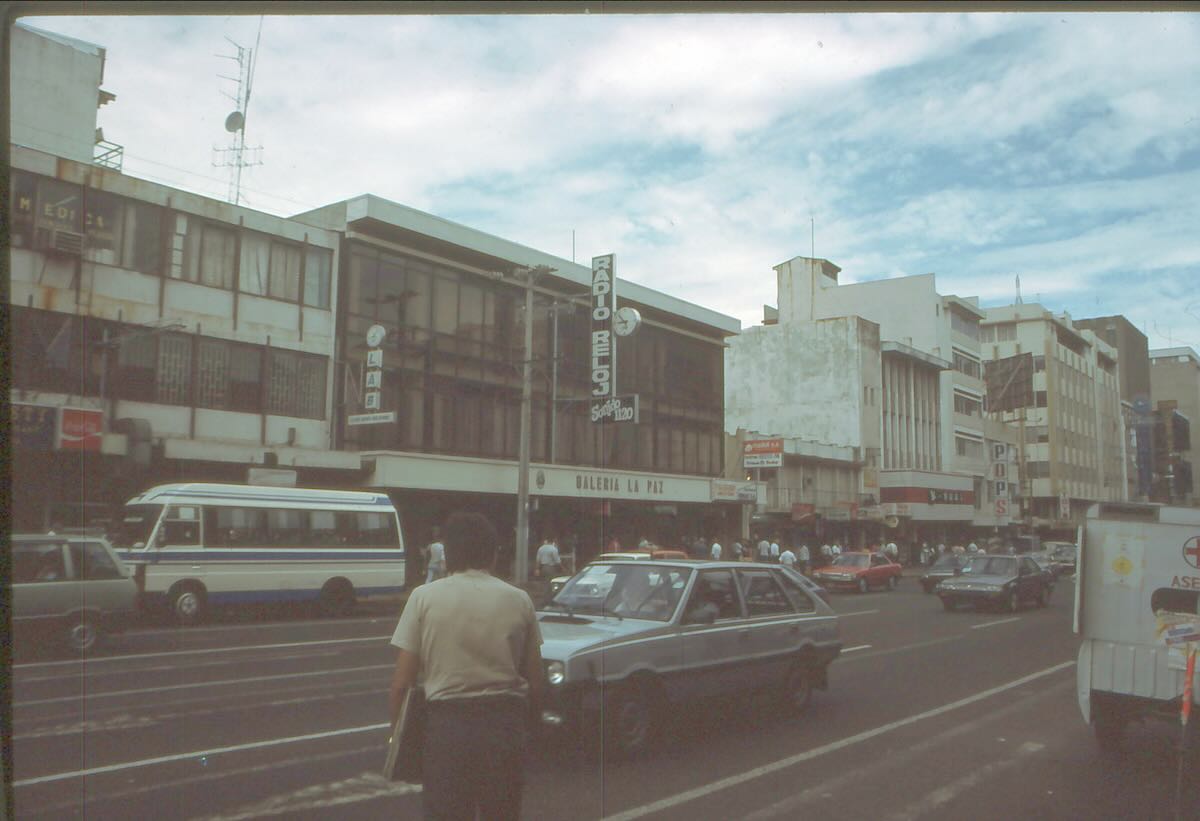
Despite being one of the smallest countries in Latin America, Costa Rica had a lot of shortwave radio stations. I have fifteen in my logbooks and some of the most famous ones were already off the air when I started DXing. Unfortunately, shortwave broadcasting from Costa Rica ended almost twenty years ago so there’s no more to be had. It is still possible to log Costa Rica on medium wave but it’s not as easy as it once was. When I started DXing in the early 1970s, stations in the San José were spaced twenty-five kilohertz apart. That meant that every other station, such as Radio Sonora on 675 kHz and Radio Columbia on 725 kHz, was on a split frequency that fell between the normally assigned 10 kHz channels. I logged nine Tico stations on medium wave while DXing from Pennsylvania in 1972-1981 and only one of those, Radio Reloj on 700 kHz, was on an even channel. Those split channels were eliminated in the 1980s so logging Costa Rica on medium wave is no longer a slam-dunk.
I visited a lot of radio stations and took a lot of photos on my one long-ago trip to Costa Rica. I’m going to focus on just five shortwave broadcasters in this first look at Costa Rica. The others will be featured in two or three future columns.
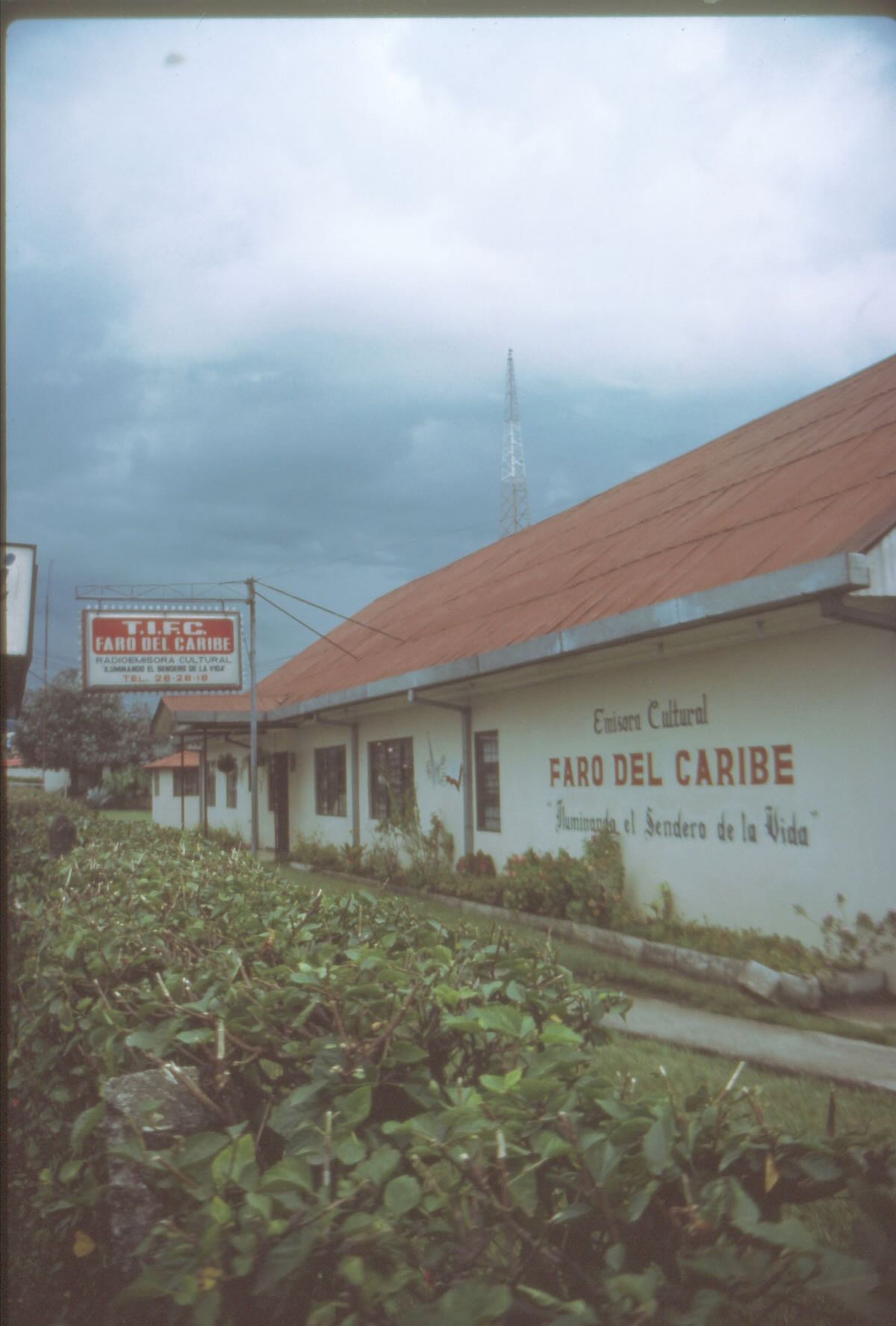
In the 1970s the first Costa Rican station most shortwave DXers heard was Faro del Caribe, or Lighthouse of the Caribbean. This religious station used two kilowatts on 9645 and 6175 kHz and got out surprisingly well as long as there wasn’t a more powerful international broadcaster also using the same frequency. In the late 1970s they added 5055 kHz in the sixty-meter band.
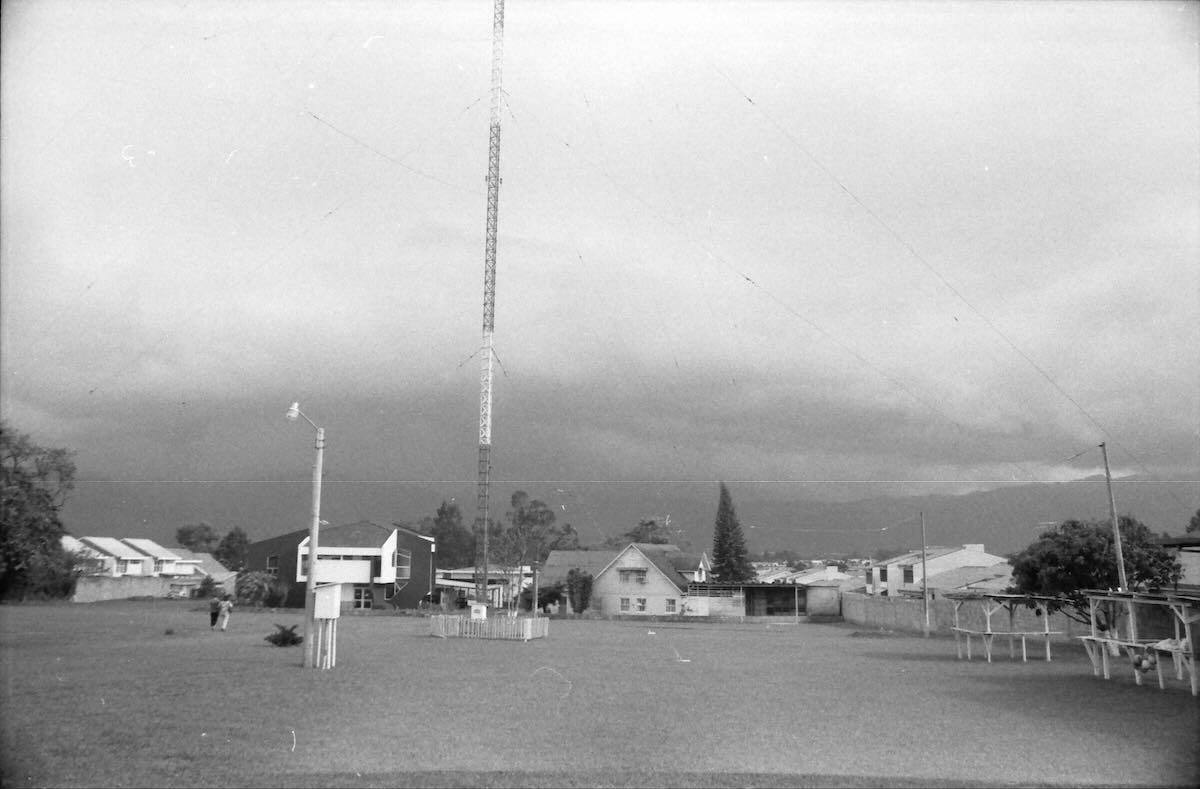
When I visited in 1990 the antennas were located right next to the studio building. The site was outside the city of San José when the station was founded but gradually a residential area built up around it.
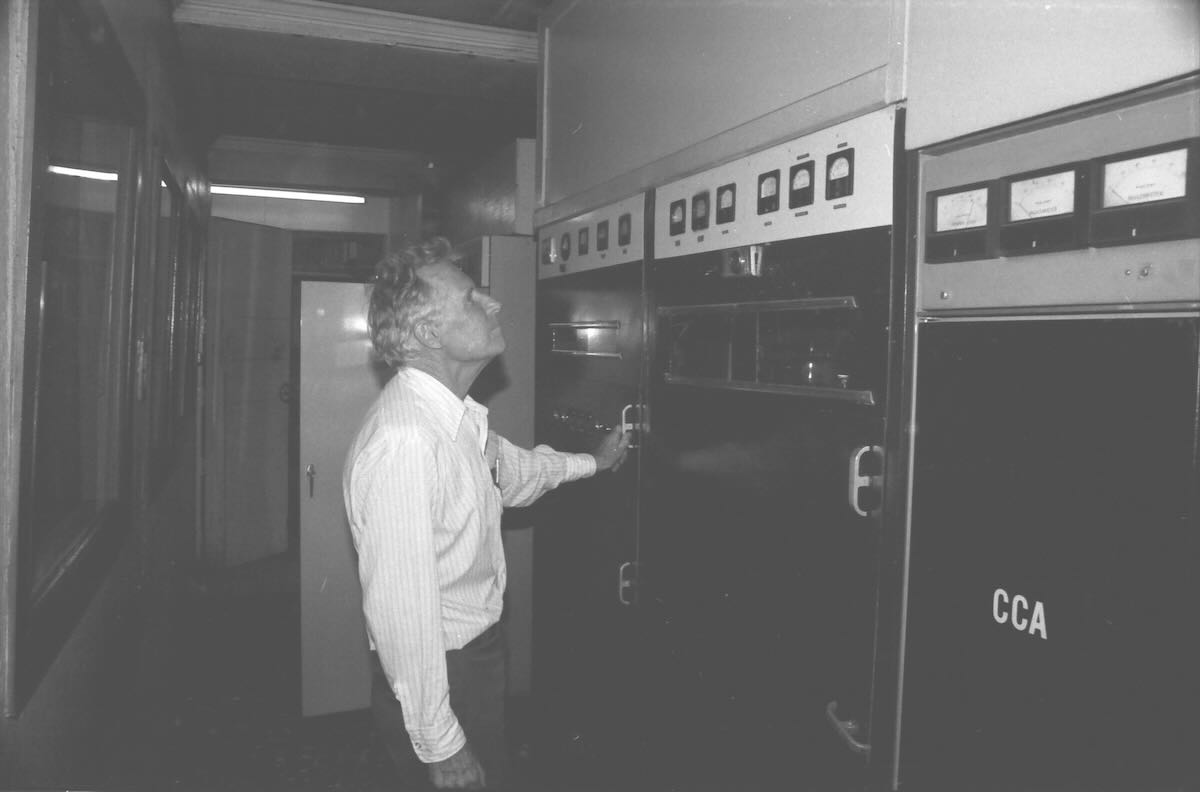
Engineer checking one of Faro Del Caribe’s shortwave transmitters.
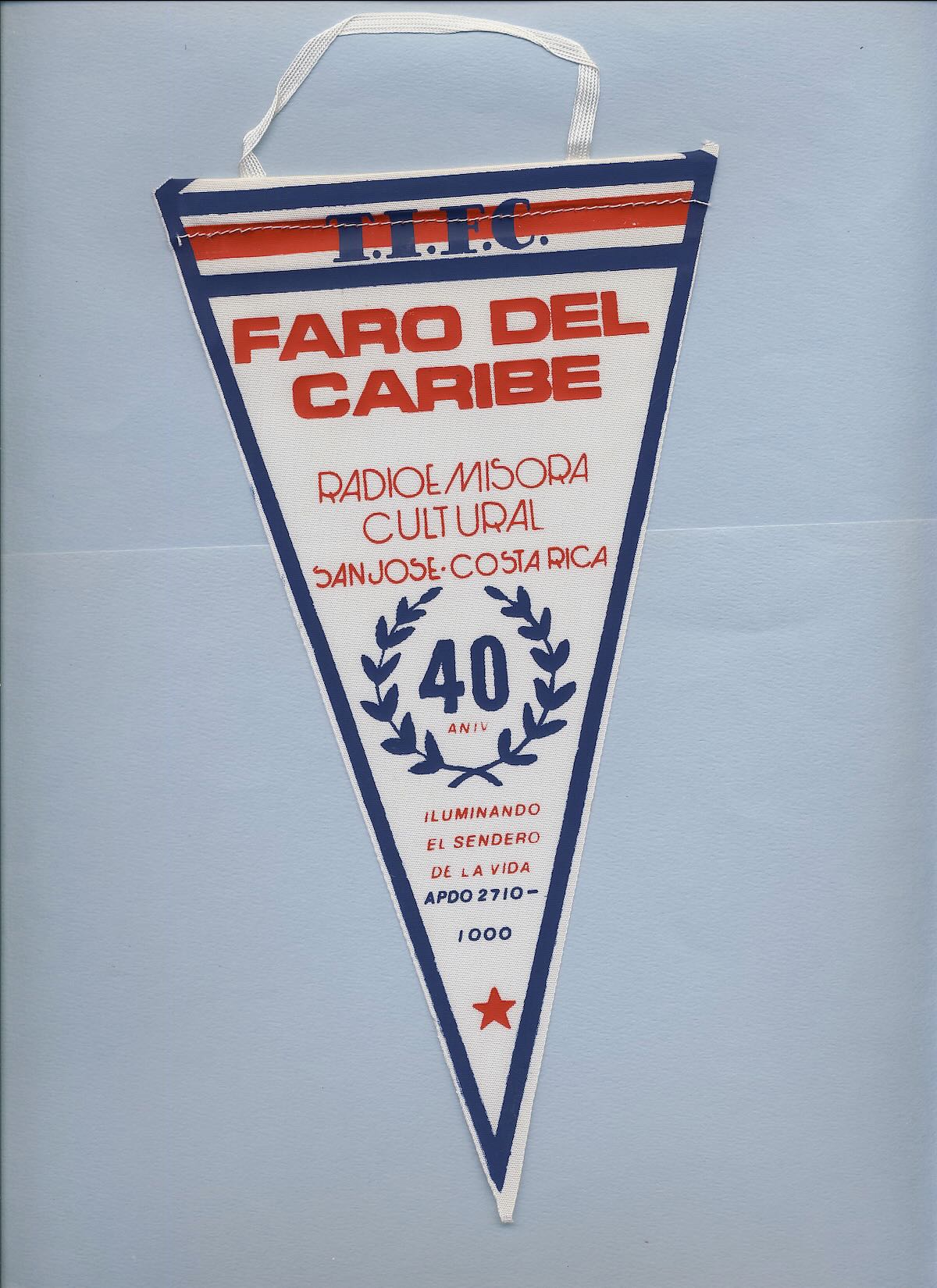
Fortieth Anniversary pennant from 1988. When Faro del Caribe began broadcasting on February 23, 1948, it was the first Evangelical Protestant radio station in Central America.
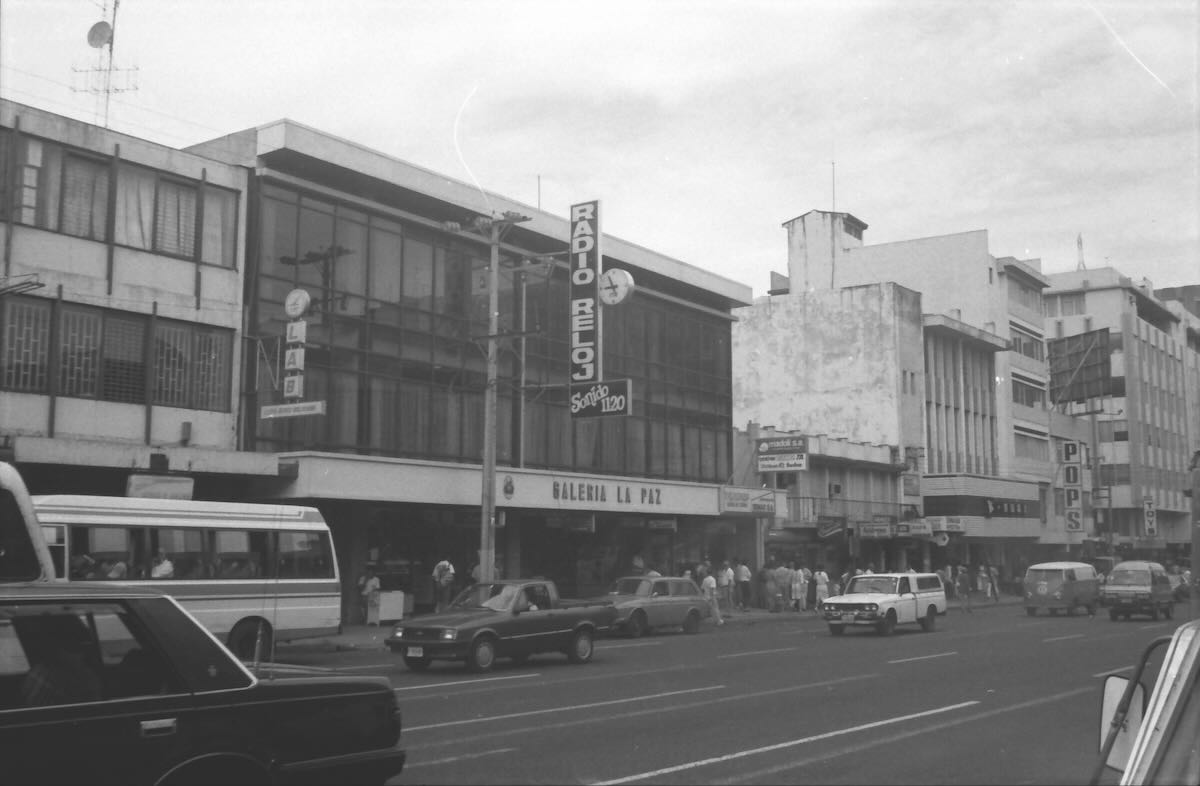
For DXers, Radio Reloj was one of Costa Rica’s best known radio voices for several decades. The station was founded as Radio Cristal by Roger Barahona in 1945. The shortwave frequency of 6006 kHz was added in the early 1950s. In 1958 the station was renamed to Radio Reloj when the format changed to focus on news and community announcements with very frequent time checks. (Radio Reloj means Radio Clock.) Roger’s brothers Isaac and Francisco had joined the broadcasting company and Radio Reloj was assigned the callsign TIHB for Hermanos Barahona (Barahona Brothers). Continue reading →

 Many thanks to SWLing Post contributor, Bob (K7ZB), who shares the following note and recording: