Author Archives: Thomas

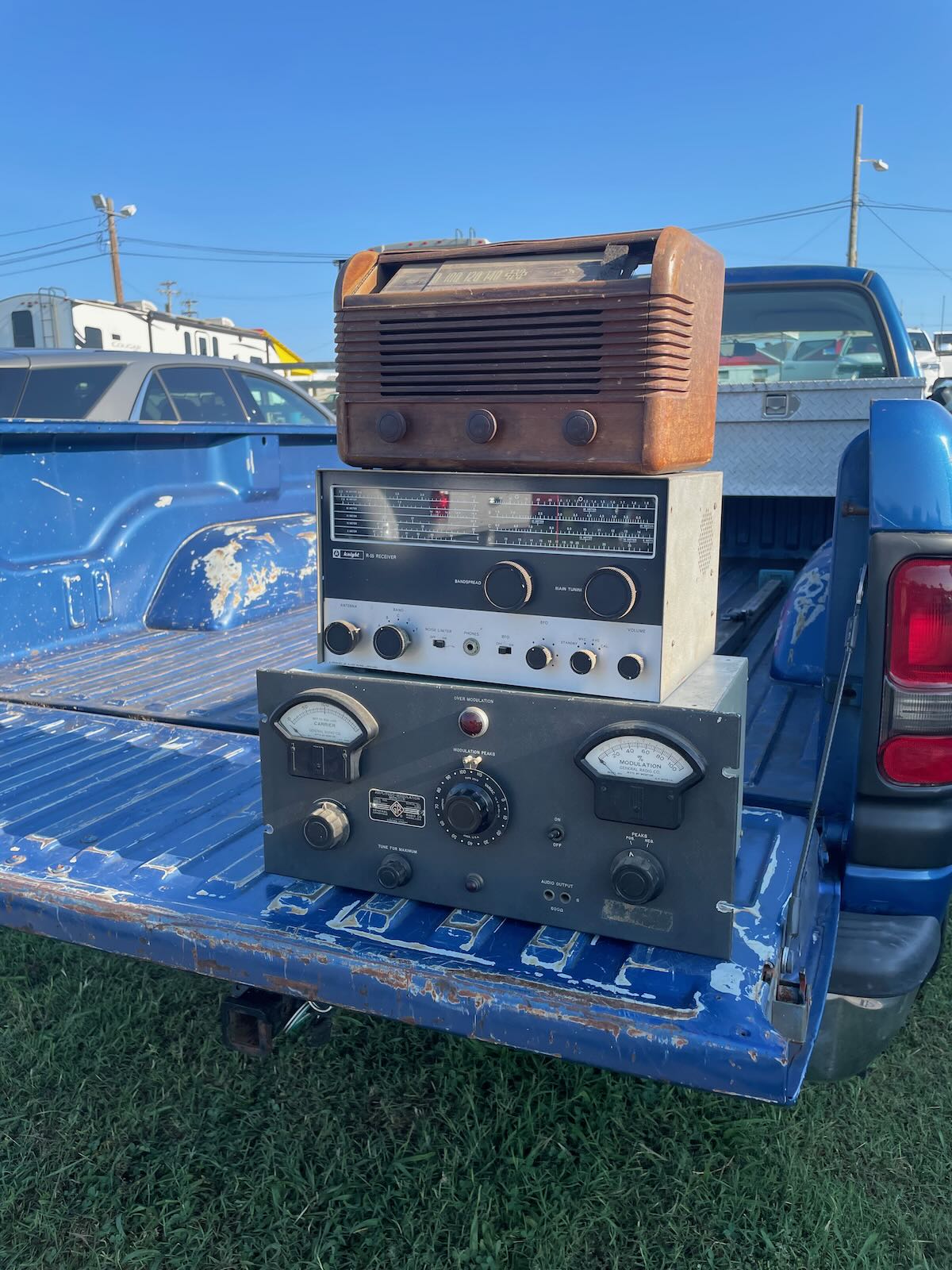
A photo tour of the 2022 Shelby Hamfest

On Friday, September 2, 2022, I had just enough time in my schedule to visit the Shelby Hamfest for a couple of hours.
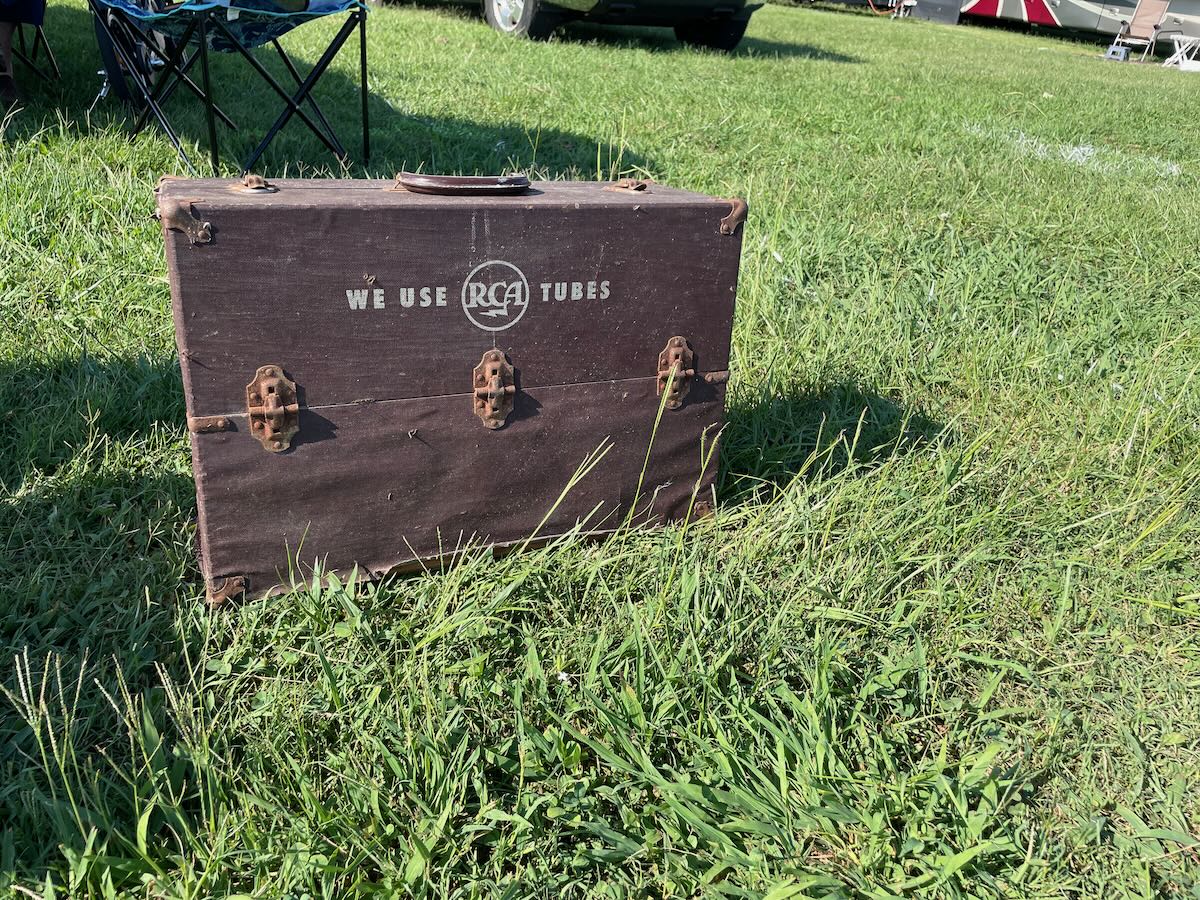
The Shelby Hamfest–referred to, locally, as “The Grand-Daddy of them All”–has long been regarded as one of the largest outdoor hamfests in the southeast US.

Shelby Photo Gallery

Weather was ideal for the hamfest: clear skies, sunshine and very dry. It was quite hot, though! Attendance was much lower than I’ve ever seen at the Shelby Hamfest in the past, but then again this was also my first Friday attending; typically I visit on Saturday which is historically the busiest day.

Continue reading

Dan reviews the new Chameleon CHA RXL Pro Wideband Magnetic Loop Antenna

Many thanks to SWLing Post contributor, Dan Robinson, for the following guest post and review:


Photo by Chameleon

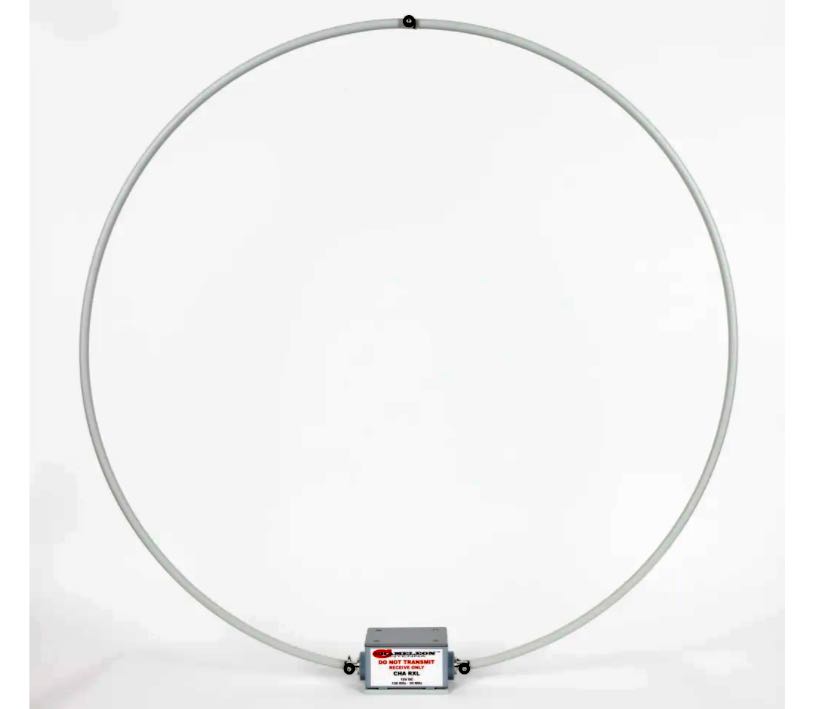
The Chameleon CHA-RXL Pro:  Improved Amp Board Raises the Game

by Dan Robinson

Back in 2021 I reviewed the CHA-RXL loop by Chameleon.  This loop antenna is sold by major retailers such as DX Engineering, Gigaparts and Chameleon itself – the company is a well-known name in antennas and other equipment for the amateur radio world.

I compared the CHA-RXL to Wellbrook 1530 and W6LVP loops feeding into a four-position Delta antenna switcher, and then to a Raven 16 port multicoupler which maintains good steady gain.

My Wellbrook is mounted on a telescopic mast about 15 feet above ground level, with a rotor.  The W6LVP (using LMR400 coax) is tripod-mounted with an overall height from ground of about 12 feet. It has special filters to prevent strong medium wave signals from bleeding into HF.

I have since added a UK-made loop (essentially a copy of a Wellbrook loop but smaller diameter and made of metal) combined with a W6LVP amp.  This W6 amp does not have filtering to block strong mediumwave signals.  In all, I have four loops into my Delta switcher, which feeds about two dozen receivers.

There is by the way quite robust discussion at https://groups.io/g/loopantennas about various loops, including the Chameleon.  And this past July, Steve Ratzlaff posted news about the upgraded loop amp board which will ship with what is now the CHA RXL Pro, saying:

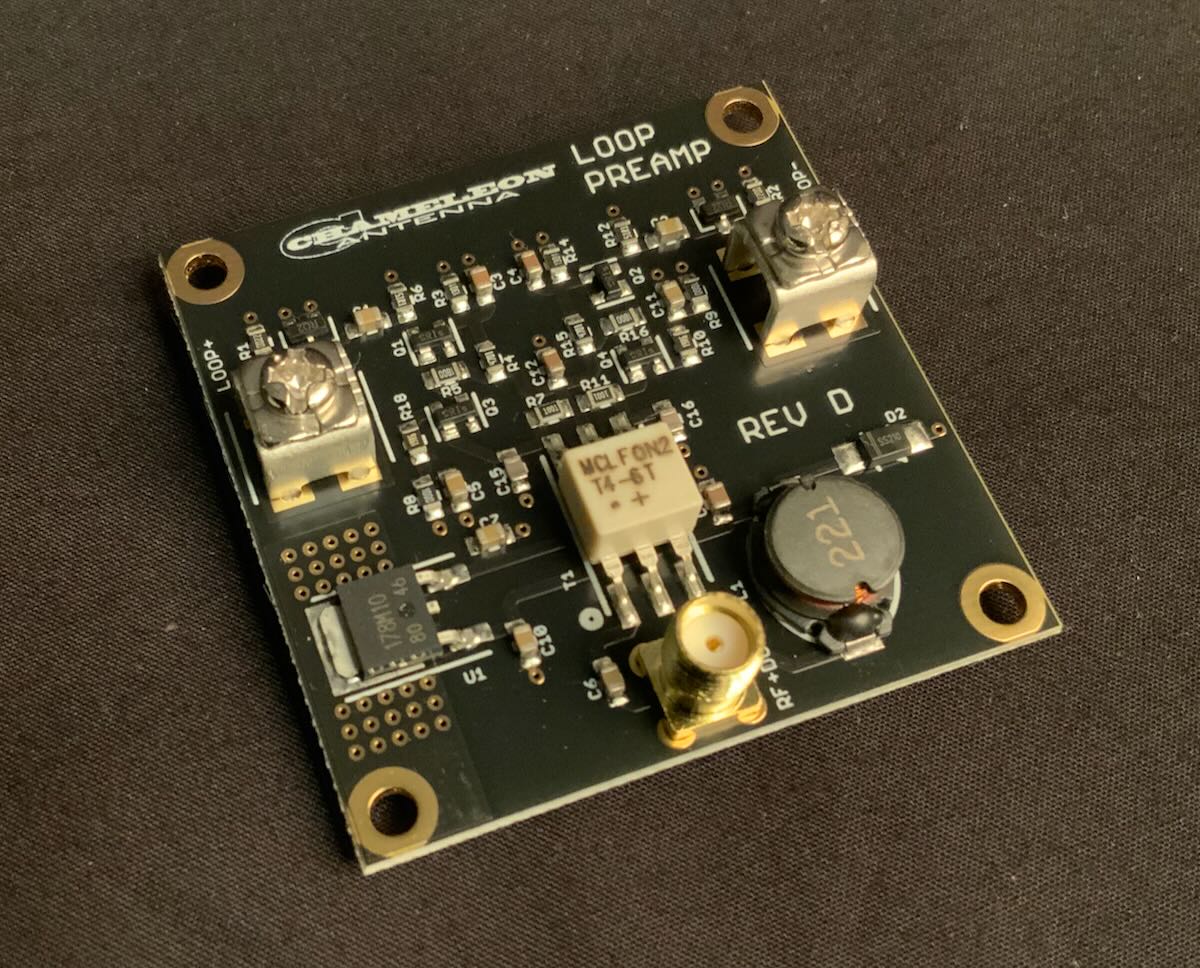
“Chameleon has completely redone their CHA RXL loop amp board from the previous poor-performing loop amp that I tested some time back, and sent me one of the new production boards to test. I’m happy to say it tests very well especially for LF sensitivity, and I can now give it my “seal of approval”.  The new board is a version of the LZ1AQ loop amp.”

Photo by Chameleon

It turns out, according to an email from Don Sherman of Chameleon, that Steve is one of the engineers who helped design the new amp board for the CHA RXL Pro, and on the Loop Antenna group he provides a folder in which he placed previous test results with “new files of the new board (sweep of the new RXL Pro loop amp, and a picture of the new amp PCB).”

Continue reading

RNZ Pacific resumes shortwave analogue service to Pacific region

(Source: RNZ via Alokesh Gupta)

RNZ Pacific resumes shortwave analogue service to Pacific region (RNZ)

From September 1, RNZ Pacific will resume its shortwave analogue service to the Pacific region between the hours of 5 and 9am New Zealand time.

Shortwave radio is radio transmission using shortwave (SW) radio frequencies.

RNZ Pacific broadcasts in digital and analogue shortwave to radio stations and individual listeners in the Pacific – the digital service is available via satellite and the analogue shortwave can be accessed by anyone with shortwave radio.

The AM service during the breakfast period was stopped in 2016.

The resumption of the analogue service will allow listeners in remote locations with a domestic shortwave radio to hear RNZ Pacific 24 hours a day, made possible with extra funding from the New Zealand government.

RNZ Pacific will run three different frequencies at various times, at 5am NZT tune in on 7425 kilohertz, at 6am NZT listen on 9700 kilohertz, and at 8am NZT change the dial to 11725.

For our full schedule of shortwave frequencies check out the RNZ Pacific website.

The DRM digital service during breakfast hours will continue on transmitter two for our partner stations around the Pacific region.

RNZ Pacific’s flagship daily current affairs programme Pacific Waves is widely listened to across the region and is also broadcast by the BBC Pacific Service.

Read the full story at RNZ.

Guest commentary: Nothing is so constant as change

Many thanks to SWLing Post contributor, Jerome van der Linden, who shares the following guest post:


Nothing is so constant as change

by Jerome van der Linden

Those of us who have had an interest in broadcasting over many years realize pretty soon that technology is constantly changing. The following relates to the situation where I live in Australia, but I suspect similar things are occurring in other parts of the world, and serve as a constant reminder that we live in a world of change.

When we were in our teens, we had radios that would tune AM and one or more shortwave bands. Hence many of us first heard interstate medium wave stations, and realised that signals there travelled further during darkness hours. Then we switched to SW1 or SW2 and often heard nothing. But persistence paid off and soon we were listening to stations that were in other countries! And when we connected a long wire to the antenna terminal signals improved dramatically. Wasn’t that amazing?

Somewhere in the 70s (I think) our TV stations brought in colour and that too was an amazing change to experience.

Then – somewhat belatedly for us in Australia – FM radio came along and gee the quality of the audio was outstanding! Even my late father was surprised by the clarity with which he could now listen to classical music on our nationwide dedicated ABC Classic FM station. FM also brought with it the introduction of “Community Radio” stations and in more recent years many other types of broadcasters.

Satellite TV came to us in the form of Foxtel: carrying so many different channels it was bewildering. When I realized that the events of 9-11 were telecast live on BBC World (and others), I too decided we should have Foxtel, as I have always been a “news nerd”.

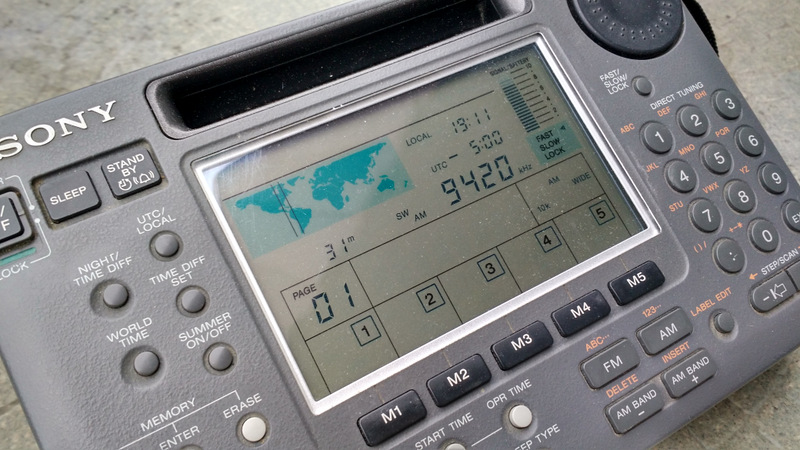
By the late 1990s – having seen a hey day in probably the 60s and 70s – shortwave listening was rapidly becoming a thing of the past, and only hobbyists listened to SW: I remember being asked by another passenger when I was on a South Pacific cruise, what was that I was listening with out on deck? Was it some kind of computer? No, it was just a Sony SW55, and I was listening to Radio Australia.

Then, probably 5 years ago in Australia DAB+ radio was introduced, and whereas we previously had a choice of perhaps 10 to 15 AM & FM radio stations to tune to, suddenly we had a choice of these same stations on DAB radio (in major cities only), PLUS another 10 or 15! We have a phenomenal choice of what to listen to. From a technical view it was amazing to think that all the signals were coming from only one or two transmitters. For those of us with some technical interest it was for a while inconceivable that each station would not have its own transmitter.

Meanwhile, our TV systems have also become digitized in the last couple of years. Not just do we have perhaps three different channels for each commercial network, so 3 commercial networks are now providing probably 9 different programs. On top of that the Government broadcasters (ABC & SBS) have provided not just at least 3 TV channels each, but each of their numerous ­radio services is now also available on every TV set (eg BBC World Service is available 24/7).

About the same time, with higher internet speeds (ie better data transfers) being available, TV services and radio services are increasingly being streamed into our homes and to our mobile devices, with radio Apps promising they’re “free”, when in fact they do incur a data transfer impact/cost in whatever Internet plan one may have available. Many of the older generation probably don’t even realize what streaming video or sound means, but I think the younger generation is catching on.

Now, to my horror, my favourite DAB music station (“Buddha”) has been making announcements on air saying that the DAB service will be terminated from September 1st, and if I want to continue listening, I must tune in using that Company’s own “LiSTNR” app! Does this mean that listening to what comes over the ether will be a thing of the past? Will we be obliged to pay $x per annum to use a company’s streaming app just to be able to listen to their programs? Whatever is the world coming to?

Our country is, I suspect, very well catered for in terms of media services, and I wonder if we’ve done that too well. I also fear though, that those of us trying to push for reintroduction of shortwave services for remote Northern Territory areas (where streaming apps are a non sense), and for Australia to again broadcast into Pacific territories, may be fighting an uphill battle.

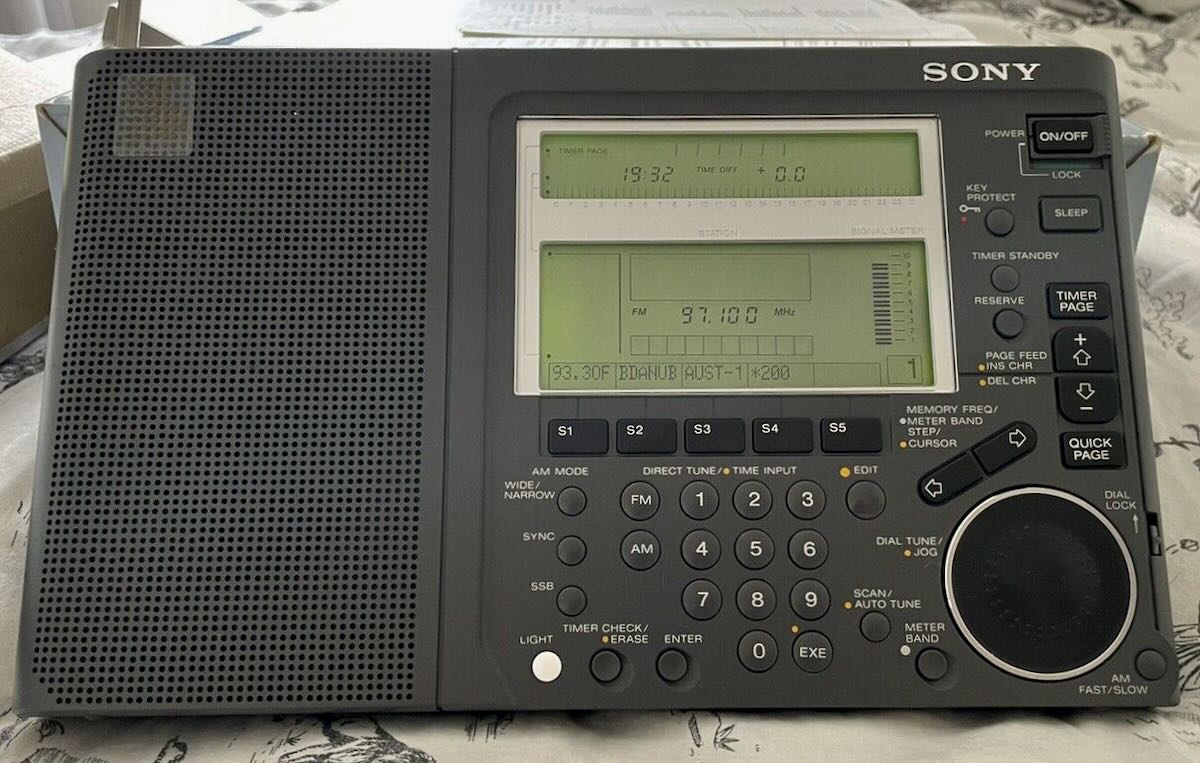
Julian spots a Sony ICF-SW77 on eBay

Many thanks to SWLing Post contributor, Julian, who writes:

Hi Thomas,

I found this eBay listing for a seemingly new in the box Sony ICF SW77 complete with accessories and paperwork. It may interest SWLing readers.

Click here to check it out on eBay.

Best wishes,
Julian

Thank you for the tip, Julian. This does look like a solid unit and in great shape. The seller also has a positive review history which is always a plus. As I always mention with portables of this age, you would need to plan to have it serviced in the future to make sure there are no leaky capacitors or other issues ongoing. I’ll admit I’ve always liked the design of the SW77! That said, 480 EUR is a steep asking price!

Radio Waves: The Gamut All Digital at 4 Years, Glory Days of Pirate Radio, AIR to Kashmir, and Podcast Collaborations

Radio Waves:  Stories Making Waves in the World of Radio

Welcome to the SWLing Post’s Radio Waves, a collection of links to interesting stories making waves in the world of radio. Enjoy!

Many thanks to Eric Jon Magnuson for summarizing these news items for Radio Waves!


Hubbard Is Four Years In With All-Digital AM. Here’s How It’s Doing. (Inside Radio)

It has been just over four years since Hubbard Radio’s adult alternative “The Gamut” WWFD, Frederick, MD (820) powered down its analog signal and began operating as a digital-only AM station under experimental authority granted by the FCC. Since then, new FCC rules permitting all-digital AMs industrywide have broadcasters taking a closer look at WWFD as they consider options for struggling AMs.

WWFD posted a 1.5 share (12+) in Nielsen’s Frederick, MD spring survey with a weekly cume of 3,300. Before it went all digital, Dave Kolesar, Senior Broadcast Engineer at Hubbard and the station’s PD, says it was a ratings no-show, “a wasted signal.”

The idea for making the all-digital leap came around Christmas 2016 when Kolesar concluded that a music format on AM – even one as differentiated as The Gamut’s expansive playlist – was “pretty much a nonstarter that exists for the purpose of having an FM translator. In all-digital mode, the AM signal has the capability of becoming relevant again” with digital sound quality, and artist and album title and album artwork displays.

According to Xperi, about 35% of cars on the road in the DC market are equipped with HD Radio receivers. Yet only a small fraction of listening to radio in the market is to AM radio. The station focuses on the one-third of the market that could enjoy a music format that looks and feels like any other service in the dashboard. The strategy involves using the FM translator as promotional vehicle for the digital AM frequency: “when you’re outside the coverage area of our 94.3 FM signal, tune into 820 and hear us while you’re driving around,” Kolesar explains. [Continue reading…]

OPINION: Remembering the glory days of pirate radio 55 years on (Eastern Daily Press)

Radio DJ Tom Edwards looks back at his youth spent broadcasting off the East Anglia coast

Although I’ve lived in Lincolnshire for nearly 30 years having been born and educated in Norwich, I will of course always be a Norfolk man. At 77 years of age now I’ve been a broadcaster for 57 of those years.

During Easter of 1964 a somewhat mysterious radio station came on the airwaves playing non-stop music and the presenters seemed to be just ad libbing at the microphone in contrast to the rather staid BBC light programme which hardly played any popular music. The station turned out to be the now famous Radio Caroline, which was transmitting from a ship off the East Anglia coast.

I was a Bluecoat at Pontins holiday camp at Pakefield and the site had a Radio Pontins Tannoy system so I asked the boss for some money to buy some 45 hit singles which he agreed to and so started doing record requests for the happy campers.

Other stations, whether they were ships or wartime fortresses, suddenly began to appear right around the coast of the UK. Apart from Caroline there were other stations including Radio London, Radio England, Radio270 and Radio 390.

The more I heard of these stations, which were becoming so popular with an estimated audience of 22 million, the more I wanted to be out there at sea with them. I wrote and sent tapes of my Pontins shows to all of them. While on a few days off in Norwich, a man called Reg Calvert called me and said he liked what he heard and offered me a weekend try out on Radio City. [Continue reading…]

AIR’s Station At 9,000 Feet Along LoC In Kashmir Broadcasts Programs For People Living Across Border (India Times)

Surrounded by the barbed wires, dense deodar trees and Pir Panchal mountains in the backdrop, this is the All India Radio (AIR) Srinagar’s Radio Station which has been set up close to the Line of Control (LoC) in Rustum area of J&K’s Uri sector.

Set up in November 2020, the station has been built 9,000 feet above the sea level.

The radio station has been set up with an aim to provide access to the Kashmiri people living on the other side of the border to listen to their favourite programs.

“The local news, music programs and especially Pahari and Gojari programs are aired from this station for the Kashmiri population living on the other side of the LoC,” said Qazi Masood who heads the station in Uri. [Continue reading…]

Podcast Collaborations: The positives, the pitfalls, and the public interest (Public Media Alliance)

Three top public media podcast executives discuss with PMA the benefits and complications that come with collaborations, and how ultimately, they can help public media organisations fulfil their public service obligations.

As the podcast market globally becomes ever more saturated and competitive, PMA invited three top podcast executives from three leading public media organisations to discuss how collaborations might provide the pathway for public media organisations to remain the premier podcast producers. It came after a talk about podcast collaborations at Radiodays Europe in Malmö, Sweden in May 2022.

They spoke to PMA’s Editorial Manager, Harry Lock.

Harry Lock: Could you give me some examples of podcasts which you’ve worked on where you collaborated with another organisation? How does it actually work logistics-wise? 

Arif Noorani, Director of CBC Podcasts: Hunting Warhead is a collaboration we did with VG, Scandinavia’s biggest newspaper, on a story they’d spent more than two years on (it was nominated for a Prix Italia.) Production wise – CBC led the podcast and embedded a VG team member in the production team providing contacts, research and notes on scripts.

We have three international co-productions with the BBC World Service – launching in the next year. It’s an equal joint effort – Jon Manel, commissioner for the BBC World Service and I co-lead all aspects of the project. We think the combined heft of CBC Podcasts and the BBC World Service was attractive. We meet weekly and more (along with Whatsapping each other if it’s urgent) to discuss production, content, rollout and all the business side of things. We have one point person between the production teams and the BBC/CBC to keep it streamlined. To make this work, you have to have lots of trust between all sides, and a shared vision of the type of content you want to make (in this case journalistically-driven serialised narrative storytelling rich in characters and heartbeat). Jon and I have informally collaborated for a few years so that really helped. We’ll also combine our audience building, digital and marketing efforts in the launch and rollout.

Andrew Davies, Digital and Engagement Editor, ABC Australia: Co-productions and collaborations with external organisations/partners is still a relatively new area for the ABC in podcasting. There have been a number of collaborations between Radio National (ABC’s specialist talks network) and the BBC but those have mostly been radio focused. The ABC’s Audio Studios team did a co-production with WNYC Studios a few years ago with Short & Curly, our very popular ethics podcast for children.

More recently we’ve worked with Arif and the CBC Podcasts team around the release of series two of our popular Stuff The British Stole podcast. That involved the CBC team helping with audience building (through cross-promotion, publicity, marketing and digital/social content) in the North American market. That was a really successful collaboration and we were excited to work with the CBC as we knew they recognised not just what a great show it is but also wanted to help it reach a bigger audience. There were a large number of people involved from both broader teams but I want to echo Arif’s point about having clear point people on both sides to keep things streamlined.

Tim Watkin, Executive Producer of Podcasts & Series, RNZ: RNZ Podcasts has produced 46 podcasts in partnership with 38 different organisations. That includes other broadcasters and media, production houses and funders. Collaboration can take many forms.

The most common form of collaboration for RNZ is where we make a podcast alongside an independent production company. For example, Eating Fried Chicken in the Shower is a series that was pitched to us by an independent producer, Charlie Bleakley, and host James Nokise. RNZ paid for the series but was very hands-on, more than a mere commission. We provided a supervising producer, sound recordist on location, draft audio edits, studios for the final mix and promotion. [Continue reading…]


Do you enjoy the SWLing Post?

Please consider supporting us via Patreon or our Coffee Fund!

Your support makes articles like this one possible. Thank you!