Author Archives: Thomas

Treetop Antennas: Featured with my friend Wlodek (US7IGN) on BBC Radio 4 Short Cuts

I’m very honored to be featured with my good friend Wlodek (US7IGN) in a short radio documentary on BBC Radio 4 today.

Wlodek is long-time reader and subscriber here on the SWLing Post and QRPer.com. Wlodek lives in Kiev, Ukraine and we keep in touch these days over email. Like me, he is passionate about field radio work and before the Russian invasion, you’d often find him in nearby forests experimenting with some pretty impressive field antennas.

Sadly, when Russia invaded Ukraine earlier this year, it very quickly brought an end to all of that for Wlod. Not only were amateur radio operators not allowed to transmit under the state of emergency, but it’s no longer safe to venture into nearby forests.

Radio producer, Cicely Fell, learned about our love of all things field radio and put together an audio piece that airs today on BBC Radio 4:

BBC Radio 4 Short Cuts

From the forests of North Carolina, USA to the city of Kyiv, Ukraine – two ham radio enthusiasts seek each other out and a voice from the past prompts a dialogue on listening between a rabbi and a radio producer.

Click here to listen via the BBC Radio 4 website (note that the audio can be streamed shortly after the program airs today).

Many thanks to Cicely and her talented team at Falling Tree Productions for spending a little time with us in the forest and on the air! Truly an honor.

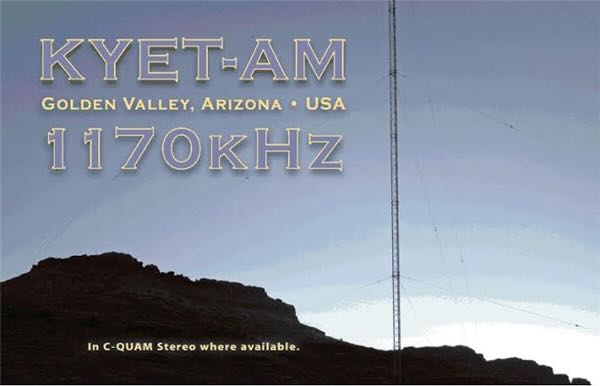
Video: Tour of AM Stereo Station KYET

Many thanks to SWLing Post contributor, Dave (N9EWO), who writes:

Dan, shango066 on You Tube give us a nice little tour of KYET on 1070 kHz in Golden Valley Arizona which transmits in AM Stereo (6K day, 1 watt night). Harris solid state transmitter which is also shown in this video:

Click here to view on YouTube.

First part of his video explains the modified Realistic receiver (which he could not get working, well at least not yet):

Click here to view on YouTube.

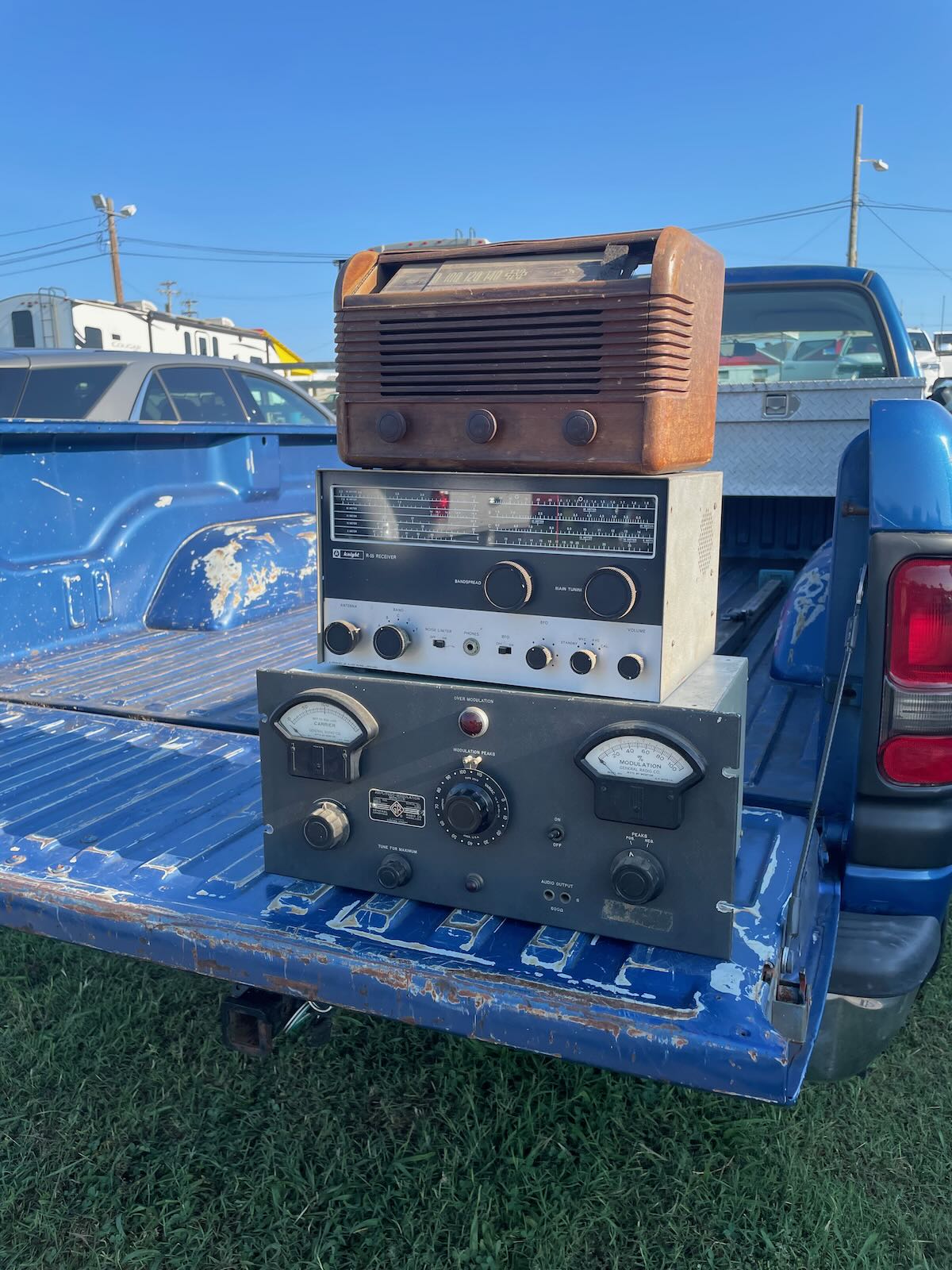
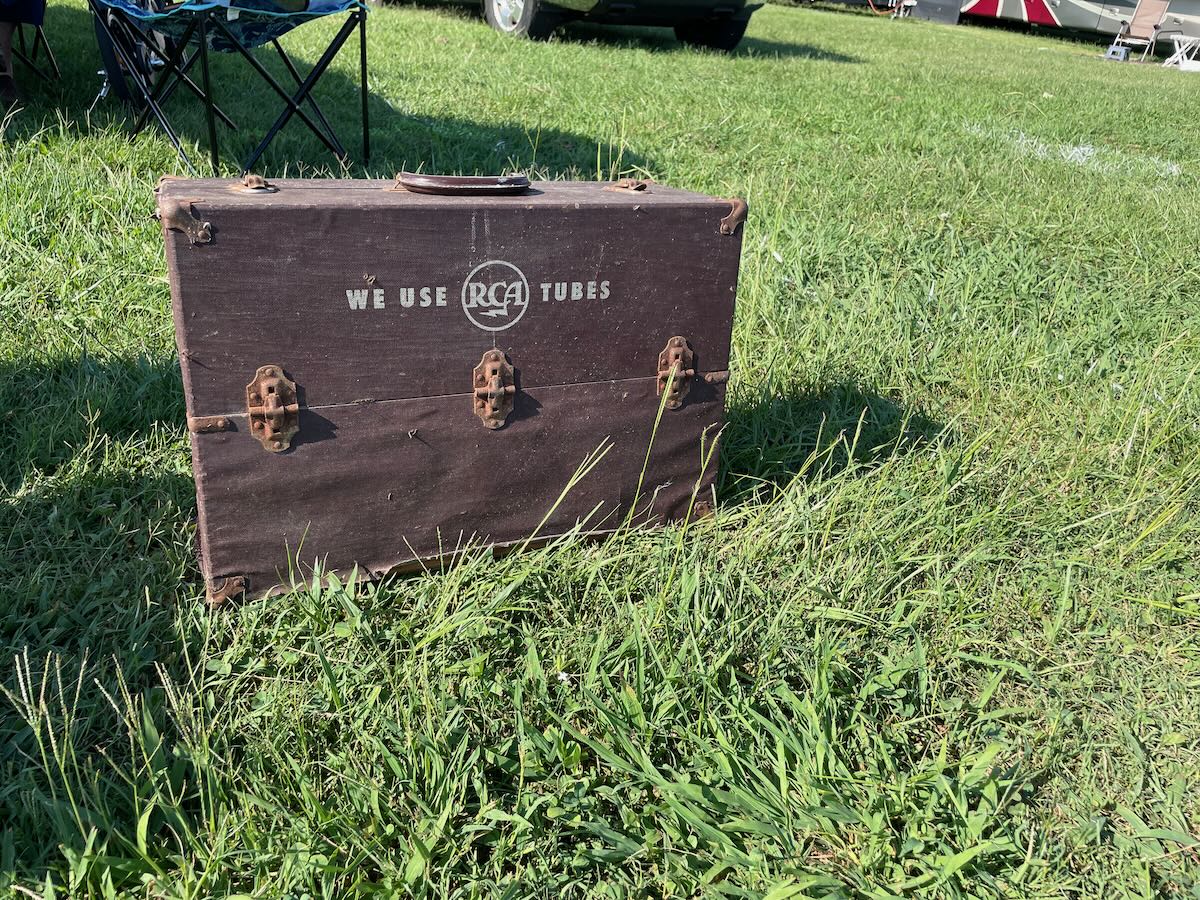
A photo tour of the 2022 Shelby Hamfest

On Friday, September 2, 2022, I had just enough time in my schedule to visit the Shelby Hamfest for a couple of hours.

The Shelby Hamfest–referred to, locally, as “The Grand-Daddy of them All”–has long been regarded as one of the largest outdoor hamfests in the southeast US.

Shelby Photo Gallery

Weather was ideal for the hamfest: clear skies, sunshine and very dry. It was quite hot, though! Attendance was much lower than I’ve ever seen at the Shelby Hamfest in the past, but then again this was also my first Friday attending; typically I visit on Saturday which is historically the busiest day.

Continue reading

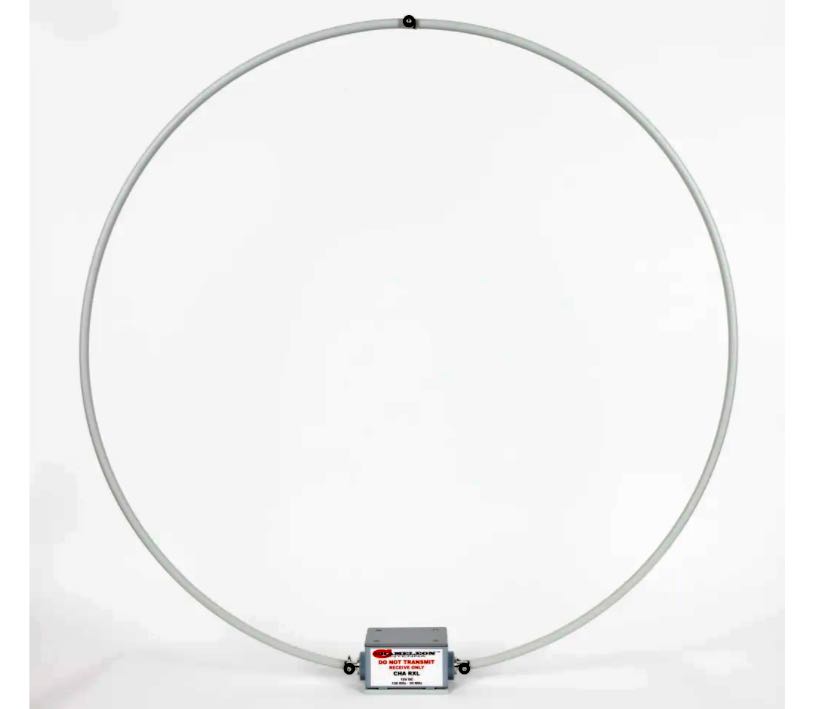
Dan reviews the new Chameleon CHA RXL Pro Wideband Magnetic Loop Antenna

Many thanks to SWLing Post contributor, Dan Robinson, for the following guest post and review:


Photo by Chameleon

The Chameleon CHA-RXL Pro:  Improved Amp Board Raises the Game

by Dan Robinson

Back in 2021 I reviewed the CHA-RXL loop by Chameleon.  This loop antenna is sold by major retailers such as DX Engineering, Gigaparts and Chameleon itself – the company is a well-known name in antennas and other equipment for the amateur radio world.

I compared the CHA-RXL to Wellbrook 1530 and W6LVP loops feeding into a four-position Delta antenna switcher, and then to a Raven 16 port multicoupler which maintains good steady gain.

My Wellbrook is mounted on a telescopic mast about 15 feet above ground level, with a rotor.  The W6LVP (using LMR400 coax) is tripod-mounted with an overall height from ground of about 12 feet. It has special filters to prevent strong medium wave signals from bleeding into HF.

I have since added a UK-made loop (essentially a copy of a Wellbrook loop but smaller diameter and made of metal) combined with a W6LVP amp.  This W6 amp does not have filtering to block strong mediumwave signals.  In all, I have four loops into my Delta switcher, which feeds about two dozen receivers.

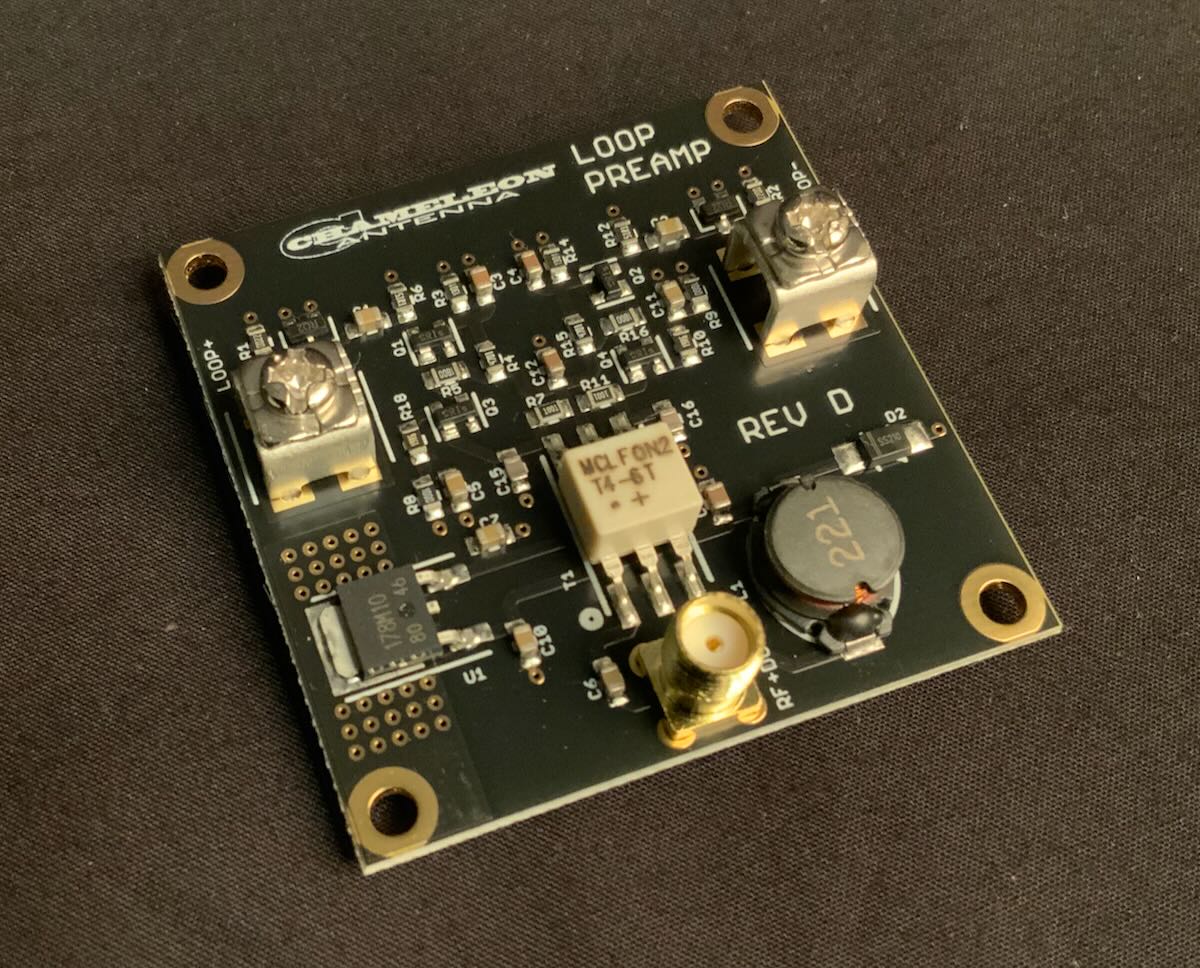
There is by the way quite robust discussion at https://groups.io/g/loopantennas about various loops, including the Chameleon.  And this past July, Steve Ratzlaff posted news about the upgraded loop amp board which will ship with what is now the CHA RXL Pro, saying:

“Chameleon has completely redone their CHA RXL loop amp board from the previous poor-performing loop amp that I tested some time back, and sent me one of the new production boards to test. I’m happy to say it tests very well especially for LF sensitivity, and I can now give it my “seal of approval”.  The new board is a version of the LZ1AQ loop amp.”

Photo by Chameleon

It turns out, according to an email from Don Sherman of Chameleon, that Steve is one of the engineers who helped design the new amp board for the CHA RXL Pro, and on the Loop Antenna group he provides a folder in which he placed previous test results with “new files of the new board (sweep of the new RXL Pro loop amp, and a picture of the new amp PCB).”

Continue reading

RNZ Pacific resumes shortwave analogue service to Pacific region

(Source: RNZ via Alokesh Gupta)

RNZ Pacific resumes shortwave analogue service to Pacific region (RNZ)

From September 1, RNZ Pacific will resume its shortwave analogue service to the Pacific region between the hours of 5 and 9am New Zealand time.

Shortwave radio is radio transmission using shortwave (SW) radio frequencies.

RNZ Pacific broadcasts in digital and analogue shortwave to radio stations and individual listeners in the Pacific – the digital service is available via satellite and the analogue shortwave can be accessed by anyone with shortwave radio.

The AM service during the breakfast period was stopped in 2016.

The resumption of the analogue service will allow listeners in remote locations with a domestic shortwave radio to hear RNZ Pacific 24 hours a day, made possible with extra funding from the New Zealand government.

RNZ Pacific will run three different frequencies at various times, at 5am NZT tune in on 7425 kilohertz, at 6am NZT listen on 9700 kilohertz, and at 8am NZT change the dial to 11725.

For our full schedule of shortwave frequencies check out the RNZ Pacific website.

The DRM digital service during breakfast hours will continue on transmitter two for our partner stations around the Pacific region.

RNZ Pacific’s flagship daily current affairs programme Pacific Waves is widely listened to across the region and is also broadcast by the BBC Pacific Service.

Read the full story at RNZ.

Guest commentary: Nothing is so constant as change

Many thanks to SWLing Post contributor, Jerome van der Linden, who shares the following guest post:

Nothing is so constant as change

by Jerome van der Linden

Those of us who have had an interest in broadcasting over many years realize pretty soon that technology is constantly changing. The following relates to the situation where I live in Australia, but I suspect similar things are occurring in other parts of the world, and serve as a constant reminder that we live in a world of change.

When we were in our teens, we had radios that would tune AM and one or more shortwave bands. Hence many of us first heard interstate medium wave stations, and realised that signals there travelled further during darkness hours. Then we switched to SW1 or SW2 and often heard nothing. But persistence paid off and soon we were listening to stations that were in other countries! And when we connected a long wire to the antenna terminal signals improved dramatically. Wasn’t that amazing?

Somewhere in the 70s (I think) our TV stations brought in colour and that too was an amazing change to experience.

Then – somewhat belatedly for us in Australia – FM radio came along and gee the quality of the audio was outstanding! Even my late father was surprised by the clarity with which he could now listen to classical music on our nationwide dedicated ABC Classic FM station. FM also brought with it the introduction of “Community Radio” stations and in more recent years many other types of broadcasters.

Satellite TV came to us in the form of Foxtel: carrying so many different channels it was bewildering. When I realized that the events of 9-11 were telecast live on BBC World (and others), I too decided we should have Foxtel, as I have always been a “news nerd”.

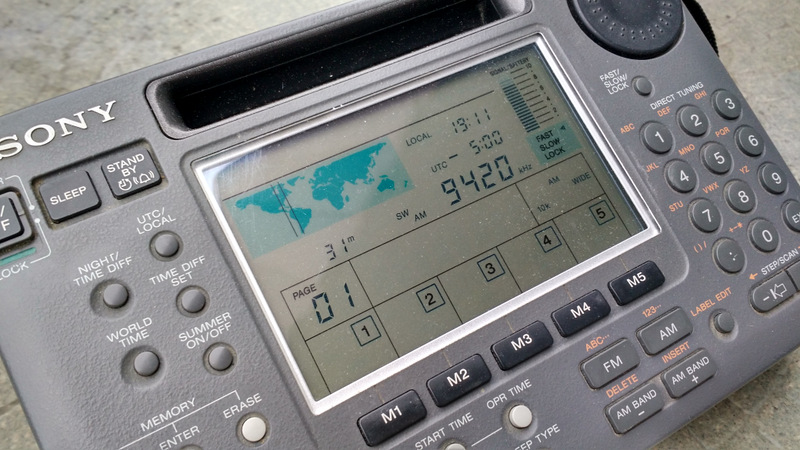
By the late 1990s – having seen a hey day in probably the 60s and 70s – shortwave listening was rapidly becoming a thing of the past, and only hobbyists listened to SW: I remember being asked by another passenger when I was on a South Pacific cruise, what was that I was listening with out on deck? Was it some kind of computer? No, it was just a Sony SW55, and I was listening to Radio Australia.

Then, probably 5 years ago in Australia DAB+ radio was introduced, and whereas we previously had a choice of perhaps 10 to 15 AM & FM radio stations to tune to, suddenly we had a choice of these same stations on DAB radio (in major cities only), PLUS another 10 or 15! We have a phenomenal choice of what to listen to. From a technical view it was amazing to think that all the signals were coming from only one or two transmitters. For those of us with some technical interest it was for a while inconceivable that each station would not have its own transmitter.

Meanwhile, our TV systems have also become digitized in the last couple of years. Not just do we have perhaps three different channels for each commercial network, so 3 commercial networks are now providing probably 9 different programs. On top of that the Government broadcasters (ABC & SBS) have provided not just at least 3 TV channels each, but each of their numerous ­radio services is now also available on every TV set (eg BBC World Service is available 24/7).

About the same time, with higher internet speeds (ie better data transfers) being available, TV services and radio services are increasingly being streamed into our homes and to our mobile devices, with radio Apps promising they’re “free”, when in fact they do incur a data transfer impact/cost in whatever Internet plan one may have available. Many of the older generation probably don’t even realize what streaming video or sound means, but I think the younger generation is catching on.

Now, to my horror, my favourite DAB music station (“Buddha”) has been making announcements on air saying that the DAB service will be terminated from September 1st, and if I want to continue listening, I must tune in using that Company’s own “LiSTNR” app! Does this mean that listening to what comes over the ether will be a thing of the past? Will we be obliged to pay $x per annum to use a company’s streaming app just to be able to listen to their programs? Whatever is the world coming to?

Our country is, I suspect, very well catered for in terms of media services, and I wonder if we’ve done that too well. I also fear though, that those of us trying to push for reintroduction of shortwave services for remote Northern Territory areas (where streaming apps are a non sense), and for Australia to again broadcast into Pacific territories, may be fighting an uphill battle.