Author Archives: Thomas

SDRuno Version 1.1 Update

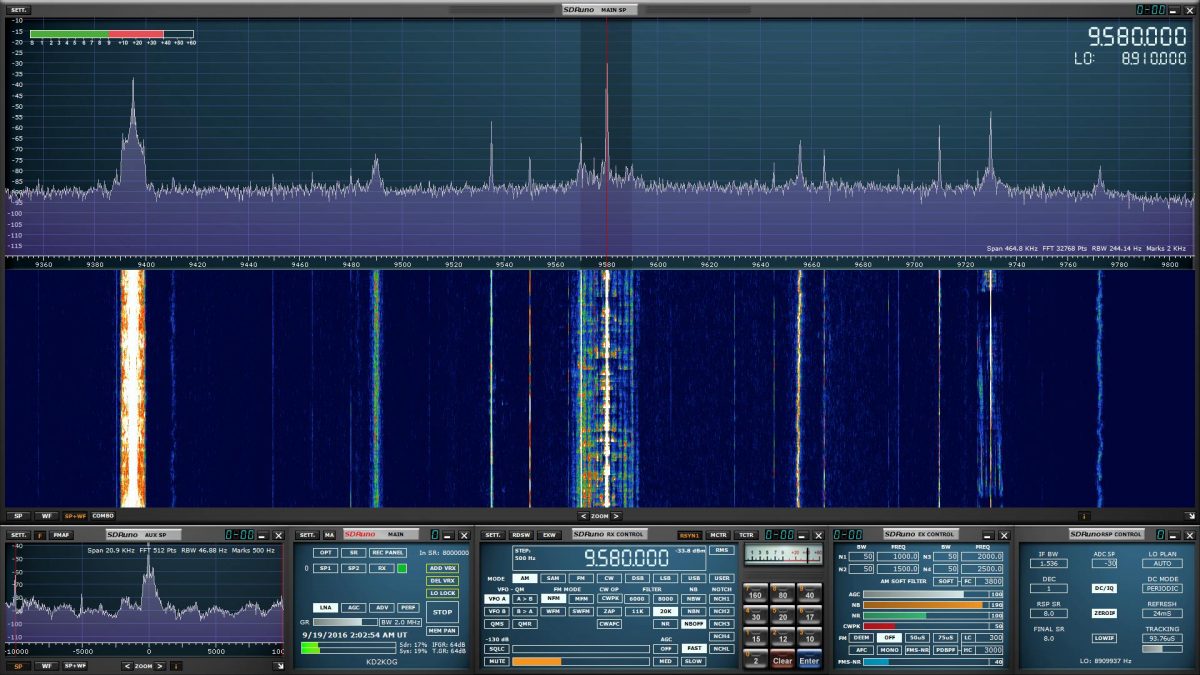
sdruno-screenshot

(Source: SDRplay Press Release)

Today, we released version 1.1 of SDRuno, specifically for RSP. New features include a calibrated power measurement facility, an SNR meter and automatic S-meter calibration. There are many additional improvements and fixes. To find out more about all the additional features, documentation can be found on:

http://www.sdrplay.com/docs/SDRplay_SDRuno_Release_Notes.pdf

and the software is available to download from:

http://www.sdrplay.com/windows.html

Paul Jones and Mike Ladd have worked tirelessly to get the new features documented in an updated version of the SDRuno Cookbook: http://www.nn4f.com/SDRuno-cookbook.pdf

Other SDRs can also use SDRuno with a new increased bandwidth limit of 2.5MHz.

Many thanks to Jon Hudson at SDRplay for sharing this info!

Possible Tecsun PL-880 hidden feature: Noise reduction adjustment?

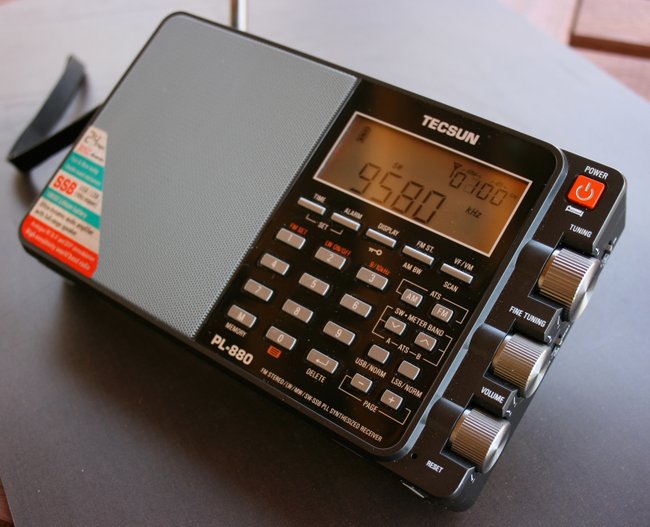
PL-880 (1)

Many thanks to SWLing Post reader, Paul, who writes:

While putzing around with my new Tecsun PL-880 that I got while browsing at Universal Radio’s store in Columbus OH, I found what appears to be an adjustable noise reduction function.

Firmware level: 8820
Mfg date: probably August 2016 (201608 from the serial number inside the tilt stand)

Here are the steps to check it out;

When in a shortwave band, press “4” until either “ON” or “OFF” appears in the display.
If it displays “OFF”, press 4 briefly to clear, then long press again until “ON” appears.

Then, long press “9” until a two digit number appears.

Use either tuning knob to increase or decrease the number.

The number appears to correspond with the DbM threshold of the received signal.

Perhaps someone can play with the feature and elaborate on its function.

Hope this is useful, let me know.

Thank you for sharing, Paul!  I do wonder if this adjustment could affect the DNR setting (check out this previous post as well).

Post readers: Has anyone else been able to replicate and test this hidden feature? Please comment!

Shortwave Radio Recordings: Radio Thailand English language service

Paul-Walker-Galena-Alaska

Many thanks to SWLing Post contributor, Paul Walker, who shares this recording from his home in Galena, Alaska. Paul notes:

Radio Thailand (13745 kHz) English service to North America at 0000UTC on November 8th, 2016:

https://www.youtube.com/watch?v=5adJQvP1Nu8

Click here to view on YouTube.

Not the strongest I ever hear them, but a good solid clean nearly noise and nearly fade free signal.

That’s an impressive signal, Paul, especially considering the fact that propagation conditions have been somewhat shaky as of late. Thanks for sharing!

Hoax Radio transmissions at Melbourne and Avalon airports

The Melbourne Airport (Source: melbourneairport.com.au)

The Melbourne Airport (Source: melbourneairport.com.au)

Many thanks to SWLing Post contributor, Phil Brennan, who writes:

Your readers might be interested in this article from today’s Guardian

Hoax radio transmission at Melbourne airport forces plane to abort landing

Police are investigating 15 incidents of illegal radio transmissions with aircraft at Melbourne and Avalon airports, including hoax calls that forced at least one aircraft to abort its landing.

In a statement issued on Monday night, the Australian federal police said there had been “unlawful interference with air traffic control broadcasts over several weeks”.

Audio obtained by the ABC revealed that, during one of the calls, the hoax caller pretended to be the pilot of a light aircraft as he spoke to an air traffic controller.

“I can see you there now. Roger your mayday. Could you please advise what your situation is,” the air traffic control operator asks.

“Engine failure,” the hoax caller replies. “Descending passing through 4,500.”

In another incident a Virgin Australia flight en route from the Gold Coast to Melbourne was forced to change course under the instruction of the hoax caller transmitting from an unknown location, the ABC reported.

Continue reading…

Such behaviour could have disastrous consequences.

You’re right, Phil. It angers me to no end when people intentionally cause interference or disrupt operations at airports. So many lives depend on air traffic control and flight communications systems.

Thank you for sharing.


Nicholas uses Android phone and $18 receiver to decode VOA Radiogram

voa-radiogram-decode-app

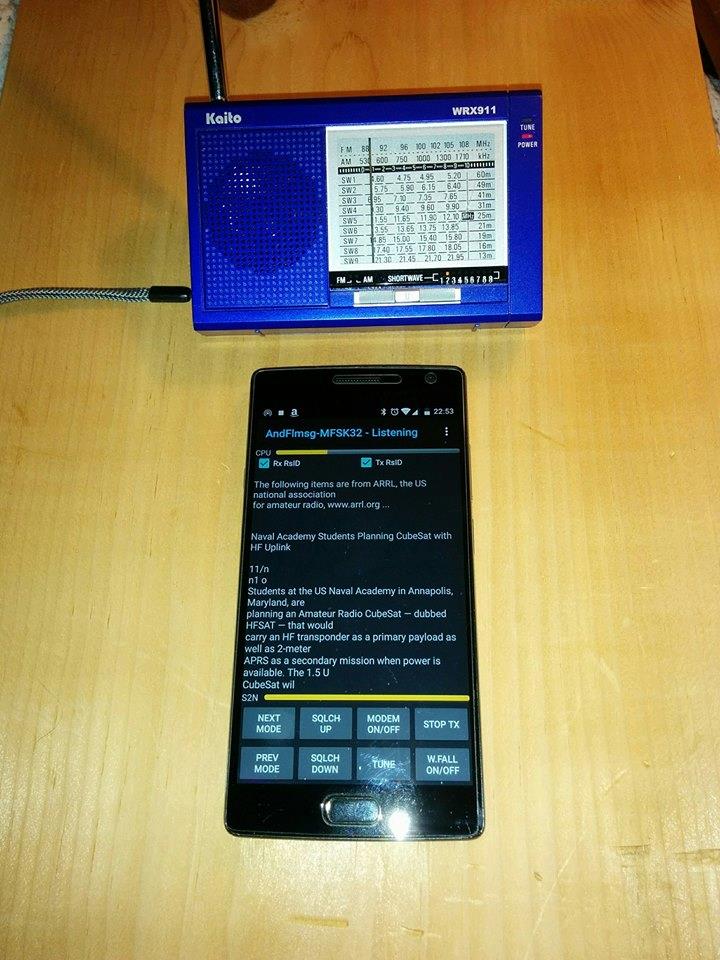
Many thanks to Nicholas Pospishil, who shares this photo and notes:

“VOA Radiogram on 5745 kHz. No fancy equipment needed.”

No kidding! Mobile phones and tablets now have more than enough horsepower to decode most VOA Radiograms.

Nicholas uses the free AndFlmsg app for Android to decode. Note that AndFlmsg is not available in the Google Play store, you must manually install it using these directions.

The Kaito WRX911 is an $18 US receiver and AndFlmsg is free. That’s a pretty inexpensive and accessible combo!

Nicholas originally posted this image on Gary J. Cohen’s Shortwave Listeners Global.

Thanks for sharing, Nicholas!

Mark’s Global Spectrum Project MK2

mark-fahey-beagle-kiwi-sdr

Many thanks to SWLing Post contributor, Mark Fahey, who shares the following:

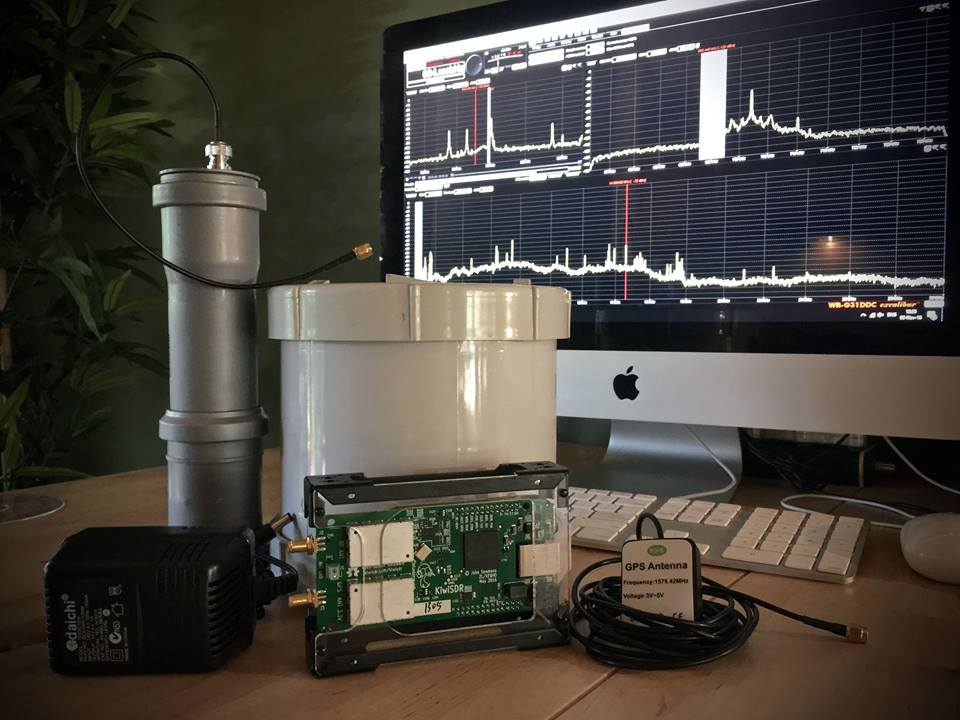
It’s been a fun weekend getting the first two remote modules for the Spectrum Project MK2 together. These modules tune into and then digitally preserve broadcasted human communication; music, discussion, culture for future generations to study and ponder.

This initial version of the hardware provides 0-30MHz with four (simultaneous) independently configured receivers that are controlled remotely from anywhere on the planet. The first of the modules will be installed near Vladivostok in Russia’s far east and the second is planned to go to one of the “stans” in Central Asia, most likely Kazakhstan.
markfahey-kiwisdr

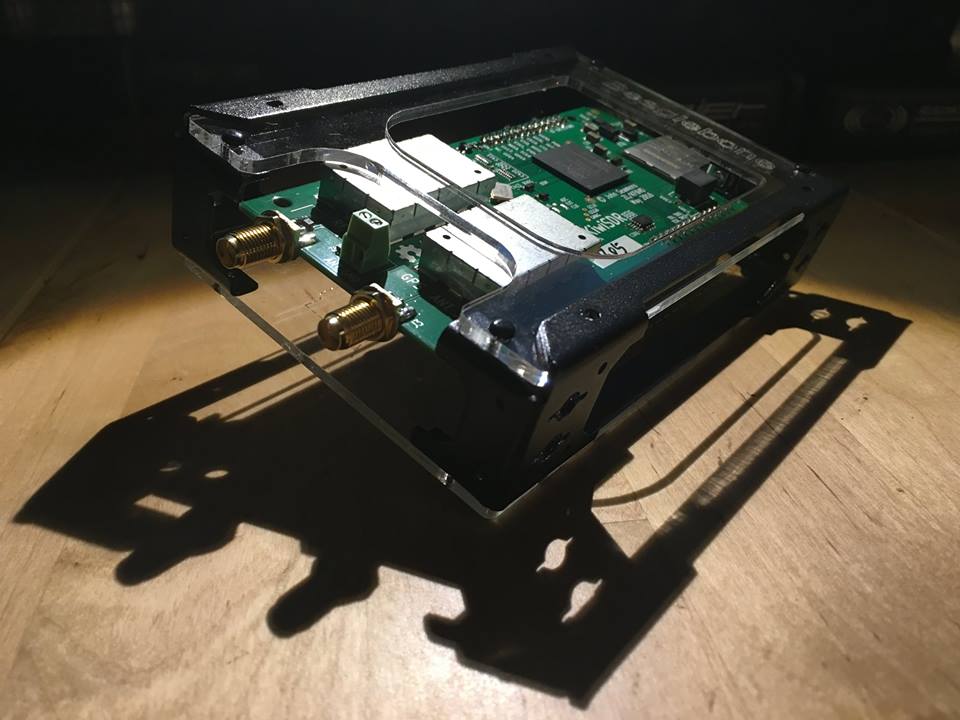
The hardware includes a KiwiSDR 0-30MHz SDR 4 channel receiver AM LSB USB CW FM plus GPS for precision timing and location information. A BeagleBone Green is the CPU and the compact 100KHz-30MHz active antennas we are using are precision built by RA0SMS in Irkutsk, Siberia, Russia.

(Note to fellow SDR geeks – the WinRadio Excalibur running on the iMac [above] is not part of the remote system – it just happens to live on my assembly bench).
markfahey-sdr-module1

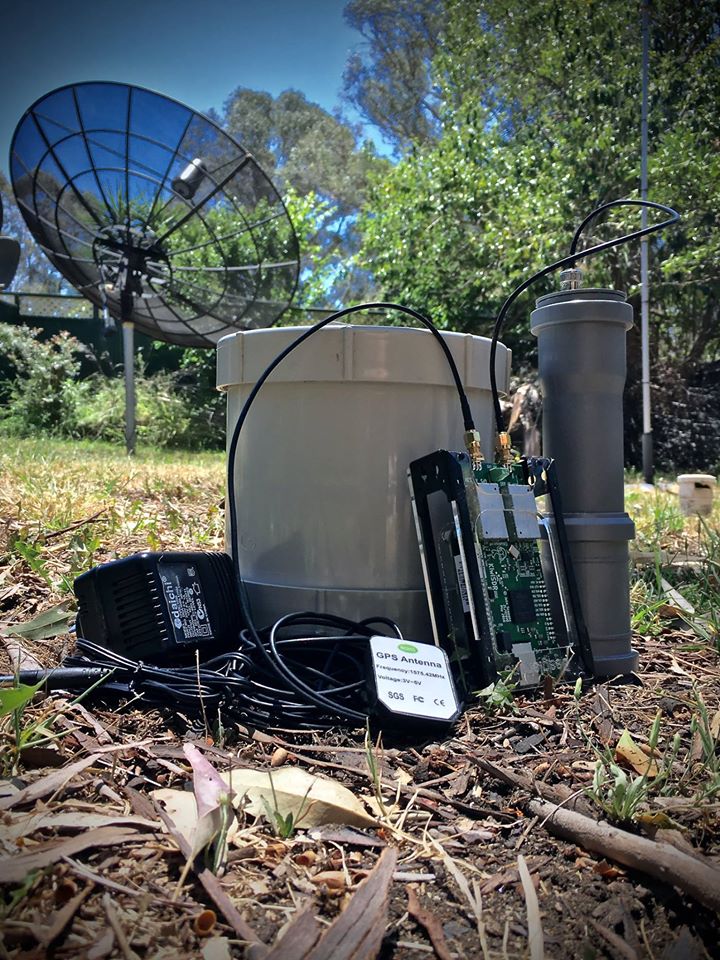
Remote Module #1 prior to sealing.

This first generation is built to connect to a wired internet connection and power supply. The hardware includes a KiwiSDR 0-30MHz SDR 4 channel receiver AM LSB USB CW FM plus GPS for precision timing and location information. A BeagleBone Green is the CPU and the compact 100KHz-30MHz active antennas we are using are precision built by RA0SMS in Irkutsk, Siberia.

Remote Module #3 and later will support solar power and a 4G/ LTE connection so the devices can be located anywhere on the planet that has reasonable cell phone coverage.
Remote Module #2

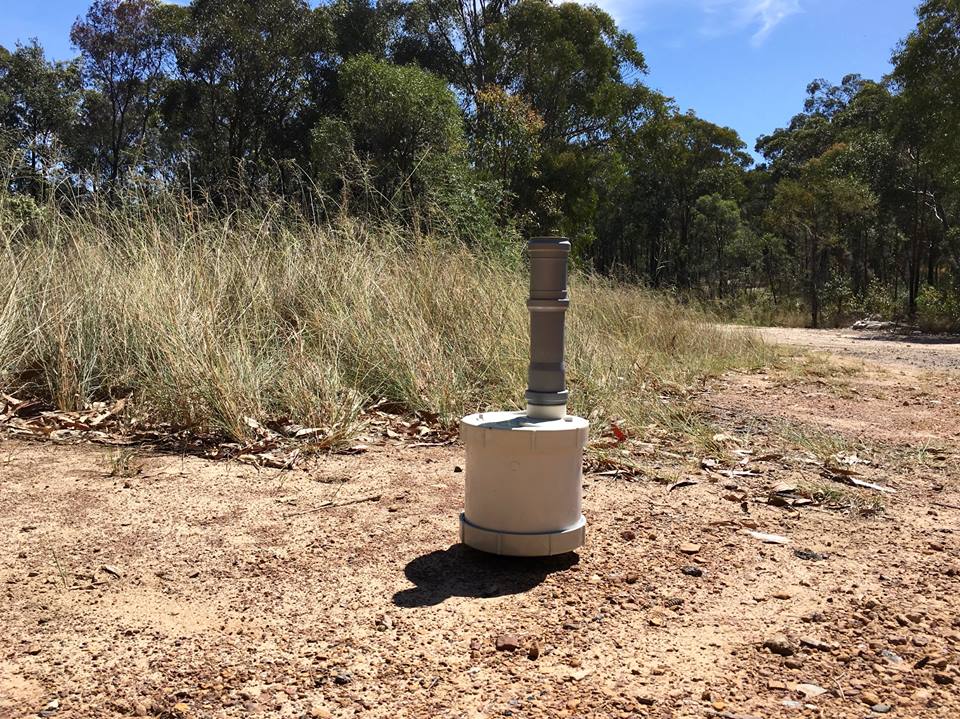
Remote Module #2

This is Remote Module #2 sealed and ready for connection to a network and power supply. The hardware includes a KiwiSDR 0-30MHz SDR 4 channel receiver AM LSB USB CW FM plus GPS for precision timing and location information. A BeagleBone Green is the CPU and the compact 100KHz-30MHz active antennas we are using are precision built by RA0SMS in Irkutsk, Siberia.

Remote Module #3 and later will support solar power and a 4G/ LTE connection so the devices can be located anywhere on the planet that has reasonable cell phone coverage.

Don’t forget you can tune into the prototype system now up and running near Sydney Australia. Point your browser to http://mediaexplorer.ddns.net:8073

This is simply amazing, Mark. I can’t wait to try out the receivers in your Spectrum Project MK2 once they’ve been deployed and implemented. We’ve talked about this concept before, but what I love about Mark is he simply pulls the trigger and makes it happen as soon as technology has made it possible to implement.

Mark: please keep us posted with your updates!

Foreign Affairs Committee believe “government should fund BBC Monitoring”

(Source: Parliment.UK via Andy Sennitt on PCJ Media’s Facebook Page)

Government should fund BBC Monitoring, not the licence fee payer

bbc-monitoring29 October 2016

It was a mistake to end Government funding for BBC Monitoring in 2013 and that change should be reversed, say MPs on the Foreign Affairs Committee.

Report findings

The Foreign Affairs Committee says BBC Monitoring is vital to the FCO’s scrutiny of developing events across the world. Highly valued by the Government, the service translates and analyses news and information from freely available media sources in 100 different languages and covering 150 countries.

Triggered by a shortfall of £4m in funding, the BBC now proposes an extensive restructure of the service, which would mean the closure of 40% of BBC Monitoring posts in the UK and 20% of posts abroad, and relocation of the service from Caversham to London.

The Government is the prime customer for the service. The Foreign Affairs Committee believes Government should restore funding for open source monitoring of media sources overseas, whether they pay BBC Monitoring or carry out the work themselves.

Chair’s comments

Chair of the Committee, Crispin Blunt MP, commented:

“BBC Monitoring is a highly regarded organisation whose work is more important than ever.

These cuts to BBC Monitoring, proposed by the BBC, are simply not in the interest of the UK Government. They will not help the FCO improve its performance in detecting trends and undercurrents overseas that have implications for UK policy – something it notably failed to do in Libya, for instance. Given the vast increase in social media output, this kind of monitoring is more important than ever.

Other countries with similar operations fund them from central Government. The principal benefit of the output of BBC Monitoring is better-informed Government policy, which is why the Government should fund it, not the licence fee payer. It’s notable that in the face of these cuts, government departments are in the process of recreating this capability internally. This should not be necessary and we should be bolstering the work of BBC Monitoring, not cutting it.”

Further information