Author Archives: Thomas

It’s Field Day weekend: find a local event, have fun

2014_Field_Day_Logo_333_X_220If you live in North America and have an interest in becoming a ham radio operator, this is The Weekend to check out what amateur radio is all about, and meet local radio enthusiasts.  It’s Field Day.

What is Field Day?  I’ll quote from the ARRL, who sponsors the event:

“ARRL Field Day is the single most popular on-the-air event held annually in the US and Canada. On the fourth weekend of June of each year, more than 35,000 radio amateurs gather with their clubs, groups or simply with friends to operate from remote locations.

Field Day is a picnic, a camp out, practice for emergencies, an informal contest and, most of all, FUN!

It is a time where many aspects of Amateur Radio come together to highlight our many roles. While some will treat it as a contest, other groups use the opportunity to practice their emergency response capabilities. It is an excellent opportunity to demonstrate Amateur Radio to the organizations that Amateur Radio might serve in an emergency, as well as the general public. For many clubs, ARRL Field Day is one of the highlights of their annual calendar.

The contest part is simply to contact as many other stations as possible and to learn to operate our radio gear in abnormal situations and less than optimal conditions.”

Many Field Day sites have a GOTA (Get On The Air) station where non-licensed individuals are welcome to play radio. It’s a fantastic way to try your hand at transmitting with a little guidance and encouragement from the more experienced. Indeed, even if there is no GOTA station, you will often be invited to try out the mic.

You’ll find that ham radio operators are very welcoming on Field Day–after all, spreading the word about the fun of amateur radio is what it’s all about. Indeed, I’ve shown up unannounced to a number of Field Days over the years; once I even got some serious radio time with the Charlotteville Amateur Radio Club while on vacation in Prince Edward Island, Canada.

Keep in mind that there are many shortwave listeners among the amateur radio community; indeed, many hams became interested in the hobby through SWLing.

The ARRL has made it quite easy to find registered Field Day locations in your region. Click here to find a local Field Day event near you–and have a great Field Day!


Sweeping cuts to VOA, RFE and RFA shortwave services

Voice_of_America_Headquarters

Unfortunate news from the Voice of America: Congress has approved major cuts to US international broadcasting over shortwave. Thanks to Dan Robinson for sharing this significant news.

Dan writes:

This news emerging from VOA late Friday:

VOA to end shortwave broadcasts in English and several language services Monday.

Received this late Friday afternoon:

voa logoFAREWELL TO SHORTWAVE

We were informed late Friday that BBG’s proposed shortwave cuts for FY2014 have been approved by Congress.

As of the end of the day on Monday, June 30th, all shortwave frequencies for English News programs to Asia will be eliminated. We will no longer be heard via shortwave in the morning (12-16 utc), and the evening (22-02utc)…mostly in Asia.

Shortwave frequencies for the following services will also be eliminated: Azerbaijani, Bangla, English (Learning), Khmer, Kurdish, Lao and Uzbek. Shortwave being used by services at RFE/RL and RFA are also being cut.

Because shortwave has been a cheap and effective way to receive communications in countries with poor infrastructure or repressive regimes, it was a good way to deliver information. But broadcasting via shortwave is expensive, and its use by listeners has been on the decline for years. At the BBG, the cost vs. impact equation no longer favors broadcasts via this medium to most of the world.

Important for us is that we will continue to be heard on shortwave frequencies during those hours we broadcast to Africa. Also, we know through our listener surveys that about half of our audience in Asia and the rest of the world listens to us via the web and podcast – so all is not lost.

Let’s break the news about this change to our audiences starting Sunday night. I doubt specific frequencies are critical to announce. The important point to make for our listeners is that we encourage their continued listening through local affiliates, and on the web at voanews.com.”

SDR# now has AM synchronous detection

LondonShortwave-Park

SWLing Post reader, London Shortwave writes with a remarkable story about the free SDR application, SDR#(or, “SDR sharp”). He writes:

“Two days ago, I emailed Youssef (SDR# developer lead) to ask if he would consider adding synchronous AM detection to his software at some point.

To my great surprise he e-mailed me back the same day and told me that it wouldn’t take him long to write the necessary code. A few hours later he sent me a preview copy of the software with the feature included (all I had to do was to swap one .dll file in the version I had installed at the time). The following day, he integrated it into the latest release!

With the new sync detector the software is rapidly becoming my favourite SDR application.

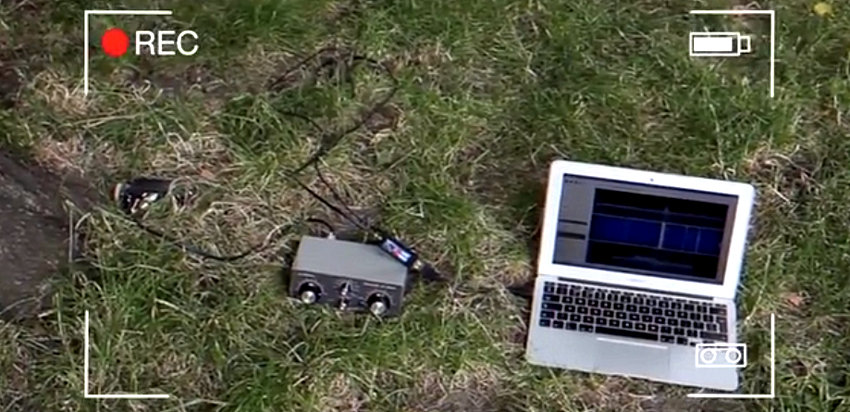
Here’s a demo video I made for Youssef (and everyone else!) to show how I’ve been getting on with it:

This is amazing–what’s especially impressive is that a first iteration of AM sync should be so well implemented.  I love the way you can use the IF shift to block out interference within a sideband, much like USB/LSB selectable sideband. There are paid and OEM SDR applications that can’t do this.

London Shortwave: you’ve convinced me to see if SDR# will drive any of my receivers. Many thanks!

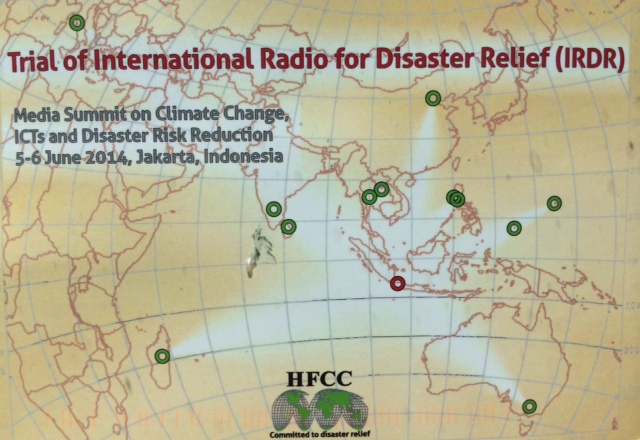
QSL: International Radio for Disaster Relief (IRDR)

SWLing Post reader, Michael Guerin, writes:

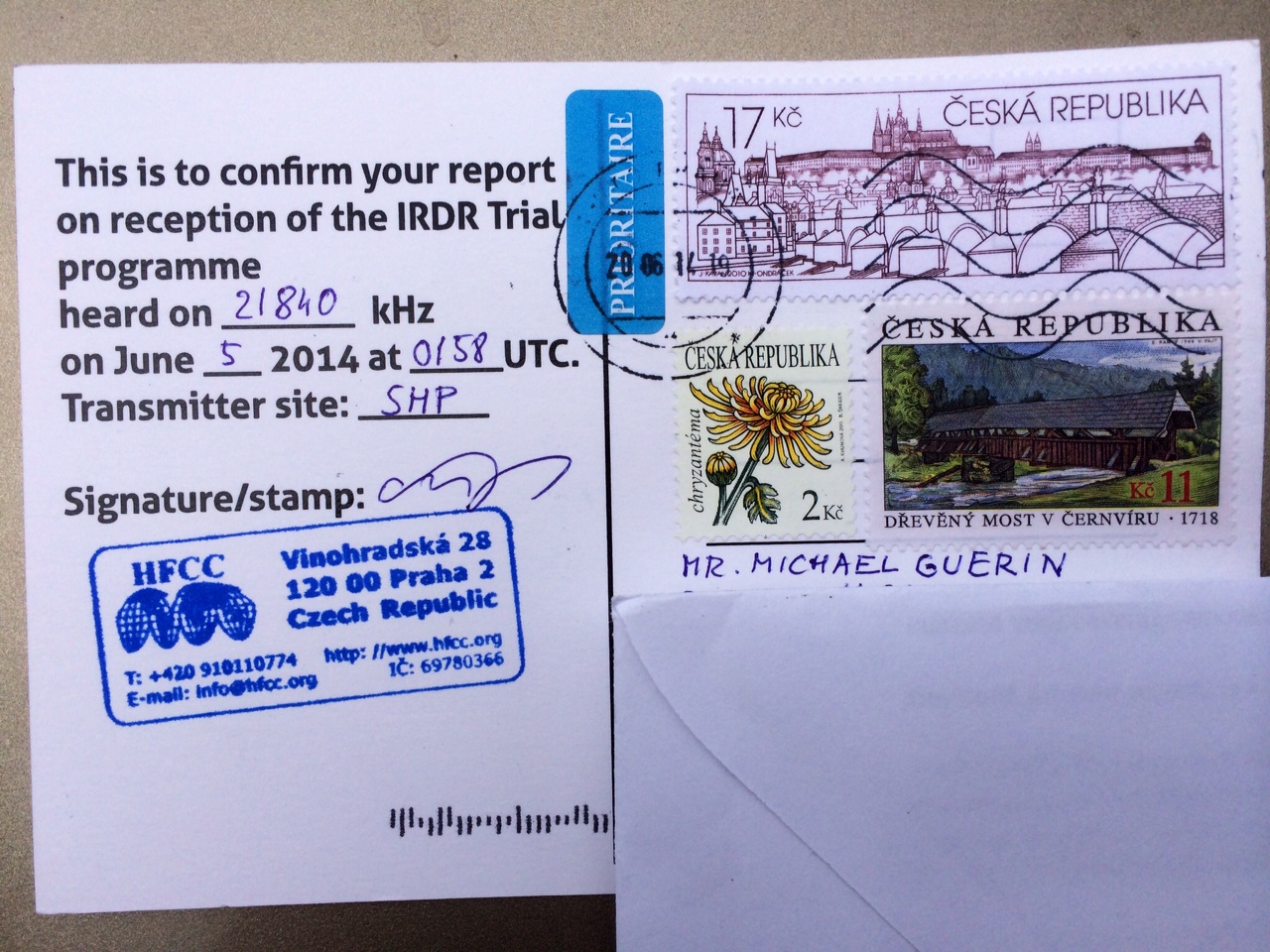
“Just received [this QSL card] from HFCC in Czech Republic. Heard Radio Australia’s test program with fair copy. Sent report by mail the next day to both HFCC and RA.”

IRDR-QSL-Michael-Front

IRDR-QSL-Michael-Back

Many thanks for sharing this card, Michael! I’m impressed the HFCC issued them so quickly.

Did you miss the IRDR test broadcast?  Stay tuned–I’m hopeful they’ll repeat this test in the future.

Shortwave Radio Recordings: Radio Impala (Rwanda)

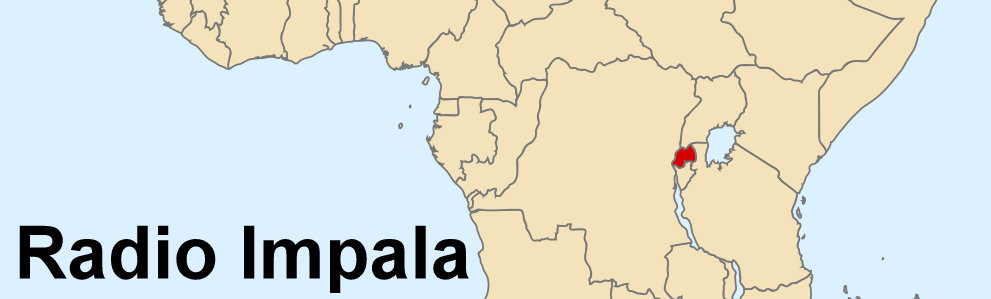
RadioImpalaYesterday, while recording the BBC coverage of Portugal v. Ghana in the World Cup, I noticed a relatively strong carrier on 17,540 kHz. A quick check of schedules and I realized this was the Rwandan based station, Radio Impala–a new catch for me.

Radio Impala is clear about their humanitarian mission of peace, friendship, human rights and equality in their station id. I’ve made a short audio clip with their English language ID below:

Radio Impala broadcasts music and commentary daily from 17:00 – 18:00 UTC (7:00 – 8:00 PM Rwanda time) on 17,540 kHz out of the Talata-Volondry, Madagascar transmitter site.

I was able to record almost 45 minutes of the show before the signal began to fade. Click here to download the recording, or simply listen via the embedded player below:

BBC World Service: Portugal vs. Ghana

WorldCupBall-001Earlier today, I tuned to the BBC World Service on 17,830 kHz at 16:00 UTC, hoping they would be covering the USA vs. Germany game of the FIFA World Cup. I was pleased to hear World Cup coverage the moment I tuned in–but was a little disappointed that BBC had selected the Ghana vs. Portugal game.  Still, I can’t complain; this BBC service is, after all, intended for Africa. And a lot was at stake for Ghana…

So, I listened to the BBC coverage of that game while watching the USA vs Germany game stream over ESPN. I also watched a little of the Portugal/Ghana game, and realized I had an advantage over others streaming the game because the shortwave coverage from the BBC was almost 5 seconds ahead of the live stream. That’s the power of shortwave: goals at the speed of light!

For your listening pleasure, here is the full recording I made from the BBC World Service today. Click here to download the recording as an MP3, or simply listen via the embedded player below:

Shortwave Radio Recordings: Radio Romania International

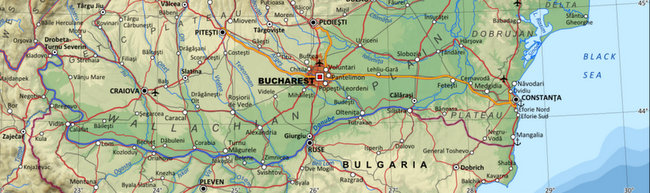
Original Map Image by Andrein: Wikimedia CommonsFor your listening pleasure: Radio Romania International‘s English language service.

I recorded this broadcast with the Elad FDM-S2 on June 26, 2014, starting at 00:00 UTC on 9,700 kHz.

This broadcast originates from RRI‘s Tiganesti transmitter site.

Click here to download the recording as an MP3, or simply listen via the embedded player below:

Click here to view other posts mentioning Radio Romania International.