Category Archives: AM

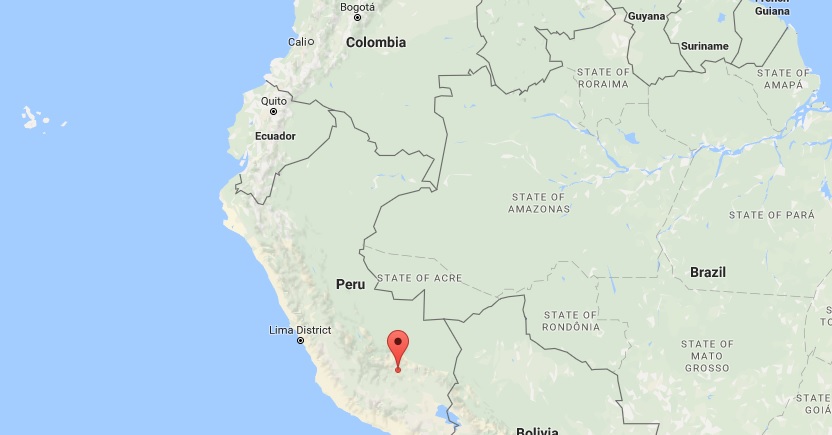
200m longwire update: rarely heard Radio Tawantinsuyo 6173.9 kHz, Peru, recorded in Oxford, UK

cusco

Hi there, I thought I would share my first reception of Radio Tawantinsuyo, from Cusco, Peru, recorded during the inaugural test of my 200 metre longwire antenna. Of course this  particular reception could be coincidence, but a very welcome catch in any case. Once again, the Sony ICF-2001D performs very well with this large antenna, but as on previous occasions, the rule is always to ‘choose your battles well’ targeting weak DX signals in uncrowded areas of the Tropical Band and elsewhere on shortwave. More details on the longwire antenna to follow in another post. Recorded at the ‘DX woods’ in Oxfordshire, UK on 31/07/16 at 00:27 hrs UTC. Thanks for watching.

Direct link to Oxford Shortwave Log reception video of Radio Tawantinsuyo

Clint Gouveia is the author of this post and a regular contributor to the SWLing Post. Clint actively publishes videos of his shortwave radio excursions on his YouTube channel: Oxford Shortwave Log. Clint is based in Oxfordshire, England.


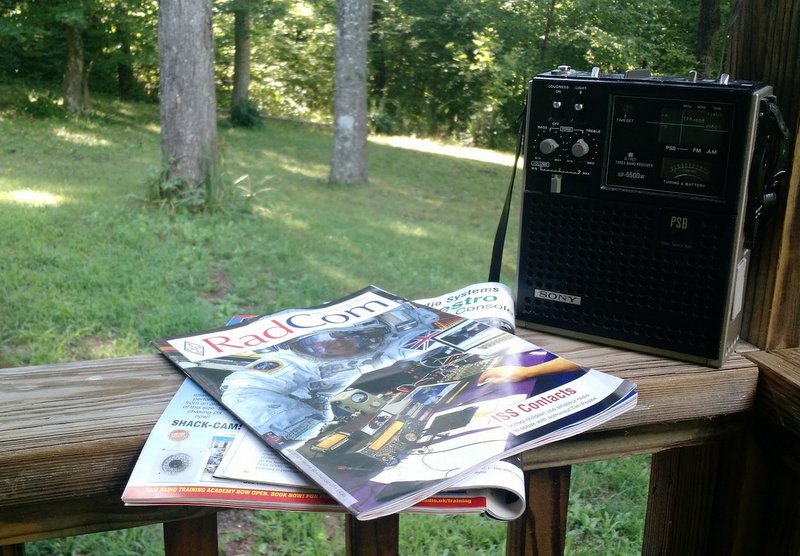
The Sony ICF-5500W: My morning companion

Sony-ICF-550W-RadCom

I spent this morning doing a lot of work around our property. When it was time for a break, I turned on my trust Sony ICF-5500W and tuned to WTZQ: one of my favorite regional AM braodcasters. Though WTZQ is over 30 miles from my home, any good AM radio, like the ICF-5500W, can receive their 1,000 watt signal with ease.

As luck would have it, when I turned on my 5500W, WTZQ started playing Love Me Do by The Beatles. It sounded absolutely amazing via the 5500W’s internal speaker: full-on, rich AM audio fidelity! Absolutely brilliant!

I cranked up the volume so our local black bears could enjoy.

I relaxed a good half hour, and caught up on reading the latest two issues of RadCom with my ICF-5500W playing WTZQ in the background.

Sometimes it’s the simple stuff that starts one’s morning off the right way.

That and plenty of good coffee.

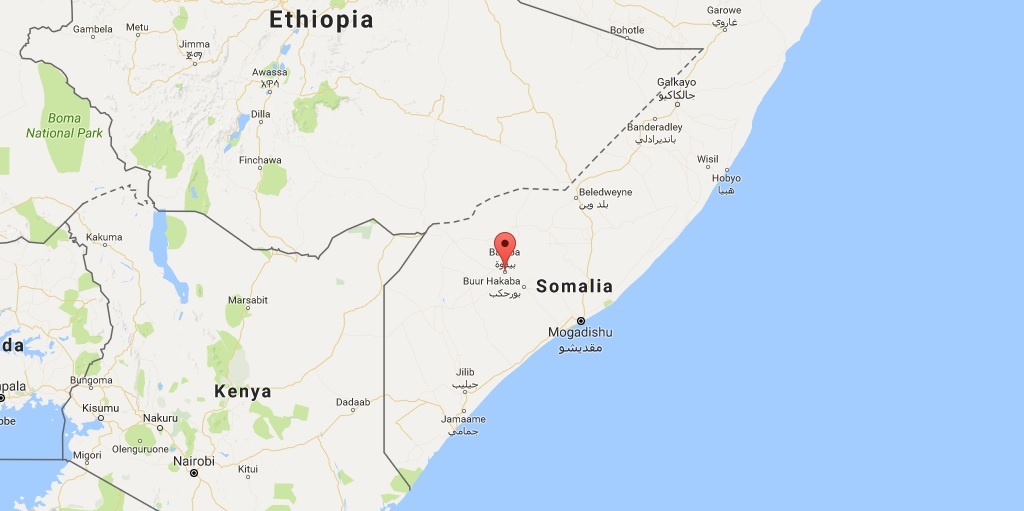
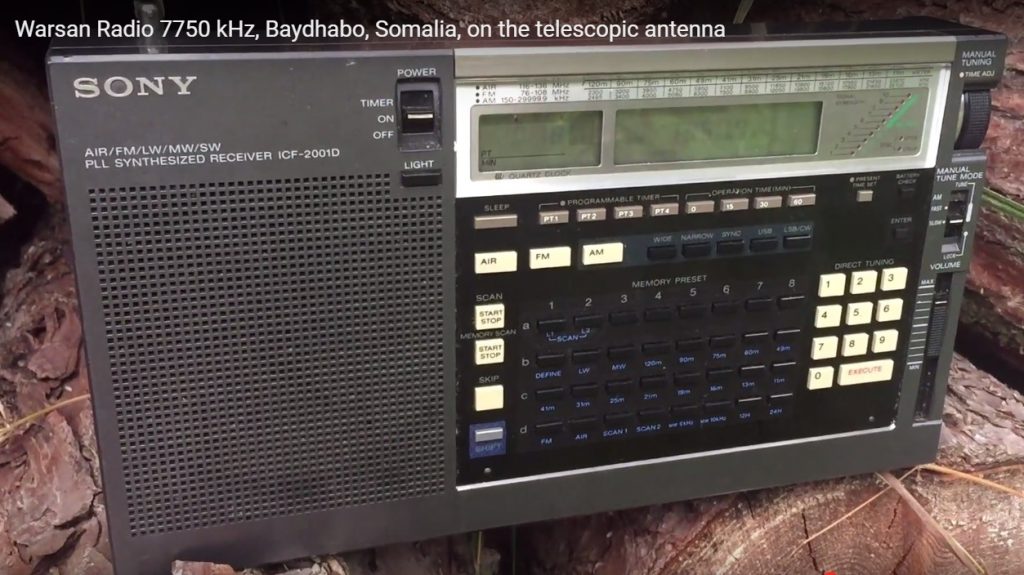
Warsan Radio 7750 kHz Baydhabo Somalia; on the Sony ICF-2001D telescopic antenna

Somalia

Hi there, great to hear this new station broadcasting from Somalia, during an early evening DX’pedition at my usual spot – a local Oxfordshire wood! Even better to hear it with just the telescopic antenna!

The ICF-2001D is renown for being extremely well ‘tuned’ to it’s own telescopic and this has been demonstrated many times over the past year or so that I’ve been using it.  This signal from Somalia was recorded on 08/08/16 at 19:15 hrs UTC using just the ‘whip’. Please click on the image below to access the reception video.

Warsan

Alternatively click here to watch the reception video on Oxford Shortwave Log

I have another video of the same signal which I will upload soon, demonstrating  reception with a 50 metre longwre and the ICF2001D. Until then, I wish you all excellent DX!

Clint Gouveia is the author of this post and a regular contributor to the SWLing Post. Clint actively publishes videos of his shortwave radio excursions on his YouTube channel: Oxford Shortwave Log. Clint is based in Oxfordshire, England.

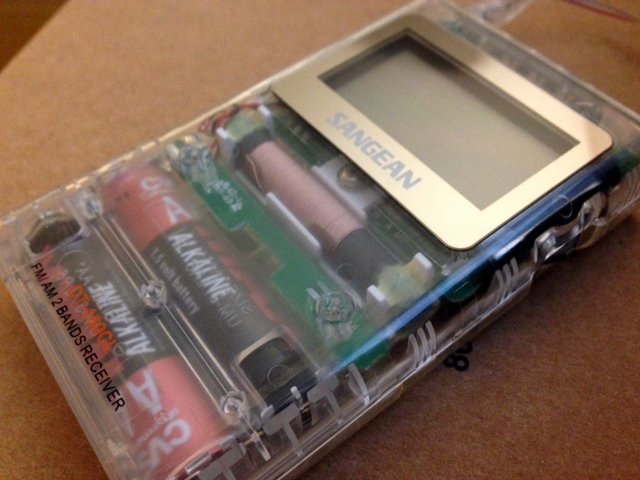
Update 4: Sangean DT-160CL v Sony SRF-39FP

IMG_9137

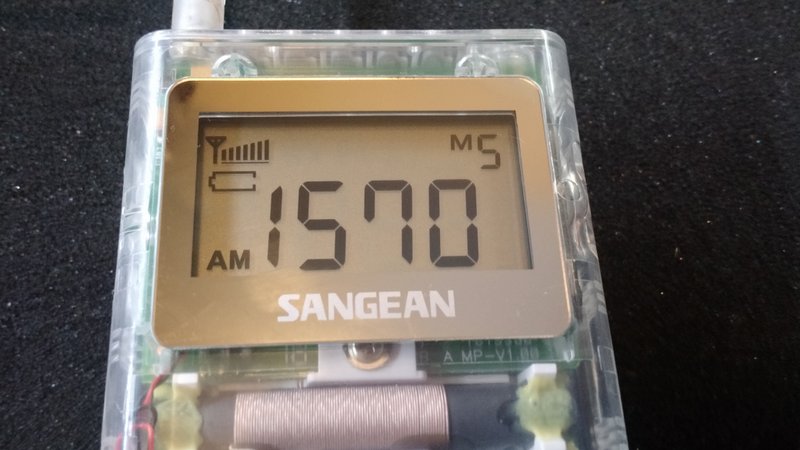
If you’ve been following the Sangean DT-160CL versus Sony SRF-39FP battery endurance test, I have some news to report: one of our competitors has finally thrown in the towel…!

Yesterday, while I was on the road for about 1.5 hours, the Sangean DT-160CL at last gave up the contest.

Since I was traveling at the time, I can’t say with absolute certainty what o’clock the DT-160 cried uncle––but roughly, we’re looking at 116 hours, 30 minutes of run time, give or take 30 minutes.

Sangean claims the DT-160 series will operate for 100 hours with two AA batteries. That claim is obviously pretty conservative.

Sangean_DT-160CL_14

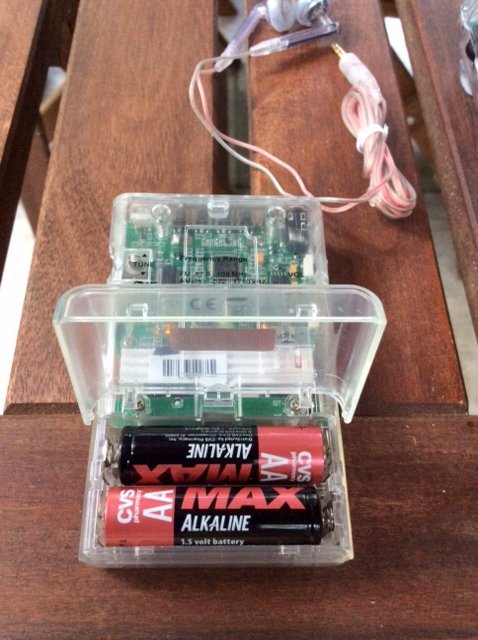
Though I used CVS Max Alkaline batteries (a generic version of Duracell’s Quantum batteries)–an improvement on the standard alkaline battery–I set the volume higher than I believe Sangean or Sony would have set it for testing purposes. This should have drained the batteries faster. The radios were also tuned to a variety of stations: weak AM, strong AM, weak FM and strong FM.

In short: I’m very impressed with the DT-160.

A 116 hour play time from two AA cells on a digitally-tuned receiver is, well, pretty incredible.

Now that the endurance test is over for the DT-160CL, I’ll replace the batteries with a fresh set of CVS Max Alkaline cells and start testing the AM/FM receiver performance.

…And how about the Sony SRF-39FP?

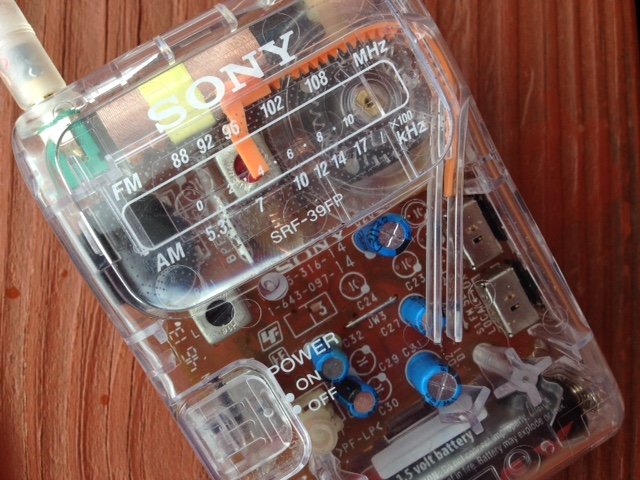
Sony-SRF-39FP

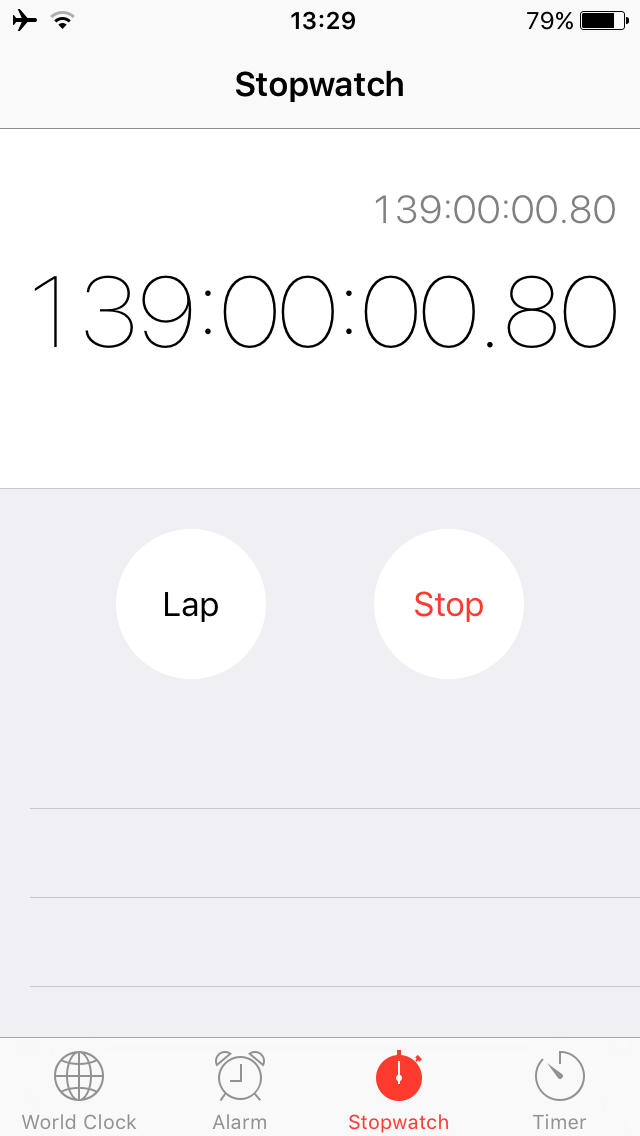
My iPhone's stopwatch has been tracking progress since last Wednesday.

My iPhone’s stopwatch has been tracking progress since last Wednesday.

Even more amazingly, the Sony SRF-39FP is still going strong––!

I actually fell asleep last night listening to the SRF-39FP and woke up this morning with music still in my ears. What a champ!

So, how long has the Sony SRF-39FP now been operating on one AA battery?

At time of posting, this little Sony’s clocked one hundred thirty nine hours.

Though I’ve always known that the  SRF-39FP was a true battery miser–one of the reasons it’s been a choice radio in the prison system–I had no idea it could operate this long on one battery.

Of course, I’ll continue tracking the Sony SRF-39FP.

How much longer will the SRF-39FP last? Stay tuned to find out!

Follow this review thread by bookmarking the following tag: Sangean DT-160CL v Sony SRF-39FP.

Update 3: Sangean DT-160CL v Sony SRF-39FP

Sangean-DT-160CL-Sony-SRF-39FP

My iPhone's stopwatch has been tracking the endurance test.

My iPhone’s stopwatch has been tracking the endurance test.

It’s been one hundred nine hours since I started the Sangean DT-160CL versus Sony SRF-39FP battery endurance test and both radio are still hanging in there!

Not knowing which radio will check out first, I’ve been taking them with me everywhere and have been careful to keep their settings identical the whole time.

Last night, I even prepared my Zoom H2N digital recorder to monitor both radios simultaneously. Having passed 100 hours of operating on the same set of batteries, I was certain one would call it quits last night.

Not so.

There was one noticeable change this morning: the Sangean DT-160CL’s battery indicator now shows a depleted cell.

IMG_20160808_073431228

It’s still operating, though–no noticeable difference in volume and reception.

The end must certainly be near! Indeed, it’s hard to believe I started this endurance test last Wednesday!

I’m very interested to see which pocket radio will go first.

Field time

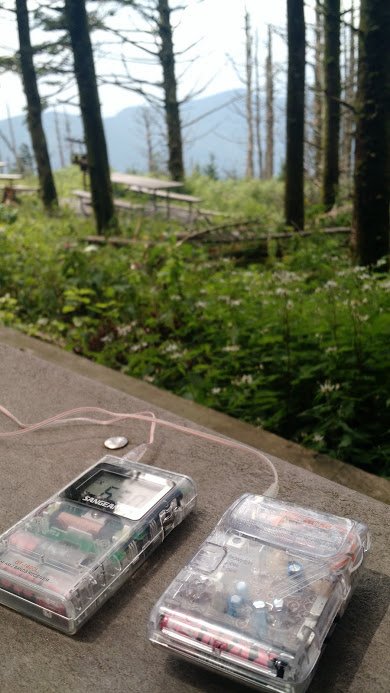
Sangean-DT-160CL and Sony SRF-39FP Mount Mitchell

Yesterday, I spent the better part of the afternoon at Mt. Mitchell State Park. Of course, I brought the DT-160CL and SRF-39FP along.

Mt. Mitchell is the highest point east of the Mississippi river. It’s a great place to play radio.

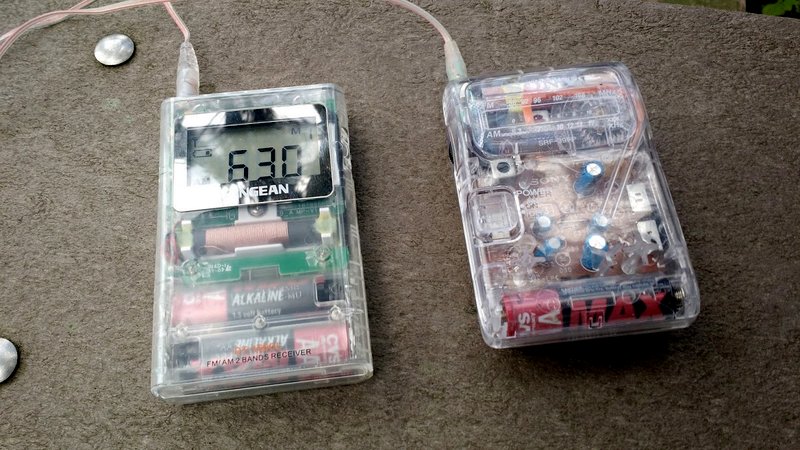
At one point, I tuned both radios to WAIZ 630 kHz: a 1,000 watt AM station about 95 miles east of the park. It’s one of my benchmark daytime stations from Mt. Mitchell.

Though most DT-160 reviewers have given the receiver low marks for AM performance, I found that the DT-160CL did a better job locking onto WAIZ than the venerable SRF-39FP.

Perhaps this is due to the fact that both radios, at that point, were operating on low voltage? Or perhaps the CL version of the DT-160 series has better AGC characteristics and sensitivity?

I doubt the latter assumption, but once the endurance test is complete, I’ll put the 160CL through the paces.

Follow this review thread by bookmarking the following tag: Sangean DT-160CL v Sony SRF-39FP.

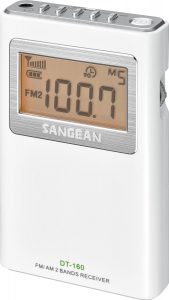
Tom Servo reviews the Sangean DT-160

Many thanks to SWLing Post contributor, Tom Servo, for sharing the following review of the Sangean DT-160. His review was originally posted on the radio discussions forum:

Sangean-DT-160

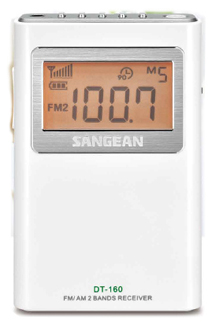
Got my Sangean DT-160 today. Thanks, Santa Claus!

Initial impressions are positive, both in the build quality and performance.

It’s a lot bigger than I thought it’d be, though.

I was picturing in my mind something closer to the SRF-M37 but it’s bigger than a pack of cigarettes — taller and wider.

Some of the performance issues others have noted, I’ve noticed as well. The FM reception is superb and outperforms the Insignia HD portable that’s my benchmark FM radio. It can hold its own with the Grundig G8 in that regard.

The sound quality is weird, though. It sounds “crunchy” or watery. Like everything is being played via a low bit rate mp3. Granted, most my local stations ARE playing low bit rate mp3s and sound terrible (which is why I don’t listen to local radio much anymore) but the few stations that aren’t still sound “weird”. Crispy. It could be the DSP or just some odd EQ’ing on Sangean’s part. It’s not a deal-breaker by any stretch but when side-by-side with a different radio the audio differences were stark. The Insignia sounds truly “flat” while the Sangean sounds treble boosted. And crispy. Did I mention that?

[At first] the wide-narrow setting [seemed to make little] difference on FM. The only station that narrow mode improved was while listening to WTGF out of Milton, FL. It’s a mono station and I’m on the fringe, and the narrow cleared up a bit of static. It makes a much more noticeable different on AM, though. Not as much as a well calibrated “wide/narrow” filter might but enough to help some talk radio stand out from the noise.

[I did eventually] figured out where the wide-narrow setting makes the most difference on FM. It’s when you have two signals on adjacent channels, the narrow really does help cut out adjacent channel splatter. Not that there’s much of a problem to begin with, but it is a little extra added oomph.

With the narrow activated, I was able to pull in 93.1 WGDQ and 94.3 WKZW from the Hattiesburg, MS market. Two stations I haven’t heard in probably a year or better, and both are first-adjacent to local 100 kW sticks that are less than 15 miles from me.

Selectivity even in wide mode is fine. Definitely better than the Insignia and on par with the Grundig. We have a crowded dial here on the Gulf coast and sometimes you need a selective radio to pull out all the stations side by side. Here’s an example of what is possible to hear on a decent night:

98.1 – WHWY – Fort Walton Beach
98.3 – WLVM – Mobile
98.5 – WYLD – New Orleans
98.7 – WYCT – Pensacola
Sangean-DT-160I was surprised to hear WYLD coming in this afternoon. In fact, at first I thought it was an image of local 99.9 WMXC, because it was the same song/DJ. But the IDs were different. That’s a good pull and something neither the Grundig nor Insignia could pull off.

The dynamic bass boost is a horrible sounding gimmick, though. It makes everything sound muddy on my “real” headphones. I didn’t try the ones that came with it. I hate it that it lacks RDS, since so many Sangean radios have that and it makes DXing more interesting. The AM has a weird squelch like damping when it’s on an empty channel. If there’s a weak signal there (like my semi-local but hard to hear WABF out of Fairhope) it just sits there, perfectly quiet. It’s not until I used the Tecsun loop with it that reasonably clear audio came out of nowhere. I strongly suspect it’s “muting” weak signals on purpose on AM.

WWL is a moderate but noisy target here; the signal strength is usually good enough for even basic radios to pick it up… Not this Sangean. It took careful alignment before I heard anything. The slightest bit of movement and it went almost completely deaf again. Very odd.

It’s a shame that conditions for FM DX have been so poor on the coast this year, I think this would be a killer DX machine on FM. My friend in Florence has heard Mexico and Wyoming this year. I’ve barely made anything further west than New Orleans, which is pitiful.

Another plus is it drives my large Sennheiser headphones louder than any other “pocket” radio in my collection.


Thanks for sharing your review, Tom! 

I sounds like the DT-160’s AGC or soft mute on the AM broadcast band is causing otherwise intelligible signals to drop out.

At time of posting, I’m still running the battery endurance test of the Sangean DT-160CL vs. Sony SRF-39FP, so I haven’t really given the DT-160CL (the correctional version of the DT-160) a proper receiver performance test. I will soon enough, though!

 

Radio Northern Ireland WRMI Broadcast

RNIe!SLnew

Radio Northern Ireland will be broadcasting via WRMI on 9955khz at 0130 UTC on Monday. This is a regular show from Radio Northern Ireland. Jordan Heyburn from Radio Northern Ireland has made changes to his show and he has included a news segment! Jordan said “I decided to include a news segment to bring the news of Northern Ireland to your own home no matter where you are in the world. Not many people hear about Northern Ireland in the news in all corners of the world!  The news brings a full round up of what has been happening in Northern Ireland including events which are happening in Northern Ireland which might interest any listeners” 

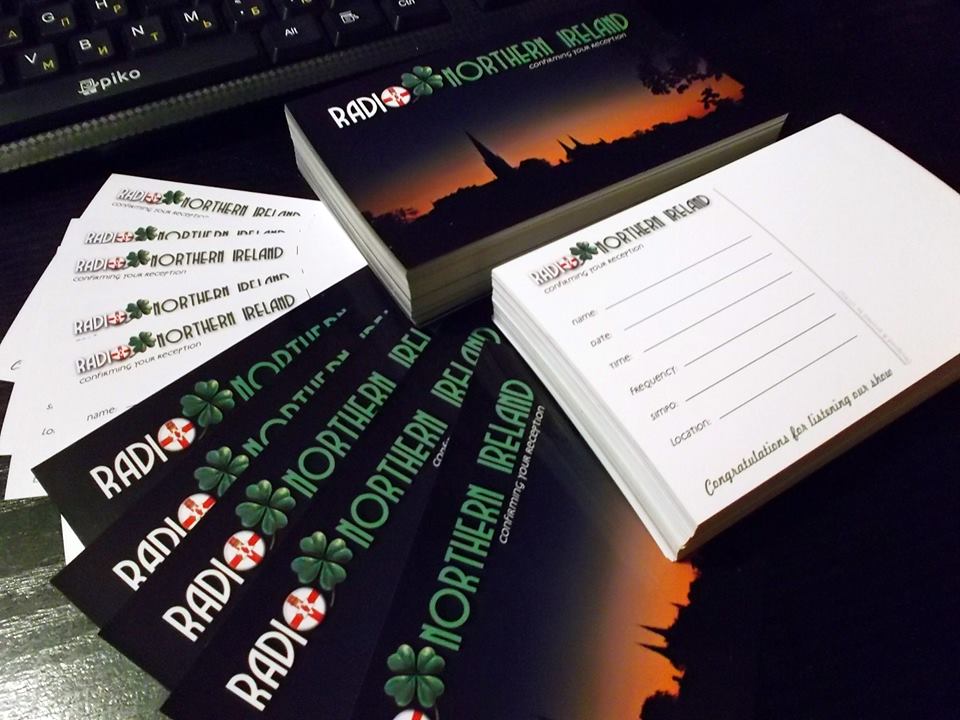
Radio Northern Ireland happily accepts reception reports to the email address [email protected]

They welcome a $2 donation via paypal to their email address if you wish to cover postage for a QSL card by post.


Jordan Heyburn (MI6JVC) is the author of this post and a regular contributor to the SWLing Post. Jordan is an avid shortwave listener, ham radio operator and shortwave presenter/owner of Radio Northern Ireland. Jordan is based in Northern Ireland.