Shortwave listening and everything radio including reviews, broadcasting, ham radio, field operation, DXing, maker kits, travel, emergency gear, events, and more
Many thanks to SWLing Post contributor, Giuseppe Morlè, who writes:
Dear Thomas,
This is Giuseppe Morlè again. First of all, Happy New Year to you and to the whole SWLing Post community! I’ve been continuing the tests on my “T Ferrite” antenna for medium wave and the 160 meters ham meter band.
I tried the antenna inside my shack listening to Rai Radio 1 from Milan Siziano, about 800 km from me, on 900 kHz in the early morning after sunrise. The antenna, despite being inside, proved to be perfect for the cancellation of the electrical noise that I had around me.
Disconnecting the antenna from the receiver–a Sangean ATS-909–the noise occupied everything without being able to listen to anything. Putting the antenna back, the noise disappeared completely making the modulation re-emerge, with a weak signal, it was already day, but with good understandability.
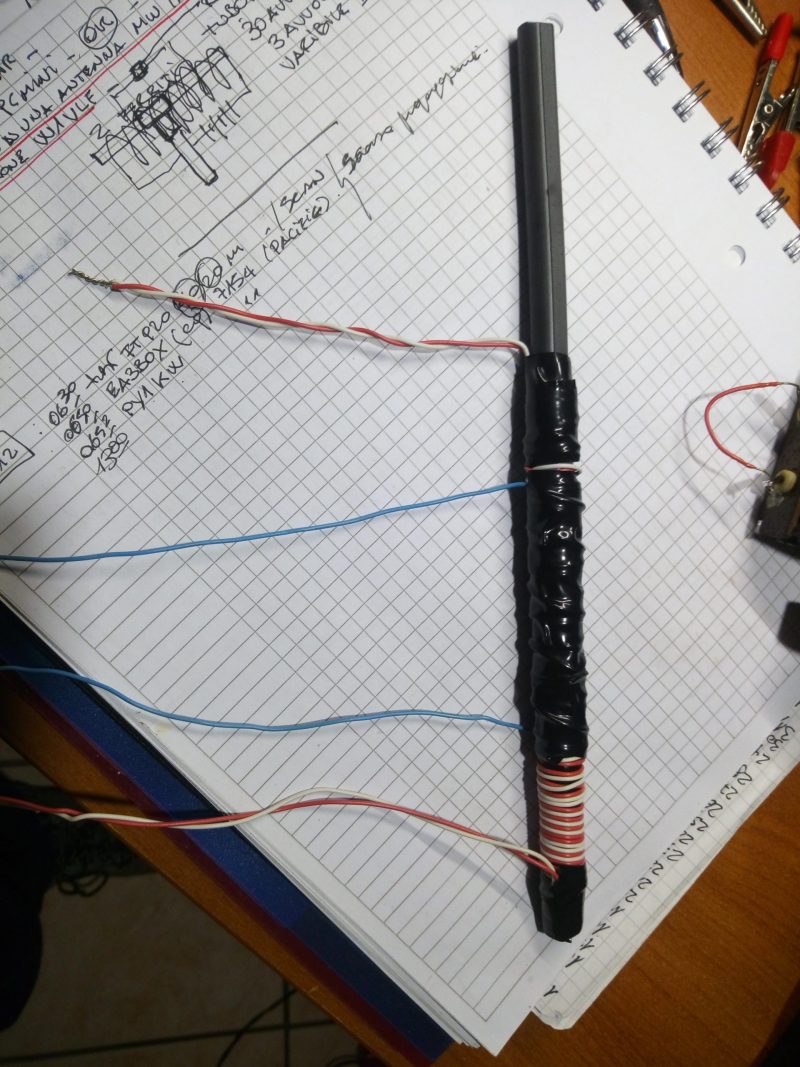
The antenna, as I described in another article, is composed of 2 ferrites 12 cm long each, bought at ham fests, tied together with insulating tape.
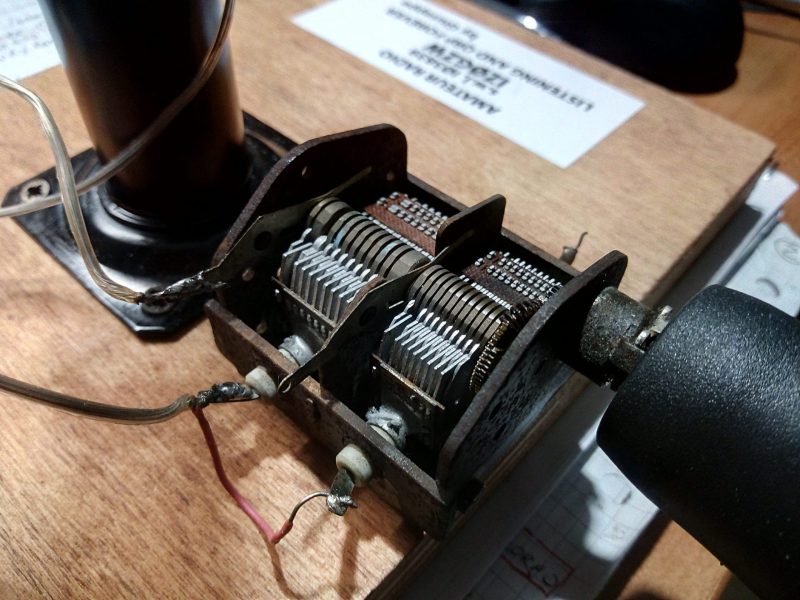
For the two windings, I used a small section of cable used for telephone systems that is rigid enough to model perfectly on the ferrites–43 turns for the primary and 3 turns for the coupling link to the receiver. The variable capacitor is 850 pf.
I should mention that the magnificent W1VLF channel was my original source of inspiration for this antenna.
That is amazing, Giuseppe! We often think of magnetic loops as the only choice for coping with urban noise and RFI, but ferrite bars–especially configured like yours–are a brilliant tool for indoor low-band listening. Thank you for sharing! We love your experiments.
Many thanks to SWLing Post contributor, TomL, who shares the following guest post:
Loop on Ground Part 2
by TomL
My previous Loop on Ground (LoG) experiment was useful which entailed connecting my Wellbrook loop amplifier to a 100 foot loop of speaker wire in the field at my favorite local Forest Preserve. It really brought in stations I had never heard before or strong stations in a more powerful way that made the audio really pleasant to listen to. This report will describe more experiments with smaller wire loops to see what the limitations are. 100 feet of wire is quite a lot of wire to mess around with especially in the cold weather or public places that do not have as much private space.
I don’t understand all the electrical interrelationships but a long posting at RadioReference.com had a great discussion about creating a 160-20 meters LoG receive-only antenna. It is 11 pages long but is worth reading how “nanZor” experimented with various parameters for general use. Kudos to him for documenting the findings as the design changed over time. You can find it here:
nanZor basically boils it down to a few guidelines.
Keep it on the ground. Lifting the wire more than an inch or two decreased the lower angle signal reception greatly.
Calculate the optimal length for one full wavelength of wire at the highest target frequency, say for example, the top of the 20 meter band (14350 kHz). 936/14.350 MHz * 0.9 velocity factor of simple insulated wire = 58.7 feet. You can round up to 60 feet, no big deal since this is broadband. The antenna should have a predictable reception pattern from 1/10th wavelength up to 1 full wavelength. Outside that range, the pattern gets “squirrely”.
Using a 9:1 balun seemed to be a little better than a 4:1 balun at the antenna feedpoint. This gets into things I cannot measure and has to do with rising impedance as a loop gets closer to ground level. I am not sure but I think my Wellbrook amp has a built in 4:1 balun and it seems to work just fine.
Make sure to use an RF Choke at BOTH sides of the feedline coax cable. He was adamant that the loop can get easily unbalanced and allow noise into the antenna and/or feedline and so it must be isolated and the ground allowed to “float” in his words.
Personally, I also wanted to use less wire and happened to have a length of 42 feet of landscape wire which should work well below 5 MHz with the Wellbrook amp engaged. Results were not bad even though on hard frozen ground. Signal levels were down a little compared to the 100 foot of wire. Here are a couple of examples, first one in a fast food parking lot with a grass field next to it and second at the usual Forest Preserve parking lot on a grass field. I made sure that my car blocked the view of the wire so people would not get nervous!
La Voz Missionaria, Brazil:
Voice of Welt from Issoudun France in Kurdish:
These are not necessarily “DX” but definitely good for SWLing. I like the signal strength with the amplifier inline at the antenna feedpoint and I did not have to use an RF Choke at the receiver side as was suggested.
I had a 75 foot long insulated wire and used that at the Forest Preserve parking lot on a couple of different days. Lower frequency signal strength and signal/noise ratio improved a little bit to be noticeable.
Then, as nanZor suggested in his postings, I purchased a 9:1 balun/RF choke (it has both a balun and an RF choke built-in) from Ham Radio Outlet and put that in place of the Wellbrook amplifier.
Examples below with the 42 foot loop and 9:1 balun/choke, no amplifier:
KSDA, Agat Guam in English
WB8U doing a POTA activation of Leavenworth State Fishing Lake
VOLMET weather, Shannon Ireland
HCJB Quito Ecuador, probably in Quechua
As a side note, there is a posting that mentions low-angle DX is better with regions that have better “ground conductivity”, salt water being the best. I have no way of verifying this. See post# 126 by KK5JY Matt.
So, bottom line is that a Loop on Ground can be useful for pleasant SWLing and portable. Best to use it on grass, not asphalt. The loop amplifier is useful to get signal levels up if you have to use a smaller loop size but the signal/noise ratio will suffer due to its smaller aperture. And, warning, the public will find a way to trip over the wire no matter where you set it up (I may try putting the wire around my car if I can park on a grass surface and/or use the gaudiest, brightest neon green or orange wire I can find – they can’t trip over THAT, can they?).
TomL
Thanks, Tom, for sharing your update. Obviously, the LoG is working brilliantly. It’s amazing that you got such clear reception from the parking lot of a fast food restaurant. If you were using a vertical instead, I bet signals would have been buried in the noise.
I can also relate to people tripping over antenna wires. I remember one POTA activation recently (the first activation in this three park run) where I intentionally laid my counterpoise on the ground, off a foot path, in the brush and where I couldn’t imagine anyone ever stepping. Ten minutes into the activation and for no reason, someone walked off the path, into the brush, and it snagged them. Maybe I’m just a Ninja level trapper and never realized it!?
Thanks again for sharing the results of your LoG, Tom. Inspiring!
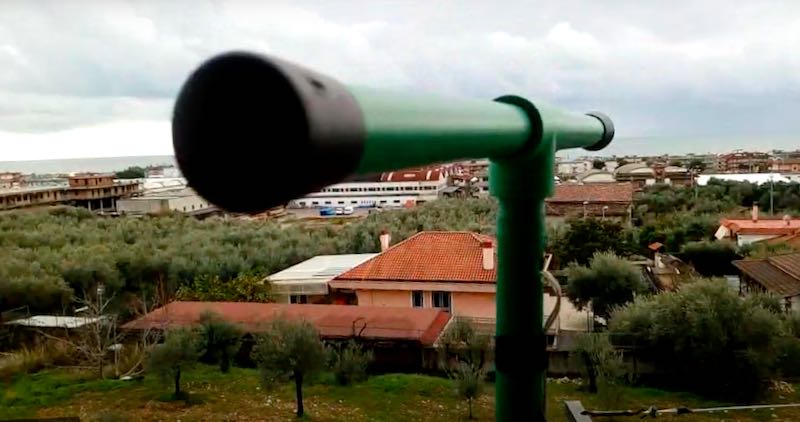
I’m Giuseppe Morlè (IZ0GZW) from Formia, on the Tyrrhenian Sea, in Italy .
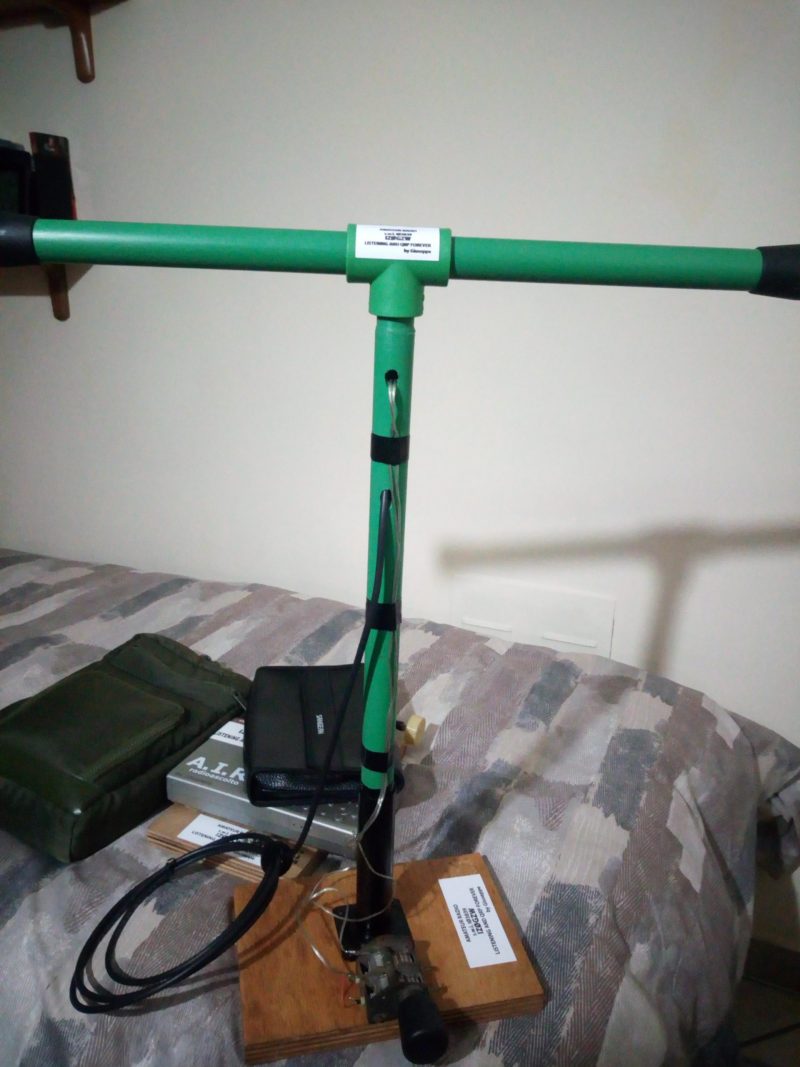
I built this simple rotating directive ferrite antenna for medium waves and the 160 meters ham band.
Inside the tube there are 2 ferrites with 43 cable windings and 3 for the coupling link that goes to the receiver.
In this video the test as soon as I assembled everything …
In broad daylight, it was 12.00 local time, you could hear well over 2000 km.
The antenna is very directive and perfectly manages to separate several stations on a single frequency.
The pipes are in plastic for plumbing use (PVC), I bought only that one, 5 Euros, the rest is all recycled.
I wanted to share this simple and very functional project of mine with the SWLing Post community.
Thanks and I wish everyone a better year.
Greetings from Italy.
Giuseppe iz0gzw.
Thank you, Giuseppe! What a simple, effective antenna project. I like how you’ve invested so little and recycled parts from other projects. I also love your view there looking south over the Tyrrhenian Sea! What a great place for radio.
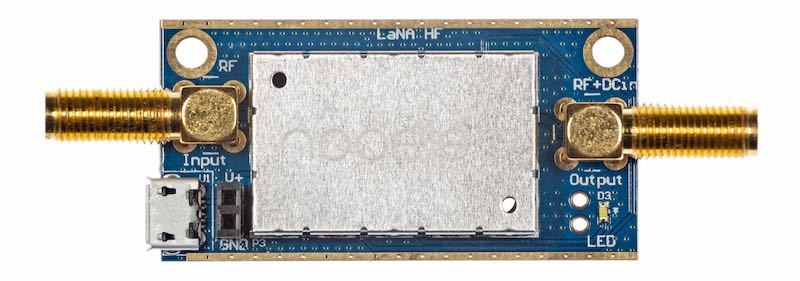
In short, this upgraded model looks very promising. Not only does it address my concerns with the original model, but it also seems to tune very effectively and efficiently.
Thanks for the tip, Chris! Yes, it’s a bit of a surprise it’s made in North America. I must admit that these Nooelec amps all look the same to me, so I’m guessing this model is simply the latest iteration?
Post readers: have you used this particular LNA? Please comment!
Many thanks to SWLing Post contributor, TomL, who shares the following guest post:
My First Loop-On-Ground antenna
A number of people have mentioned the Loop On Ground (LOG) antenna in the past as a good receive-only antenna. I did some research but could only find a few examples by amateur radio operators.
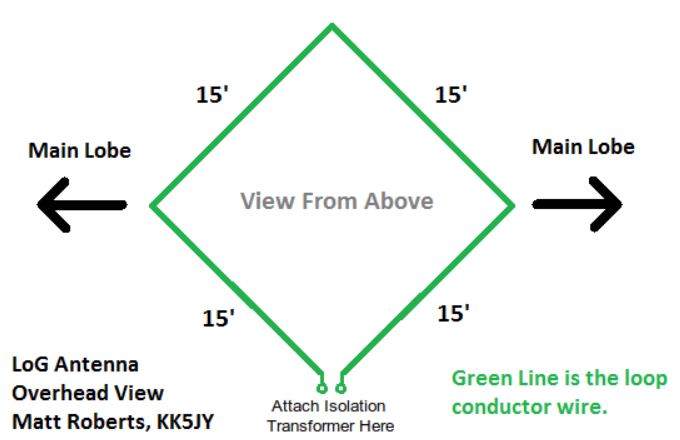
Matt Roberts (KK5JY) has a good article including some antenna theory and measurements, you can find it here:
I also read somewhere that for transmitting, a LOG antenna is useless as it radiates much of the energy right into the ground! But I didn’t care about that. I needed something for receive I can deploy easily without supports and take down just as easily. As you may recall, my home condo is literally saturated with noise and I cannot null it out. So a wire looped on the ground is supposed to work? You bet it does!
Of course, there are some conditions to meet. There has to be enough flat ground away from people or pets (or lawn mowers!) who would get tangled in the wire on the ground. The wire should be as close to the ground as possible (although I had good results laying the wire on top of cut grass). The loop of wire can vary in circumference from about 20 feet to 150 feet (the shorter length will stay in an omnidirectional pattern higher in frequency but lower in signal pickup and vice-versa for the longer length). The wire needs to be insulated. That’s about it!
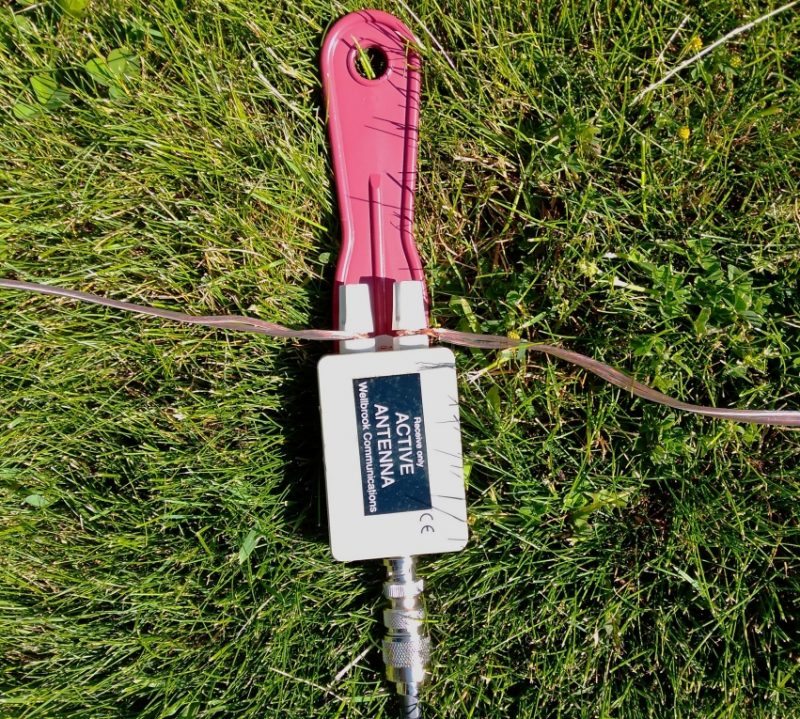
So, off to the hardware store to buy a cheap spool of 100 foot 18 gauge speaker wire. But, the articles mention using a balun and they all made their own. I did not feel like doing that (I am not that good at making things from scratch) and I did not want to spend money ordering one. More reading somewhere informed me that my existing Wellbrook Medium Aperture loop amplifier has a built-in balun at the antenna side of the device. Hallelujah!
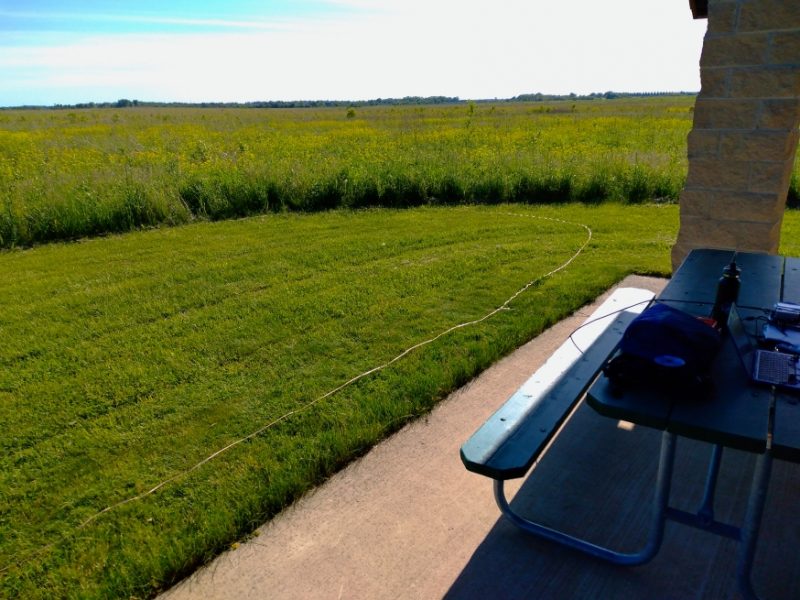
I bundled together the wire, Wellbrook parts and battery supply, small laptop and Airspy HF+ to my favorite Lake Nelson Forest Preserve. The shelter there is little used and is adjacent to the prairie with cut grass. It did take a good 15 minutes to lay out the 100 feet of wire on the ground while trying to keep it as flat as possible. And I did not have enough space for a circle, so I ended up with an oblong shape. The long sides are facing directly north-south, so in theory (I think) this gives me an oblong shaped reception pattern east-west. The photo shows half of the wire laying on the grass.
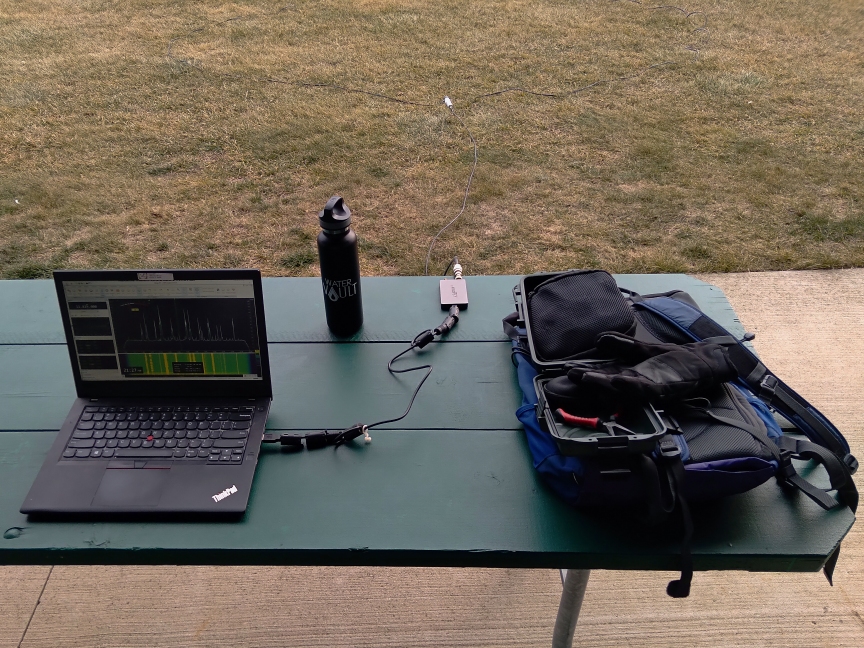
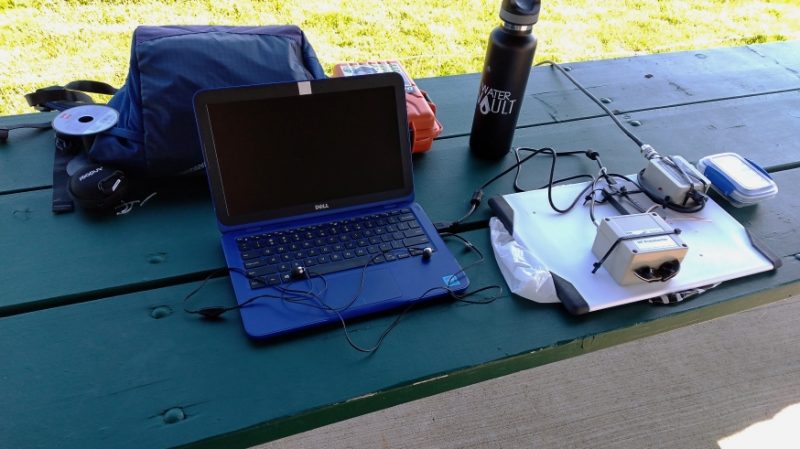
I ended up with this setup on a picnic table at the rear end of the shelter. The coax wire goes from the Wellbrook amp into its power module, then to a Cross Country Wireless preselector, then to the Apirspy HF+ and laptop.
I was really impressed by the signal strength of the usual suspects like Radio Nacional da Amazonia. I could see that the Wellbrook amp was boosting signals across the board with only a little extra noise.
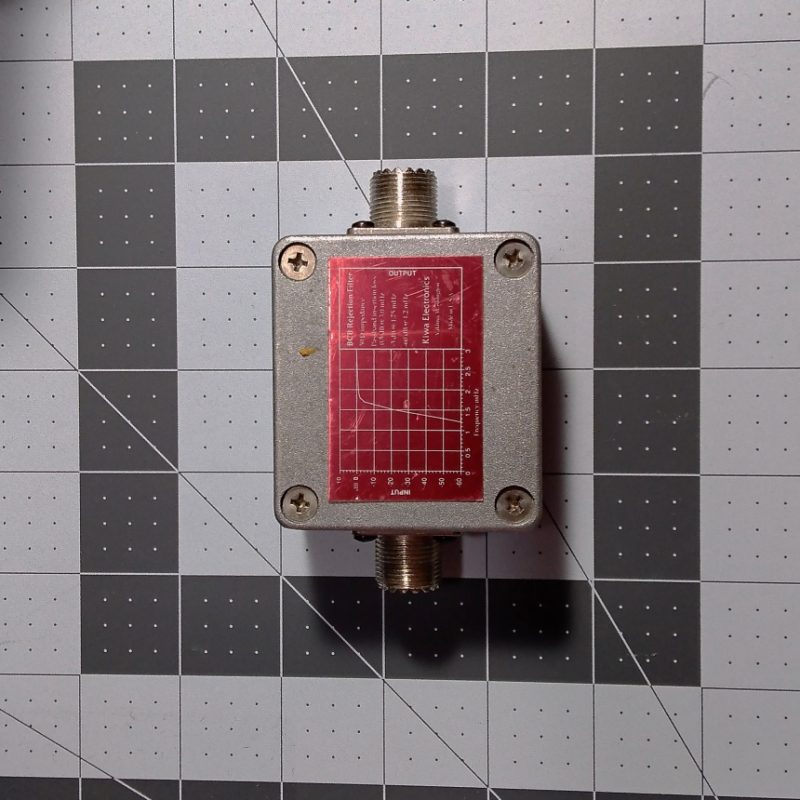
I use the preselector to try to keep the Airspy radio from overloading, especially mediumwave broadcast signals which can sound like a small amount of extra “hash” type noise in the background. I have since added into the accessory chain an old Kiwa Electronics BCB filter that does a great job of knocking down the frequencies below 2 MHz.
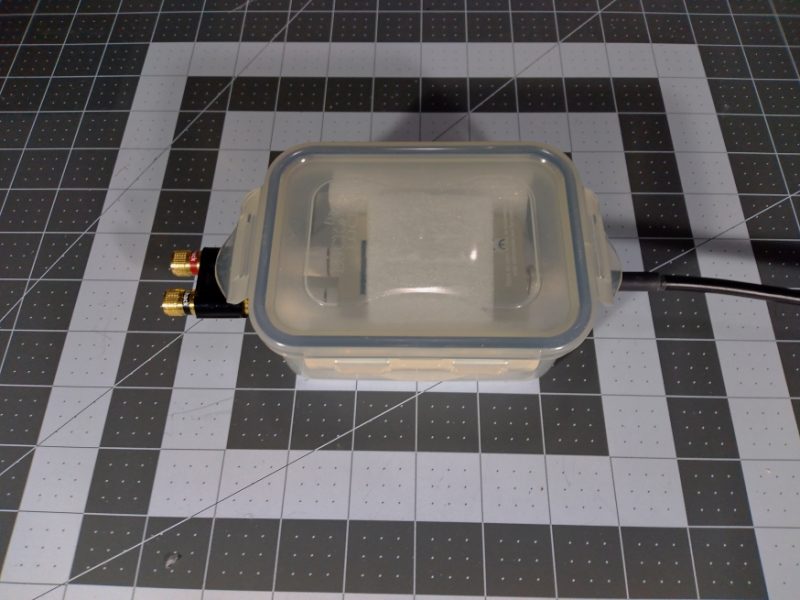
I have also since added a water resistant box to enclose the Wellbrook amp to keep it safe from getting stepped on or too wet.
Also, a couple of weeks later I was able to go to a campgound and try out 60 feet of wire but the result was noisier since I was surrounded by RV vehicles in a crowded campsite. It was not horrible and I was able to listen to some good radio stations but location can matter with any antenna.
I hope you like the recordings below. Because of some serious health issues this summer, these May 31 2020 recordings & report are just being published now (I am recovering slowly but surely!). My small laptop is under-powered, so I was only able to record MP3 files one at a time. It kept me busy as I went from one frequency to the next and kept recording anything I heard. I was able to hear a couple of stations I never heard before and that is a success in my book.
It remains to be seen if this antenna is as good as my 19 foot vertical antenna attached to the top of the car roof, especially low-angle DX signals. Maybe you will have the chance to experiment as well and share your experience, too. Now, will a small loop-on-ground antenna around my car parked late at night at a far corner of the grocery store work OK??? I will have to try it!
Recordings (crank up the volume if it is too weak):
22:00 UTC, Radio Saudi (Arabic) 11915 kHz
22:04 UTC, KDSA Adventist Radio (Indonesian) 11955 kHz
22:14 UTC, KDSA Adventist Radio (English) 12040 kHz
22:20 UTC, Voice of Korea (Japanese) 11865 kHz
22:23 UTC, Yemen Radio (heavily jammed) 11860 kHz
22:35 UTC, Radio Brazil Central (Portuguese) 11815 kHz
22:50 UTC, WWV booming in 10000 kHz
23:11 UTC, UnKnown (might be FEBC) 9795 kHz
23:15 UTC, China Radio Int’l (Spanish teaching Chinese, from Kashi) 9800 kHz
23:17 UTC, China Radio Int’l Business Radio (from Xianyang) 9820 kHz
23:19 UTC, China Radio Int’l (Chinese from Urumqi) 9865 kHz
23:21 UTC, Voice of Korea (Korean) 9875 kHz
23:23 UTC, Maybe Radio Taiwan without jamming from CNR 9900 kHz
23:34 UTC, China Radio Int’l (Chinese from Bamako Mali) 7295 kHz
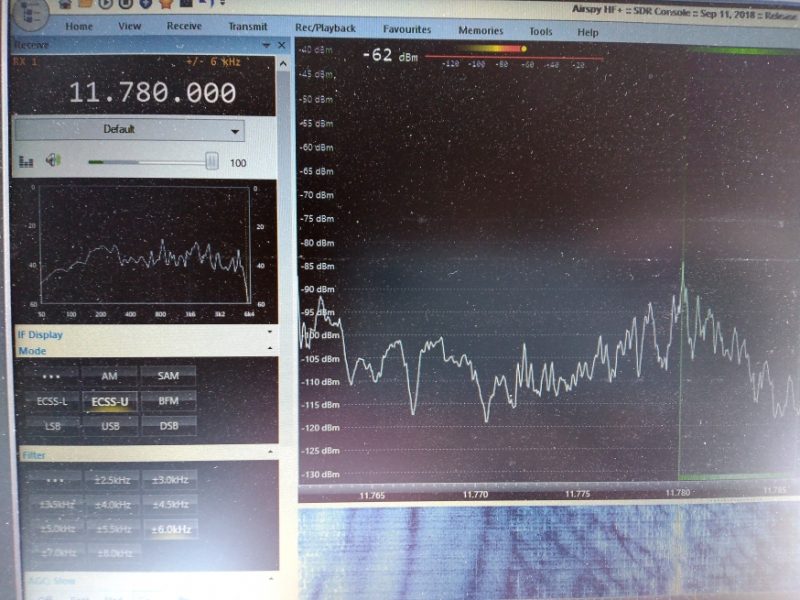
23:43 UTC, Radio Nacional da Amazonia 6180 kHz (& 11780 kHz around 40 seconds)
23:50 UTC, MAYBE China PBS from Xinjiang in Kazakh (nothing else listed on schedules) 6015 kHz
23:56 UTC, Radio Mali (French announcer humming to music and acting crazy) 5995 kHz
00:30 UTC, XEPPM Radio Educacion (Spanish Mexico City) 6185 kHz
This is brilliant Tom! Thank you for sharing.
Our antenna guru contributor, Grayhat, has been encouraging me (understatement!) to build a Loop-On-Ground antenna but I haven’t done this yet because, at home, our driveway would interfere with its deployment. That and I have no RFI to speak of in my rural/remote home so my skyloop antenna is tough to beat. But having one available for portable use would make a lot of sense. I’m going to put this on my 2021 project list!
Post Readers: Do you use a LoG antenna at home or in the field? Please comment!
Many thanks to SWLing Post contributor, Dennis Dura, who shares the following video featuring the Tecsun AN-200 on the Waters & Stanton YouTube channel:
I told so many over the years that I honestly think the AN200 is one of the most useful and effective mediumwave antennas you can purchase. It’s portable and it pairs so easily with most any radio.