Category Archives: Articles

The relevance of shortwave radio for UNESCO’s World Radio Day 2013

ChildSWRadioUganda

Student in Uganda tunes an Ears To Our World self-powered shortwave radio. (Photo: ETOW partner, The Empower Campaign, Uganda)

Wednesday, February 13th 2013 is World Radio Day.  UNESCO describes World Radio Day as “a day to celebrate radio as a medium; to improve international cooperation between broadcasters; and to encourage major networks and community radio alike to promote access to information and freedom of expression over the airwaves.”

A worthy cause.

UNESCO asked me to record a segment about our non-profit, Ears To Our World, and the relevance of radio in honor of World Radio Day.

Here’s my (brief) contribution:

Steven Roberts cycled the US with a Sony ICF-2010

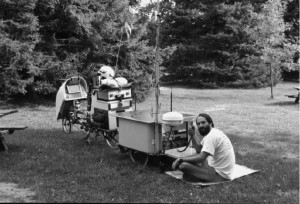
N4RVE working the world from BEHEMOTH, somewhere in Wisconsin. (Photo: Steven Roberts)

Steven (N4RVE) working the world from his bike BEHEMOTH, somewhere in Wisconsin. (Photo: S. Roberts)

One of the most fascinating responses I received after posting the story of my buddy Vlado’s incredible thrift store find (a Sony ICF-2010 for just $5) came from Steven Roberts, who told me that, in the 1980s, he cycled across the United States with the Sony ICF-2010 in tow.

Indeed, Steven carried much more than just the Sony on his memorable trip:  he had a custom designed computer (circa late 80s), a fully-functioning ham radio station, as well as all of his camping and living supplies, mounted on his custom-designed recumbent bike…Wow.

Talk about someone with vision!  I asked Steven if I could post this for SWLing Post readers, to which he replied:

Thanks! I have a pretty good summary of the whole crazy adventure at this link, and the bike is now in the Computer History Museum. Fast-Forward two decades, and I’m geeking-out a 44-foot steel sailboat (including a wrap-around rack console for audio, comms, and electronics lab). Here’s the bike: http://microship.com/resources/technomadic-tools.html

You’re most welcome, Steven–and many thanks, for the inspiring story! We look forward to hearing about your adventures on the water…

If you have a story you’d like to share, please contact me.

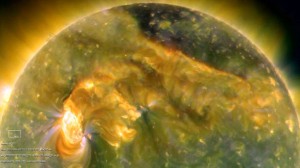
Wired: Listen to a Solar Flare Drown Out Radio Communications on Earth

(Photo: NASA via Wired)

(Photo: NASA via Wired)

(Source: Wired)

Over the weekend, a tiny spot on the sun erupted into a moderately sized solar flare that was particularly loud in radio waves. With the sound of a roaring wave, it completely drowned out radio communication all over the Earth between 28 MHz and 21.1 MHz.

The recording [found on this page] comes from either a short wave radio station or a Ham radio transmission, said amateur radio astronomer Thomas Ashcraft, who works with NASA’s Radio JOVE project. It’s interesting to hear the voices get “swallowed up as the solar wave passes through,” he added in an e-mail to Wired.[]

Read the full article on Wired.

Making A Transistor Radio by George Dobbs

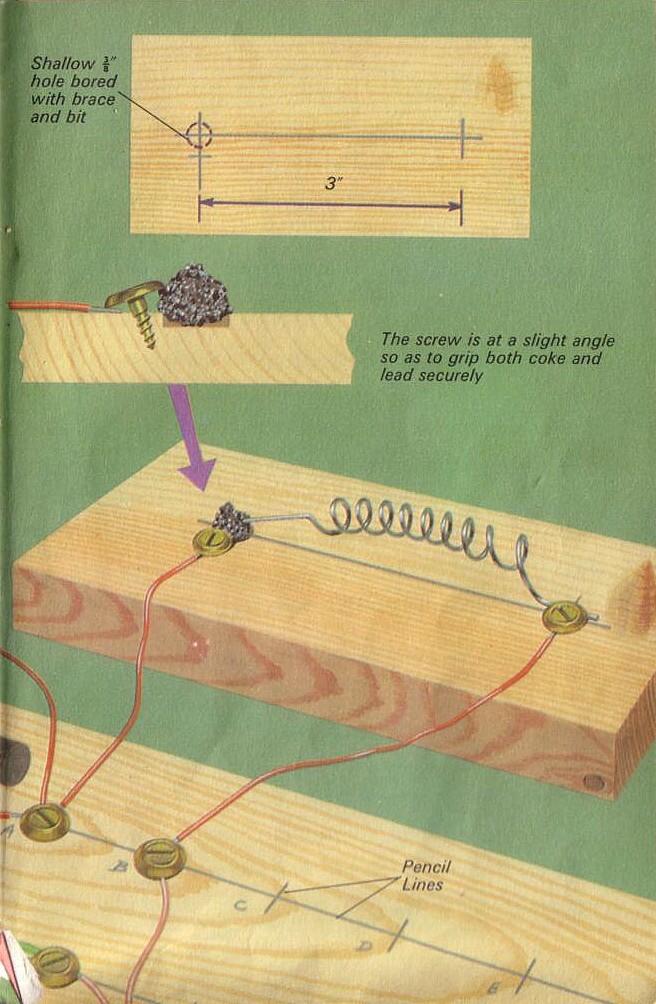
A sample illustration from "How To Build a Transistor Radio"

A sample illustration from “Making a Transistor Radio”

Those of you who are ham radio operators (especially QRPers) are familiar with the name George Dobbs (G3RJV). In 1972, Reverend Dobbs wrote a book called, Making A Transistor Radio and now it’s available online.

Making A Transistor Radio is a clear, simple, step-by-step guide to building your own transistor radio. In each stage of the process you’re rewarded with a working radio. In addition, you’ll learn about all of the stages of a working receiver.

Perhaps what I love best about this book–besides the fact that is resembles the mountains of electronics books I poured through in my youth–are the illustrations.  Each illustration describes exactly how each component of the radio should be built, leaving nothing to be pondered.

If you’ve ever wanted to build your own radio, from scratch, this is a great place to start.

Thanks, Eric, for sending this link!

Mark’s studio version of Firedrake

(Photo: Satdirectory.com)

(Photo: Satdirectory.com)

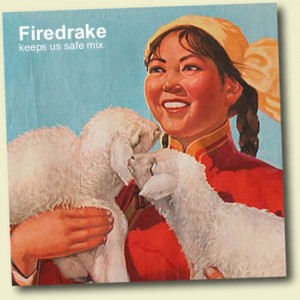
As I suspected, the unidentified broadcast I recently posted was the Chinese jamming service, Firedrake.  Thanks to all who confirmed.

Mark Fahey even commented with a link to an article explaining how he made a studio recording of Firedrake from Chinasat 6B. Read Mark’s article here.

Mark also has the full 60 minute studio copy of Firedrake available as a 90MB MP3 file.


Mike’s home brewed amplified antenna

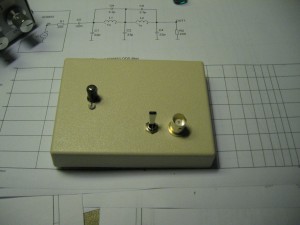
Active Ferrite Rod Antenna (Photo: ON2NLT)

Active Ferrite Rod Antenna (Photo: ON2NLT)

In my recent post, The truth about portable amplified shortwave antennas, I argue that small, portable amplified antennas are, by and large, ineffective. The post comments are interesting, however; many readers agree, and some tout the Sony ANT-LP1 as worthy, but Mike made the following comment about his amplified antenna:

The one active antenna that I have been pleased with is one I built myself.  The design was by ON2NLT and uses a ferrite rod, so it is somewhat directional.  Rotating the unit (it is very compact) often allows nulling out noise or interference.  You have to be careful not to crank up the gain too much though, or you will amplify the noise floor.  The link is here

http://www.kolumbus.fi/juha.niinikoski/Ferrite_antenna/Ferrite_antenna.htm

Looks like a fairly simple project.  Thanks, Mike!

Dave’s FM station empire

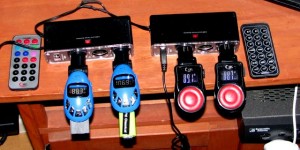
FMMegaplexDave Schmarder (N2DS) enjoys making radios and featuring them on his website, http://makearadio.com. What you may not know is that he also runs his own FM stations empire…and you can too:

I thought your visitors might be interested in my FM stations empire. I bought a bunch of mp3 players with built in fm transmitters that are usually used in a car and adapted them for home use. They all cost me under $4 each, plus a TF card for a couple bucks for each music transmitter.

At the moment I have 8 transmitters running, mostly with usb sticks looping music, but also a transmitter hooked to my tv cable box and another one to my internet radio.

This allows me to be anywhere in my little house and listen to these audio sources using a small Tecsun FM radio. During the summer I could sit on my porch and listen without dragging my radios or iPad outside.

Perhaps some of your visitors might be interested in having their own fm radio megaplex. Here is the link: http://www.n2ds.com/musiccenter/musiccenter.htm

73, Dave
N2DS

Thanks, Dave!

I’ve often thought of broadcasting 1930’s and 40’s music over a micro shortwave transmitter in my house. I would love to know if any readers have done this. Admittedly, it would take a pretty committed shortwave radio geek. Anyone? Anyone?