Category Archives: Broadcasters

Shipping Forecast tribute

shipping-forecast-locations

Many thanks to @realmarkfahey who shares this tribute to the Shipping Forecast via Twitter:

If the embedded tweet above does not appear, click this link to listen via the web.

Shortwave Radio Recordings: Radio Romania International

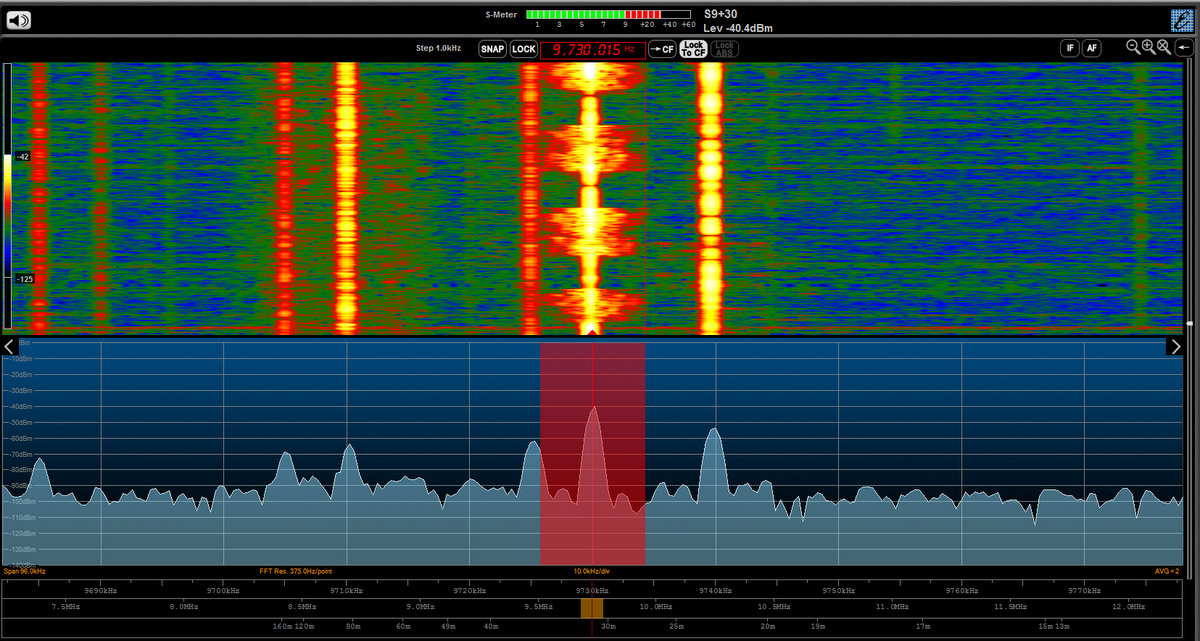
Screen capture of the Elad FDM-S2 recording RRI's interval signal

Screen capture of the Elad FDM-S2 recording RRI’s interval signal

For your listening pleasure: one full hour of Radio Romania International‘s English language service.

This recording was made on April 23 at 00:00 UTC on 9730 kHz. I used my Elad FDM-S2 software defined receiver to make this recording.

As you can see from the screenshot of the Elad spectrum display above, Radio Romania International’s signal was quite strong. Earlier in the day, the FDM-S2 could also easily hear the RRI English service on 11,700 kHz, which was much weaker at my location here in the eastern US.

Click here to download the recording as an MP3, or simply listen via the embedded player below:

Radio Six International broadcasts this week

Radio-Six-International

(Source: Mike Terry via the WRTH Facebook page)

Radio Six International

Shortwave transmissions will return for an experiment next weekend. From transmitters in Sweden, and on a couple of frequencies in different bands, we offer an afternoon of programming from 14:00 to 16:00 GMT on Saturday, 25th April, aimed at listeners in Europe. (3 – 5pm UK time, 4 – 6pm Europe).

Programme details on the April issue of Radio News. Hear us in the UK, Ireland and most of Western Europe on 9,405kHz (31.87m); and Scandinavia and Northern Europe on 3,975kHz (75.47m).

Ed Royce to champion “new approach” to US international broadcasting

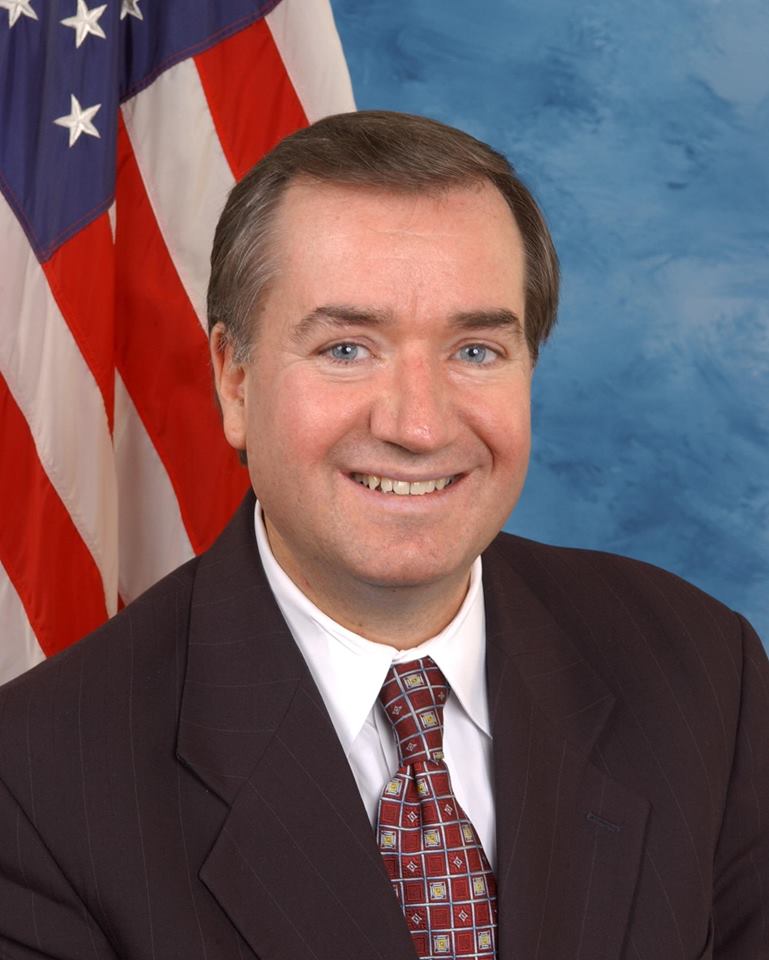
US Representative, Ed Royce

US Representative, Ed Royce

Many thanks to SWLing Post reader, Michael, for sharing a link to this opinion piece in the Wall Street Journal by Ed Royce (R), Chairman of the House Foreign Affairs Committee.

Here is a short clip from the piece:

“Vladimir Putin has a secret army. It’s an army of thousands of “trolls,” TV anchors and others who work day and night spreading anti-American propaganda on the Internet, airwaves and newspapers throughout Russia and the world. Mr. Putin uses these misinformation warriors to destabilize his neighbors and control parts of Ukraine. This force may be more dangerous than any military, because no artillery can stop their lies from spreading and undermining U.S. security interests in Europe.

Neither can the U.S. international broadcasting services that performed such a valuable service during the Cold War. They have withered until they are no longer capable of meeting today’s challenges. Until this changes, Russia’s president and his propaganda will flourish.

[…]From its inception, the BBG has drawn criticism from right, left and center. A part-time board that is supposed to oversee and spend $740 million a year, it has a fundamentally flawed structure. A 2013 Inspector General report for the State Department found the BBG to be dysfunctional. The same year, former Secretary of State Hillary Clinton described the BBG as “practically defunct.” No wonder the agency isn’t coming close to competing with Mr. Putin.

Righting this ship must be an urgent foreign-policy priority. I will soon introduce bipartisan legislation to do just that. The bill would charge one U.S. broadcasting organization (VOA) with reporting U.S. policy and other global news, and another, including RFE/RL and similar services, to act as the free press in repressive societies like Russia. Each organization will have its own CEO and its own board, with accountability that is clear to all[…]”

Read Ed Royce’s full Op Ed piece in the Wall Street Journal online.

Update: Dan Robinson also points out this piece, by Ron Nixon, published in the NY Times.

Can the VOA justify its funding?

voa logoJonathan Marks followed up his last post with two more pieces from the Media Network Vintage Vault, again, on the topic of US international broadcasting.

Jonathan writes:

Interesting to see there was opposition to RFE/RL expansion in 1992. http://jonathanmarks.libsyn.com/mn06081992radio-free-asia

And Bill Whitacre is good in this edition: http://jonathanmarks.libsyn.com/mn07051992voakorea

My question remains: can VOA still justify the funding it has? It has spent billions over the last few decades, but has little to show for it.

No doubt, with the recent loss of CEO Andy Lack and the announcement that VOA Director, David Ensor, is stepping down, the VOA is struggling to remain viable.  I don’t believe this is due to a lack of good reporters or internal innovators, rather, a lack of proper management.

Jonathan also found this recently published report titled, “Reassessing US International Broadcasting” by S. Enders Wimbush and Elizabeth M. Portale. Click here to download the full report as a PDF.

VOA director David Ensor steps down

(Source: NY Times)

David Ensor (Source: BBG)

David Ensor (Source: BBG)

David Ensor, who as director of the Voice of America has presided over significant growth in the news agency’s audience despite budget cuts, announced Tuesday that he was stepping down.

Mr. Ensor, who joined the Voice of America in June 2011, said he would leave the government-funded broadcaster at the end of next month. He did not explain his decision or discuss his plans.

The Broadcasting Board of Governors, which oversees the Voice of America, credited Mr. Ensor with creating new television programming in Russian, Ukrainian, Persian, Mandarin, Burmese and Creole, among other languages. It also said he had led a digital transformation of the agency’s newsroom and expanded media programs in Africa.

[…]His time at the news agency has not been without controversy. Dan Robinson, the former chief White House correspondent for the Voice of America, said its central news operation had been devastated by staffing cuts, and he and other former employees said a number of veteran correspondents had resigned or retired in frustration. [Continue reading…]

Cambridge 105 goes pirate for Good Friday

Cambridge-105(Source: Southgate ARC via Thomas Ally)

Cambridge 105 goes pirate – including on 6,070 kHz – for Good Friday

Community broadcast radio station Cambridge 105 is throwing away the modern technology and returning to the era of pirate radio for Good Friday.

Setting up turntables and cart machines on the Riverboat Georgina on the River Cam, we’ll be broadcasting from 10am to 10pm, covering everything from the early days of offshore radio in the 1960s to the end of the era in the early ’90s.

We’ve also teamed up with the DARC-run Channel 292 shortwave transmitter on 6070kHz for the day, so SWLs should be able to hear us there across much of Europe.

Dom M0BLF will be handling QSL cards for anyone who does hear us on HF.

Cambridge 105 is run entirely by volunteers, including a good number of licensed amateurs, both on the engineering and presentation side of the station.

73,

Rob, M0VFC