Category Archives: Broadcasters

BBC World Service: Portugal vs. Ghana

WorldCupBall-001Earlier today, I tuned to the BBC World Service on 17,830 kHz at 16:00 UTC, hoping they would be covering the USA vs. Germany game of the FIFA World Cup. I was pleased to hear World Cup coverage the moment I tuned in–but was a little disappointed that BBC had selected the Ghana vs. Portugal game.  Still, I can’t complain; this BBC service is, after all, intended for Africa. And a lot was at stake for Ghana…

So, I listened to the BBC coverage of that game while watching the USA vs Germany game stream over ESPN. I also watched a little of the Portugal/Ghana game, and realized I had an advantage over others streaming the game because the shortwave coverage from the BBC was almost 5 seconds ahead of the live stream. That’s the power of shortwave: goals at the speed of light!

For your listening pleasure, here is the full recording I made from the BBC World Service today. Click here to download the recording as an MP3, or simply listen via the embedded player below:

Shortwave Radio Recordings: Radio Romania International

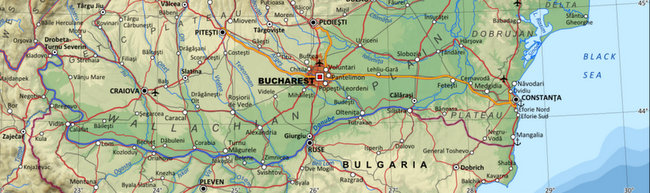
Original Map Image by Andrein: Wikimedia CommonsFor your listening pleasure: Radio Romania International‘s English language service.

I recorded this broadcast with the Elad FDM-S2 on June 26, 2014, starting at 00:00 UTC on 9,700 kHz.

This broadcast originates from RRI‘s Tiganesti transmitter site.

Click here to download the recording as an MP3, or simply listen via the embedded player below:

Click here to view other posts mentioning Radio Romania International.

Shortwave Radio Recordings: BBC to the 2014 British Antarctic Survey

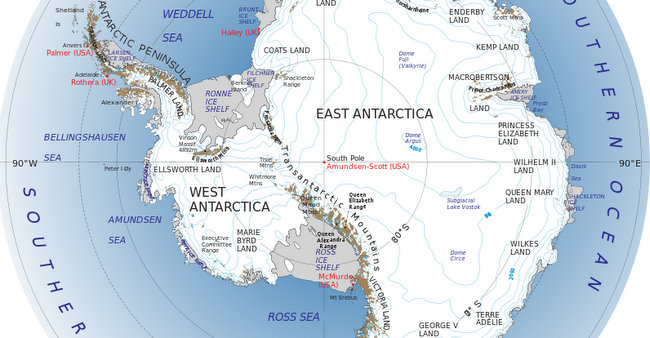
800px-Antarctica.svgAs promised, here are the recordings of the BBC World Service’s thirty minute broadcast to the British Antarctic Survey. The broadcast started at 21:30 UTC on June 21, 2014 and was broadcast on 5,875, 5,985, 7,350 and 9,890 kHz.

British_Antarctic_Survey_Logo

As in previous years, this broadcast was lighthearted, filled with humorous shout-outs from the team’s family and friends. Even a couple of special guests were included. Listen for yourself:

This excellent recording was made by SWLing Post reader, Dominik, in Europe:

Click here to download Dominik’s recording as an MP3.

Post reader Rob Wagner (VK3BVW), in Australia, could receive the broadcast on three frequencies (5,875, 5,985, and 7,350). He’s included clips of each broadcast on his excellent blog, The Mount Evelyn DX Report.

As for me, I was traveling to visit family yesterday afternoon when the broadcast started.  I knew from listening endeavors on previous visits that receiving a broadcast indoors at their home is not feasible; there is some sort of power line noise in that area that overwhelms anything on the short or medium wave bands, unless the station is very strong.

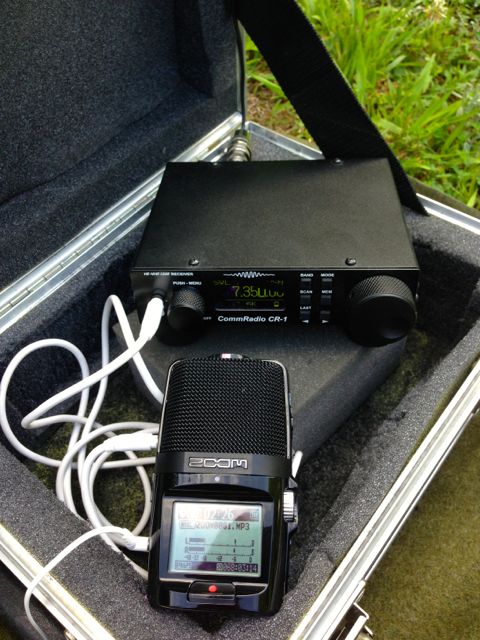
To cope with this noise, I knew I would need to move my operation outdoors, away from the house, and employ an outdoor antenna. So I packed the following, all into my small flight case: the CommRadio CR-1, a NASA PA-30 15 foot passive wide-band wire antenna, and the Zoom H2n Handy Recorder
.
CommRadio-CR-1-Zoom-H2N-BBC-Antarctica

I hung the PA-30 antenna in a nearby tree, spread a wool army blanket on the ground for lounging, and put the mini flight case to use as a stand to hold the radio and recorder. The CR-1 required no external power supply, as its internal battery had been charged in advance (one of the reasons I love this little receiver for travel).

To try out the set-up, I tuned around the bands. Conditions were rough, thunderstorms were in the region, but I was most impressed that I could hear several broadcasters on 31 meters. I knew that the BBC broadcast would be a tough catch; after all, none of their transmissions were targeting my part of the globe–rather, the opposite!

When I tuned to the BBC broadcast on 7,350 kHz, here’s what I heard:

This is (very) rough copy; for five or so minutes, you’ll hear me switching between AM/USB and LSB to find the best mode for the signal. I also check the other BBC frequencies to see if any were more audible.

In the end, using ECSS (zero-beating the signal in USB) seemed to work best.

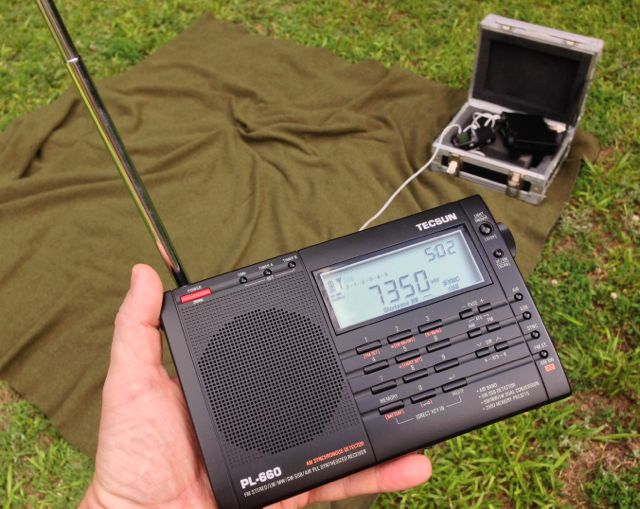
For fun, I had also brought along the Tecsun PL-660–a choice portable radio for weak signal DX. I tuned to 7,350 and could just hear the BBC signal in the noise, but voice and music were unintelligible.
Tecsun-PL-660-BBC-Antarctic

What did I get out of the experience?  Good copy?  Alas, no.

But there’s nothing like the fun of playing radio outdoors! Even though the copy was rough, propagation deplorable, and static crashes abundant, I thoroughly enjoyed the experience.  Moreover, I was amused to note that while I listened (and sweated) outside in the very hot, muggy conditions of the American southeast, a few scientists huddled near the extremely chilly southern pole at that exact moment, were tuning in the exact same broadcast.  It somehow made the heat bearable.

That’s the remarkable camaraderie of radio: truly, a wireless community.

Today: Catch and record the BBC’s broadcast to the British Antarctic Survey Team

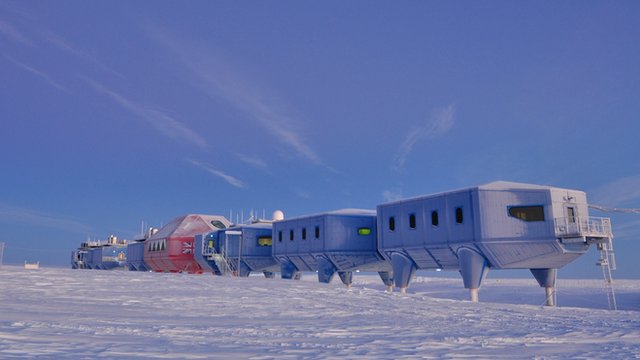
Halley VI: The British Antarctic Survey's new base (Source: BBC)

Halley VI: The British Antarctic Survey’s new base (Source: BBC)

Every year, the BBC broadcasts a special program to the 41 scientists and support staff in the British Antarctic Survey Team.

The BBC will play music requests and send special messages to the team who winter over in this isolated post. The broadcast is guaranteed to be quirky, nostalgic and certainly DX worth catching. Click here to listen to the 2013 broadcast.

The winter program will air today, June 21, 2014 at 21:30 UTC on the following frequencies:

  • 7,350 kHz; Ascension; 207°
  • 9,890 kHz; Woofferton; 182°
  • 5,985 kHz; Dhabayya; 203°
  • 5,875 kHz; Wooferton; 184° (updated)

Readers: If you have a chance, try to record the broadcast as I’m uncertain if I’ll have a chance to catch it this year. I would like a good recording for the Shortwave Radio Audio Archive.

Many thanks!

Happy Summer/Winter Solstice: Listening to New Zealand and Australia

Australia-NewZealand

I’ve been on the road a lot lately. A lack of time resulting from this, combined with frequent afternoon and evening thunderstorms when I am home, has meant that I’ve not had the radio time I often enjoy.

This morning,  I woke up around 5:50 AM determined to get a bit of time on the radio. After all, today is the first day of summer here in the US, and a special day for me. I walked outside and hooked my antenna back up; I had been forced to disconnect it yesterday as pop-up thunderstorms persisted throughout the afternoon and evening.

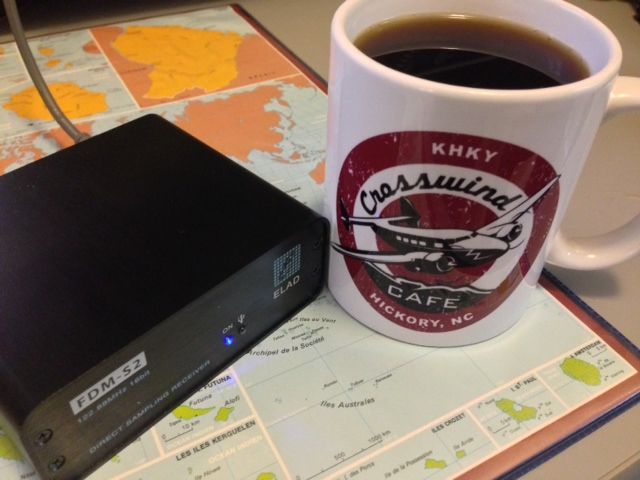
I then brewed a cup of coffee and settled into my “listening lounge” for some early morning tuning.

Elad-FDM-S2-Coffee

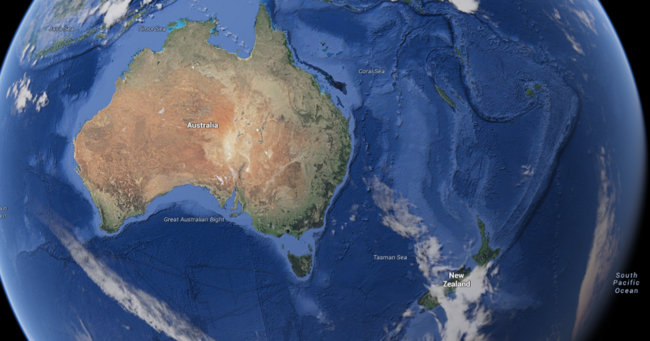
I started off this morning off by tuning the Elad FDM-S2 to Radio New Zealand International on 9,890 kHz in DRM (Digital Radio Mondiale). I was treated to one full hour of Peter Fry’s Saturday Night music; the DRM lock was completely stable.  Though I prefer the sonic characteristics of AM over digital modes, I’m most impressed with the audio quality DRM affords coming from a 50 kW signal being broadcast on the other side of the planet. The quality is so exceptional that, if you listen carefully, you can even hear the news reader shifting papers at the top of the hour.

That got me thinking: I’m flawlessly receiving and decoding a wireless digital audio signal from 13,500 kM away. Amazing. Especially considering that my laptop struggles to receive Wi-Fi in many hotels.

RNZI signed off after an hour, so I switched modes to AM and tuned to Radio Australia on 9,580 kHz.

BombersAs I had hoped, RA was broadcasting the second half of the AFL match featuring the Essendon Bombers who ultimately held a nine-point win over the Adelaide Crows. Alas, Radio Australia dropped the signal before the end of the final quarter, but I was able to watch the results roll in on my iPhone while making waffles in the kitchen. If this had been a World Cup match, I would have scoured the shortwaves for another Radio Australia frequency.

Immediately after tuning in RNZI, I hit the record button on the FDM-S2 (around 5:55 EDT/9:55 UTC) and didn’t stop the recording until after Radio Australia signed off, so there is a 30 second silence in the middle while I tuned and switched modes from DRM to AM.

Click here to download my full 2+ hour morning recording, or simply listen via the embedded player below:

Depending on which hemisphere you live in, I hope you enjoy this summer–or winter– solstice.

As for me, I’m looking forward to a happy birthday with my family.  Cheers!

BBC: audience for international services “has risen to a new high”

(Image source: BBC)(Source: Yahoo News via Richard Cuff)

The BBC has said the audience for its international services has risen to a new high, with 265 million people around the world accessing its output each week.

The corporation’s estimates show the numbers using its various global news services – including the World Service and BBC World News – have risen by 3.5 per cent in the past year, with big jumps in Russia and Ukraine as people have apparently turned to “trusted” sources.

[…]Radio has seen a major decline in numbers with 17 million fewer listeners than the previous 12-month period, although it continued to be the biggest platform overall with 128 million tuning in.

Rises in digital and television use have offset that figure to give an overall audience rise.

[…]The audience for TV services stands at TV viewers at 126 million and digital access stands at 46 million – a third of these through mobile devices – with many people clearly using more than one of the services.

Peter Horrocks, director of the BBC World Service Group, said: “Today’s figures show the most successful year ever for the BBC’s global news services.

“Investment in TV bulletins and responsive mobile services for the World Service is bearing fruit. Radio will be a World Service mainstay for years to come, but as these figures testify, the way people access news is changing and we must continue to innovate if we are to flourish in the years ahead.”

Read this full article at Yahoo News.

Polish Radio External Service drops German language programs

PolishRadioMany thanks to SWLing Post reader, Dominik, who writes:

I think you may be interested in the recent changes in Polish Radio External Service. A recent article from wirtualnemedia.pl states that German-language programmes are going to be terminated. Here is a link to the original article and below you can find my (rough) translation:

From 1st July Polish Radio External Service’s programmes will be changed. The station wants to expand English and Russian sections, but the German section will be liquidated. English-language thematic programs will appear.

Ministry of Foreign Affairs wants changes in organizational structure of PRES, which receives a yearly grant. This year PRES will receive 9,3 million z? – it means a drop of about 1 million z?.

According to the Ministry’s expectations, Hebrew broadcasts were stopped in April, however the Hebrew section will officially cease to exist now. The station will be developing its English and Russian sections. Programmes in Belarusian and Ukrainian languages will still be transmitted. The Polish section will be also changed. Starting from July, it won’t produce its own materials – it will only broadcast materials from other stations of Polish Radio.

Polish Radio wants to continue analogue broadcasting of a channel, which plays an important role in Eastern European countries. The internet presence of the channel is also going to be expanded. – Apart from the English-language site thenews.pl, a site dedicated to Eastern European countries – novosti.pl – will be created. – says Rados?aw Kazimierski, spokesman of Polish Radio.

The broadcaster wants to prepare thematic programs for listeners in Ireland, UK and USA. Programmes for listeners in India and China (in Radiovision system) are also planned. – The changes will be systematically introduced during the upcoming months. – says Kazimierski.

Few workers will lose their jobs after those changes.

Dominik then comments:

The article states that PR wants to keep the analogue broadcasting, but it doesn’t specify what kind of broadcasting will continue.

After the recent closure of three remaining shortwave transmissions, following relays are still on air:

  • Polish section: 1386 kHz via Lithuania 19:00-20:00 UTC
  • Belarusian section: 1386 kHz via Lithuania 20:00-21:00 UTC
  • German section via Radio 700: 14:30-15:00 on 7310 and 6005 kHz, 18:00-18:30 on 3985 kHz.

There are also some local relays on FM and DAB, but the recent events in Crimea showed that they aren’t as reliable as AM. Ukrainian section of PRES was relayed in Crimea via transmitters of Radio ERA. Two (of total 4) were switched off by separatists.

Many thanks for this update and your comments, Dominik.  I will be very interested to see how PR decides to deliver their programming in the UK, Ireland and the US. I would have to assume only by the Internet as I don’t believe they would invest in local AM (MW) relays like Russia Today and China Radio International.