Category Archives: Broadcasters

RFE/RL Opens Offices In Latvia & Lithuania

Many thanks to SWLing Post contributor, Eric Jon Magnuson, who shares a link to the following press release from RFE/RL:


As War Transforms Media Landscape in Europe, RFE/RL Opens Offices In Latvia, Lithuania

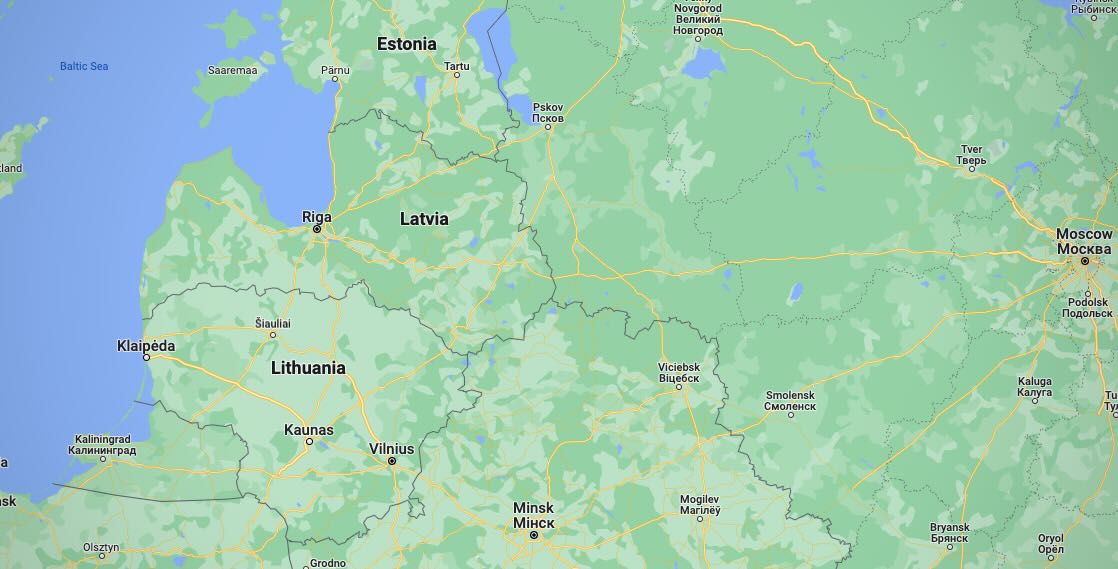
WASHINGTON—Following the forced suspension of RFE/RL operations in Russia on March 6, RFE/RL is pleased to announce the opening of news bureaus in Riga, Latvia and Vilnius, Lithuania. These offices will house teams from RFE/RL’s Russia and Belarus services and the 24/7 Current Time global digital and TV network, and also provide a base for new investigative journalism projects and digital innovation hubs.

Said RFE/RL President Jamie Fly, “These new bureaus will allow RFE/RL to continue to engage with our audiences in Russia and Belarus, despite those government’s best efforts to silence independent journalism. RFE/RL will expand its already-successful efforts to reach Russian and Belarusian audiences with the relevant news they seek, and desperately need. We are grateful to the Latvian and Lithuanian governments for their commitment to press freedom and their support for vulnerable journalists who have had to seek safe haven outside their home countries.”

In Riga, RFE/RL plans to establish a multimedia hub that will host Russian Service and Current Time staff displaced from Russia. The Latvian capital will also house a new, Russian-language investigative journalism unit and a digital innovation hub designed to counter disinformation and develop strategies to circumvent online censorship across delivery platforms. The Vilnius news bureau will primarily host displaced Belarus Service journalists forced to flee after the flawed 2020 elections, as well as a new reporting team being set up by Current Time to serve the needs of the network’s Russian-speaking audiences in Belarus.

RFE/RL’s impact during the first two weeks of Russia’s war on Ukraine demonstrates the appetite within Russia and Belarus for a credible, uncensored alternative to Kremlin media about the full scope of the conflict. Between February 24 and March 16, the number of views of RFE/RL videos on YouTube from Russia tripled to nearly 238 million, while the number of visits, page views, and unique visitors to its websites from Russia rose by 34 percent, 51 percent, and 53 percent respectively. As for Belarus, the number of RFE/RL videos viewed via YouTube from inside the country quadrupled (to 22.4 million), and the number of visits (+158%), page views (+148%), and unique visitors (+110) to RFE/RL websites from Belarus has also increased dramatically.

RFE/RL deeply appreciates the support of the governments of Latvia and Lithuania for RFE/RL’s mission and for the establishment of these new bureaus. The people of Latvia and Lithuania have for decades been enthusiastic consumers of RFE/RL programming—both of RFE/RL’s Latvian and Lithuanian services that operated from 1975 to 2004, and more recently of Current Time programming. RFE/RL President Fly visited Vilnius and Riga this past January, in part to attend the Lithuanian premiere of the award-winning, Current Time-commissioned film “Mr. Landsbergis,” about Lithuania’s struggle to restore its independence.

RFE/RL’s Russian Service is a multiplatform alternative to Russian state-controlled media, providing audiences in the Russian Federation with informed and accurate news, analysis, and opinion. The Russian Service’s websites, including its regional reporting units Siberia.Realities and North.Realities, earned a monthly average of 12.7 million visits and 20.6 million page views in 2021, while 297 million Russian Service videos were viewed on YouTube, Facebook, and Instagram.

Current Time is a 24/7 Russian-language digital and TV network led by RFE/RL in cooperation with VOA, that caters to Russian-speakers worldwide. In addition to reporting uncensored news, it is the largest provider of independent, Russian-language films to its audiences. Despite rising pressure on Current Time from the Russian government, Current Time videos were viewed over 1.3 billion times on YouTube, Facebook, and Instagram/IGTV in FY2021.

Labeled an “extremist organization” by the Belarus government, RFE/RL’s Belarus Service provides independent news and analysis to Belarusian audiences in their own language, relying on social media platforms such as Telegram, Instagram, and YouTube, as well as mirror sites and an updated news app to circumvent pervasive Internet blockages and access disruptions.

About RFE/RL
RFE/RL relies on its networks of local reporters to provide accurate news and information to more than 37 million people every week in 27 languages and 23 countries where media freedom is restricted, or where a professional press has not fully developed. Its videos were viewed 7 billion times on Facebook, YouTube, and Instagram/IGTV in FY2021. RFE/RL is an editorially independent media company funded by a grant from the U.S. Congress through the U.S. Agency for Global Media.
Click here to read  this announcement at RFE/RL.

CBS Miami features WRMI and the “Shortwaves for Freedom” campaign

Many thanks to SWLing Post contributor, Dennis Dura, who shares the following article from CBS Miami:

Shortwave Radio Signal From Florida Cow Pasture Reaches Russia Carrying Latest News (CBS Miami)

Click here to view on YouTube.

MIAMI (CBSMiami) – A massive shortwave radio antenna sits in a cow pasture north of Lake Okeechobee in Central Florida.

“We have 14, 100,000-watt transmitters and 23 antennas beaming to all parts of the world,” said Jeff White, the general manager of Miami-based WRMI.

The multi-signal station is said to be one of the largest shortwave radio operations in the world.

WRMI stands for Radio Miami International and worldwide coverage means it can easily send signals into Ukraine and Russia.

Shortwave is old school technology, think of World War II or the Cold War, as American-produced news beamed behind the iron curtain. Now, during the invasion of Ukraine, Russia has shut down journalism as we know it.

Kate Neiswender, one of the guiding lights behind funding news programming for Russian audiences, said, “they were going to pass a law making journalism essentially illegal, facing a 15-year criminal penalty.”

Neiswender and fellow former journalists formed a fundraiser to beam news into Russia, where state-controlled media, at best, does not tell the true story of the invasion and many Russian citizens have no clue about the severity of the invasion.

“This is a journalistic pursuit more than anything else,” said Neiswender. [Continue reading at CBS Miami…]

Click here to read our previous post about Shortwaves for Freedom and contribute to the campaign here.

Radio Waves: Colorado Inmate Radio, Experimental Radio News 4, BBC World Service to Ukraine, DIY Radio, and When the World Tuned to Shortwave

Radio Waves:  Stories Making Waves in the World of Radio

Because I keep my ear to the waves, as well as receive many tips from others who do the same, I find myself privy to radio-related stories that might interest SWLing Post readers.  To that end: Welcome to the SWLing Post’s Radio Waves, a collection of links to interesting stories making waves in the world of radio. Enjoy!


Inmate-produced radio station streams beyond prison walls (NBC News)

Inside Wire, available 24/7 to incarcerated people in Colorado and to online listeners around the world, is said to offer a chance for prisoners and those they harmed to heal.

LIMON, Colo. — Herbert Alexander stares at the sound waves jumping on the computer screen in front of him, his shaved head partially covered by headphones. He’s editing a short audio feature on incarcerated fathers, a subject with which he is intimately familiar.

His two sons will soon hear his voice and his story because Alexander, 46, an inmate at Limon Correctional Facility, is preparing a segment for Inside Wire: Colorado Prison Radio, billed as the first radio station to be produced inside a prison and available to the world outside.

Other radio stations created in prisons generally air only within the walls of their lockups, but Inside Wire, which premiered March 1, reaches all 21 prisons in the state and beyond, online and by app, making the first of its kind in the country, organizers said.

“In spaces where isolation continues, this medium can cut through that,” said Ryan Conarro, general manager and program director of Inside Wire and creative producer for the University of Denver Prison Arts Initiative, which oversees the program in partnership with the Colorado Department of Corrections. [Continue reading at NBC…]

Experimental Radio News 4 (Experimental Radio News)

This issue of ERN includes novel aeronautical experiments, life-detecting radars and non-wearable health monitoring, the latest on those mysterious shortwave trading stations and more.

Click here to read a wide variety of topics in Experimental Radio News 4.

BBC World Service resurrects shortwave broadcasts in war-torn Ukraine (TPR)

The BBC has resurrected an old school way of broadcasting in order to reach people in the crisis area of Ukraine: Shortwave radio. What is shortwave, and why has the BBC decided to begin using it again? Continue reading

Czech Radio sends broadcasting gear to Ukraine

Many thanks to SWLing Post contributor, Chris Greenway, for sharing this story via Twitter:

Czech Radio helping Ukrainian public broadcaster’

At the request of the Ukrainian public broadcaster UA: PBC, Czech Radio is sending technical equipment essential for broadcasting to Ukraine. Thanks to this donation it will be possible to set up temporary Ukrainian radio stations in the event that the current broadcasting facilities are occupied or destroyed by Russian troops. Czech Radio has also launched an internet stream of the UA:PBC radio broadcast in Ukrainian. The stream will be available on the audio portal and in the mobile application mujRozhlas.cz. The aim of the project is to make information about the war in Ukraine available daily to refugees and Ukrainians in the Czech Republic.

Radio Waves: RNZ & TVNZ Merging, Tech Keeping Ukrainians in Touch, Solar Storms Documentary, and Aspidistra

Radio Waves:  Stories Making Waves in the World of Radio

Because I keep my ear to the waves, as well as receive many tips from others who do the same, I find myself privy to radio-related stories that might interest SWLing Post readers.  To that end: Welcome to the SWLing Post’s Radio Waves, a collection of links to interesting stories making waves in the world of radio. Enjoy!


RNZ and TVNZ to merge (RadioInfo)

New Zealand’s Minister for Broadcasting and Media Kris Faafoi has announced the government’s decision to create a new public media entity by merging RNZ and TVNZ.

According to Faafoi, ensuring New Zealanders continue to have access to reliable, trusted, independent information and local content sits at the heart of the decision.

“The public media sector is extremely important to New Zealanders in providing them with high quality, independent, timely and relevant media content,” Faafoi said.

“But we know the media landscape is changing and the sector is having to adapt to increased competition, changing audience demands and ways of accessing media, falling revenue, and new and emerging digital platforms. We need public media which is responsive to these changes and can flourish.

“RNZ and TVNZ are each trying to adjust to the challenges, but our current public media system, and the legislation it’s based on, is focused on radio and television.

“New Zealanders are among some of the most adaptive audiences when it comes to accessing content in different ways; like their phones rather than television and radio, and from internet-based platforms. We must be sure our public media can adapt to those audience changes, as well as other challenges that media will face in the future.”

“The new public media entity will be built on the best of both RNZ and TVNZ, which will initially become subsidiaries of the new organisation. It will continue to provide what existing audiences value, such as RNZ Concert, as well as better reaching those groups who aren’t currently well served; such as our various ethnic communities and cultures,” Faafoi said[…]

Read more at: https://radioinfo.com.au/news/rnz-and-tvnz-to-merge/ © RadioInfo Australia

Technologies old and new keep Ukrainians in touch with the world (The Economist)

Battery radios and satellite internet both have jobs to do

In communist Eastern Europe a shortwave radio was a vital piece of equipment for anyone wanting to stay ahead of the censors. Stations such as the bbc World Service, Radio Free Europe and Voice of America broadcast news, entertainment and rock-and-roll across the Iron Curtain.

After the cold war ended, shortwave radios gave way to television and the internet, and the broadcasts were wound down. But on March 3rd, in the aftermath of Russia’s invasion of Ukraine, the bbc announced their return. The World Service has begun nightly news broadcasts into Ukraine and parts of Russia (see map). Continue reading

NAB calls on US AM/FM stations to cease Russian programming

Many thanks to SWLing Post contributor, Zack Schindler, who shares the following stories all focused on US broadcasters receiving pressure from the NAB and their communities to halt broadcasts of Russian state-sponsored media like Russia Today and Sputnik:

NAB Calls On Broadcasters To Cease Russian Programming (Radio and Television Business Report)

It says it is a “fierce defender” of the First Amendment and “the critical importance of the ability to freely express views, both popular and unpopular.”

That said, the NAB explains that the First Amendment “does not prevent private actors from exercising sound, moral judgment.”

That’s why the chief advocacy group for broadcast radio and TV wants any state-sponsored programming with ties to Moscow pulled from U.S. airwaves now.

What will operators in Kansas City and Washington, D.C., do? RBR+TVBR heard from one of them, and he’s livid with the NAB. Another has placed the association among those responsible for “Cancel Culture” in the U.S.

In response to the invasion of Ukraine by Russia, NAB President/CEO Curtis LeGeyt seemingly took aim at Sputnik, the English-language service of the Voice of Russia.

Sputnik has already noticed, and reacted. On Tuesday, it noted that “Western governments” and internet giants including Google, Microsoft, Facebook and Twitter “have moved to heavily censor Russian foreign-language media outlets over the conflict in Ukraine, blocking websites, shutting down social media pages, and taking radio and television broadcasts off air.”

Calling the “censorship” unacceptable, Russian Foreign Ministry spokesman Oleg Gavrilov said in a meeting of the Russian Federation Council that, “separately, attention should be paid to the absolutely unacceptable behaviour of foreign, especially American, IT giants such as Google and Meta. Hostile propaganda activities are openly conducted on their social platforms, while Russian sources of information are blocked, and massive restrictions on access to domestic media are put in place.”

[…]“[G]iven the unprovoked aggression exhibited by Russia against the free and sovereign people of Ukraine, NAB calls on broadcasters to cease carrying any state-sponsored programming with ties to the Russian government or its agents,” LeGeyt said. “While we know that airings of such programs are extremely limited, we believe that our nation must stand fully united against misinformation and for freedom and democracy across the globe.”

Programs aren’t extremely limited to those in the Nation’s Capital, where Radio Sputnik airs on W288BS, at 105.5 MHz, and originating station WZHF-AM 1390, a directional two-pattern Class B facility first known as Top 40 WEAM. Both WZHF and the FM translator reaches much of greater Washington. [Continue reading…]

Why are Kansas City’s airwaves filled with pro-Putin ‘Radio Sputnik’ propaganda? (Kansas City Star Editorial Board)

“You’re listening to Radio Sputnik,’‘ the polished, made-for-radio voice says, accompanied by triumphant Russian-themed music. “Telling the untold.”

“Live from the divided states of America,” announces the host of “Fault Lines Radio” show. Produced in Washington, D.C., the program airs locally on AM radio station KCXL. Yes, we’re talking about a radio station spouting Russian propaganda from the heartland — just outside Kansas City. And why, you might ask, are Russian talking points airing on area radio stations?

Money talks. Or maybe we should say rubles.

Radio Sputnik, a media service funded by the Kremlin, airs daily on three stations in Kansas City. Alpine Broadcasting Corp. owner Peter Schartel is paid by Russian interests to broadcast pro-Vladimir Putin programming on them all.

And this week, with Russian tanks, artillery and troops continuing the tragic and reckless invasion of neighboring Ukraine, the Russian apologists spun hard. Schartel remained defiant even after multiple reports Thursday that the American branch of RT, the Russian-funded media network, was shutting down and laying off its staff. He said his contract was with an American company that works with the Russian authorities behind Sputnik. That company “has not notified us of any interruption,” he said.

For now, at least, the show goes on, and we sampled its absurd pro-Russian arguments so you wouldn’t have to.

Guests on the “Fault Lines Radio” show this week, encouraged by hosts Jamarl Thomas and Faran Fronczak, would have you believe Putin was an unwilling participant in this conflict. The Western media, one guest said, is complicit in spreading Ukrainian government war propaganda, and added that the besieged Ukrainian government is winning the information war on social media.

“If you were reading that, you might think there has been a billion Russian troops killed and that Ukrainian freedom fighters are storming Moscow,” said Mark Sleboda, Putin’s Moscow-based mouthpiece and frequent contributor to pro-Russian media companies.

Thomas predictably agreed, and the Putin praise continued.

KCXL has no ties to Russia and is against the country’s conflict with Ukraine, Schartel told us Wednesday. But he needs the money, and he’d lose his business if he pulled the plug on Radio Sputnik. So, that’s how you end up with a radio show here in the land of barbecue and jazz playing Cold War oldies and coddling a powerful, seemingly deranged dictator.

Putin ordered the invasion of neighboring Ukraine. The unprovoked and inhumane attack has caused thousands of deaths of both civilians and soldiers in Ukraine. Parts of the country are being reduced to rubble.

Outside of Moscow, the Russian invasion has been almost universally condemned. Except for right here in the Kansas City area, where listeners of KCXL were bombarded with pro-Putin talk. [Read the full article here…]

National Association of Broadcasters call to stop airing Russian radio, pressures Liberty radio station (KMBC)

LIBERTY, Mo. —Down a rural road just a mile away from Liberty’s city square, a radio station inside small brick building displays an American flag in the front window.

For six hours every weekday, 1140AM KCXL broadcasts radio programming paid for by the Russian government, called Radio Sputnik.

The National Association of Broadcasters earlier this week called for U.S. broadcasters to cease Russian-sponsored programming considering the war in Ukraine.

[…]Alpine Broadcasting Programming and sales manager Jonne Santoli-Schartel told KMBC on Thursday she and her husband, Peter Schartel, have no plans to pull Radio Sputnik from the station’s airwaves.

“If we can’t express our viewpoints anymore, and we have cancel culture, and people deleting and people putting pressure on other people to not hear certain programming, then we’re in trouble and freedom no longer exists,” Santoli-Schartel said.

Those living nearby disagreed.

“If the money means more than your morals, then you’ve got a problem,” said Debbie Bowman, who has family members from Ukraine.

Last year, government documents showed Alpine Broadcasting made at least $60,000 from RM Broadcasting, led by Florida businessman Arnold Ferolito. RM Broadcasting acts as a go between for two U.S. radio stations including KCXL, and Rossiya Segodnya, a media organization sponsored by the Russian government.

A judge in 2019 ordered RM Broadcasting to register as a foreign agent under the U.S. Foreign Registration Act.

That act makes sure people engaged in domestic political or advocacy work on behalf of foreign interests disclose financial information along with relationships.

[…]Santoli-Shartel also said she does not agree with the Russian invasion of Ukraine, however, she has no plans to stop broadcasting.

“My heart is breaking for these moms and these dads on both sides,” she said. “I think if I was in Russia, I would want to get out of Russia because I think they’re in danger also. But the people of Ukraine, I think it is so horrible.”

To see RM Broadcasting’s latest filing under the Foreign Agent Registration Act, click here. [Read full article and view video here…]

Video Presentation: WLW Radio -100 Years – Behind The Scenes by Dave Snyder

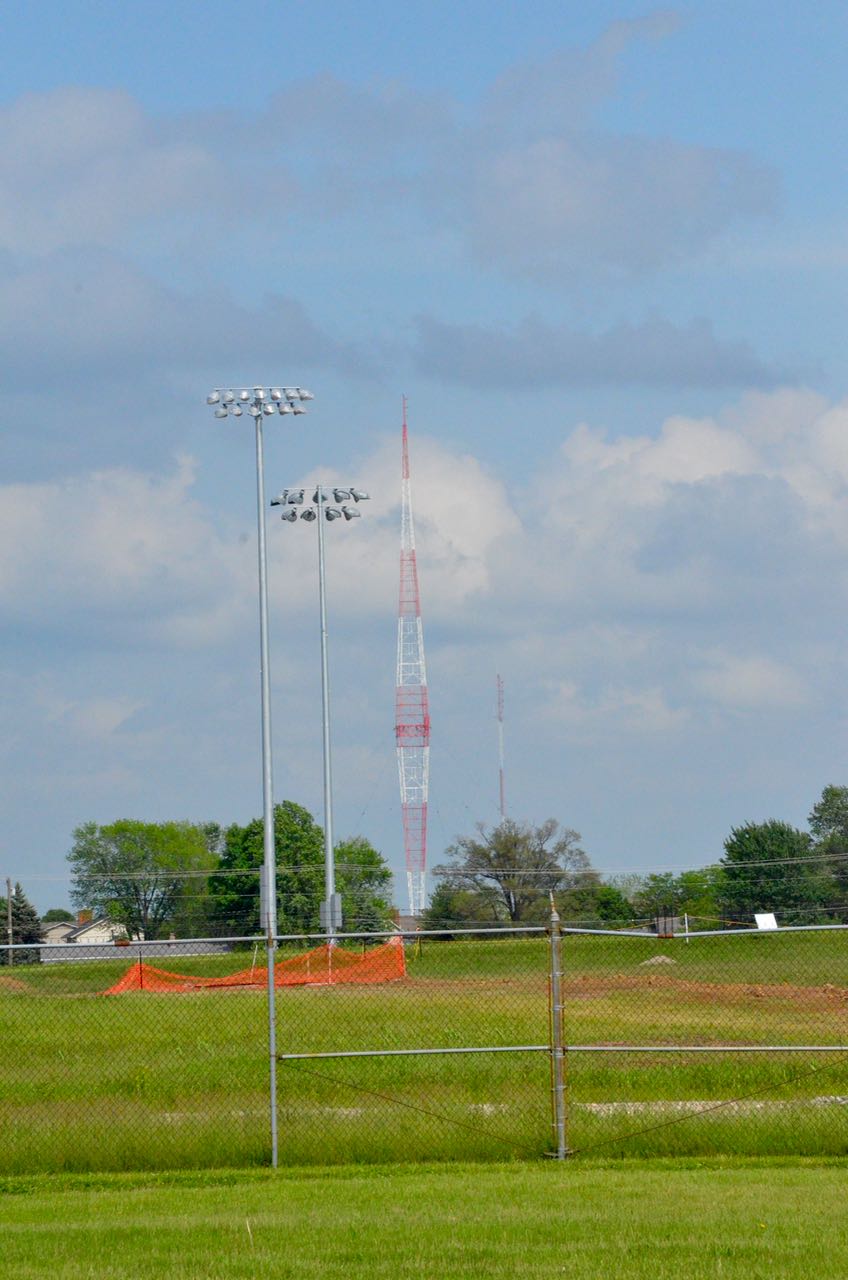
A view of the iconic WLW tower taken from the neighboring VOA Bethany site and museum.

Many thanks to SWLing Post contributor, David Snyder, who shares this presentation outlining the history of WLW for the National VOA Museum of Broadcasting YouTube channel.

Video description:

Behind the scenes pictures from the efforts of Powel Crosley, Jr. creating the famous WLW Radio Station, including the largest USA AM broadcast transmitter at 500,000 watts.

Click here to view on YouTube.

Most excellent! Thank you for sharing this, David.