Category Archives: FM

CBS considering the sale of its radio division

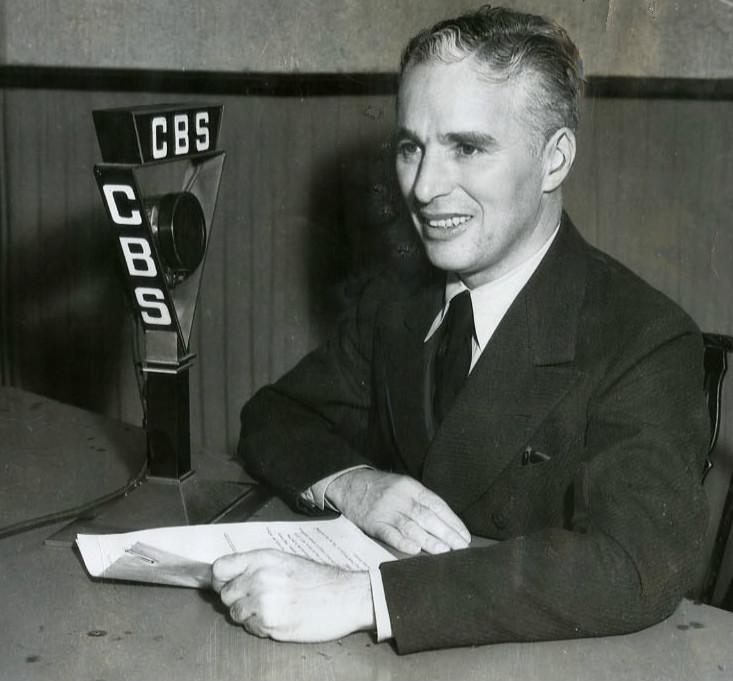
When Charlie Chaplin finally allowed the world to hear his voice after 20 years of mime, he chose CBS's airwaves to do it on. (Source: Wikipedia)

When Charlie Chaplin allowed the world to hear his voice after twenty years of silent performance, he chose CBS for the broadcast.

(Source: LA Times)

CBS Corp. is poised to exit the radio business that it helped create.

Eighty-eight years ago, the company’s founder, William S. Paley, bought the nascent Columbia Broadcasting System, and those radio stations became the nucleus of a budding broadcast empire.

But on Tuesday, CBS Chairman and Chief Executive Leslie Moonves said the company was exploring strategic options, including a sale or spinoff, of its entire radio division.

“The aim here is to unlock value for our shareholders,” said Moonves, who made the announcement during an investor day in New York.

The decision marks the end of an era and highlights the waning influence of commercial radio, which is no longer considered a growth industry. Young adults spend more time listening to digital music files, podcasts and subscription Internet radio services such as Spotify and Pandora. The shift has prompted major advertisers, including car dealerships, wireless phone companies and financial services firms, to steer more of their marketing dollars to digital platforms.

Continue reading at the LA Times’ website…

FCC Commissioner outlines 2016 anti-pirate agenda

fcc-logoMany thanks to an anonymous SWLing Post contributor who writes:

The FCC released this material [yesterday]. It consists mainly of letters to various organizations to ask their members to avoid cooperating with unlicensed radio stations.

The concern is that real estate owners may be harboring unauthorized stations, and that businesses may support such stations with advertising funds.

I would point you to an interesting opinion on the subject by Prof. John Anderson:

O'Rielly Outlines Anti-Pirate Agenda for 2016

John references this recent YouTube video clip of a Congressional hearing where FCC Chairman Tom Wheeler is questioned on the FCC’s enforcement efforts:

Again, I am not the source of the following material–the FCC is:

STATEMENT OF COMMISSIONER MICHAEL O’RIELLY ON PIRATE RADIO ENFORCEMENT ADVISORY.

STMT. News Media Contact: Robin Colwell at (202) 418-2300, email: [email protected]  OCMO https://apps.fcc.gov/edocs_public/attachmatch/DOC-338021A1.docx
https://apps.fcc.gov/edocs_public/attachmatch/DOC-338021A1.pdf

Released:  03/01/2016.  FCC ENFORCEMENT ADVISORY: PERSONS OR BUSINESSES OPERATING “PIRATE” BROADCAST STATIONS ARE SUBJECT TO ENFORCEMENT ACTION. (DA No.  16-159)  This Enforcement Advisory discusses the rules that prohibit “pirate” radio, explains to the public at large what broadcast actions are illegal, why such activities may harm the public, and what do to in case someone suspects “pirate” broadcasts.  EB . News Media Contact: Will Wiquist at (202) 418-0509, email: [email protected]

https://apps.fcc.gov/edocs_public/attachmatch/DA-16-159A1.docx
https://apps.fcc.gov/edocs_public/attachmatch/DA-16-159A10.pdf
https://apps.fcc.gov/edocs_public/attachmatch/DA-16-159A11.pdf
https://apps.fcc.gov/edocs_public/attachmatch/DA-16-159A12.pdf
https://apps.fcc.gov/edocs_public/attachmatch/DA-16-159A13.pdf
https://apps.fcc.gov/edocs_public/attachmatch/DA-16-159A2.pdf
https://apps.fcc.gov/edocs_public/attachmatch/DA-16-159A3.pdf
https://apps.fcc.gov/edocs_public/attachmatch/DA-16-159A4.pdf
https://apps.fcc.gov/edocs_public/attachmatch/DA-16-159A5.pdf
https://apps.fcc.gov/edocs_public/attachmatch/DA-16-159A6.pdf
https://apps.fcc.gov/edocs_public/attachmatch/DA-16-159A7.pdf
https://apps.fcc.gov/edocs_public/attachmatch/DA-16-159A8.pdf
https://apps.fcc.gov/edocs_public/attachmatch/DA-16-159A9.pdf
https://apps.fcc.gov/edocs_public/attachmatch/DA-16-159A1.pdf

Note that the bulk of this report focuses on FM/AM radio pirates in local markets rather than shortwave pirates (though I’m sure, on occasion, shortwave pirates are on the FCC radar).

BBC: Raspberry Pi-powered transmitters broadcast Syrian radio

BBC-FM-Transmitter-SyriaMany thanks to SWLing Post contributor, Richard Langley, who shares the following:

Latest item, which provides more information, on this previously mentioned news story:

http://www.bbc.com/news/technology-35690688

Here’s an excerpt:

Raspberry Pi computers are being used to power “micro” radio transmitters in Syria.
The Pocket FMs, as they are called, were designed by a German organisation as a way of providing Syrians with independent radio.

The devices have a range of between 4 to 6km (2.5 to 3.75 miles), which is enough to cover an entire town.

At the heart of each is a Raspberry Pi, the credit card-sized single-board computers.
About two dozen have been built, and the designer says they are intended to be as easy to set up as a piece of flat-pack furniture.

“We lost one device in Kobane”, Philipp Hochleichter told BBC Radio 4’s PM programme.

“But due to the bombing – not due to a malfunction.”[…]

Continue reading on the BBC website…

The Raspberry Pi is an amazing little computer; capable of so much at such a low cost. I just purchased a Raspberry Pi 3 yesterday; hoping I can think of a clever way to use it for a little radio fun..

Paul gives us a glimpse of KIYU Alaska

IMG_2798

SWLing Post contributor, Paul Walker, is not only a shortwave listener, he’s also a broadcaster.

Paul works at community radio station KIYU in Galena, Alaska. At my request, Paul has kindly shared a few photos of his workplace with us.IMG_0077IMG_2797IMG_2799

Paul also sent this short video at the mic of KIYU:

Very cool, Paul! You certainly have a lot of translators to list in your station ID–no doubt, these are the many sites that serve your communities.

Thanks for sharing a little of your world at KIYU!

If you’d like to try hear Paul on the air, check out the KIYU home page.

Al Jazeera: In the internet age, radio still rules the world

ETOW-Uganda-Radio

Teacher and student with Ears To Our World radio in rural Uganda (2010)

(Souerce: Al Jazeera)

The United Nations cultural agency UNESCO has marked World Radio Day by calling for more freedom of expression and wider access to information in times of emergencies and disasters.

While digital technology dominates the modern means of transmitting information, UNESCO said on Saturday that radio remains the primary source of information for most people in the world.

“Radio still remains the medium that reaches the widest audience worldwide, in the quickest possible time,” the UNESCO statement said.

According to the UN, an estimated 44,000 radio stations broadcast to at least five billion people, representing 70 percent of the population worldwide.

“Radio is a platform that allows people to interact, despite different educational levels, so somebody may be illiterate but still be able to call in a show to give a testimony and participate in radio, Mirta Lourenco, a UNESCO spokesman, told Al Jazeera.

“This is not the same if the person wants to read a newspaper.”

[…]In developing countries, an estimated 75 percent of households have access to a radio, making it an essential and reliable part of disaster and emergency response, UNESCO said.

In India, the biggest advantage of radio is that it is cheap, making it accessible to 99 percent of the population, Dilip Cherian, radio commentator at Radio One India, told Al Jazeera’s Jane Dutton.

The arrival of mobile phones has changed the consumption habits of millions, but many come with built-in radio chips and this has helped keep the radio industry effective, more than 120 years after the first radio broadcast.

[…]”It’s very local, very community-driven, so people feel that they can really relate to presenters and the conversations on the radio,” Amy O’Donnell, a spokesman for the aid organisation Oxfam, told Al Jazeera.

“It’s actually a very participatory mechanism in local communities for people to have their say and have their voices heard.”

Guest post: The future for radio broadcasting in Australia

Many thanks to SWLing Post contributor, Phil Brennan, who shares the following guest post–an article he originally authored for the Australian DX News:


WHKY-AM-Radio-Tower

What Future for Radio Broadcasting in Australia?

By Phil Brennan, Darwin, NT

As we witness the worldwide decline in long wave, medium wave , shortwave and indeed FM broadcasting, it can be at times a slightly depressing exercise to ponder the future of our hobby.  As I write, just last week Radio France announced that it will soon cease all LW broadcasting.  There’s an on-line petition to save the service: this morning it had collected 770 signatures after one week. It was 769 until I sent my modest click across the universe L.

On the domestic front we’ve seen the pointy-headed bean counters in Canberra and their political masters take the knife to our national broadcaster to the point where Radio Australia now seems to be little more than a relay station for the ABC with barely any in-house production tailored for its audience.

With all this doom and gloom it was with some trepidation that I spied a recent Australian Government report entitled Digital Radio Report [1] which arrived via my email in-box through the excellent Australian Policy On-line resource.  The report was published in July 2015 by the Department of Communications and was conducted by the Minister for Communications under the Broadcasting Services Act and the Radiocommunications Act. Note: the Minister for Communications then was Malcolm Turnbull who is now Australia’s Prime Minister.

The report makes for an interesting read (for nerds like us) and provides some great insight into the bureaucracy’s thinking on the future of radio broadcasting in this country.  So while the report ostensibly considers the current and potential state of digital radio in Australia, in so doing it looks at the other forms of radio broadcasting and gives us a peek into the future.

The report broadly considers the following issues:

  • The current state of digital broadcasting and alternative forms, eg streaming services through the interwebs
  • Whether Australia should set a digital switchover date and close off analogue services; and
  • The legal and regulatory framework for digital services.

Like you would have dear reader I quickly scrolled through the report to see if it was recommending a full switchover to digital.  The good news is that this won’t happen anytime soon and perhaps not ever.  Phew! It seems Australia’s geography and sparse population works in our favour (for once).  Anyway, more on that later.

So what does the Australian radio broadcasting landscape look like at present?  Well for lovers of analogue radio it’s still looking pretty strong and it’s likely to remain that way for some time to come.  In the five big cities the 2014 average weekly audience for commercial radio services grew by 4.13 per cent to 10.1 million people.  That’s pretty impressive given the quality of the stuff they serve up each day.  Aunty’s (that’s the ABC to foreign folk) radio service reached a record 4.7 million people in 13/14, an increase of 155,000 listeners on the previous year. Well done Aunty!

All up there are 273 analogue commercial radio services (104 on AM, 152 FM and 12 outside the broadcasting service bands.  Community radio is going strong with 357 analogue services (13 AM and 344 FM) plus 244 narrowcasters (33 AM and 211 FM).  There’s lots of stuff still out there it seems.  Perhaps too much as the FM band is becoming very crowded in the major metropolitan areas.

There are 142 commercial digital services in the big capitals plus the two trial sites in Canberra and Darwin.  Interestingly a good proportion of the digital services are simulcast analogue services, for example 11 out 29 of the commercial digitals in Sydney.  Listenership of digital radio is growing slowly and steadily, reaching 25 per cent in the first quarter of 2015, primarily due to the growth of receivers in motor vehicles.

Streaming services are rapidly gaining ground with services like Spotify, Pandora and the new Apple Music picking up new subscribers each week.  The move by Aunty and the Special Broadcasting Service’s (SBS) to mobile apps for streaming content is also showing good growth. It would appear that to some extent this growth has been at the expense of terrestrial digital services, but audience data in this area is pretty sketchy it seems.

So what of the future for digital radio? Well it seems that for the present the public does not show a preference for digital radio over other forms. And while some European countries such as Norway with near total digital coverage are looking to switch off their FM services, some countries such as the UK have postponed their planned switchover to digital due to slow uptake by the listening public.

In Australia there are big interests such as SBS, Commercial Radio Australia and Broadcast Australia pushing for a switchover to digital as soon as possible.   Thankfully the report’s authors have listened to other bodies that advocate for a multi technology approach.  Significantly the report notes that while digital could match FM for coverage with a similar number of transmitters, it will struggle to match the coverage provided by the medium and high powered AM transmitters that reach the remaining population.  Digital Radio Mondiale and satellite digital radio technologies could increase digital’s coverage but are not considered viable.

Internet based services are not seen as a realistic alternative in the medium term due to high data costs, restricted wifi coverage, likely interruptions in high traffic areas and poor battery life on mobiles.  It’s likely that this will be a niche medium for some time.

So what does the report conclude and recommend?  Well, digital radio was only ever introduced as a complimentary technology and that will continue to be the case.  In saying that the report makes a series of recommendations to free up the rules so broadcasters can take up the digital option more readily.  DAB+ is the preferred technology so don’t go ordering a DRM set anytime soon.

Perhaps most interestingly, the report makes a major finding that there may be an opportunity to consider how analogue terrestrial radio coverage can be improved pending the roll out of digital radio.  This includes further research into how AM coverage can be improved in metropolitan areas and whether the FM spectrum can be made available in regional areas for new analogue services or switching existing AM services over to FM, potentially in lieu of the rollout of digital services.  For us lovers of analogue radio this is certainly good news, particularly if more high powered AM broadcasters hit the band.

Does this actually mean that analogue radio services are safe?  Well, governments have been very good at ignoring reports advocating for the public good and succumbing to the commercial interests with other agendas, particularly when it comes to media.  That said, it doesn’t make a lot of sense for the government to pull the plug on analogue anytime soon given the coverage issues in regional Australia.  However, when it comes to governments, the sensible thing to do is often viewed as the last option.

[1] © Commonwealth of Australia


Thank you, Phil, for your article and opinions! I agree–in a country with such vast expanses, analog radio still has advantages over other mediums. Comments?

Your favorite radio stations that stream online?

The Grace Digital Mondo WiFi radio

The Grace Digital Mondo WiFi radio

Lately, I’ve been spending a lot of time with WiFi radios.

You see, I’ve been preparing a three part series about WiFi radios for The Spectrum Monitor magazine (Part 1 will appear in the April 2016 issue). Not only have I been evaluating and reviewing several radios, but also station aggregators: the curated databases of radio stations to which WiFi radios link.

Internet radio = Local radio discovery

Internet (or Web/WiFi) radio is a fantastic platform for discovering small, even semi-isolated, community radio stations that, until the Internet, had never broadcast signals beyond their local communities. With Internet radio, we can enjoy these stations as if we, too, are locals. Local becomes international.

WHKY-AM-Radio-Tower

As I travel, I try to note the callsigns of AM/FM radio stations I enjoy.

Sadly, not all of my favorite local radio stations stream online as it’s a major expense for a small broadcaster and yields very little in the way of ad revenue. After all, who in South Africa is going to buy auto parts from a store in Homer Alaska? It’s a conundrum for sure, and one shared by private shortwave broadcasters.

Still, there are a number of stations that do manage to have a reliable streams online.

In no particular order, here’s a short list–a handful–of some of my favorite stations that stream (click on the callsign to listen to the station live):

  • WTZQ Everything from Glenn Miller to Steve Miller (Hendersonville, NC)
  • WXRC Classic Rock (Charlotte, NC)
  • WDRV Classic Rock (Chicago, IL)
  • WHGM Classic Hits (Havre de Grace, MD)
  • WFED Federal News Radio (Washington, DC)
  • CBAL French language music from (Moncton, NB, Canada)
  • CKUT McGill University radio, (Montreal, Canada)
  • CIAO World Music and Talk Radio (Brampton, ON, Canada)
  • 6WF ABC local talk and music (Perth, Australia)
  • Fréquence 2 (Ivory Coast, Africa)
  • CFZM Nostalgia (Toronto, Canada)
  • Saint-Pierre & Miquelon 1ère French music/talk (St. Pierre and Miquelon)
  • WNMB 1950’s music (North Myrtle Beach, SC)
  • KBON Cajun/Zydeco/Blues and variety (Louisiana, USA)

What are your favorite stations?

Please comment and share some of your favorite streaming AM/FM radio stations! I’m all ears!