Category Archives: FM

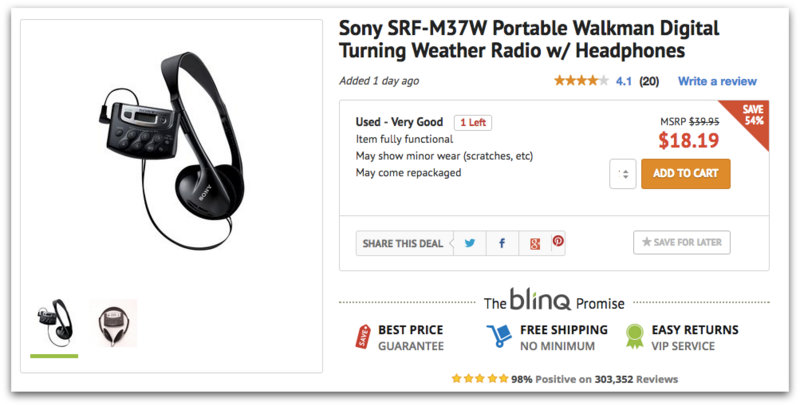
Blinq Deal: Used Sony SRF-M37W AM/FM/WX digital walkman $18.19 shipped

Blinq-Sony-SRF-M37

I just noticed that Blinq.com has a “Used – Very Good” Sony SRF-M37W AM/FM/WX digital walkman with headphones for $18.19 shipped.

While I don’t think the SRF-M37W will win any DXing awards, it is a very practical and lightweight portable for outdoor/active use (hiking, walking, running, biking, etc). I was mighty tempted to purchase this one and mount it on my mountain bike, but I have other portables that could do the job.

Features:

  • Digital AM/FM/Weather stereo tuner
  • Direct weather and preset access buttons
  • 20-station preset memory
  • Digital LCD digital with clock and battery indicators
  • Headphones and belt clip included

The SRF-M37W runs on one AAA battery.

Click here to view on Blinq.com.

If you miss this deal on Blinq, no worries. Amazon’s price for a new unit is only $29.91 shipped–Amazon has a number of used units around $22 shipped.

Listening to the International Space Station (ARISS) with a Yaesu VX-3

ISS

Yesterday, my buddy Eric (WD8RIF) sent the following message:

“Take your girls outside with an HT and listen to the ARISS pass in just about 10 minutes. The downlink freq is 145.800.”

Though I was in the middle of another project, I took Eric’s advice: I grabbed my Yaesu VX-3, corralled my daughters and ran outside. Eric’s message was already eight minutes old when I read it, so I only had about two minutes to get ready.

My Everyday Carry (EDC) pack, loaded with all of the essentials.

My Everyday Carry (EDC) pack, loaded with all of the essentials.

Fortunately, I always have a Yaesu VX-3R loaded with fresh batteries in my EDC pack (above).

Official NASA portrait of British astronaut Timothy Peake. Photo Date: August 28, 2013. Location: Building 8, Room 183 - Photo Studio. Photographer: Robert Markowitz

Official NASA portrait of British astronaut Timothy Peake. Photographer: Robert Markowitz

With the VX-3 tuned to 145.8 MHz, we waited as the ISS made its way above the horizon. The downlink audio of astronaut Tim Peake (KG5BVI) communicating with Walter Jackson Elementary in Decatur, Alabama, started to punch through the static after a minute or two. We listened the entire time we had line-of-sight to the ISS–about five minutes or so.  We were pretty deep in a valley at that point, so I’m pleased we were able to catch even that much of a pass.

Of course, we could only hear one side of the conversation: the downlink from the International Space Station.

It was a memorable event for my girls who have seen ISS passes at night, but had never heard live audio from an astronaut before.

Here’s a short video of two of the exchanges we heard:

(Click here to view on YouTube.)

Eric pointed me to the ARISS “Upcoming Contacts” (http://www.ariss.org/upcoming-contacts.html) page where future ARISS QSOs are listed. Evidently, this particular ARISS QSO was the third Eric had monitored in two weeks.

Pretty much any receiver that can tune to 145.80 MHz FM–or a VHF scanner–can hear the ARISS downlink as long as the ISS is passing overhead during the transmission. Of course, if you have a high-gain antenna that can track the ISS as it moves across the sky, you’ll get even better results than I did with my basic rubber duck antenna.

My advice?  If you want to impress a child (or your inner child–!) find a little time to listen to a future ARISS QSO!

Indeed, the next step for me is to see if I can propose an ARISS QSO for our school group!

CBS considering the sale of its radio division

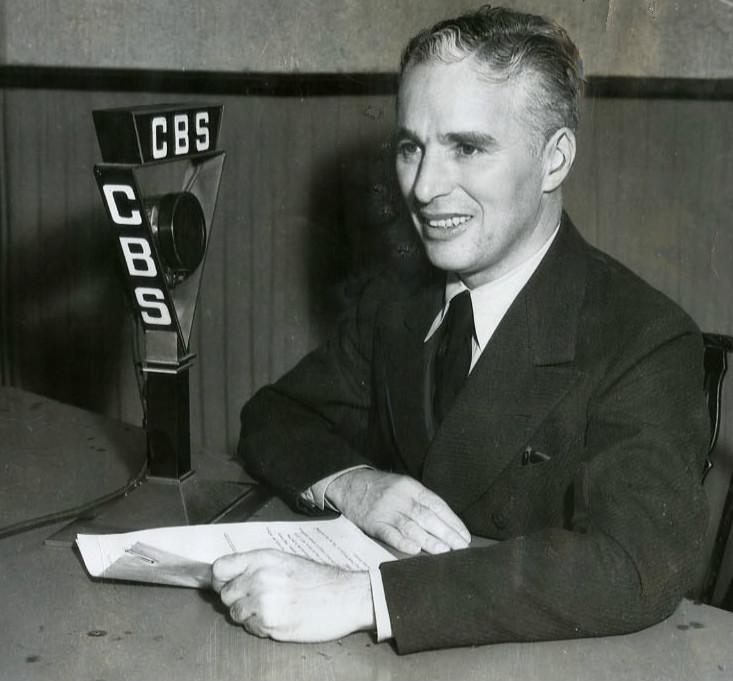
When Charlie Chaplin finally allowed the world to hear his voice after 20 years of mime, he chose CBS's airwaves to do it on. (Source: Wikipedia)

When Charlie Chaplin allowed the world to hear his voice after twenty years of silent performance, he chose CBS for the broadcast.

(Source: LA Times)

CBS Corp. is poised to exit the radio business that it helped create.

Eighty-eight years ago, the company’s founder, William S. Paley, bought the nascent Columbia Broadcasting System, and those radio stations became the nucleus of a budding broadcast empire.

But on Tuesday, CBS Chairman and Chief Executive Leslie Moonves said the company was exploring strategic options, including a sale or spinoff, of its entire radio division.

“The aim here is to unlock value for our shareholders,” said Moonves, who made the announcement during an investor day in New York.

The decision marks the end of an era and highlights the waning influence of commercial radio, which is no longer considered a growth industry. Young adults spend more time listening to digital music files, podcasts and subscription Internet radio services such as Spotify and Pandora. The shift has prompted major advertisers, including car dealerships, wireless phone companies and financial services firms, to steer more of their marketing dollars to digital platforms.

Continue reading at the LA Times’ website…

FCC Commissioner outlines 2016 anti-pirate agenda

fcc-logoMany thanks to an anonymous SWLing Post contributor who writes:

The FCC released this material [yesterday]. It consists mainly of letters to various organizations to ask their members to avoid cooperating with unlicensed radio stations.

The concern is that real estate owners may be harboring unauthorized stations, and that businesses may support such stations with advertising funds.

I would point you to an interesting opinion on the subject by Prof. John Anderson:

O'Rielly Outlines Anti-Pirate Agenda for 2016

John references this recent YouTube video clip of a Congressional hearing where FCC Chairman Tom Wheeler is questioned on the FCC’s enforcement efforts:

Again, I am not the source of the following material–the FCC is:

STATEMENT OF COMMISSIONER MICHAEL O’RIELLY ON PIRATE RADIO ENFORCEMENT ADVISORY.

STMT. News Media Contact: Robin Colwell at (202) 418-2300, email: [email protected]  OCMO https://apps.fcc.gov/edocs_public/attachmatch/DOC-338021A1.docx
https://apps.fcc.gov/edocs_public/attachmatch/DOC-338021A1.pdf

Released:  03/01/2016.  FCC ENFORCEMENT ADVISORY: PERSONS OR BUSINESSES OPERATING “PIRATE” BROADCAST STATIONS ARE SUBJECT TO ENFORCEMENT ACTION. (DA No.  16-159)  This Enforcement Advisory discusses the rules that prohibit “pirate” radio, explains to the public at large what broadcast actions are illegal, why such activities may harm the public, and what do to in case someone suspects “pirate” broadcasts.  EB . News Media Contact: Will Wiquist at (202) 418-0509, email: [email protected]

https://apps.fcc.gov/edocs_public/attachmatch/DA-16-159A1.docx
https://apps.fcc.gov/edocs_public/attachmatch/DA-16-159A10.pdf
https://apps.fcc.gov/edocs_public/attachmatch/DA-16-159A11.pdf
https://apps.fcc.gov/edocs_public/attachmatch/DA-16-159A12.pdf
https://apps.fcc.gov/edocs_public/attachmatch/DA-16-159A13.pdf
https://apps.fcc.gov/edocs_public/attachmatch/DA-16-159A2.pdf
https://apps.fcc.gov/edocs_public/attachmatch/DA-16-159A3.pdf
https://apps.fcc.gov/edocs_public/attachmatch/DA-16-159A4.pdf
https://apps.fcc.gov/edocs_public/attachmatch/DA-16-159A5.pdf
https://apps.fcc.gov/edocs_public/attachmatch/DA-16-159A6.pdf
https://apps.fcc.gov/edocs_public/attachmatch/DA-16-159A7.pdf
https://apps.fcc.gov/edocs_public/attachmatch/DA-16-159A8.pdf
https://apps.fcc.gov/edocs_public/attachmatch/DA-16-159A9.pdf
https://apps.fcc.gov/edocs_public/attachmatch/DA-16-159A1.pdf

Note that the bulk of this report focuses on FM/AM radio pirates in local markets rather than shortwave pirates (though I’m sure, on occasion, shortwave pirates are on the FCC radar).

BBC: Raspberry Pi-powered transmitters broadcast Syrian radio

BBC-FM-Transmitter-SyriaMany thanks to SWLing Post contributor, Richard Langley, who shares the following:

Latest item, which provides more information, on this previously mentioned news story:

http://www.bbc.com/news/technology-35690688

Here’s an excerpt:

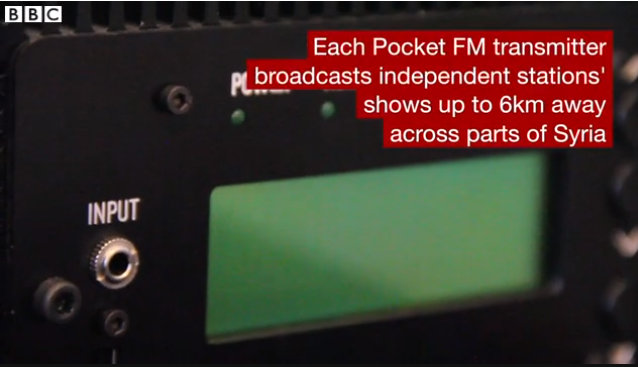
Raspberry Pi computers are being used to power “micro” radio transmitters in Syria.
The Pocket FMs, as they are called, were designed by a German organisation as a way of providing Syrians with independent radio.

The devices have a range of between 4 to 6km (2.5 to 3.75 miles), which is enough to cover an entire town.

At the heart of each is a Raspberry Pi, the credit card-sized single-board computers.
About two dozen have been built, and the designer says they are intended to be as easy to set up as a piece of flat-pack furniture.

“We lost one device in Kobane”, Philipp Hochleichter told BBC Radio 4’s PM programme.

“But due to the bombing – not due to a malfunction.”[…]

Continue reading on the BBC website…

The Raspberry Pi is an amazing little computer; capable of so much at such a low cost. I just purchased a Raspberry Pi 3 yesterday; hoping I can think of a clever way to use it for a little radio fun..

Paul gives us a glimpse of KIYU Alaska

IMG_2798

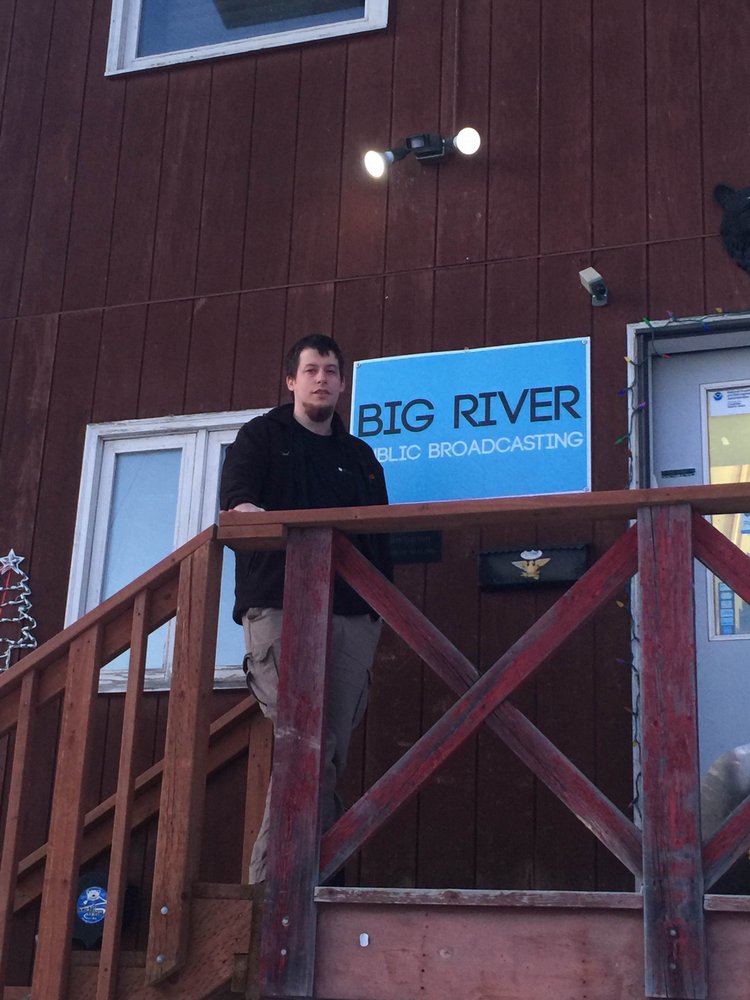
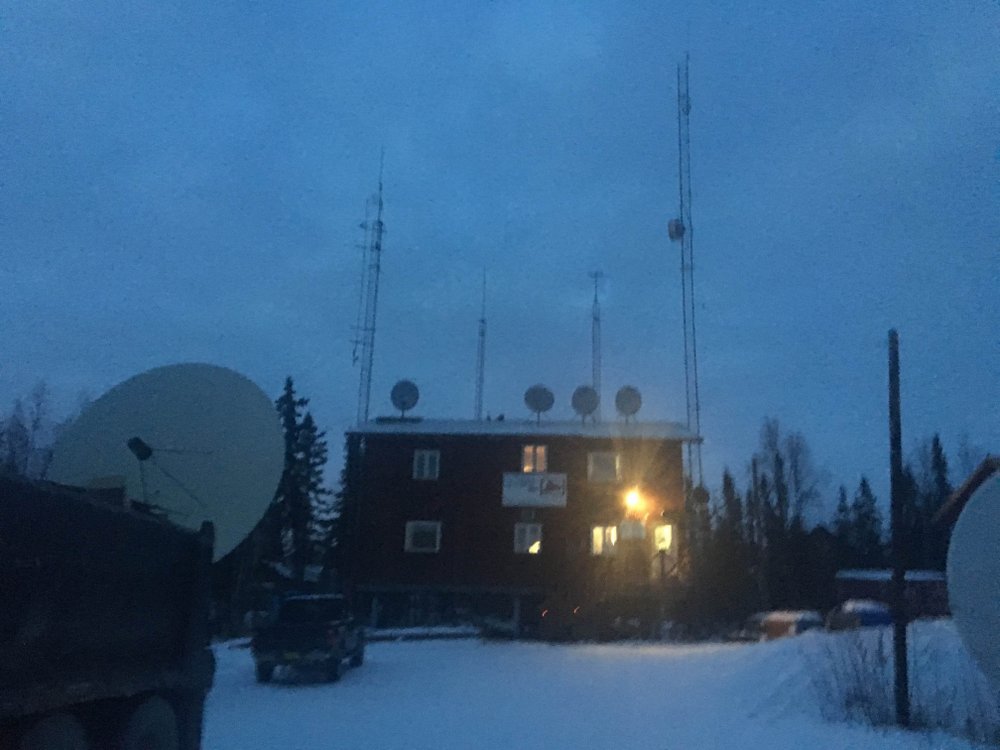
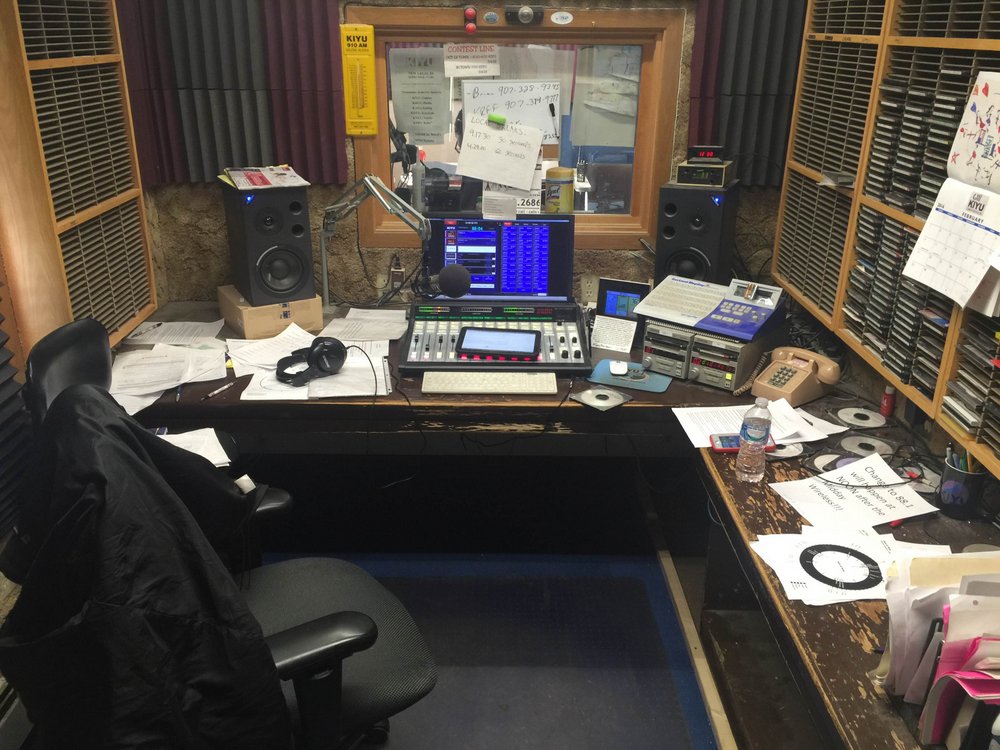
SWLing Post contributor, Paul Walker, is not only a shortwave listener, he’s also a broadcaster.

Paul works at community radio station KIYU in Galena, Alaska. At my request, Paul has kindly shared a few photos of his workplace with us.IMG_0077IMG_2797IMG_2799

Paul also sent this short video at the mic of KIYU:

Very cool, Paul! You certainly have a lot of translators to list in your station ID–no doubt, these are the many sites that serve your communities.

Thanks for sharing a little of your world at KIYU!

If you’d like to try hear Paul on the air, check out the KIYU home page.

Al Jazeera: In the internet age, radio still rules the world

ETOW-Uganda-Radio

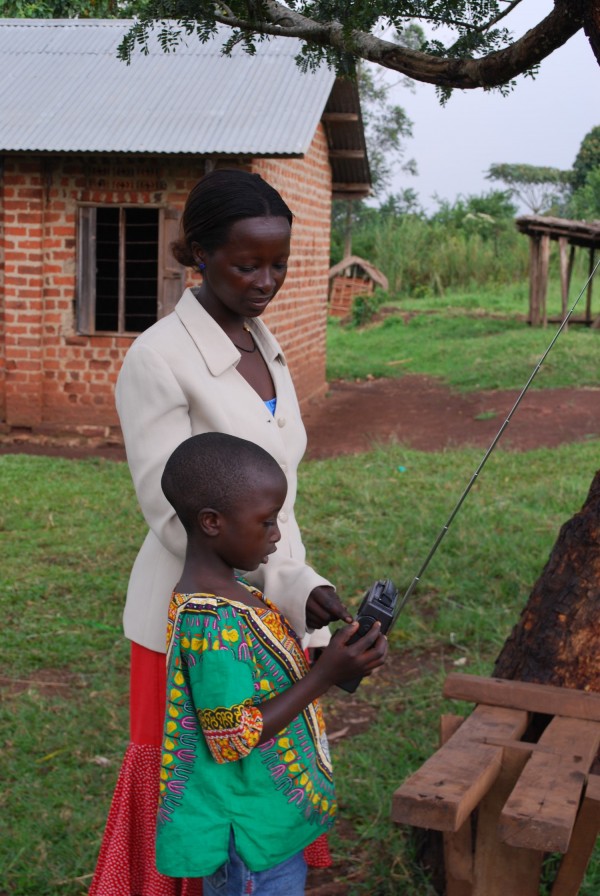
Teacher and student with Ears To Our World radio in rural Uganda (2010)

(Souerce: Al Jazeera)

The United Nations cultural agency UNESCO has marked World Radio Day by calling for more freedom of expression and wider access to information in times of emergencies and disasters.

While digital technology dominates the modern means of transmitting information, UNESCO said on Saturday that radio remains the primary source of information for most people in the world.

“Radio still remains the medium that reaches the widest audience worldwide, in the quickest possible time,” the UNESCO statement said.

According to the UN, an estimated 44,000 radio stations broadcast to at least five billion people, representing 70 percent of the population worldwide.

“Radio is a platform that allows people to interact, despite different educational levels, so somebody may be illiterate but still be able to call in a show to give a testimony and participate in radio, Mirta Lourenco, a UNESCO spokesman, told Al Jazeera.

“This is not the same if the person wants to read a newspaper.”

[…]In developing countries, an estimated 75 percent of households have access to a radio, making it an essential and reliable part of disaster and emergency response, UNESCO said.

In India, the biggest advantage of radio is that it is cheap, making it accessible to 99 percent of the population, Dilip Cherian, radio commentator at Radio One India, told Al Jazeera’s Jane Dutton.

The arrival of mobile phones has changed the consumption habits of millions, but many come with built-in radio chips and this has helped keep the radio industry effective, more than 120 years after the first radio broadcast.

[…]”It’s very local, very community-driven, so people feel that they can really relate to presenters and the conversations on the radio,” Amy O’Donnell, a spokesman for the aid organisation Oxfam, told Al Jazeera.

“It’s actually a very participatory mechanism in local communities for people to have their say and have their voices heard.”