Category Archives: Guest Posts

Jonathan’s interviews with Gerry Wells

sup-obsessionGerald Wells, the Curator of the British Vintage Wireless & Television Museum passed away on December 22nd, 2014. In our previous post about his passing, I pointed to a brilliant BBC radio documentary which featured Mr. Wells.

Last week, Jonathan Marks posted his own tribute to Gerry Wells on Critical Distance. Jonathan’s post includes two half-hour interviews with Mr. Wells from 1986/1987.

Jonathan has kindly allowed me to embed an excerpt from his post, below, along with his interviews.

Jonathan writes:

“Sad to note that the Curator of the British Vintage Wireless & Television Museum, Gerald Wells, passed away on December 22 2014.

At the end of the 1960’s Gerry gave up his job as an electrical contractor. He could see wireless sets being discarded and felt there was a need for a “Vintage Wireless Museum”. The Museum for Vintage Wireless came into existence in 1974 and was later expanded to include Television.

I made a couple of half hour documentaries with Gerry in 1986/1987, hearing the stories of how radios were built and got their names. Other documentaries focused on his life as a lifelong radio engineer.

I remember visiting the UK’s Vintage Radio Wireless Museum in Dulwich, South London as though it were yesterday. It’s just an ordinary terraced house from the outside, but inside its a celebration of the tube (Valve) radio, especially in the era 1920-1950. What’s more, Gerald Wells, was one of the world’s experts on valves – and had a flood of stories about the famous names I heard second-hand as a child. Did you know that Vidor Batteries were named after the manufacturers two daughters? And what were the better brands of radios.

Enthusiasts in the UK have since made a DVD about Gerald which I can recommend. Part Two of this programme was made in Dulwich one year later is also here on this blogpost. I am sure you could visit Gerald 1000 times and still take away new and different stories about this era of broadcasting. Anyone restoring early iPods? Thought not.”

I encourage you to check out Jonathan’s full post on Critical Distance. I’m always amazed at the number of topics Jonathan has covered in his radio career and, especially, his tenure at Media Networks. You’ll find hundreds of recordings like the ones above at the Media Network Vintage Vault

Global 24’s take on the future of the shortwave radio

Many thanks to the staff of Global 24 for the following response to my post, Does Shortwave Radio Have a Future?:


Global24

To Shortwave Listeners of the World:

Shortwave radio is not dying. In fact, we think the whole story line should just go away.

We wanted to thank Thomas Witherspoon of SWLing.com for his excellent article on this very topic and the team of Global 24 wanted to share our perspective on this question.

First,

The 5,000 of you that have written to Global 24 since November 1, 2014 attest to the fact that shortwave radio is not dying.

The 1,000 of you that have joined our Listeners Club and Insiders Club since November 1, 2014 attest to the fact that shortwave radio is not dying.

The 30,000 unique visitors that visited our website, Global24Radio.com, since November 1, 2014 attest to the fact that shortwave radio is not dying.

You can expect Global 24 to be outspoken whenever and where ever we hear the words that shortwave radio is dying.

Yes, many government broadcast operations have closed up shop. They are totally incorrect in their worldview and so-called “research”. The public diplomacy and foreign policies of governments around the world are in incoherent disarray. It’s not surprising that incoherent foreign policy equates to government shortwave broadcasting being cut back. The fact that the U.S. government thinks shortwave is a medium of the past – should be enough for us all to stand up and cast a doubtful stare.

Whether we are confronting Ebola, dwindling global natural resources,welcoming the Arab spring or dealing with the reality of more and more failed states – states based on borders and beliefs largely imposed by the West – we are living in a world that is more dangerous than ever.

Important World Events Need a Western Perspective on Shortwave

Yes, we live in a world where terrorists groups like ISIS send out thousands of tweets an hour recruiting people to their violent worldview. Yes, we live in a world where ISIS produces an “Annual Report” that visually looks as good as than anything the Voice of America (VoA) produces. Yes, we live in a world where the internet reach of terrorists far eclipses the audience of the VoA. Does shortwave have a place in this world? Of course it does. One kid in Syria – or anywhere in the Middle East – listening to a shortwave radio that gets a different perspective and doesn’t go radical makes it worth it to us. Shortwave is a place where moderate worldviews can be heard easily.

Anyone with TV access or web access has so many other choices for information gathering. Why yield the field in shortwave – the one place where an audience is guaranteed? The governments of many nations, especially the United States need to “go back to the basics” and go back to shortwave radio. VoA, Radio Free Europe, Radio Liberty, Radio Free Asia, Radio Marti and the Middle Eastern Broadcasters need to have their shortwave budgets exponentially increased immediately. It’s not just about hot button issues and unfree governments – it’s about inexpensive access to information for the world and simple “soft power”. Simply look at China Radio International or the Xinhua news agency and you will see a rapidly growing international presence – they are fighting the fights we have already largely walked away from.

The Developing World Still Need Shortwave

We live in a world where access to electricity is still limited to huge swaths of our brothers and sisters around the world. Does shortwave have a place of growing importance in this world? Of course, it does.

Shortwave radio requires no electrical mains, no internet access, no subscriptions – and of course, one radio can be shared and listened to by so many people. How can we live in a world where so many people don’t have clean water, electricity, basic medical care and access to information and think that social media, TV and the internet are the sole communication vehicles of the future? When kids in every country the world over have the water they need, the eyeglasses they need, the medical care they need, the electricity they need and the education they need, then maybe we can talk about engaging them on their smartphones and TVs exclusively and winning over their hearts and minds with 160 character “Tweets”.

Shortwave was, and is, a battle that must be won – not given up on.

The Rest of Us Still Need Shortwave

For the first time in many of our lives, we all should genuinely concerned about press freedom in the United States and in other “First World” nations – yet alone press freedom in countries driving world events like Russia, China, Saudi Arabia and Iran. Across our country more and more people are seeking a simpler lifestyle unburdened by expensive TV, internet and satellite connections. A lifestyle characterized by a lack of dependence – in terms of either information, resources or infrastructure. We are prepping, homesteading and preparing to live off the grid together. We are buying our guns, packing our bug out bags and drawing up emergency plans for our families. .

What We Plan to Do

Here at Global 24 – we are a modest operation but we will be bringing to the world a new view of shortwave radio. Together with our listeners, we can do what governments can not do alone: create a renaissance in shortwave listening in the form of commercial shortwave listening before manufacturers stop making radios and stores stop marketing and selling them. These are the real threats to shortwave radio.

Guest Post: Anil reviews the FiFi-SDR receiver kit 2.0

Many thanks to SWLing Post reader, Anil Raj, for sharing his review of the FiFi-SDR receiver kit 2.0:


FIFi4-TravelKit-001

The perfect radio for business travellers?

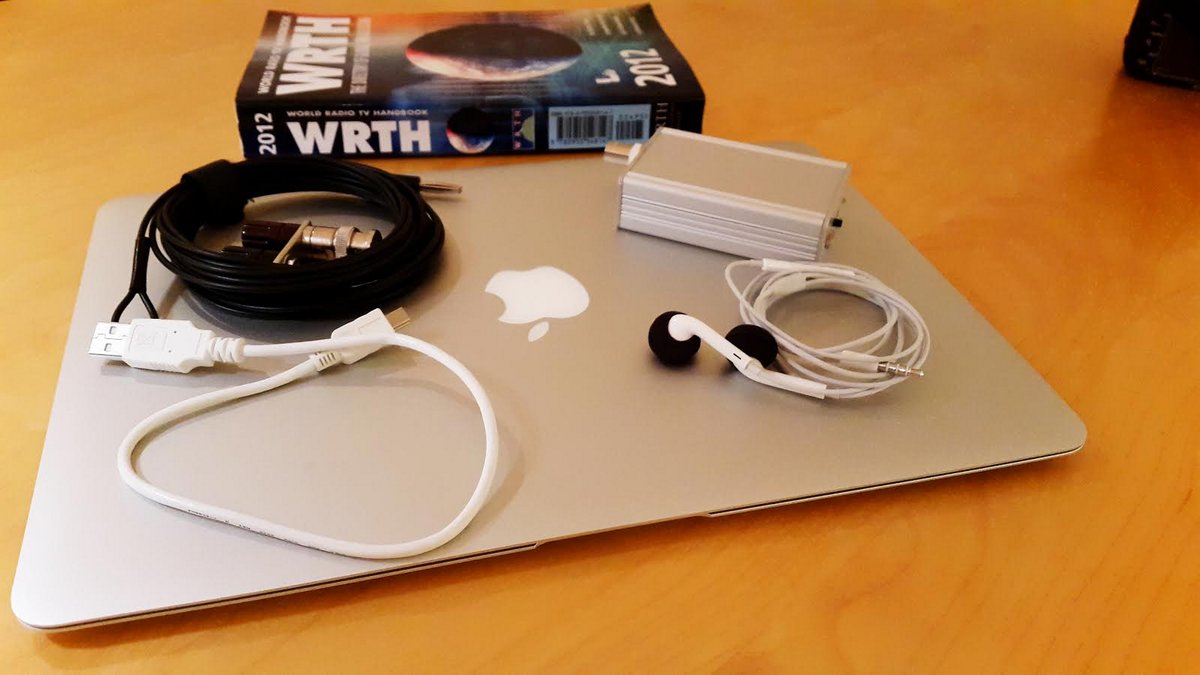
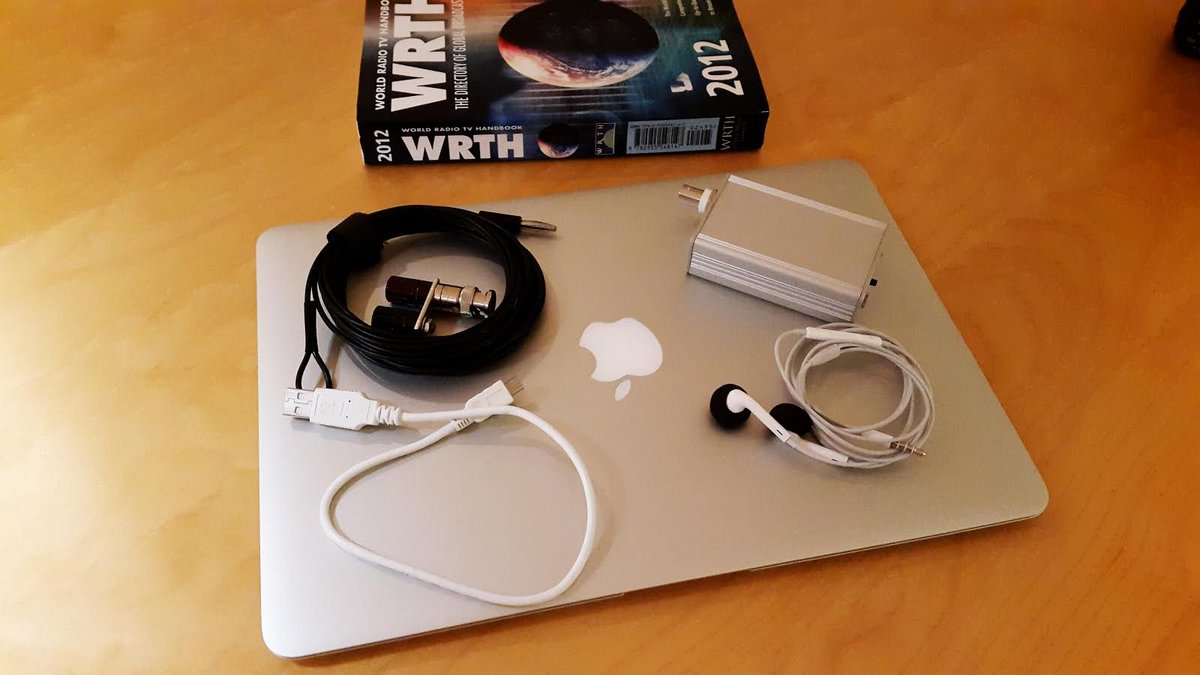
I travel regularly, or should I say commute between Europe and Asia, and have been on the lookout for a small receiver with good performance that would be easy to carry with me. I never travel without my laptop so an SDR would be the sensible thing to look for. A few weeks back the tiny FiFi SDR receiver caught my interest as I was browsing the website of Funkamateur http://www.box73.com/ the excellent German ham radio magazine. It looked promising as it had an impressive bank of filters covering all the way from LF to HF. Also, the front end is designed to emphasize sensitivity, so that it can work well with short wire antennas. It also had a built in sound card which would make interfacing to my computer a simple job.

Fifi5


The price was certainly right – $ 169. I ordered it, and it showed up in my mailbox a few days later. It is offered as a “kit” though in practice all that needs to be done is to solder a couple of connectors and sockets. All the surface SMD components are pre-soldered, and the rugged extruded case has die cut holes for the connectors and controls making the mechanical assembly very simple. The entire exercise took me about 20 minutes until the receiver was plugged in and powered up.

Fifi1-001

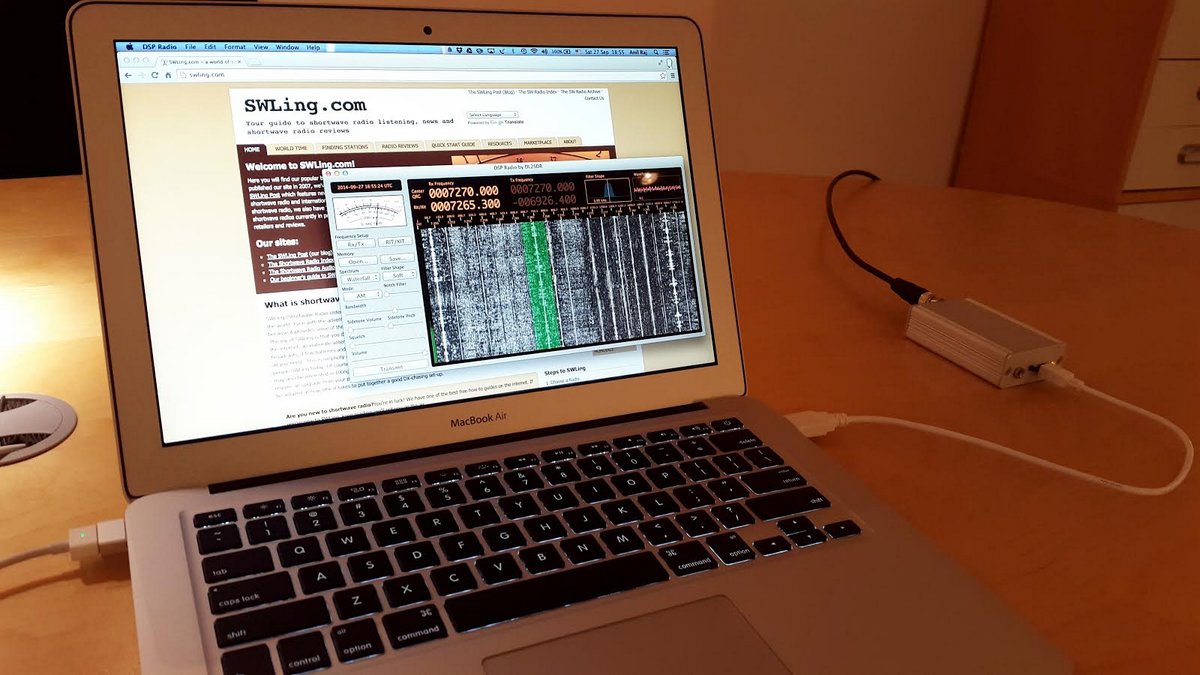
Since I use a Mac the choice of SDR software is a lot more restricted than that for Windows. I did however find free software called SDR Radio (http://dl2sdr.homepage.t-online.de/) developed by DL2SDR which does a great job of partnering with the FiFi and my Mac.

SDR Radio is still in development, so the UI can a bit rough at the edges at times. Also, configuring the Audio and MIDI settings on my Mac took a bit of work, but DL2SDR Sebastian was quick to reply to my mails requesting help when I got stuck.

So how does it all sound? While I am sure that there may be better performing SDR radios out there, what this little matchbox sized receiver does is simply amazing. Users running Windows will have access to much more sophisticated applications than the simple programs available for Mac and will be better able to compare this radio. However, it does an outstanding job of handling both AM broadcast as well as CW and SSB utility and Ham signals. While SDR Radio does not offer a lot of bells and whistles at present, the continuously variable bandwidth which can be dialled in to almost zero, and effective notch filter get the job done very well. In empirical testing and comparisons with the Palstar R30C, the FiFi easily outclassed the older analog radio (and the Palstar is no slouch, especially on the lower frequencies).

Fifi3-TravelKit

In summary, this is going to be the radio that I will be taking with me on all my travels from now on. It is tiny, ruggedly built, and has excellent RF performance, especially at lower frequencies.


Many thanks for your review, Anil!

The FiFi SDR does indeed sound like an ideal SDR for travel. Like you, I am usually limited by the SDR applications available on the Mac OS. While I use a Windows 7 PC at home, on the road, I travel with the MacBook Air (a superb laptop!).

Click here to view details and purchase a FiFi SDR ($169 shipping included).

London Shortwave refines his tablet-based portable SDR

IMG_0248 (1)

One of the great things about the SWLing Post is that readers share their varied–and highly creative–methods of playing radio.  A few weeks ago, SWLing Post reader, London Shortwave, shared his portable SDR set-up with us; he uses this outdoors to mitigate London’s heavy radio interference. Dennis Walter, president of Germany-based Bonito, commented, and later posted an alternative portable SDR solution using the Bonito RadioJet IF receiver.

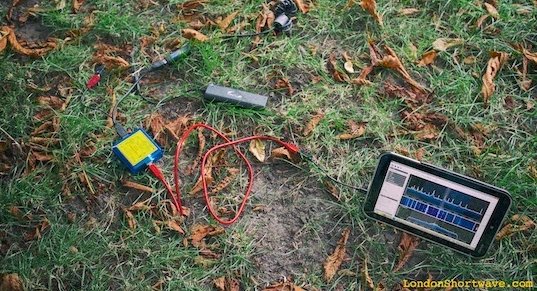
Below, London Shortwave shares a guest post (also viewable on his blog) which describes in detail his design for his portable SDR around the FunCube Dongle Pro+ and an 8″ Windows tablet, and explains how effectively it works for him. This post includes recordings and a video; it’s an excellent tutorial:


DESIGNING A PORTABLE SDR SYSTEM

This article is a follow up to the submission I made to the SWLing Post a little while ago. In short, the idea was to combine the FunCube Dongle Pro+ USB-based software defined radio (SDR) with an 8″ Windows tablet running SDR# to have a portable, on-the-go SDR solution.
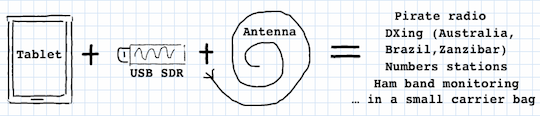
The original inspiration

The original inspiration

Tablet radio interference

At the outset, I thought that all that was necessary was a tablet (I chose Toshiba Encore 8″), the FunCube dongle itself and just some antenna wire. This turned out to be a naive assumption because the tablet’s USB interface injected enormous amounts of radio frequency interference (RFI) into the SDR, making listening on some shortwave frequencies essentially impossible. Just to be sure that I wasn’t being plagued by a defect of my chosen tablet model, I tried out the same set-up on a Dell Venue 8, with identical results.

To deal with the issue of tablet-generated RFI, I bought a galvanic USB isolator, which, in essence, is a box that breaks the electrical connection between the USB dongle and the tablet’s USB interface while allowing USB data to pass through in both directions.
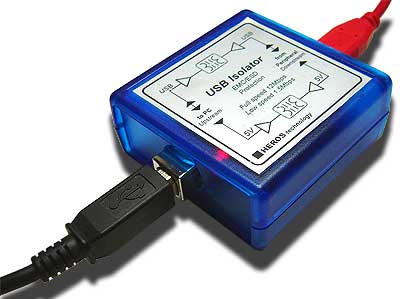
Heros Technology galvanic USB isolator

Heros Technology galvanic USB isolator

Additional power for the SDR

Connections

The isolator resolved the RFI issue completely, but created another problem altogether: the device specifications state that the isolator’s power output is restricted to 100mA at 5V. This is sufficient for USB devices that are self-powered but not for the FunCube dongle that draws all of its power from the USB port to which it is connected.
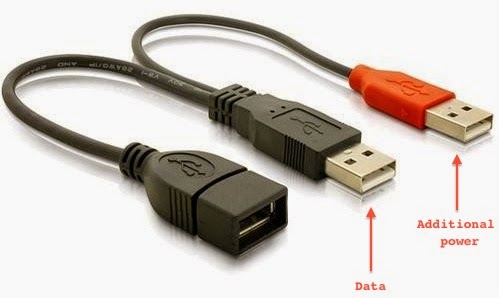
USB Y cable

USB Y cable

One way to supply extra power to a USB device is to use a “Y-cable”. Such cables have one extra USB plug that can be attached to a source of additional power (for example, a USB power bank). This solution is commonly used to connect power-hungry items, such as large hard disks, to low-power, portable computing devices (laptops and tablets). Having bought this cable, my next step was to find/improvise a battery that meets the USB power specifications (5V, 500mA).

Yet more interference

My first thought was to use the mobile USB power bank that I use to charge my iPhone while on the go. After all, it already has a USB port and supplies power with the right voltage. Once again, my expectations were confounded and RFI reared its ugly head! The power bank radiates significant interference into the circuit because it uses a switching regulator to maintain steady voltage. Luckily, I came across Gomadic’s portable AA battery pack with regulated 5V output that emits way less interference than any of the other USB batteries I tried (my intermediate solution used 4 rechargeable AA batteries and a makeshift USB connector, and although this resulted in zero additional interference I decided that it’s not safe to supply the SDR with unregulated voltage that doesn’t match the rest of the circuit). I used the handy passthrough USB voltmeter I bought in Maplin to check that Gomadic’s nice-looking gadget does indeed give out 5V as advertised.

So, what can one do with the remaining RFI from the additional power supply? It turns out that it can be mitigated quite effectively by inserting a balun (item 10 on Figure 2) between the SDR and the antenna wire (item 12). The balun is connected to the SDR with a coaxial cable (the “feed line”, item 11). Additionally, ferrite choke rings (item 9) attached to the feed line help reduce this RFI further: winding the feed line through the choke rings several times is sufficient. However, neither the balun nor the chokes are effective enough to replace the USB isolator! It appears they only help with the noise generated by the power supply, which is relatively minor anyway.

 Cost vs Portability

When SWLing Post published the details of my intermediate solution, Dennis Walter – one of the engineers behind Bonito RadioJet – popped up in the comments section and suggested that my setup is too tedious, as it involves lots of cables, and that his SDR is superior in terms of portability and the supplied software. While I haven’t had the chance to evaluate RadioJet, I pointed out that the cost of his radio is significantly higher than that of all of my components put together. I also mentioned that the free SDR# software I use is superb: it sounds excellent and offers a number of features that many software packages and conventional radios don’t have. So, having finalised my design, I thought that it might be time to tally up the cost and listen to the results.

Below is the full component list:

1) Toshiba Encore 8″ tablet $194

2) On The Go USB host cable for Toshiba’s micro USB connector: $7

3) Heros Technology USB Isolator: $125

4) USB Y cable with two males + 1 female plugs: $8

5) Gomadic Portable AA Battery Pack with regulated 5V output: $20

6) Gomadic female USB connector tip: $6

7) FunCube Dongle Pro+: $208

8) USB volt-meter (optional): $33

9) 2 ferrite choke rings: $10

10) Wellbrook HF Balun: $50

11) Feedline cables $7

12) 6 metres of thick copper antenna wire: $8

Adding up the prices of items 2 – 12 (and excluding the optional voltmeter) brings the total cost to  $449 vs. Bonito RadioJet’s $689. For the price difference you can throw in the Toshiba tablet at $194 and still have some change, enough to buy a carrier bag and perhaps even a nice pair of headphones!

Figure 1. Radio components

Figure 1. Radio components

Figure 2. Antenna components

Figure 2. Antenna components

In terms of portability, the entire setup fits nicely into an 11″ laptop carrier bag.
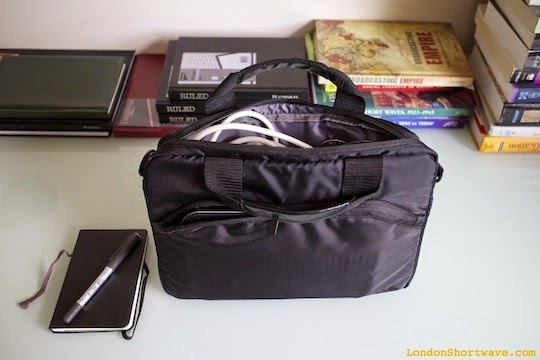
Figure 3. Packing the components into an 11" carrier bag

Figure 3. Packing the components into an 11″ carrier bag
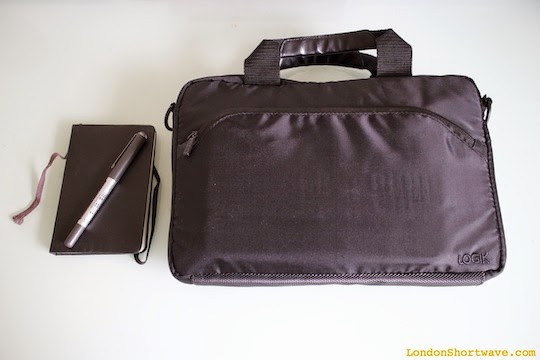
Figure 4. Ready to go

Figure 4. Ready to go

Setting things up in the field is not particularly cumbersome, either:

Figure 5. Portable SDR setup in action in a local park

Figure 5. Portable SDR setup in action in a local park

As for the results, listen to the below snippets and be the judge. The only thing I will say is that none of my other portable radios have ever given me this kind of performance, not even with the long wire antenna attached:

And while we’re at it, here’s a demo video:

Portable SDR on Toshiba Encore 8″ Tablet from London Shortwave on Vimeo.

At one point I wanted to build an enclosure to house the FunCube dongle, the power supply and the USB isolator in a single tidy unit, but I no longer see the need. It’s easy to pack all of those items into the carrier bag and also they are all useful individually: the USB isolator can be paired with other SDRs, and I recently discovered a neat additional use for the Gomadic battery pack.

Well, that brings me to the end of this post. I hope my design will inspire you to come up with your own portable SDR system, and that you will share your results with me in the comments section. Happy listening!


IMG_0241