Category Archives: Ham Radio

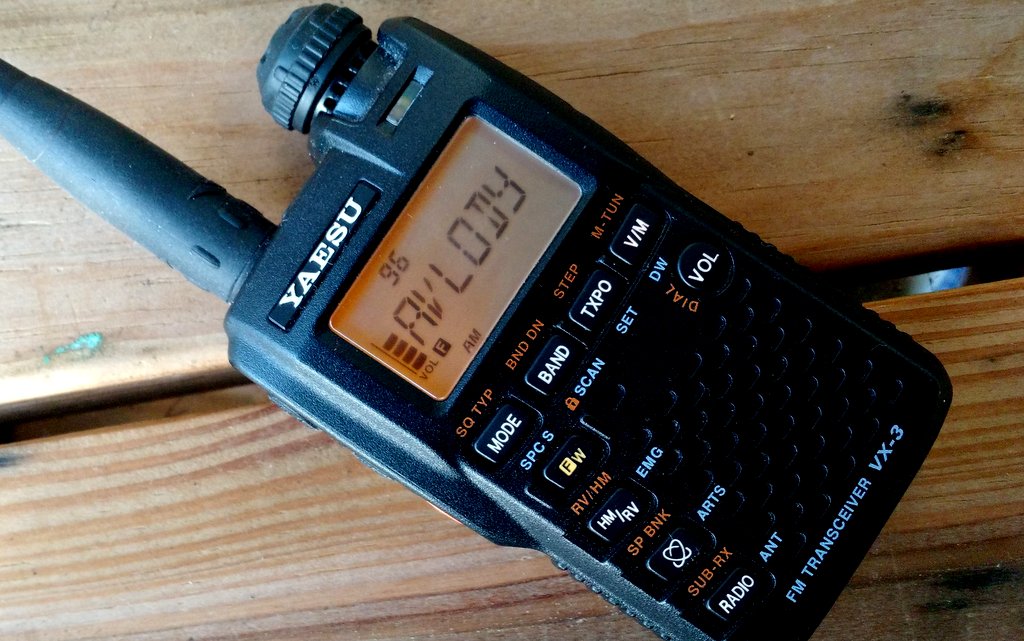
Dave’s Yaesu VX-3R notes

Many thanks to SWLing Post contributor, Dave Zantow, who shares the following in reply to my recent post about the Yaesu VX-3R:

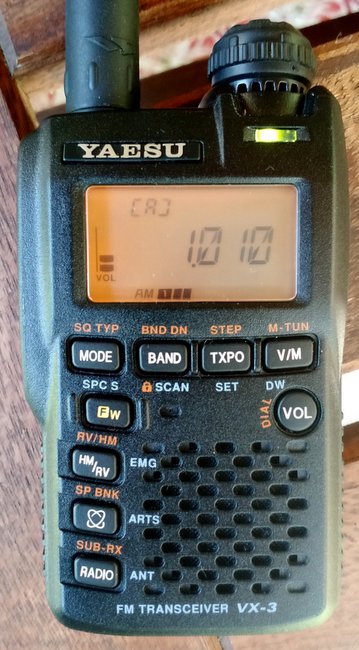
The VX-3R has a tiny internal ferrite bar for AM/mediumwave broadcast listening.

Yes, it’s indeed true the VX-3R is discontinued and is already pretty much sold out.

Rumors of a VX-4R has been around for years and let’s hope that happens–?? Have a sneaky feeling that IF it come to pass it will include C4FM digital (Yaesu Fusion) ?? I actually preferred the older VX-2R over the 3, but that was me (have reviews on both models on my web page). But my two VX-3R test samples were very early production (lots of QC bugs).

http://webpages.charter.net/n9ewo2/vx2r.html
http://webpages.charter.net/n9ewo2/vx3r.html

As I cover on my news page Yaesu is coming out with a number of new HT’s soon.

Sorry no word of a tiny VX-3R replacement yet. Will of course cover that IF and when it happens on the web page.
http://webpages.charter.net/n9ewo2/news.html

Thank you, Dave!  I’ll certainly consider purchasing the VX-4R (if it comes to fruition) if for no other reason than to compare it with the VX-3R.

Again, I love this little all-in-one micro-sized HT as an Everyday Carry radio. If you’re interested in the VX-3R, your best bet will be to check with radio retailers like Universal Radio and Ham Radio Outlet for used/demo units. Of course, as I’ve mentioned before, you might also follow a VX-3R search on eBay where I recently purchased an open box unit for $119 shipped.
Yaesu VX-3R: Monitoring ATC over a cup of coffee

While I have a number of amateur radio handheld radios, one of my favorites is the recently-discontinued Yaesu VX-3R.

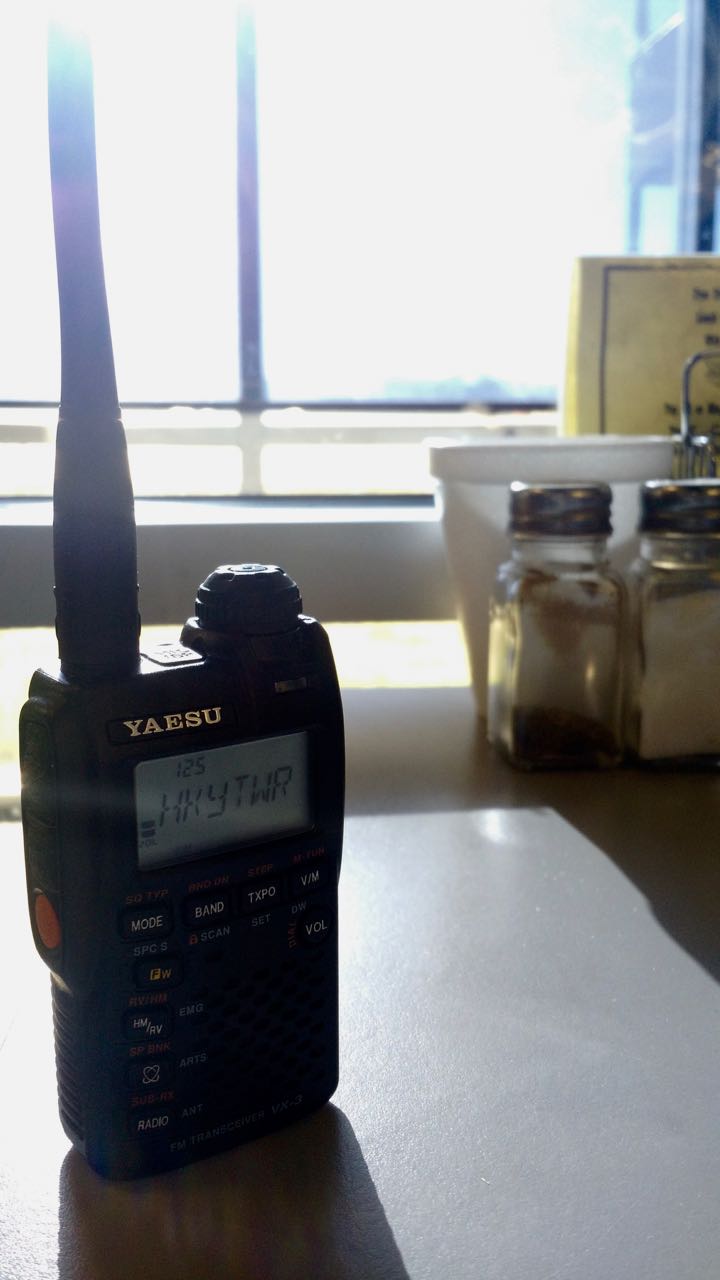
Saturday morning, I took my father to the his local regional airport’s café (KHKY). It’s a frequent stop when I’m in town visiting.

While sipping coffee, talking with friends and watching GA aircraft land and take off, I tuned to the airport’s tower. It was a pretty busy morning air traffic-wise and it was fun to monitor communications from our table with a view of the runway.

While the little VX-3R lacks the power output of larger HTs, and doesn’t include digital modes like D-Star or DMR, it is dual-band (2M/70cm) and its wideband receiver covers the shortwave, FM and MW broadcast bands in a pinch. Best of all, the VX-3R is amazingly portable.

I take the VX-3R everywhere in my compact EDC (Everyday Carry) pack:

My Everyday Carry (EDC) pack, loaded with all of the essentials.

I’ve used this little radio while traveling (hitting local repeaters and even simplex), I’ve monitored live air support during a local forest fire, and, on a moment’s notice, even caught an ARISS contact.

This week, I decided it might make sense to purchase another VX-3R to carry in the glove compartment of my truck. Since I already know my way around this radio, and since I already have the software and programming cable through RT Systems--it seems to make sense.

I checked the price at Universal Radio only to find the following notice:

AVAILABILITY UPDATE:
This model is being discontinued. We expect one more shipment in late February which will fill our back-orders.  We are not accepting additional orders at this time.

DX Engineering, Ham Radio Outlet and GigaParts also show no stock.

I feel like $139 was a bargain for this versatile amateur HT.

Late last night, a “New Open Box” unit appeared on eBay for $119 shipped. The seller had 100% positive feedback, so I snagged it.

If you’re interested in the VX-3R, your best bet will be to check with radio retailers like Universal Radio and Ham Radio Outlet for used/demo units.

Of course, you might also follow a VX-3R search on eBay.

Post readers: Any other VX-3R owners in our community? Any other fans of monitoring ATC/aviation traffic?

TX Factor Episode 14

Many thanks to SWLing Post contributors, Thomas Ally and Eric McFadden (WD8RIF), who note that TX Factor have just published their 14th episode.

I look forward to watching this episode later today. Here’s the description via TX Factor:

For your winter entertainment – enjoy part two of our informative series on HF and VHF propagation. Steve Nichols G0KYA concludes with his explanation on how space weather affects our ability to communicate on the HF bands.

Bob parts with some cash at Hamfest and Mike chats to Phil Willis M0PHI and Cathy Clark G1GQJ, two movers and shakers in the world of amateur radio.

Our free-to-enter-draw is back with a chance to win a copy of Radio Propagation Explained by Steve Nichols.

Click here to view Episode 14 on YouTube.

March 2-4, 2017: Join us for the 30th (!!!) NASWA Winter SWL Fest!

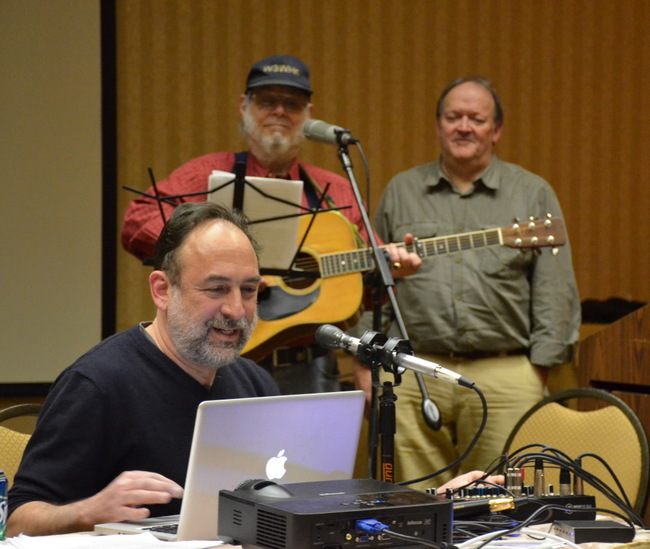
Broadcasting a live performance of the Shortwave Shindig at the 2015 Winter SWL Fest.

Every year, I look forward to the only event I know that brings together both my avid interest in radio and my loyal radio-listening friends: the Winter SWL Fest. This is the one place where, among the 125-plus attendees, you can talk freely about all aspects of the shortwave hobby without any need of explanation as to why you find radio so fascinating. As a result, over the course of the eight years I’ve attended the ‘Fest, it has begun to feel less like a technical hobbyists convention and more like a (most enjoyable) family reunion.

The DoubleTree hotel where the Winter SWL Fest is held. Notice anything unique about the top floor of this hotel?

This year, the Winter SWL Fest is celebrating its 30th (!!!) Anniversary. The ‘Fest organizers have added an extra day to the convention making it a special three day event.

Here’s the description from the Winter SWL Fest website:

The Winter SWL Fest is a conference of radio hobbyists of all stripes, from DC to daylight. Every year scores of hobbyists descend on the Philadelphia, Pennsylvania suburbs for a weekend of camaraderie. The Fest is sponsored by NASWA, the North American Shortwave Association, but it covers much more than just shortwave; mediumwave (AM), scanning, satellite TV, and pirate broadcasting are among the other topics that the Fest covers. Whether you’ve been to every Fest (all 29, starting with the first year at the fabled Pink & Purple Room of the Fiesta Motor Inn) or this year’s will be your first, you’re sure to find a welcome from your fellow hobbyists.

For 2017, the 30th Annual (!!) Winter SWL Fest will have three days of sessions where you can learn about the latest developments in the radio listening hobbies, but there’s so much more going on. There’s a silent auction that takes place, where you’re bound to find something of interest. There’s the Hospitality Suite, where attendees partake of tuning oil and other treats and engage in spirited conversations. There is the closing Banquet, with after-dinner remarks by a luminary from the field, often one of the many broadcasters who attend the Fest, followed by the raffle, where you could win one or more of the dozens of prizes, ranging from pens from stations up to top-notch communications receivers. And of course, the infamous midnight ride of Pancho Villa that closes things out every year.

Early registration fees are available through the month of January, as an incentive to register early. We strongly urge you to do so as fees will increase for those registering January 28th and later.

Hotel Registration: The Doubletree Guest Suites offers a special $109 rate (single or double) that includes a full breakfast buffet. Reservations may be made by phone at +1-610-834-8300 or 800-222-8733 or online here; click on Special Rates and enter the group code NAS. If at all possible, please reserve hotel rooms using our group code, so we can maintain proper credit and keep costs down.

Fest Registration: A paper reservation form may be downloaded here; you may also register online via PayPal here.

Your hosts, Richard Cuff and John Figliozzi, work throughout the year to ensure that attendees have a great time over the weekend, and by all accounts, they succeed stunningly. How else could this event have lasted for 30 years (egad) and draw people from around the world to southeastern Pennsylvania? Won’t you join us?

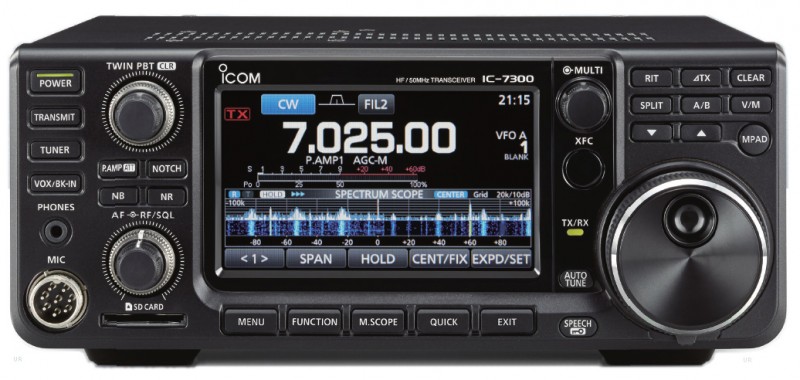
This year, the grand prize at the Winter SWL Fest is the new Icom IC-7300 transceiver (which also happens to be an exceptional general coverage HF receiver).

If you can make a pilgrimage to Plymouth Meeting, PA, please do so. I think you’ll enjoy the diversity of programs and people who attend. I’ll be there along with a number of regular SWLing Post contributors. It’s a great time to exchange stories and ideas in person.

I always leave the Winter SWL Fest energized about a new aspect of our radio hobby. I think you will too.

Click here to register for the Winter SWL Fest online.

Southgate ARC: What Is a Balun and How to Make One Cheaply

(Source: Southgate ARC)

Ham Radio – What Is a Balun and How to Make One Cheaply

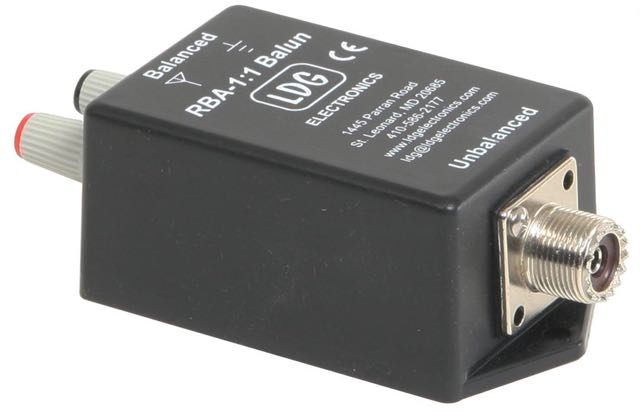
A Balun is a transformer which allows coaxial cable, which is an unbalanced lead to be connected to a balanced load, for example a resonant aerial.

The 1:1 balun is often called a choke balun, it works by eliminating Radio Frequency currents flowing on the outside of your coaxial cable, this is important because it prevents the pattern of the dipole becoming distorted and prevents the braid of the coaxial cable radiating.

Connecting coax to your resonant dipole which can be configured in a V shape or in a sloping fashion, however serious power loss and feeder radiation can occur without the use of a balun transformer. No one wants to induce Radio Frequency currents into Television receivers or Broadcast equipment as it may result in disputes with neighbours and could possibly lead to your station having to close down. Try to keep the centre of your aerial away from buildings as it may induce Radio currents into the mains wiring.

Building a choke is not difficult all you need is some plastic pipe available from many Do It Yourself outlets and warehouses. I use a length of about 1 foot of plastic pipe and 21 feet of coaxial cable, the length of the pipe and diameter is chosen because it works well if using R-G-5-8 coax the ends of the pipe can be sealed after placing a SO-239 connector for your coaxial lead. I use two bolts and solder tags at the other end of the pipe to connect the ends of the dipole to the choke.

When wrapping your coax around the pipe don’t use too much force as it may damage the inner braid and space the turns away from each other by a millimetre or two. R-G-2-1-3 coax around 21 feet used with 5 inch pipe will handle 400 watts pf power. Wire ties can be used to hold the turns together along the length of the pipe. Using these measurements your choke will cover all of the ham radio bands from 1.8 Megahertz through to 28 Megahertz and will keep the radiation pattern.

Using a dummy load connected to the choke and transmitting 100 watts from my transmitter indicated an S.W.R. readings of around 1.5 to 1 at 3.5 Megahertz when testing 28 Megahertz the S.W.R. reading came down to 1.1 to 1 which is an excellent match. Using the choke as it should be at the feed point of a dipole cut for 40 metres give an S.W.R. reading of 1.2 to 1. The highest reading was 1.5 to 1 when using 18 Megahertz but the rest of the High frequency bands gave me very acceptable matching.

By
John Allsopp G4YDM
https://g4ydm.blogspot.co.uk/

Article Source:
http://EzineArticles.com/expert/John_Allsopp/1925417

Article Source:
http://EzineArticles.com/9615600

Cloud-SDR: a remote access system for a number of popular SDRs

Many thanks to SWLing Post reader, Sylvain (F4GKR), who writes:

I am Sylvain, from Cloud-SDR, a new company selling software to get remote access to your existing SDR receivers through the Internet.

Coud-SDR

  • currently supports : SDRPlay, Perseus, BladeRF and AirSpy. LimeSDR to come when received and tested.
  • client software is free (can be used as standard SDR receiving software with locally connected devices),
  • server software starts at 110 Euros, VAT may be added depending on customer location,
    easy to use

From the Cloud-SDR website:

The Cloud-SDR Concept

You need a way to remotely access your existing SDR receiver? To stream your IQ samples to another remote computer over the network?

Cloud-SDR is a commercial software solution to enable real time RF data sharing or processing through the cloud.

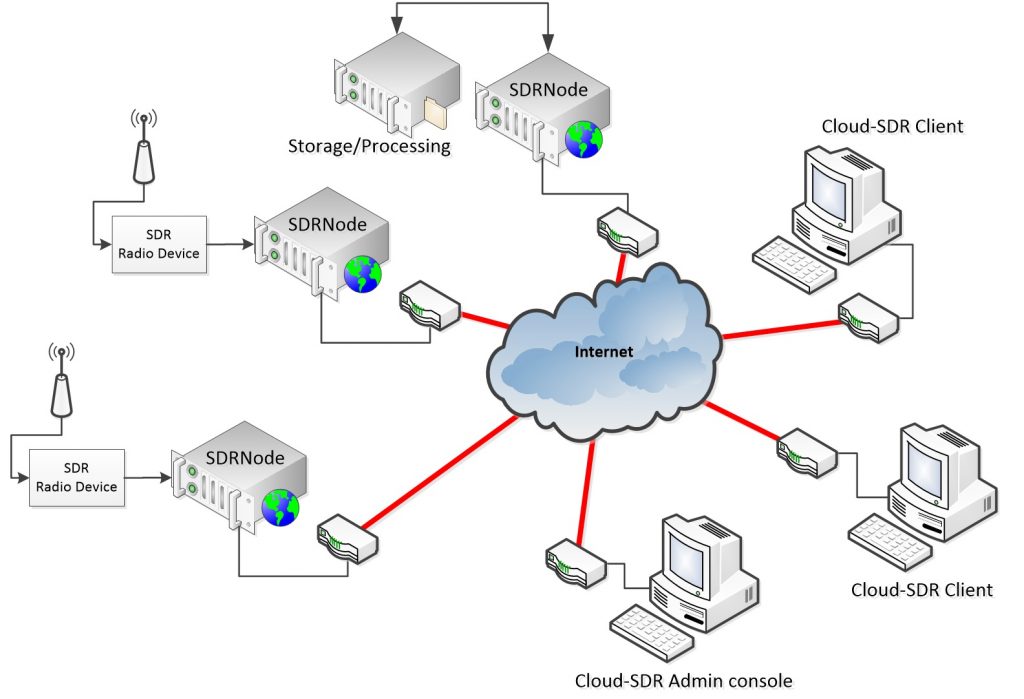
Cloud-SDR can collect real-time IQ complex samples from an SDR hardware device connected on one machine, stream the samples to a second machine for demodulation or analysis, then send the resulting stream to third machine for storage.

In standalone mode, Cloud-SDR can execute signal processing tasks described with embedded JavaScript DSP engine.

Because network bandwidth is limited compared to SDR receiving bandwidth, the core concept of Cloud-SDR is to move the processing along the cloud to where it is required or possible : the DSP chain is divided in sub-tasks that are spread between computers interconnected through Internet.

Very cool, Sylvain!

I like the fact your system supports popular affordable SDRs like the SDRplay RSP & AirSpy and that you can stream your IQ samples.

Click here to read more on the Cloud-SDR website.

Build a Raspberry Pi-powered SDR

Many thanks to SWLing Post contributor, Jeremy Clark (VE3PKC), who writes:

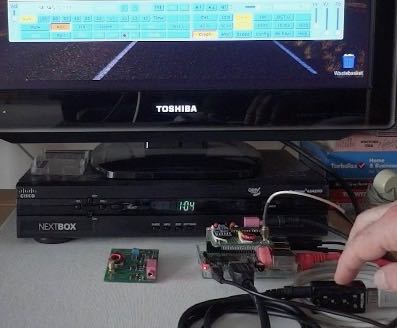
I have developed an SDR receiver that may be of interest to your readers. It can be used directly with the Raspberry Pi2B/3B. It comes in several versions DIP/SMD.

Check out this MP4 movie:

I have two eBooks which are basically design manuals for the DIP and SMD version of my SDR receiver. Each eBook has an Internet linked parts list, so that the reader can get their own parts to keep costs down. The DIP eBook is $7.90 CAD and the SMD book is $14.90 CAD.

Click here to view Jeremy’s website.

Thank you, Jeremy–this looks like a fascinating construction project!

Readers: just to be clear, Jeremy is selling eBooks detailing construction–not kits. He did mention if you’re interested in obtaining the PCB, he can sell this as well.