Category Archives: Ham Radio

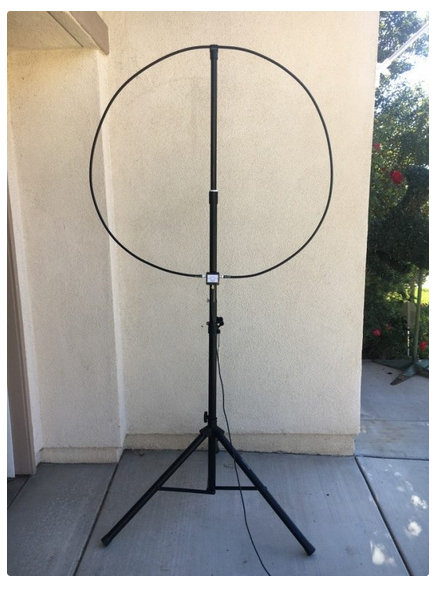
The W6LVP magnetic loop antenna

Many thanks to SWLing Post contributor, Troy Riedel, who asks:

Just curious if you or anyone you know have any experience with Magnetic Loops from W6LVP? […]Here’s his eBay page – 458 feedbacks and 100%.

Thank, Troy! I’ve never used the W6LVP loop, but the price–in comparison with other wideband mag loop receive antennas–is very attractive.
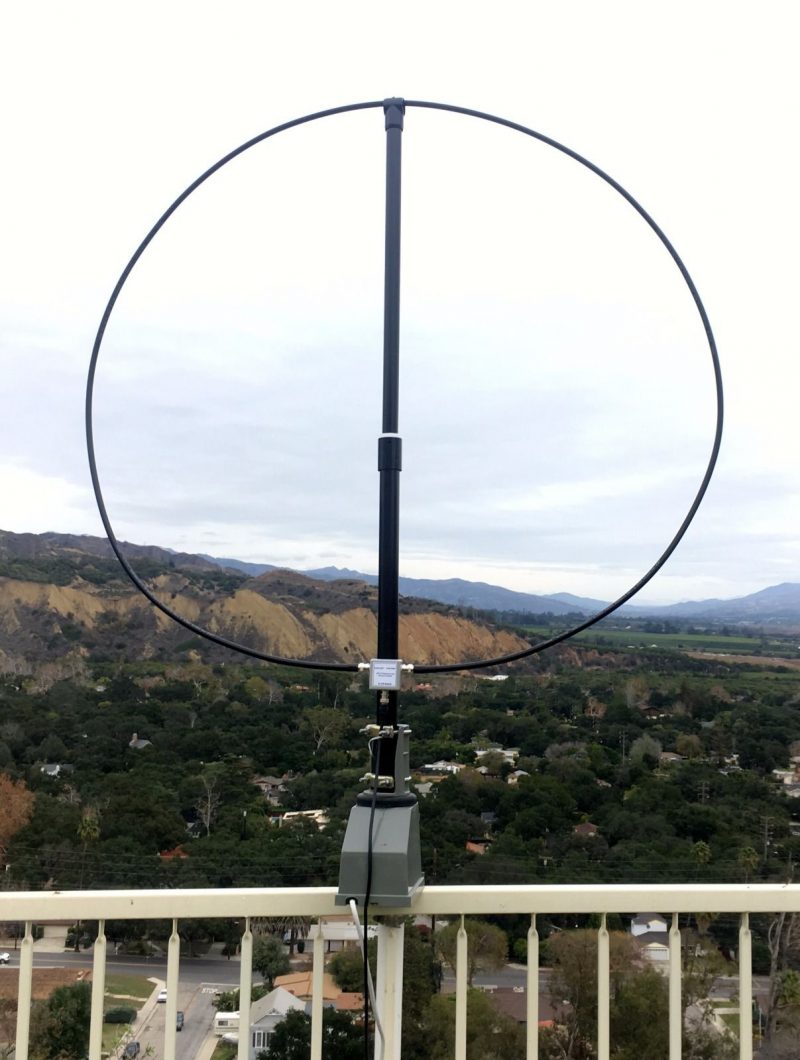
W6LVP currently offers two models of loop antennas:

Here’s the product description of the Mag Loop with Power Inserter from the W6LVP website (where orders can also be made–pricing identical to eBay):

The Wellbrook Model ALA1530LN-2 and DX Engineering (Pixel/Inlogis) Model RF PRO-1B magnetic loops are both good amplified receive antennas.  However, they are both expensive.  Shipping the Wellbrook antenna from the UK to the US adds another $100.

Extensive side-by-side testing of the Wellbrook, DX Engineering, and W6LVP receive loops was compiled using simultaneous WSPR signal-to-noise reception reports on all LF, MF, and HF amateur bands.  In addition, extensive laboratory bench tests measuring gain, signal-to-noise ratio, and IMD were also performed.  Signal-to-noise ratio is important to pull weak signals out of the noise and IMD is important to reject distortion caused by nearby strong transmitters such as AM broadcast stations.  In both test regimens, all three antennas performed very well and without significant difference.

The antenna version listed here includes a power inserter for use with receivers or with transceivers that have a separate receive antenna input.  If your rig doesn’t have a receive antenna input, check out my antenna with a transmit/receive switch.

If you live in the shadow of one or more high-power AM broadcast transmitters, contact me about a special version just for you.  Please contact me at [email protected].

W6LVP amplified receive-only magnetic loop antenna (boy is that mouthful):

  • The W6LVP mag loop is a complete receive antenna system delivering top-of-the-line performance to amateur radio operators and SWLs – particularly for those with space and/or budget limitations.  It is a great complement to vertical or wire transmit antennas.   You have a knob to turn up the power but don’t have one to turn up the received S/N.
  • Ten foot circumference (approximately 1 meter diameter) loop.  Small size yields a natural stealth for HOA challenges.  The loop is rigid enough to maintain its shape but flexible for portable transport or attic installation.
  • Includes a low-noise, broadband amplifier covering 2200 (135 kHz)  through 10 meters (30 MHz) with no tuning or adjustment.  Perfect match for continuous tuning SDR receivers.  Great for contesters to quickly check all bands.  Greater coverage is possible at reduced performance.
  • Light-weight antenna structure fabricated from furniture-grade PVC yields a strong but very light antenna weighing only 2 pounds (not including power inserter or power adapter).  Great for both portable/camping as well as fixed installations.  Light weight and small size make for lower shipping cost – particularly compared to shipping from the UK.
  • Directly compatible with a low-cost speaker tripod stand (not included) for portable operation.
  • Compatible with light-duty rotator (recommended) for fixed operation.  Loop can be rotated to null interference by up to 30 dB or enhance desired signals.
  • Includes low-noise linear AC power adapter to generate clean 12 volts for the loop amplifier.  Unlike the DX Engineering antenna which requires 24 VAC, power can be easily supplied by 12 volt batteries during portable operation.  Reverse polarity and short circuit protection provided by automatically resettable fuse.

Eham reviews are very positive–so far, 5 stars on all six reviews.

I also discovered this short video of W9OY comparing the W6LVP loop to a full size 80 meter vertical (verticals are much more susceptible to noise than loops):

Click here to view on YouTube.

I am very curious if any SWLing Post readers have ever compared the W6LVP loop to the Wellbrook or Pixel Loop antennas.

I actually own the Pixel Loop and might very well purchase, review and compare the W6LVP loop later this year (if time allows).

If you own the W6LVP loop and/or have compared it with the Pixel or Wellbrook, please comment!
Click here to view W6LVP antennas on eBay.

Click here to view the W6LVP website.

North American Shortwave DX Contest Results

Many thanks to SWLing Post contributor, John Cooper, who writes:

Greetings fellow DXers and SWLers.

The North American Shortwave DX Contest, “The Final Countdown,” has come to a close. Participation expectations were high with 50 requests for Contest form packets being received and sent out to prospective contestants.

The actual contest participation in the contest was another matter with only 10 contestants completing out of 13 competing which equaled out to a final 20% participation rate in the contest. 3 contestants dropped out, 1 due to a personal issue, 2 equipment failures due to blizzard conditions in Utah destroying a rooftop antenna, and 1 SW receiver failure.

The question I have is why the lack of actual participation? Was the contest to hard? Or as I have the sinking gut feeling, the Shortwave hobby truly is dying a slow painful death? Thus the contest name “The Final Countdown,” sounds prophetic.

Although Propagation conditions were lousy during the 21 days. of January the contest was held on, there were several days of good DX openings as I participated as an observer, and was able to score high. I would have personally placed in the top 5 if officially entering.

There were 3 great prizes donated by Universal Radio Inc., for the top three finishers, and they were a main sponsor along with NASWA who donated several months of Journal space for the contest packet forms and CIDX who also published the contest forms packet in their excellent monthly electronic newsletter. These are the largest Shortwave Clubs/Associations in North America. Additionally I want to thank Thomas Witherspoon for posting several announcements, reminders, and contest form packets on the SWLing Post, one of my favorite sites for radio information.

The bottom line is those that did participate stated they enjoyed themselves and in some cases the joy of SWLing and DXing were rekindled again after many years of inactivity. That’s a good sign!

73

John P. Cooper
Contest Manager
“The Final Countdown”

Click here to download the The North American Shortwave DX Contest score sheet (PDF).

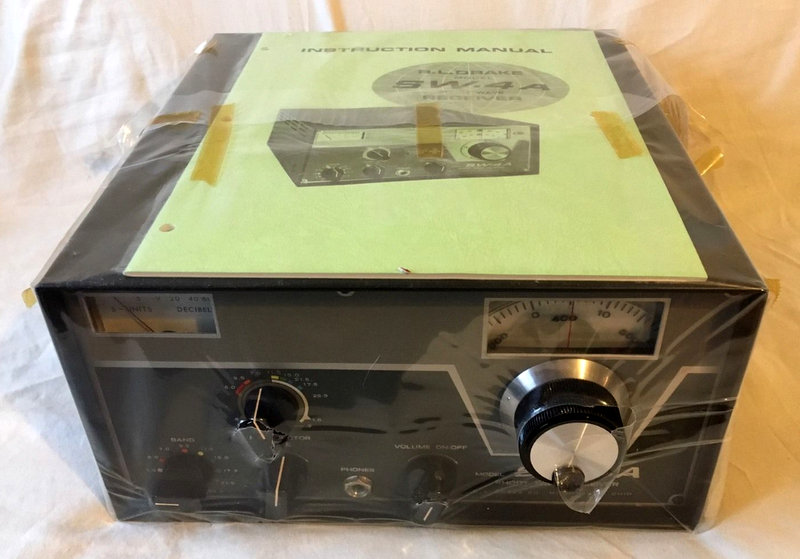
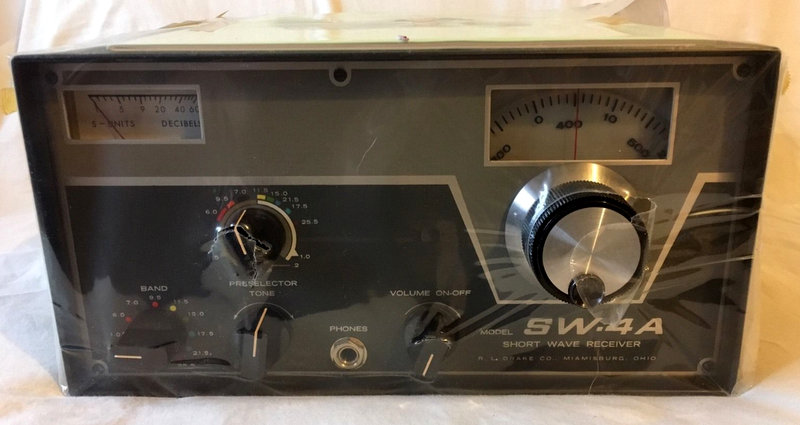
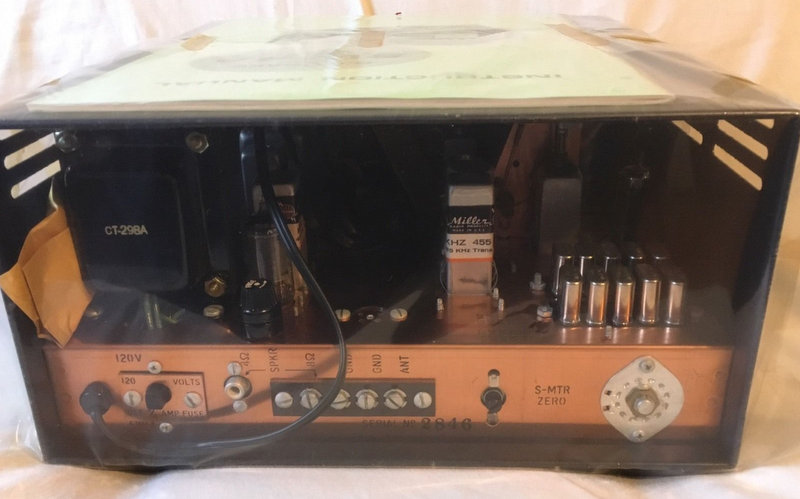
eBay find: R.L. Drake SW4A Shortwave Receiver (new old stock!)

Many thanks to SWLing Post contributors Eric McFadden (WD8RIF) and Randy Moore (KS4L) who share a link to this rare find on eBay: a New Old Stock (NOS) Drake SW4A.

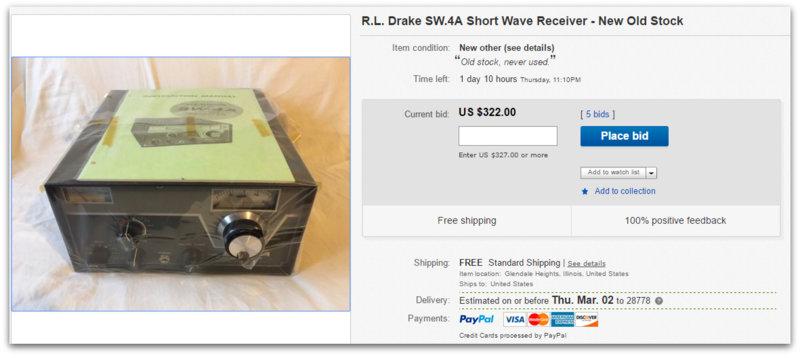
Click here to view on eBay.

The seller provides this short description:

New in original box and packing, R.L. Drake Short Wave Receiver – model SW.4A. With manual. Old stock, never used. Stored in a safe/dry place.

Being sold AS-IS!

The seller doesn’t have a deep history on eBay, but 100% positive feedback.

I fully expect this price to rise way beyond a figure I could appropriate, but I would certainly love to purchase it. I know this: I wouldn’t leave it in the box for long. After carefully checking it and bringing the voltage up slowly, I would put it on the air. What a beautiful receiver.

At time of posting, the price was $322 US (free shipping) with one day, 10 hours to go. Click here to view.

HAARP February 2017 on air operations

Many thanks to Chris Fallen (KL3WX), Assistant research professor in the University of Alaska Fairbanks Geophysical – Space Physics group , who shares the following update in reference to upcoming HAARP activities:

Regarding this February 2017 campaign, HAARP will be operating from 19 to 22 February.

Specifically, experiments will begin daily sometime after 1800 hours 2/19 UTC. My experiments will be the last each day (local Alaska time) and are scheduled to start at 0330 hours on 2/20, 2/21, and 2/23 UTC; and at 0430 hours on 2/22.

Experiment times and frequencies are subject to change for various reasons, particularly in response to ionospheric conditions shortly before each experiment.

I will do my best to update https://twitter.com/ctfallen in real time.

Operations are very active times and I will be monitoring conditions and equipment so generally speaking, for my artificial aurora experiments, your best bet is to search around 2.7 MHz +/- 100 kHz given current conditions.

For the Luxembourg effect experiments, I will try to keep the two frequencies separated by about 1 MHz, which means that they will occur earlier in my experiment window rather than later, when the ionosphere is more dense.

Many thanks for the update, Chris.

SWLing Post readers viewing our website should find your Twitter feed embedded below. Those reading via RSS or our Feedburner email feed, can click here to view updates on Twitter.

CubeSat with Amateur Radio Transponder Set to Launch on February 15

Image result for cubesat image

For those interested in listening for and/or tracking CubeSats, this was posted by ARRL:

CubeSat with Amateur Radio Transponder Set to Launch on February 15

AMSAT-UK and AMSAT-NL have announced that at the Nayif-1 1U CubeSat, which includes a full FUNcube communication package, is set for launch on an Indian PSLV launch vehicle on February 15 at 0358 UTC.

PSLV Flight C-37, will carry more than 100 satellites into orbit.

Nayif-1 carries a U/V linear Amateur Radio transponder for SSB and CW and a telemetry transmitter. The initial plan called for a late-2015 launch.

Nayif-1 was a joint project of the Mohammed bin Rashid Space Centre (MBRSC) and American University of Sharjah (AUS). The United Arab Emirate’s first nanosatellite, Nayif-1 was developed by Emirati engineering students from AUS under the supervision of a team of engineers and specialists from MBRSC. The partnership between the two entities was aimed at providing hands-on satellite-manufacturing experience to engineering students.

Telemetry will be transmitted on 145.940 MHz, 1.2 KB BPSK (FUNcube standard). The SSB/CW transponder uplink passband is 435.045-435.015 MHz, and the downlink passband is 145.960-145.990 MHz.

AMSAT-UK is seeking post-launch reports from stations around the world, especially during the first few minutes and hours after launch. It is anticipated that the first signals may be heard in North America during the mid-evening hours on February 14 (local time).

A mission-specific telemetry dashboard is available. Information can be found on the web in PDF format at, https://funcubetest2.files.wordpress.com/2017/02/nayif-1_dashboard_notes_release_1-0b.pdf.

In a manner similar to that of the FUNcube-1 dashboard, this one will be capable of uploading the telemetry received to a central data warehouse. More information on the telemetry dashboard is available, as is a test file.

Initial spacecraft operation will be in a low-power “safe” mode, with just the telemetry transmitter activated.

I have had some fun tracking CubeSats in the past, and it is especially fun to watch your data appear on the dashboard history. And of course you are helping the research to boot!

Robert Gulley, AK3Q, is the author of this post and a regular contributor to the SWLing Post. Robert also blogs at All Things Radio.

ISS SSTV: Receiving images from space

(Source: Southgate ARC)

Slow-scan television (SSTV) transmissions are planned from the International Space Station (ISS) on February 13-14, 2017

The SSTV images will be transmitted as part of the MAI-75 Experiment on 145.800 MHz FM using the Kenwood TM-D710 transceiver located in the Russian ISS Service module. It is thought they may use the PD-180 SSTV format.

The MAI-75 activities have been scheduled for the Russian crew on Monday, February 13 from 09:25-18:00 GMT and Tuesday, February 14 from 11:25-16:30 GMT.

Note the ISS transmissions on 145.800 MHz FM use the 5 kHz deviation standard rather than the narrow 2.5 kHz used in Europe. If your transceiver has selectable FM filters try the wider filter.

The ISS Fan Club website will show you when the space station is in range http://www.issfanclub.com/

ISS SSTV information and links at
https://amsat-uk.org/beginners/iss-sstv/

ARISS-SSTV Images
http://ariss-sstv.blogspot.co.uk/

Listen to the ISS when it is over Russia with the R4UAB WebSDR
http://websdr.r4uab.ru/

Listen to the ISS when in range of London with the SUWS WebSDR
http://websdr.suws.org.uk/

If you receive a full or partial picture from the Space Station your Local Newspaper may like to know
http://www.southgatearc.org/news/2016/july/now-is-a-great-time-to-get-ham-radio-publicity.htm

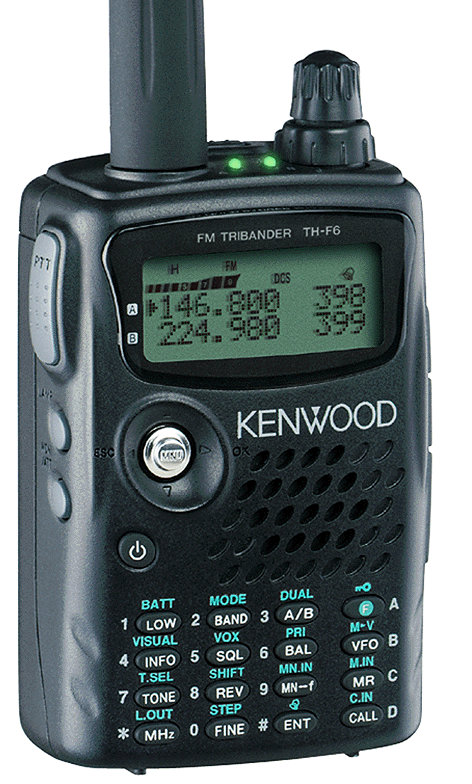
The versatile Kenwood TH-F6A

In reply to my recent post about the Yaesu VX-3R, SWLing Post reader Tha Dood comments:

[The Yaesu VX-3R] is a neat little HT, but the Kenwood TH-F6A is way more versatile.

How? Full 5W on 2m, 222MHz, and 440MHz, and will RX 150KHz to 1.3GHz in AM, FM, FM wide, NBFM, USB, LSB, and CW. All that in a size of a pack of cigs. Yes, it will overload easily, but something that wide banded and this small, I kind of expected that.

However, want to hear what your wireless FM innercom sounds like on 175KHz? You can do that. Want to hear what your 222.1MHz transverter sounds like on SSB? You can do that. Need to tune-in to local AM / FM radio when power goes out? You can do that. Want to listen to CB CH19 truckers gripe about traffic conditions? You can do that. Want to listen to aircraft traffic at an air show? You can do that. You want to monitor 6M 50.125MHz USB to hear when that band opens? You can do that.

No, it doesn’t have D-Star, DMR, Fusion, or even SW’s DRM, but analog-wise this HT is so versatile, what else is out there like it?

Thanks for sharing your thoughts about the TH-F6A!

A couple more things I like about the TH-F6A:

  • it meets MIL-STD 810 C/D/E standards for resistance to vibration, shock, humidity and light rain
  • It has a dedicated number keypad for direct frequency entry (something, sadly, the VX-3R lacks)

I’ll put the TH-F6A on my “wish list” this year and perhaps give it a thorough review. (Perhaps Santa Claus is listening!?)

Here’s a snapshot of TH-F6 pricing at time of posting: