Category Archives: Ham Radio

Radio Waves: Clandestines, FCC’s New Logo, WNYC Vision, and RAC Membership Renewal Procedures

Radio Waves:  Stories Making Waves in the World of Radio

Because I keep my ear to the waves, as well as receive many tips from others who do the same, I find myself privy to radio-related stories that might interest SWLing Post readers.  To that end: Welcome to the SWLing Post’s Radio Waves, a collection of links to interesting stories making waves in the world of radio. Enjoy!

Many thanks to SWLing Post contributors Ron, Andrea Borgnino, and Tracy Wood for the following tips:


Clandestine: Under false flags (Nils Schiffhauer – DK8OK)

Non-official radio stations always attracted shortwave listeners who call them “clandestines”, follwing a mixture of mis-understanding and romanticism. The range of this class of stations is remarkably wide. Nowadays, the majority of them is renting time from major transmission centres like Nauen/Germany, Issoudun/France or Toshkent/Uzbekistan.

As all media, they are put into service to influence people and to sell something by propaganda. The difference between an official broadcaster, like Voice of America, and a “clandestine” like North Korea Reform Radio is not palpable – both are financed by the U.S. Congress.

With most broadcasters transmitting on a scale between facts (“white” – nearly only the BBC) and sheer disinformation (“black”), clandestines are placed on the darker third of this range. The separation between “clandestine” and “official” is rather artificial. There simply is no difference between e.g. the official World Harvest Radio and the clandestine Voice of Wilderness, both religious brodcasters, funded by Cornerstone Ministries International/USA – to take just two religious stations.

Today’s activity of clandestines is concentrated on Africa and Asia with especially taking countries like North Korea, China, Eritrea and Sudan into focus.[]

FCC Adopts a New Official Seal in Anticipation of Relocation (ARRL News)

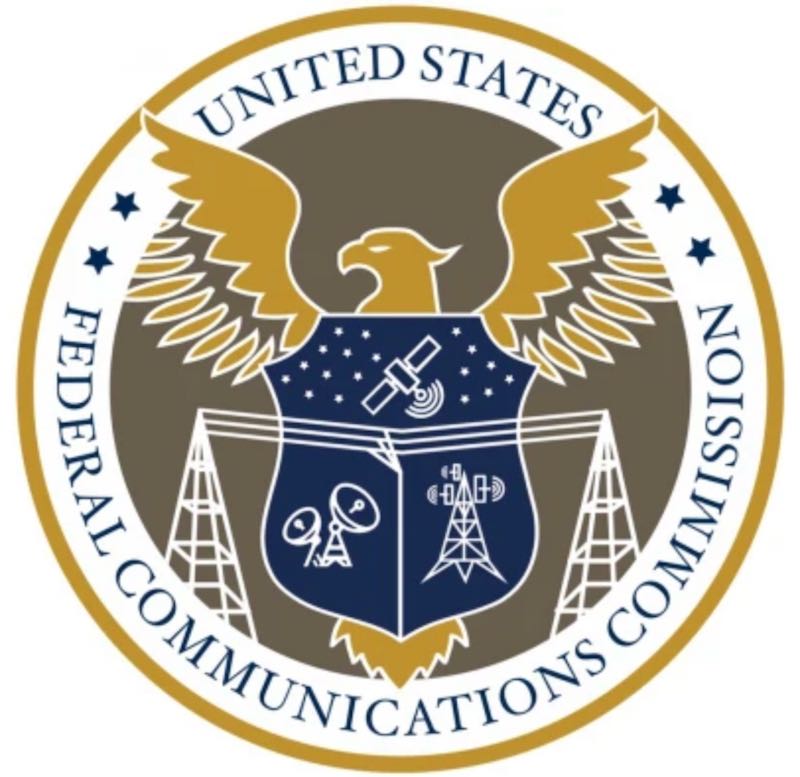
In anticipation of its upcoming move, the FCC has adopted a new FCC seal. The redesigned seal is the product of an agency-wide contest that solicited proposals from employees and contractors. The winning design, submitted by Umasankar Arumugam, was selected by a vote of the agency’s employees and contractors.

The revised design incorporates several elements: communications technologies currently transforming our world; four stars on the outer seal border, drawing from the legacy of the predecessor Federal Radio Commission seal; 18 stars on the shield, recognizing the current number of bureaus and offices; and the eagle and shield, identifying the FCC as a federal government agency.[]

1937 Vision: WNYC, The Flagship Station of a Non-Commercial Cultural Network (WNYC)

The notion of WNYC becoming the flagship station of a non-commercial network of cultural stations was first publicly articulated by Mayor La Guardia at the launching of the station’s new WPA-built transmitter facility in Greenpoint, Brooklyn on October 31, 1937. La Guardia envisioned a non-commercial/educational radio network connected via shortwave rather than expensive landlines leased by AT&T, but the FCC prohibited interstation communication by means other than wire when wire is available. At the ceremony La Guardia sharply criticized the FCC prohibition: “That is just as nonsensical and as unreasonable as to say that one isn’t permitted to fly from here to Chicago because there are railroads going from here to Chicago. Of course, all this is very good for the New York Telephone Company, but it is not so hot for us.”[]

New RAC membership renewal procedures (RAC via Southgate ARC)

On behalf of Radio Amateurs of Canada, I would like to thank you for your continued support of Amateur Radio in Canada and internationally.

Your membership has helped RAC in its two primary objectives: to support and promote Amateur Radio in Canada and internationally; and to provide valuable programs and services to RAC members (see below).

As a result of the COVID-19 global pandemic, the RAC Head Office in Ottawa has been closed temporarily and we are no longer able to send out membership renewal notices by mail and we will be sending out email notices instead.

We would appreciate it if you would please watch for these messages in your inbox and also in your junk folders – this is especially true if you have Outlook or Hotmail email addresses.

In addition, you can assist us by checking to see when your membership will expire by logging on to the RAC website and going to the “My Membership” webpage (https://www.rac.ca/my-membership/). You can also find it on the mailing label of the paper version of The Canadian Amateur magazine or by calling the RAC office as described below.

If you need to renew your membership you can do so by using one of the following options:

  • Online:  by completing the online renewal form (or by clicking on the “Join Radio Amateurs of Canada” logo on the top right of the RAC website). Payments must be made by credit card or by PayPal.
  • By phone:  by calling 877-273-8304 from 10 am to 4 pm EST/EDT, Monday through Friday (except statutory holidays). You may pay by credit card or you may send a cheque for the appropriate amount to the RAC head office.
  • By mail:  if you prefer to have your renewal form processed via standard mail, you can download an application for your region from the Membership Renewals webpage and mail it to the RAC Office.

73, Glenn MacDonell, VE3XRA
RAC President


Do you enjoy the SWLing Post?

Please consider supporting us via Patreon or our Coffee Fund!

Your support makes articles like this one possible. Thank you!

Using Adobe on Android to read The Spectrum Monitor magazine

Many thanks to SWLing Post contributor, Bill Hemphill, who writes:

I was very happy to see your post about The Spectrum Monitor magazine. Like you, I am a big fan of it and have subscribed for several years and have purchased the archived years.

Usually, I am not a fan of digital magazines. They either are in special formats requiring special programs or even special versions of Acrobat. Like you, I was happy to see that it is in standard PDF format.

But that still brought up a problem. With my eyesight, I need to zoom in on the page to read it, even when using a 10” tablet and definitely if using a smaller screen such as my phone. Normally it means panning around the page, reading column one down and then going back to the top of the page to read the second or third column.

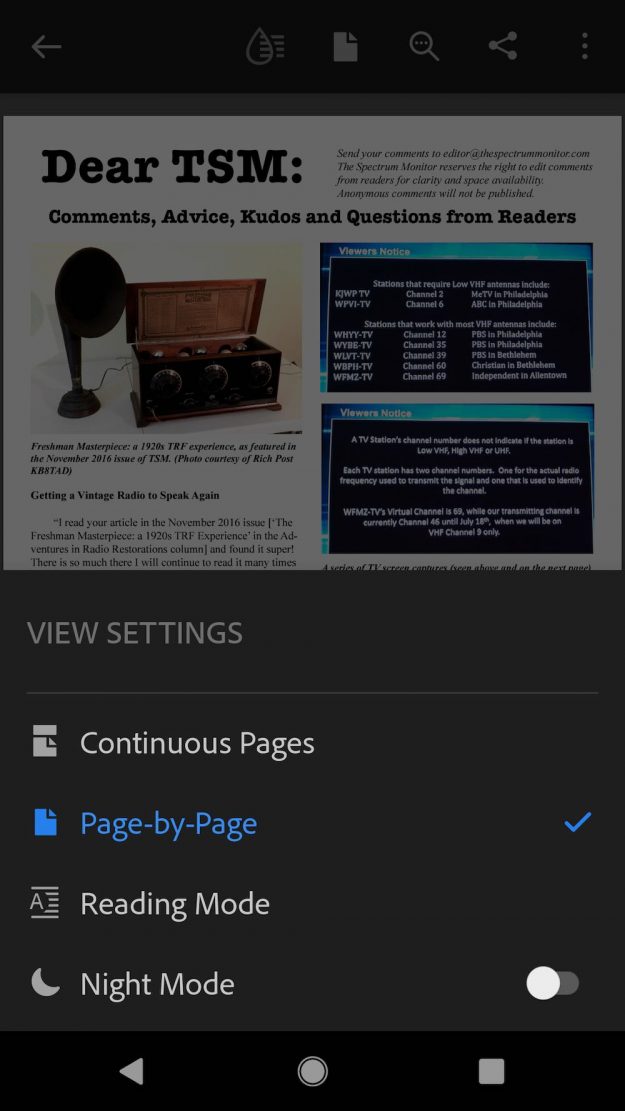
But there is some good news that many people may not be aware of. The Acrobat Reader app on the Android system allows for a mode called “Reading Mode”. What reading mode does is stack the columns up into a single column thus allowing for reading straight down – no more scrolling back to the top of the next column. And you can tap on the screen to enlarge the text and the text will reformat in a larger font to fit the margins of the screen.

I took some screen shots of TSM using Adobe Reader on my Android phone.

On the left is the complete page, on the right I have tapped on the page and while it enlarged it, I now need to scroll around to read it:

Following screen shot shows the “View Setting” Settings and “Page-by-Page” is the default setting.

What you want do is change this to “Reading Mode”:

Once you have selected “Reading Mode” you will find that the columns are now stacked vertically and you can read my just scrolling down. No more going back to the top for the next column. Also, taping on the text will enlarge it and reflow it to fit the device screen.

Left screen shot is after selecting “Reading Mode” and right is after tapping the screen to enlarge the text:

With Reading Mode, I find I can even read TSM on my Cell Phone Screen as well as my tablets.

Note: Reading Mode only works with PDF’s that have been created with this is mind. It obviously won’t work with PDF’s created from scans.

Unfortunately, while there is a “Read Mode” in Acrobat Reader DC for Windows, it does not stack the columns like the Android version does. I’m not sure if the Acrobat Reader for iPhone works the same way as Android.

Hope this is of help to others.

73
Bill Hemphill
WD9EQD
Smithville, NJ

Thank you so much, Bill, for sharing your tip! You make a really good point, too, that PDF publications give you the flexibility to change text size and adjust layout through Adobe Reader so that it’s quite easy to read even on a small device. I’m also a huge fan of PDF documents and wish other radio publications would consider adopting the PDF format instead of replying on proprietary readers and apps.

Click here to check out The Spectrum Monitor magazine. 

BBC: “How amateur radio is connecting people during lockdown”

Many thanks to SWLing Post contributors, Kris Partridge and Mark Hirst, who share the following article from the BBC:

Coronavirus: How amateur radio is connecting people during lockdown

By Vanessa Pearce
BBC News

Amateur radio use in the UK has seen a “significant” rise during the coronavirus lockdown as people seek new ways of staying connected. The national body that represents users – the Radio Society of Great Britain (RSGB) – has said many people who formerly enjoyed the hobby are also returning to it.

Mark Rider’s social life before the coronavirus lockdown consisted of the occasional trip to the pub, rehearsing with musician friends and visiting his wife in her care home.

“But when I knew that wasn’t going to happen any time soon I decided to dust off my amateur radio equipment to seek out some other social interaction,” he says.

Mr Rider, a retired engineer from North Warwickshire, said “ragchewing” – or chatting to people on the airwaves – “has become one of the highlights of my day”.

“Because I live on my own, and because of lockdown, I knew I couldn’t do what I used to do, which wasn’t going to be very good for me or my mental health.”

The 67-year-old says keeping in touch with others has been more important since his wife was taken into care after a stroke.

“Just speaking to somebody else in the same situation is very rewarding,” he says.

The RSGB defines amateur radio as a “technical hobby for people who want to learn about, use and experiment with wireless communications”, like Mr Rider, who uses his radio kit to speak to others using designated radio frequencies.

Steve Thomas, RSGB general manager, says the organisation has experienced a threefold increase in the number of people asking to sit licensing exams since social distancing rules came into place. There are currently about 75,000 licensed users in the UK.

“Across the country, clubs and individual radio amateurs are supporting one another by setting up ‘nets’, or online meetings,” Mr Thomas says.[…]

Continue reading the full article at the BBC.

Thank you for sharing this excellent article! A number of readers have been commenting about how much more activity there is on the ham radio bands these days. I concur! With everyone at home, ham radio certainly does provide a way to reach out and be a part of a larger community.

Radio Waves: Radio Garden, BBC Budget, Legacy of Ronan O’Rahilly, and ARISS to Begin Experimental Demonstrations

Radio Waves:  Stories Making Waves in the World of Radio

Because I keep my ear to the waves, as well as receive many tips from others who do the same, I find myself privy to radio-related stories that might interest SWLing Post readers.  To that end: Welcome to the SWLing Post’s Radio Waves, a collection of links to interesting stories making waves in the world of radio. Enjoy!

Many thanks to SWLing Post contributors Dennis Dura, Mike Terry and the International Radio Report for the following tips:


A trip around the world through local radio stations (The Guardian)

Streaming means we can tune into breakfast shows, travel bulletins and local gossip on every continent – and revel in radio’s ability to create a sense of community

I’d missed the joke about the three-legged chicken. It was causing a stir.

“That one about the chicken with three legs you told yesterday,” said a presenter on Ireland’s Midwest Radio’s afternoon show, “apparently Ronald Reagan told it first.”

“Did he, now?” the co-host replied.

“Yes. You stole a joke from Ronald Reagan.”

Jeez, I’m going as red as a tomato here.”

The conjunction of tripedal fowl, the 40th president of the United States and two men in a studio in Ballyhaunis, County Mayo, will never make a list of great radio moments but it was enough to coax me from between my four walls, even if it was via the imagination.

Radio has never been more popular: it’s seen off challenges, from television to the internet, to become stronger than ever. In 2017, according to industry ratings body Rajar, nine out of 10 people in the UK listened to the radio every week. Perhaps it succeeds because we have to conjure up our own pictures of events and places beyond our immediate surroundings. As a bored, lonely boy growing up in an anonymous south-east London suburb, I’d spend most evenings in my bedroom jamming a coathanger into the back of an old radio and scanning the airwaves, awestruck by the range of languages and music bursting out of the night through skirling static; each voice sending tantalising reassurance of a world beyond the dispiriting confines of my own.[]

Coronavirus: BBC ‘needs to make £125m savings this year’ (BBC News)

The BBC has said it will have to “think hard about every pound” it spends on new programmes because of financial pressures during the current lockdown.

Delays to a new licence fee regime for people over 75 and problems collecting fees are among the challenges cited.

Staff have been told the BBC will have to find £125m savings this year.

Senior leaders will take a pay freeze until August 2021 and all non-essential recruitment will be put on hold as part of the cost-cutting measures.

Staff will also be invited to work part time or take unpaid leave if they find it “helpful” during the lockdown.

In a briefing on Wednesday, director general Tony Hall said other reasons behind the cash shortfall were a delay to a plan to cut 450 jobs, and uncertainty around commercial revenues.

Other broadcasters have been badly hit during the crisis, with ITV last month cutting its programme budget by £100m and Channel 4 cutting £150m from its programming.

On Wednesday, Channel 4’s director of programmes Ian Katz said the broadcaster would have to cut back on drama and produce “lower tariff” shows.[]

The Irish Legacy of Ronan O’Rahilly and Radio Caroline (The Irish Broadcasting Hall of Fame)

With the passing of Ronan O’Rahilly in April 2020, a colossus of radio broadcasting has left a legacy that will stand the test of time and has made a massive impression on radio broadcasting in Ireland. While his beloved Radio Caroline was a familiar sight off the South East of England, its influence on both radio and music in 1960’s Britain cannot be underestimated. It forced the British Government to enact new legislation outlawing the almost a dozen pirate radio ships that blasted pop music into Britain and it forced the BBC to reorganise and compete with the opening of a dedicated pop channel in 1967, BBC Radio One. In the month when Ronan passed onto the afterlife, both BBC Radio One and Radio Caroline still broadcast today. But while Caroline’s history focusses mainly on its influence on Britain, Ireland has played a key role in that colourful history and this is that story.

At the helm of Radio Caroline was Ronan O’Rahilly. He was born in Clondalkin, Dublin in 1940, his father Aodogan was a well-known and wealthy businessman, regarded as an influential ally of Eamon DeValera, while his grandfather Michael O’Rahilly was better known as The O’Rahilly, sacrificed his life during the 1916 Easter Rising having been shot dead while leading a charge on a British position at the end of Moore Street.[]

During the COVID-19 Pandemic, ARISS to Begin Experimental Demonstrations of School Contacts using a Multipoint Telebridge Amateur Radio Approach (ARISS)

ARISS News Release                                                                             No. 20-03          
April 28, 2020 —Amateur Radio on the International Space Station (ARISS) is pleased to announce the first use of a concept called Multipoint Telebridge Contact via Amateur Radio, allowing school contacts for Stay-At-Home students and simultaneous reception by families, school faculty and the public.

During the last several weeks, efforts to contain the spread of the COVID-19 virus have resulted in massive school closures worldwide. In addition, the Stay-At-Home policies invoked by authorities, initially shut down opportunities for ARISS school contacts for the near future.

To circumvent these challenges and keep students and the public safe, ARISS is introducing the Multipoint Telebridge Contact via Amateur Radio concept. First operation of this experimental system will occur during a contact scheduled with a group of Northern Virginia Students located in Woodbridge, VA on Thursday, April 30 at 13:35 UTC (9:35 EDT). During this event, an ARISS telebridge radio ground station will link to the astronaut on the International Space Station (ISS) ham radio station and each Stay-At-Home student and their teacher will be individually linked to the telebridge station. Under the teacher’s direction, each student, from their home, takes a turn asking their question of the astronaut.

Quoting ARISS Chair Frank Bauer, “This approach is a huge pivot for ARISS, but we feel it is a great strategic move for ARISS. In these times of isolation due to the virus, these ARISS connections provide a fantastic psychological boost to students, families, educators and the public. And they continue our long-standing efforts to inspire, engage and educate student in STEAM subjects and encourage them to pursue STEAM careers.”

ARISS is inviting the public to view a live stream of the upcoming contact at its new ARISS YouTube Channel: https://youtu.be/Cu8I9ose4Vo.

During the contact, participants will ask as many of the following questions as time allows:
1. What does the sun look like from outer space?
2. How comfortable is it to sleep in space?
3. What is one thing you want to eat when you get back to earth?
4. I’ve heard that stars are red, yellow and blue. Can you see those colors in space when you look at the stars?
5. Besides your family, what do you miss most while being in space?
6. What are your thoughts on our Covid-19 situation right now? Does the Earth look differently over the last 3 months now that many people are inside and not creating pollution?
7. How often do you get to go out of the ISS? Have you been on any space walks?
8. Who makes the rocket that takes you to the ISS?
9. What does it feel like to float all the time?
10. Do you use flashlights on space walks?
11. How do you exercise in space?
12. How do you get out for space walks safely without the air from the ISS coming out into space? How does it feel to walk in space?
13. What do you wear in the space station?
14. How did it feel when you first got to space?
15. How is space different from Earth?
16. What do you study in school to become an astronaut?
17. What do you like the most about being in space?
18. Were you nervous when you launched into space?
19. How do you communicate with loved ones while you are in space?


Do you enjoy the SWLing Post?

Please consider supporting us via Patreon or our Coffee Fund!

Your support makes articles like this one possible. Thank you!

FCC is crystal clear: Remote ham radio licensing exams are absolutely permitted

In the wake of the Coronavirus pandemic, amateur radio VECs in the US have been experimenting with remote testing sessions–meaning, administering ham radio license exams via real-time teleconference apps like Skype, Zoom, and Google Meet.

Amateur radio operators in support of remote testing have been contacting the FCC asking for formal approval of remote exams and the ARRL has also been exploring and experimenting with the process.

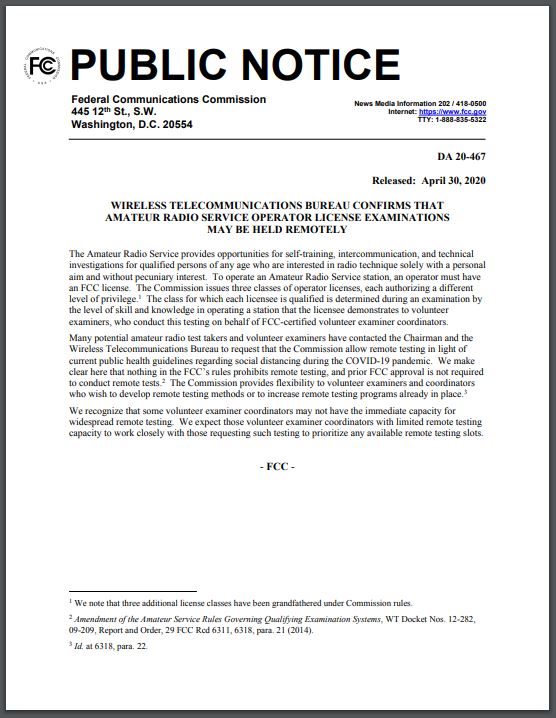
Today, the FCC posted a public notice, making it clear that FCC approval is not required to conduct remote tests:

We make clear here that nothing in the FCC’s rules prohibits remote testing, and prior FCC approval is not required to conduct remote tests.  The Commission provides flexibility to volunteer examiners and coordinators who wish to develop remote testing methods or to increase remote testing programs already in place.”

I’ve pasted the text from the body of the public notice below (click here to download the full PDF doc):


DA 20-467
Released: April 30, 2020

WIRELESS TELECOMMUNICATIONS BUREAU CONFIRMS THAT
AMATEUR RADIO SERVICE OPERATOR LICENSE EXAMINATIONS
MAY BE HELD REMOTELY

The Amateur Radio Service provides opportunities for self-training, intercommunication, and technical investigations for qualified persons of any age who are interested in radio technique solely with a personal aim and without pecuniary interest. To operate an Amateur Radio Service station, an operator must have an FCC license. The Commission issues three classes of operator licenses, each authorizing a different level of privilege. 1 The class for which each licensee is qualified is determined during an examination by the level of skill and knowledge in operating a station that the licensee demonstrates to volunteer examiners, who conduct this testing on behalf of FCC-certified volunteer examiner coordinators.

Many potential amateur radio test takers and volunteer examiners have contacted the Chairman and the Wireless Telecommunications Bureau to request that the Commission allow remote testing in light of current public health guidelines regarding social distancing during the COVID-19 pandemic. We make clear here that nothing in the FCC’s rules prohibits remote testing, and prior FCC approval is not required to conduct remote tests. 2 The Commission provides flexibility to volunteer examiners and coordinators who wish to develop remote testing methods or to increase remote testing programs already in place.3

We recognize that some volunteer examiner coordinators may not have the immediate capacity for widespread remote testing. We expect those volunteer examiner coordinators with limited remote testing capacity to work closely with those requesting such testing to prioritize any available remote testing slots.

– FCC –


Do you enjoy the SWLing Post?

Please consider supporting us via Patreon or our Coffee Fund!

Your support makes articles like this one possible. Thank you!

Radio Waves: AM/FM in Teslas, Odd Crosleys, CW Club Membership on the Rise, and 2020 Contest University is Free

Radio Waves:  Stories Making Waves in the World of Radio

Because I keep my ear to the waves, as well as receive many tips from others who do the same, I find myself privy to radio-related stories that might interest SWLing Post readers.  To that end: Welcome to the SWLing Post’s Radio Waves, a collection of links to interesting stories making waves in the world of radio. Enjoy!

Many thanks to SWLing Post contributors Kim Elliott, Dave Anderson, and Paul Evans for the following tips:


“Infotainment Systems” In Cars Portend Safety, Privacy, And Competition Issues (Forbes)

Almost all new cars include so-called “infotainment systems,” which provide navigation and various sources for music and news. Most companies have begun to outsource these systems to the Silicon Valley mainstays such as Apple, Amazon, and Google. The electric car manufacturer Tesla, however, has developed its own infotainment system that is far more integrated with the car itself.

Tesla recently announced an “upgrade,” which would allow users to watch Netflix, Hulu, and YouTube (when the car is parked). This innovation has a flip side: it removes AM / FM radio capabilities. Tesla and other electric car manufacturers claim they have removed AM radio in many of their models due to concerns over interference. But Tesla’s announcement is peculiar because electric engines do not interfere with FM radio reception.

Former FEMA director Brock Long worries that Tesla’s decision could prevent the government from transmitting crucial information in emergencies. Long’s concerns are valid, particularly in a crisis like the ongoing pandemic, when broad communication with the public is necessary to protect national security. AM/FM radio reach places that television and broadband do not, and that is why the government has invested tens of millions of dollars to ensure radio stations can remain on the air during periods of widespread threat to the public – including the current one. As the coronavirus reminds us, our nation still has public safety needs that no amount of technical wizardry can obviate.

The public safety concerns are real, but Tesla decision to remove AM/FM radio also raise the perennial tech issues of privacy and competition.

Tesla has contracts with tech companies such as Spotify and Pandora, many of which are pay services. These tech companies are no doubt pleased that Tesla is contemplating taking out AM/FM radio, which is still the most listened to audio platform—and constitutes meaningful competition. However, these conflicting interests creates mismatched incentives for Tesla.

Because Tesla’s market share is small, and the upgrade is optional, this conduct likely does not rise to anything close to an antitrust violation. However, the vertically integrated model which Tesla is following raises the same type of concerns as when Big Tech firms pick and choose what apps and services customers can favor. If Google, Apple, and Amazon, which have their own podcast and streaming audio services, begin to demand that auto manufacturers carry their services exclusively, then more serious competition problems will arise.[]

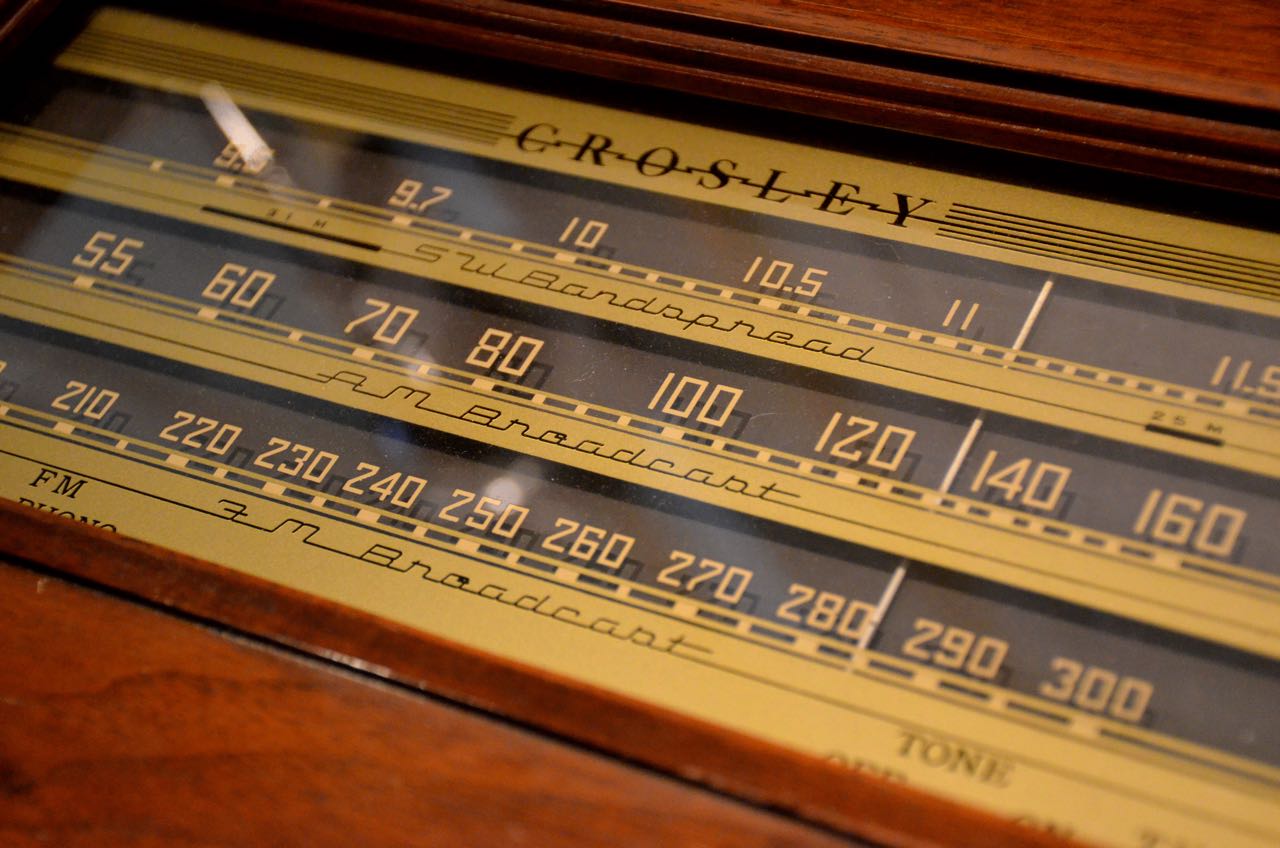
Odd Crosley Radios from the 1920s (Hackaday)

You may sometimes see the Crosley name today on cheap record players, but from what we can tell that company isn’t connected with the Crosley Radio company that was a powerhouse in the field from 1921 to 1956. [Uniservo] looks at two of the very early entries from Crosley: the model VIII and the XJ. You can see the video of both radios, below.

The company started by making car parts but grew rapidly and entered the radio business very successfully in 1921. We can only imagine what a non-technical person thought of these radios with all the knobs and switches, for some it must have been very intimidating.

The model VIII had two large knobs, three small knobs, and a switch. Oddly enough there were very few markings on the knobs, as you were expected to know how to use a tuned RF radio. The large knobs were for tuning capacitors and the switch was for coil taps, while the three small knobs controlled the tube filament supplies.[]

Increase in CW Club membership (G4BKI.com)

The rate at which amateurs are joining CW clubs has gone through the roof with ‘lockdown’.

The fastest growing club (SKCC) has tripled its daily new members rate and is now increasing by 14-15 per day. Information and files can be found at: http://www.g4bki.com/club_call_history.htm

Contest University 2020 will be held online free via Zoom (Contest University)

Contest University 2020 will be held online free via Zoom (Link will be available on May 7th)

Thursday, May 14th 9:00 am EDT

CTU 2020 outline is available on the 2020 Course Outline Page

Click here to read more information.


Do you enjoy the SWLing Post?

Please consider supporting us via Patreon or our Coffee Fund!

Your support makes articles like this one possible. Thank you!

FCC comment period on RF exposure limits

Many thanks to SWLing Post contributor, Paul Evans, who writes:

Readers will recall that the FCC formulated new RF Exposure rules in November 2019. They were released for the Federal Register in early December. There was to be a comment period of 30 days followed by a 30 day reply from the FCC.

Nothing was published until April 1, 2020, when the Federal Register published a FINAL rule on *part* of the original proposals. There was no comment period!

On April 6, 2020 the Federal Register published the rest of the document, but this time with “Comments are due on or before May 6, 2020, and reply comments are due on or before May 21, 2020.”

This too was incorrect and was changed to “Comments are due on or before May 15, 2020, and reply comments are due on or before June 15, 2020.”

https://www.federalregister.gov/documents/2020/04/15/2020-07866/human-exposure-to-radiofrequency-electromagnetic-fields-correction

Somebody clearly forgot how to count. Most importantly, these documents should be examined in detail. They should be checked for discrepancies and ‘failures in method’ of their new methods of measurement, testing and realisation. They ignore all the other existing worldwide standards, stating that they need a simpler set of standards in the USA. In the process a clear set of standards (int’l and EU) are muddied and require an entire new suite of tools in order to legally produce RF!

Don’t assume the ARRL will deal with things and that ‘they will be alright’. Time is running out to comment.

Thank you for the heads-up, Paul!