Shortwave listening and everything radio including reviews, broadcasting, ham radio, field operation, DXing, maker kits, travel, emergency gear, events, and more
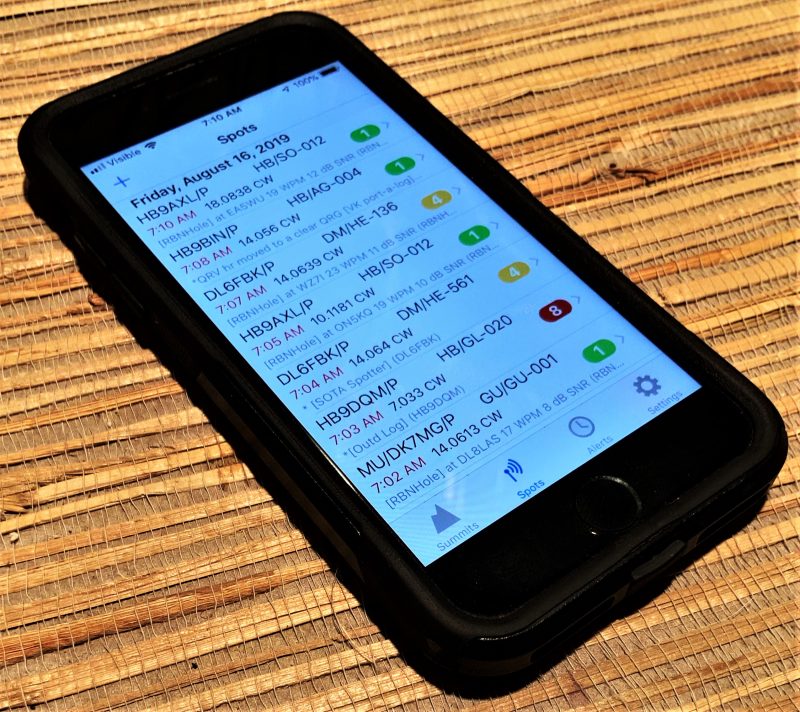
I do my best to keep this list of applications up-to-date and am always on the lookout for new ones. Thing is, new apps are developed every day–certainly a moving target for this editor.
This is where you can help…
Please comment on this post with your favorite radio-related iOS, Android, and Windows Phone applications. Please link to the app and/or mention what operating system you use. Of course, please tell us what you love about your choice apps.
A prize! Woot!
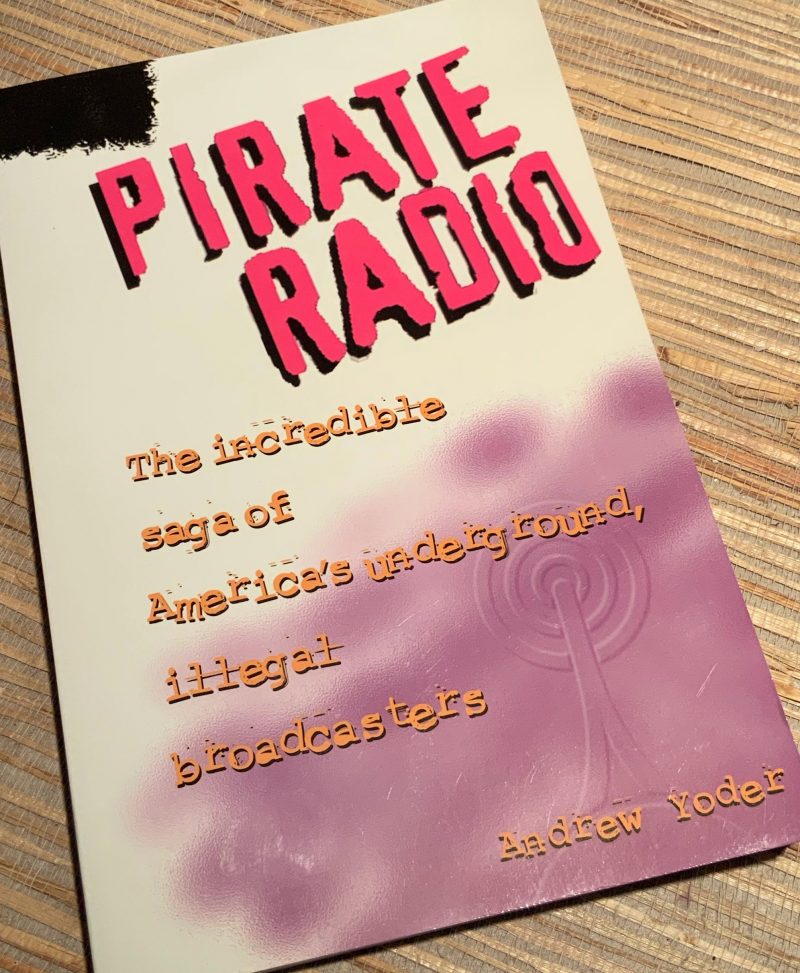
Next Friday (August 23, 2019) I’ll pick one random comment from this post and send the lucky reader a copy of Pirate Radio: The incredible saga of America’s underground, illegal broadcasters by Andrew Yoder. This classic pirate radio history book even includes an audio CD with clips from famous (and infamous!) pirate radio stations.
Using the same W6LVP loop. 3 PM local time daytime propagation. Testing on Medium Wave and Short Wave, no VHF. AM broadcast signals only.
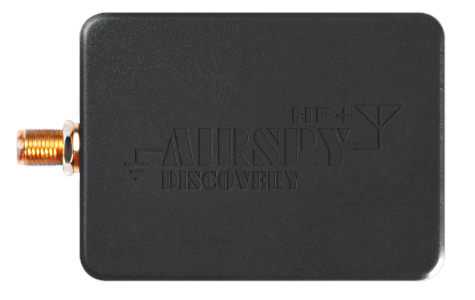
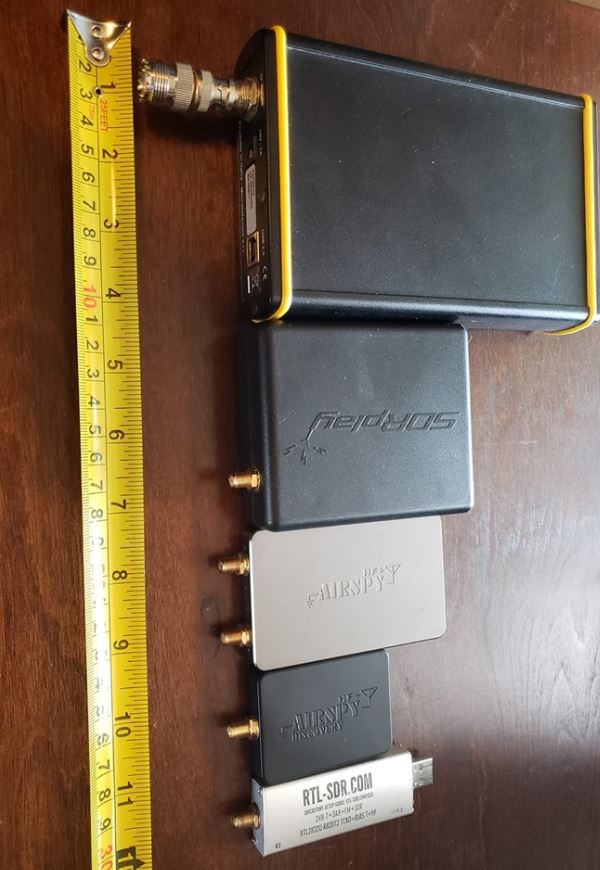
Ivan also included an image comparing the size of the HF+ discovery with other popular SDRs:
From top to bottom: the Microtelecom Perseus, SDRplay RSP, AirSpy HF+, Airspy HF+ Discovery, and the RTL-SDR.com SDR dongle.
When I demo the AirSpy HF+ to radio clubs, folks are amazed that such a tiny SDR can provide benchmark performance. It’s hard to believe the HF+ Discovery might even provide more performance from an even smaller package!
Many thanks to SWLing Post contributor, TomL, who shares the following guest post:
Summer Daytime DXing 2019
by TomL
I took note of the mediocre band conditions this summer amongst amateur radio operators as they were making off the cuff comments about still being in a solar minimum. Some had gone out and bought upgraded transmitters to solve the problem (MOAR WATTS!). And more power thrown at a weak ionosphere does seem to help get a signal farther. I had not been out since the spring and decided to find out for myself. But instead of more watts, I wanted more height.
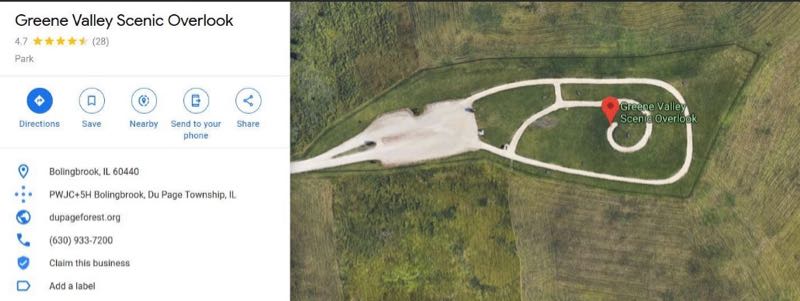
Greene Valley Scenic Overlook is open to the public from May through October on weekends only (and only from 11am-6pm). It was the largest land fill (aka, garbage dump) in Illinois, now covered over and producing captured methane gas. On August 3 & 4, I ventured over there to see if its 190 feet above the surroundings might help my radio reception.
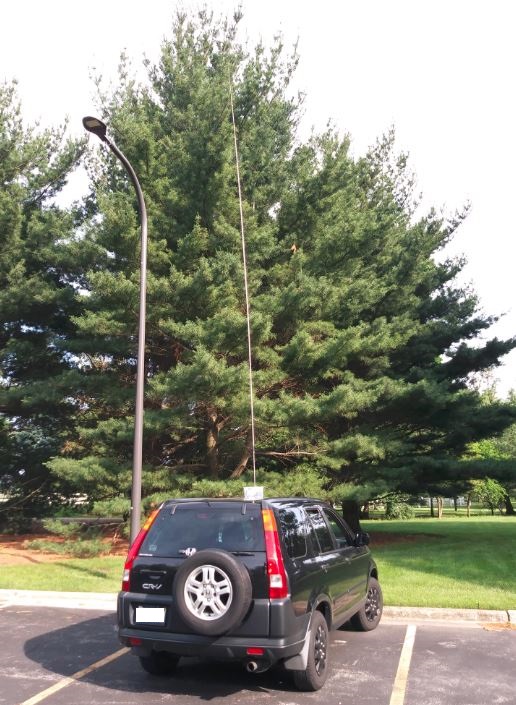
After trying my luck with a 12 foot vertical antenna on a tripod (and numerous children running around it chasing butterflies or looking at the view of Chicago), I went out the next day and parked away from anyone and put up my 19 foot vertical on the roof of the car. This setup is still amazing to me and works much better than the tripod mounted antenna, probably because it has a proper ground plane as well as being 7 foot taller.
So, yes, the conditions were so-so, not too bad and not too good. Lots of weak signals and some empty frequencies that I had expected to hear some South American stations around the 5 – 10 kw range. Weak stations from Asia were more scratchy sounding than usual even with the extra 190 feet of height. Here are 5 broadcast recordings as a sample (times in UTC):
Running out of things to listen to, I wandered over to the 20 meter amateur radio band and found a different situation. Propagation was decent between the Western hemisphere and Europe. Lots of “pile ups” going on with people trying to make contact with their trans-Atlantic counterparts. Some said they were running 500 watts or more, so more power does seem to help! Here are 5 recordings to show how active it was:
This outing was quite educational and I find it curious that people running 1000 watts or less are able to be heard well between continents but the large broadcasters were difficult to hear. Antennas pointed in the right direction, at the right time of day and frequency, can certainly do amazing things, plucking those weak signals out of the air so easily. And I do think the extra height had something to do with hearing this magic, too!
Happy Listening,
TomL
NOTES:
An easy way to lookup amateur radio operator “call signs” is to go to web site QRZCQ.com which does not need a login. Some records may be out of date, but most of it is accurate.
Setup used was a cheap Dell laptop, Windows 10, SDR Console 3.03, connected to the AirSpy HF+, a Palstar amplified preselector, and an old Kiwa BCB filter, then going up to the car roof magnetic balun (a Palomar MLB2) which is then connected to the 4 magnet base and the MFJ 19 foot stainless steel antenna. You can read about it here:
Brilliant report, Tom! It’s true: the bands are fickle, but like you I always find interesting things to hear on HF. I think your setup using your vehicle as the ground plane for the antenna is a fantastic idea. Plus, set up is easy, self-supporting, and you’ll never have to worry about a park ranger, for example, complaining because you have a wire suspended from a tree. And when there are no trees? You’re still golden.
Thanks for sharing your experience and DX! Amazing that even with mediocre conditions, you still snagged some distant signals.
Many thanks to SWLing Post contributor, Dan Robinson, who shares this excellent photo gallery from the Berryville Hamfest. Dan notes:
You will notice one photo in particular — of a rare Skanti R-8001 and a Telfunken E1500.
The Skanti, which went for only $600, is now comfortably sitting in my radio shack!
Wow! What an impressive collection of radios at this flea market. Looks like Berryville is worth the trip for anyone with an interest in vintage radio.
Many thanks to SWLing Post contributor, Harald Kuhl (DL1AX), who writes:
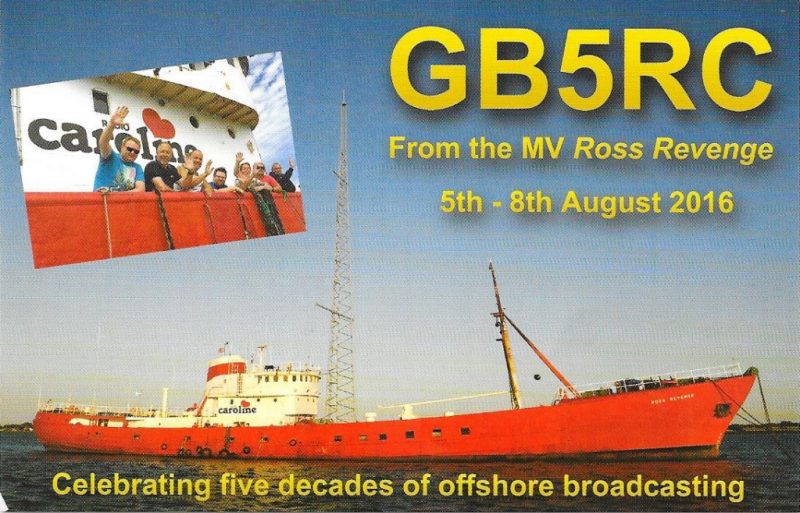
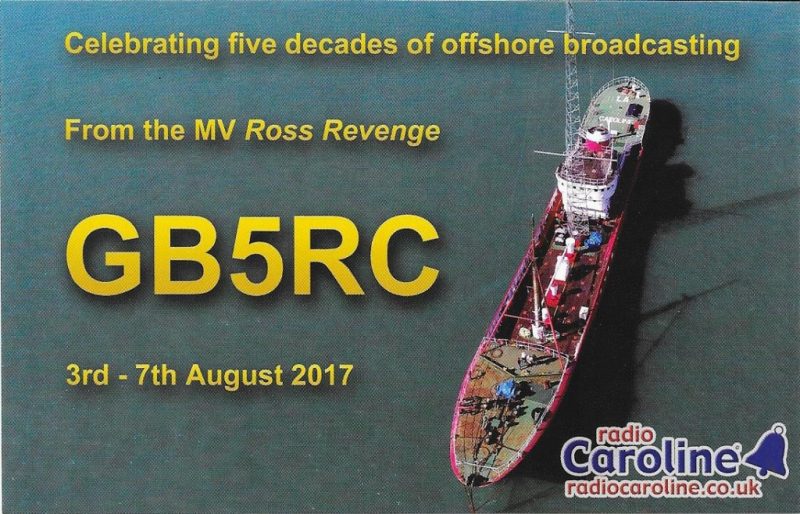
At the beginning of August there will be two special event amateur radio stations active on shortwave, celebrating anniversaries of famous European pirate stations Radio North Sea International and Radio Caroline:
2019 is the fifty fifth anniversary of Radio Caroline and the Martello Tower Group are pleased to be able to activate the world famous MV Ross Revenge again in August. This year we have been granted the ‘special’ special callsign of GB55RC. […]
Yesterday, I attended the WCARS hamfest in Waynesville, North Carolina, with my friend Sébastien (VA2SLW) who is currently on vacation in the area.
The WCARS hamfest is a smaller regional hamfest, but it attracts a lot of folks from the mountain regions of north Georgia, Tennessee, South Carolina, North Carolina, and beyond.
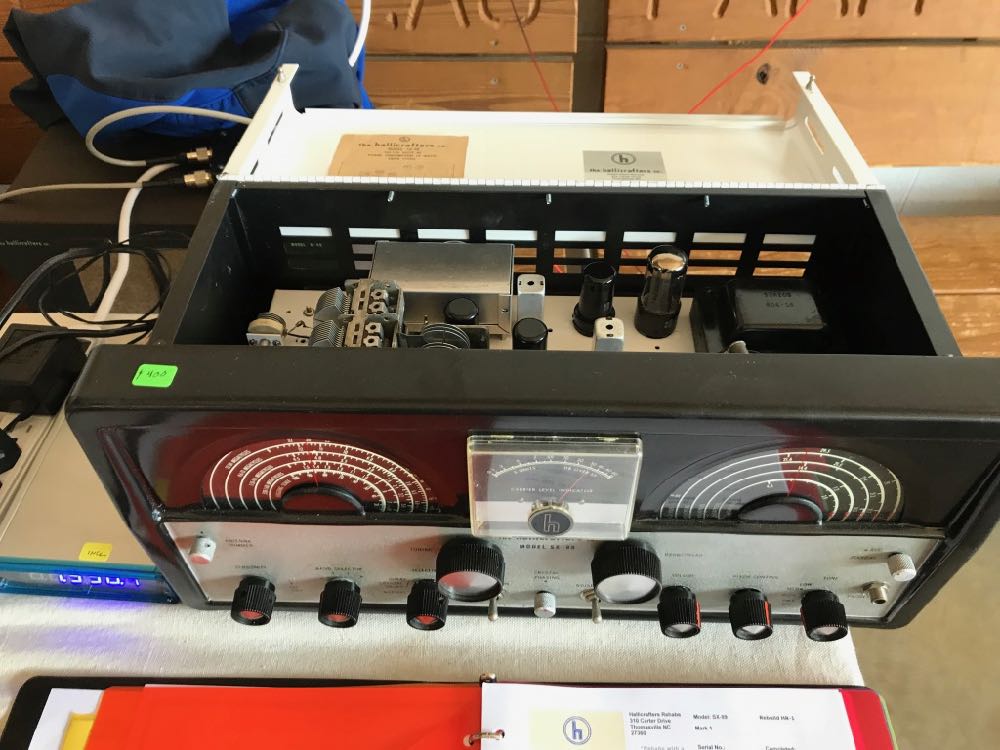
The WCARS hamfest flea market always has quite a variety of radios, including a number of great vintage models. I’ve been very lucky in the past finding excellent deals, too. This year, I (reluctantly) passed up a few deals knowing I’m also attending the Huntsville Hamfest in August and the Shelby Hamfest in September.
Below, you’ll find a selection of photos from the hamfest. Note that you can click on the image to enlarge it and I attempted to include price tags when possible:
In episode 23 of TX factor we explore the process of music audio mastering at Mike Marsh G1IAR’s studio in south Devon. Mike shows us how the latest TX Factor theme tune was mixed and mastered, and demonstrates the process of cutting the audio onto vinyl disc – such nostalgia.
Nick Bennett 2E0FGQ visits the National Radio Centre at Bletchley Park where Noel Matthews G8GTZ and Graham Shirville G3VZV demonstrate how set up and operate over the new geostationary satellite, Oscar 100. Plus, Bob McCreadie G0FGX visits the folks at Icom UK with a full review of Icom’s long-awaited VHF / UHF all-mode transceiver the IC-9700.
Click here to view Episode 23 on TX Factor’s website, or click here to watch on YouTube.
Thanks team for yet another excellent and informative episode, TX Factor!
Please support this website by adding us to your whitelist in your ad blocker. Ads are what helps us bring you premium content! Thank you!