Category Archives: New Products

The AOR AR-Mini B is back (and on sale at Universal Radio)

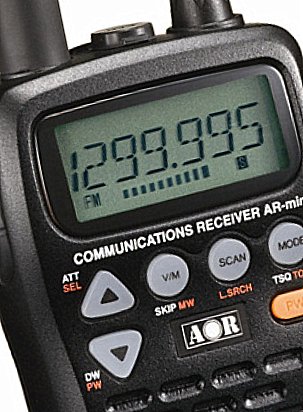
AOR-AR-Mini-BWhile browsing the front page of Universal Radio recently, I noted that the AOR AR-Mini B handheld communications receiver is currently on sale.

This surprised for two reasons:

  1. I thought the AR-Mini B was discontinued.
  2. This receiver used to sell for about $259 US.

I contacted Fred Osterman (President of Universal) for more details.

Fred informed me that, a couple of weeks ago, AOR USA announced the availability of the model once again. He noted that the units arrived from AOR JAPAN to AOR USA last week and they are now in stock.  Fred seemed as surprised as I was that the Mini B resurfaced.

He confirmed that AOR have these in quantity–they’re not simply units discovered in a warehouse corner somewhere.  They could be surplus from a large special order.

The AOR AR-Mini B is not a perfect receiver, but at $159.95 it’s a pretty good value for a very rugged, water-resistant receiver that puts much of the radio spectrum in your pocket (100 kHz to 1299.995 MHz).

If you’re tempted to purchase the AOR AR-Mini B, check out this review by Larry Van Horne (PDF) and this review by Dave Zantow first.

New from Heathkit: the Explorer Jr TRF AM radio receiver kit

HeathkitExplorerJr

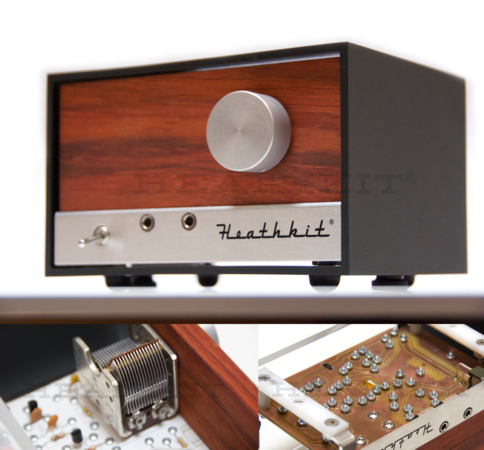
The Heathkit Explorer Jr. (Image Source: Heathkit)

Yes, the legendary Heathkit company is back and their first kit is a simple Tuned Radio Frequency (TRF) AM/mediumwave analog receiver: the Explorer Jr.

I knew Heathkit was back in business and under new management, but hadn’t heard any updates as of late. Their president, Andy, just sent a message to the “Heathkit Insiders” group explaining what the team has been up to:

“We’ve designed and developed a wide range of entirely new kit products. We authored the manuals for these kits, complete with the beautiful line art you rely on, preserving and respecting our iconic historic Heathkit style. We developed many new inventions and filed patents on them. We relocated Heathkit, and set up a factory, and a warehouse, and offices, in Santa Cruz, California, near Silicon Valley. We built the back office infrastructure, vendor and supply chain relationships, systems, procedures, operations methods, and well-thought-out corporate structure that a manufacturing company needs to support its customers, to allow us to scale instantly the day we resume major kit sales. All this effort enables us to introduce a fleet of new kits and helps ensure Heathkit can grow, prosper, and continue to bring you great new products for a very long time.”

The Insiders’ message goes into much more detail–I would encourage you to contact Heathkit about joining this group.

The big news in this message was the launch announcement of the Explorer Jr. kit which can be ordered from their website now. The price is $149.95 plus shipping. Heathkit anticipates a 30-day shipping time for the first set of orders.

Here’s a description of the kit from their website:

A Radio Kit Whose Time Has Come.

Again.

When Heath started designing & selling do-it-yourself airplane kits shortly after the Great War, the state-of-the-art in radio was the Tuned Radio Frequency (TRF) design.

A TRF radio was a great deal. If you had a great deal of money. A TRF receiver became a fixture in the homes of families around the world, receiving the news and music AM broadcasts of the day. A family AM radio was a big investment — $100 to $625 in 1929 dollars. (With inflation, that’s $1,400 to $8,700 in today’s dollars.)  Of course, at that price radios also were beautiful. They were made of fine wood, and designed to last. Radios were a visible and attractive furnishing you could be proud to have in your living room or parlor.

Heathkit’s TRF radio is a great deal. And a great deal of radio. This Explorer Jr TM radio is modeled on the original TRF designs, but better. You get to build it yourself. It’s safe and simple enough for beginners to assemble and understand. But it receives AM broadcast stations with performance superior to the vintage radios of 1930.

With the number of Heathkit enthusiasts out there, I suspect this first run of kits won’t last long. The kit trim is available in six colors: Silver, Cranberry, Cucumber Green, Plum Pie, Sapphire Blue, and Tangerine.

Click here to view and order the Explorer Jr on Heathkit’s webstore.

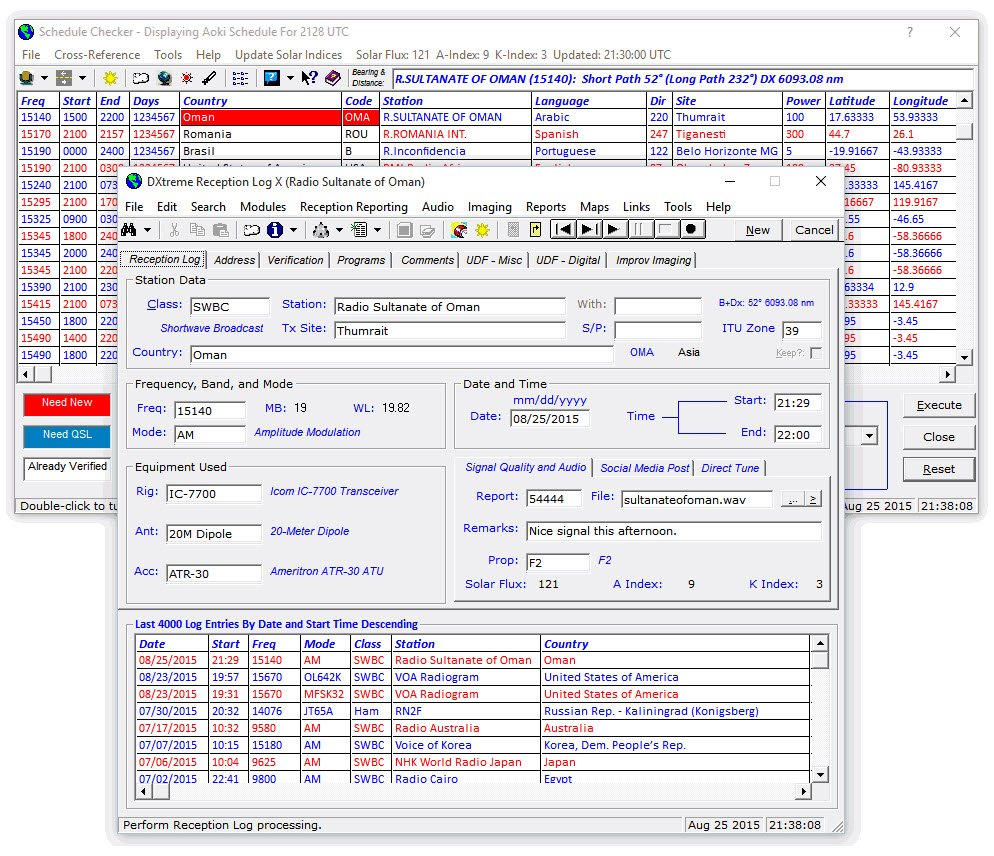
DXtreme Reception Log X

schedule_checker_and_reception_log_wndow

SWLing Post sponsor, Bob Raymond (NE1I) at DXtreme, writes:

I’m pleased to announce that the latest version of our logging software for radio and TV monitoring enthusiasts is now available:

www.dxtreme.com (Version 10.0).

Please find the full product announcement below:


DXtreme Reception Log X (Version 10.0)

DXtreme Software™ has released a new version of its popular logging program for radio monitoring enthusiasts: DXtreme Reception Log X™ (Version 10.0).

Like other logging programs, DXtreme Reception Log X lets listeners and DXers log the stations they’ve heard. But unlike other logging programs, Reception Log X provides advanced features that can add a new dimension to logging activities.

New Features in Version 10.0

  • Afreet Ham CAP1 Integration — Lets users run short- and long-path propagation predictions from the Schedule Checker, Reception Log, Countries, and Transmitter Sites windows. Reception Log X sends key data to Ham CAP which, in turn, displays a chart showing the signal-to-noise-ratio prediction by time and frequency and a Mercator projection showing the current propagation prediction for the path between the user and the target station.
  • Improv ImagingTM — A dedicated tab on the Reception Log window, Improv Imaging lets users associate ad hoc images with log entries. Users can capture from their screen, scan from their image scanner, or paste from the Clipboard any images they want to associate with a displayed log entry, such as screen captures of stations received on digital applications, waterfall displays, Amateur TV pictures, Ham CAP maps showing propagation conditions at the time of reception, etc. An Improv Image Explorer lets uses peruse their collection of Improv images, and call up the log entries with which they are associated.
  • Preview QSL Image Viewer — Is now larger and expandable on the Verification tab of the Reception Log window, and the new QSL Image Explorer lets uses peruse their collection of QSL images, and call up the log entries with which they are associated.
  • Colorful User Experience Enhancements — Lets users set the foreground and background colors of heading and data rows on grids throughout the program — one set of foreground and background colors for odd data rows, and another for even data rows — making it easier to view schedules on the Schedule Checker, log entries on the Last Log Entries grid and window, and data in Reports.

Advanced Features

  • Schedule CheckerTM — Lets users import schedules from Aoki, EiBi, and
    FCC AM web sites and display that schedule data according to the filter criteria they specify. A list box lets users switch between the schedules at will. And, depending on the schedule type, users can filter schedule information by band, frequency, station, country, city, state, time of day, language, antenna direction, and target area. When the What’s On Now? function is activated, the schedule refreshes automatically at the top of each hour for Aoki and EiBi schedules.

For each schedule item, Schedule Checker queries the Reception Log X database to let users know – by means of user-defined, foreground and background display colors – whether they need to monitor a station for a brand- new or verified country. Schedule Checker also displays bearing and distance, runs Ham CAP propagation predictions and DX Atlas azimuth plots2, tunes supported radios to schedule frequencies when double-clicking schedule items3, and starts log entries for scheduled stations.

  • Last Log Entries Grid— Located on the Reception Log window, the grid shows up to 5000 of the most recent log entries added. Its records can be sorted, and double-clicking records displays detailed data on the Reception Log window.Users can resize the grid columns and scroll horizontally to columns that do not appear initially. But because the names of stations and NASWA countries can be quite long, users can also display a larger, resizable Last Log Entries window. A Properties dialog box lets users change the order of columns, the number of log entries to display, and the foreground and background colors and font attributes of grid headings and data rows system-wide.
  • Reception Reports — Users can create customized paper and e-mail reception reports plus club report entries for reporting catches to clubs and magazines.
  • Social Media Posting — When users add or display a log entry, Reception Log X prepares a post announcing their DX catch and displays it on the Social Media Post tab. From there, users can drag the post to their favorite social media web site(s) to share their catch with others.Using the Script Editor window, users can create and edit social media scripts that format social media posts to their liking. A browse button lets users select the script they want to use. Three scripts come with Reception Log X.
  • Direct Print SWL and Address Labels — Users can prepare SWL and Address labels for direct output to their printers, and print labels one-at-a-time or in any number up to the maximum number of labels on each page of label stock.
  • Rig Control — Retrieves the frequency and mode from supported radios and permits tuning from the Schedule Checker and Reception Log windows.
  • Multimedia Features — An embedded Audio facility lets users maintain an audio archive of stations heard. An integrated QSL ImagingTM facility lets users scan, display, and explore QSL and e-QSL images.
  • Performance Reporting — Produces reports that track the performance of the user’s monitoring station, and lets users FTP those reports to user-provided Web space for remote access. Reports integrate with DX Atlas to generate pin maps.
  • Support for Monitoring Amateur Radio Operators — Users can retrieve call sign and address information for monitored hams from optional Web services (HamQTH.com, BuckmasterTM HamCallTM, and QRZ XML Logbook Data) and send automatic eQSL requests to monitored hams via www.eQSL.cc.
  • Documentation — Includes on-line Help and a Getting Started Guide.

Operating Systems, Pricing, Contact Information

DXtreme Reception Log X runs in 32- and 64-bit versions of Microsoft Windows® 10, 8.1, 8, 7, Vista®, and XP. It retails for $89.95 USD worldwide for electronic distribution. Pricing for CD versions and upgrading users is available on our Web site. All prices include product support by Internet e-mail. For more information, visit www.dxtreme.com or contact Bob Raymond at [email protected].


Bob, thanks for sharing your product announcement and thank you for sponsoring the SLWing Post!

Click here to visit DXtreme or here to download the PDF of this product announcement.

Jeff’s Updated Sangean PR-D4W Review

Sangean

Many thanks to Jeff McMahon, from the Herculodge, who shares an update to his Sangean PR-D4W review.

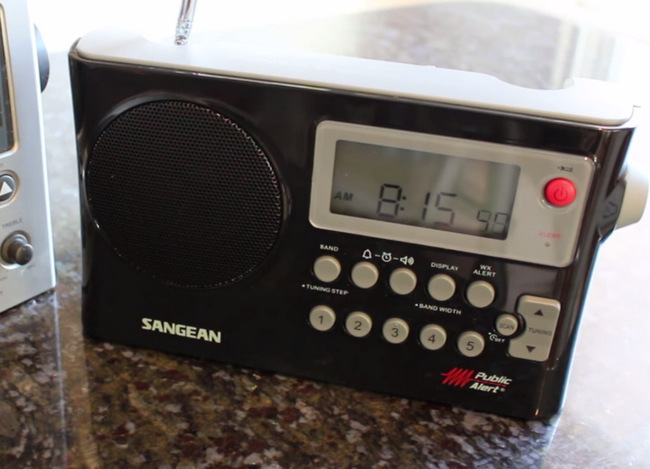
The good news is that Jeff continues to be impressed with the PR-D4W and ranks it above the venerable C.Crane CCRadio-2E in almost every category. At $64.50 on Amazon, the PR-D4W is a much better value.

Follow this link to his review:

http://herculodge.typepad.com/herculodge/2015/10/sangean-pr-d4w-review-with-fm-wire-antenna-upgrade.html

Jeff gives high marks to the Sangean PR-D4W

Sangean

My pal, Jeff McMahon, over at the Herculodge, has just posted a video review of the Sangean PR-D4 portable radio. In summary, he writes:

“It’s a great radio with top FM, AM, and speaker sound. It blows away my C.Crane Radio-2E. Lack of illumination, however, makes it less than ideal as a bedside clock radio.”

Wow! I’m most impressed that Jeff places the PR-D4W (which retails for $69 on Amazon) above the venerable CCRadio-2E (which retails for $169 on Amazon) in terms of AM performance.

I just checked and it appears that Universal Radio also retails the PR-D4W for $69.95.

Follow Jeff at the Herculodge and on YouTube.

National RF 75-NS-3 receiver kit

NationalRF-75-NS_2

National RF, of California, has introduced a new “semi-kit” receiver: the RF 75-NS-3. Here’s an excerpt from the product description page of the National RF website:

National RF’s 75-NS-3 receiver is a complete super-hetrodyne mini high frequency receiver, designed specifically for the short-wave listener, electronics enthusiast or radio amateur, who wants to use their hands and build a radio. The receiver is offered as a semi-kit in which the electronic assembly is loaded and functionally tested at the National RF facility. The customer must then go to the grocery store (yes…the grocery store!), procure a can of [Spam] lunch meat, eat it or give it to the dog, and then proceed to drill and paint the can, in order for it to become the receiver’s enclosure! […] Detailed drilling instructions and final assembly instructions are provided as part of the kit. All other parts required for completion of the receiver are provided as well. Recognizing that the finished assembly looked somewhat like the fabled Collins receiver of the ‘60s, the 75S-3, (particularly when the can is painted a light gray) National RF engineers dubbed it (with tongue firmly planted in cheek, of course) the 75-NS-3! Although we have had fun packaging this receiver in a lunch meat can, it is nothing to turn your nose at! Its performance and portability will surprise you, and it is an ideal radio to bring with you on any trip!

75-NS_3

The receiver architecture is that of a single conversion super-hetrodyne receiver, that is capable of receiving AM, SSB, or CW. The receiver incorporates a dual gate FET as an RF amplifier with manual peaking and gain controls. A ceramic filter is used in the IF section with a front panel switch that controls a broad or narrow IF response. Other front panel controls include audio drive, BFO setting, and a band switch for the HF bands. The 75-NS-3 has internal receive frequency coils that are switched at the front and rear panels. The frequency range of the receiver, over three band set positions, is 3.5 through 12 MHz. This allows reception of several international short-wave bands, the 80, 60, 40, and 30 meter amateur radio bands, and of course, WWV time and frequency standard stations at 5 and 10 MHz.

For those who simply want a lower cost receiver to monitor the shortwave frequencies, National RF offers two variants of the original receiver: the 75-NS-1 and the 75-NS-2. Both are based on the design and circuit of the 75-NS-3, but do not have the band switching and frequency range of the 75-NS-3 receiver. The 75-NS-1 covers between 3 and 6 MHz, including the 80 and 60 meter amateur band. The 75-NS-2 covers between 6 and 12 MHz, including the 40 and 30 meter amateur bands. Both units have the fixed ceramic resonator band width set for about 6 KHz. And, of course, they are both designed to fit in the tasty potted meat can!! All other specifications presented apply to both of these models as well.

Pricing of the 75-NS-x versions:

  • Type 75-NS-1 Mini HF Receiver Semi-kit (covers 3 to 6 MHz) $189.95
  • Type 75-NS-2 Mini HF Receiver Semi-kit (6 to 12 MHz) $189.95
  • Type 75-NS-3 Mini HF Receiver Semi-kit (band switched from 3.5 through 12 MHz in three switched positions) $269.95
  • Shipping and Handling to within the US $10.00 each

Click here to view on the National RF website.

Video: Stephen’s Poldhu Radio Kit

Radio-Kit

Many thanks to SWLing Post contributor, Stephen Cooper, who recently shared a video on the SWLing chatroom:

I’m a sucker for cute radio kits, so I purchased one of these from the UK-based seller on eBay as well. There are two kit packages: one with the receiver only, another with the receiver, amplifier and speaker. Shipping is free–even to the US–and pricing is fair (19 – 25 GBP or roughly $30-38 US)

Click here to search eBay.

Readers: if you haven’t checked out the SWLing chat room, I would encourage you to do so! There’s almost always someone there and, many evenings, readers share reception reports in real time. Click here to check out the chat room.