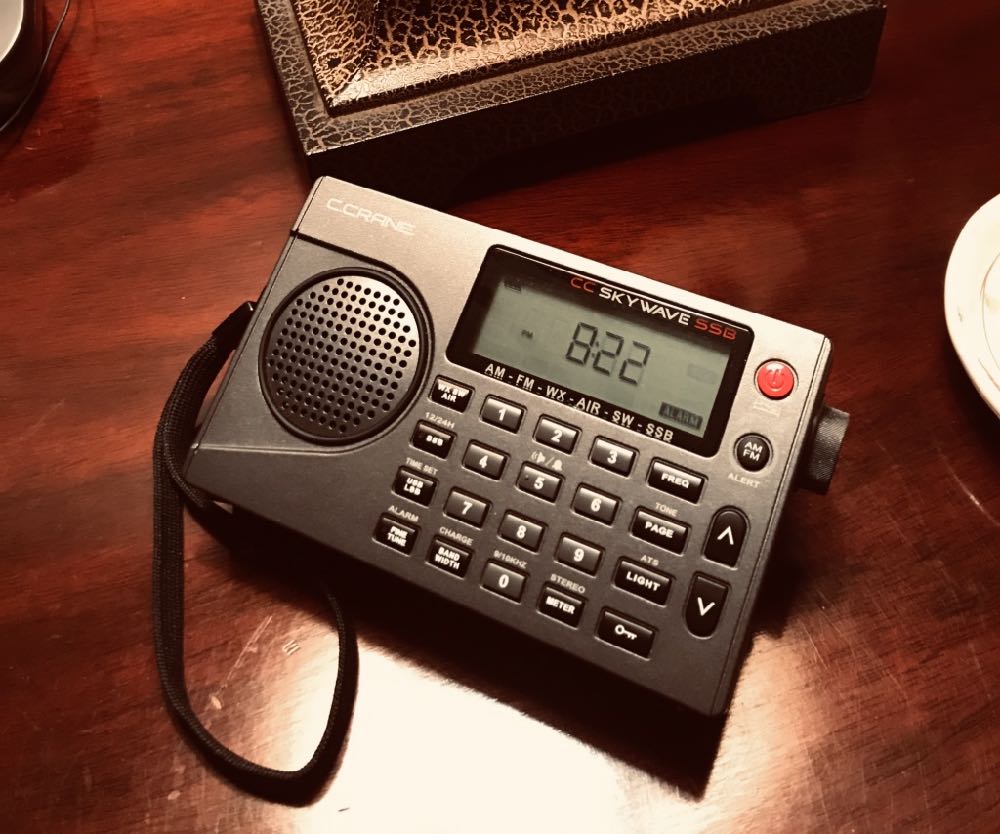
The CC Skywave SSB is set to wake me at 3:30 to catch a 5:30 flight.
I have a pretty accurate body clock. Regardless of when I doze off, I always wake up at the same time.
When I’m at home on my regular schedule, I trust my “internal chronometer” so much, I haven’t set an alarm in years.
When I travel, it’s a completely different story…
It’s a rare occurrence when a flight, train, or even road trip allow me to wake up at my normal time, so I rely on an alarm clock.
In fact, I’ll let you in on a little secret: I’m a nervous Nellie when I’m forced to break my sleep cycle to catch an early flight. My fear of missing a flight may even border on paranoia–I’ll wake up multiple times during the night in a panic unless I feel completely at ease that there’s an alarm system in place to wake me no matter what.
I recently told a friend about this fear and he asked, “Why not just set the alarm on your phone?!”
Simple answer: I don’t trust smart phones and tablets. They’re too complicated with so many nighttime settings, alarm/alert volume levels, short battery life, etc. etc.
Case in point…
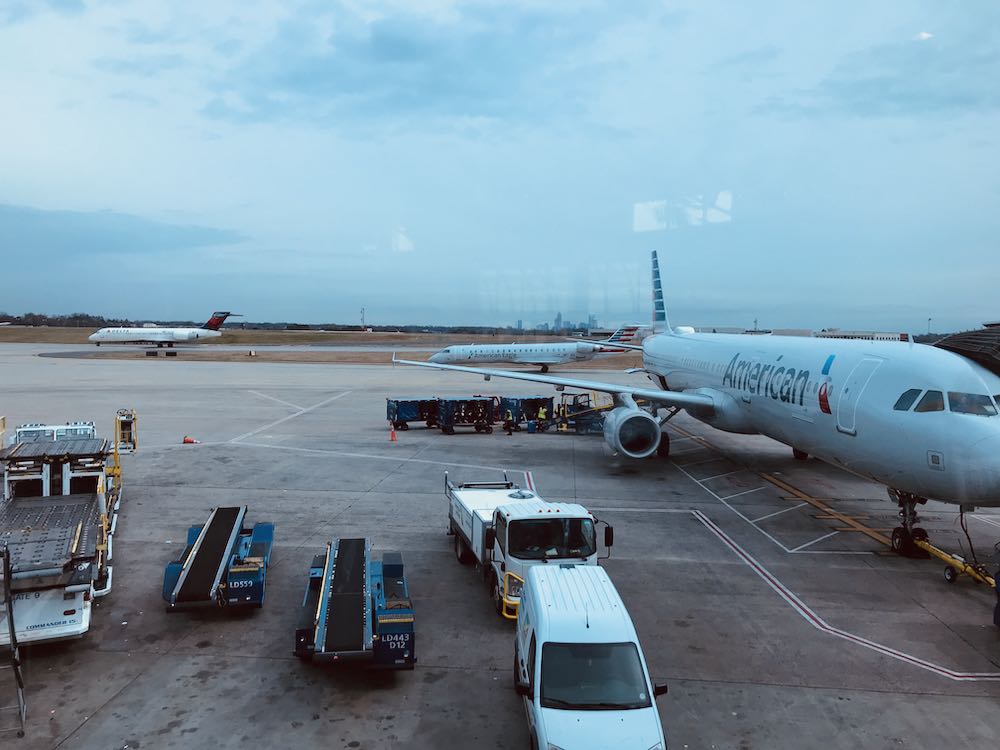
Earlier this year, I had to catch an early flight and needed to wake up at 4:00 AM, so I scheduled my iPhone and iPad to alarm at 4:00. (When at home, I try to have my iPhone/iPad wake me first, because the alarm is very gradual and doesn’t disturb my wife.) Of course, I also set my travel radio’s alarm clock for 4:10, as a fail safe.
Knowing I had a total of three(!!!) alarm clocks set, I slept like a baby.
At 4:10 AM, my travel radio alarm started beeping. The iPhone and iPad were completely silent.
Turns out, the iPad decided to do an operating system update during the night. For some reason, after rebooting, it simply forgot about the alarm. (Thanks, iPad!) And the iPhone? I’m still not sure how/why, but the mute switch on the side of the phone was engaged and if it vibrated to wake me, I never heard it rumbling on the night stand.
Thank goodness the travel radio had my back, else I would have missed that flight.
Travel radios: Never leave home without one!
I like to be a self-sufficient traveler even though I only travel with one bag and pack very lightly. I never rely on my destination to have a functioning alarm clock (with battery backup, of course) or effective wake up call service. Regardless of how minimally I pack, I always take a travel radio.
In February, for example, I travelled to Philadelphia for the Winter SWL Fest. Even though my trip was nearly a week long, to keep from paying a carry-on fee with Frontier airlines, I packed everything in a bag that met their strict “personal carry-on” bag size.
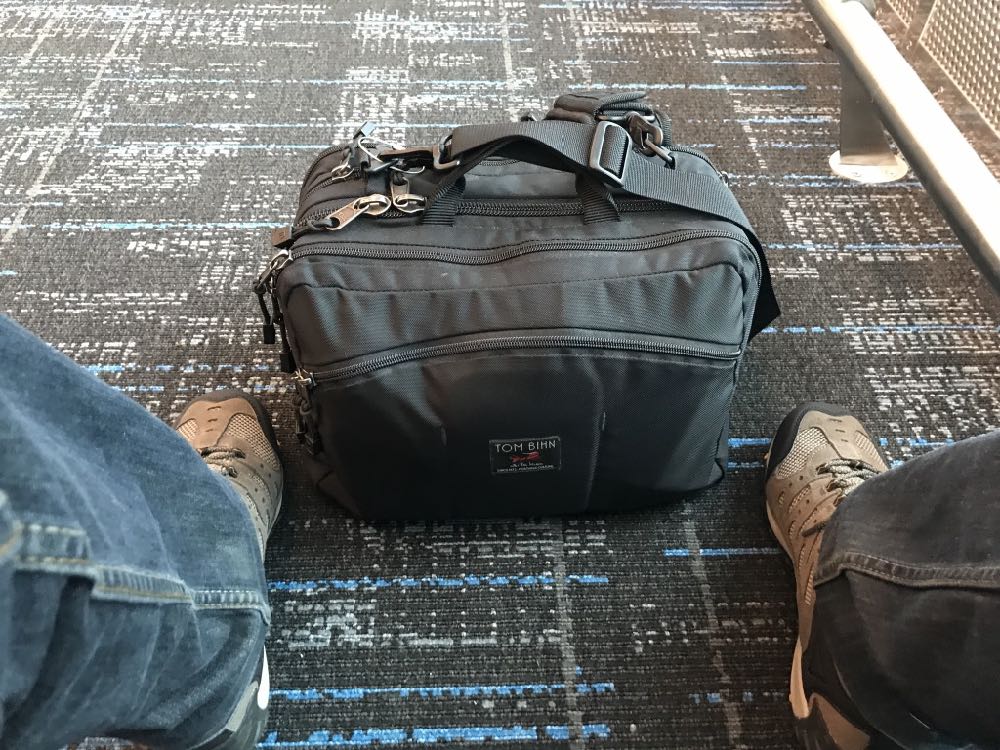
Regular readers know I’m a bit of a pack geek, so my bag of choice was the Tom Bihn Stowaway. Here’s the bag fully packed out at my feet in the airport:
Here’s a photo of everything I packed in the Stowaway for that trip:
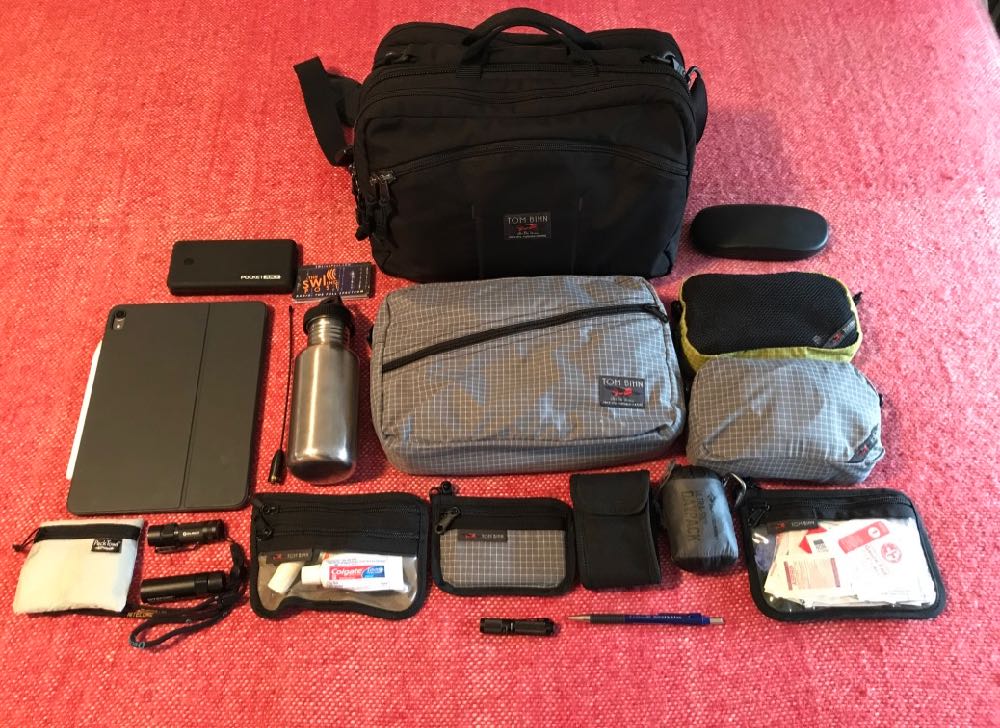
This particular trip really pushed the limits on my minimalist travel philosophy. Honestly? It was a fun challenge! I had to hone my pack contents down to only the essentials (don’t make fun of me for believing three flashlights were essential–the previous year, our hotel was without power for several days).
Still, I made room for one of the smallest travel radios in my arsenal: the County Comm Marathon ETFR:
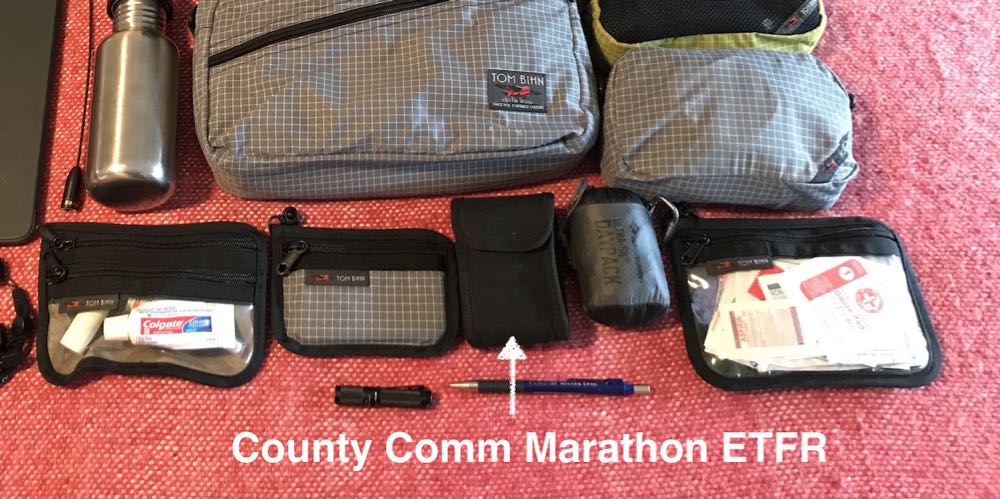
I chose the ETFR because it has a custom case that could attach to my belt or pack strap if interior space became too tight. The ETFR radio hasn’t been in production for a decade, but it’s an effective radio companion and the alarm works without fail.
Choosing a travel radio
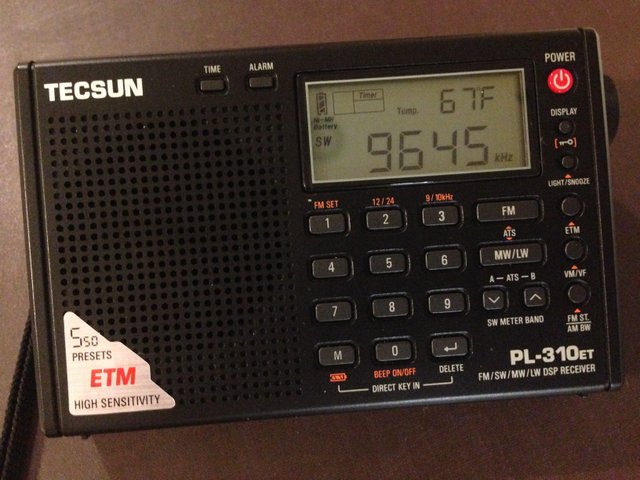
Most modern digital portables are based on DSP chips that have clock and alarm functions, so you might already own an effective travel radio.
With that said, I always prioritize radio features that benefit a traveler, of course; here are some that I look for:
- Small size: Naturally, it’s sensible to look for a travel radio that’s small for its receiver class for ease in packing.
- Overall sturdy chassis: Any travel radio should have a sturdy body case that can withstand the rigors of travel.
- Built-in Alarm/Sleep Timer functions: We’ve already exhausted this topic, right?.
- Powered by AA batteries: While the newer lithium ion battery packs are fairly efficient, I still prefer the AA battery standard, which allows me to obtain batteries as needed in most settings; a fresh set of alkaline (or freshly-charged) batteries will power most portables for hours on end.
- Standard USB charging cable: If I can charge batteries internally, a USB charging cable can simply plug into my smart phone’s USB power adapter or the USB port on my laptop; no extra “wall wart” equals less weight and less annoyance.
- ETM: Many new digital portables have an ETM function which allow auto-scanning of a radio band (AM/FM/SW), saving what it finds in temporary memory locations–a great way to get a quick overview of stations. (As this function typically takes several minutes to complete on shortwave, I usually set it before unpacking or taking a shower. When I return to my radio, it’s ready to browse.)
- Single-Side Band: While I rarely listen to SSB broadcasts when traveling, I still like to pack an SSB-capable receiver–especially for longer trips.
- RDS: Though an RDS (Radio Data System) is FM-only, it’s a great feature for identifying station call signs and genre (i.e., public radio, rock, pop, country, jazz, classical, etc.)
- External antenna jack: I like to carry a reel-type or clip-on wire external antenna if I plan to spend serious time SWLing. Having a built-in external jack means that the connection is easy, no need to bother with wire and an alligator clip to the telescoping whip.
- Tuning wheel/knob: Since I spend a lot of time band-scanning while travelling, I prefer a tactile wheel or knob for tuning my travel radio.
- Key lock: Most radios have a key lock to prevent accidentally turning a radio on in transit–but with a travel radio, it’s especially important to have a key lock that can’t be accidentally disengaged.
- LED flashlight: Very few radios have this, but it’s handy to have when travelling. Note that the County Comm ETFR (above) does!
- Temperature display: Many DSP-based radios have a built-in thermometer and temperature display; I like this when I travel anytime, but especially when I’m camping.
While I don’t have a portable that meets 100% of the above travel radio wish-list, I do have several that score very highly.
Since this is a favorite topic, I’ve written a number of articles with reviews of travel radios. In my CC Skywave SSB review last year, I list a number of current favorites.
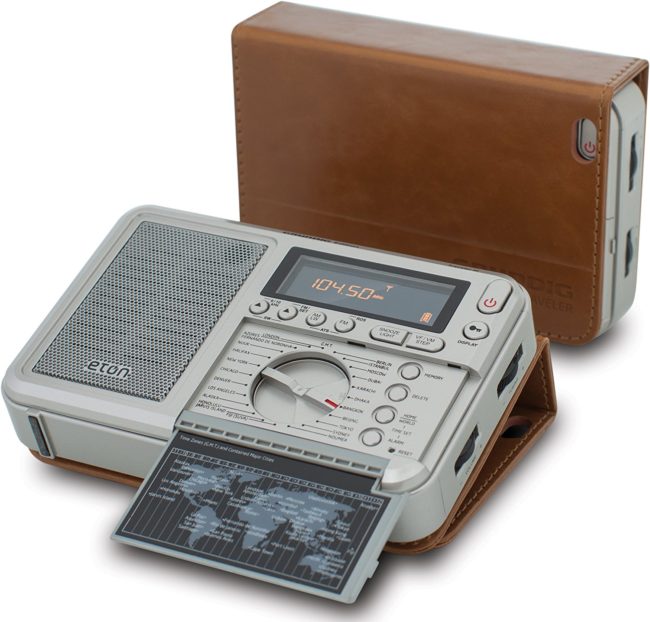
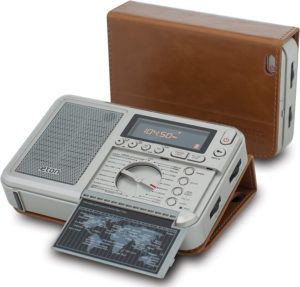 I should also mention that one great deal at time of posting is the Eton Executive Traveler.
It’s a brilliant little radio for $34.99 shipped (note this affiliate link supports the SWLing Post).
One of our readers has been following the price of this little radio for months–it’s being sold at an all-time low at present.
What’s in your travel pack?
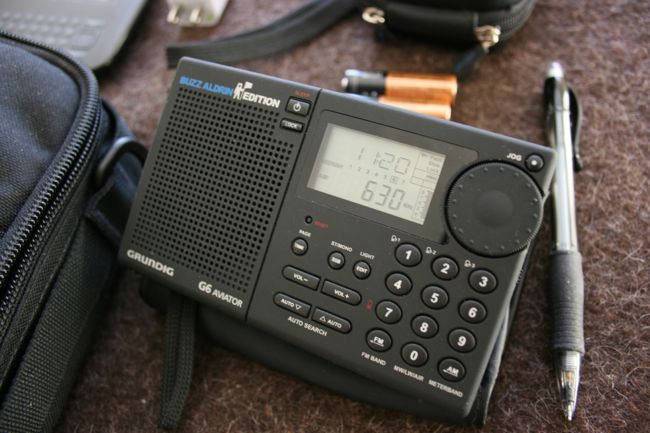
What’s your favorite travel radio? What features are important to you? Anyone else paranoid about missing early flights?
Please comment!
Do you enjoy the SWLing Post?
Please consider supporting us via Patreon or our Coffee Fund!
Your support makes articles like this one possible. Thank you!