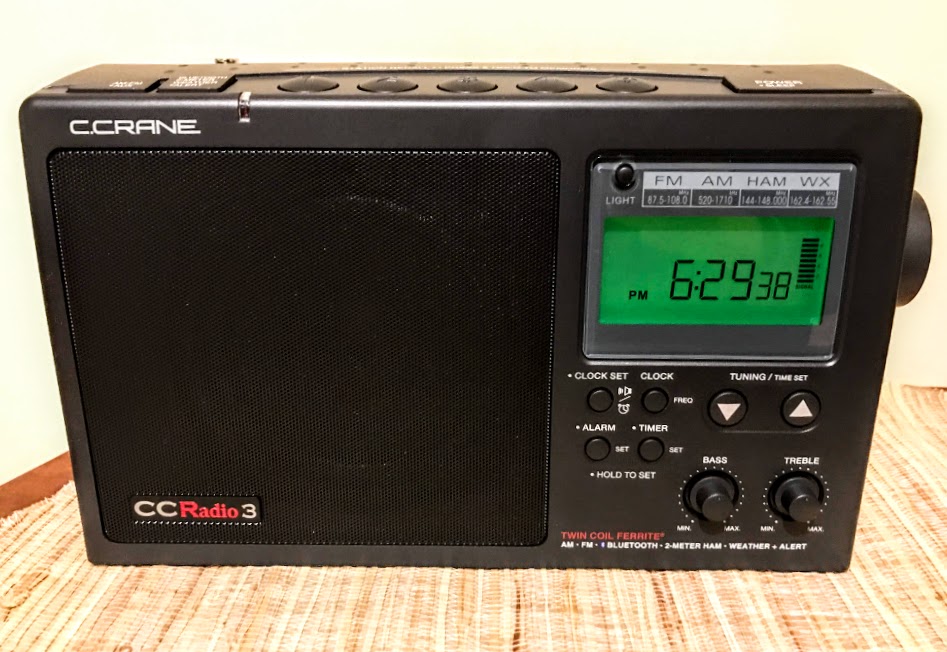
In early January 2019, C. Crane sent me a pre-production unit of their latest radio for evaluation: the C. Crane CCRadio3.
Since I received the CCradio3, I’ve had it on the air and have been evaluating it in real-life listening conditions, searching for any potential quirks that C. Crane should address before a full production run of the radio hits the market.
Yesterday, C. Crane announced the CCRadio3 in their email newsletter:
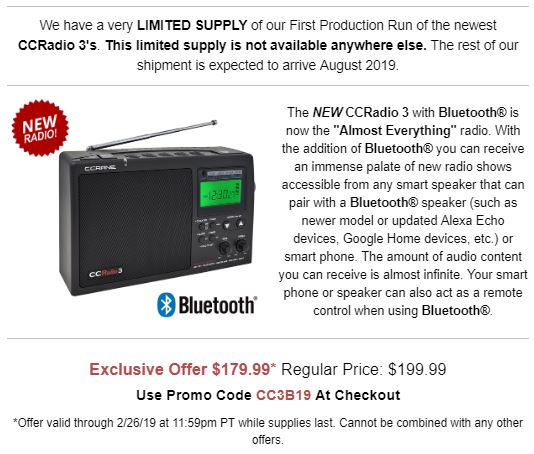
So now, finally, I can break my silence to inform you all about this latest iteration of the venerable CCRadio. And, indeed, I have a lot to tell…
CCRadio3 Preview
What follows is a preview of the CCRadio3 based on my time with the pre-production unit. I will not refer to this as a “review” of the CCRadio3, since this is a pre-production unit. I’ll obtain a first production run unit when available and post a full review at that time.
In the meantime…here are some of my impressions based on the pre-production unit, organized by feature.
Bluetooth
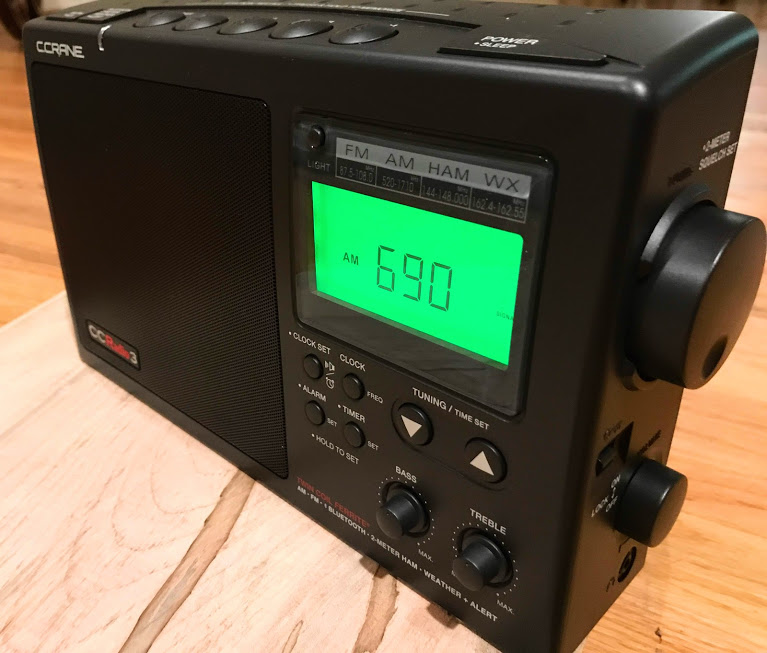
What’s new with the CCRadio3? The major upgrade is the addition of Bluetooth connectivity. In fact, that’s the only obvious upgrade other than the fact you can now toggle between AM/FM band rather than scroll through all the bands on one band button.
With Bluetooth connectivity, you can pair with your smart phone, tablet, laptop, PC or any other Bluetooth device, and use the CCRadio3 as your Bluetooth speaker.
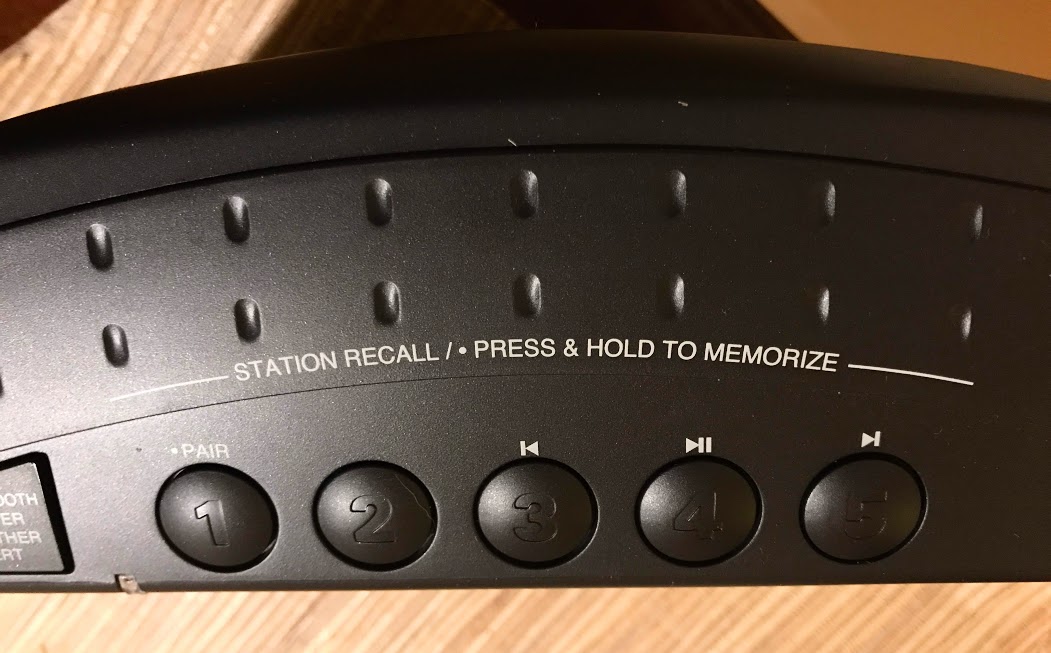
How many radios do you know that include simple operation instructions on the chassis? Very simple.
The pairing is incredibly simple and Bluetooth connectivity most impressive. I find that no matter where I go in my house, the CCRadio3 maintains a solid Bluetooth connection with my iPhone. Most of my other Bluetooth devices will lose connectivity if I put a couple walls between my iPhone and the receiver, but not the CCRadio3.
Audio
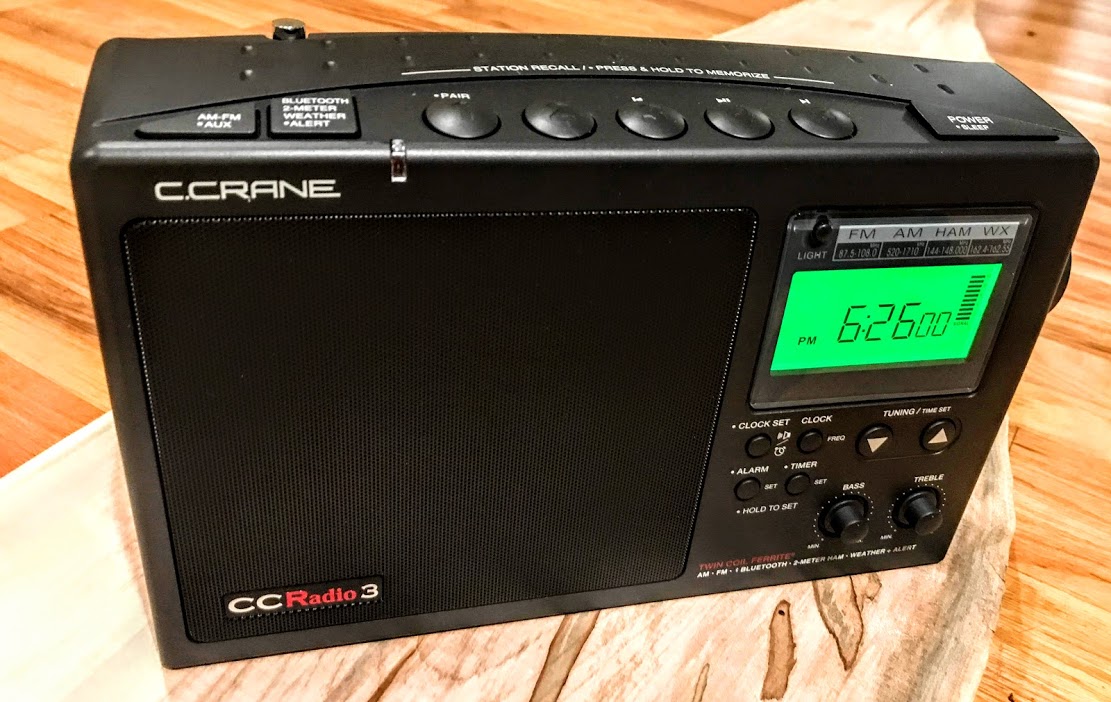
The internal speaker on the CCRadio3 provides room-filling audio with clear, rich fidelity. The separate bass and treble controls do help tailor the sound based on the audio source. It reproduces music brilliantly in FM and Bluetooth modes.
2 Meter Ham Radio Band
One unique feature of the CCRadio series is 2 meter ham band reception. This is a great way to monitor local amateur radio repeater traffic.
In truth, I’ve spent comparatively little time with the CCRadio3 on 2 meters thus far, having focused instead on the AM/FM and WX bands, but I have verified that I can receive local repeaters and the squelch functionality is quite effective.
I’ll spend more time on this band in my upcoming full review.
Weather Radio (WX) Band
The CCRadio3 can receive all seven NOAA/Environment Canada radio frequencies.
And here’s something that really surprised me: this pre-production CCRadio3 has the best weather radio reception of any radio I’ve ever tested to date. Normally, at my home, I can receive two NOAA stations with the average weather radio. The best of my weather radio receivers might hear a total of three. The CCRadio3, with antenna fully-extended, can receive five NOAA stations! I can almost WX DX with this rig!
I’m so pleased C. Crane places an emphasis on WX band performance. Their CC Skywave and CC Skywave SSB also have best-in-class weather radio reception.
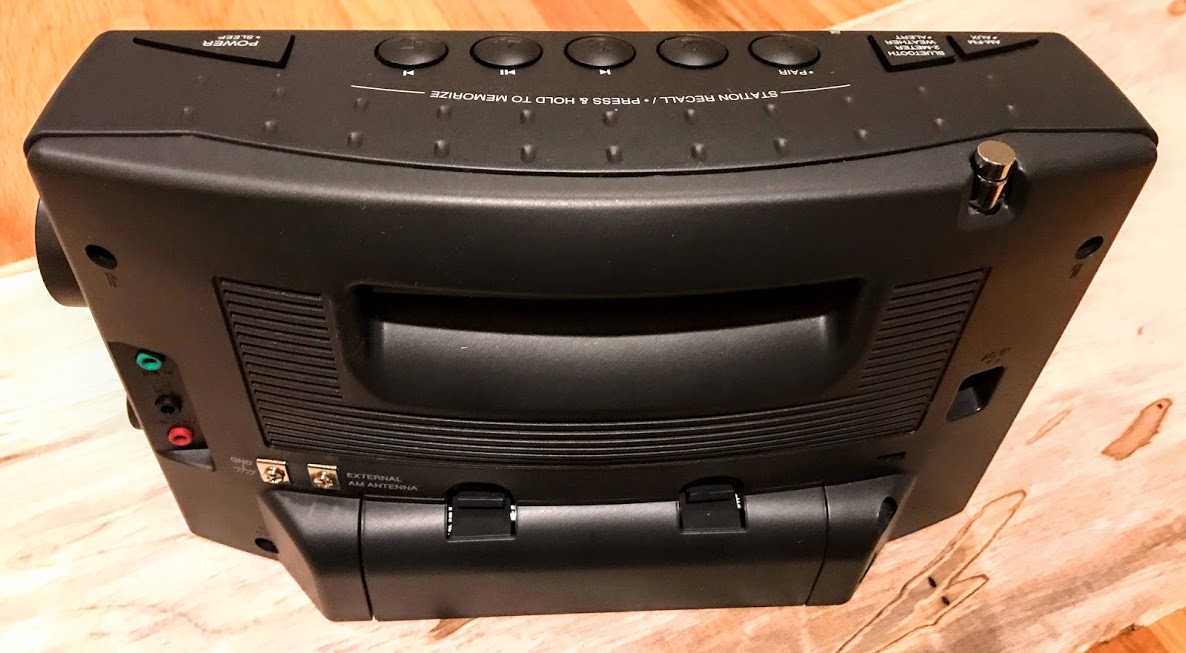
Like the CCRadio2E, the grab handle is built into the back of the radio.
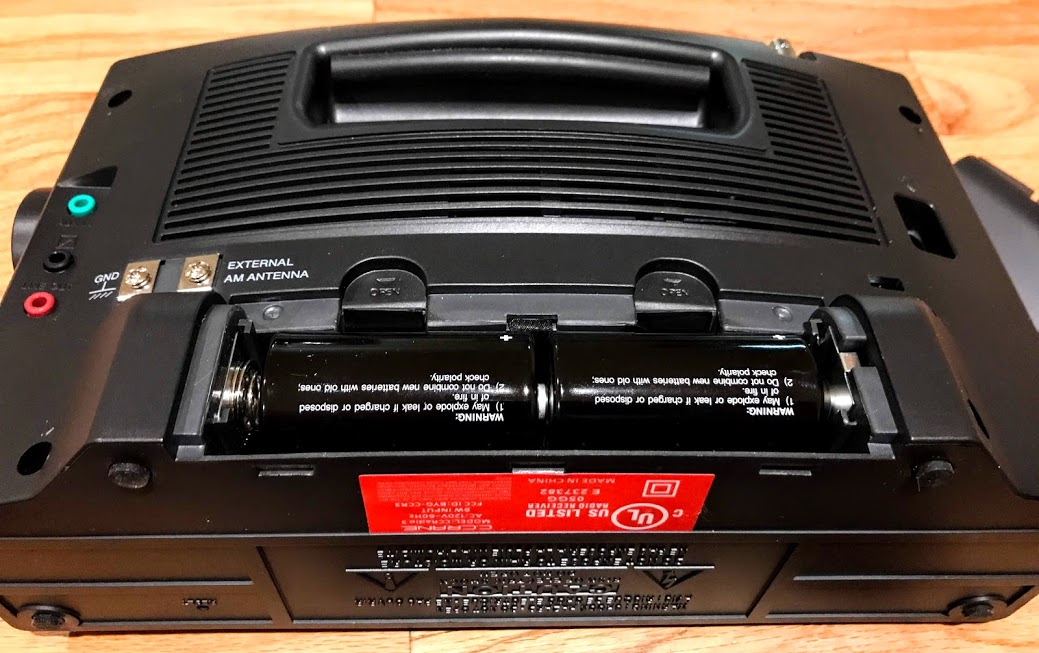
The CCRadio3 uses four D cells for battery operation which should yield about 120 hours of AM broadcast listening at moderate volume.
FM
Thus far I’m very pleased with FM performance. I’ve noted that the CCRadio3 receives all of my local and distant benchmark stations with ease. I believe it would certainly be an FM benchmark receiver. As I mentioned earlier, audio fidelity is excellent via the internal speaker.
AM/Mediumwave
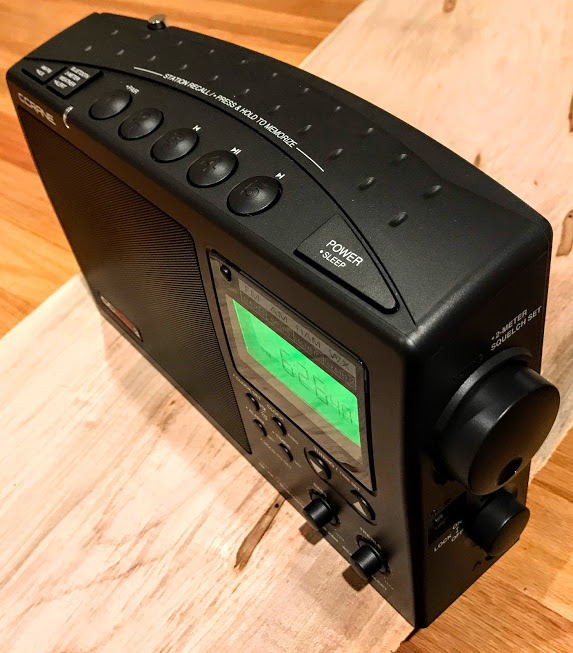
I consider the CCradio3’s predecessor––the CCRadio2E––to be one of the finest AM broadcasting listening portables currently in production. I’ll admit that when I heard the CCRadio3 added Bluetooth, I feared somehow that would equate to possible noise somewhere in the audio chain…Fortunately, this fear was entirely unfounded. In fact, looking at the CCRadio3 announcement, I note that C. Crane took this concern seriously:
“The CCRadio 3 is one of the few high-performance radios with Bluetooth® that has no detectable noise and some of the best reception available.”
When I first turned on the CCRadio3 and tuned to the AM band, I did what I always do when testing mediumwave performance: In the early morning, as the sun was rising (i.e., grey line propagation), I tried to pull my benchmark station––WAIZ, a 1,000 watt station about 95 miles away as the crow flies––out of the muddle. The CCRadio3 was able to do it; in fact, I could hear the station’s morning crew doing their “Wacky Wake-Up” shenanigans. Turning the radio body, I also gathered, rather quickly, that the CCRadio3’s Twin Coil Ferrite Bar antenna does an excellent job of nulling out unwanted stations.
An impressive start of the evaluation.
Comparing the CCRadio3 with Panny RF-2200
Looking around SWLing Post HQ, I picked up my recently re-capped and refurbished Panasonic RF-2200. I wanted to see how the CCRadio3 would stack up against what I consider one the finest AM broadcast portables ever produced…

I’ve tested the CCRadio3 and ‘2200 at various locations––in the morning, midday, and at night––and can say that not only does the CCRadio3 give the RF-2200 a run for its money, but it even outperforms the RF-2200 at times, in terms of weak station intelligibility.
In fact, I think the CCRadio3 may possibly have a very slight edge on the RF-2200 in terms of sensitivity, as well.
However, note that there are two factors that make this comparison a tough call:
- First of all, I find that the RF-2200’s AGC is smoother than that of the CCRadio3––the peaks and dips in audio are not as strong when listening through AM flutter. Most of the time, this makes it a little easier for me to discern weak signal audio. I believe the CCRadio3’s AGC and soft mute may be making the troughs in AGC a little deeper, as well. It would be amazing if C. Crane could allow users to disable soft mute like recent Sangean models have.
- Secondly, the RF-2200 has two AM bandwidth settings: narrow and wide. I almost always use the RF-2200 with the wide bandwidth setting. I find the narrow filter is a little too narrow unless I need it to block an adjacent signal. In general, I use wider AM filter settings than many DXers because I find that the filter between my ears does a better job of discerning signals with a little more audio information.
The CCRadio3 has only one bandwidth. I’m guessing––based purely on my listening experience––that it’s 4 to 6 kHz in width. (I’ll try to confirm this with C. Crane). Obviously this is narrower than the RF-2200’s wide filter. In side-by-side comparisons, the RF-2200’s AM fidelity therefore sounds much richer, especially when music is involved.
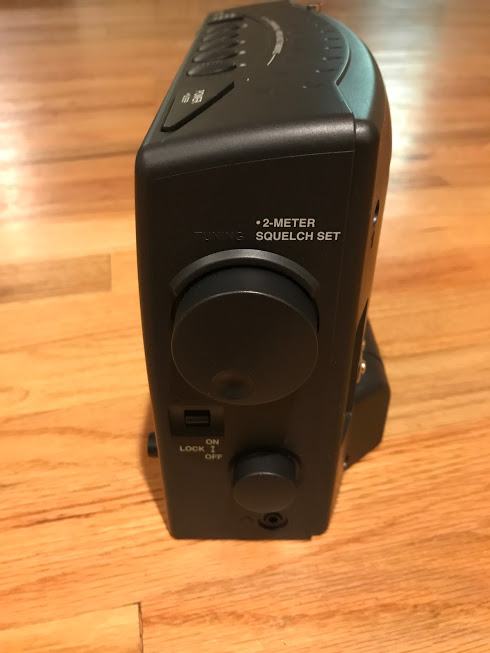
That this is so really shouldn’t be a surprise, as the Radio3 and its predecessors were designed around spoken word intelligibility––in other words, making it easy for the listener to understand what’s being said. And, frankly, it works. Most of the time, I find that the CCRadio3 does a better job of making weak signals “pop” out of the static. It’s a little easier catching weak signal station IDs with the CCRadio3, even if you have to listen through a more active AGC/soft mute tug.
So…is the CCRadio3 (at least, this pre-production unit) better than the RF-2200 at weak signal DXing? In some respects, yes. In others, not quite. Yet the fact that it can even compare with the RF-2200 speaks volumes…no pun intended. I would have never guessed that it would have a sensitivity edge on the RF-2200.
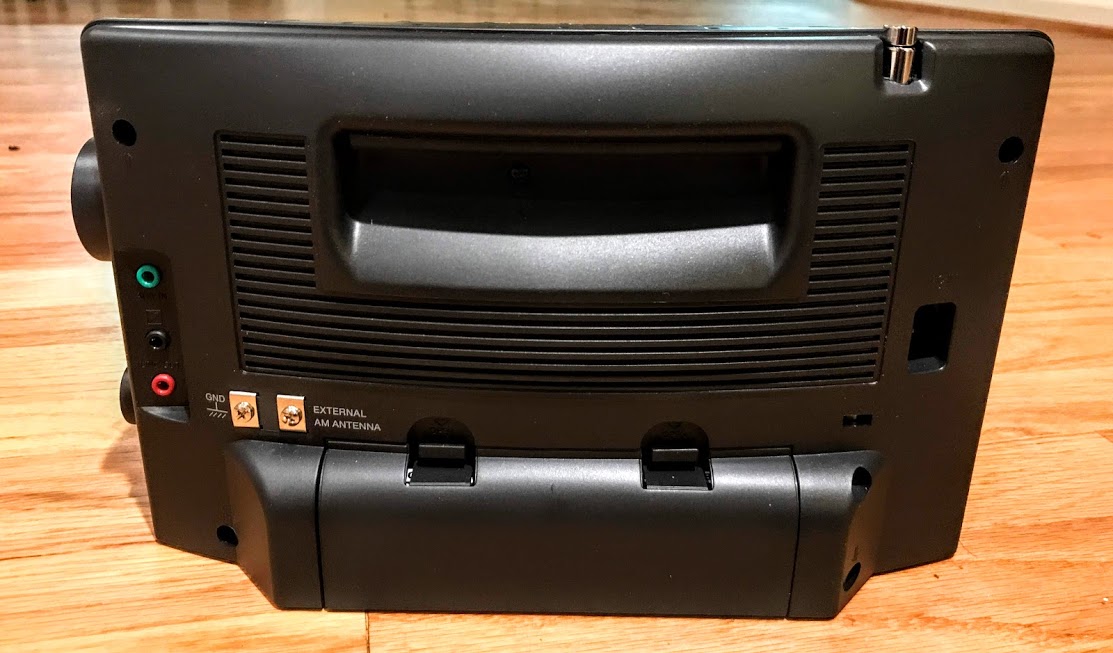
Of course, the CCRadio3 has both AM antenna and ground terminals.
I made a few early afternoon videos comparing the CCRadio3 with the RF-2200. In the first video, I’m tuned to a station approximately 20-25 miles away. You’ll note how the RF-2200’s audio fidelity, with the wide filter engaged, is hard to match:
Click here to view on YouTube.
In the second video, I’m tuned to 1290 AM (WHKY), a 50,000 watt station about 95 miles away. [Note that I erroneously give an inaccurate mileage figure in this video; not sure what I was thinking! Sorry about that, folks.]
Click here to view on YouTube.
In the third video, I’m tuned to 630 AM (WAIZ), again, a 1000 watt station about 100 miles away. As you can imagine, it’s very weak and both radios struggle to receive any intelligible audio through the ocean waves of fluttering radio jumble. [Again, please ignore the distance I give in the video; this station is actually a little over 95 miles away.]
Click here to view on YouTube.
I also did a late afternoon comparison video around sunset using one of my favorite AM radio stations ever: CFZM in Toronto–about 980 miles distant. Here’s the video:
Click here to view on YouTube.
In these video comparisons, the radios are nearly side-by-side. I found this had little to no effect on reception. When comparing these radios off camera, I had them spaced at least 40″ apart and always, of course, oriented the antennas identically.
Conclusion
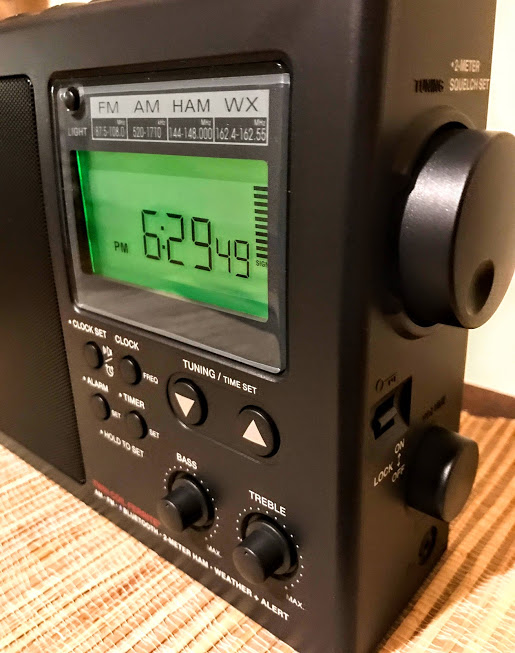
Again, this is merely a preview of the pre-production unit of the CCRadio3. I thought I’d touch on reception and a few of the key points that might help some of the CCRadio3’s early adopters make a purchase decision. I have yet to do testing with headphones or external antennas and still wish to compare it with even more radios, to make my review as thorough as I’d like.
And I’m really looking forward to reviewing the production unit of the CCRadio3, because this pre-production receiver has certainly surpassed my expectations!
This latest iteration of the CCRadio should remain king of AM radio reception, compared with any other portable radio currently in production.
C. Crane has announced that they have a very limited number of first-production-run units available for order right now. If you order one, use the coupon code CC3B19 at checkout, so that, as the above ad suggests, you can snag it for $179.00–$20 off the future retail price. I suspect this first run will sell out fast.
Click here to check out the CCRadio3 product/order page.
Eager for the full review of the C. Crane CCRadio3? Stay tuned!
Do you enjoy the SWLing Post?
Please consider supporting us via Patreon or our good old Coffee Fund!
Your support makes articles like this one possible. Thank you!