Category Archives: Nostalgia

Video: Tour of RNW operations van and interview with Niels Zack

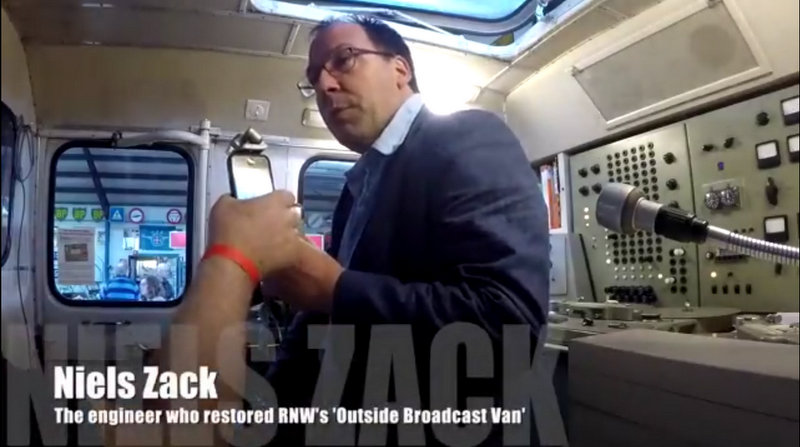
ShortwaveService has uploaded the following video (to YouTube) which features the RNW Operations Van used in the recent 70th anniversary broadcast.

The video includes a tour of the van, the setup used in the 70th anniversary broadcast and an extended interview with Niels Zack, who restored the operations van:

Click here to view on YouTube.

I listened to at least an hour of the Saturday broadcast via the U Twente WebSDR. Sadly, I just discovered the audio dropped about 2 minutes into my recording.

Post readers: Anyone else listen to, record or simply log this anniversary broadcast? Please comment!

Photos of a B-17G Radio Operator Position

I had the pleasure of visiting the Champaign Aviation Museum recently and examining their under-restoration B-17G, “Champaign Lady”. Actually, the term “under-restoration” is incorrect. In actuality, the Champaign Aviation Museum is effectively building their B-17G nearly from scratch—quite an undertaking but one that the volunteers are performing skillfully and enthusiastically.

Being an amateur radio operator, shortwave listener, and would-be WWII-radio restorer, I was was pleased to see that Champaign Lady already has a nearly-complete radio-operator position installed, between the bomb-bay and the waist-gun section of the airplane. As a B-17G would have had during the war, Champaign Lady features a BC-348 liaison receiver and morse-code key mounted on a desk on the port (left) side of the bomber and a stack of AM/CW Command Set transmitters and receivers racked on the starboard (right) side of the bomber. In the photos, the top Command Set boxes are the transmitters and the bottom three Command Set boxes are the receivers. Of course, the BC-348 and the Command Set transmitters and receivers are fully tube-type, semiconductors having not yet been invented. During the war speedometer-type cables would connect the Command Set receivers to controls in the cockpit, allowing the pilot and co-pilot to control the Command Set receiver frequencies; electrical cables would have carried the receivers’ audio to the pilot and co-pilot and would have allowed them to change volume-level. The radio operator could transmit using the Command Set transmitters and could also switch the pilot or co-pilot intercom microphones to any of the Command Set transmitters to allow the pilot or co-pilot to broadcast to other bombers in the formation.
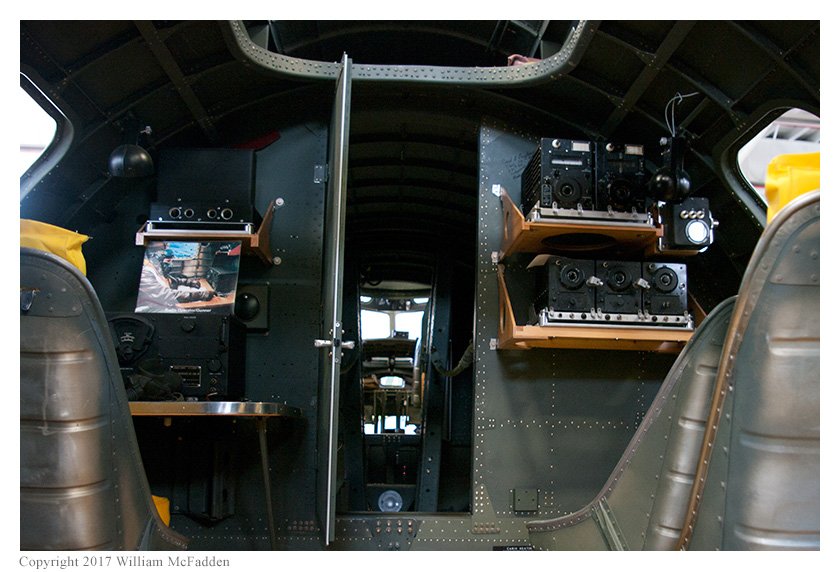
"Champaign Lady" radio operator position

B-17G “Champaign Lady” radio operator position; BC-348 liaison receiver on the port (left) side and Command Set transmitters and receivers on the starboard (right) side.
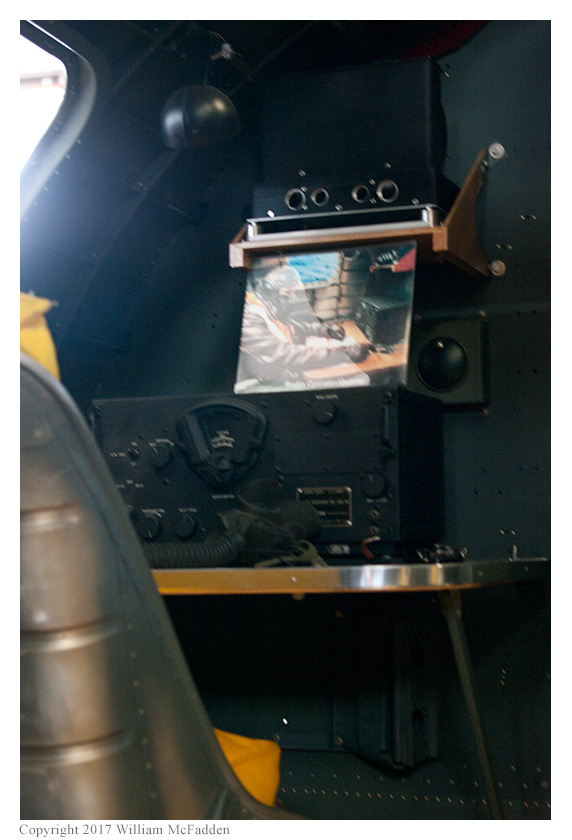
"Champaign Lady" BC-348 receiver

B-17G “Champaign Lady” BC-348 liaison receiver and morse-code key.
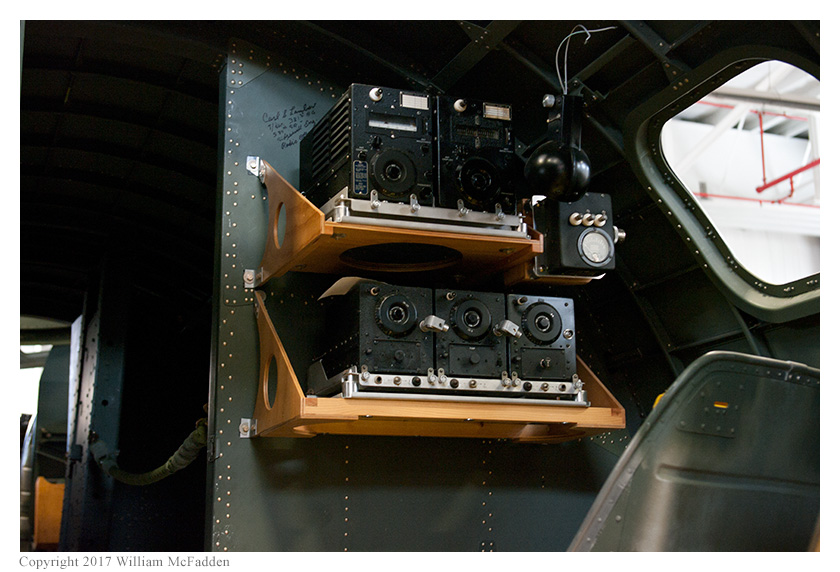
"Champaign Lady" Command Set transmitters and receivers

B-17G “Champaign Lady” Command Set transmitters and receivers on the starboard side of the radio room

During the war, the B-17G radio operator was an enlisted man, typically a sergeant or higher in rank. If in an earlier version of the B-17G, the radio operator was also responsible for manning a .50 caliber machine gun located in his section of the airplane. In all versions of the B-17G, the radio operator assisted the navigator by providing position reports based on radio fixes of beacons or radio stations. Additional information about the role of the B-17G radio operator can be found on the B-17 Queen of the Sky website.

And, for those interested, here is what Champaign Lady’s nose-art looks like:
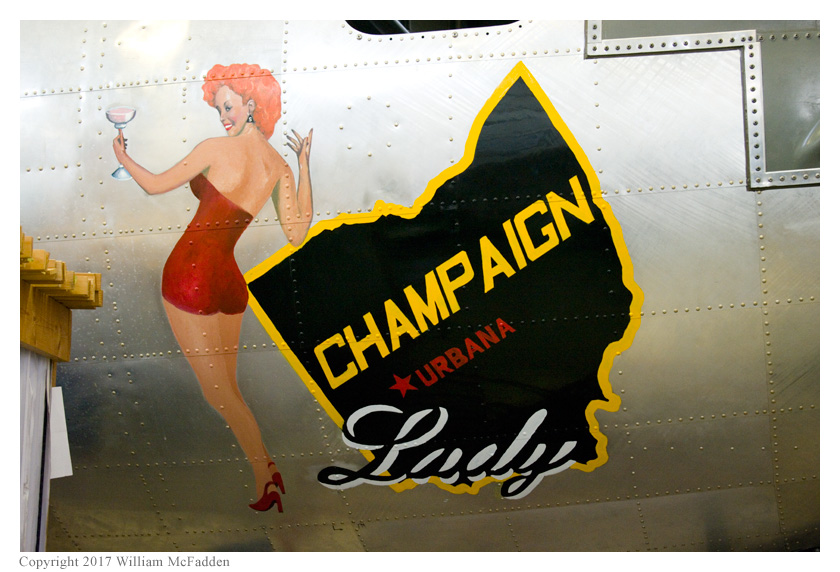
B-17G "Champaign Lady" nose-art

B-17G “Champaign Lady” nose-art, starboard side; the port side features a mirror-image version of the same design

The Champaign Aviation Museum has a beautifully restored B-25J, “Champaign Gal”, in flying condition. Unfortunately, I’ve not been able to see if Champaign Gal features a restored radio operator position.

I have a BC-224, which is the 12-volt version of the BC-348 liaison receiver to put back into service as well as a BC-696A Command Set transmitter that I hope to eventually put back onto the air in the 80-meter amateur band. It would be wonderful if I had a B-17G in which to install these items—or even just room to build a replica B-17G radio operator position!

73,

Eric McFadden, WD8RIF
http://wd8rif.com/radio.htm

Pristine Condition Braun T-1000 Receiver Appears on Ebay

The German industrial designer Dieter Rams is world renowned for his beautiful and functional product designs, including the Braun T-1000 portable receiver.

These fine, collectable receivers appear on Ebay regularly, but this one is in pristine shape:

The asking price is a cool $1,800 USD, but for the near mint condition of this T-1000 it is likely appropriate; perhaps the new owner will acquire it for a “Best Offer” price. Other T-1000s on Ebay currently are priced from $370 to $1,299.

Of course, the cost is in-line with a collectable value; functionally, it’s reception abilities are almost certainly surpassed by a modestly priced SDRPlay RSP1 or a vintage Sony ICF-2010 for instance. The radio aficionado interested in the 55 year old T-1000 is not expecting best-in-class reception, but the chance to own a recognized icon of industrial design (the T-1000 is in NYC’s Museum of Modern Art’s permanent collection).

Click here for the Ebay auction of the Braun T-1000: http://www.ebay.com/itm/BRAUN-T1000-GERMAN-GRUNDIG-SATELLIT-LIKE-SW-TRANSISTOR-RADIO-NEAR-MINT-/201891688853

Guy Atkins is a Sr. Graphic Designer for T-Mobile and lives near Seattle, Washington.  He’s a regular contributor to the SWLing Post.

One vintage radio in two classic films

Many thanks to SWLing Post contributor, Dan Hawkins, who writes:

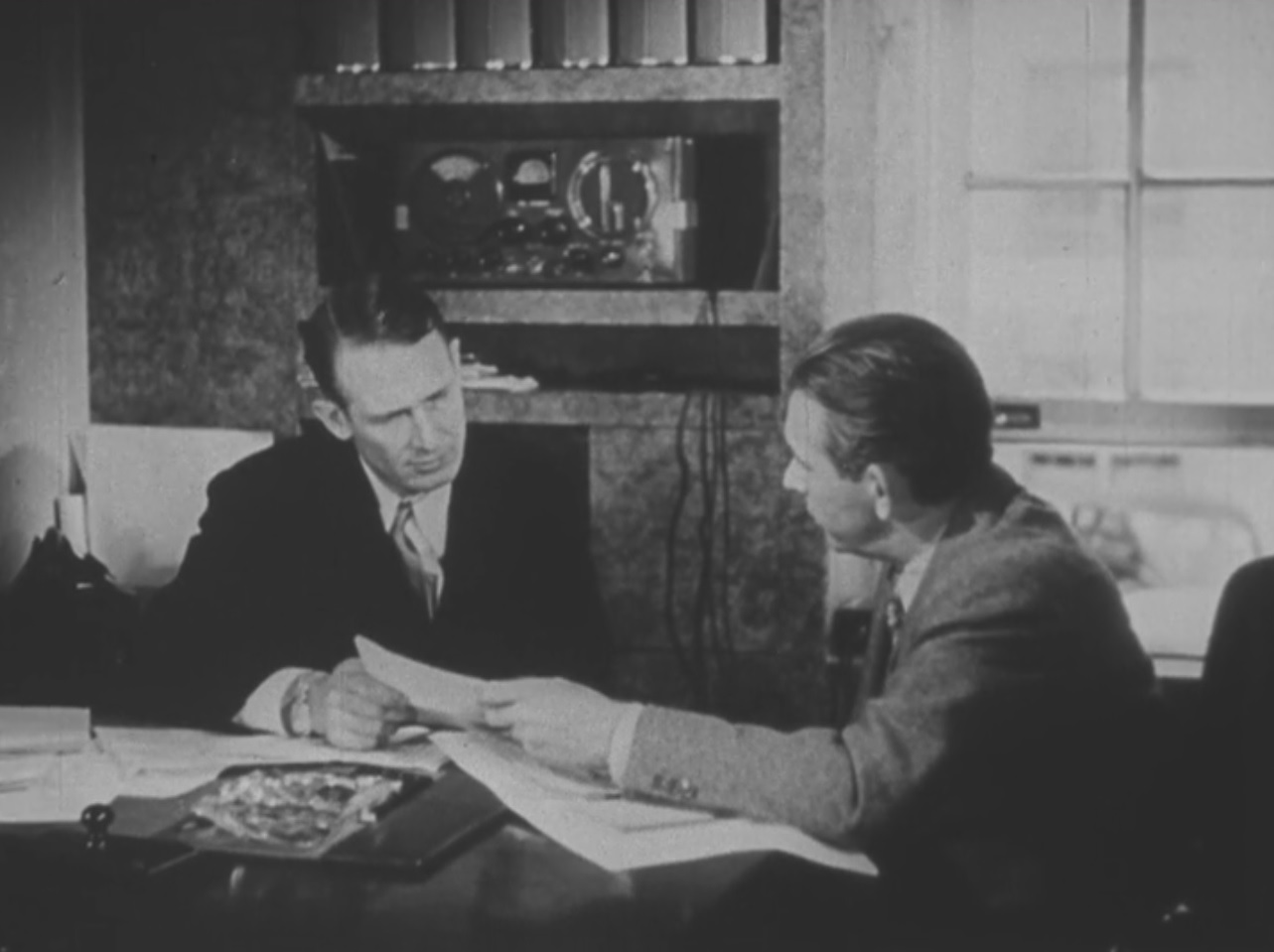
This evening I watched the excellent Undercover: How to Operate Behind Enemy Lines on Netflix streaming. This is a 1943 training film for Office of Strategic Services personnel learning how be secret agents. The film was directed by the legendary John Ford who also took an acting role in the film. In this scene, Al is receiving his forged papers from an OSS agent before leaving for Germany. A radio may seen on a shelf in the background.

Undercover: How to Operate Behind Enemy Lines is also available on YouTube:

Click here to view on YouTube.

The next film is much better known. The same model radio makes a foreground appearance in Some Like it Hot. Osgood Fielding III has one of these on his yacht.

Maybe Osgood is laughing because the film takes place in 1929 and the company that made the radio was founded several years later.

I won’t spoil the secret of this radio’s maker and model. It will probably not take long for SWLing Post readers to come up with an answer.

Post readers: are you up for the challenge? 🙂 What model of radio do we see here? I’ll keep quiet, because it’s one of my favorite manufacturers.

And, Dan, many thanks. I really do owe you one because I was not familiar with Undercover: How to Operate Behind Enemy Lines. I can’t believe there was a WWII era Ford film I had missed. I, too, have Netflix but the YouTube copy you suggested is actually a better restored version in terms of audio.  Thanks again!

RNW: Video of Flevoland Shortwave station

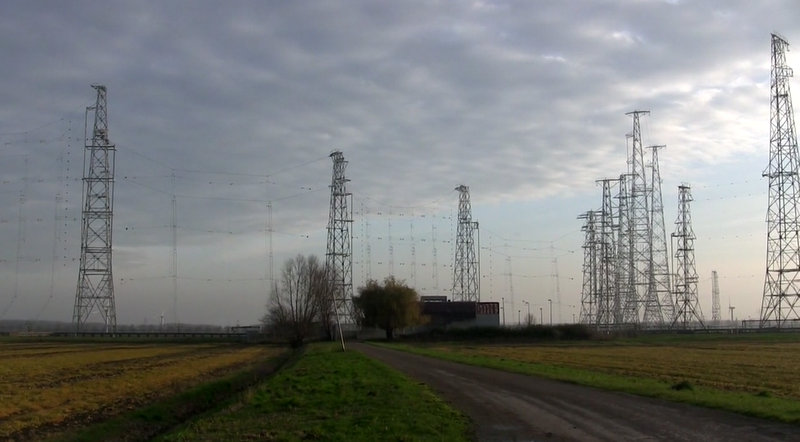
Screenshot from Peter Veenendaal’s video of the RNW Flevo shortwave station

Many thanks to SWLing Post contributor, Peter Veenendaal, who shares the following video and notes:

I am a former employee of Radio Netherlands Worldwide, which stopped broadcasting exactly 5 years ago next May.

Three years ago I made this short video of the Flevoland Shortwave station RNW used until 2007. It’s still there, idle and hoping for better times.

Click here to watch on Vimeo–All rights Peter Veenendaal.

Many thanks, Peter–most impressive! The magnitude of those curtain antennas is simply amazing. Thank you for sharing.

Symposium marking the 90th anniversary of international radio broadcasting in the Netherlands

Many thanks to SWLing Post contributor, Jonathan Marks, who shares the following details about the ‘Keep in touch with the Dutch’: Symposium marking the ninetieth anniversary of international radio broadcasting in the Netherlands, 1927-2017:

(Source: Historici.nl via Jonathan Marks)

‘Keep in touch with the Dutch’:

Symposium marking the ninetieth anniversary of international radio broadcasting in the Netherlands, 1927-2017

Thursday 1 June 2017, 2-5pm

Doelenzaal, Singel 425 Amsterdam

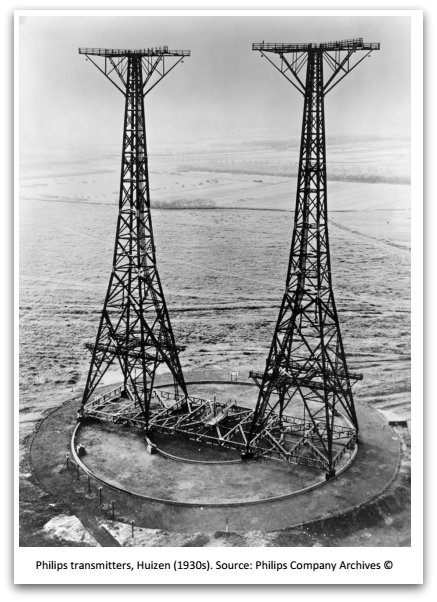
On 1 June 1927 Queen Wilhelmina officially inaugurated international radio broadcasting from the Netherlands with a speech to listeners in the Dutch colonies. This transmission attracted attention from all over the world as it was one of the first times that sound had been transmitted via radio waves across such a distance. In the decades that followed Dutch radio-makers continued to play a pioneering role in international broadcasting, experimenting with new technologies and programming formats. This symposium aims to highlight several themes from this rich history and explore source-materials in order to think about a research agenda in this field and new broadcasting techniques in the digital age.

Program

  • 2.00-2.15pm: Vincent Kuitenbrouwer (University of Amsterdam)
    Introduction
  • 2.15-2.45pm: Bas Agterberg (Beeld en Geluid)
    Everybody Happy? Archiving RNW and the Heritage of Eddy Startz at Sound and Vision
  • 2.45-3.00pm: break
  • 3.00-3.30pm: Jonathan Marks (CEO Critical Distance)
    International Radio Broadcasting in the Era of Amazon Echo
  • 3.30-4.00pm: Rocus de Joode (Independent Consultant at JRCC)
    The Importance of Shortwave, the Madagascar Relay station Now and Then
  • 4.00-4.15pm: break
  • 4.15-5.00pm: Panel: International radio in the digital age
    – Alec Badenoch (University of Utrecht/Vrije Universiteit): Radio Garden
    – Leon Willems and Suzanne Bakker (Free Press Unlimited): Radio Dabanga
  • 5.00-6.00pm: drinks reception

Please register

Vincent Kuitenbrouwer, History Department, University of Amsterdam
Email: [email protected]

This symposium is sponsored by the Amsterdam School of Historical Studies (ASH) and the Modern History Research Group

If I lived within a reasonable distance of Amsterdam, I would certainly attend this afternoon symposium.  Impressive line-up!

Thank you for sharing, Jonathan!

A Radio Laser 558 revival

Many thanks to SWLing Post contributor, Dave Porter, who writes:

Radio Laser aka Laser 558 was an 80’s pirate station off the coat of England. Looks like one of the main movers is hosting a revival.

Dave shared the following email from Laser 558:

7 April 2017

Dear David,

Hopefully you have now had chance to read through Radio Adventures of the Communicator book? I hope you enjoyed reading and it was informative? I am interested to hear any comments, questions or suggestions you might have.

There is still considerable mileage in the Laser brand – hobby pirates using the Laser brand enjoy considerable success.
You don’t need me to tell you how successful Laser was. Few of us in the 1980s thought the memories would last so long, yet hundreds have bought my recent books about Laser, and many would like to work on a new Laser project. Maybe it’s because interest in 80s music has never been higher, or maybe deep down, everyone wants to be a pirate, even if only at weekends!

Our project is to Relaunch Laser
I’ve joined with other broadcast professionals to relaunch the Laser project from a ship. We believe that a reborn Laser venture would be economically viable, and it will be fun and exciting as well as profitable. A “little bit of naughtiness” invariably gives a project a whiff of extra desirability, it attracts more interest from anyone with a freedom-loving rebellious streak. The original Laser team and I were already aware of this when planning the station in 1983 and that basic tenet is just as true today. This is however 100% legal.

I felt that you would want to be involved and not miss this wonderful opportunity. The chance of a lifetime to be part of an exciting fun project. YOU could be working with experienced Laser engineers and some of her best known DJs. This is a golden opportunity to be a part of a radio venture on board a ship; one that the public can visit and get enthusiastic about.

The Pirate Ship
Our ship is chartered, licensed and insured for the public to visit and can berth in any of five dozen harbours and docks around the UK. Both radio and TV studios are being constructed on board along with a public performance area. With on board dining facilities, it means our audience can join us to experience life on board and enjoy a live performance by one of the artists recording that week. As well as recording facilities we are offering the ship for filming, just like the Radio Veronica ship in Amsterdam. The ship will be the main location for a feature length movie to be shot on board which the producers hope to expand into a TV series; we’ve seen some scripts and it’s very exciting. Members of our team may even be seen on screen!

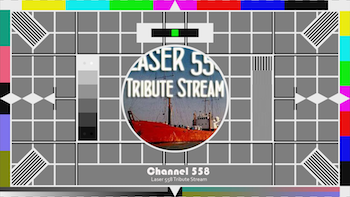
This project is much more than just a radio station. We have been testing a Laser Tribute stream for some time and more recently our Laser TV Channel 558 has been streaming too. This will have both live and pre-recorded programmes. The music and videos showing on our ‘test transmissions’ now are taken from genuine 1980s Laser discs; we have a very wide library of all the hits from the era, and more, but Channel 558 will be more than just 80s. You can watch CHANNEL 558 right now on your computer or a smartphone – just click here or the test card at the top of this page. (some interesting adverts at :15 and :45!)

EVENTS
We’re currently lining up special events to publicise both the Pirate Ship and the radio brands:
Live Laser Lover Road Shows from various indoor and outdoor locations.
Laser Weekends at a UK Holiday Camp.
Laser Party Nights live from the radio ship each weekend.
BROADCAST EXPANSION
Programmes will be made available to local radio stations for rebroadcast, perhaps overnight. A DCMS consultation exercise currently taking place is expected to remove the restrictions on networking, which will substantially expand the possibilities of our daytime shows also being carried on other stations.

Our radio programmes will also be made available to the new local DAB muxes and we may take a channel on the national DAB, if reasonable terms can be agreed.

GOING FORWARD
What need to expand our team to include more help to help us relaunch LASER in some style and carry our plans out in full. The opportunities for this project are limitless, and this time around, its all legal! This exciting new opportunity is a metamorphosis of pirate radio into a legitimate and even more enjoyable operation; using today’s technology and communications capabilities, with a tried and tested brand identity.

News will be published HERE when we are ready to release it. I’m sure that you would like to be involved in what will be the most fun-packed radio party ever. If you confirm that you really ARE interested and we can take things from there.

Hope to hear further from you,

Best 73
Paul Rusling
Email: [email protected]

Many thanks, Dave, for sharing the news. Sounds like Laser 558 has some ambitious goals ahead!  Pretty amazing. We’ll continue to follow their progress.