Category Archives: Nostalgia

Looking for SWLing Post gear? We’ve got you covered!

Over the years, readers have often encouraged me to create SWLing Post shortwave radio-themed products, which is to say, t-shirts, coffee mugs, and the like. But for some reason, I’ve never gotten around to it.

That is, until now…
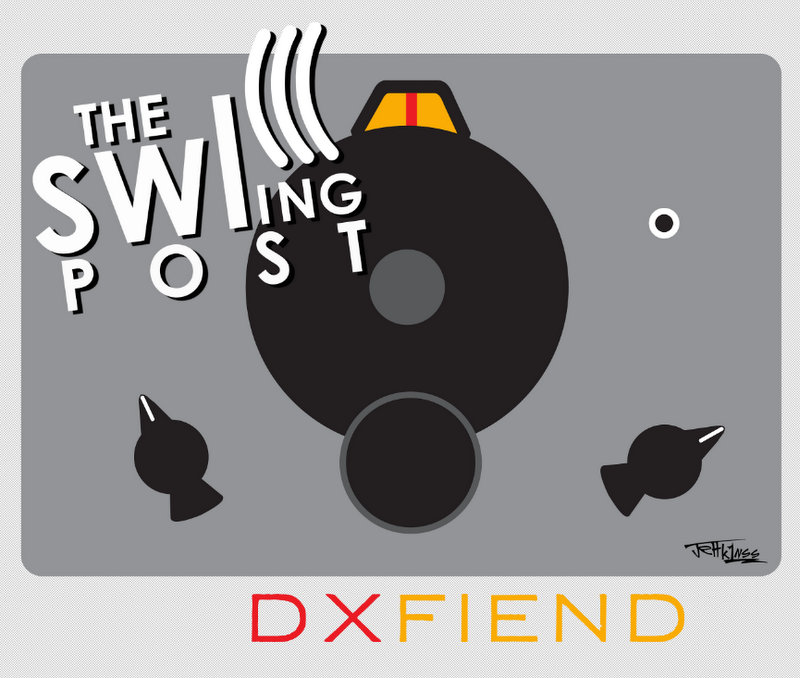
SWLingPost-DXFiend-Vintage-Front

What finally motivated me to create these items is a friendship:  I’m fortunate to number among my friends the amazingly talented Jeff Murray (K1NSS) of Dashtoons.  It occurred to me that I might commission Jeff to design some shortwave radio-themed graphics that represent the broad spectrum of radio enthusiasts here on the SWLing Post. Jeff, ever enthusiastic where radio is concerned, was the perfect artist for the job–particularly since he and I see eye-to-eye on the beauty of both radio innovations and radio nostalgia.  And with Jeff’s quirky sense of humor to enliven his sharp, dapper graphics, the great results you see here were simply inevitable.
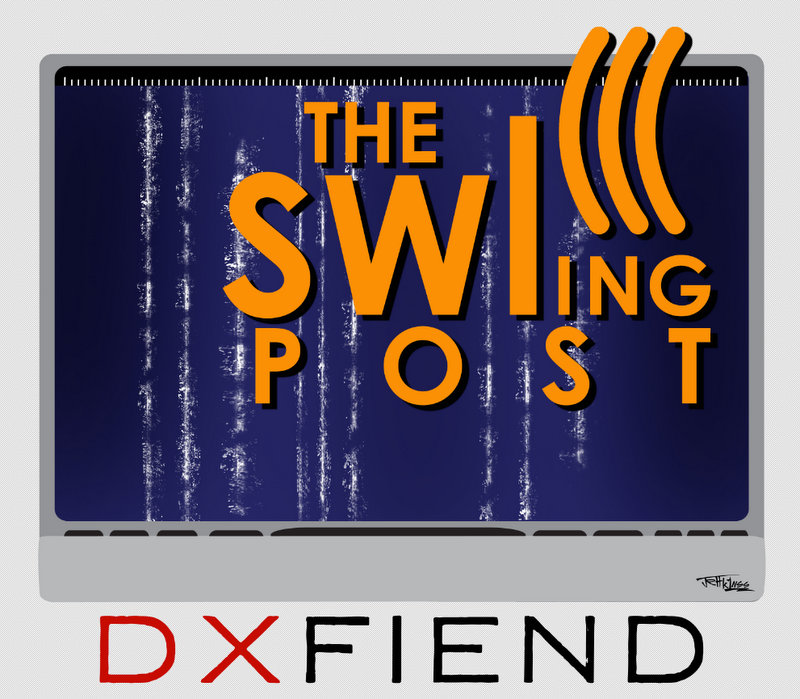
SWLingPost-DXFiend-SDR-Front

Of course, his pictures speak louder than my words.  As I’ve said, Jeff’s clearly a graphic artist par excellence, and it certainly doesn’t hurt that he really knows radio–inside and out.

SWLingPost-DXFiend-Vintage-Back

While he was at it, Jeff created an SWLing Post logo that will soon accompany a refreshed Post design I’ve had in the works…stay tuned for that as the new year approaches.

SWLing-Post-Women's-T-shirtIn the meantime, I thought I’d share a link to a simple CafePress webstore I’ve put together for our newly-minted swag.

Click here to view great SWLing Post gear.

So far we only have a few select items on offer, but I’ll soon be adding more. But we do have two great t-shirt and coffee mug designs available now:  the Radio Waterfall design features the SWLing Post logo superimposed over a blue SDR waterfall, with the words “DX FIEND” emblazoned beneath; the Radio Nostalgia design features the above vintage-style radio image, with”DX FIEND” beneath, and the “SECRET WORLD” image on the back. Take it from me, they look great.

Let me know if there’s something in the CafePress catalog you’d like to own featuring Jeff Murray’s terrific radio art, and I may be able to put it out there for you.

SWLingPost-Shirt-FrontOh, and by the way–a small percentage of your purchase (typically between $2.00-4.00US) goes towards keeping the SWLing Post online. The rest of the cost goes to CafePress’ product base price. True, I doubt we’ll ever sell enough to break even this way, but who cares…! After all, I do all this for fun, not profit.

Plus I confess to a little personal motivation: I really wanted a Jeff Murray-designed mug for my own cuppa joe!

The great thing about CafePress–although slightly pricey for some items–is that they offer great products, great customer service, and a no-questions-asked return policy. I like that.
large_mug_sdr_waterfall_mugsSo, if you take a leap of faith and purchase one of our items, please comment and let me know how you like it!

Side note: If you ever need amazing custom artwork for your QSL cards, your company, or your shack, I highly recommend Jeff Murray. He worked with me over the course of a week to nail down these incredible designs, and wowed me with his powerful creativity every step of the way.  It was worth every single penny and more, and an honor to work with him, which is why I hope to have him create even more artwork next year! Thanks, Jeff!

And thanks to our Post readers for your purchase!  Go ahead–join me in a hot cuppa!
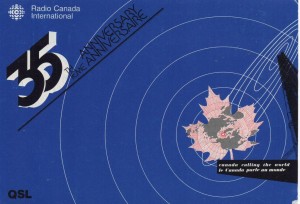
1989 RCI Christmas Special: a studio recording

UK-DXer-RCI-QSLMany thanks to Colin Newell who writes:

Over on the DXer.ca homepage I have a 32kbps MP3 recording on a CBC RCI broadcast that has not been heard since December 1989! A 1 hour program from the Reel-Reel master that Ian McFarland owns.

Head on over – download for free –

And Merry Christmas!

What a great early Christmas gift for those of us who miss the Ian McFarland days of RCI.  Thank you, Colin!

Click here to visit DXer.ca.

eBay find: Mullard Meteor 600A

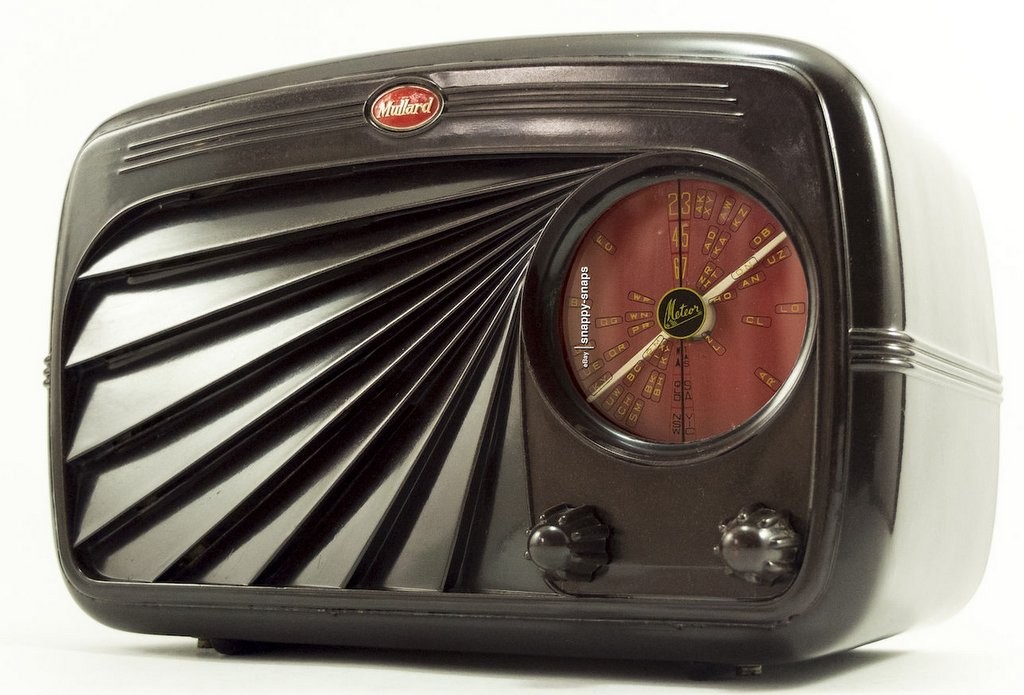
Mullard-Tube-Radio-Bakelite-1Many thanks to SWLing Post reader, Monti, who knows that I have a serious affinity for 1940s era receivers. Monti writes from his home in Australia:
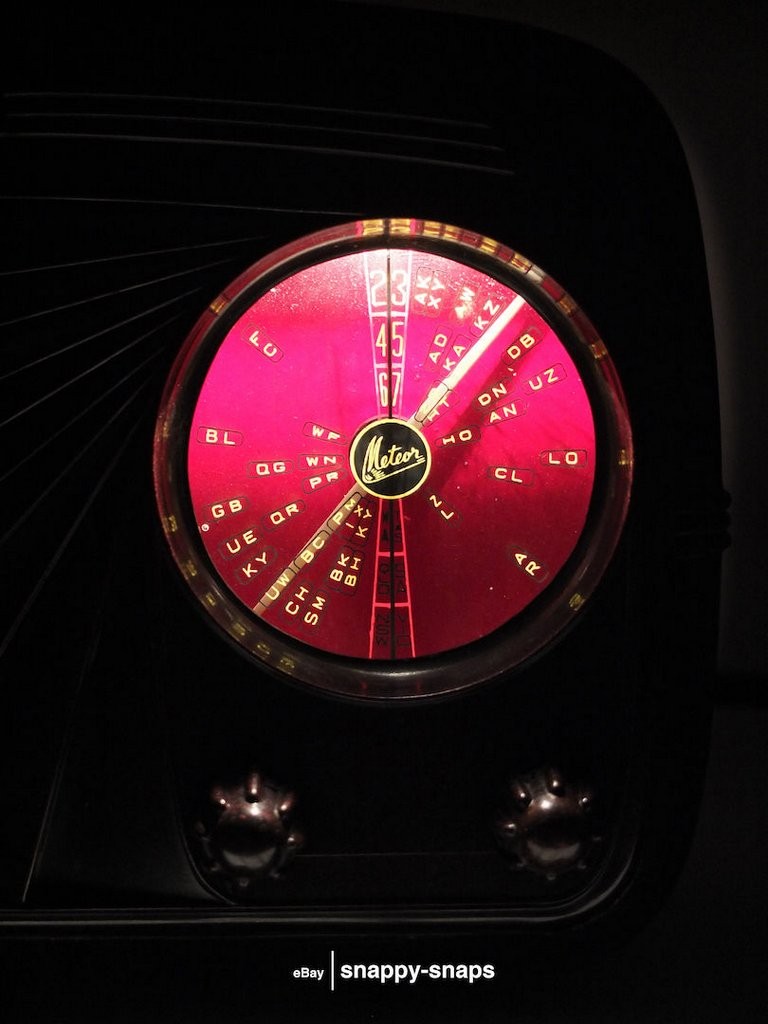
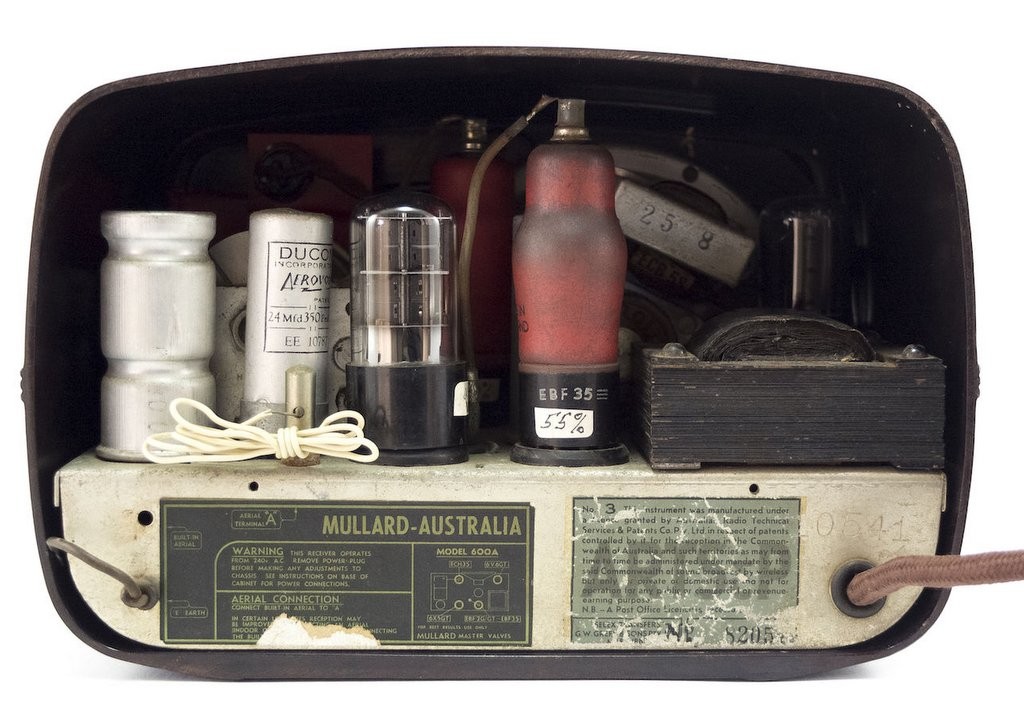
I had to send you this link Thomas. I’ve never seen this model before but what a stunning shape for a 40’s piece.

Look at this on eBay:
Mullard Meteor 600A Vintage Art Deco Bakelite Valve Radio c.1947

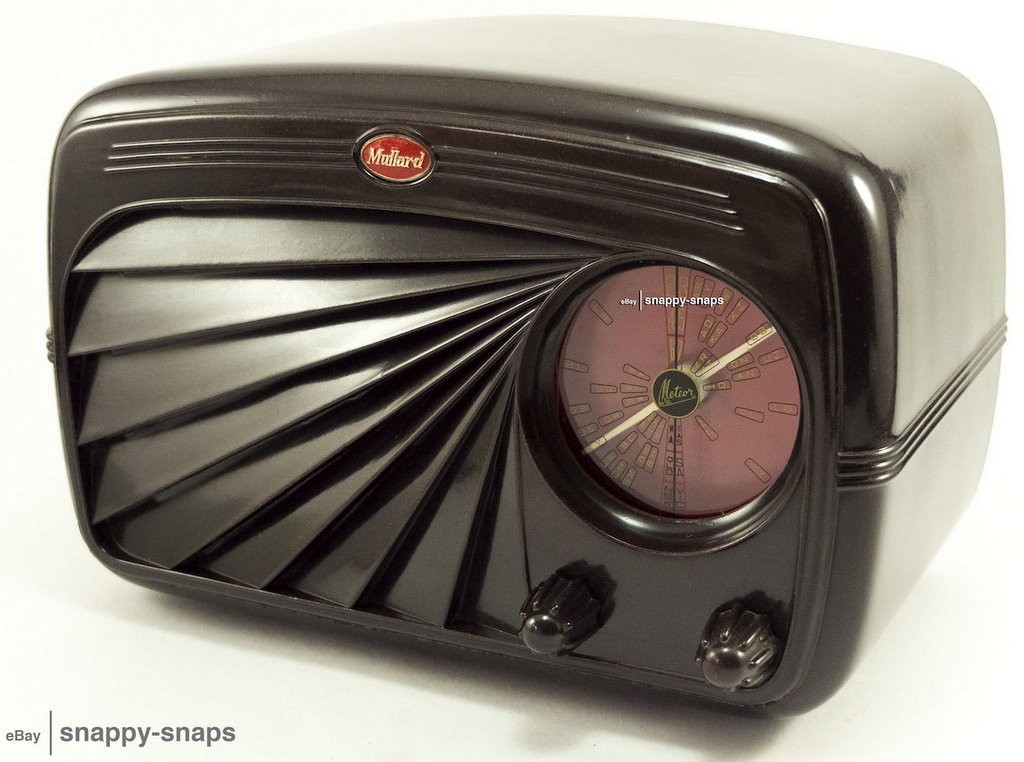
Lovely! While I could never pay $485.00 AUD for a non-working radio, I can certainly appreciate this gorgeous and unique design with radiating speaker grill louvres.

Check out this beautiful “meteor” dial:

Mullard-Tube-Radio-Bakelite-2

What a stunning radio!

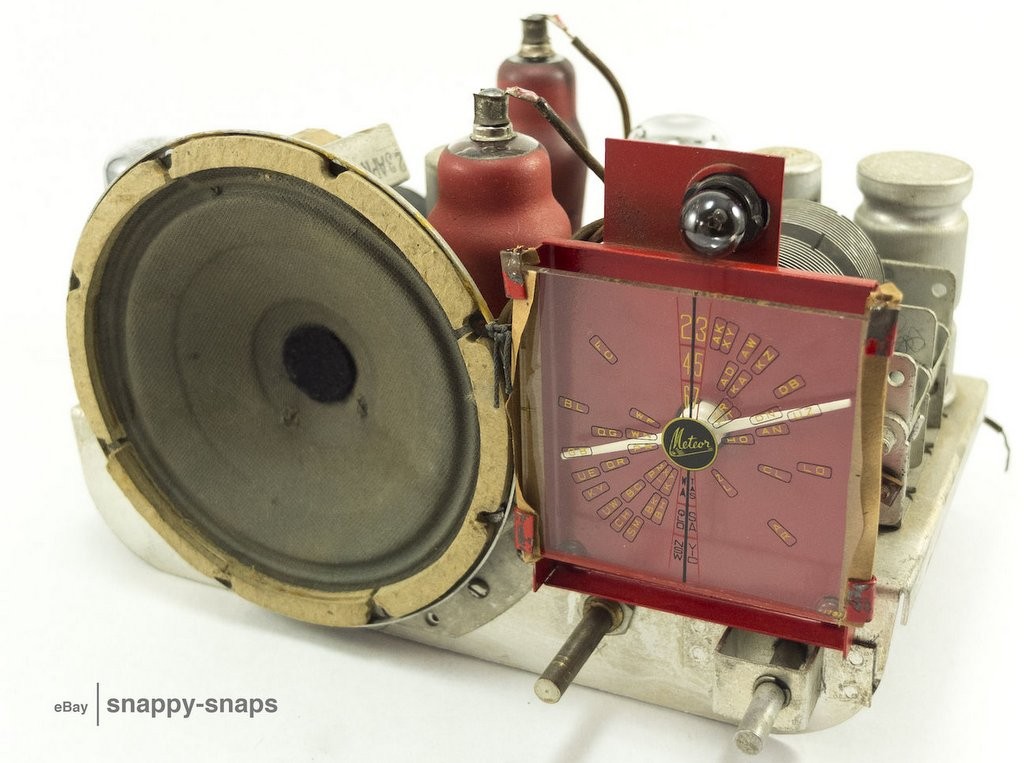
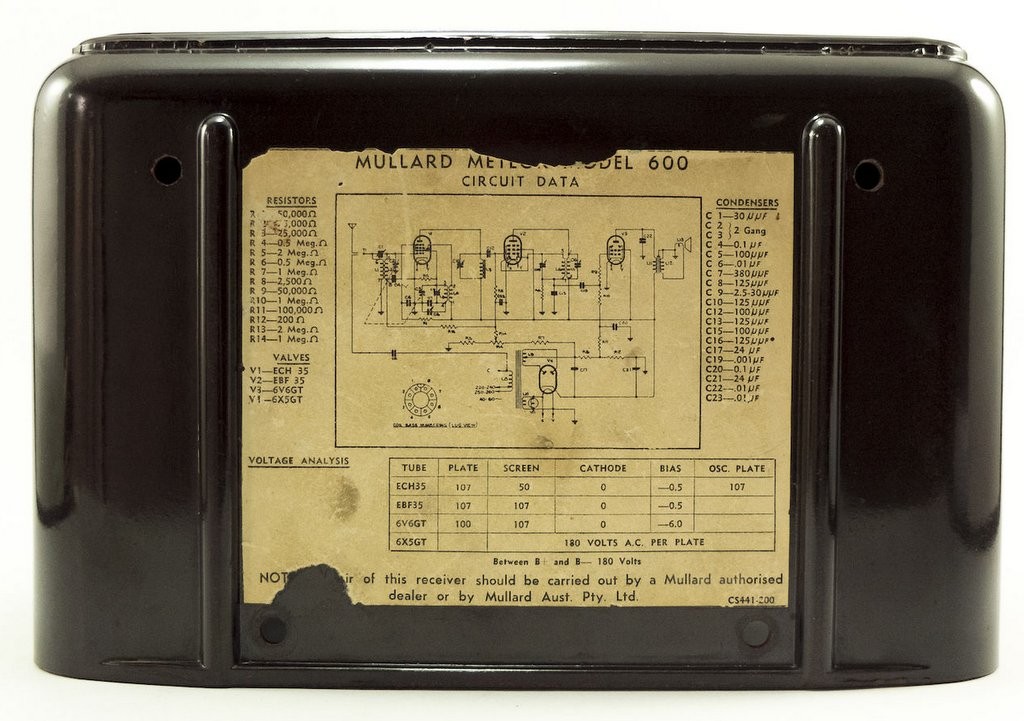
Here are a few more pics I snatched from the eBay listing:

Mullard-Tube-Radio-Bakelite-3Mullard-Tube-Radio-Bakelite-5

Mullard-Tube-Radio-Bakelite-4

Mullard-Tube-Radio-Bakelite-6

Thanks for sharing, Monti!

Any lucky SWLing Post readers in Australia or New Zealand own one of these Mullards?

eBay Find: the Zenith Trans-Oceanic Royal D7000Y, with Comparisons to the Sony CRF-320

ebaySometimes when  browsing eBay you’ll come across a hot item that wasn’t even on your wish list or Followed eBay Searches. This was the case for me early last month when I spotted a new listing for a Zenith Royal D7000Y-2 Trans-Oceanic that’s arguably the best performing T-O ever made. It’s not the most collectable (the final R7000 series has that distinction), but is the final model with the desirable band spread tuning arrangement. The D7000Y is also the last of the hand-wired Trans-Oceanics. Some claim this model has the best audio of the transistorized T-Os, too.
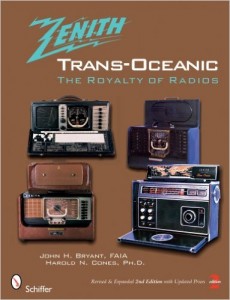
I have a soft spot in my heart for Zenith Trans-Oceanics, as the co-author of the “Royalty of Radios” reference book, the late Prof. John Bryant, was my best friend for many years. John also wrote books on Zenith’s corporate history and other models of Zenith radios. The transistorized Zenith Trans-Oceanics were unobtainable dream receivers for me when I was a teenager in the mid-1970s.royalty of radios book

I watched this Buy-It-Now auction for three days and was very surprised it remained available, especially after noticing its superior condition compared to other auctions for the same model. Finally on the third day I pulled the trigger–I’m not a collector of vintage radios but I couldn’t miss the chance to let this fine old Zenith follow me home. At a Buy-It-Now price of $219 including cross-country shipping, it seemed like a no-brainer decision.

When the radio arrived–packed extremely well–it was in ever better condition than pictured and described (I’d call it 9.8 on a 10 scale).  The package included the original hang tag, QA stickers, owners manual, service manual, marketing literature and even the original monaural earphone and AC power cord. All dial lamps and the chart light worked fine. The previous owner said the T-O was fully aligned a year ago, and indeed I found that the reception quality on the built-in whip antenna is great. I’d love to know where this receiver was stored for the last 38 years; it was clearly someone’s gently used, cherished Zenith.

This slideshow requires JavaScript.

________________________________

A folder of high resolution photos of this receiver can be viewed here.

Compared Against the Sony CRF-320

Besides simply enjoying receivers I get a kick out of comparing them against each other, and against various other ones owned by my radio hobby friends. Thanks to the loan of a vintage Sony CRF-320, I was able to directly compare it to my Zenith Trans-Oceanic Royal D7000Y-2 receiver. My friend’s CRF-320 is the equal of my Zenith in condition and quality. Each of us would like to own both of these radios!

This is an interesting pairing, since the Zenith was among the last of the premier, USA manufactured portable receivers (analog only, all hand-wired chassis), and the CRF-320 was an equally prestigious portable receiver of the “latest technology”–digital/analog readout with printed circuit board construction.

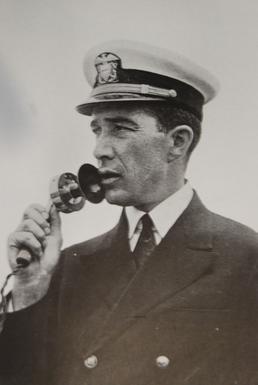
Eugene_F._McDonald_the_Commanderand_founder_of_ZenithOnce a leading receiver brand, Zenith did not react quickly enough to changing trends and business climate after the death of its founder, Commander Eugene F. McDonald.  The 40 year old (1942-1982) proud line of Trans-Oceanics gave way to new, semi-automated methods of building receivers with inexpensive labor from Asia.
After an initial production run of the next (and last) R7000 series, manufacturing was moved to Taiwan. The receiver was built just as well as the previous Royal D7000, but used PCBs inside and the useful band spread frequency ranges were done away with (at the expense of ease of tuning). Still, Zenith T-Os couldn’t compete on price or performance against the Sony CRF-320, and the R7000 Trans-Oceanics were the last (and now most collectible) versions.

This YouTube video compares reception of these two vintage receivers with mid-morning signals on the 31 meter band, from the Seattle area:

Both radios were used with their built-in whip antennas although I couldn’t extend the Zenith’s its final four inches due to ceiling height in the room.

In my opinion, the CRF-320 is superior in keeping signals steady with its AGC, but the D7000Y-2 excels in audio quality and is neck-and-neck in most other respects. The Zenith may have performed a bit better with weak signals if the ceiling in my kitchen was a few inches higher! (Both radios have substantially long built-in antennas, and each are very well matched to their circuitry for excellent reception.)

There are many references around for the Zenith Trans-Oceanic series, but not a lot has been published on the CRF-320. Here is one page with good details on the Sony:  http://www.shortwaveradio.ch/radio-e/sony-crf320-e.htm

Jay Allen’s excellent article on restoring a Zenith T-O Royal D7000 has very clear photos of the receiver’s interior: http://radiojayallen.com/zenith-royal-7000/

Moral of the Story?

I’ve been active on eBay since 1998. As with garage sales, the chances of an excellent “find” increase with the time spent in the pursuit. Sometimes you just get lucky though and find a very desirable item remaining unsold for days, such as this Trans-Oceanic! It’s all about being in the right place at the right time. Since I’ve bought the receiver I’ve yet to see any other D7000s of equal or better quality, despite some with Buy-It-Now prices of up to $450 plus shipping (edit 12/16: I spotted one that appears in equal condition to mine, but for a Buy-It-Now of $675 + $40 S/H).

Guy Atkins is a Sr. Graphic Designer for T-Mobile and lives near Seattle, Washington.  He’s a regular contributor to the SWLing Post.

How Far We’ve Come: Looking Back at Radiotelegraphy, 1939 Style

It’s often insightful to look to the past to fully appreciate the current technology we take for granted.

When we tap a favorite contact’s name in our mobile phone–even for someone on the other side of the world–we can be talking to them within seconds, with clarity that’s often the equal of visiting face-to-face. Perhaps Skype or FaceTime is more your style? Yawn… just another two-way, real-time video session. The fact that the other person is thousands of miles away no longer makes you pause at the wonder of it all.  Continue reading

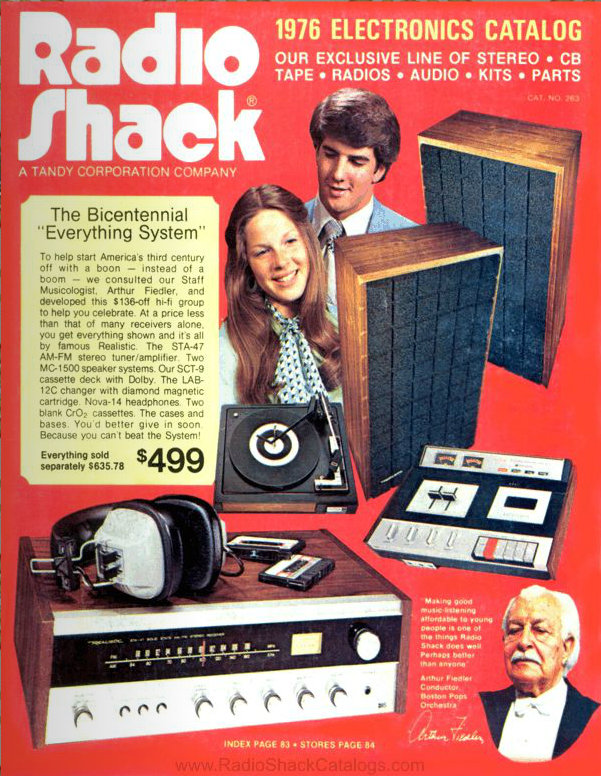
Guest post: Trip Down Shortwave Memory Lane via Vintage RadioShack Catalogs

RadioShack-CatalogMany thanks to SWLing Post contributor, Mario Filippi (N2HUN), for the following guest post:


Trip Down Shortwave Memory Lane via Vintage RS Catalogs

-Mario Filippi (N2HUN)

Attached is a wonderful website containing archived Radio Shack catalogs and sales flyers going back to 1939, surely of interest to SWLs, hams, and other electronics hobbyists. Most of us have fond memories growing up and visiting our local Radio Shack when it was the place to go for ham, shortwave, and scanner radios. My hometown Radio Shack was located on North Avenue in New Rochelle, NY and I purchased an electric guitar (could not afford a Fender) from them in the late 60’s which had three pickups and included a case for $29.95!

Radio Shack Catalogs

You see, back then Radio Shack had a much more diversified line of products, including musical instruments, power tools and even scientific stuff like microscopes and slide rules. These archived catalogs are a treasure trove of information not only from a historical perspective, but for anyone who is interested or who is contemplating purchasing vintage equipment such as shortwave radios, because you can look up the original sales info in the RS catalog which contains the original price, photo, description, and accessories available at that time.

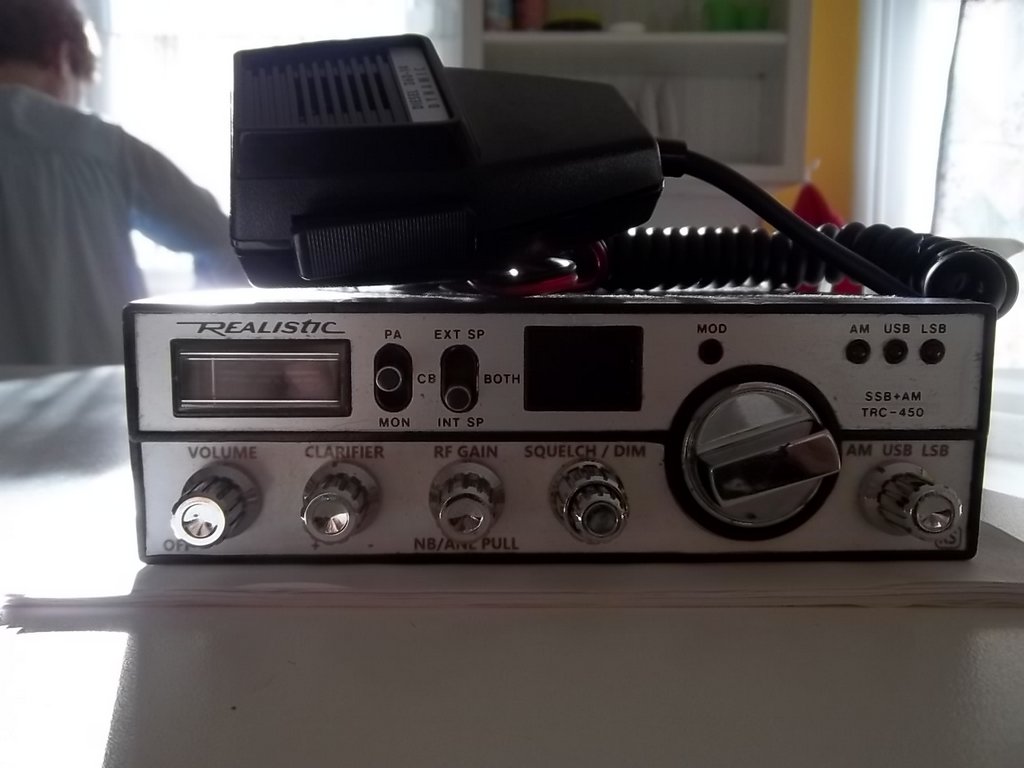
For example, last year I purchased a “tech special” Realistic TRC-450 AM/SSB CB radio on Ebay that needed LED repair, so I looked up the original sales ad and got the price, photo (this helps to see original condition), and product description. Below is a picture of my restored Realistic which originally sold in 1980 for $269.95!

RadioShack-TRC-450

The classic Realistic TRC-450 AM/SSB CB radio. (Photo: Mario Filippi)

Nowadays most people don’t realize how expensive electronics were a few decades ago. A comparable new AM/SSB CB radio sells for about half that price nowadays!

Lastly, as one progresses chronologically through the catalogs, you can see technology (and even fashion) trends – the large 8 track tape decks of the 60’s and 70’s progressed to smaller cassette players of the 80’s and 90’s, then DVD/CD players made their entrance, ultimately giving way to higher tech forms of entertainment such as satellite radio and Internet-based entertainment. Well I hope you enjoy this totally entertaining and informative website and I thank the individual who took the time and effort to preserve for perpetuity these priceless annual time capsules for everyone to enjoy.


Mario, many thanks for this trip down memory lane!

As you state, these catalogs are actually an excellent reference source when trying to determine pricing and features of RS radios found on the used market.

I think they’re also so much fun to flip through as they’re chock-full of nostalgic value. When I was a kid, I could care less about toy store catalogs–the RadioShack catalog was my toy store!

Indeed, when I open the online catalog copies at Radio Shack Catalogs, I can almost smell the ink on the pages! Am I the only one?

WWV History: Richard’s QSL cards

WWV-First-Sign-SM

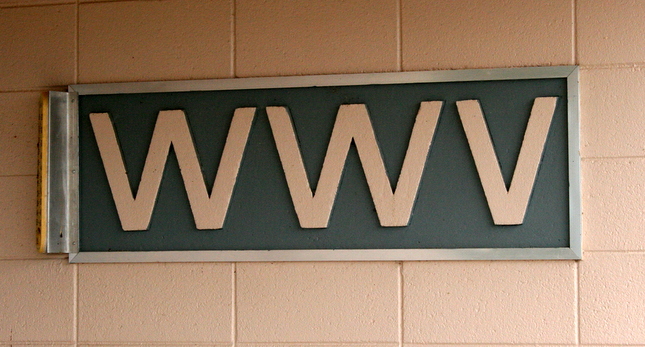
Sign from the original WWV tranmitter site in Maryland, currently posted outside of the Fort Collins, Colorado transmitter building. (Photo: Thomas Witherspoon)

Commenting on our post about Myke’s new release of At The Tone, SWLing Post contributor Richard Langley writes:

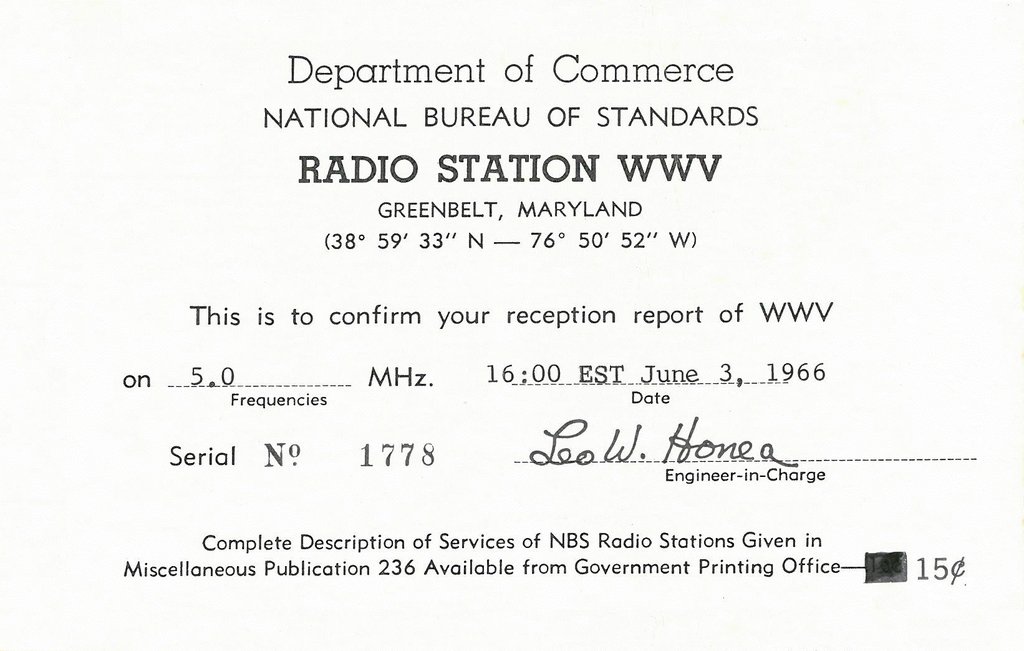
I must have first heard WWV shortly after putting together the Knight-Kit Span Master I received for Christmas 1963. I still have my log books from my high school days, which include an entry for Radio Habana on 29 December 1963 for which I subsequently received a QSL card. But I guess I didn’t log all my receptions. The first entry for WWV is dated 3 June 1966 in the last year of WWV’s operation from Greenbelt, Maryland (on government land that subsequently became the site of NASA’s Goddard Space Flight Center).

WWV_QSL_frontWWV_QSL_back

I have a QSL card for the reception of the 5 MHz signal featuring a drawing (in pink) of the Jefferson Memorial [see above].

The next entry is dated 1 December 1966, the first day of WWV’s operation from Fort Collins, Colorado.

WWV_firstday_QSL_frontWWV_firstday_QSL_back

I have one of the special QSL cards issued for confirmation of first-day reception for my report on the 20 and 25 MHz signals [see above].

I’m sure I heard WWVH early on too but my first log entry is dated 29 March 1967. I never did QSL them.

Richard: Thanks so much for sharing these special QSL cards. Wow! I had never seen the first day card from WWV Fort Collins before–what a treasure you have there!