Category Archives: Nostalgia

How Bob McGwier used a Cray-2 supercomputer to decode a ham radio transmission heard in Star Trek IV

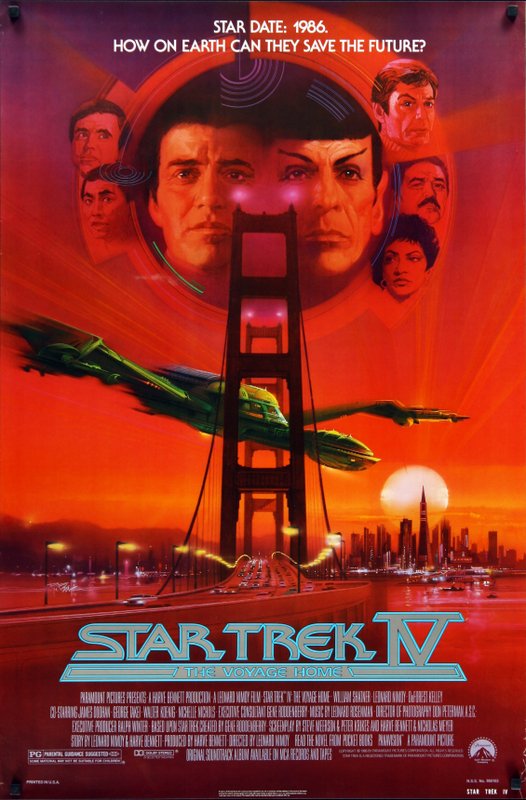
Startrek4-MoviePoster-SmallIn response to our recent post with a message to us from Star Wars sound designer Ben Burtt, SWLing Post reader, David Guilbeault, comments:

Here’s a similar story that circulated on the Internet around 1990 (pre WEB!). I worked in packet switching at that time and was very impressed with Bob’s achievement (even with a CRAY to work with) .

I reached out to Bob McGwier (N4HY), who is a Facebook friend, and he has kindly given us permission to share his message again here and with a few new comments:
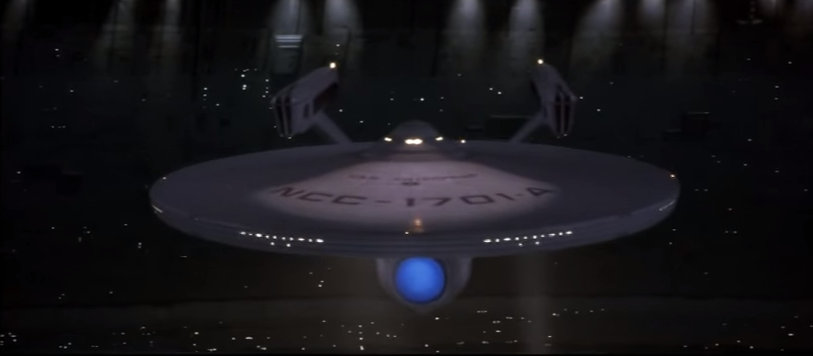

Star-Trek-IV-Cap

Decoding HF packets in Star Trek IV

Originally posted on December 4, 1989 by Bob McGwier (N4HY)

Several months ago, Harold Price, NK6K, challenged me to demodulate what he thought might be HF packets in Star Trek IV.
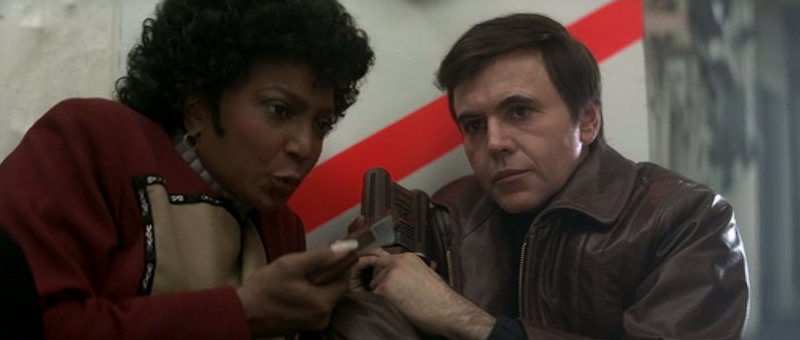
Chekov-Uhura-Star-Trek-IV

During the scenes where Scotty is valiantly trying to beam both Chekov and Uhura back from the U.S.S. Enterprise, where they have been stealing Nuclear vessel high speed photons, Scotty is having a hard time hearing them.
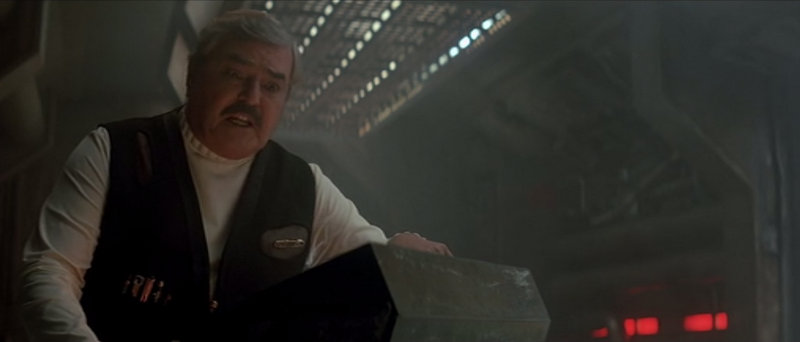
Scotty-Star-Trek IV

Listen to the audio clip by clicking here or using the embedded player below (target sound is at 5 seconds):

One of the sources of interference is what appeared to Harold to be HF packet. Always being one to rise to a challenge, I took on the job of doing some fancy Digital Signal Processing footwork. Almost from the first I was certain that it must be an HF packet since my very first demodulator attempt clearly revealed flags before the start of a frame and end of frame was also clear. I knew it was HDLC of some variety.

Several things impeded the effort, including Scotty’s voice on top of the packets, some SSB from 20 meters was also nearly on top of the signal. All of this had to be filtered out. I spent an hour of time on the Cray-2 at work and used the fanciest FSK demodulator I could write and I finally had noisy baseband signal plotted on paper in front of me. I did my best to get an integral number of samples per baud as the signal was very noisy, and though the bits could be made out by eye, I could tell that it was going to take another hour of Cray-2 time to get the clock recovered and to make good bit decisions. In a couple of places, HDLC showed me what were clearly bit errors, and these could be done by eye as well.
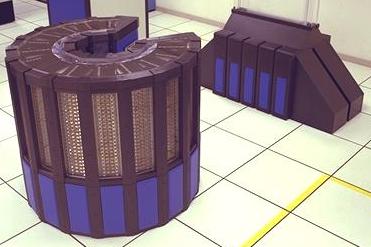
A Cray-2 operated by NASA. (Source: NASA)

After the filtering, and building a demodulator for the badly mis-tuned signal (almost 900 Hz below), I took the bits to Phil Karn, KA9Q and he decoded the NRZI data and proved beyond a shadow of a doubt that it was indeed an HF amateur radio packet. It was WA8ZCN-0 sending an RR for NR-3 to N6AEZ on 20 meters. I got Bill Harrigill, WA8ZCN on the phone and he agrees that it was probably him.

Thanks Harold for the challenge and Phil for the help.

Bob N4HY

P.S. A Cray-2 is about 50% faster than the fastest Pentium-Pro computer available today.

Again, keep in mind that the message above dates from 1989! This past week, Bob added the following comment when I contacted him:

The Cray Supercomputer on which the work was done was being operated on behalf of the National Security Agency by my research institute.

I received permission to “to test optimal algorithms for software decoding of FSK transmissions” and this was my test case!!!!

That is why Phil Karn was decoding the AX.25 bits by hand. I did not have permission to develop link layer protocol code, though I tried.

A few years later when half the bad guys in the world seemed to be using AX.25 and cheap ham gear I said “See, I told you so several years ago and you didn’t listen”.

I used that transmission in so many different ways I no longer remember them all.

That’s fantastic, Bob, and so great to know the back story on your decoding process! Thank you again for sharing this with us!

Star Trek fans can find the scene Bob references starting around time mark 1:12 in the film.

Star Wars sound designer is, indeed, a radio enthusiast

StarWars-LogoSWLing Post readers may remember a post I recently published in which I believed I’d identified a familiar shortwave time signal station in the Battle of Hoth scene from The Empire Strikes Back. If you haven’t read this post, feel free to do so and listen to the embedded video/audio clips.

Upon hearing this, I went so far as to muse that the Star Wars sound designer might be a radio listener. I asked our readers if anyone could confirm this–?

Well, we’ve got our answer!  I’m truly indebted to an SWLing Post reader who passed my post along to his friend, Ben, who could provide this definitive response:

“This is Ben Burtt, sound designer of the Star Wars films. A friend sent me a link to this blog thinking I would like to comment.

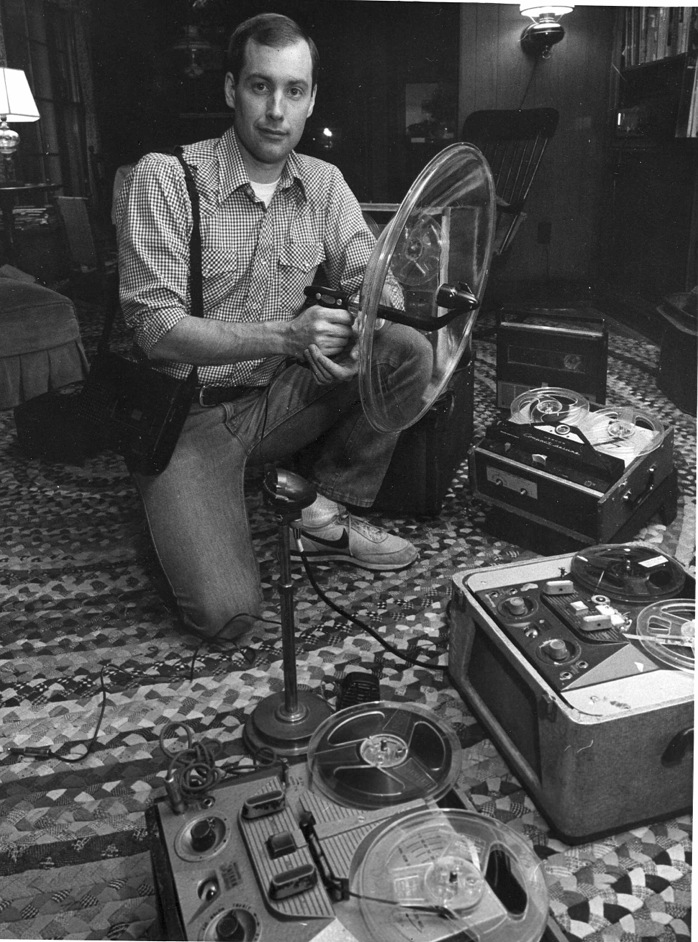
Ben and old recorders

Ben Burtt with his recording gear, circa 1980. The mike on the stand at Ben’s feet is one from his grandfather’s ham radio station in the 1950s, or possibly earlier.

“The answer is yes, I have always been a ham radio enthusiast.”


“My grandfather, Harold Burtt, operated W8CD out of his home in Columbus, Ohio 1930s-1960s. I was enthralled as a kid listening to the sounds on his receiver. I heard alien worlds and cosmic ‘voices.’

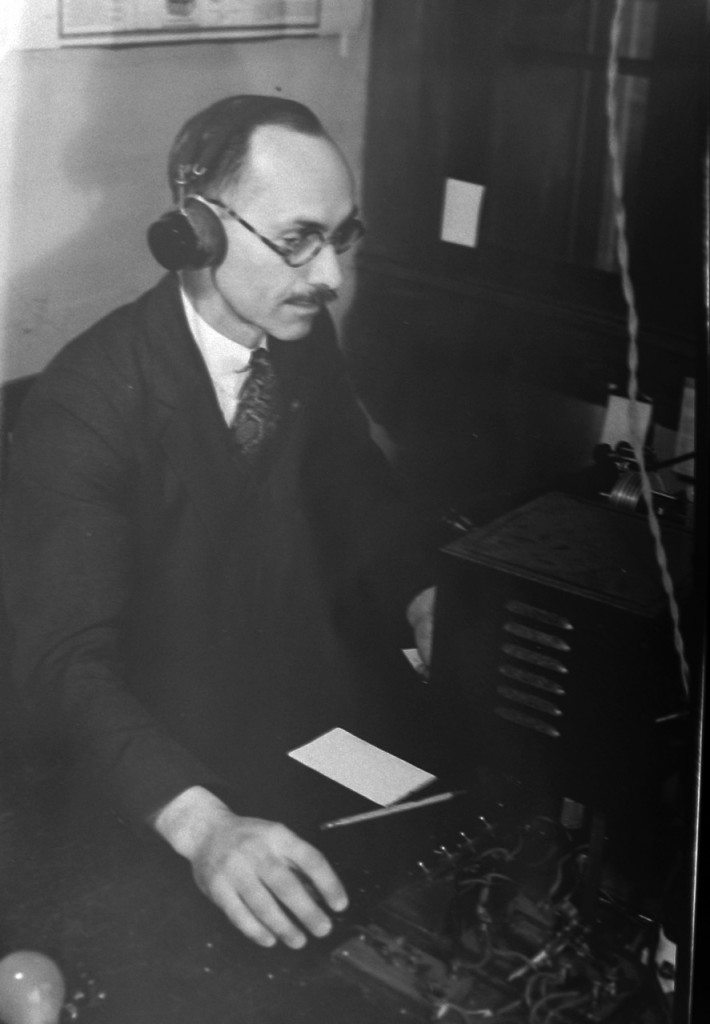
Harold Burtt, (Chairman of the Psychology Dept Ohio State) with his attic gear approximately 1935

Harold Burtt, W8CD. (Chairman of the Psychology Dept Ohio State) with his attic gear,  approximately 1935

“So not only did I record his radio, but continued to do so on the Star Wars series and Star Trek as well.

My memory of the Hoth transmission was that it was WWV but it could have been CHU since I was recording all that interested me on the dial.”

Terrific! Thank you, Ben, for taking the time to respond. As I said, you’ve certainly started off this radio enthusiast’s year on the right wavelength…no doubt some of our readers will agree.

Indeed, the powerful sonic experience of the Star Wars and Star Trek films has, in my estimation, helped shape many of us into the radio/sound enthusiasts we’ve become–myself certainly included. Thank you, Ben, for this!  You’ve sharpened my ear to a greater appreciation of sound, especially filmic sound, and your work in particular.    

For readers who are less familiar with Ben Burtt’s work, check out his Wikipedia page and IMDB profile–you’ll find he’s been the sound designer on numerous influential films including the recently released Star Wars: The Force Awakens.

A special thanks to Ben Burtt for sharing these wonderful photos and kindly giving me permission to use them here on the SWLing Post.  I must say, considering my love of radio in the thirties, I especially like that photo of Harold Burtt (W8CD) in his shack.

SRAA Recording: The Happy Station Show circa 1979

Crosley-Dial-BlackAndWhiteMany thanks to Shortwave Radio Audio Archive contributor, Richard Collings, who recently submitted this amazing off-air recording of the Happy Station Show. Richard notes:

The Happy Station Show of Sunday 23rd December 1979. A pre-recorded special Christmas show with Tom Meijer. Broadcast from 0930 to 1020GMT [on 9895 kHz and received in Plymouth, Devon, UK].

Click here to download the recording as an MP3, or simply listen via the embedded player below:

Note that this is one of many archived off-air recordings found on the Shortwave Radio Audio Archive.

Make time for some holiday listening

Santa-Christmas-Radio

Remember that there are some unique broadcasts to tune to today and throughout the holidays. Here are a couple of note:

Of course, many of your favorite international broadcasters will also have holiday specials throughout the week.

If you like pirate radio listening, you’re in for a treat as well. Typically, there are numerous shortwave pirates on the air during the holidays–especially on Christmas Eve, Christmas Day, New Year’s Eve and New Year’s Day.

What? You’ve never tuned in a pirate station before? There’s no better time than now to log that first pirate! Click here to learn how.

Did anyone hear the Grimeton VLF broadcast earlier today? Though it’s nearly an impossible catch for me State side, I still tried. Sadly, a long line of (unseasonal) thunderstorms moved into the region and I was forced to unplug my large external loop antenna in the wee hours of the morning.  I hope they had a successful broadcast.

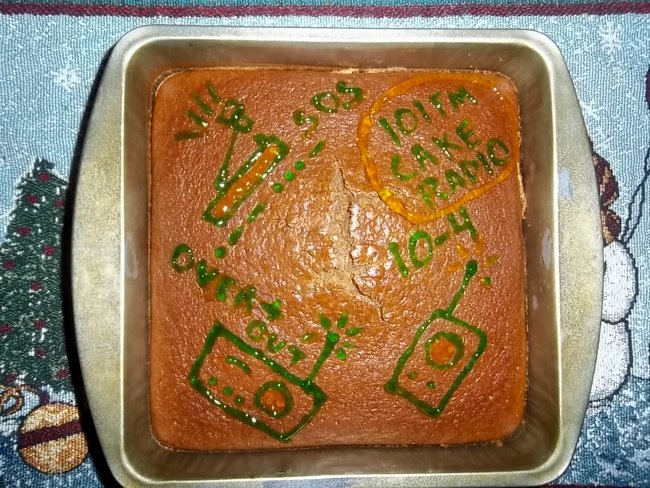
100_5513

While we’re talking about radio and the holidays, I thought I’d also share this photo (above) that SWLing Post contributor, Mario Filippi sent in last week.

He and his wife made this cake for the annual office Christmas party. Mario comments:

“Since I am the ‘go to’ radio guy at work, we decorated the cake with various radio icons and slogans with the hope of putting smiles on everyone’s face.”

No doubt, your cake was a success!

Good cheer!

The SWLing Post has an international set of readers. While not everyone celebrates Christmas like my family, there seem to be many celebrations and festivals that happen this time of the year.

However you celebrate, here’s wishing you and yours the best of the season! 

Merry Christmas and Happy New Year to all!

Download the 1923 “first Wireless Christmas” edition of The Radio Times

RadioTimes1923

(Source: BBC Genome Blog via Mike Barraclough)

The much-loved Christmas edition of the Radio Times made its first appearance in 1923. 

It was all very different to today’s multi-channel, on-demand world. There was only radio, and London station 2LO had a meagre five-and-a-half hours of programmes on Christmas Day.

But to some extent, the first Christmas issue set many traditions which have prevailed for decades in various guises. The cover was a warm splash of colour and very festive in tone, while the publication’s austere masthead was festooned with snow and holly.

John Reith, who went on to become the BBC’s first director general, was given the first page to deliver a message to listeners, in which he deliberated the meaning of Christmas and then inevitably talked about the joy of broadcasting and the “first Wireless Christmas”.

“The loud speaker is such a convenient entertainer,” he wrote. “He doesn’t feel hurt if a cracker is pulled in the middle of a song, or offended if the fun grows riotous during his performance”.

While Reith was keen to talk up the virtues of broadcasting, the magazine was packed with adverts for radio sets and cartoons about the joys of consuming radio programmes.

But Christmas is all about giving, and we’d like to offer you the chance to download the first Christmas issue. It’s a fascinating document and we hope you will enjoy it. Happy Christmas fromBBC Genome!

Download a PDF version of the 1923 Christmas Radio Times by clicking on this link

Time station CHU in The Empire Strikes Back

Fullscreen capture 12202015 40448 AM

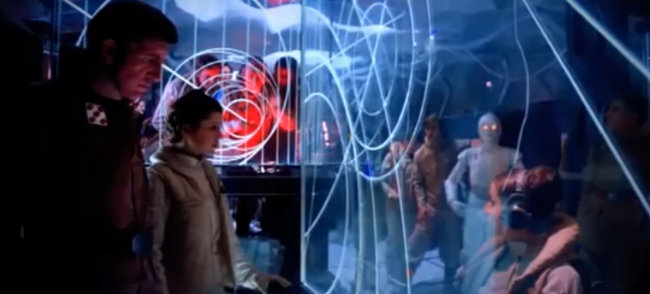
Earlier today, I published a post noting that I thought I heard the time station WWV in a scene of The Empire Strikes Back.

SWLing Post reader, RadioGeek, quickly corrected me: that’s Canadian time station CHU‘s data pips I’m hearing, not circa-1980s WWV.  Cool!

Listen for yourself

Here’s the clip from The Empire Strikes Back, Battle of Hoth

Now listen to the recording of CHU I made only moments ago–note the tone and duration of the data pips:

No wonder I mixed up CHU and WWV; I’ve listened to both for propagation since I was a kid.

I wonder which of the Lucas Film sound engineer(s)/artist(s) chose CHU for this scene? Anyone know, by chance? Or can anyone find out?

No doubt, that sound designer is an SWL or ham radio operator. Perhaps this may also explain the SSB-esque radio dialog between fighter pilots throughout the Star Wars films:

Please comment!

Jonathan shares archived Media Network Christmas and New Year shows

Crosley-Dial

Many thanks to SWLing Post contributor, Jonathan Marks, who shares the following from his Media Network Vintage Vault.

Jonathan writes:

“Picking up on the idea of revisiting archive Christmas and New Year shows, here are some from Radio Netherlands for the SWL Blog.

Seasons Greetings, Jonathan”

Media Network 26.12.1996 Boxing Day Show

A radio Christmas spent in the Media Network studio way back in 1996. Sounds like we were having fun! I look back on this period as perhaps one of the golden years for Dutch external broadcasting, producing a range of documentary productions in English and Spanish and recording great concerts, both classical and jazz.

This programme focussed on answering listeners’ letters on subjects like satellite television in Australia (DW was organising a bouquet of signals) and the major changes to the commercial radio scene in New Zealand. The auction of FM frequencies in the Netherlands and shortwave stations that sold radios were also topics for discussions. RBI archives have, for the most part, been destroyed. Swiss shortwave listeners were quizzed on their listening habits. The 410 ft tower formerly used by AFN has been dynamited out of existence. Capital Radio in South Africa is in trouble.

MN.28.12.1995 Rhodesia – Answering Back From Francistown

I met the late Harold Robin a couple of times at his home in Tunbridge Wells, UK. He was a brilliant Foreign Office engineer who built the wartime Aspidistra transmitter famous for its clandestine work out of Crowborough. Have a listen to the programmes Wartime Deception and you’ll see what I mean.

Although his work during the war is well documented in books like “The Black Game”by Ellic Howe, I think we managed to capture the other stories from later in his life. For instance, how he invented the “Picolo” modulation system as used by the diplomatic service to communicate text over shortwave between embassies. He also built the BBC Overseas relay station in Oman, and the external service of UAE Radio from Dubai. This edition, recorded after Christmas in 1995, looked at the story of the British response to the declaration of independence by Ian Smith in, what was then, Rhodesia. Harold talks about setting up a mediumwave transmitter in a matter of weeks in the town of Francistown, in the Bechuanaland Protectorate, now called Botswana. Thanks also to Colin Miller for some of the recordings of the RBC. It seems that one of the two transmitters was sent to Cyprus after the World and Rhodesia operation ended, the other ended up in Ordfordness for some experiments on 648 kHz. You might also want to check out the video of Margaret Howard, who refers to a special programme transmitted over this MW sender. It was called the World and Rhodesia and was more of a UK government editorial than any programme the BBC would make. The programme concept didn’t work although it seemed to have taken the British government a couple of years to find out. Harold refers to staying in the Tati Hotel River Lodge, about 8 kms outside of Francistown. Sure enough, it’s still there.

MN.23.12.1982: Christmas Review 33 years ago

I picked this recording out of the archives because it has a nice capsule summary of the major media stories from 1982. The highlight was, of course, the Falklands-Malvinas “conflict”. This programme contains clips from the FIBS, RAE Argentina and the BBC’s Calling the Falklands Programme. We also looked in some detail at the short-lived Radio South Atlantic which broadcast in May and June 1982 from a requisitioned BBC transmitter on Ascension Island. We asked the British Ministry of Defence to explain how the station was operated. We also analyzed a transmission broadcast on May 20th 1982 (the second night of transmission).

But it was also the last programme in which Wim van Amstel appeared as RNW Frequency Manager. It was certainly not the last time he was heard on the programme, though. Again it is striking to hear some of the predictions – and how they were spot on. The call with Arthur Cushen in New Zealand is rather like making contact with the moon. Cannot believe how fast time has flown.

At the time of publishing this podcast, I was also sad to hear of the passing of BBC correspondent and broadcaster Brian Hanrahan, who famous line when broadcasting under censorship from the Falklands Fleet was brilliant. Unable to reveal how many British aircraft had been involved in the conflict, he reported that after one sortie he “counted them all out and I counted them all back.

MN.26.12.1991.Year End Review

This was a news show 1.6 million tune in to Radio Netherlands in Dutch during their summer holiday. WWV and WWVH have had problems with their automated time announcements. Drum recorders are back on line. Victor Goonetilleke has news about Cambodia. VOA is having challenges building its transmitters at a new site 50km North of Colombo.

Why did we broadcast all these numbers? People forget none of the listeners had access on-line and only a fraction of the audience had access to printed DX bulletins. Andy Sennitt reports on what is in the 1992 World Radio TV Handbook. James Robinson reports that several UK local radio stations are leaving mediumwave. WLS 890kHz is scrapping its FM format. A new Catholic SW station WEWN was being built in Birmingham, Alabama. (The late) Dave Rosenthal reports on an experiment in McMurdo. Remember this show is 24 years old!

Vasily Strelnikov signs off at Radio Moscow World Service and recommends people to tune into Radio Netherlands. Radio Moscow staff watch the red flags of the USSR being lowered.

Thanks so much for sharing these, Jonathan–and Season’s Greetings to you!

I’m looking forward to several hours of listening over the coming days.