Category Archives: Radio History

The RAAF No. 4 Wireless Unit: Never to march, never to be mentioned

Many thanks to SWLing Post contributor, Neil Bolitho, who shares the following story in reply to our post yesterday Australian Codebreakers in WWII. Neil writes:

Never to march, never to be mentioned.

Since the end of the Second World War, many thousands of returned service personnel have marched at Anzac Day services throughout Australia.

My father never marched.

My father served in RAAF No 4 Wireless Unit, Central Bureau.

Central Bureau was under the direct command of General Douglas MacArthur, and was set up to detect, record, and translate all messages transmitted by Japanese forces in the Pacific.

Central Bureau was headquartered in Brisbane, but its Wireless Units worked in the field, moving forward with MacArthur, constantly intercepting and deciphering enemy messages.

As the war progressed, the units became so efficient in their work that they were monitoring all enemy radio traffic, and in fact frequently knew the Japanese intentions before the messages reached their intended destination.

The Wireless Units served throughout the Pacific islands providing vital information about enemy strengths and positions.

RAAF No 4 Wireless Unit was formed as a highly mobile unit, and served at Hollandia, Morotai, Labuan Island, and at Luzon, Philippines.

The U.S. High Command highly praised the Wireless Units of Central Bureau, stating that their work effectively shortened the War in the Pacific by at least two years.

At the end of the war, Central Bureau was dismantled. All personnel signed a lifetime secrecy order to not speak of their wartime activities.

No promotions applied. No evidence of their Central Bureau service was recorded, including overseas service. No medals were struck.

Family members, including children, were not told in any detail, of their father’s war experience.

It was only in the late 1990’s that the Australian government allowed information to be released.

In the early 1960’s, my father mysteriously went on an unexplained visit to Brisbane.
It was not until over thirty years later that I found out that he attended a twenty-year anniversary of his unit’s graduation.

I write this on behalf of the children and grandchildren of those Central Bureau personnel that served diligently and efficiently when called upon, and who, when the job was done, quietly went home. They are our heroes.

Indeed. Thank you so much, Neil, for taking the time to share your father’s story. We’re honored to post it here.

If you’re interested in WWII signal intelligence, here are a few fascinating posts from our archive:

Australian code breakers in World War II

Many thanks to SWLing Post contributor, Ian P, for sharing the following from the radio program, ABC Overnights:

The crucial role of Australian code breakers in World War 2

Thanks to the recent film, The Imitation Game, you may be familiar with the story of how British intelligence, led by mathematician Alan Turing, cracked Nazi codes during WW2. Did you know there were also two secret organisations in Australia working to break Japan’s military codes?

These were staffed with brilliant cryptographers, including some who had studied mathematics and the classics, and others who had lived or grown up in Japan. By patiently and carefully unravelling the codes in Japanese signals, their intelligence played a crucial role in the battles of Midway and the Coral Sea, as well as the push into the Philippines.

Trevor Chappell interviews Craig Collie, author of the book Code Breakers – Inside the Shadow world of Signals Intelligence in Australia’s two Bletchley Parks.

Duration: 36min 36sec
Broadcast: Mon 10 Apr 2017, 1:00am
Published: Mon 10 Apr 2017, 4:43pm

Listen to the full program/interview via the embedded player below:

Click here to download the MP3 or click here to listen on the ABC website.

I’ve also noted that you can pre-order Code Breakers – Inside the Shadow world of Signals Intelligence in Australia’s two Bletchley Parks at Amazon.com. There is no expected delivery time yet, however.

Code Breakers is available directly from the publisher in Australia–click here to view.

Video: Tour of RNW operations van and interview with Niels Zack

ShortwaveService has uploaded the following video (to YouTube) which features the RNW Operations Van used in the recent 70th anniversary broadcast.

The video includes a tour of the van, the setup used in the 70th anniversary broadcast and an extended interview with Niels Zack, who restored the operations van:

Click here to view on YouTube.

I listened to at least an hour of the Saturday broadcast via the U Twente WebSDR. Sadly, I just discovered the audio dropped about 2 minutes into my recording.

Post readers: Anyone else listen to, record or simply log this anniversary broadcast? Please comment!

Photos of a B-17G Radio Operator Position

I had the pleasure of visiting the Champaign Aviation Museum recently and examining their under-restoration B-17G, “Champaign Lady”. Actually, the term “under-restoration” is incorrect. In actuality, the Champaign Aviation Museum is effectively building their B-17G nearly from scratch—quite an undertaking but one that the volunteers are performing skillfully and enthusiastically.

Being an amateur radio operator, shortwave listener, and would-be WWII-radio restorer, I was was pleased to see that Champaign Lady already has a nearly-complete radio-operator position installed, between the bomb-bay and the waist-gun section of the airplane. As a B-17G would have had during the war, Champaign Lady features a BC-348 liaison receiver and morse-code key mounted on a desk on the port (left) side of the bomber and a stack of AM/CW Command Set transmitters and receivers racked on the starboard (right) side of the bomber. In the photos, the top Command Set boxes are the transmitters and the bottom three Command Set boxes are the receivers. Of course, the BC-348 and the Command Set transmitters and receivers are fully tube-type, semiconductors having not yet been invented. During the war speedometer-type cables would connect the Command Set receivers to controls in the cockpit, allowing the pilot and co-pilot to control the Command Set receiver frequencies; electrical cables would have carried the receivers’ audio to the pilot and co-pilot and would have allowed them to change volume-level. The radio operator could transmit using the Command Set transmitters and could also switch the pilot or co-pilot intercom microphones to any of the Command Set transmitters to allow the pilot or co-pilot to broadcast to other bombers in the formation.

"Champaign Lady" radio operator position

B-17G “Champaign Lady” radio operator position; BC-348 liaison receiver on the port (left) side and Command Set transmitters and receivers on the starboard (right) side.

"Champaign Lady" BC-348 receiver

B-17G “Champaign Lady” BC-348 liaison receiver and morse-code key.

"Champaign Lady" Command Set transmitters and receivers

B-17G “Champaign Lady” Command Set transmitters and receivers on the starboard side of the radio room

During the war, the B-17G radio operator was an enlisted man, typically a sergeant or higher in rank. If in an earlier version of the B-17G, the radio operator was also responsible for manning a .50 caliber machine gun located in his section of the airplane. In all versions of the B-17G, the radio operator assisted the navigator by providing position reports based on radio fixes of beacons or radio stations. Additional information about the role of the B-17G radio operator can be found on the B-17 Queen of the Sky website.

And, for those interested, here is what Champaign Lady’s nose-art looks like:

B-17G "Champaign Lady" nose-art

B-17G “Champaign Lady” nose-art, starboard side; the port side features a mirror-image version of the same design

The Champaign Aviation Museum has a beautifully restored B-25J, “Champaign Gal”, in flying condition. Unfortunately, I’ve not been able to see if Champaign Gal features a restored radio operator position.

I have a BC-224, which is the 12-volt version of the BC-348 liaison receiver to put back into service as well as a BC-696A Command Set transmitter that I hope to eventually put back onto the air in the 80-meter amateur band. It would be wonderful if I had a B-17G in which to install these items—or even just room to build a replica B-17G radio operator position!

73,

Eric McFadden, WD8RIF
http://wd8rif.com/radio.htm

Pristine Condition Braun T-1000 Receiver Appears on Ebay

The German industrial designer Dieter Rams is world renowned for his beautiful and functional product designs, including the Braun T-1000 portable receiver.

These fine, collectable receivers appear on Ebay regularly, but this one is in pristine shape:

The asking price is a cool $1,800 USD, but for the near mint condition of this T-1000 it is likely appropriate; perhaps the new owner will acquire it for a “Best Offer” price. Other T-1000s on Ebay currently are priced from $370 to $1,299.

Of course, the cost is in-line with a collectable value; functionally, it’s reception abilities are almost certainly surpassed by a modestly priced SDRPlay RSP1 or a vintage Sony ICF-2010 for instance. The radio aficionado interested in the 55 year old T-1000 is not expecting best-in-class reception, but the chance to own a recognized icon of industrial design (the T-1000 is in NYC’s Museum of Modern Art’s permanent collection).

Click here for the Ebay auction of the Braun T-1000: http://www.ebay.com/itm/BRAUN-T1000-GERMAN-GRUNDIG-SATELLIT-LIKE-SW-TRANSISTOR-RADIO-NEAR-MINT-/201891688853

Guy Atkins is a Sr. Graphic Designer for T-Mobile and lives near Seattle, Washington.  He’s a regular contributor to the SWLing Post.

RNW: Video of Flevoland Shortwave station

Screenshot from Peter Veenendaal’s video of the RNW Flevo shortwave station

Many thanks to SWLing Post contributor, Peter Veenendaal, who shares the following video and notes:

I am a former employee of Radio Netherlands Worldwide, which stopped broadcasting exactly 5 years ago next May.

Three years ago I made this short video of the Flevoland Shortwave station RNW used until 2007. It’s still there, idle and hoping for better times.

Click here to watch on Vimeo–All rights Peter Veenendaal.

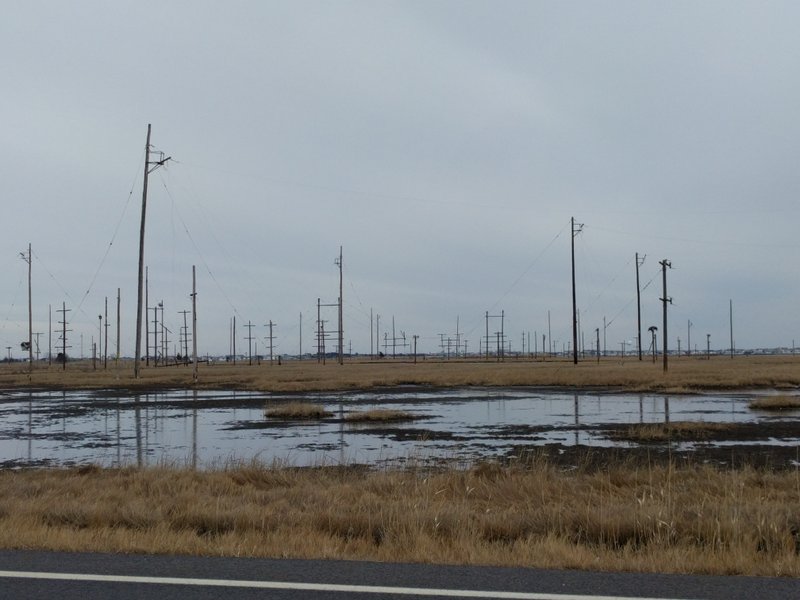
Many thanks, Peter–most impressive! The magnitude of those curtain antennas is simply amazing. Thank you for sharing.

Symposium marking the 90th anniversary of international radio broadcasting in the Netherlands

Many thanks to SWLing Post contributor, Jonathan Marks, who shares the following details about the ‘Keep in touch with the Dutch’: Symposium marking the ninetieth anniversary of international radio broadcasting in the Netherlands, 1927-2017:

(Source: Historici.nl via Jonathan Marks)

‘Keep in touch with the Dutch’:

Symposium marking the ninetieth anniversary of international radio broadcasting in the Netherlands, 1927-2017

Thursday 1 June 2017, 2-5pm

Doelenzaal, Singel 425 Amsterdam

On 1 June 1927 Queen Wilhelmina officially inaugurated international radio broadcasting from the Netherlands with a speech to listeners in the Dutch colonies. This transmission attracted attention from all over the world as it was one of the first times that sound had been transmitted via radio waves across such a distance. In the decades that followed Dutch radio-makers continued to play a pioneering role in international broadcasting, experimenting with new technologies and programming formats. This symposium aims to highlight several themes from this rich history and explore source-materials in order to think about a research agenda in this field and new broadcasting techniques in the digital age.

Program

  • 2.00-2.15pm: Vincent Kuitenbrouwer (University of Amsterdam)
    Introduction
  • 2.15-2.45pm: Bas Agterberg (Beeld en Geluid)
    Everybody Happy? Archiving RNW and the Heritage of Eddy Startz at Sound and Vision
  • 2.45-3.00pm: break
  • 3.00-3.30pm: Jonathan Marks (CEO Critical Distance)
    International Radio Broadcasting in the Era of Amazon Echo
  • 3.30-4.00pm: Rocus de Joode (Independent Consultant at JRCC)
    The Importance of Shortwave, the Madagascar Relay station Now and Then
  • 4.00-4.15pm: break
  • 4.15-5.00pm: Panel: International radio in the digital age
    – Alec Badenoch (University of Utrecht/Vrije Universiteit): Radio Garden
    – Leon Willems and Suzanne Bakker (Free Press Unlimited): Radio Dabanga
  • 5.00-6.00pm: drinks reception

Please register

Vincent Kuitenbrouwer, History Department, University of Amsterdam
Email: [email protected]

This symposium is sponsored by the Amsterdam School of Historical Studies (ASH) and the Modern History Research Group

If I lived within a reasonable distance of Amsterdam, I would certainly attend this afternoon symposium.  Impressive line-up!

Thank you for sharing, Jonathan!