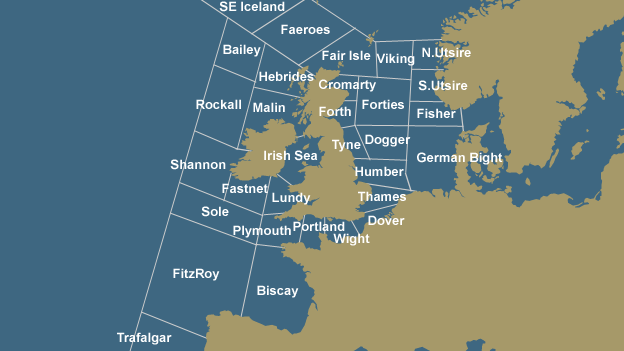
 Many thanks to SWLing Post reader, George, who writes:
With all of the recent postings about the Shipping Forecast, I thought I’d share this excellent little video produced by the Met Office:
Click here to view on YouTube.
Thank you, George!

Many thanks to SWLing Post reader, George, who writes:
With all of the recent postings about the Shipping Forecast, I thought I’d share this excellent little video produced by the Met Office:
Click here to view on YouTube.
Thank you, George!

Photo from the control room at the VOA Bethany museum.
(Source: Southgate ARC)
National VOA Museum to celebrate 75th anniversary of Voice of America
There’s an important birthday celebration in West Chester this year: the 75th anniversary of the Voice of America.
“We’re planning a series of events and exhibits this year to celebrate the VOA’s commitment across America and the world to embrace best practices in telling the truth in order to let the world decide,” said Jack Dominic, museum executive director.
The VOA was formed in 1942 as a way to counteract Nazi propaganda in Germany and provide war news to American troops and Allies overseas.
“WLWO, a division of WLW, was transmitting news via shortwave radio overseas long before 1942,” said Dominic. “In fact, broadcasters from WLWO provided the nucleus of the early VOA broadcasting team. Cincinnati’s shortwave technology and its broadcasters truly helped the U.S. win the war.”
The reentrant rhombic antennas at the VOA-Bethany station in West Chester were so powerful that they became quickly known as the “siege guns of radio” for their capacity to reach the far corners of Nazi-occupied countries with little audible distortion. A frustrated Adolph Hitler was known to call the VOA “those Cincinnati liars.”
The VOA-Bethany station transmitted VOA news to Europe during WW II and South America during the Cold War through its innovative shortwave rhombic antenna network developed by the Crosley Corporation. The Bethany station was decommissioned by the federal government in 1994, after shortwave radio technology was supplanted by television and satellite technology.
“The men and women who made up the VOA broadcasting system were our journalistic beacons of light during the 20th century,” said Ken Rieser, president of the VOA museum board.
“Elmer Davis, John Houseman, Edward R. Murrow and Robert Bauer all had positions of leadership within the VOA.
“We hope that the VOA enjoys many more years of embracing the highest of journalistic standards in its reporting so it inspires people in war-torn and oppressed countries to hope, dream and work toward democracy.”
The Voice of America, based in Washington, D.C., is the world’s largest international broadcaster, providing balanced and comprehensive news and information in 47 languages to 236 million people each week, according to the VOA website. It continues to reach people in countries lacking a fee press today and its languages include: Russian; Ukrainian; Azerbaijani; Serbian; Armenian; Thai; and Somali.
The National VOA Museum of Broadcasting is located in the art deco Bethany station building and houses three collections: Gray History of Wireless radios; VOA-Bethany station’s Voice of America control room; and the Media Heritage Cincinnati Museum of Broadcast History. The West Chester Amateur Radio Assn. operates station WC8VOA from the museum building.
The VOA museum now offers an annual $50 membership that provides free admission for the member, an adult guest, and up to three children under 12. Members also receive updates and advance information about new exhibits and programs.
For $250, members receive the benefits above, as well as a 50 percent discount on any and all lectures, programs or visiting exhibit tickets.
The National VOA Museum of Broadcasting is open the third Saturday of each month from 1 to 4 p.m. Admission is $5 for adults and $1 for children. The museum is located at 8070 Tylersville Road in West Chester.
Museum will be open this Saturday, Feb. 18
For more information, visit the VOA Museum website at www.voamuseum.org or call (513) 777-0027.
To access Voice of America programs, visit www.voanews.com
The VOA Bethany museum is certainly worth a visit! I went there in 2015 and was most impressed with the work these volunteers have accomplished.
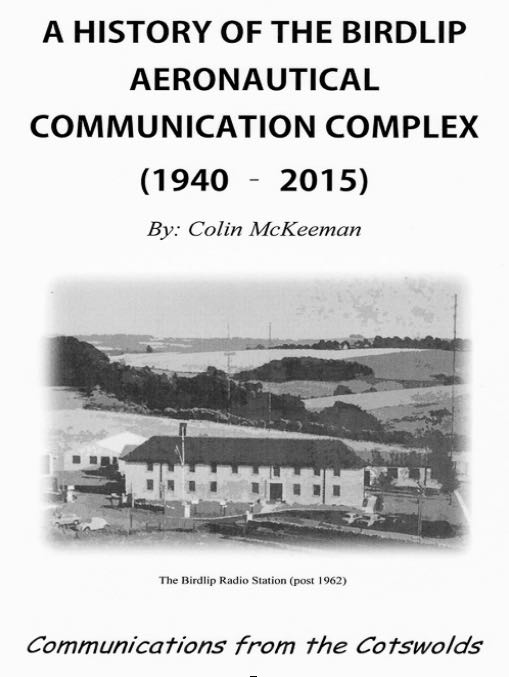 Many thanks to SWLing Post reader and author, Colin McKeeman, who shares the following announcement:
As a mature aviation historian and keen HF monitor since the mid-1960’s, as you will note from my blog this has prompted me to produce this detailed record of the [Birdlip Aeronautical HF Communications Complex, U.K.] stations activities.
[…]The activities of this station are currently handled by ‘Shanwick’ (Shannon and Prestwick) for air traffic on the North Atlantic.
I attach a summary of its content which may help to clarify the scope and nature of this publication.
Click here to download the full press release (PDF).
Fascinating, Colin! I think you’ll find a number of our community members love reading about the history of HF stations. Thank you for sharing your press release!
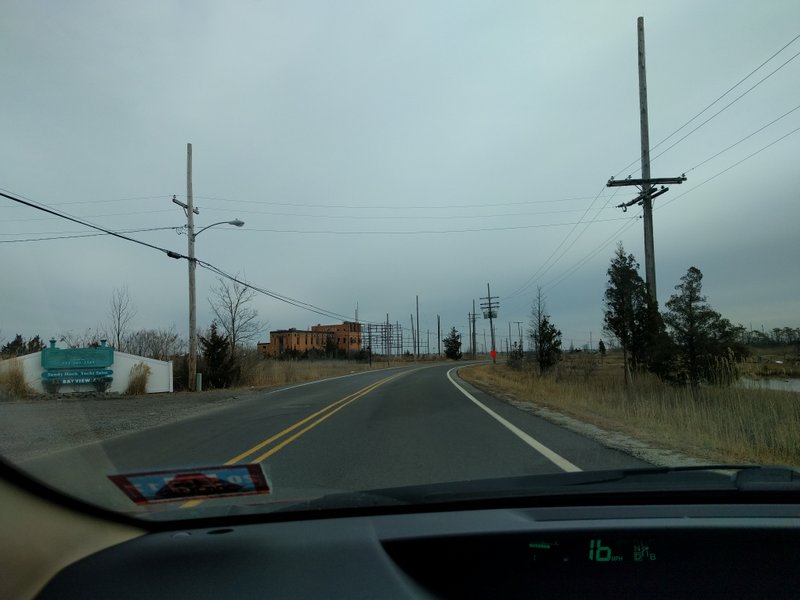
As we mentioned last month, the remnants of WOO at Good Luck Point are slated to be removed soon. Many thanks to our intrepid SWLing Post contributor, Dennis Dura, who shares the following excellent photos he took at Good Luck Point yesterday. Dennis notes:
I finally got to the site [Saturday] afternoon.
All the towers are still there!
There was some construction next to the old AT&T building, but zero work on the poles…Who knows for how long though? So if anyone wants to visit they should do it soon.
Here’s all the pictures I shot. They start with my entry on Bayview Avenue heading east then back out again.
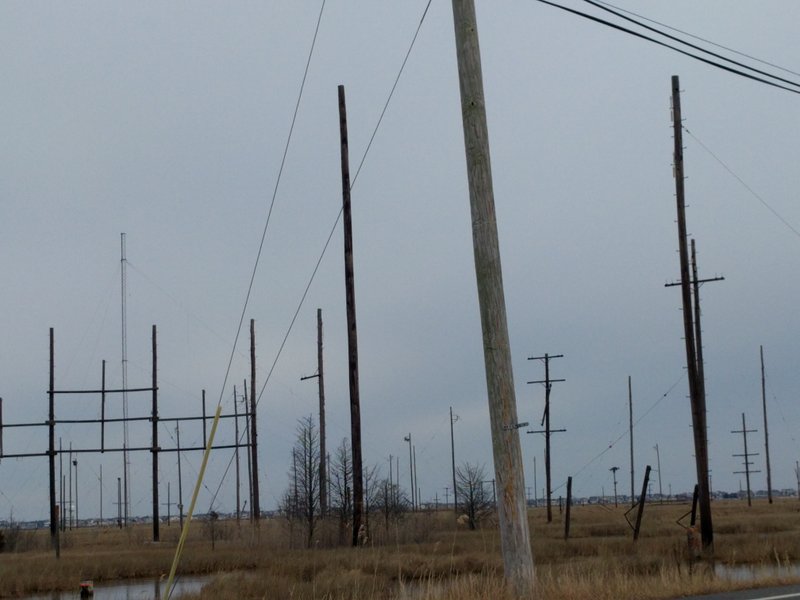

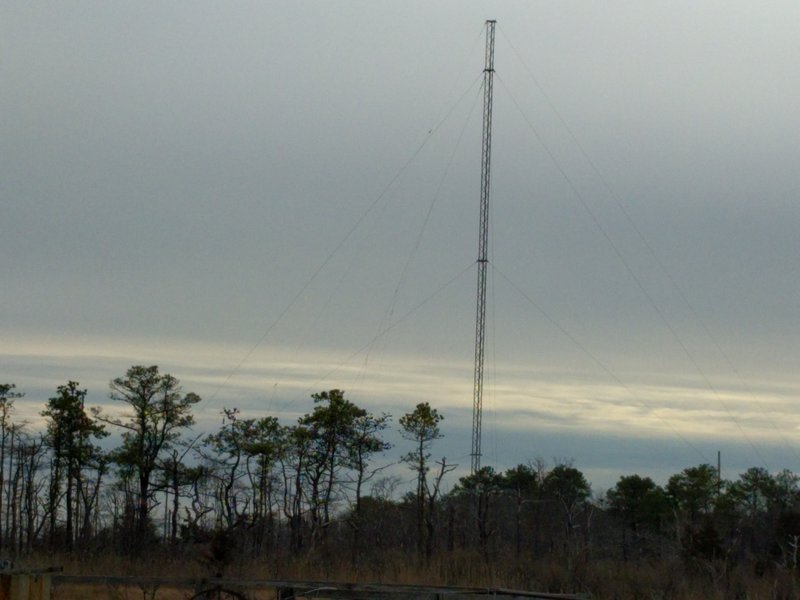
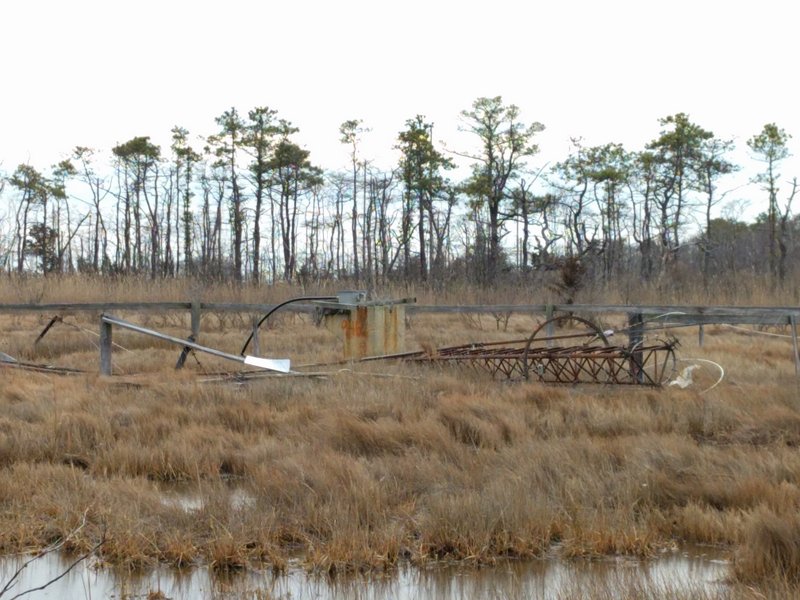
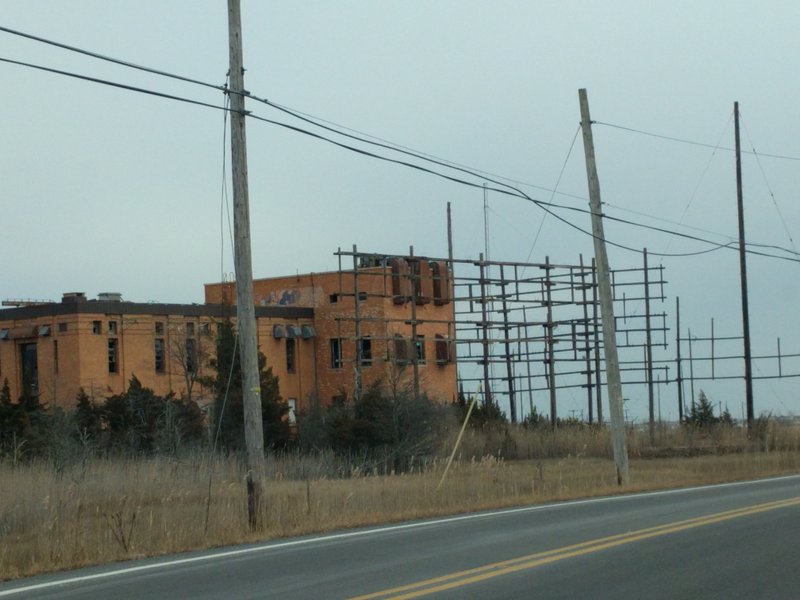
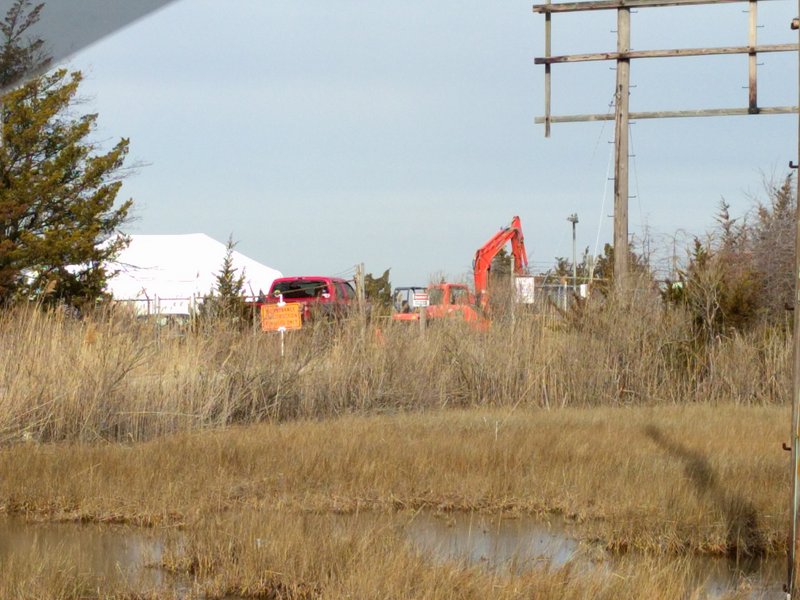
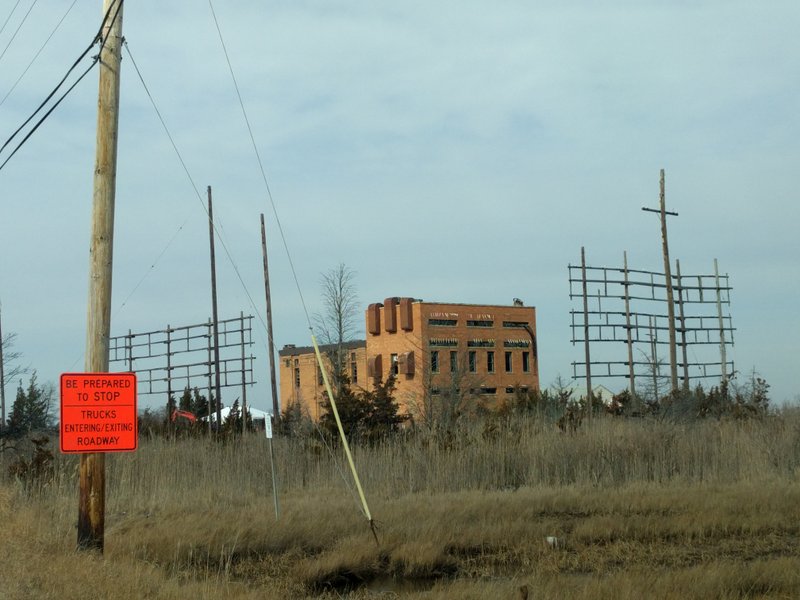

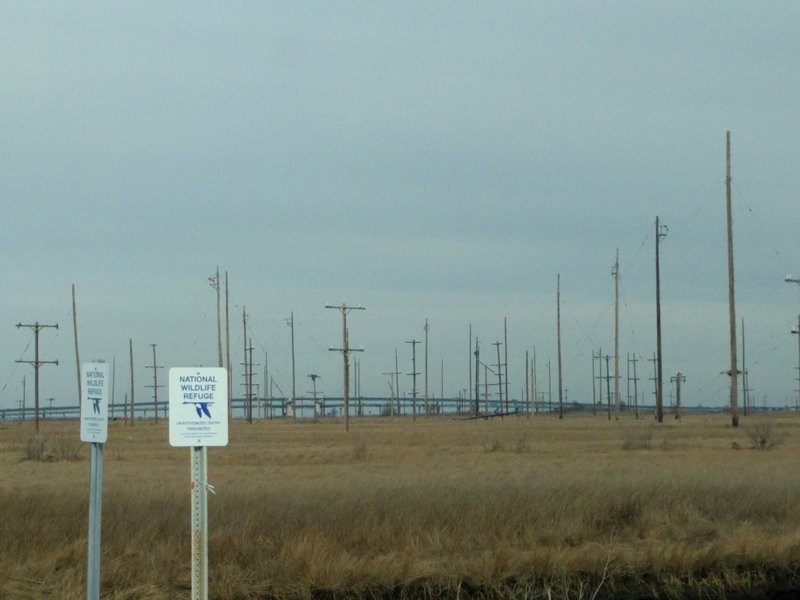
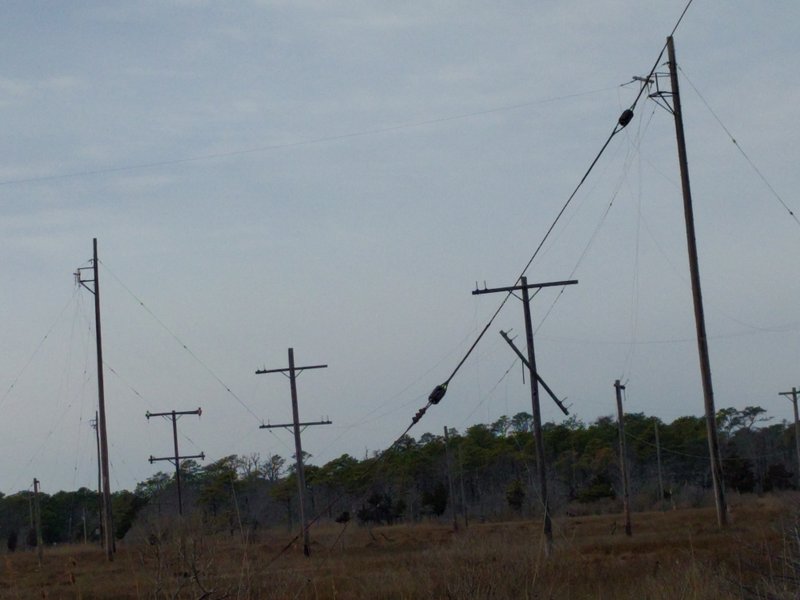
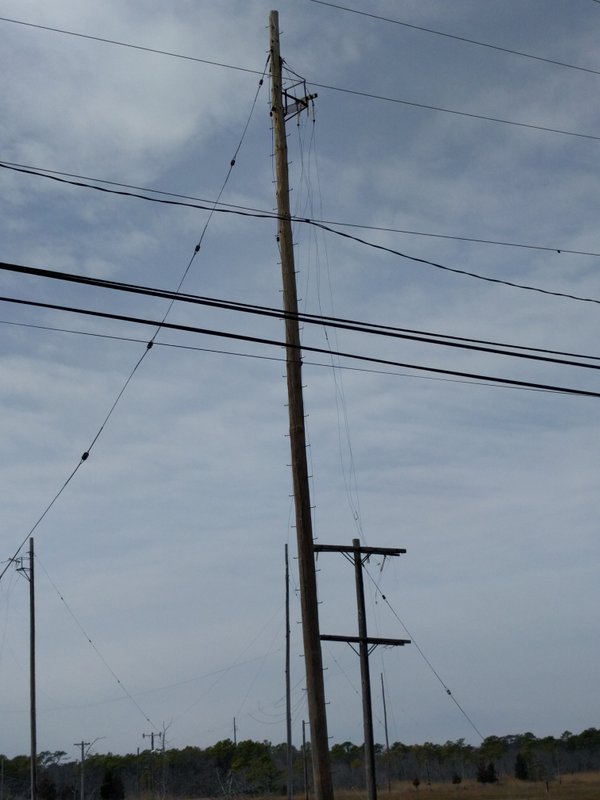

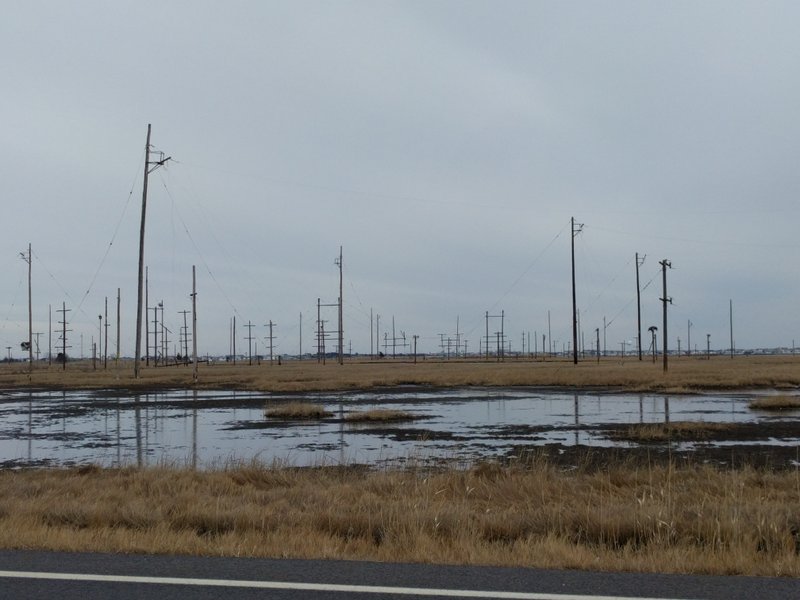
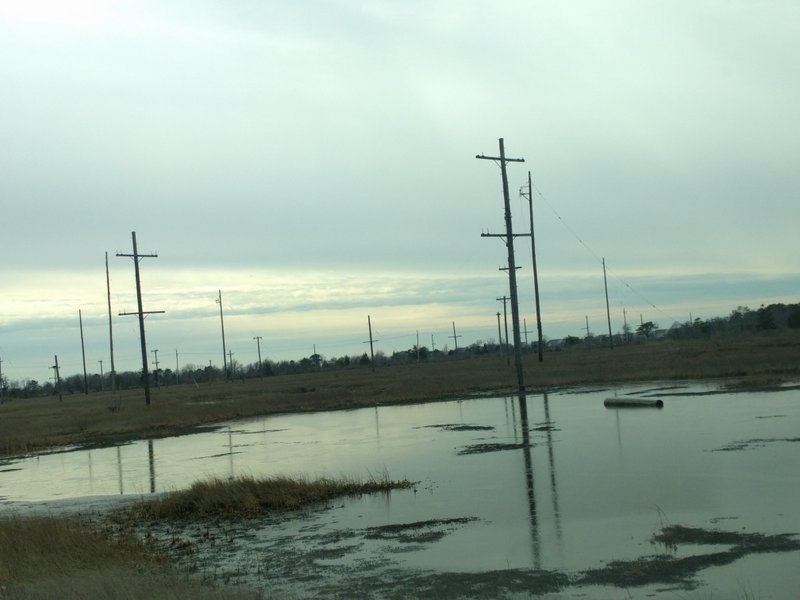
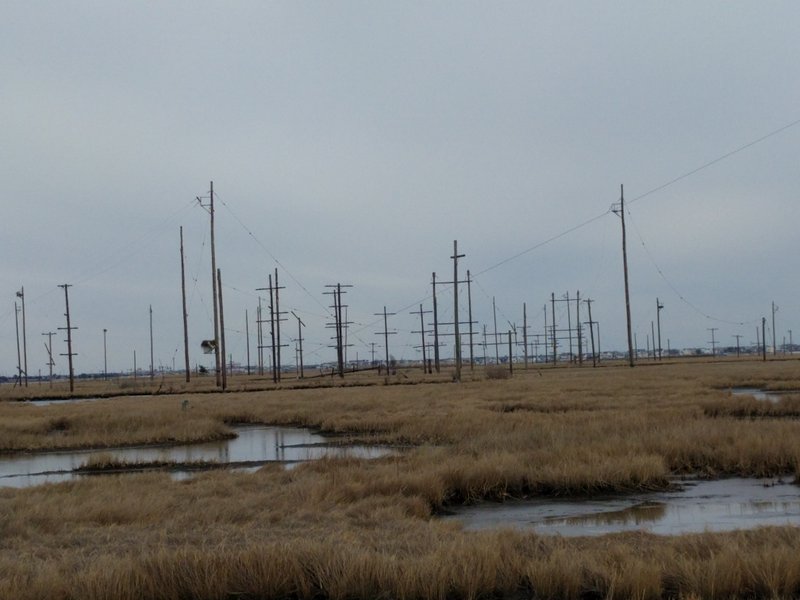
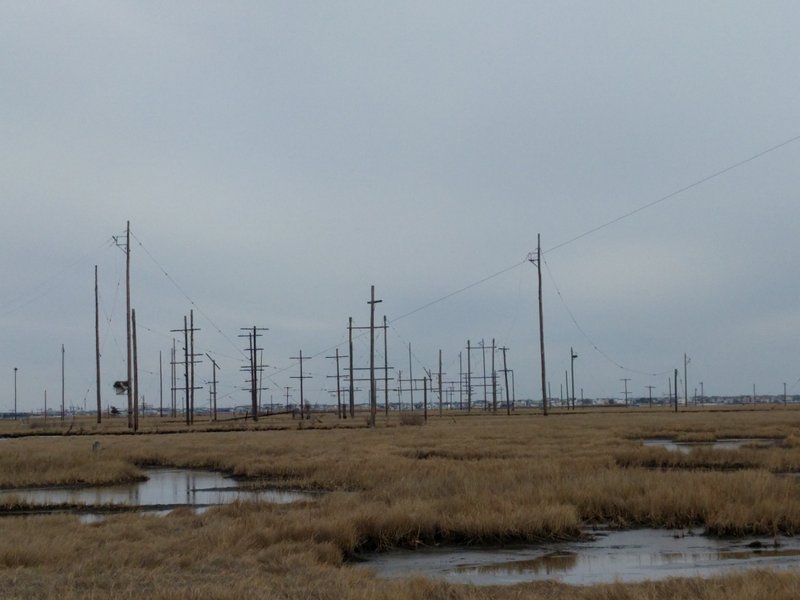

Thank you so much for sharing your excellent photos, Dennis! Since I don’t live near Good Luck Point, I appreciate the virtual tour through your photos!
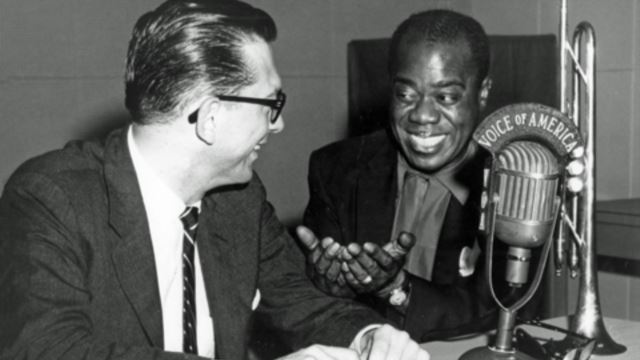
Willis Conover interviewing Louis Armstrong (Photo source: Inside VOA)
(Source: VOA News)
A little more than seven weeks after the United States officially entered World War II, a live, 15-minute shortwave radio broadcast was transmitted into Germany from a small studio in New York City on February 1, 1942.
It was introduced by the American patriotic song “The Battle Hymn of the Republic.” Then, announcer William Harlan Hale’s voice could be heard saying: “We bring you Voices from America. Today, and daily from now on, we shall speak to you about America and the war. The news may be good for us. The news may be bad. But we shall tell you the truth.”
That was the very first broadcast from what, 75 years later, is now the Washington-headquartered Voice of America.
By the end of the war, VOA was broadcasting in 40 languages, with programming consisting of music, news and commentary.
Since then, VOA has grown into a multimedia international broadcasting service, with programming and content in 47 languages on multiple platforms, including radio, television and mobile.
On that first broadcast, announcer Hale’s words set the standard for future programs.
?And since 1976, his words have carried the weight of the VOA Charter, which by law requires VOA to “serve as a consistently reliable and authoritative source of news.” What’s more, it says VOA news must “be accurate, objective and comprehensive.”
“It’s been 75 years since we first began broadcasting objective news and information around the world,” said VOA Director Amanda Bennett. “And now, I think what we do here is more important than ever.”
Over the years, VOA correspondents and freelance reporters in many parts of the world have been on the scene to cover major world events.
In 1989, VOA East European correspondent Jolyon Naegele reported on demonstrations in Czechoslovakia and the fall of the communist government. Later that year, on the other side of the world, VOA increased programming and added staff to its Beijing bureau to cover the student-led demonstrations in Tiananmen Square. Beijing Bureau chief Al Pessin was expelled from China for his reporting.
Today, VOA broadcasts news and other programming through 2,500 television and radio affiliates around the world. At the same time, it provides content for mobile devices and interacts with audiences through social media.
As of 2016, VOA’s weekly audience across all platforms averaged more than 236 million people worldwide.
Check out more information on our VOA 75th anniversary page.
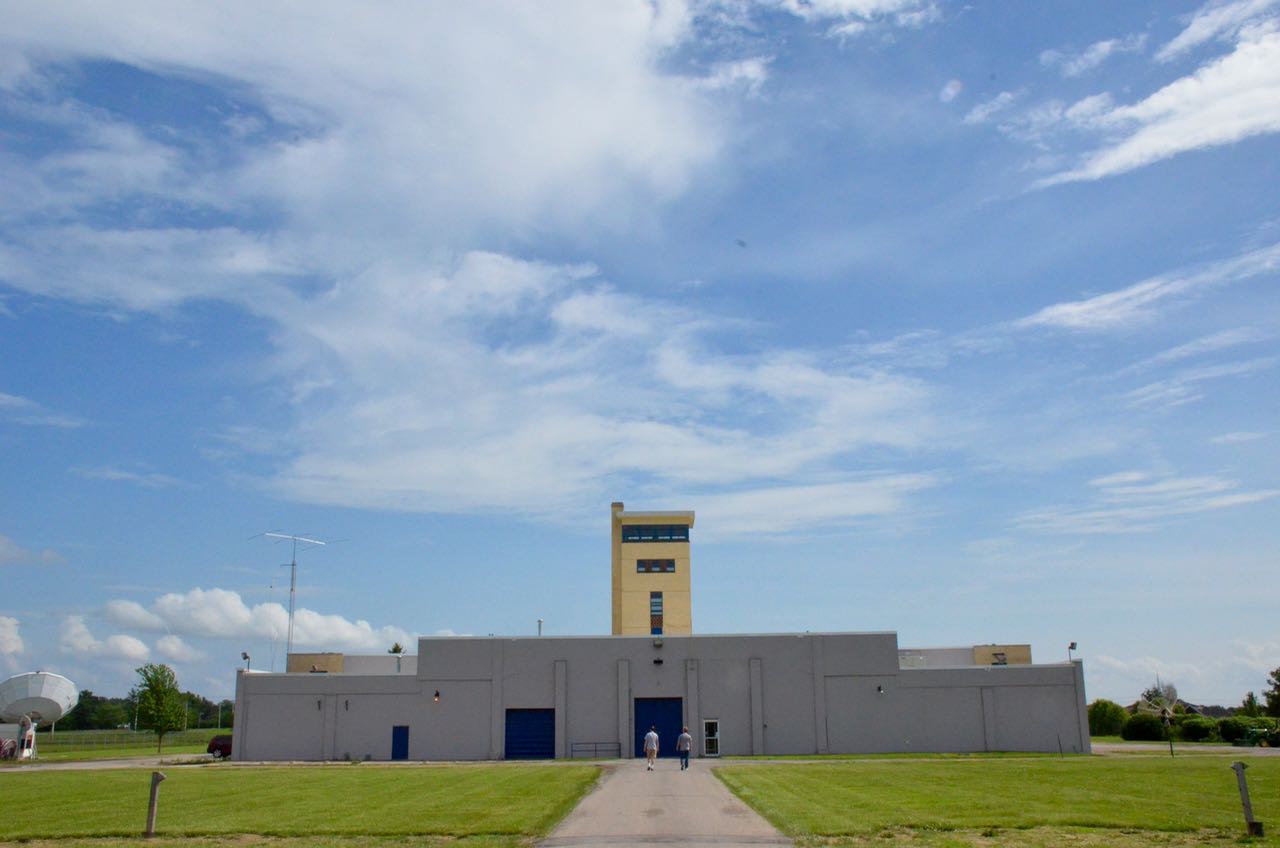
Voice of America Bethany Relay Station, May 2015
Many thanks to SWLing Post contributor, Alexander (DL4NO), who writes:
Hello Thomas,
I just heard a short feature on Deutschlandfunk: 75 years ago today VoA started transmitting – in German.
vy 73
Alexander
DL4NO
Many thanks for the tip, Alexander!
The Deutschlandfunk article, of course, is in German. I found, that Google Translate did an acceptable job translating it into English.
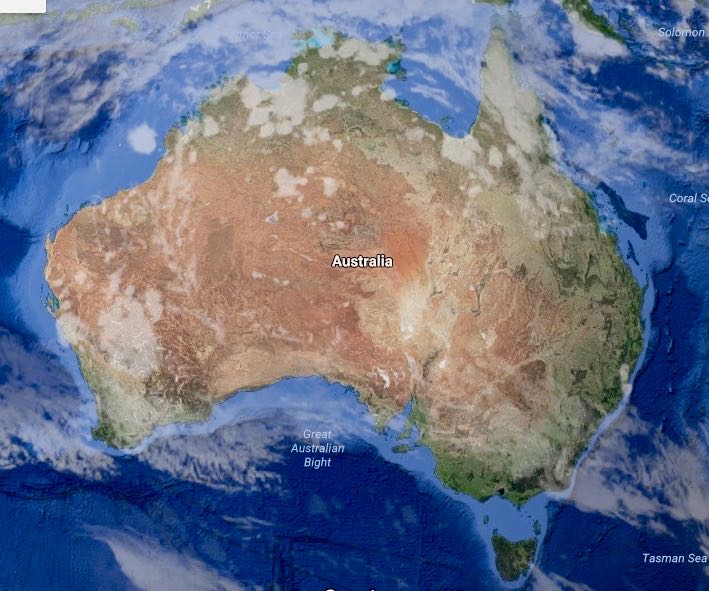
This morning, I woke up, tuned to 9,580 kHz and all I heard was static.
Other than when the Shepparton transmitting station has been silenced for maintenance in the past, 9,580 kHz is one of the most reliable frequencies I’ve ever know on shortwave. Radio Australia has met me there every morning I’ve listened since I was eight years old.
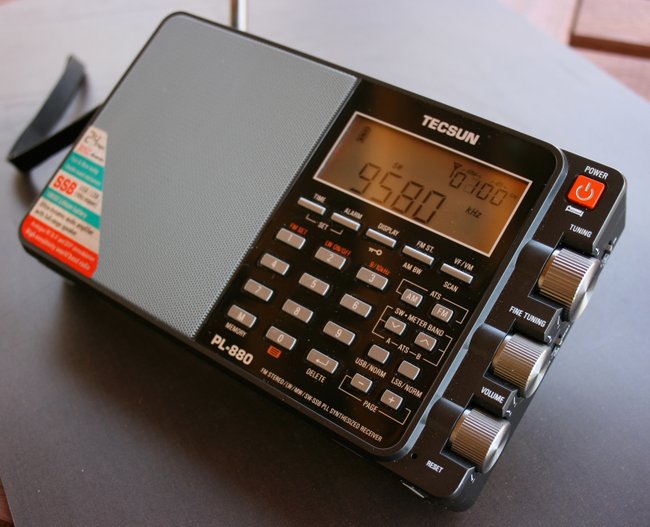
I feel like I’ve lost a dear friend and certainly a staple source of news on shortwave radio. I know I’m not alone–a number of readers have shared similar sentiments this morning.
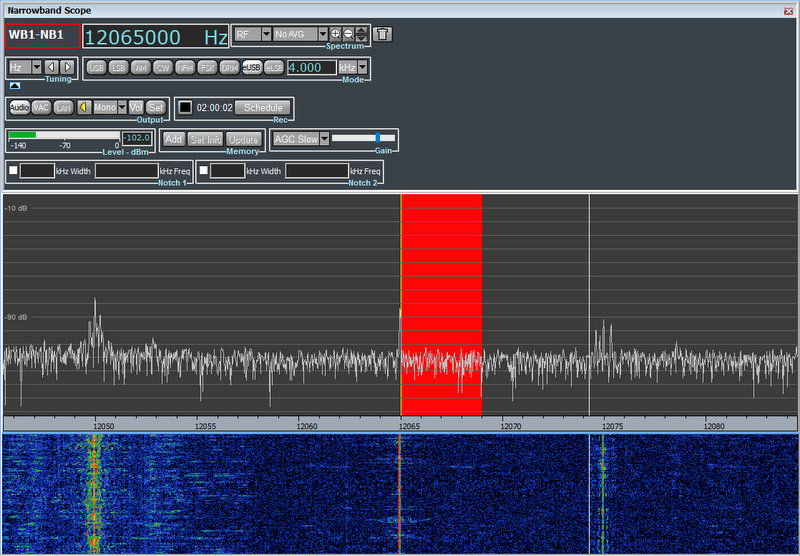
Listening to Radio Australia on 12,065 kHz with the Titan SDR Pro.
Since the beginning of the year, a few of us have been making a concerted effort to thoroughly archive Radio Australia’s final days on the air. Mark Fahey, London Shortwave, Richard Langley, Rob Wagner and I (to name a few) have been making both audio and/or spectrum recordings.
At 0100 UTC on January 31, 2017, we heard the “Waltzing Matilda” interval signal for one last time. As I understand it, the crew at the Shepparton site left the transmitter on a few extra seconds extra so their famous interval signal would be, in essence, the final sign-off.
Our friend and contributor, Rob Wagner, from Mount Evelyn, Australia, posted an excellent recording/video of the final minutes earlier today.
Due to propagation and the time of day when the shut down happened, I was unable to make a recording, so I’m pleased others could.
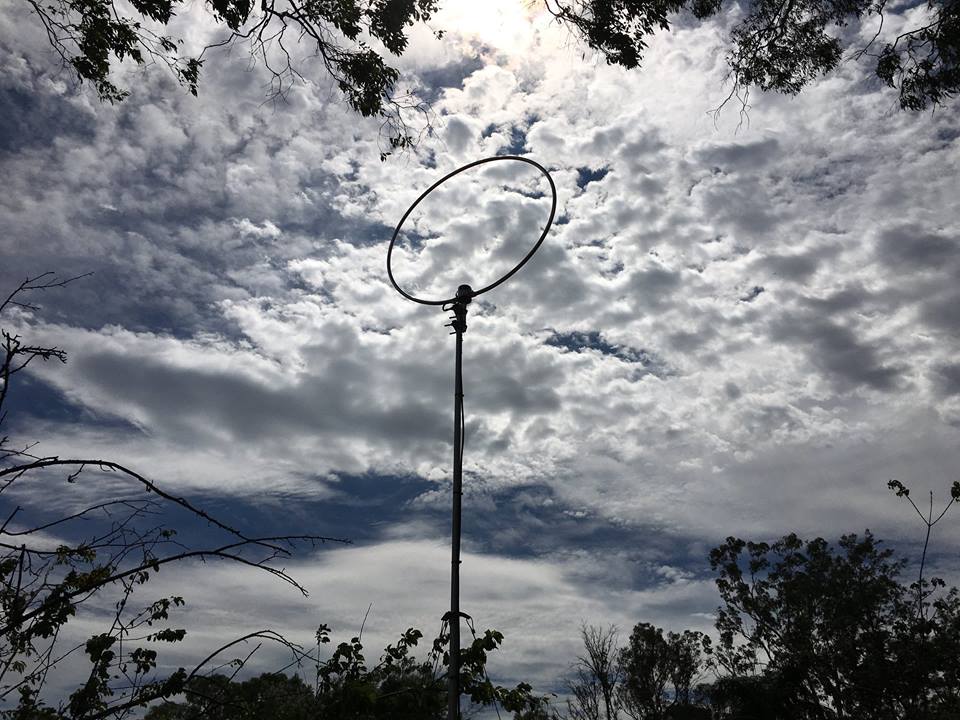
Mark Fahey’s Wellbrook Mag Loop antenna.
I’m grateful to friend and contributor, Mark Fahey, who lives near Sydney, Australia, and was also able to record the final moments of Radio Australia as well. Mark recorded the shortwave service and RA satellite feed simultaneously.
Mark shares the following recordings and notes:
Recording 1
This is RA’s final few minutes on shortwave – it was recorded on 17840kHz.
The file picks up the regular program ending, then into a Promo for RA “Pacific Beat” (a Pacific current affairs program), then the classic RA Interval Signal then the transmitter clicks off and the void is heard.
Click here to download the MP3.
Recording 2
The file starts at exactly the same time as the first file, but in this example we are monitoring the Network Feed from Intelsat 18 at 180.0 degrees east (above the equator right on the international date line). This satellite feed is the way Radio Australia gets to the network of FM Transmitters they have scatted around the Pacific Region (which is why they feel they don’t need shortwave anymore for – most populated areas of Radio Australia’s target area now is covered by a network of Radio Australia FM transmitters).
Click here to download the MP3.
Some differences to the first file – Radio Australia is produced in FM quality stereo, though of course DXers only ever heard it in shortwave quality mono. So this network feed is in stereo and has a wider dynamic range that what DXer’s are familiar with from Radio Australia. At the end of the Pacific Beat Promo, Radio Australia goes straight into News, the closing of the shortwave service was not an event that would have been noticed for the typical listeners of RA who now listen via FM in Pacific capitals and major towns.
Thank you Mark for your comparison–I’ve never heard RA so clearly. Only you would’ve thought to simultaneously record the satellite feed! It gives the moment that much more context.
A number of SWLing Post contributors have been sharing recordings this morning. I will plan to collect these and put them on the Shortwave Archive in the near future.
Though senator Nick Xenophon says he will introduce legislation to Parliament to force the ABC to reinstate its shortwave radio service, we have to assume we’ve heard the last of Radio Australia and ABC on shortwave. (With that said, I understand Xenophon is a determined fellow.)
Rest assured: if Xenophon’s legislation gains traction, we will post updates!
No doubt, Radio New Zealand International’s shortwave service has just become that much more important in remote Pacific Islands. Click here to view RNZI’s schedule.