Shortwave listening and everything radio including reviews, broadcasting, ham radio, field operation, DXing, maker kits, travel, emergency gear, events, and more
Many thanks to SWLing Post reader, Phil Ireland, who comments:
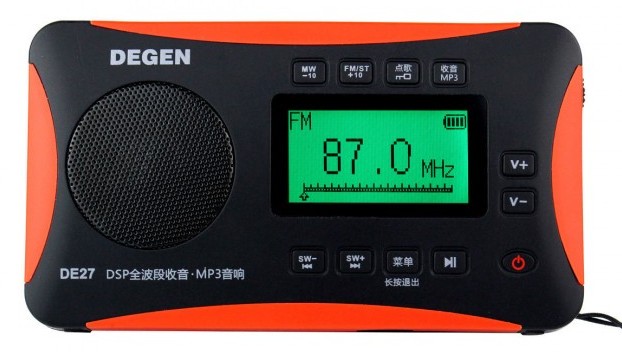
I’ve just received my Degen DE27 from China. Interesting little radio, I haven’t had a good chance to put it through its paces yet but my initial impressions are the radio seems well built and fairly intuitive to turn it on.
However, all the instructions are in Chinese so luckily there was someone in my office who could set the language to english otherwise, setting up the radio is a nightmare! I will have to take the radio outside to test its performance as the office environment is useless to listen in.
The box says the radio tunes from 3.2 mhz to 21.850 mhz however, I havent been able to work out how to make it tune out of the standard SW Broadcast Bands yet. Toggling between 10 khz and 9 khz steps for AM is easy as it setting the FM band coverage but I’m yet to determine the SW settings. It appears tuning is only in 5 khz as well on SW.
As for venturing into MP3 settings and recording, I’ll leave that, it seems too much of a challenge! The clock and calendar, sleep timer, alarms are all fairly straight forward but there is an “E-Book” setting which defies description! It has a USB flash disc function and inputs for a micro SD card. Charging the supplied Lithium battery is via a supplied USB cable.
The display is easy to read and attractive with excellent backlighting. I’m not expecting stellar performance on any band, after all, it was a cheap radio (about 40 AUD with free postage) but it is built around DSP architecture. Only a single bandwidth is available and there is no SSB capabilities. The radio hopefully will be ideal to throw onto a backpack or pocket as a travel portable.
If DEGEN read these comments, perhaps an English manual put online would be extremely helpful to allow users to get the most out of the DE27.
I’ll comment more on the performance later but for now, the radio shows promise.
Thanks so much for sharing your initial impressions, Phil! Please keep us informed as you discover more about this little radio!
This reminds me that I have yet to put my Degen DE221 through the paces. Stay tuned!
Sometimes when browsing eBay you’ll come across a hot item that wasn’t even on your wish list or Followed eBay Searches. This was the case for me early last month when I spotted a new listing for a Zenith Royal D7000Y-2 Trans-Oceanic that’s arguably the best performing T-O ever made. It’s not the most collectable (the final R7000 series has that distinction), but is the final model with the desirable band spread tuning arrangement. The D7000Y is also the last of the hand-wired Trans-Oceanics. Some claim this model has the best audio of the transistorized T-Os, too.
I have a soft spot in my heart for Zenith Trans-Oceanics, as the co-author of the “Royalty of Radios” reference book, the late Prof. John Bryant, was my best friend for many years. John also wrote books on Zenith’s corporate history and other models of Zenith radios. The transistorized Zenith Trans-Oceanics were unobtainable dream receivers for me when I was a teenager in the mid-1970s.
I watched this Buy-It-Now auction for three days and was very surprised it remained available, especially after noticing its superior condition compared to other auctions for the same model. Finally on the third day I pulled the trigger–I’m not a collector of vintage radios but I couldn’t miss the chance to let this fine old Zenith follow me home. At a Buy-It-Now price of $219 including cross-country shipping, it seemed like a no-brainer decision.
When the radio arrived–packed extremely well–it was in ever better condition than pictured and described (I’d call it 9.8 on a 10 scale). The package included the original hang tag, QA stickers, owners manual, service manual, marketing literature and even the original monaural earphone and AC power cord. All dial lamps and the chart light worked fine. The previous owner said the T-O was fully aligned a year ago, and indeed I found that the reception quality on the built-in whip antenna is great. I’d love to know where this receiver was stored for the last 38 years; it was clearly someone’s gently used, cherished Zenith.
This slideshow requires JavaScript.
________________________________
A folder of high resolution photosof this receiver can be viewed here.
Compared Against the Sony CRF-320
Besides simply enjoying receivers I get a kick out of comparing them against each other, and against various other ones owned by my radio hobby friends. Thanks to the loan of a vintage Sony CRF-320, I was able to directly compare it to my Zenith Trans-Oceanic Royal D7000Y-2 receiver. My friend’s CRF-320 is the equal of my Zenith in condition and quality. Each of us would like to own both of these radios!
This is an interesting pairing, since the Zenith was among the last of the premier, USA manufactured portable receivers (analog only, all hand-wired chassis), and the CRF-320 was an equally prestigious portable receiver of the “latest technology”–digital/analog readout with printed circuit board construction.
Once a leading receiver brand, Zenith did not react quickly enough to changing trends and business climate after the death of its founder, Commander Eugene F. McDonald. The 40 year old (1942-1982) proud line of Trans-Oceanics gave way to new, semi-automated methods of building receivers with inexpensive labor from Asia.
After an initial production run of the next (and last) R7000 series, manufacturing was moved to Taiwan. The receiver was built just as well as the previous Royal D7000, but used PCBs inside and the useful band spread frequency ranges were done away with (at the expense of ease of tuning). Still, Zenith T-Os couldn’t compete on price or performance against the Sony CRF-320, and the R7000 Trans-Oceanics were the last (and now most collectible) versions.
This YouTube video compares reception of these two vintage receivers with mid-morning signals on the 31 meter band, from the Seattle area:
Both radios were used with their built-in whip antennas although I couldn’t extend the Zenith’s its final four inches due to ceiling height in the room.
In my opinion, the CRF-320 is superior in keeping signals steady with its AGC, but the D7000Y-2 excels in audio quality and is neck-and-neck in most other respects. The Zenith may have performed a bit better with weak signals if the ceiling in my kitchen was a few inches higher! (Both radios have substantially long built-in antennas, and each are very well matched to their circuitry for excellent reception.)
There are many references around for the Zenith Trans-Oceanic series, but not a lot has been published on the CRF-320. Here is one page with good details on the Sony: http://www.shortwaveradio.ch/radio-e/sony-crf320-e.htm
I’ve been active on eBay since 1998. As with garage sales, the chances of an excellent “find” increase with the time spent in the pursuit. Sometimes you just get lucky though and find a very desirable item remaining unsold for days, such as this Trans-Oceanic! It’s all about being in the right place at the right time. Since I’ve bought the receiver I’ve yet to see any other D7000s of equal or better quality, despite some with Buy-It-Now prices of up to $450 plus shipping (edit 12/16: I spotted one that appears in equal condition to mine, but for a Buy-It-Now of $675 + $40 S/H).
Guy Atkins is a Sr. Graphic Designer for T-Mobile and lives near Seattle, Washington. He’s a regular contributor to the SWLing Post.
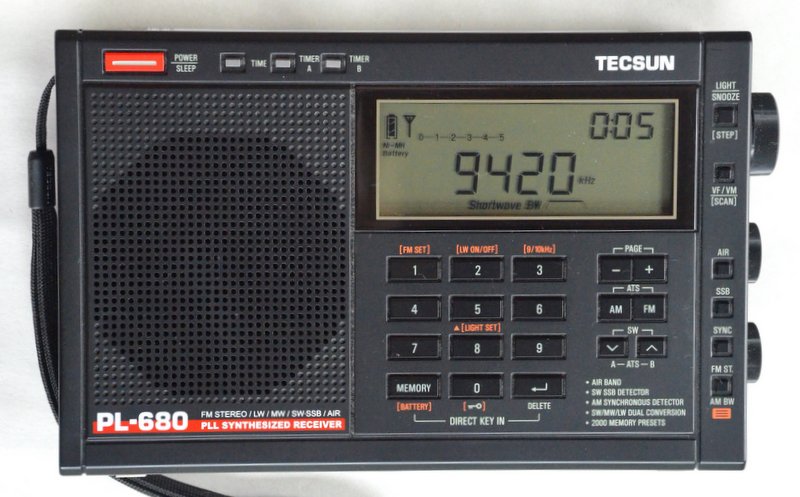
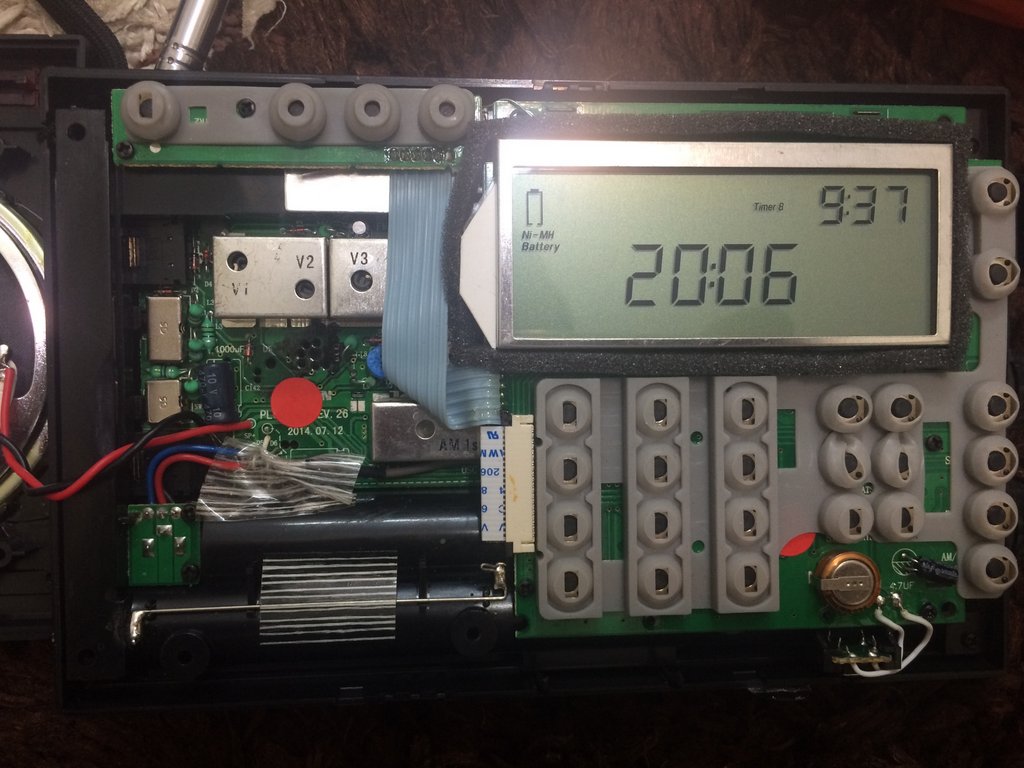
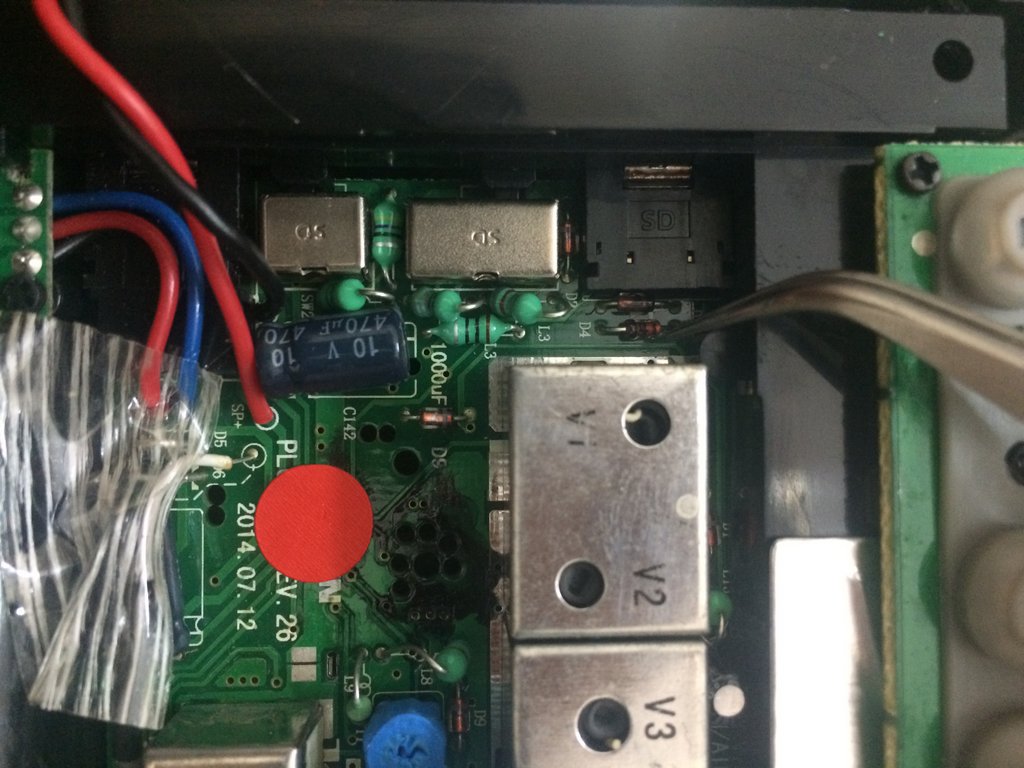
“The basic idea of the diode clipper is that for signals with an amplitude within ±0.7 Vpeak (less than about +7 dBm over 50 ?) the diodes are just open circuits and do not interfere; for higher amplitudes, the diodes clip the signal to about ±0.7 Vpeak limiting the maximum power that reaches the receiver at about +10 dBm over 50 ?, which the vast majority of receiver circuits can easily tolerate. If you wonder why I specified +7 dBm for unclipped signals and +10 dBm for clipped ones of the same peak to peak amplitude, it’s because unclipped signals are supposed to have a nice sinusoidal shape; once clipped, they become more square and their RMS voltage is higher, explaining the 3 dB difference.”
Thanks for sharing this, Mehdi! I’m happy to see that the PL-680 has some built-in ESD protection.
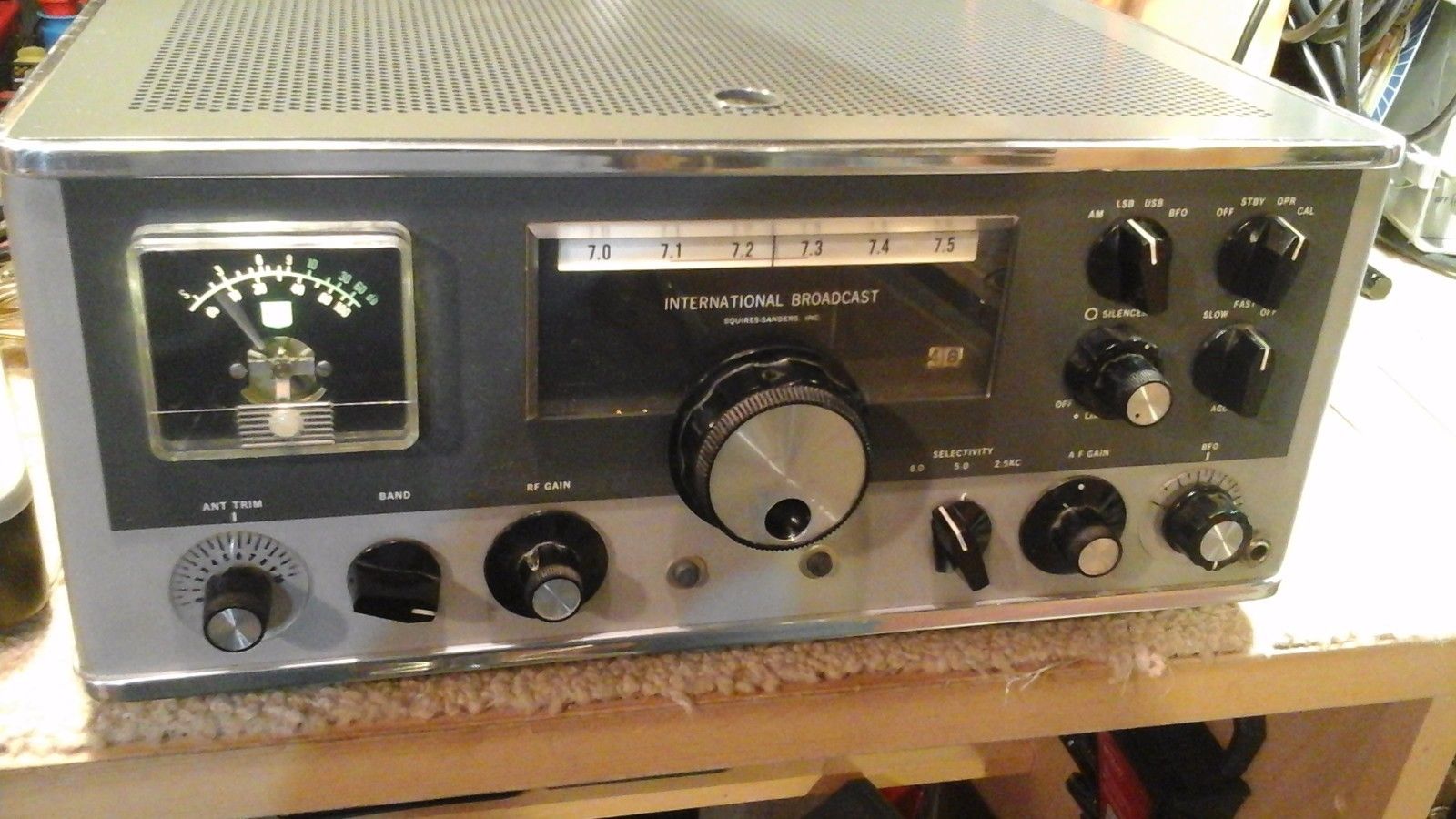
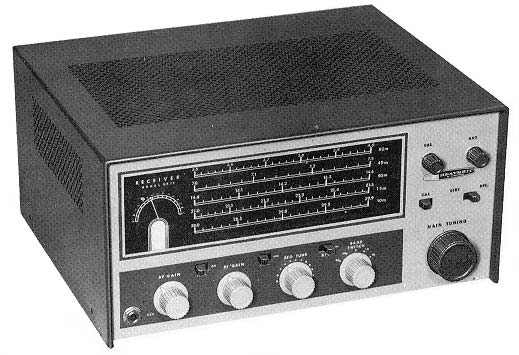
[The Squires Sanders SS-IBS is] a legendary receiver that either brought new ideas to receivers, or brought them to the amateur radio level.
There’s an article in QST in 1963 from Squires about this new stuff, I’ve never seen it so I don’t know if he’s talking in abstract terms, or revealing this receiver.
A big difference is that there’s no RF amplifier before the mixer, and the mixer is balanced. But he throws some of that out by going to double conversion, I assume for tuning reasons. The first IF is 500KHz wide, the first oscillator is crystal controlled and the second oscillator is variable, as seen in top end receivers of the day. The alternative would be a tuneable oscillator that was switched per band (instability from the switch, and the higher the band, the higher the frequency, hence stability) or mixing the tuneable oscillator with a crystal oscillator before feeding the first mixer, which can cause spurs without proper filtering).
The second IF is 1MHz, and having a filter so high was relatively new, though maybe some rigs had moved up to HF filters at the time.
It apparently is fussy about the antenna, or matching, because of the lack of RF amplifier.
Soon there’d be receivers that converted to 9MHz or so directly, saying goodbye to most image problems. Heathkit had a general coverage receiver later in the sixties that had an IF, with crystal filter, at 1680KHz, a relatively cheap receiver with much greater image rejection on the higher bands. The ham band only Heathkit HR-10 used the same IF and filter.
The Heathkit HR-10 (Source: Heathkit Virtual Museum)
Then a bit later, synthesizers arrived that made it much easier to build better receivers.
There was a wave of building using the 7360 balanced mixer used in this receiver, and frontend q-multipliers to deal with the lack of front end selectivity. But as semiconductors and ICs came along, it became much easier for mixers to be balanced or double balanced.
Thanks for this insight, Michael–sounds like the Squires Sanders SS-IBS was quite the innovation of its time. Thank you for sharing!
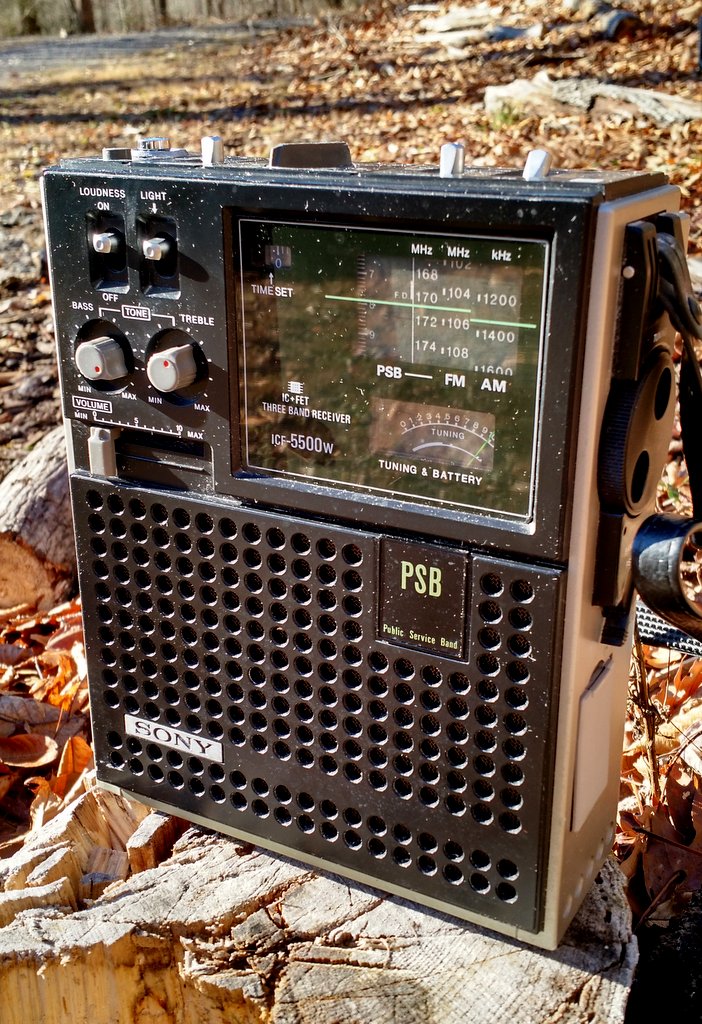
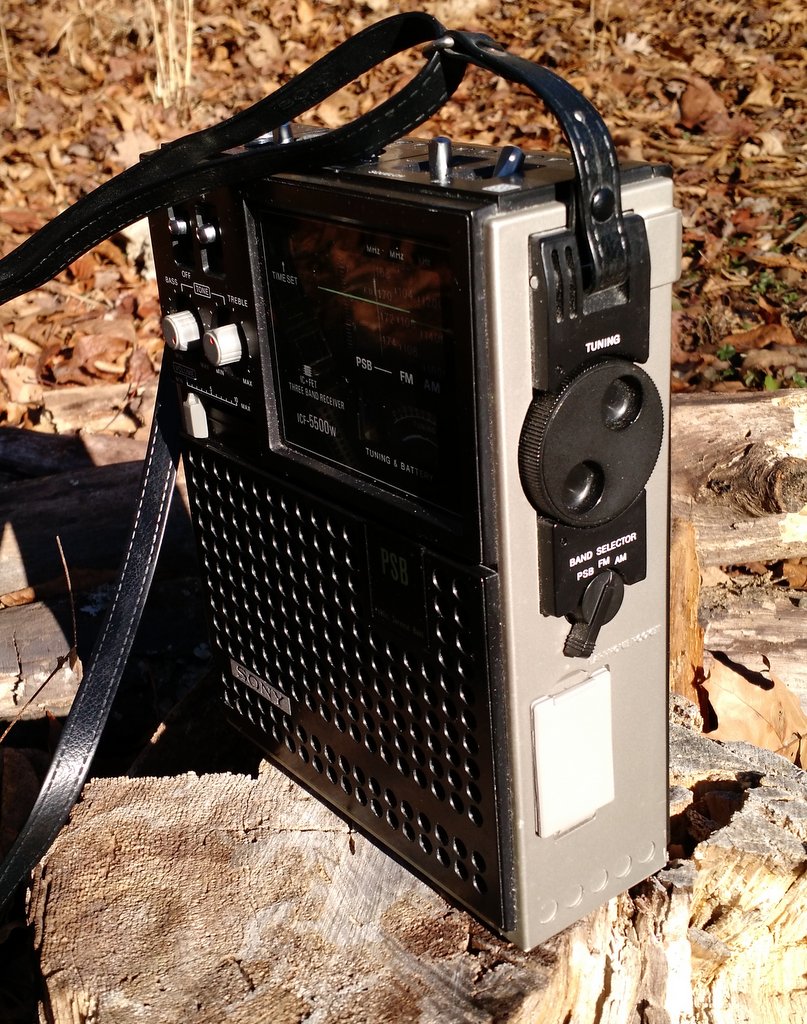
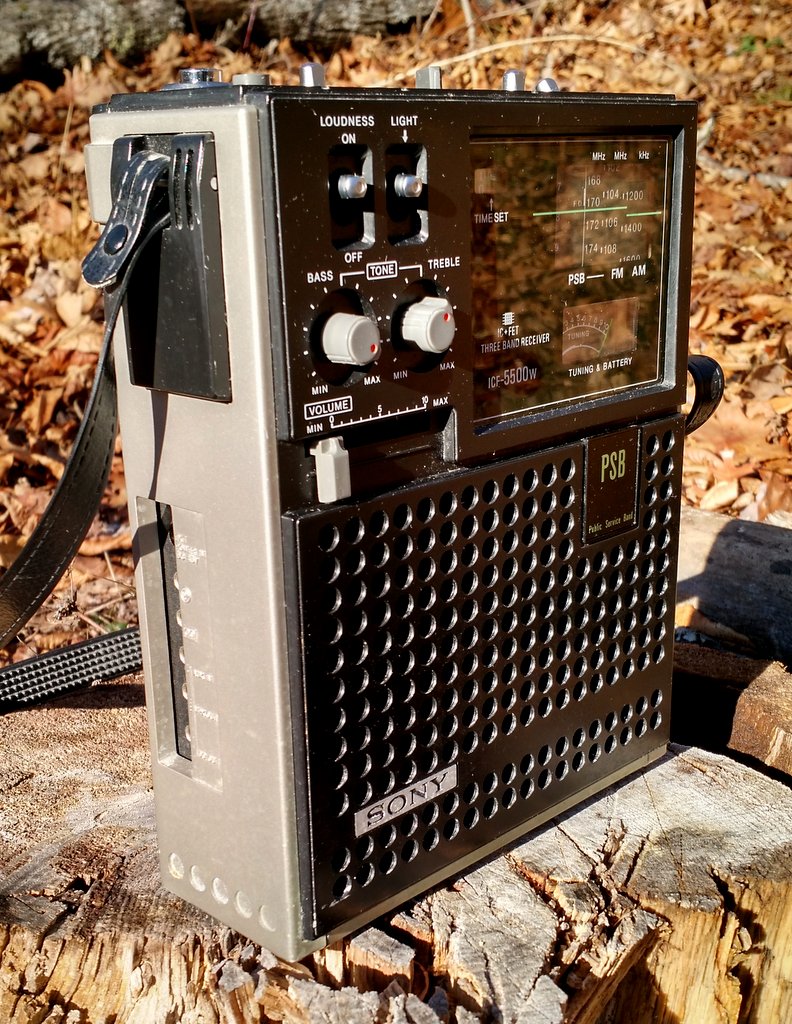
Friday, I brought home an untested, slightly grimy, Sony ICF-5500W. I purchased it through Goodwill for $20.
I crossed my fingers as I put three C cells in the radio and turned it on. Fortunately, I was rewarded with brilliant audio. I tuned the ‘5500W on AM/mediumwave and heard CFZM, 500 miles to my north, and Radio Reloj, 860 miles to my south. A quick scan on the FM dial revealed that I could also hear all of my local benchmarks. Whew!
Other than the dial needing a little calibration, and DeOxit on a few pots, it’s in excellent mechanical shape.
I started cleaning the radio last night using Q-tip cotton swabs and a vinegar/water solution.
I’d like to restore the hard plastic chassis’ original shine, though.
I was tempted to reach for some Armor All, but stopped myself short. I know it would give the ICF-5500W a nice shine, but would it cause any long-term damage to the black plastic or clear dial cover?
I know there are vintage radio restorers among the SWLing Post readership. Can someone offer advice on what’s the best product to use (or not use!) on my ICF-5500W?
This morning, I received a question I’m often asked. It usually goes something like this:
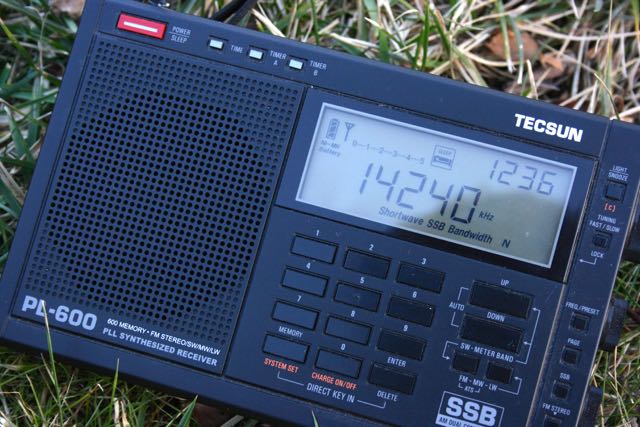
“Should I purchase the Tecsun PL-600, or invest a little more and purchase the Tecsun PL-660? Is it worth the price difference?”
I decided it best to post this question, along with my response, below.
SWLing Post reader, Warren, writes:
“I have been on your web site for a couple of hours now. I especially appreciated your super review. From that I decided I liked the Tecsun PL-660 best. As I was looking for one on ebay, I saw an ad for a Tecsun PL-600. Although I did find specs on your web site, I did not find a review by you. I did find links to other reviews.
One person said a PL-600 was a PL-660 minus the AIR band.
Another said the SSB didn’t work until he took it apart and replaced a capacitor.
Another said the filters didn’t work as well on the 600, or didn’t exist.
Many said the quality was excellent – buy it! Many said it was terrible.
Can you tell me, in your opinion, which, if any, of the above you agree with? And give me your own rating of the 600?
The 600 is much less expensive than the 660. If it is missing filters and sound quality I’m not interested. If it is only missing the airline band I am very interested.”
Here’s my reply to Warren:
“It is confusing and, you’re right, for some reason I don’t think I’ve ever done my own review of the PL-600–though it’s been included in comparisons.
Here’s my answer to your question:
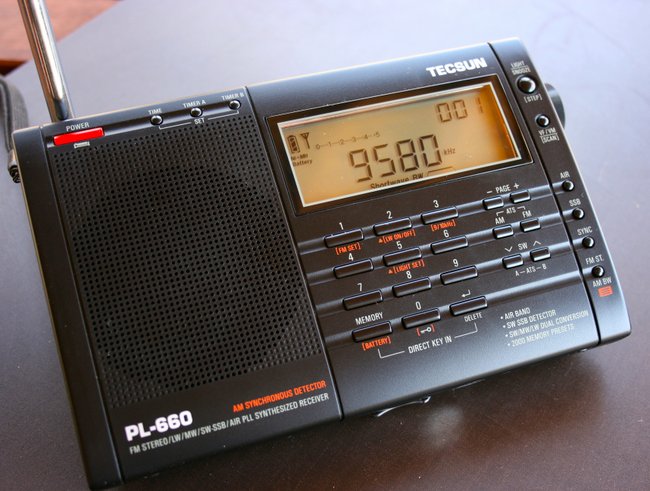
If you want the best overall performance, go for the Tecsun PL-660. I think it’s well worth the price.
The Tecsun PL-660.
The PL-660 has a great synchronous detector–something the PL-600 lacks–which helps with selective fading and pulling weak signals out of the murk. Since you can select the sideband for the sync lock, you can also use this function to help mitigate adjacent signal interference.
The ‘600 is one of the few portables on the market in this price range that has a BFO for single sideband listening (along with the CountyComm GP5/SSB and the Degen DE1103 DSP). When newcomers to the hobby want a full-featured sub-$100 radio that’s simple to operate, I often suggest the PL-600. I’ve never had any issues with my PL-600, by the way–it performed as specified right out of the box and continues to do so today.
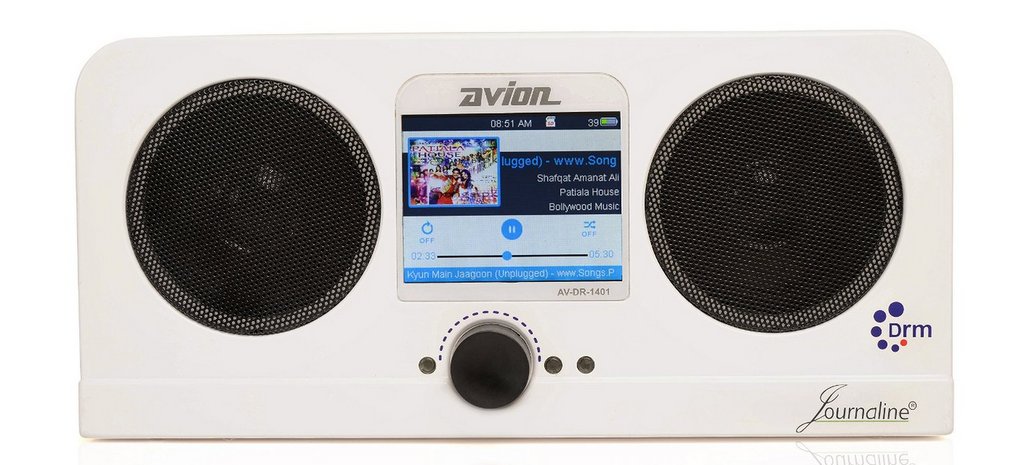
Many thanks to SWLing Post reader, Mike Barraclough, for sharing a link to this review of the new Avion DRM receiver by DRM Radio Forum user PhilipOneL. I’ve pasted his evaluation of the Avion below–you can read this, along with the full discussion thread, on the DRM Radio Forum:
I received my Avion AV-DR-1401 this afternoon and have had it up and running for a couple of hours. There is no instruction booklet with it so I am puzzling over the 41-button remote. It is not as user-friendly as I hoped.
First impression: somewhat cheap feel to it. I have put a small bend already in the thin but long aerial. But that is just the outside (handle, volume control, master power switch, and aerial); I hope it works well anyway. But that cheapness hurts when the price of the radio was fairly high to begin with and I paid more than I wanted for a private company to ship it (Fedex).
The radio arrived with its battery fully charged: nice. (But I need to get an adaptor for the AC adaptor’s mains plug which has tubular prongs rather than the North American blade prongs.) I like a lot the fact that it runs normally with its internal battery rather than plugged into mains. This means I can carry it away from noise sources. And it is very carryable — it reminds me of a small 1965-era beach radio in size.
Turned on, it scanned the local FM spectrum well and registered all the local stations. But I cannot get the Scan function to operate on MW and SW, nor in DRM mode. With an outside antenna (8 metre wire) attached, it was able to get the AIR DRM broadcast on 7550 kHz and decode it. It didn’t seem to be able to get enough signal with just the extending aerial.
I have not figured out yet how to make it register a medium-wave, shortwave, or DRM station in its memory; it does not happen when the button labelled “Delete / Store” is pushed. Among the 41 buttons, there is no other likely candidate for that function.
Shortwave sensitivity in AM mode seems to be poor. I was listening, for instance, to ERT Greece on 9420 on the three receivers now on my desk: Satellit 750, MorphyRichards 27024, and the Avion DR-1401, each in turn connected to the same outdoor antenna. The MR27024 produces the best sound and greatest s/n ratio. It seems far more sensitive than the Avion. But who knows? I may discover I am doing something wrong with the set.
Tuning can be done by inputting a frequency on the remote. Alternatively, the volume wheel can be pushed (this takes two hands) to convert it to a tuning knob. Two problems are apparent. One is that the signal is muted as you tune until you wait on a frequency for four or five seconds. Thus it is a slow and aggravating experience to try to tune across a band looking for signals. Secondly, as soon as a station is tuned and producing audio, the knob goes back to being a volume control. Grrrr. (I think there is a professor at all the design schools who seems to be telling all her/his students to be visually minimalist in design and to give every knob multiple functions. That professor should be publicly shamed until she/he recants and causes all the students to go back to multiple knobs each of which does one thing well.) When the radio gets itself ready to produce audio it seems to ramp itself up to full audio in a series of four steps, each a half-second or so after the last — it is an odd-sounding process. It is like a faulty AGC circuit; perhaps it is.
Sound quality is mediocre at best on AM (both mw and sw). I didn’t listen long enough to the DRM signal from AIR before it signed off to get a good idea of DRM audio quality; I was busy cooking supper. FM audio is mediocre too on the internal speakers but, piped out through the headphone jack to external speakers, it is quite good. When I piped the AM audio out it still seemed mediocre.
Why the AM sound is mediocre seems to be related to two things: the tiny speakers (about 8 cm or 3.3 inches) and the bandwidth at the radio stage. Even comparatively strong (and clean) signals like RHC on 6000 kHz have what may be adjacent signals mixing in — perhaps even internal mixing products? I heard a splash of a local FM station at one point while listening to a shortwave band.
I have written my contact at Avion (Ankit) asking for an instruction booklet, or a pdf of one. I hope I’ll get that early next week (if indeed they have one).
I hope over the next week I will get some chances to check out more DRM signals. I am also hoping that my gradual love affair with the MorphyRichards radio will be replicated here. When I first got the MR27024 I was very cranky about its weird ways of doing things. But once I got a good antenna on it, and got used to its ways, I prefer it to all my other radios as a table-top radio (that is, one useful for listening to specific regular stations). The MR’s radio-stage DSP is quite lovely and makes for good sound. I doubt the Avion will seduce me to quite the same extent, but it may grow on me in other ways.
I understand the problems with DRM but I am still a fan of of the system. I bought this Avion set partly in hopes that I would encourage the manufacturer in some small way. I will use it but I suspect that the minimalist design features (which were also a part of the MorphyRichards design) will turn off users of the Avion.
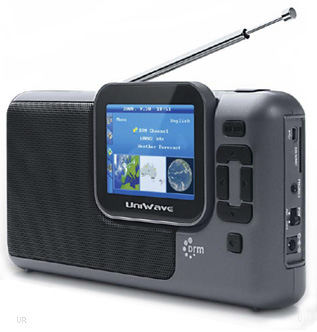
I’m not terribly surprised by this reviewer’s assessment. Just looking at some of the preliminary info on the Avion receiver last year made me think of previous DRM portables like the Newstar DR111 and the Uniwave Di-Wave 100.
The UniWave Di-Wave/Di-Wave 100.
I have a hunch all of these designs were fleshed out by engineers and entrepreneurs who had not gotten customer input in advance.
It’s sad, too. While I know DRM (via the shortwaves) was a “cart before the horse” innovation–meaning, broadcasters adopted the technology well before consumer receivers were on the market.
I really wish the medium would’ve gained traction.
While I prefer the rich sonic texture of amplitude modulation, I love listening to DRM broadcasts well. Last year, during my presentation at PARI, I played a recording of a piano concerto I heard on one of Radio New Zealand International’s DRM broadcasts. If memory serves, the audio clip was taken from this recording I made on June 21, 2104:
Through the presentation room’s hi-fi system, the music sounded absolutely brilliant.
To put what this audience was hearing in perspective, I told them:
“We’re listening to a radio station some 8,300 miles away without the use of the Internet, mobile phones, satellites, or any sort of subscription service. We’re hearing FM-quality audio, streamed wirelessly and originating from the other side of our planet.”
I then received a number of questions like: “How is this technology possible?” and “Do they make car radios that can receive these broadcasts?”
There’s magic in DRM. Sadly, I feel its deployment was awkward and its window of opportunity may have already passed. An affordable, effective, and simple DRM receiver (combined with serious, viral publicity) could turn the tide somewhat–but it doesn’t seem like this will happen anytime soon. Each new DRM portable is only a slightly improved iteration of its predecessor and the price tag continues to be too high for effective market penetration.

 Sometimes when browsing eBay you’ll come across a hot item that wasn’t even on your wish list or Followed eBay Searches. This was the case for me early last month when I spotted a new listing for a Zenith Royal D7000Y-2 Trans-Oceanic that’s arguably the best performing T-O ever made. It’s not the most collectable (the final R7000 series has that distinction), but is the final model with the desirable band spread tuning arrangement. The D7000Y is also the last of the hand-wired Trans-Oceanics. Some claim this model has the best audio of the transistorized T-Os, too.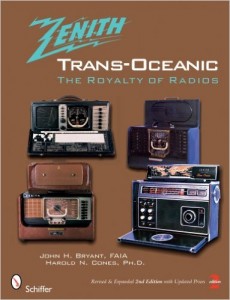
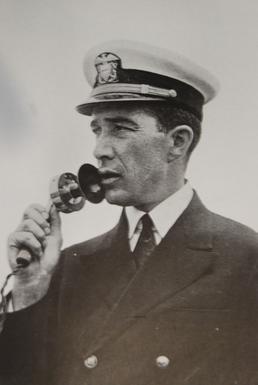 Once a leading receiver brand, Zenith did not react quickly enough to changing trends and business climate after the death of its founder, Commander Eugene F. McDonald. The 40 year old (1942-1982) proud line of Trans-Oceanics gave way to new, semi-automated methods of building receivers with inexpensive labor from Asia.