Shortwave listening and everything radio including reviews, broadcasting, ham radio, field operation, DXing, maker kits, travel, emergency gear, events, and more
Many thanks to SWLing Post contributor, Jon Helberg, who writes:
Greetings!
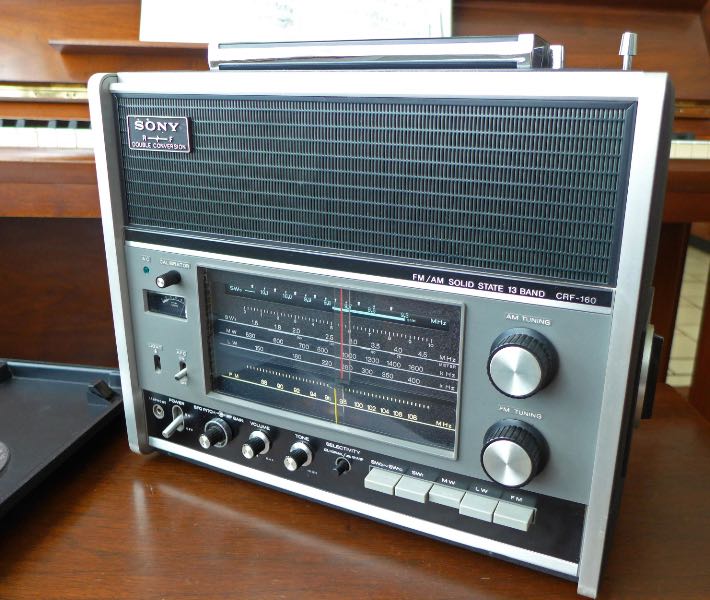
During our COVID-19 shutdown I located my old Sony CRF-160 which has been closet bound for some years now, however it has always worked as new.
[…]Other than the broken toggle switch for the light, all knobs and dials work, are present and accounted for. Upon powering up after many years in storage it lights up just fine and appears to be operational, however once powered up the volume control and every knob I turned brought loads of static to the speakers indicating corrosion of contacts, etc., so I just shut it down without testing any further.
The power cord has become a bit sticky as some plastics and rubber do over time, but of course that easily can be cleaned up. The entire radio case and front cover is intact (nothing broken, warped or bent), with the standard wear marks on the outside but otherwise fine. I do not have the box, manual, or any other accessories. The telescoping antenna looks as if it may have been slightly bent at one time (not kinked), and it extends and retracts just fine.
I have owned this radio since new but raised a family who used it as well (kids broke the light switch), so I do know it worked the last time I used it before storage, but I haven’t used it since other than just turning it on as I have mentioned above.
Photos
I don’t do much with radio any longer other than listening to AM, therefore this radio had no value to me other than sentimental (purchased it after an Army tour with ASA as a radio intercept operator), therefore looking for your thoughts on whether it’s worth getting repaired, or just focus on selling on eBay, or somewhere else?
I would have no idea as to its value, who could repair it, or the cost involved.
Tough decision, Jon, so thanks in advance for allowing me to share your inquiry here with the SWLing Post community.
I’m hoping readers can comment with thoughts on the actual value of the radio, the availability of spare parts (toggle switch), and their thoughts on whether you should keep or sell it.
I’m a nostalgic guy, so my inclination would be to keep it unless you really wanted to liquidate it for funds, or you simply have no attachment to it at all. As custodians of vintage radios, I also feel we should try to keep them in working order.
In terms of repairs, I know my good friend Vlado (at HamRadio.repair) could re-cap it and make it like new. If you could locate a parts radio or simply a similar toggle switch, Vlado could sort that out too I’m sure.
Post readers: What are your thoughts? Should Jon keep the Sony or sell it? Are parts easy to find. Please comment and include any relevant links!
Radio Waves: Stories Making Waves in the World of Radio
Because I keep my ear to the waves, as well as receive many tips from others who do the same, I find myself privy to radio-related stories that might interest SWLing Post readers. To that end: Welcome to the SWLing Post’sRadio Waves, a collection of links to interesting stories making waves in the world of radio. Enjoy!
Many thanks to SWLing Post contributors Alan, Mike, and Dave Zantow for the following tips:
The incumbent government, under its vision of introducing modern trends and technology in different sectors, has planned to fully digitize the state-owned Radio Pakistan.
This information has been revealed in official documents during the ongoing week-long national workshop on Digital Radio Migration policy of Radio Pakistan at Pakistan Broadcasting Academy, Islamabad.
The digitization will bring about a revolution in the field of broadcasting in the country, and will capture the audience at home and abroad including South Asia and Central Asia and the Middle East through quality news, current affairs and programs.
Under the plan, the biggest 1000-Kilowatt DRM Medium-wave transmitting station of Radio Pakistan will be set up at Fort Monroe hill station in Dera Ghazi Khan district in South Punjab at an estimated cost of three billion rupees.
It will be the first ever most powerful but digital transmitter of Radio Pakistan that is to be established in center of the country as part of Phase-II of Digital Radio Migration policy and it will help cover the entire population of Pakistan with crystal clear and noise-free waves.
The project has already been approved by the federal cabinet while the Punjab government has been asked to acquire land for the said purpose.
Under Phase-II of DRM plan, five DRM+FM transmitters of 10-kilowatt each will be installed in Islamabad, Lahore, Karachi, Faisalabad and Multan in the existing Radio Stations.
Besides, eight DRM+FM transmitters of five kilowatt each will be installed in Quetta, Peshawar, Gilgit, Skardu, Gwadar, Mirpur (Azad Kashmir), Khairpur and Narowal in the existing radio stations.
The phase-II of the plan would be accomplished in three years with an overall estimated cost of 3,153 million rupees.
And under Phase-III of the plan, four DRM medium wave transmitters of 100-kilowatt each will be installed in Lahore, Skardu, Quetta and Peshawar for strategic purposes.[…]
The BBC says it is closing a further 18 medium wave transmitters across England, Scotland and Wales in the next stage of its plan to cut costs.
Services being closed range from BBC Radio Solent’s two AM frequencies on the South Coast to BBC Radio Scotland’s service in Aberdeen.
Six more BBC Local Radio services will no longer be transmitted on AM – they are Three Counties Radio (630 and 1161 kHz), BBC Radio Merseyside (1485 KHz), BBC Radio Newcastle (1458 KHz), BBC Radio Solent and BBC Radio Solent (for Dorset) 999 and 1359 KHz, BBC Radio Cornwall (630 and 657 kHz) and BBC Radio York (666 and 1260 KHz).
Kieran Clifton, Director, BBC Distribution & Business Development explains: “The majority of radio listening in the UK – including to the BBC – is now digital, and digital listening is continuing to grow.
“This change was planned as long ago as 2011, but we have taken a measured approach to implement it to ensure that as many of you as possible have already moved on to other ways of receiving the services before we make this change. We know that the changes will impact some of you, and that’s why we’re speaking about the plans again now. We want to make sure that people listening to these transmissions will be able to use other methods to hear the same programmes.”[…]
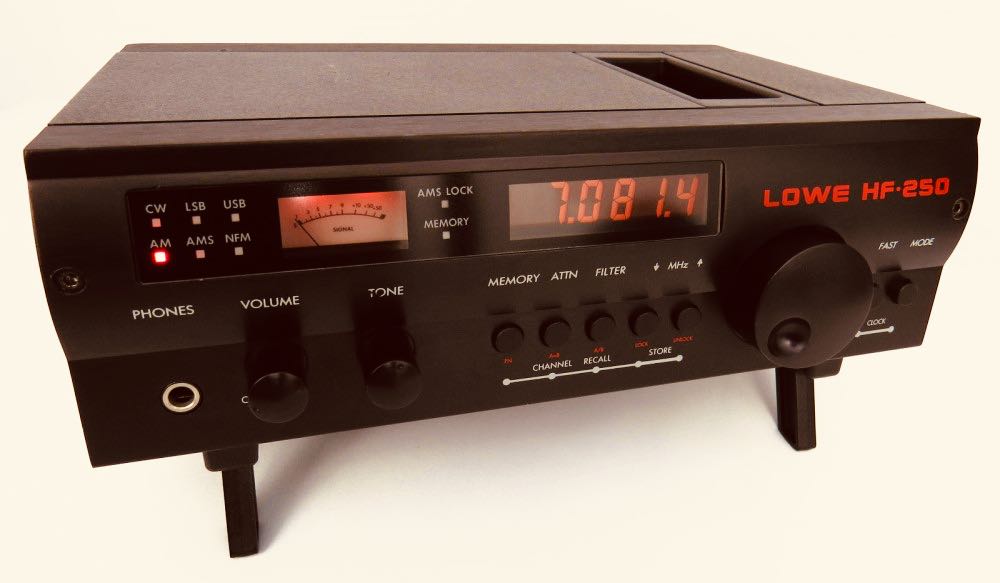
[…]As far as audio quality goes, it’s extremely difficult to beat the Lowe HF-250. Mind you it has it’s share of “bug-a-boos” as well.
In our view it has held up much better in it’s old age vs. the AOR AR7030. Properly operating and in decent condition samples are fairly rare on the used market now (even more so in North America). Most owners know what the receiver is and hang on to them. But once a great while one does show up on the used market. Click here to read the full review.
BBC News has suspended plans to cut 450 jobs as it faces the demands of covering the coronavirus pandemic.
The job losses were announced in January and were part of a plan to complete a £80m savings target by 2022.
Outlets due to be hit include BBC Two’s Newsnight, BBC Radio 5 Live and the World Service’s World Update programme.
Director general Tony Hall gave staff the news on Wednesday, a week after the broadcaster delayed the end of the free TV licence scheme for all over-75s.
Lord Hall said “we’re suspending the consultation on those saving plans”.
He told staff: “We’ve got to get on with doing the job that you’re doing really brilliantly.
“It would be inappropriate. We haven’t got the resource to plough ahead with those plans at the moment, so we’ll come back to that at some point.
“But for the moment we just want to make sure you are supported and you’ve got the resources to do the job that you and your colleagues are doing amazingly.”[…]
Many thanks to SWLing Post contributor, Julien, who writes with the following question:
First, thanks for your site !
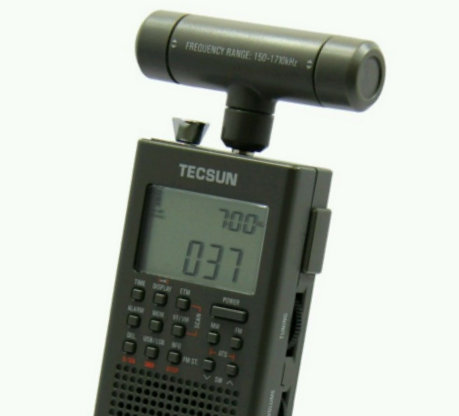
I have a question about PL-365. It seems auto-scan works only in the range of 2,245-21,950 kHz. The ranges from 1,711-2,245 and 21,950-29,999 can only be scan manually.
Do you know the reason for this? Or a trick to auto-scan the other two ranges?
I do not know the reason for the auto scan limits, but imagine it could be a limitation of the SiLabs DSP chip inside–although this is merely a guess. My hope is that someone in our community can verify or perhaps help if they know of a work-around. Please comment!
Many thanks to SWLing Post contributor, Mario Filippi (N2HUN), for the following guest post:
A Look Back: Memories of the Panasonic RF-2200 and its Sibling, the National Panasonic DR22
by Mario Filippi, N2HUN
All photos by author unless otherwise noted
One of the preeminent AM/FM/SW portables of all time is the venerable Panasonic model RF-2200 receiver that was sold in the USA starting in the mid-1970’s for around $165.00 US.
Weighing in at a hefty 7 pounds, 13 ounces and vital statistics of 12” x 7” x 4” it came equipped with a robust shoulder strap to schlep from the radio shack to alfresco listening sites and was basically a completely self-contained entertainment center for the radio enthusiast. My first RF-2200 was purchased in the late ‘70’s from Grand Central Radio Shop in New York City, now just a memory and long gone, but back then they sold a bevy of shortwave and ham radio equipment.
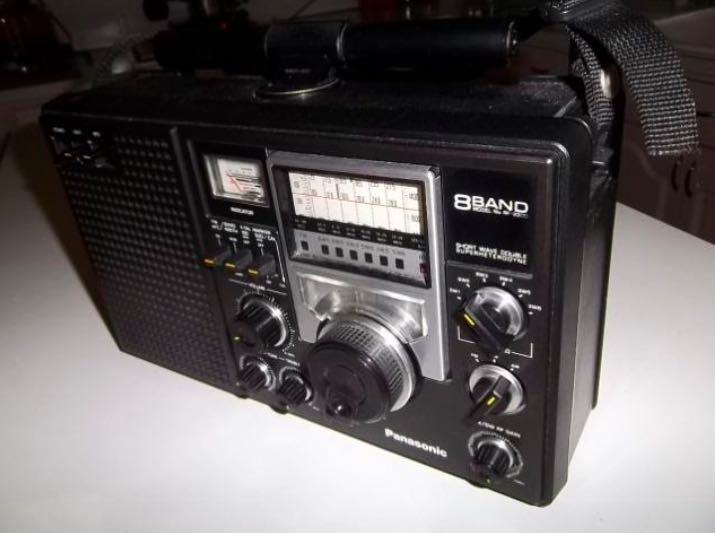
Photo 1. Author’s favorite portable of all time, Panasonic RF-2200
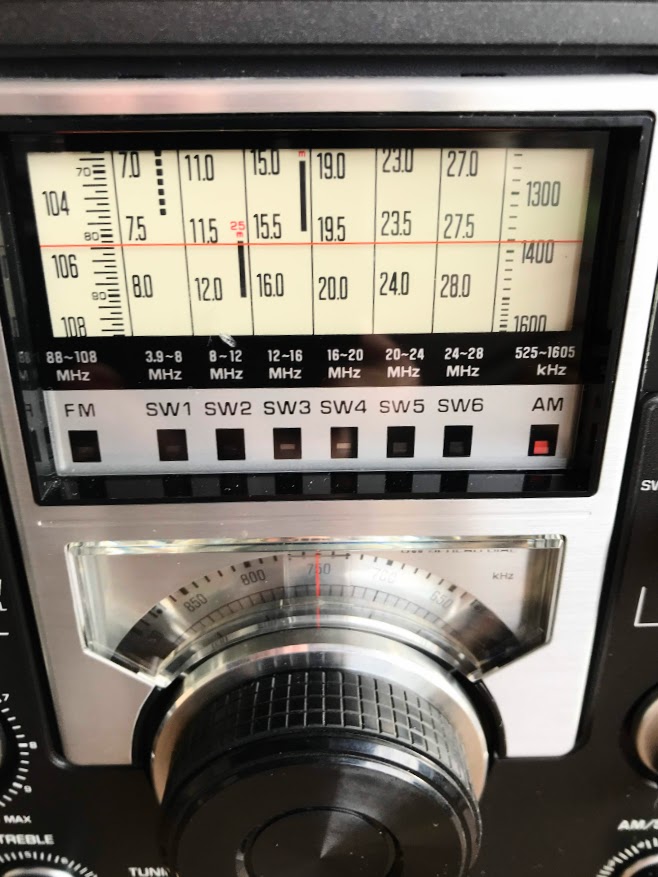
It was love at first sight when I saw the RF-2200 in the store’s gleaming glass display case way back when. The ‘2200 possessed all the bells and whistles to guarantee a good time for the SWL such as a rotatable ferrite AM broadcast band antenna, BFO (Beat Frequency Oscillator) for SSB reception, AM /FM/SW (3.9 – 28 MHz) bands, a D’Arsonval “S” meter that doubled as a battery status indicator, large four inch front mounted speaker, switchable coarse/fine tuning speed, base/treble/RF gain pots, 125/500 kHz crystal markers to calibrate the VFO, wide/narrow bandwidth switch, dial/S meter lights, earphone/recorder jacks and telescopic antenna for SW and FM. Plus it sported the renowned Panasonic trademark.
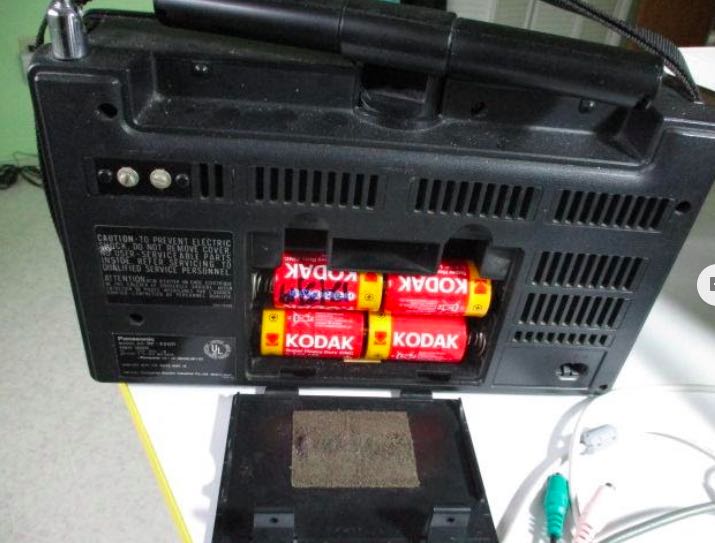
Photo 2. RF-2200’s rear: exposed battery compartment, screw connectors for external antenna, AC plug lower right. Rectangular earphone storage compartment is above batteries. Battery cover’s gray foam pad is dry rotted and needs replacement.
Part of the 2200’s ample avoirdupois can be attributed to the unit’s four “D” battery power plant, but Panasonic also supplied an AC cord to plug into the house mains and an earphone (located inside the battery case). It runs forever on those four stout dry cells, one of the many positive features of this vintage gem.
Back in those days portable radios generally were not judged and valued based their diminutive size and weight but on the array of features geared to the end-user. Front panels were festooned with an array of controls rivaling an aircraft’s cockpit. Knobs, analog dials, meters, large front-mounted speakers, switches and lots of black plastic were the order of the day. These all contributed to the beauty and practicality of portable shortwave radios back then.
One thing missing though was built-in memory channels; those existed in the operator’s brain and not yet delegated to memory chips.
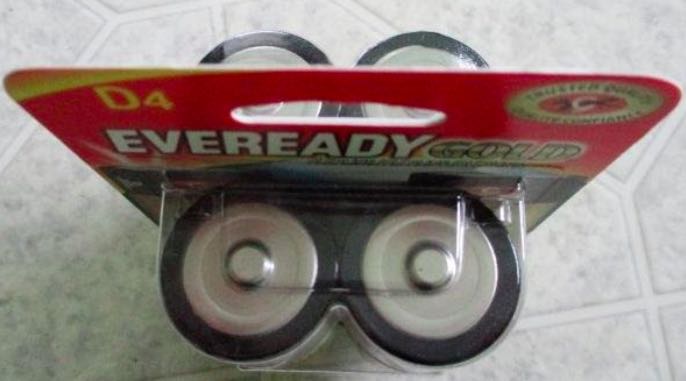
Photo 3. Pack of four “D” cells, at 1 lb 4oz, weighs more than some of today’s portables!
One of the features long gone and missing in modern receivers these days is the “recorder out” jack that looks identical to an eight-inch earphone jack and yes the ‘2200 has one. It was used to plug in a tape recorder to memorialize an op’s favorite radio show. Of course back then there were many more shortwave stations broadcasting. Gone also are those tiny incandescent bulbs, sometimes described as “grain of wheat” lamps that were used on S meters, dials, etc. The RF-2200 sports ample illumination for the S-meter and tuning dial which makes it a perfect bedside table radio for late night DX’ers and insomniacs.
Speaking of DX, the ‘2200’s rotatable AM ferrite antenna is one of the main virtues this radio possesses. As an avid AM DX’er and faithful disciple of AM radio in general, the ‘2200’s rotary directional antenna nulls out noise and routinely pulls in stations as far away as Nashville (WSM), Chicago (WBBM), St. Louis (KMOX), Atlanta (WSB), Boston (WBZ) and Toronto (CJBC) when the sun goes down. Look closely at the antenna mount’s base and you’ll even see compass-like degree markings that’ll help when retrieving a favorite local or DX AM station.
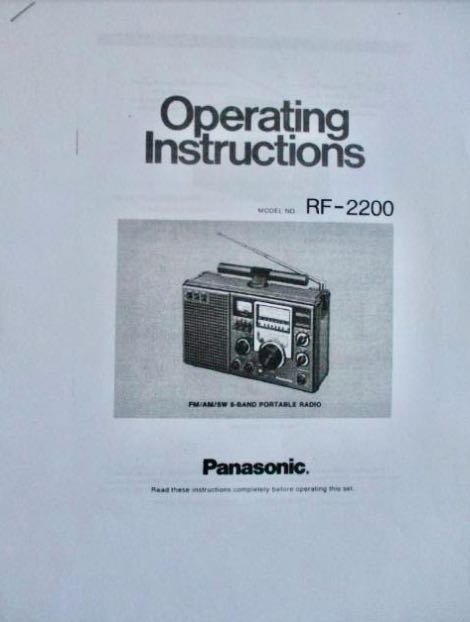
Photo 4. Operating manual copy is available on-line
Shortwave coverage is approximately from 3.9 – 28 MHz as per the service manual, but I’ve checked the actual coverage of my unit using a calibrated service monitor and found it to be 3.47 – 28.9 MHz which makes sense since I’ve tuned to W1AW’s code practice on 3.581 MHz with no problem and have also heard the Volmet station on 3.485 MHz. That’s good news for hams wanting to receive 80m CW. It gets a bit tricky though using the fine tuning option for CW hi hi.
AM broadcast band coverage is only from 525 – 1610 kHz as per the specifications; the AM band had not yet been extended to 1710 kHz at that time. The ITU approved the extension in 1988. With that in mind I wanted to determine what the actual band coverage of my unit was. Again, using an IFR service monitor it was found to be from 514 – 1720 kHz; that’s good news for those who listen to stations at the top of the band. It also explains why I can hear YWA, a non-directional radiobeacon (NDB) from Toronto, Canada just below the AM band on a frequency of 516 kHz. If you own a RF-2200 or DR22 tune to the bottom of the AM band and listen for it. You may also hear the warbling sound of NAVTEX stations on 518 kHz. Switch on the BFO and wait for dark, you might get lucky like I have.
My apologies for not being an FM broadcast band listener so all I can state is the few times I’ve listened it sounded absolutely great. The specs state a FM broadcast band frequency range of approximately 87.5 – 108 MHz. Mine measured from 86.8 – 108.9 MHz but I’ve yet to realign my unit so these ranges may vary among the population. Note that I have undertaken the labor intensive task of aligning my National Panasonic DR-22 which is almost the exact same unit as the ‘2200. You can search this blog for my results that were kindly published by Thomas previously (click here to read).
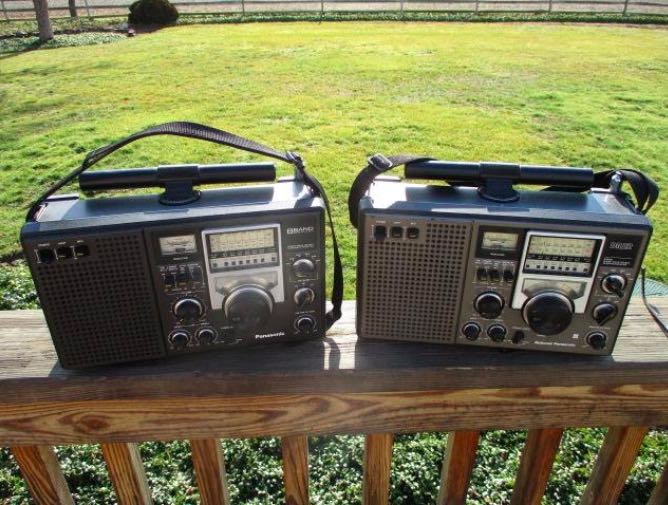
Photo 5. Side by side comparison. Panasonic RF-2200 on left, National Panasonic DR22 on right.
For those not aware, the RF-2200 was also marketed in Europe as the National Panasonic DR22 and in other parts of the world as the Cougar 2200. My DR22 was an eBay purchase, and that’s the best place to find either model.
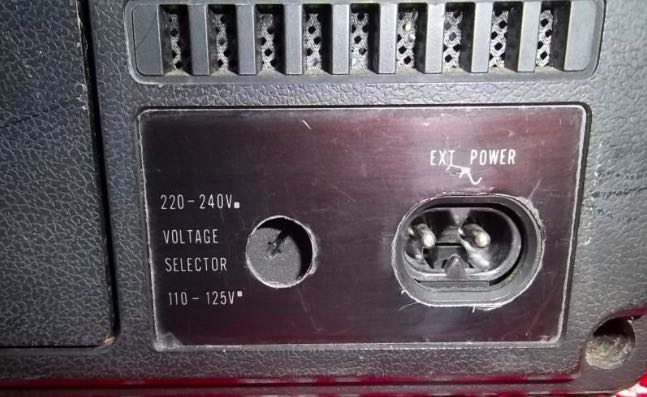
DR22s are rather rare compared to the ‘2200 though. First off, one of the major differences with the DR22 is that it runs on either 110 or 220V, and that’s accomplished by a switch on the back of the unit.
DR22 runs on 120 or 240V via switch on rear panel
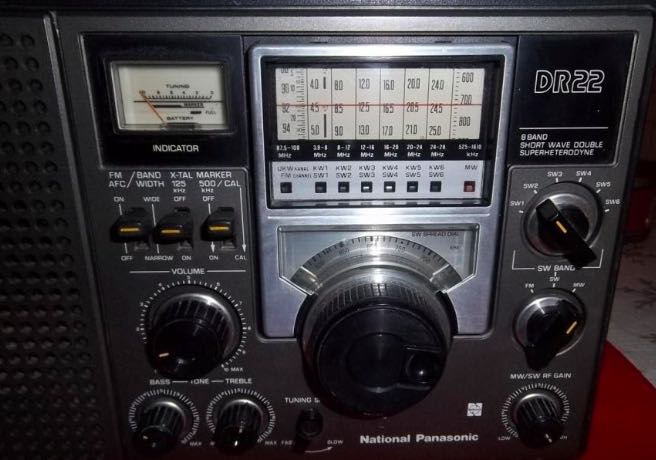
The DR22’s front panel stenciling is slightly different too, as shortwave bands are labeled “KW 1 – KW 6” in addition to “SW1 – SW6”. Not sure what “KW” means though. Perhaps some reader can enlighten us.
Well, that’s about it, if you want a RF-2200, or DR22 then window shop on eBay. Lately they have been selling from $40.00 US (parts only) to $455.00 for pristine units. That’s a pretty wide price range and even I’m surprised at the high prices being gotten for clean units. All I can say is that the two I have now are staying right here in the shack with me.
Thanks for reading and 73’s.
eBay searches (note these eBay partner links support the SWLing Post):
Thank you so much for sharing this excellent post, Mario. Like you, I’m a massive fan of the Panasonic RF-2200; in fact, I own two of them! It is, in my opinion, the best AM/MW portable ever made.
Post Readers: Any other RF-2200 and DR22 owners out there? Can anyone explain why the DR22 labels shortwave bands as “KW1 – KW6”–? Please comment!
An icom M802 package can be had for less that $3k… but the installation may run up anywhere up to $5k hence the OP’s ~$8k cost and request for alternatives. The bulk of cost (for pretty much anything in a boat) is always in installation…not the cost of electronics, as boats have unique issues regarding their ground.
As a sailor, when faced with a budgetary issue of installing a marine SSB radio system, IMO the answer is most definitely not “get a ham radio and your license”…the answer is most definitely “get a good SSB portable with an external antenna input”.
To get valuable weather resources such as Chris Parker (www.mwxc.com), weatherfax and eavesdop on atlantic nets, a quality portable SSB receiver is all that is required, provided that some sort of external antenna is used.
In my case, in the Bahamas, a 25ft length of wire semi permanently rigged to the flag halyard presented a strong and clear enough signal to reliably get the morning weather, and any weatherfax data I needed (along with the laptop).
My radio back then was the Satellit 800, and this year that behemoth will be replaced with a Tecsun PL-880… such a setup is ALL that is required.
Thank you for your input, Ian! It’s been seven years since we originally posted that article about HF receivers and transceivers on boats and yachts. I’m curious if any other readers might have suggestions they would care to share. What has works for you? Please comment!
Many thanks to SWLing Post contributor, Dan Robinson, who shares the following guest post:
An Initial Review of the Belka-DSP Shortwave Receiver
by Dan Robinson
A few weeks ago, during daily online excursions, I ran across the Belka-DSP receiver. This is not really a new receiver. Demonstrations have appeared on You Tube going back into 2019.
The Belka has a price of only about $120 U.S. I felt this was a fairly easy purchase, so I went to the website of Alex Buevky (EU1ME).
The receiver has a tuning range of 1.5 – 30 MHz – note that this is a revision from the description on the Belrig site, which still had a range starting at 3.5 mhz as of the time I am writing this.
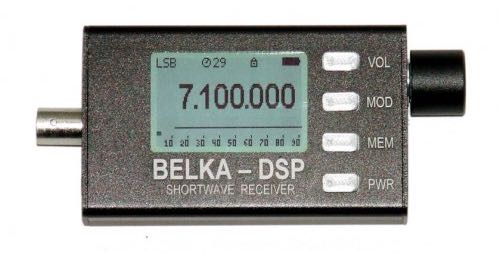
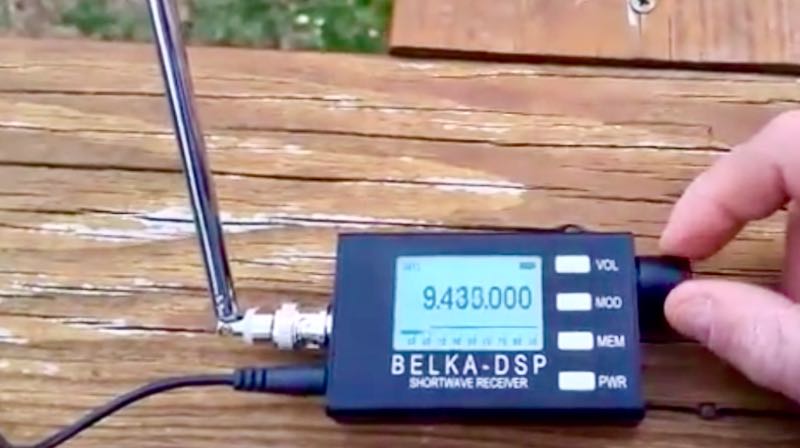
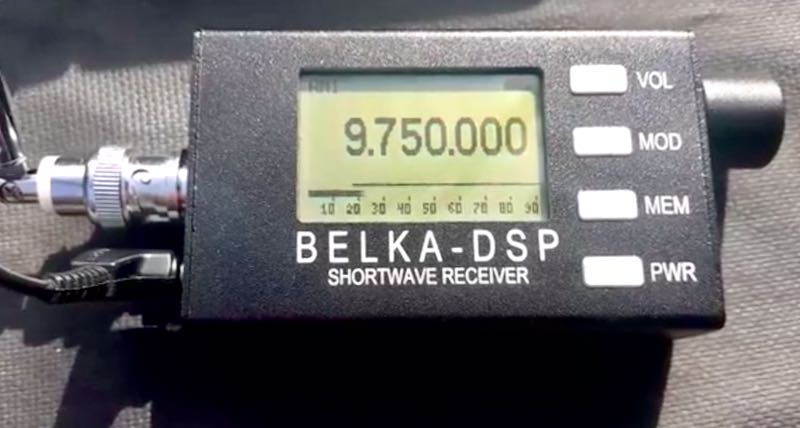
The Belka is contained in a small heavy duty metal box – the size reminds one of a few boxes of matches put together – 85x50x20 mm with weight of about 100 grams. Indeed, the diminutive size is quite striking.
While the menu system appears to be a bit confusing, once you start using the receiver you get used to the logic of it. From the description of the SDR:
“It is possible to adjust the frequency band both from above, from 2.4 to 4.7 kHz, and from below from 50 to 300 Hz. In telegraph mode, the frequency band is constant, about 300 Hz, and its center is regulated from 500 Hz to 1 kHz.
The settings of the favorite radio stations can be stored in any of 32 memory locations.
The receiver does not have a built-in speaker, but there is a rather powerful VLF bridge that provides sufficient volume when working with an external speaker, speaker or headphones.
The built-in LI-Ion battery lasts for 24 hours of total operating time on the headphones.
In addition to the built-in battery, the receiver can also work from an external DC voltage source of 5 V.”
The Belrig site is English and Russian, which makes ordering easier. However, be aware that when you hit purchase using a major credit card you may receive a security alert from the card company. Once I confirmed, the process completed and I received a verification email from Belrig – quite quickly and efficient.
Communications with Alex has been excellent – he is very responsive to suggestions and input.
The SDR arrived in an excellent small heavy cardboard box wrapped with the typical packing tape for the Belarus postal system. The receiver itself and a telescopic antenna with BNC connector were wrapped in bubble wrap. No paper instructions – those are available directly at the Belrig site [click here to download PDF manual].
The only other item on the Belrig site is a Panoramic Adapter:
“designed for use as part of a radio receiving path of a transceiver/receiver jointly with a personal computer (PC) and SDR software” according to Belrig. This Pan@SDR “allows you to visually see the RF spectrum in a band up to 200 kHz as well as to receive and decode different modulation types (depending on a software type). . . [and] may be used without a transceiver as SDR-receiver with fixed oscillator (similarly to SoftRock RX), for example, to listen to amateur and broadcasting stations, to decode and to record telegraph stations with CW skimmer, to control signal quality, to calibrate frequency. It may be used as well as a selective millivoltmeter.”
An unboxing video of the Belrig SDR can be seen here:
Initial impressions
My house in Maryland is notorious for high noise levels – located on a corner, we are surrounded by electric wires on four sides. My attempts to overcome this with my many main premium receivers involve W6LVP, Wellbrook loops and one PAR-FED long wire located outside, with ANC-4 and other noise reduction efforts in my basement radio shack inside.
When I use various portable receivers upstairs in the den of my home, I usually have to keep them well away from incoming Xfinity/Verizon cable TV and Internet lines.
Usually, I am unable to hear much using portables such as SONY SW-55s and Panasonic RF-B65s while sitting on the sofa in the middle of this large family room due to noise from all of these cable lines.
However, interestingly – using the Belka-DSP receiver I was able to get decent reception at this spot. I attribute this to the metal construction of the receiver, compared to portables with plastic cases.
Certain portables, notably the CountyComm/Tecsun GP5/PL-360-365 are extremely sensitive to being handled, with substantial signal loss once your hand is removed from the cabinet. The Belka-DSP exhibits sensitivity to touch, but not as much signal loss as there is when you take your hands off a Tecsun PL-365.
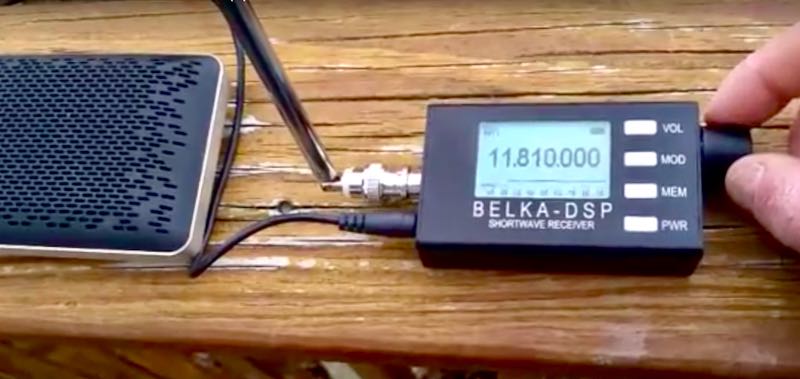
I did notice a few frequencies on the Belka where there are digital artifacts – one occurs at or around 11,810 kHz, the BBC frequency. You can see that in the accompanying video as I tuned up from 11,810.
Others are noticed at various points all the way up through the receiver’s top tuning range of 30 MHz, though thankfully most are not in major SWL bands.
Digital audio artifacts are seen on portable receivers using IC chips, notably the XHDATA D-808 which has several annoying digi-burps on some key frequencies occupied by stations. On my D-808 for example, 9,650 kHz has a digital artifact that interferes with reception of Guinea.
Tuning on the Belka is simple once you get used to the steps. The knob on the right serves for tuning, selection of tuning steps, volume, high-low sensitivity, the various audio “cut-off” modes which essentially function as DSP selectivity. There are 32 memories. Modes are: LSB, USB, CW, NFM, AM1, AM2. For AM mode, AM1 is the most useful, as AM2 seems to be quite harsh in its various DSP audio modes.
The Belka is very sensitive to the type of speaker it is plugged into, assuming you are not using a bluetooth dongle. Connecting via a 3.5 mm cable to a basic Brookstone speaker that has bluetooth produced audio overloads on the Belka, requiring careful placement of the speaker in proximity to the radio.
Whether this had anything to do with the quality of 3.5 mm cable I was using, I am not sure. These audio overload issues were not present using the DSP only with a pair of quality SONY studio headphones. I have not tested the Belka yet with a bluetooth dongle. So be prepared to do some experimenting with speakers and cables.
As mentioned by one person on SWLing Post, the surprise when I received the Belka was that the tuning range is actually 1.5 to 30 MHz rather than 3.5 MHz shown on the Belrig description and in the video there.
This certainly makes the small Belka more attractive, though one wonders why it could not include the full medium wave band.
Also unclear is whether the Belka will have the capability in future for firmware updates, and addition of any new features such as bluetooth though I have to think that adding bluetooth would impact battery duration.
I posed four questions to Alex, including why he made the decision to have the battery soldered in rather than easily user replaceable with battery terminals, whether he is considering adding bluetooth capability, adding capability for firmware updates, and whether he is thinking about extending coverage to include the full medium wave band.
Alex thanked me for my “interesting questions” adding:
“Now Belka-DSP is a final product in this regard no updates or modifications are planned in the near future. We do think about the way how to improve this receiver, how to make it even more user friendly, but I can not say exactly which changes will take place and when. Looking forward for your future questions.”
Alex says that the Belka receivers ship out with batteries not fully charged to comply with post office regulations.
For me, the battery issue is a bit annoying. Similar to cellphones with built-in batteries this means that when the Li-Ion cell does deteriorate you are stuck with a bit of soldering to replace it – and I am not good at soldering.
Another example of this practice is the Pocket SDR made by Gerhard Reuter in Germany which uses flat Li-Ion batteries that are soldered in. If you have no problem using soldering irons, then none of this is a concern.
I can live without on-board Bluetooth, since dongles are available online. But I would like to see coverage of the full medium wave band and it would certainly be nice to have FM band coverage. Obviously the ability to update the radio’s firmware would be a welcome addition.
Another suggestion I would make to Alex would be to provide some way to quickly move from band to band, similar to the capability seen on most regular portables. Having to constantly press the side knob to switch to rapid 50 kHz slewing to move say, from 49 meters to 19 meters, involves too much fiddling.
It would be interesting to see the internals of the Belka radio – four Philips screws are located on the left and right sides of the receiver, so that should not be difficult, though I have chosen not to go exploring inside mine.
Summary
Overall, I am very impressed with the Belka. This seems to be an amazingly quiet and sensitive little receiver. It’s obviously similar to the CR-1a in that it has a display, but much smaller and perfect for Dxing on the road, with a BNC connector that enables connection of any amplified antenna, loops or longwires.
I have included a video made outside my house using only the BNC telescopic antenna with the Belka, showing reception at about 1800 to 1830 UTC of some major stations in the SW bands.
This demonstration shows how sensitive the Belka is in broad daylight hours (also shown is my SONY SW-1000T).
A search of YouTube shows at least two other handheld DSP receivers being demonstrated in 2019, both with full scope screens, seemingly experimental units and on Russian YouTube channels. There is some discussion of availability, but as of early 2020 these units do not seem to be available.
It’s unclear whether any of these units ever made it to production on any scale. Comparing the features on these to the Belka – including AGC, Noise Reduction, Squelch, etc – it seems there might be quite a bit of space on the open market for SDRs that far exceed the capabilities of the Belka.
On the other hand, inclusion of larger scope displays would clearly have implications for battery life, which is one area where the Belka SDR – with its claimed 24 hour duration – obviously excels.
I will be interested to read other user reviews of the Belka-DSP – for now, it appears to be the only receiver of its kind and size being produced in significant numbers, so I certainly want to thank Alex for bringing it to the market.
Thanks so much, Dan for sharing your review of the Belka-DSP. I agree that likely the reason the Belka-DSP is less prone to the effects of holding and grounding is because it has a metal case and is probably better shielded. I agree that there should be an easy way to move between the various meter bands. Including features like this is always a concern in terms of ergonomics for small radios with simplified controls.
It is a fascinating and unique little receiver. Since it’s designed and produced by a “mom and pop” company, I imagine upgrades won’t happen unless there’s a new version produced at some point. With that said, this engineer obviously has the know-how to make a capable receiver!
Thanks again, Dan, and we look forward to any/all updates you wish to share!
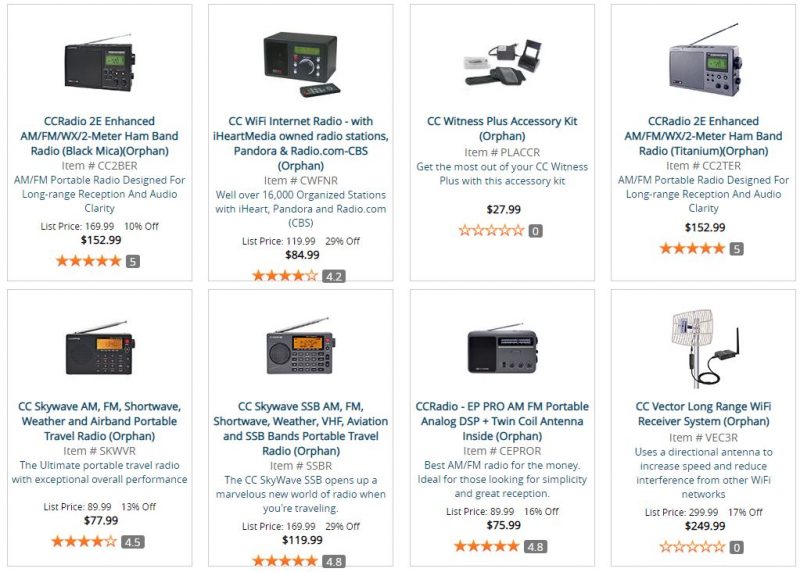
I just received a newsletter from C.Crane noting that they’re having an “Orphan” sale today (17 January 2020).
“Orphans” are C.Crane returns and open box items that have been tested and evaluated by C.Crane. Orphans are sold at a discount and carry a full 60 day warranty. I’ve purchased a number of Orphan items in the past and have never received a dud.
One of the best deals I see in their list of Orphans is the CC Skywave SSB for $119.99–the lowest price I’ve seen for this particular unit.