Category Archives: Radios

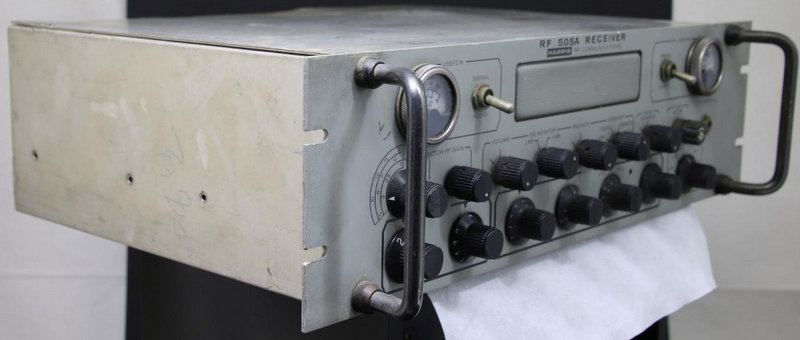
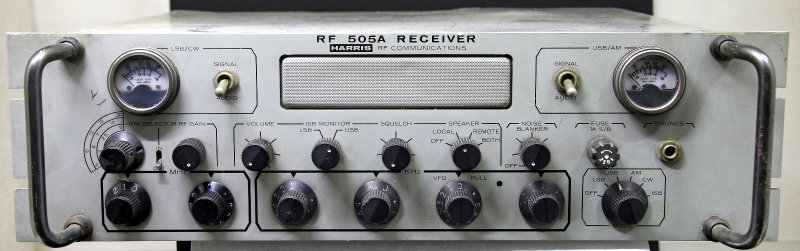
Bob recalls working at Harris and putting the RF-505A on the air

Fullscreen capture 5102016 114119 AM

In response to our post mentioning the Harris RF-505ASWLing Post contributor, Bob LaRose (W6ACU), writes:

I know the RF-505A very well. It was introduced in about 1969 while I worked at Harris in Rochester. I started working there as a Co-Op student while at RIT and then after I got my BSEE I joined them full time, initially as a Field Engineer but quickly found my way into Marketing and eventually Sales.

Right after the first version came out, the RF-505, I took one home to my parent’s house for a weekend and did some SWLing with it. It was very neat in one respect – it tuned ISB (Independent Side Band) and in those days there were a number of utility stations using ISB (separate traffic on each sideband). To an SWL some of the most interesting of these were the VOA point-to-point links from the East and West Coast, each carrying two simultaneous program feeds for the overseas relay stations!

Harris-RF-505A

While overall a good receiver my personal results on the sensitivity of the original RF-505 were not very positive. On the bench with exactly a 50 ohm source it looked good but on a real world antenna it was pretty numb. Eventually, after a lot of internal arguments, they came out with the RF-505A that included a tunable active preselector as shown in the photos. Problem solved.

For a ham or SWL the RF-505 was a real pain in the butt to tune. You could dial in any exact frequency but the decade switches didn’t roll over (either mechanically or electrically) so you had to do a lot of knob twiddling to do any kind of band scanning. The detents on the switches connected to the knobs were pretty stiff so you could easily take some finger skin off tuning around!

If I remember correctly Harris built them for about a five year period and then replaced them with the RF-550, which was a monster of a receiver with all kinds of advanced features. It included a keyboard with electronic display.

Great memories!

Thanks so much for this RF-505A insight, Bob! I had a hunch that band-scanning wasn’t the RF-505A’s strong suit–it would be incredibly cumbersome to scan with so much “knob twiddling.”

It must have been pretty amazing to work for the legendary Harris corporation. Thanks for sharing!

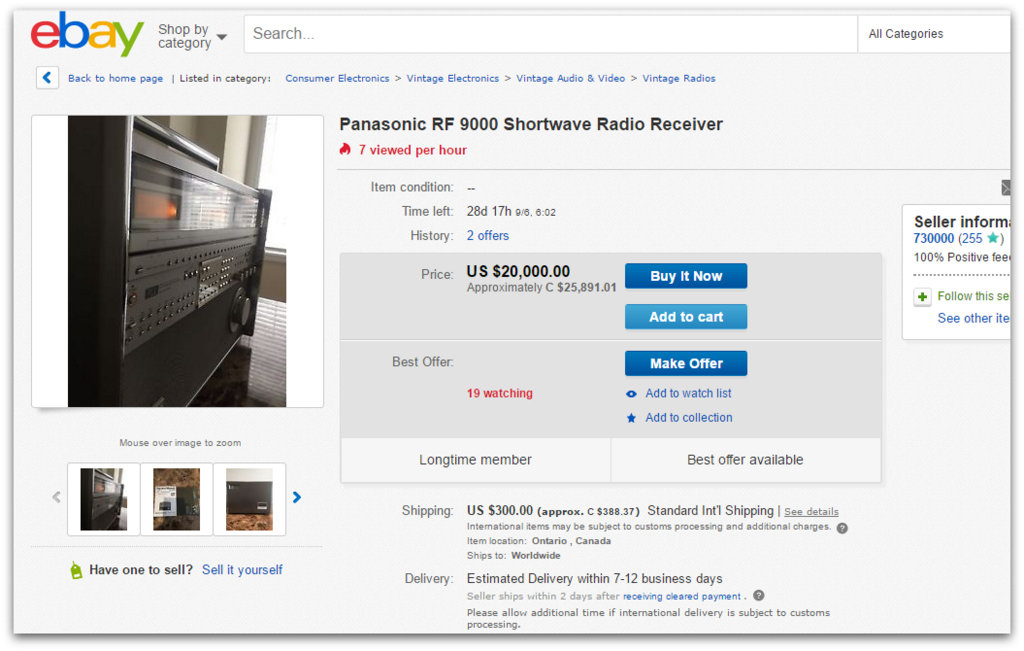
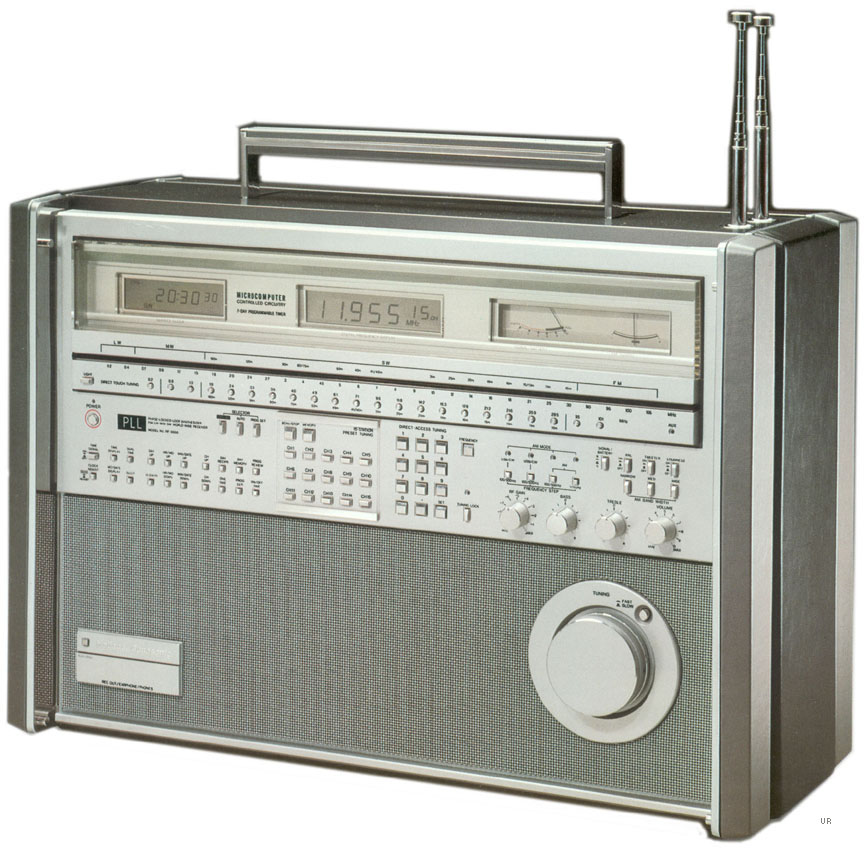
eBay: Dan notes astronomical price sought for Panasonic RF-9000

Fullscreen capture 5112016 121009 PMMany thanks to SWLing Post contributor, Dan Robinson, who writes:

This is the highest price ever sought by an RF-9000 seller.  [The last RF-9000] went for around $9,000-10,000.

s-l1600-001

[…]The RF-9000, as many veterans of SWL know, was produced by Panasonic as a kind of showpiece.

From information available, only some hundreds were ever made.  The price new, as detailed in the Osterman book, was about $3800.

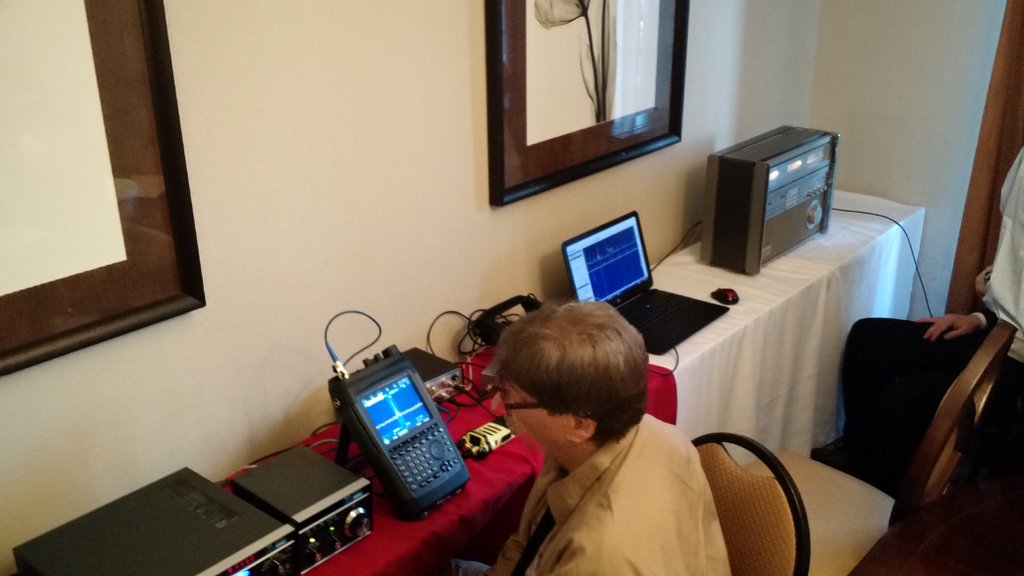
Note Dan's RF-9000 at the far end of the listening lounge table.

Note Dan’s RF-9000 at the far end of the SWL Fest’s Listening Lounge table.

Those who attended this year’s SWL Fest got a rare opportunity to lay hands on this technology showpiece (at least the technology as it was back when it was being made between 1982 and 1985).

Click here to view on eBay.

And, Dan, thanks for lugging your RF-9000 to the SWL Fest!  It was indeed a treat to operate the RF-9000. I must say that the RF-9000’s audio fidelity is outstanding–beautifully balanced! What an amazing radio.

Still–this eBay seller is asking too much at $20,000 US (and $300 shipping). This might well be a collector that has no intention of letting the RF-9000 go. I could understand that! Thanks again, Dan!

Historic ‘Radio Row’ Finds a Home on the Internet

73RR Logo - B

(Source: 73 Radio Row press release)

A new website designed for radio amateurs, SWL’ers, CB’ers and all communications hobbyists has launched on the Internet recreating the atmosphere of the famed Radio Row in New York City.

According to its founder, Richard Fisher, KI6SN, “’73 Radio Row’ takes its cue from an era when New York’s legendary radio district bustled with communications fanatics shopping for surplus and used gear along Cortlandt Street in Lower Manhattan.” 73 Radio Row’s Web address is: http://www.73RadioRow.com

The site features used radio receivers, transmitters and transceivers, as well as unbuilt kits, new/old stock antennas, Morse instruments and station accessories of all kinds.

“We are crazy about radio, the same as everyone else,” Fisher said. “RETRO is NOWtro.” For complete details, visit: http://www.73RadioRow.com or write to: [email protected]. Call (951) 395-1923.

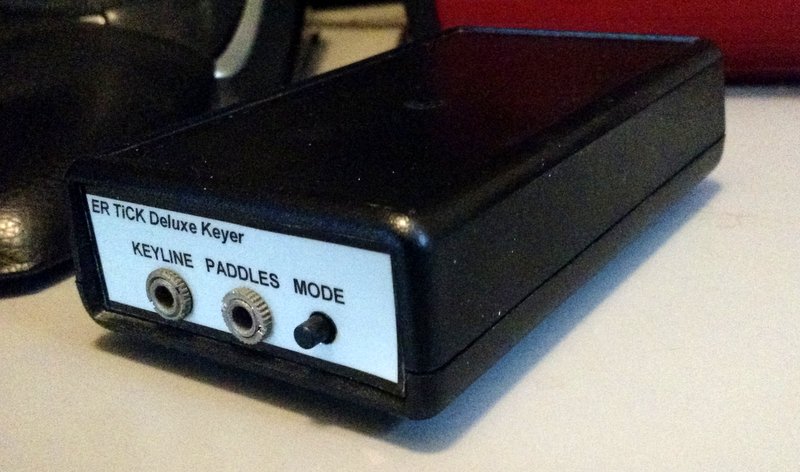
I discovered 73 Radio Row right after it launched–I ordered a portable ER TiCK Deluxe Keyer for the very affordable price of $26 US shipped.

IMG_20160507_073723040-001

The keyer was dispatched immediately and I received it within a couple of days.

I know Richard Fisher (KI6SN) quite well and can certainly vouch for his integrity. In fact, he’s even giving a portion of 73 Radio Row proceeds to Ears To Our World–what a nice guy!

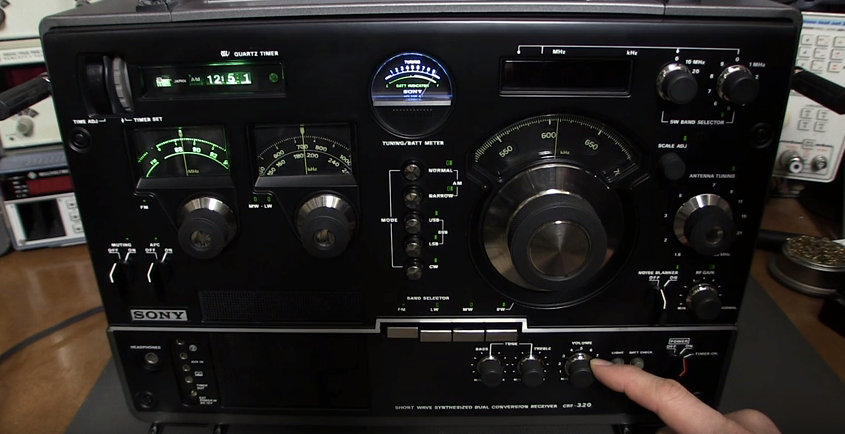
Video: Repairing, restoring and modifying a Sony CRF-320

Sony-CRF-320

Many thanks to SWLing Post contributor, Ken McKenzie, for sharing the most comprehensive video you’ll ever find on restoring the Sony CRF-320 receiver:

Click here to watch on YouTube.

Make sure you check out Mr. Carlson’s YouTube channel, Mr. Carlson’s Lab where you’ll find repair videos ranging from solid state to tube gear.

Thanks for the tip, Ken!

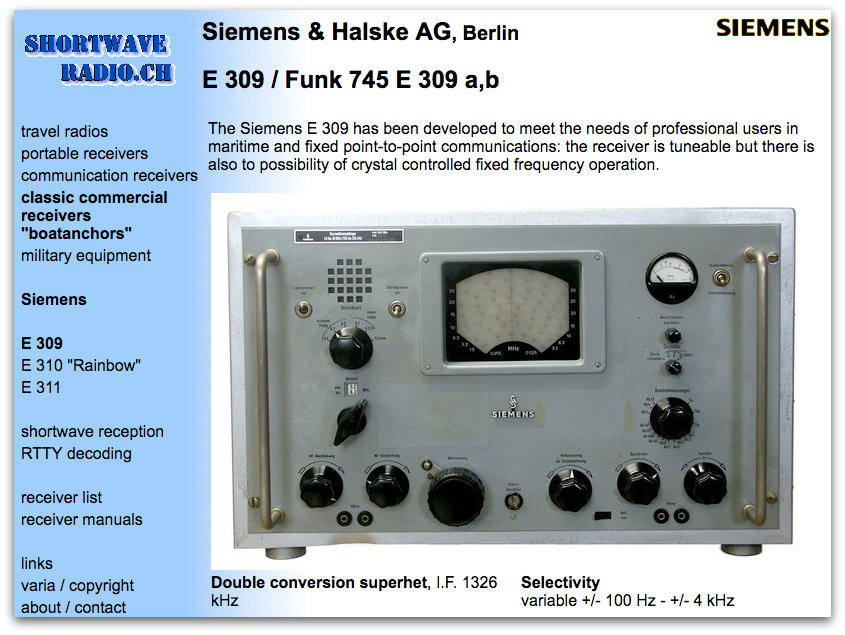
ShortwaveRadio.ch: A treasure trove of central European classic receivers

ShortwaveRadio.ch

Commenting on our post regarding the Kurzwellen Empfänger Siemens receiver, SWLing Post reader “13dka” writes:

Some more info (mostly about the tuning procedure) [of the Kurzwellen Empfänger Siemens] here:

http://www.shortwaveradio.ch/radio-e/siemens-e311-e.htm

BTW this site is a comprehensive source on classic shortwave radios that enjoyed some popularity in central Europe.

Indeed!  I have stumbled across ShortwaveRadio.ch many times before doing research and meant to mention it here on the SWLing Post. Thank you for the reminder!

What’s so impressive about this site is that it’s in both German and English.

If I ever make it to the excellent Friedrichshafen ham radio convention, I’ll have ShortwaveRadio.ch bookmarked on my smartphone to help me ID all of those amazing European boat anchors in the flea market!

Thanks again for the tip!

Dan notes a unique modification on this Hammarlund HQ-180A

Hammarlund-HQ-180A

Many thanks to SWLing Post contributor, Dan Robinson, who shares a link to this eBay listing of a Hammarlund HQ-180A and notes:

Whoever owned this Hammarlund HQ-180A installed a DC meter where the clock or crystal unit usually is.

Hammarlund-HQ-180A-Mod

s-l1600 (1)

And the screws on the top of the hatch seem to indicate installation of a DC supply perhaps?

Click here to view on eBay.

Like you, I’ve never seen this particular mod to the HQ-180A, Dan.

I’m curious if the owner installed the DC meter to replace a broken or missing clock?  Though I’ve never searched for one, I suspect those Hammarlund clocks are getting more difficult to find on the used market.

CountyComm: A note of caution about the high-gain ferrite bar antenna

Ferrite-Bar-PL-365After our post this morning regarding the high-gain ferrite bar antenna (available via eBay), I received a message from Nick at CountyComm.

Nick notes:

“[The high-gain antenna is] very cool however we wanted to let you know that we found out it [can] actually destroy the antenna input to the GP5/SSB or GP5/DSP because of its heavy weight. [W]e had at least five radios come back [after] customers had purchased the large ferrite antenna from an eBay seller.”

Many thanks, Nick, for the feedback. It is important to note that the high-gain bar antenna is not an OEM product, so CountyComm isn’t responsible if it harms the radio’s antenna jack.

While still relatively lightweight, the high-gain bar antenna is substantially heavier and longer than the GP5’s supplied MW antenna.

I’ve been concerned about dropping the GP5/SSB with the larger bar antenna inserted–fearing the jack could break off–so I’ve been very careful using it. I’ll probably continue using the larger ferrite bar, understanding that I’ll have to handle it with care.

If you’re concerned about damaging your radio, I would suggest using an inductively coupled AN200 loop antenna instead.

Again, Nick, thanks for the heads-up!