Category Archives: Radios

New improved API for the SDRplay RSP

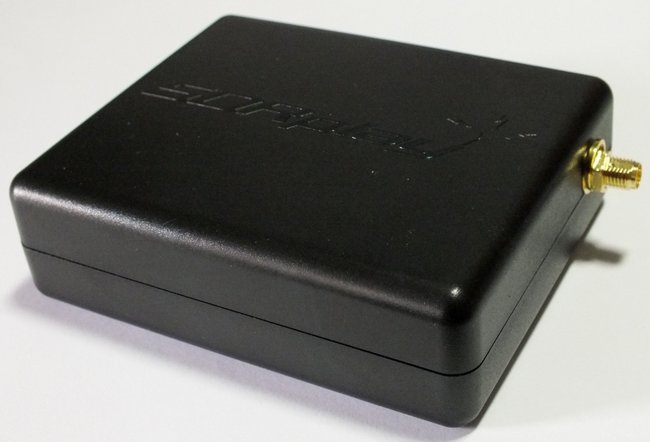
The SDRplay RSP software defined radio

The SDRplay RSP software defined radio

Many thanks to Jon Hudson with SDRplay, who shares the following announcement:

We are pleased to announce release 1.8.0 of the API for the RSP. This is a major upgrade to the API with new features and an improved gain map which should result in improved performance over a key portion of the gain control range. Currently this API is available for Windows only, but versions for Linux and Mac OS and Android will follow shortly.

The API now incorporates automatic post tuner DC offset correction and I/Q compensation. This will almost completely eliminate the DC centre spike that was previously present in zero IF mode and also correct for amplitude and phase errors in the I/Q signal paths that can lead to in-band images when strong signals are present.

There is a new gain map for the RSP which should help improve the receiver noise floor for gain reduction settings in the range of 59-78 dB. To achieve this, the IF gain control range has been increased from 59 to 78 dB. In addition, the user can now turn the LNA on or off at any point within the IF gain control range. This means that the LNA can remain on for gain reduction settings of up to 78 dB, whereas previously the maximum gain reduction that could be attained whilst the LNA was on was only 59 dB. Being able to leave the LNA on will result in improvements in the receiver noise performance for gain reductions in the range of 59 to 78 dB. The upper 19 dB of the IF gain control range have now been disabled. In practice this part of the gain control range was useless as trying to operate within this region always lead to receiver overload even when signals were very weak.

To fully exploit the features of this new API release, we have also issued release 3.5 of the ExtIO plugin. This plugin will work with HDSDR, SDR sharp (releases 1361 or earlier) and Studio 1. Automatic I/Q compensation and DC offset correction will work with later versions of SDR sharp, but we will need to update the native plugin for users of these later versions to be access the new gain map.

Similarly, users of SDR Console will gain the benefit of automatic DC offset compensation and I/Q correction, but will not yet be able to access the new gain map. We hope that a version of SDR console that unlocks this feature will become available in the near future.

Until a new release of SDR-Console is available, you can copy the API into the SDR-Console installation directory…

from C:\Program Files\MiricsSDR\API\x64\mir_sdr_api.dll to C:\Program Files\SDR-RADIO-PRO.com\mir_sdr_api.dll

The API installer has also contains an extra certificate to be more user friendly for Windows XP, Vista and Windows 7 users.

The new API and ExtIO plugin can be downloaded from our website at: www.sdrplay.com/windows.html

Many thanks for sharing this, John!  I’ll update my RSP today.

Click here to read the SWLing Post review of the SDRplay RSP.
Avo’s review of the Digitech AR1946 shortwave portable

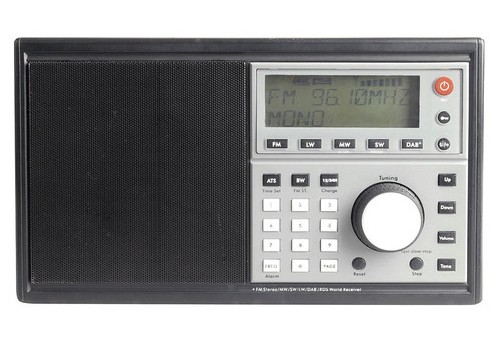
digitech-AR1946-front

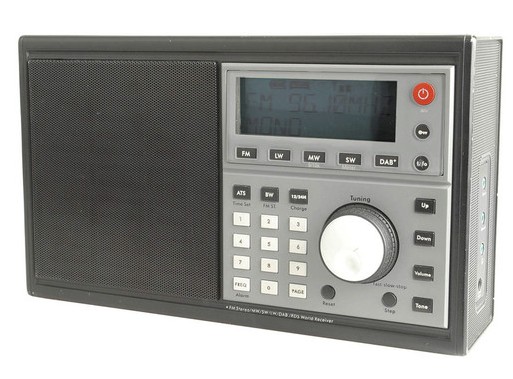
The Digitech AR1946

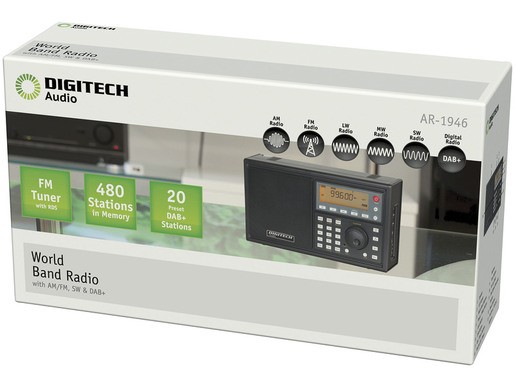
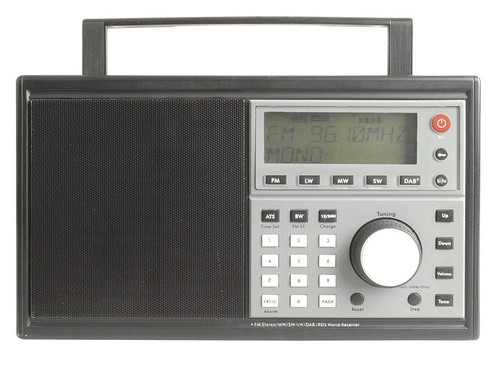
Digitech has released their latest shortwave portable: the Digitech AR1946.

If you live in Australia or New Zealand, you’re probably familiar with the Digitech brand which is sold at JayCar Electronics. If you live in other parts of the world, you may never run across a Digitech (branded) portable.

Digitech-AR1946-box

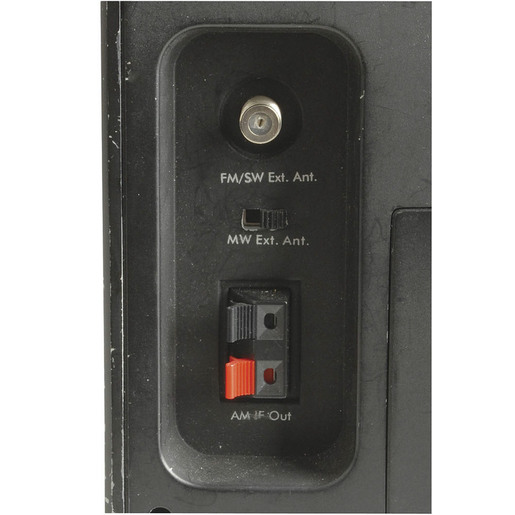
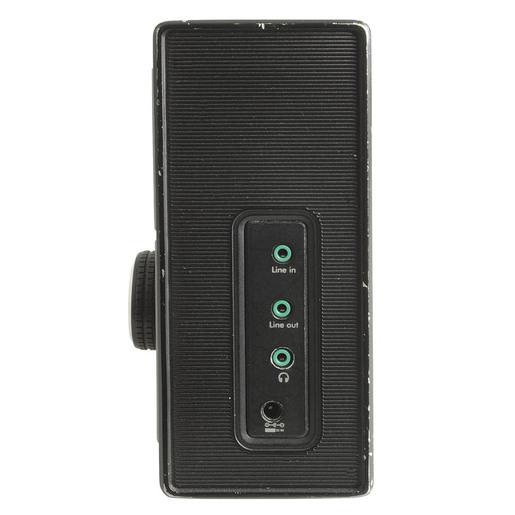
SWLing Post reader, Avo, purchased the new AR1946. He commented with the following brief review (I inserted a few product photos from JayCar):

[The] AR1946 is now out. Had one for a day but ended returning it as shortwave was full of garbage. Fully DSP based according to the box.

Digitech-AR1946-Front-Handle

I do have to say that FM performance is superb. Sensitivity and selectivity is better than any previous radio I have used and RDS is very usable even on weak signals. 10 kHz steps with a very smooth non muting dial make it a pure DX machine in my books for FM.

Digitech-AR1946-R-sdie

Digital [DAB+] is ok but kept cutting out even with good signal strengths. AM modes have 7 bandwidths that work very well. MW is a bit dull but no images.

Digitech-AR1946-Left-s

If only SW was good I would recommend it as a good all rounder but at $219 for just a great FM tuner I think it’s expensive.

Digitech-AR1946-Back-S

Saying all this, the unit feels good quality wise and in my opinion is a better attempt than the [Digitech] AR1945.

Digitech-AR1946-Front-1

I think a revision can sort out SW and if so, I am definitely repurchasing….

Many thanks for your assessment, Avo!

It sounds like your unit suffers from the same problems many recent DSP portables have experienced: a high noise floor. This was the issue affecting the recently released Degen DE1103 DSP.  I’m not sure why this is happening more in some of the most recently released receivers, but I assume it has to do with poor engineering and internal shielding.

I bet that the noise level may vary unit to unit. Avo, you might ask for another to test before getting the full refund (if Jaycar’s return policy allows).

Have any other readers put the Digitech AR1946 on the air? Please comment!  Click here to view the AR1946 at JayCar Electronics.

Icom IC-R72: a repair story

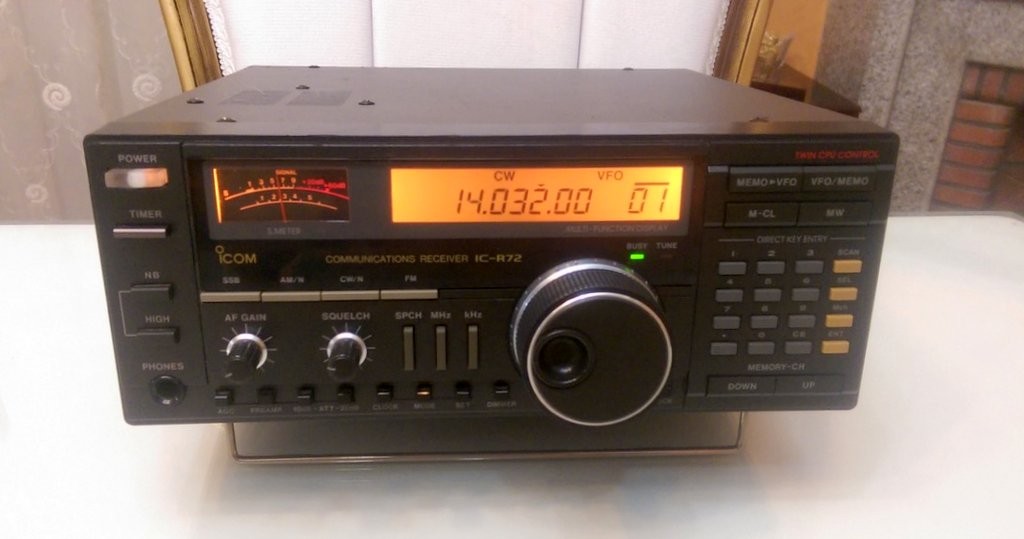
Icom-IC-R72-Front-Mehdi-AsgariIn this post I’m going to tell you how I repaired my Icom IC-R72 receiver. Although it’s about a specific device, the logic and methodology applies to all radios.
I bought an Icom R72 from a friend for about $200. At first, I just checked 7.0MHZ (40 meter band) and 21.0MHZ (15 meter band) and it was OK. After some time, I tried to listen to some ham radio on 20 meters (14.0MHZ) and it was deaf! I checked everything: antenna connectors, balun…everything.

With some trial and error, I found out that it was deaf from 11-15 MHz. With the help of the members of “Icom R72” Yahoo Group, I found one of the usual suspects: bandpass filters’ switching diodes.

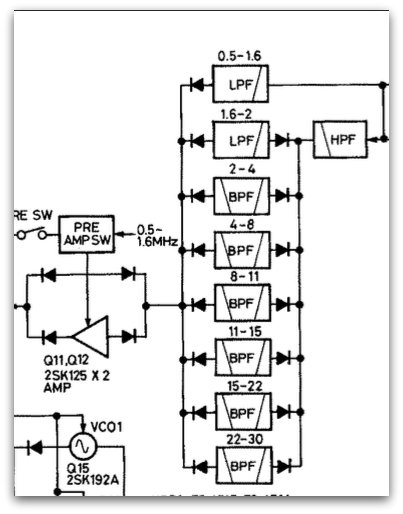
I took a look at the service manual and apparently this radio uses multiple bandpass filters  for different  frequency ranges.

Schematic-Icom-R72-1

As you see in the above picture (grabbed from service manual), one of the bandpass filters is for 11-15 MHz range–that’s the range where my radio was deaf.

Note that there are multiple ways to test that a radio is deaf at a frequency. One of the simplest ways: connect an antenna or even a long wire to the antenna socket of radio. The noise level should increase; if not, there’s a problem.

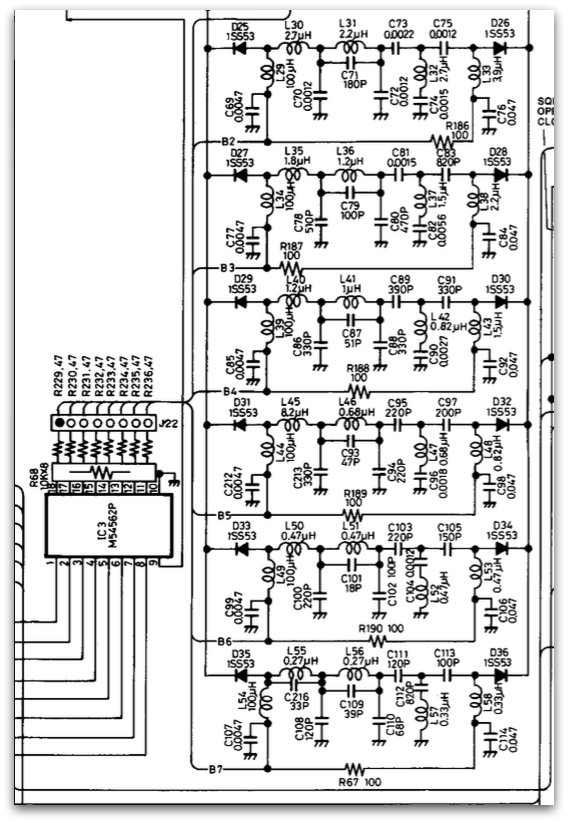
Schematic-Icom-R72-2

After testing diodes with a multimeter, I found out that D31 is faulty. Almost all multimeters have a diode-test functionality.

I replaced it. The original diode was 1SS53, but I used a 1N4148 which is very common and found everywhere. Now I have a working radio! 🙂

If you have a radio that’s deaf at a frequency range, there is probably a problem in bandpass filters.

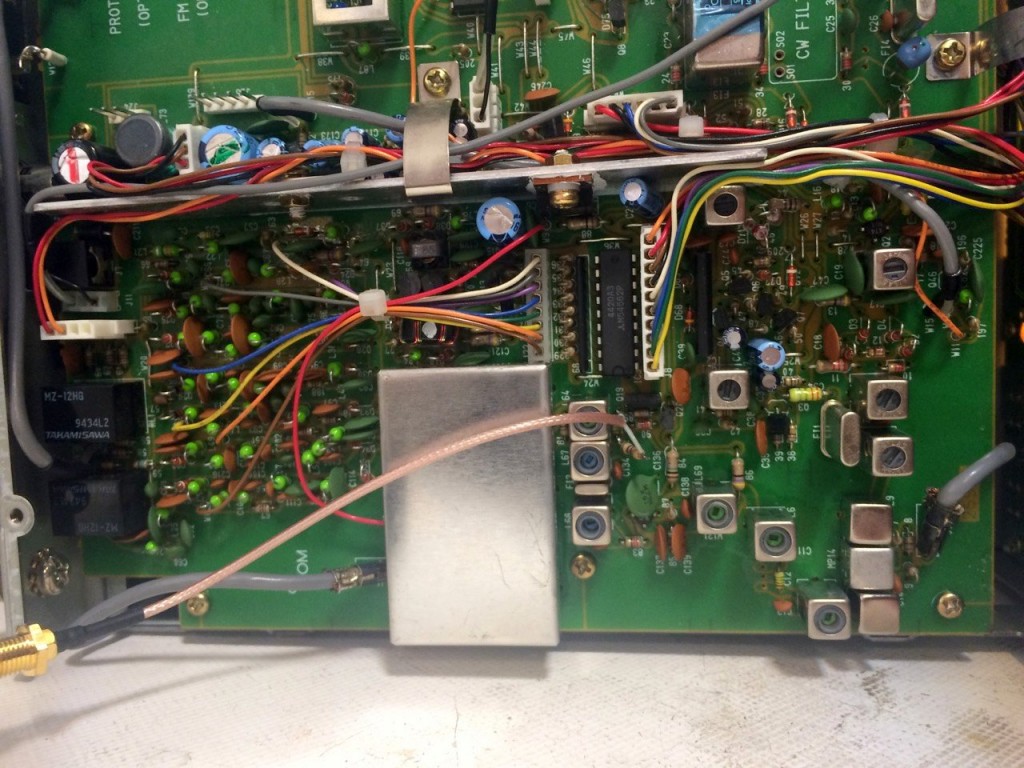
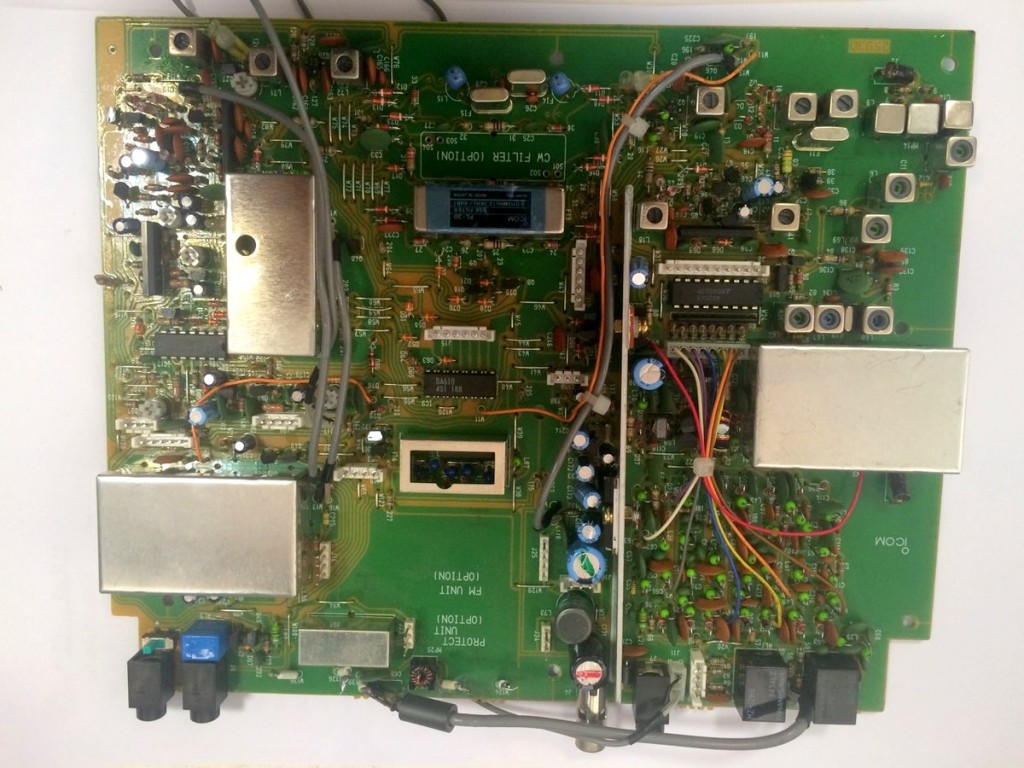
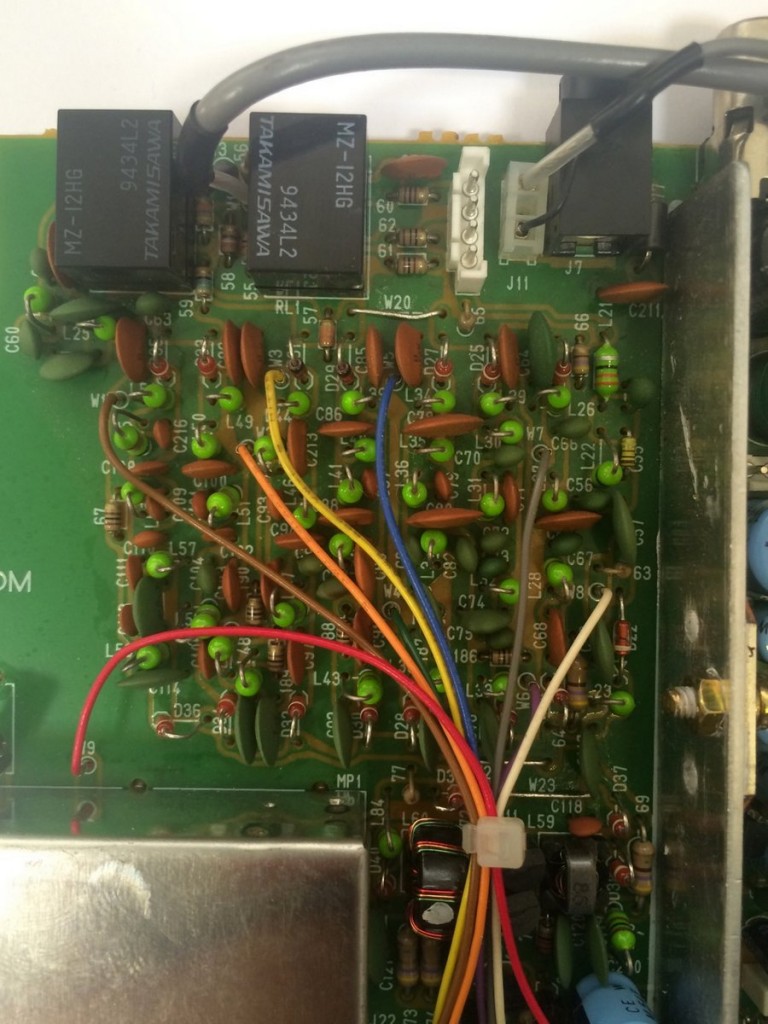
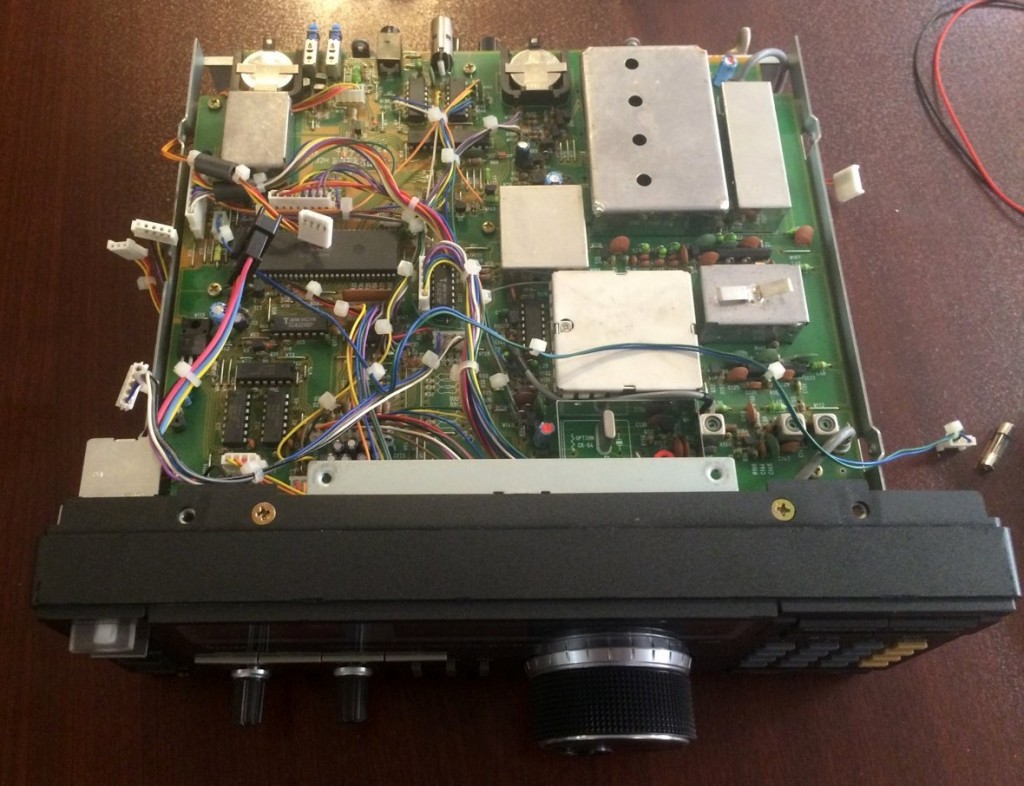
Here are some internal pictures of my Icom IC-R72:

IC-R72-Internal-IF-Stage-Mehdi IC-R72-Board-1 IC-R72-Board-2 Icom-IC-R72-Open

I should thank my friend and electronics mentor, Saeed (EP2LSH) who always helps me in my electronics adventures.

Mehdi Asgari, the author of this post, is a regular contributor to the SWLing Post. Mehdi lives in Tehran and is an active member of the EP2C amateur radio club.

Wired: Inside Bang & Olufsen

Beolit 39 from 1938, B&O's first Radio in Bakelite (Source: Wikipedia, image by Theredmonkey)

Beolit 39 from 1938, B&O’s first Radio in Bakelite (Source: Wikipedia, image by Theredmonkey)

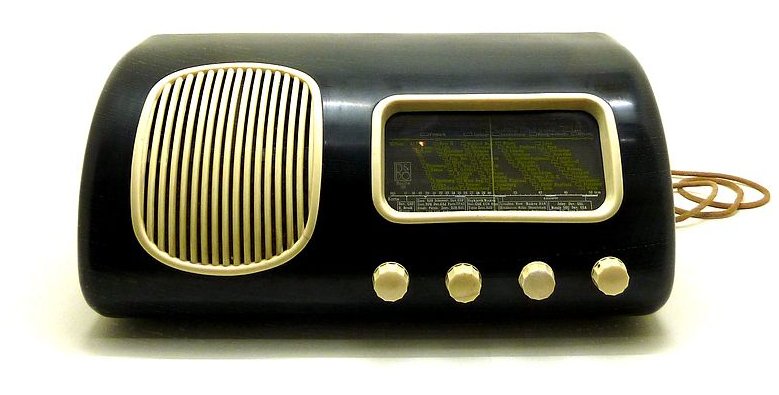
On the topic of beautiful radio design, I just read this Wired Magazine article which features photographer, Alastair Philip Wiper.

Wiper has been researching the Danish consumer electronics company Bang & Olufsen for his upcoming book, The Art of Impossible: The Bang & Olufsen Story. He was granted unprecedented behind-the-scenes access to B&O, where he learned about the company’s design philosophy, process and history. Here’s a short excerpt from the article:

“In the mid-1950s, design greats like Arne Jacobsen began experimenting with new materials and colors, galvanizing a wave of mid-century modern Danish furniture makers. Everything was sleek, teak, and handsome—it still is—but exhibits showing off the new pieces had a curatorial problem: no one was making modern radio cabinets, forcing curators to display decidedly outdated designs alongside the stylish new furniture. The technology definitely needed a major overhaul.

Bang & Olufsen joined a handful of radio manufacturers in rising to the challenge. The two men spent a few years doing research and working with architects and designers to design devices as beautiful as they were functional—an approach widely taken for granted today but novel at the time[..]”

I encourage you to read the full article at Wired.com and view some of the photographs in their online gallery.  If you’re not familiar with B&O design, do a simple image search online.

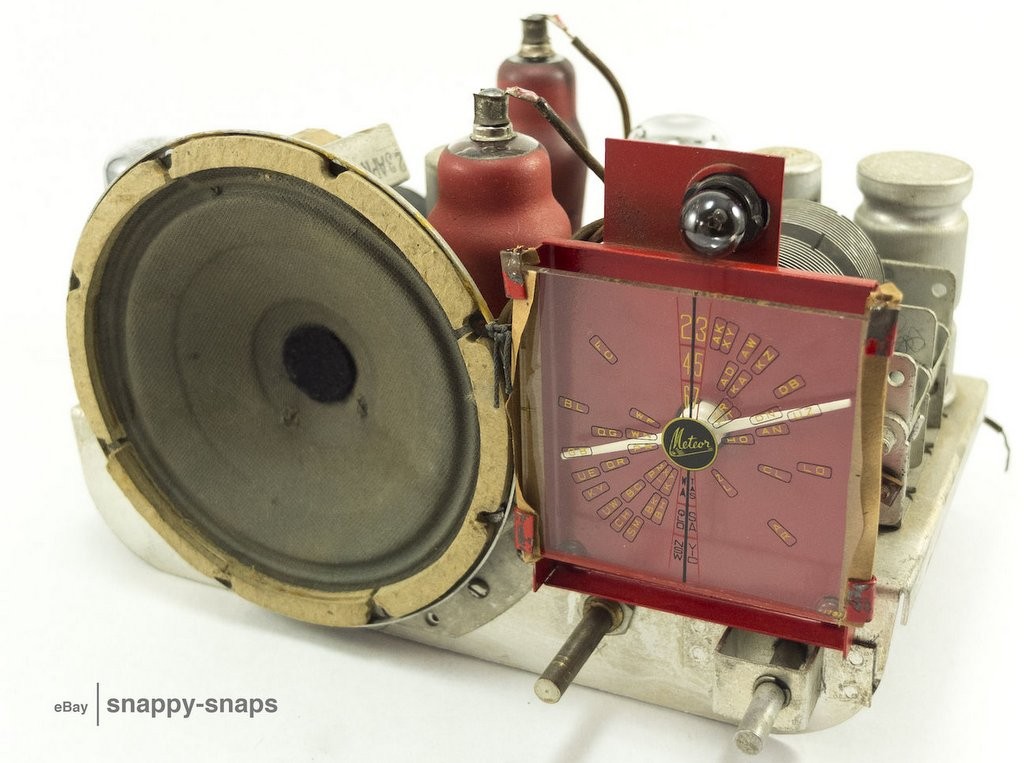
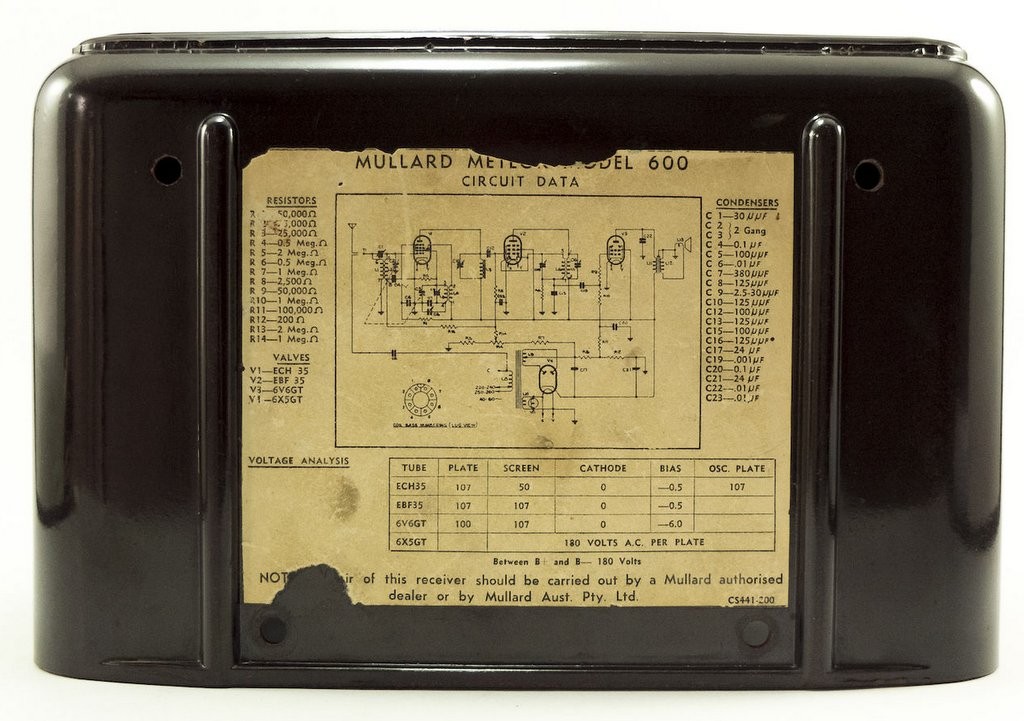
eBay find: Mullard Meteor 600A

Mullard-Tube-Radio-Bakelite-1Many thanks to SWLing Post reader, Monti, who knows that I have a serious affinity for 1940s era receivers. Monti writes from his home in Australia:
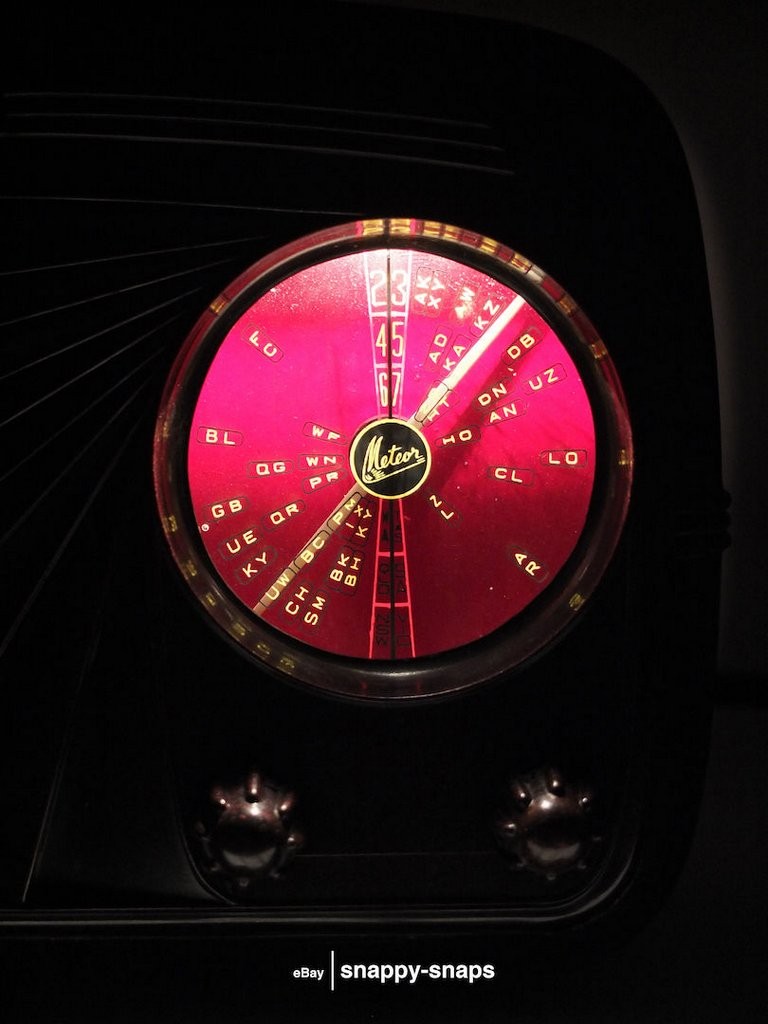
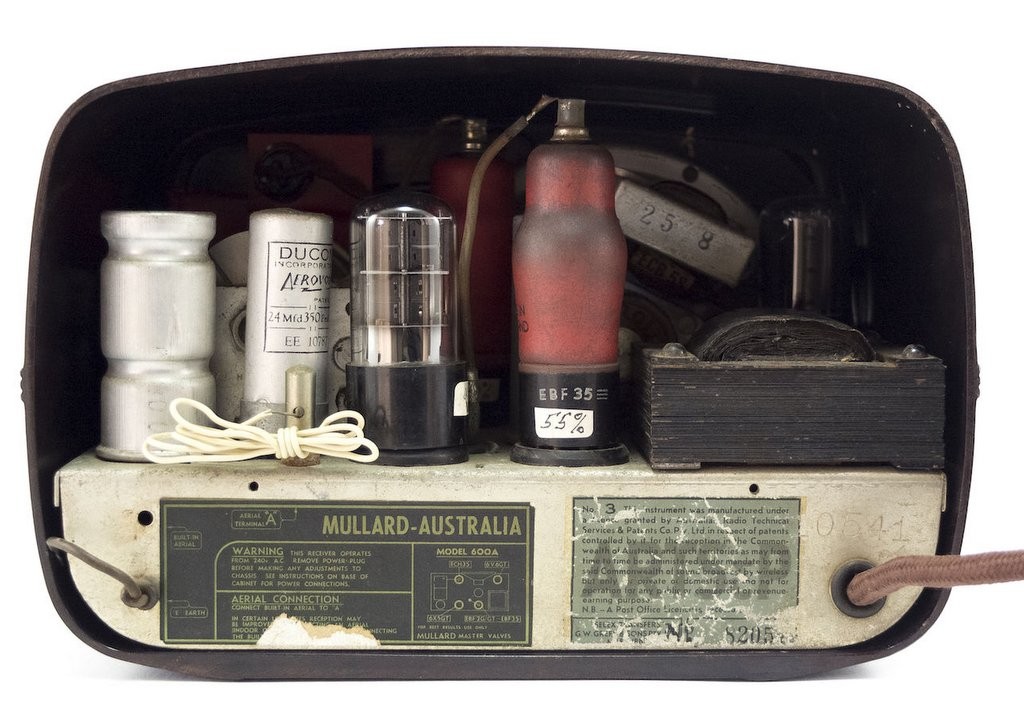
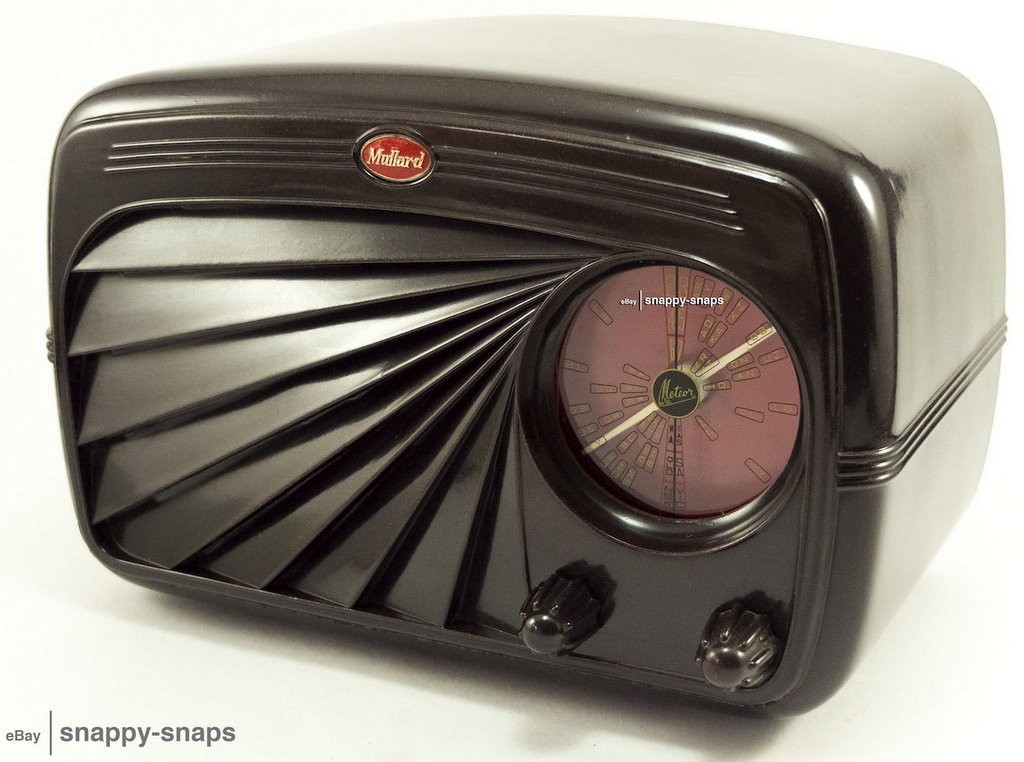
I had to send you this link Thomas. I’ve never seen this model before but what a stunning shape for a 40’s piece.

Look at this on eBay:
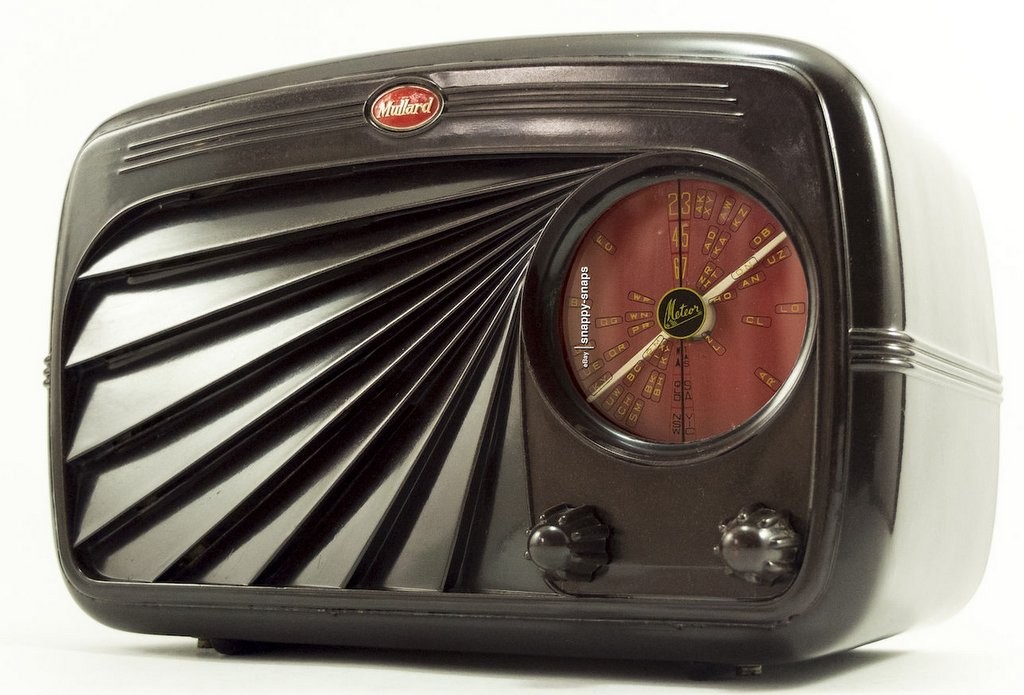
Mullard Meteor 600A Vintage Art Deco Bakelite Valve Radio c.1947

Lovely! While I could never pay $485.00 AUD for a non-working radio, I can certainly appreciate this gorgeous and unique design with radiating speaker grill louvres.

Check out this beautiful “meteor” dial:

Mullard-Tube-Radio-Bakelite-2

What a stunning radio!

Here are a few more pics I snatched from the eBay listing:

Mullard-Tube-Radio-Bakelite-3Mullard-Tube-Radio-Bakelite-5

Mullard-Tube-Radio-Bakelite-4

Mullard-Tube-Radio-Bakelite-6

Thanks for sharing, Monti!

Any lucky SWLing Post readers in Australia or New Zealand own one of these Mullards?

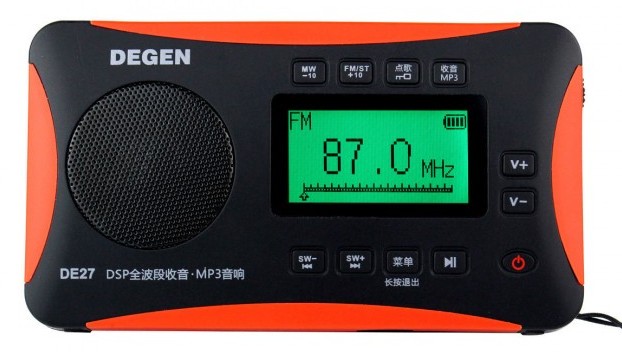
Phil’s initial impressions of the Degen DE27

Degen-DE27

Many thanks to SWLing Post reader, Phil Ireland, who comments:

I’ve just received my Degen DE27 from China. Interesting little radio, I haven’t had a good chance to put it through its paces yet but my initial impressions are the radio seems well built and fairly intuitive to turn it on.

However, all the instructions are in Chinese so luckily there was someone in my office who could set the language to english otherwise, setting up the radio is a nightmare! I will have to take the radio outside to test its performance as the office environment is useless to listen in.

The box says the radio tunes from 3.2 mhz to 21.850 mhz however, I havent been able to work out how to make it tune out of the standard SW Broadcast Bands yet. Toggling between 10 khz and 9 khz steps for AM is easy as it setting the FM band coverage but I’m yet to determine the SW settings. It appears tuning is only in 5 khz as well on SW.

As for venturing into MP3 settings and recording, I’ll leave that, it seems too much of a challenge! The clock and calendar, sleep timer, alarms are all fairly straight forward but there is an “E-Book” setting which defies description! It has a USB flash disc function and inputs for a micro SD card. Charging the supplied Lithium battery is via a supplied USB cable.

The display is easy to read and attractive with excellent backlighting. I’m not expecting stellar performance on any band, after all, it was a cheap radio (about 40 AUD with free postage) but it is built around DSP architecture. Only a single bandwidth is available and there is no SSB capabilities. The radio hopefully will be ideal to throw onto a backpack or pocket as a travel portable.

If DEGEN read these comments, perhaps an English manual put online would be extremely helpful to allow users to get the most out of the DE27.

I’ll comment more on the performance later but for now, the radio shows promise.

Thanks so much for sharing your initial impressions, Phil! Please keep us informed as you discover more about this little radio!

This reminds me that I have yet to put my Degen DE221 through the paces. Stay tuned!

eBay Find: the Zenith Trans-Oceanic Royal D7000Y, with Comparisons to the Sony CRF-320

ebaySometimes when  browsing eBay you’ll come across a hot item that wasn’t even on your wish list or Followed eBay Searches. This was the case for me early last month when I spotted a new listing for a Zenith Royal D7000Y-2 Trans-Oceanic that’s arguably the best performing T-O ever made. It’s not the most collectable (the final R7000 series has that distinction), but is the final model with the desirable band spread tuning arrangement. The D7000Y is also the last of the hand-wired Trans-Oceanics. Some claim this model has the best audio of the transistorized T-Os, too.
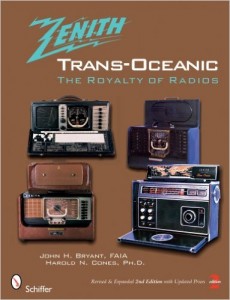
I have a soft spot in my heart for Zenith Trans-Oceanics, as the co-author of the “Royalty of Radios” reference book, the late Prof. John Bryant, was my best friend for many years. John also wrote books on Zenith’s corporate history and other models of Zenith radios. The transistorized Zenith Trans-Oceanics were unobtainable dream receivers for me when I was a teenager in the mid-1970s.royalty of radios book

I watched this Buy-It-Now auction for three days and was very surprised it remained available, especially after noticing its superior condition compared to other auctions for the same model. Finally on the third day I pulled the trigger–I’m not a collector of vintage radios but I couldn’t miss the chance to let this fine old Zenith follow me home. At a Buy-It-Now price of $219 including cross-country shipping, it seemed like a no-brainer decision.

When the radio arrived–packed extremely well–it was in ever better condition than pictured and described (I’d call it 9.8 on a 10 scale).  The package included the original hang tag, QA stickers, owners manual, service manual, marketing literature and even the original monaural earphone and AC power cord. All dial lamps and the chart light worked fine. The previous owner said the T-O was fully aligned a year ago, and indeed I found that the reception quality on the built-in whip antenna is great. I’d love to know where this receiver was stored for the last 38 years; it was clearly someone’s gently used, cherished Zenith.

This slideshow requires JavaScript.

________________________________

A folder of high resolution photos of this receiver can be viewed here.

Compared Against the Sony CRF-320

Besides simply enjoying receivers I get a kick out of comparing them against each other, and against various other ones owned by my radio hobby friends. Thanks to the loan of a vintage Sony CRF-320, I was able to directly compare it to my Zenith Trans-Oceanic Royal D7000Y-2 receiver. My friend’s CRF-320 is the equal of my Zenith in condition and quality. Each of us would like to own both of these radios!

This is an interesting pairing, since the Zenith was among the last of the premier, USA manufactured portable receivers (analog only, all hand-wired chassis), and the CRF-320 was an equally prestigious portable receiver of the “latest technology”–digital/analog readout with printed circuit board construction.

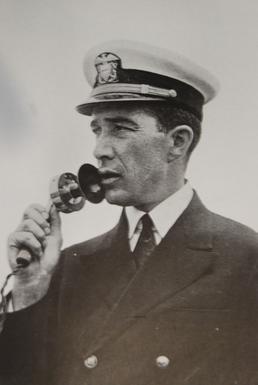
Eugene_F._McDonald_the_Commanderand_founder_of_ZenithOnce a leading receiver brand, Zenith did not react quickly enough to changing trends and business climate after the death of its founder, Commander Eugene F. McDonald.  The 40 year old (1942-1982) proud line of Trans-Oceanics gave way to new, semi-automated methods of building receivers with inexpensive labor from Asia.

After an initial production run of the next (and last) R7000 series, manufacturing was moved to Taiwan. The receiver was built just as well as the previous Royal D7000, but used PCBs inside and the useful band spread frequency ranges were done away with (at the expense of ease of tuning). Still, Zenith T-Os couldn’t compete on price or performance against the Sony CRF-320, and the R7000 Trans-Oceanics were the last (and now most collectible) versions.

This YouTube video compares reception of these two vintage receivers with mid-morning signals on the 31 meter band, from the Seattle area:

https://www.youtube.com/watch?v=Uli6DPRJkX8

Both radios were used with their built-in whip antennas although I couldn’t extend the Zenith’s its final four inches due to ceiling height in the room.

In my opinion, the CRF-320 is superior in keeping signals steady with its AGC, but the D7000Y-2 excels in audio quality and is neck-and-neck in most other respects. The Zenith may have performed a bit better with weak signals if the ceiling in my kitchen was a few inches higher! (Both radios have substantially long built-in antennas, and each are very well matched to their circuitry for excellent reception.)

There are many references around for the Zenith Trans-Oceanic series, but not a lot has been published on the CRF-320. Here is one page with good details on the Sony:  http://www.shortwaveradio.ch/radio-e/sony-crf320-e.htm

Jay Allen’s excellent article on restoring a Zenith T-O Royal D7000 has very clear photos of the receiver’s interior: http://radiojayallen.com/zenith-royal-7000/

Moral of the Story?

I’ve been active on eBay since 1998. As with garage sales, the chances of an excellent “find” increase with the time spent in the pursuit. Sometimes you just get lucky though and find a very desirable item remaining unsold for days, such as this Trans-Oceanic! It’s all about being in the right place at the right time. Since I’ve bought the receiver I’ve yet to see any other D7000s of equal or better quality, despite some with Buy-It-Now prices of up to $450 plus shipping (edit 12/16: I spotted one that appears in equal condition to mine, but for a Buy-It-Now of $675 + $40 S/H).

Guy Atkins is a Sr. Graphic Designer for T-Mobile and lives near Seattle, Washington.  He’s a regular contributor to the SWLing Post.