Category Archives: Recordings

Shortwave Radio Recordings: Radio Impala (Rwanda)

RadioImpalaYesterday, while recording the BBC coverage of Portugal v. Ghana in the World Cup, I noticed a relatively strong carrier on 17,540 kHz. A quick check of schedules and I realized this was the Rwandan based station, Radio Impala–a new catch for me.

Radio Impala is clear about their humanitarian mission of peace, friendship, human rights and equality in their station id. I’ve made a short audio clip with their English language ID below:

Radio Impala broadcasts music and commentary daily from 17:00 – 18:00 UTC (7:00 – 8:00 PM Rwanda time) on 17,540 kHz out of the Talata-Volondry, Madagascar transmitter site.

I was able to record almost 45 minutes of the show before the signal began to fade. Click here to download the recording, or simply listen via the embedded player below:

BBC World Service: Portugal vs. Ghana

WorldCupBall-001Earlier today, I tuned to the BBC World Service on 17,830 kHz at 16:00 UTC, hoping they would be covering the USA vs. Germany game of the FIFA World Cup. I was pleased to hear World Cup coverage the moment I tuned in–but was a little disappointed that BBC had selected the Ghana vs. Portugal game.  Still, I can’t complain; this BBC service is, after all, intended for Africa. And a lot was at stake for Ghana…

So, I listened to the BBC coverage of that game while watching the USA vs Germany game stream over ESPN. I also watched a little of the Portugal/Ghana game, and realized I had an advantage over others streaming the game because the shortwave coverage from the BBC was almost 5 seconds ahead of the live stream. That’s the power of shortwave: goals at the speed of light!

For your listening pleasure, here is the full recording I made from the BBC World Service today. Click here to download the recording as an MP3, or simply listen via the embedded player below:

Shortwave Radio Recordings: Radio Romania International

Original Map Image by Andrein: Wikimedia CommonsFor your listening pleasure: Radio Romania International‘s English language service.

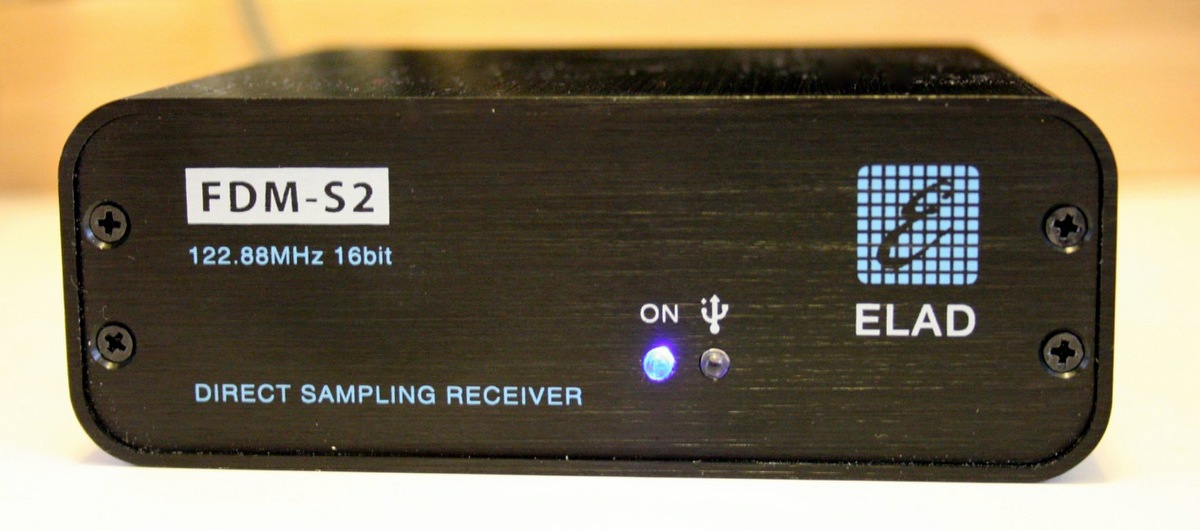
I recorded this broadcast with the Elad FDM-S2 on June 26, 2014, starting at 00:00 UTC on 9,700 kHz.

This broadcast originates from RRI‘s Tiganesti transmitter site.

Click here to download the recording as an MP3, or simply listen via the embedded player below:

Click here to view other posts mentioning Radio Romania International.

Shortwave Radio Recordings: BBC to the 2014 British Antarctic Survey

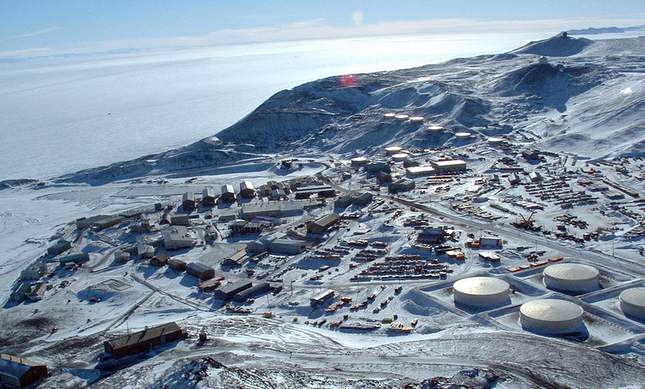
800px-Antarctica.svgAs promised, here are the recordings of the BBC World Service’s thirty minute broadcast to the British Antarctic Survey. The broadcast started at 21:30 UTC on June 21, 2014 and was broadcast on 5,875, 5,985, 7,350 and 9,890 kHz.

British_Antarctic_Survey_Logo

As in previous years, this broadcast was lighthearted, filled with humorous shout-outs from the team’s family and friends. Even a couple of special guests were included. Listen for yourself:

This excellent recording was made by SWLing Post reader, Dominik, in Europe:

Click here to download Dominik’s recording as an MP3.

Post reader Rob Wagner (VK3BVW), in Australia, could receive the broadcast on three frequencies (5,875, 5,985, and 7,350). He’s included clips of each broadcast on his excellent blog, The Mount Evelyn DX Report.

As for me, I was traveling to visit family yesterday afternoon when the broadcast started.  I knew from listening endeavors on previous visits that receiving a broadcast indoors at their home is not feasible; there is some sort of power line noise in that area that overwhelms anything on the short or medium wave bands, unless the station is very strong.

To cope with this noise, I knew I would need to move my operation outdoors, away from the house, and employ an outdoor antenna. So I packed the following, all into my small flight case: the CommRadio CR-1, a NASA PA-30 15 foot passive wide-band wire antenna, and the Zoom H2n Handy Recorder
.

CommRadio-CR-1-Zoom-H2N-BBC-Antarctica

I hung the PA-30 antenna in a nearby tree, spread a wool army blanket on the ground for lounging, and put the mini flight case to use as a stand to hold the radio and recorder. The CR-1 required no external power supply, as its internal battery had been charged in advance (one of the reasons I love this little receiver for travel).

To try out the set-up, I tuned around the bands. Conditions were rough, thunderstorms were in the region, but I was most impressed that I could hear several broadcasters on 31 meters. I knew that the BBC broadcast would be a tough catch; after all, none of their transmissions were targeting my part of the globe–rather, the opposite!

When I tuned to the BBC broadcast on 7,350 kHz, here’s what I heard:

This is (very) rough copy; for five or so minutes, you’ll hear me switching between AM/USB and LSB to find the best mode for the signal. I also check the other BBC frequencies to see if any were more audible.

In the end, using ECSS (zero-beating the signal in USB) seemed to work best.

For fun, I had also brought along the Tecsun PL-660–a choice portable radio for weak signal DX. I tuned to 7,350 and could just hear the BBC signal in the noise, but voice and music were unintelligible.

Tecsun-PL-660-BBC-Antarctic

What did I get out of the experience?  Good copy?  Alas, no.

But there’s nothing like the fun of playing radio outdoors! Even though the copy was rough, propagation deplorable, and static crashes abundant, I thoroughly enjoyed the experience.  Moreover, I was amused to note that while I listened (and sweated) outside in the very hot, muggy conditions of the American southeast, a few scientists huddled near the extremely chilly southern pole at that exact moment, were tuning in the exact same broadcast.  It somehow made the heat bearable.

That’s the remarkable camaraderie of radio: truly, a wireless community.

Happy Summer/Winter Solstice: Listening to New Zealand and Australia

Australia-NewZealand

I’ve been on the road a lot lately. A lack of time resulting from this, combined with frequent afternoon and evening thunderstorms when I am home, has meant that I’ve not had the radio time I often enjoy.

This morning,  I woke up around 5:50 AM determined to get a bit of time on the radio. After all, today is the first day of summer here in the US, and a special day for me. I walked outside and hooked my antenna back up; I had been forced to disconnect it yesterday as pop-up thunderstorms persisted throughout the afternoon and evening.

I then brewed a cup of coffee and settled into my “listening lounge” for some early morning tuning.

Elad-FDM-S2-Coffee

I started off this morning off by tuning the Elad FDM-S2 to Radio New Zealand International on 9,890 kHz in DRM (Digital Radio Mondiale). I was treated to one full hour of Peter Fry’s Saturday Night music; the DRM lock was completely stable.  Though I prefer the sonic characteristics of AM over digital modes, I’m most impressed with the audio quality DRM affords coming from a 50 kW signal being broadcast on the other side of the planet. The quality is so exceptional that, if you listen carefully, you can even hear the news reader shifting papers at the top of the hour.

That got me thinking: I’m flawlessly receiving and decoding a wireless digital audio signal from 13,500 kM away. Amazing. Especially considering that my laptop struggles to receive Wi-Fi in many hotels.

RNZI signed off after an hour, so I switched modes to AM and tuned to Radio Australia on 9,580 kHz.

BombersAs I had hoped, RA was broadcasting the second half of the AFL match featuring the Essendon Bombers who ultimately held a nine-point win over the Adelaide Crows. Alas, Radio Australia dropped the signal before the end of the final quarter, but I was able to watch the results roll in on my iPhone while making waffles in the kitchen. If this had been a World Cup match, I would have scoured the shortwaves for another Radio Australia frequency.

Immediately after tuning in RNZI, I hit the record button on the FDM-S2 (around 5:55 EDT/9:55 UTC) and didn’t stop the recording until after Radio Australia signed off, so there is a 30 second silence in the middle while I tuned and switched modes from DRM to AM.

Click here to download my full 2+ hour morning recording, or simply listen via the embedded player below:

Depending on which hemisphere you live in, I hope you enjoy this summer–or winter– solstice.

As for me, I’m looking forward to a happy birthday with my family.  Cheers!

Shortwave Radio Recordings: Radio New Zealand International (DRM)

This morning, while scanning the 31 meter band, I noticed a DRM (Digital Radio Mondiale) signal on 9,890 kHz. Normally, I ignore most DRM signals because the amount of signal strength needed to properly decode the mode (here in the US) is simply too low for pleasant, artifact-free copy.

Still, I thought I’d give the new Elad FDM-S2 a try, so I changed mode from AM to DRM.

RNZI-DRM-003To my amazement, the FDM-S2 quickly decoded the signal and produced excellent audio from Radio New Zealand International.

I assumed the decoding lock would not hold, but I was wrong; indeed, I believe there were only one or two significant drops in the 40+ minutes I listened. This may be a very good sign from the FDM-S2, even if propagation was above average.

I’m not a big DRM listener, but that’s mainly because there is so little to hear on the bands. The real test will be All India Radio in DRM–I’ve never managed to get a consistent lock on them from here in eastern North America.

Still, I’m pleased as punch that I can so easily copy RNZI–one of my favorite international broadcasters–in DRM.

Here’s a recording of the broadcast starting at 11:18 UTC on June 14, 2014. Click here to download the the recording as an MP3, or simply listen via the embedded player below:

Shortwave Radio Recordings: the Voice of Greece, one year on

Last night, while learning the ropes of the new Elad FDM-S2, I noticed some great music on 9,420 kHz, the former Voice of Greece frequency.

GREECE-ECONOMY-MEDIAIt was then that I realized yesterday (June 11) marked the one year anniversary of the day that the Greek government shut down ERT and the Voice of Greece. If interested, click here for some audio I recorded that very night.

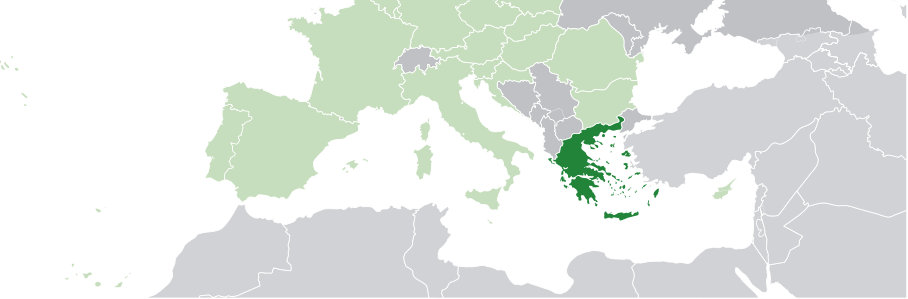
Amazingly, one year later, 9,420 kHz is still active out of the Avlis transmitter site and last night, the Radio Station of Macedonia (a.k.a., ERT 3) was playing an excellent mix of Greek music and jazz.

Click here to listen to the 51 minute recording, made with the Elad FDM-S2 software defined receiver, starting at 00:50 UTC:

You’ll note great audio fidelity and a low noise floor despite the numerous static crashes present from area thunderstorms. (Note that I did not have DSP noise reduction nor the noise blanker engaged.) I started the recording in standard AM mode, then changed it to AM synchronous detection between songs in the first half of the recording.