Category Archives: Shortwave Radio

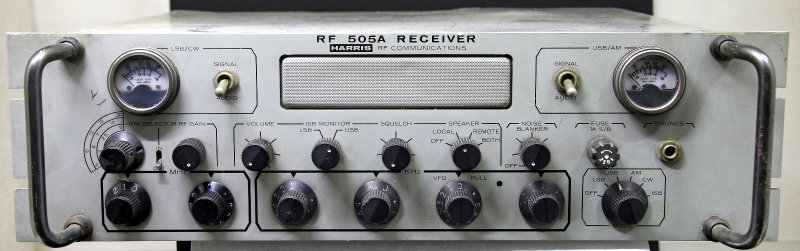
Nick acquires a Harris RF 505A receiver

Many thanks to SWLing Post contributor, Nick Booras, who writes:

I just picked up a Harris 505A and I made a couple videos your viewers might like.

This radio is extremely sensitive as you can see in the comparison videos. I am very lucky to have picked it up. I will add that in the comparison to the Kenwood TS890 I didn’t try the 15 kHz filter on video. I did try it afterwards and I was surprised to receive the weak 6.085 signal with similar results to the 505. I thought for sure that that huge width would only let in more noise but I was wrong. I learned something new! But the 505A is still a super sweet machine.

Thank you for sharing this, Nick! What a wonderful addition to your radio collection. I’ve always loved the incredibly simple design of the 505A and have assumed it would have a very low noise floor.

Thanks again!

Dan notes a spike in Zenith Trans-Oceanic prices

Many thanks to SWLing Post contributor, Dan Robinson, who notes:

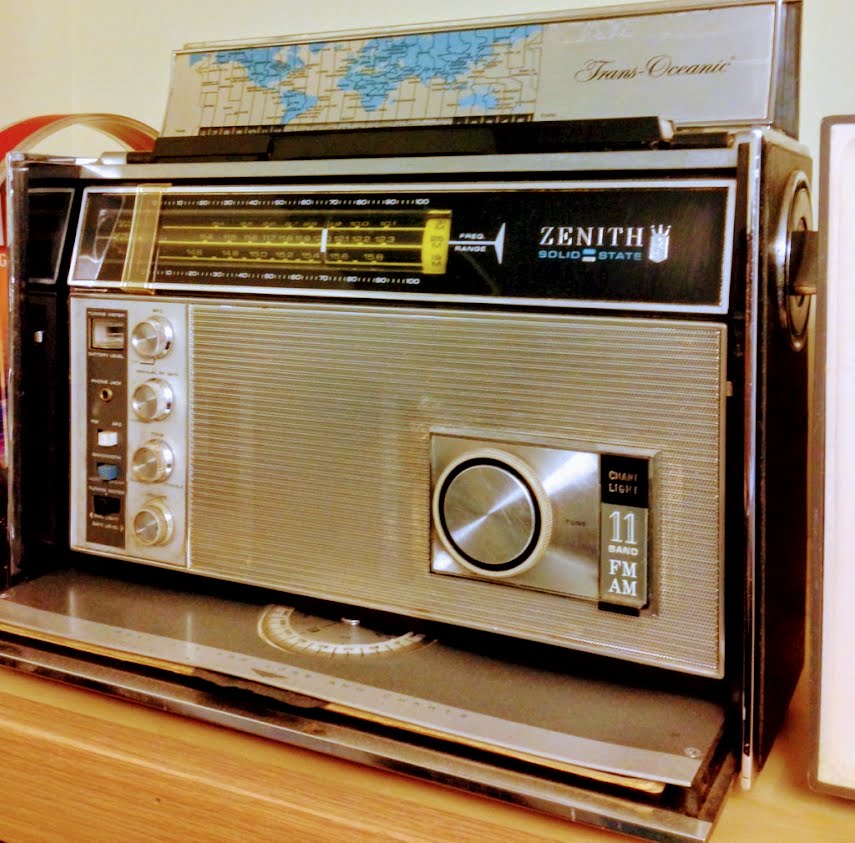
There appears to be a spike in Zenith Trans-Oceanic sales. The recent eBay sale of a D7000Y for $900 sparked a number of new auctions by sellers seeking to take advantage of this apparent
trend.

The following D7000Y was listed with a $900 Buy It Now price by someone obviously
cashed in.

Click here to view on eBay.

Wow! I’m curious what could have encouraged this spike in prices. I have a Trans-Oceanic but will not sell it because it was my first portable radio. With that said, if there are readers who’ve considered parting with theirs, this might be the right time. Thanks for the tip, Dan!

RIP George Zeller: Losing a giant in our shortwave radio world

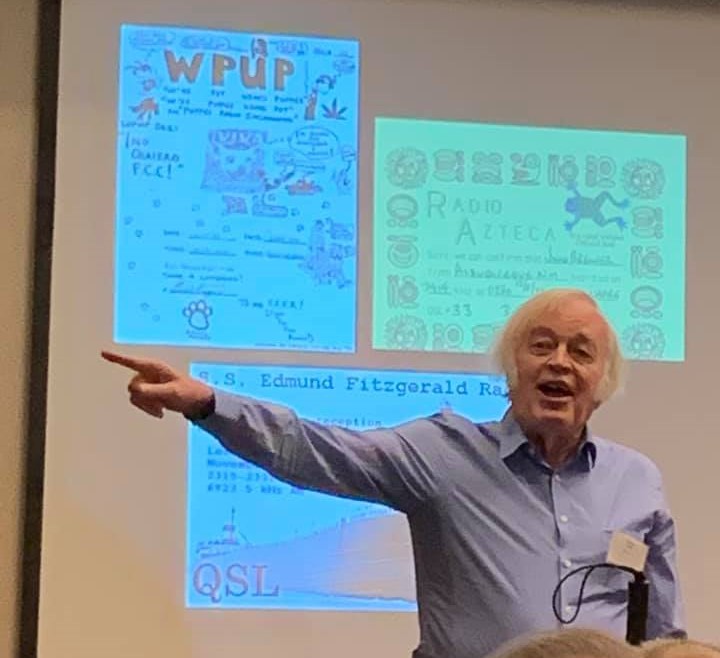
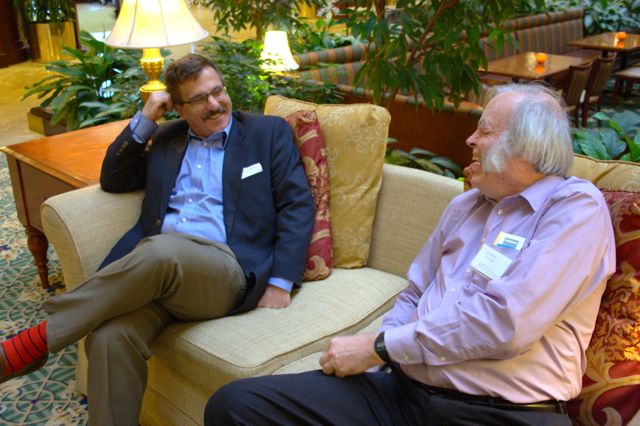
George Zeller at the Winter SWL Fest Pirate Radio forum (Photo by Paul Kaltenbach)

Many of us who were friends with George Zeller or who regularly attend the Winter SWL Fest are devastated to learn that this well-loved SWL personality passed away after an unintentional electrical fire in his Cleveland home on Saturday March 20, 2021.

Richard D’Angelo with NASWA posted this message about George:

I was shocked and saddened to learn of George Zeller’s sudden passing earlier today (March 20) in a house fire this morning. I had exchanged emails with George earlier this week on NASWA editorial matters as he was slowly recovering from his recent Covid-19 vaccination. The news article in the online Cleveland Comeback mentioned overcrowded electrical outlets/extension cords as the cause of the accidental fire. George was 71 years old.

George and I knew each other for about 40 years. George came to several DXpeditions at Gifford Pinchot and French Creek State Parks. We attended many of the same radio hobby gatherings over the years. For several years, I traveled to Cleveland for work; George and I would go out to dinner on those occasions. Naturally, any time my company was mentioned in the local newspaper George would eagerly forward that information to me. George also traveled to the Winter SWL Festival in Plymouth Meeting, Pennsylvania each year to gather with like minded radio people. He attended other radio conventions too over the year’s throughout the country.

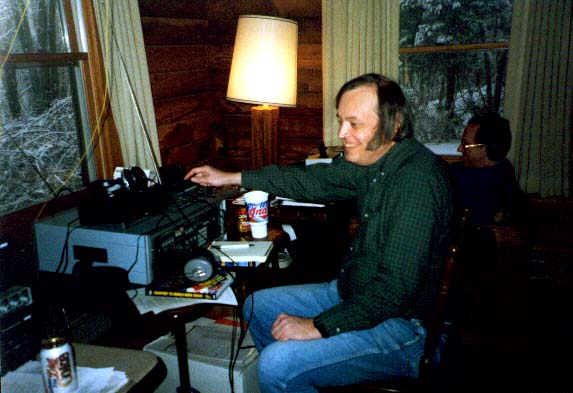
George at a Gifford Pinchot State Park DXpedition

George was well known in the greater Cleveland area as an Economist who kept close tabs on the Ohio economy. The Economic Indicators project he worked on provided continually updated information on poverty, earnings, and the economy in all Ohio counties and communities, with related demographics. In Ohio, Economic Indicators data include annual income trends for all 612 Ohio school districts. Detailed data was also available for job growth and payroll earnings in all Ohio counties going back to 1979, including measures of the very large job losses suffered by Cleveland and Ohio during the 2000s recession that has lingered longer in Ohio than it did elsewhere in the United States. Over the year’s he mixed with local political figures and served as a volunteer in a number of community organizations serving the greater Cleveland area. He was a regular on several talk radio programs when Ohio’s economy was the lead topic.

George was an active baseball and football fan. He attended baseball games wherever he could. He spent time traveling to difference cities attending games in many major league and minor league baseball stadiums. I recall making such a trip to Camden Yards in Baltimore with several others to catch an Orioles-Yankees baseball game when my children were youngsters. He was an enthusiastic Cleveland Indians and Cleveland Browns fan going back to the glory days of the 1950’s. He never forgave the Indians for trading away Rocky Colavito.

For twenty years George wrote a column about unlicensed pirate and clandestine shortwave radio broadcasting news in Monitoring Times magazine. He was also a contributing editor to Passport to World Band Radio, the definitive guide to international shortwave broadcasting frequencies, schedules, and receiving equipment. For decades he wrote a column on Clandestine radio broadcasting in the monthly issues of The ACE from the Association of Clandestine Radio Enthusiasts. Annually, he hosted the Pirate Radio Forum at the Winter SWL Festival in Plymouth Meeting, Pennsylvania as well as being the host of the prize raffle at the Saturday night banquet. In recent years, George was the editor of the Pirate Radio Report column for the North American Shortwave Association. He joined NASWA in December 1965 as a lad of sixteen.

Left to right: Rich D’Angelo and George Zeller at the Winter SWL Fest

George was always fun to be with and a real character to boot. No matter what the topic of the conversation was, he had a story that may or may not have been pertinent. There was never a dull moment when he was part of the group. George Zeller will be missed by all of us.

Thank you for sharing, Rich.

In the news article about the house fire, his neighbor described George as always kind and somewhat reclusive. With his radio community, he was everything but reclusive.

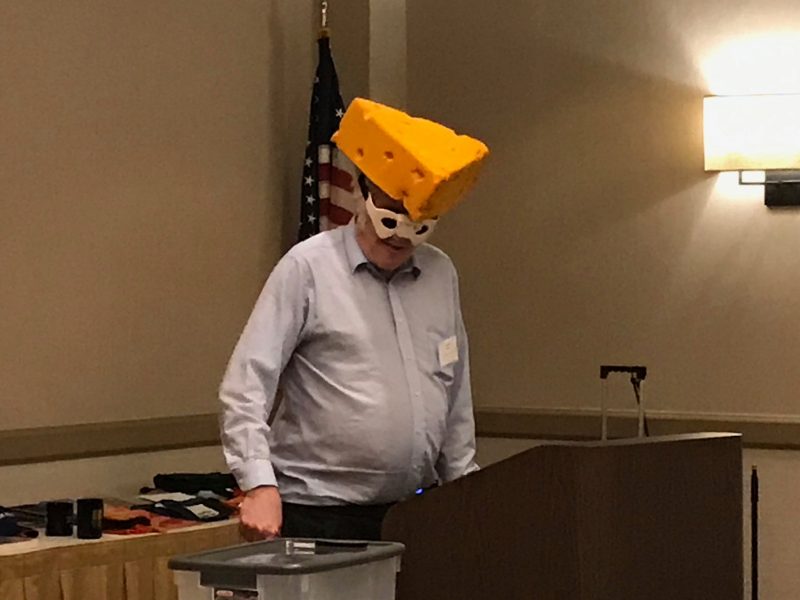
George wearing his ceremonial cheese hat and goggles at a Winter SWL Fest banquet. (Photo by Larry Willl)

George had a huge personality, amazing sense of humor, and perhaps what I admired about him most was his ability to poke fun of himself. A quality I hold in high regard.

We will miss you, George.

From Cleaveland.com (22 March 2021): George Zeller, economist, advocate for the poor and RTA riders, dies in house fire

Social DXing: Looking back at one very radio-active year

One year ago, I posted an article about making the most of social distancing as the world started locking down due to the rapid spread of Covid-19. Here in March 2021, the news is looking much better: vaccines are being distributed at a record pace across the globe and number of cases and deaths are mostly on the decline.

Looking back
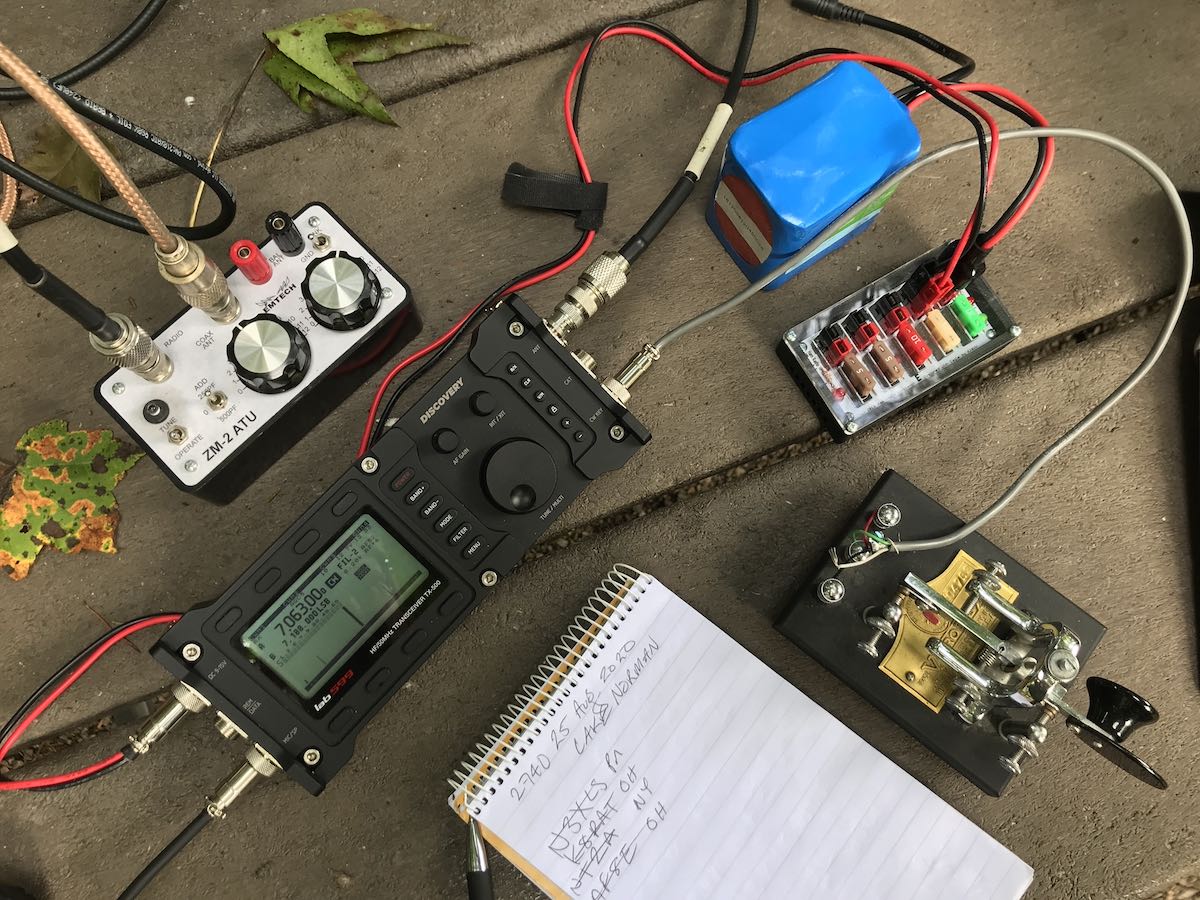
As I look back at the Social DX Bucket List I made last year, I’m happy to see that I actually accomplished about 64% of the goals I listed. I knew some of those goals would take well over a year to achieve (the QRP EME one especially).

In particular, I’m chuffed that I braved up and started doing Parks On the Air (POTA) and Summits On The Air (SOTA) activations in CW (Morse Code). That was a huge step for me and I’ll freely admit: I was nervous about it. But in July 2020, I managed to do my first CW activation and since then it has become my choice mode of operating in the field. CW is such a simple mode and so efficient–plus it gives me a sense of connection with the roots of radio communications.

I also accomplished a few things I never set out to do:

Not a typical radio year for me
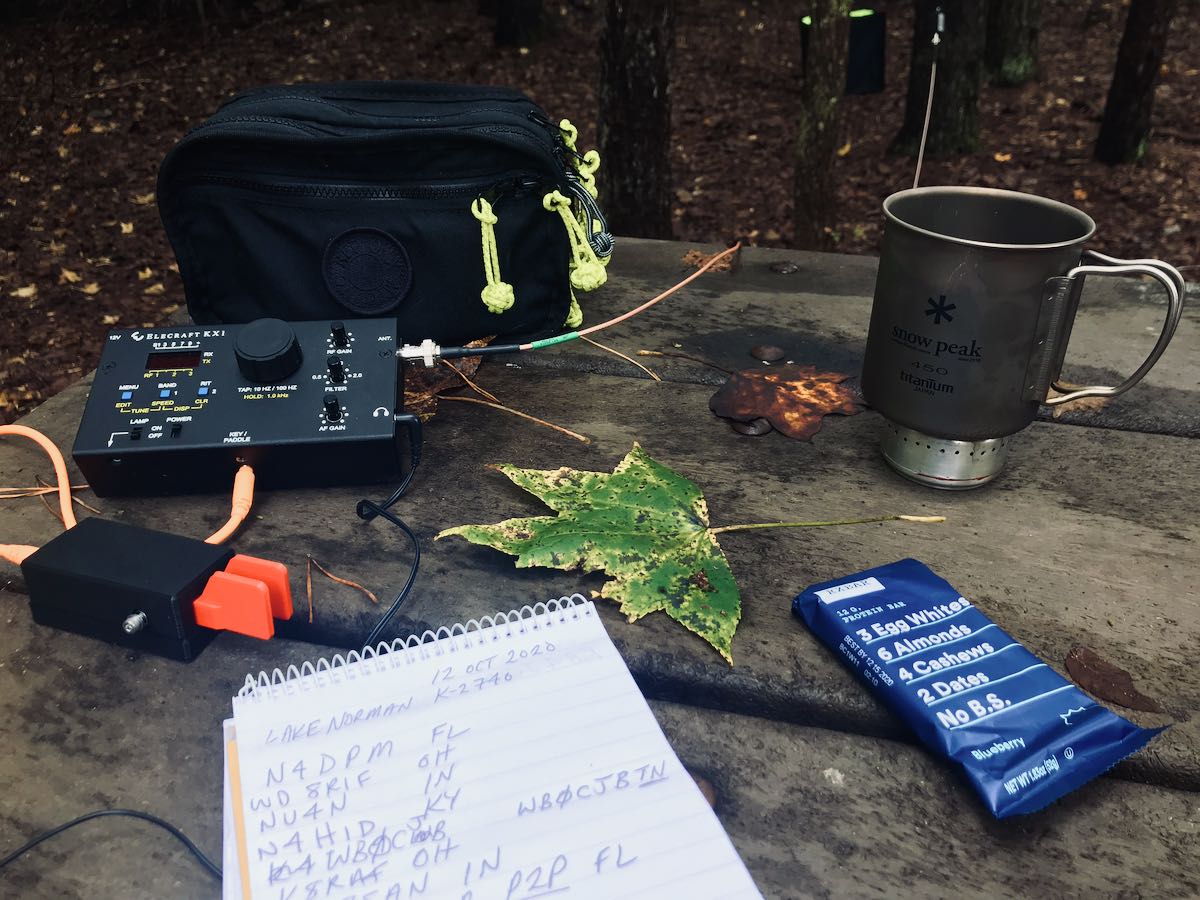
In a “normal” year, I do way more SWLing than I do ham radio activity.

Last year, I started doing caregiving for my parents in my hometown–I’m typically there 2-3 days a week. While I’ve done shortwave listening and even a little MW DXing in my hometown, I typically don’t have a lot of time, especially in the evening hours. I just want to hit the sack early. QRM is also debilitating there and while I’d like to install a permanent Loop On Ground antenna to mitigate the noise (you heard that right, Andrea!) I’m not entirely sure I’d even have the dedicated listening time to justify it. When I’m there, I like to spend quality time with my folks.

In general, I’ve had much less free time. Indeed, if you’ve written to me via email, you’ll know this based on how long it’s taken me to reply. It can take several weeks especially if the reply requires a detailed response (which many do).
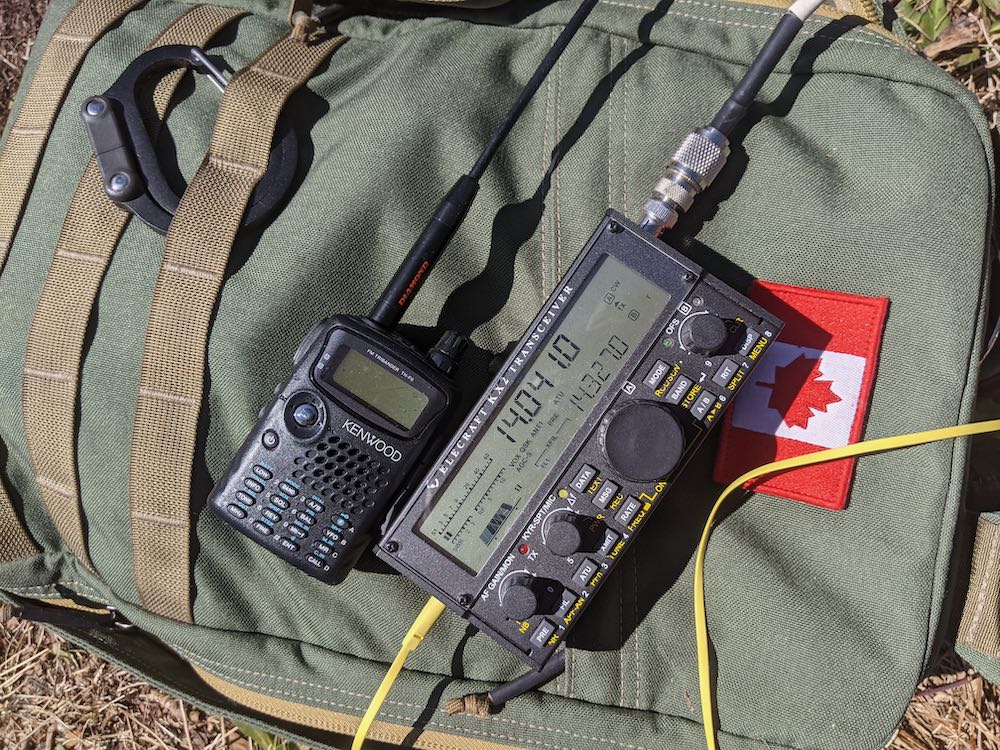
En route to, and on the way back from my hometown, I’ve found that doing park and summit activations has been very rewarding. Last year, I believe I completed a total of 82 park activations.

POTA has given me an excuse to explore public lands I’ve never visited before. Plus, I love nothing more than taking radios to the field–both receivers and transceivers.

Hamming and SWLing

At the end of the day, I’m an SWL and a ham radio operator. I find the two activities complimentary.
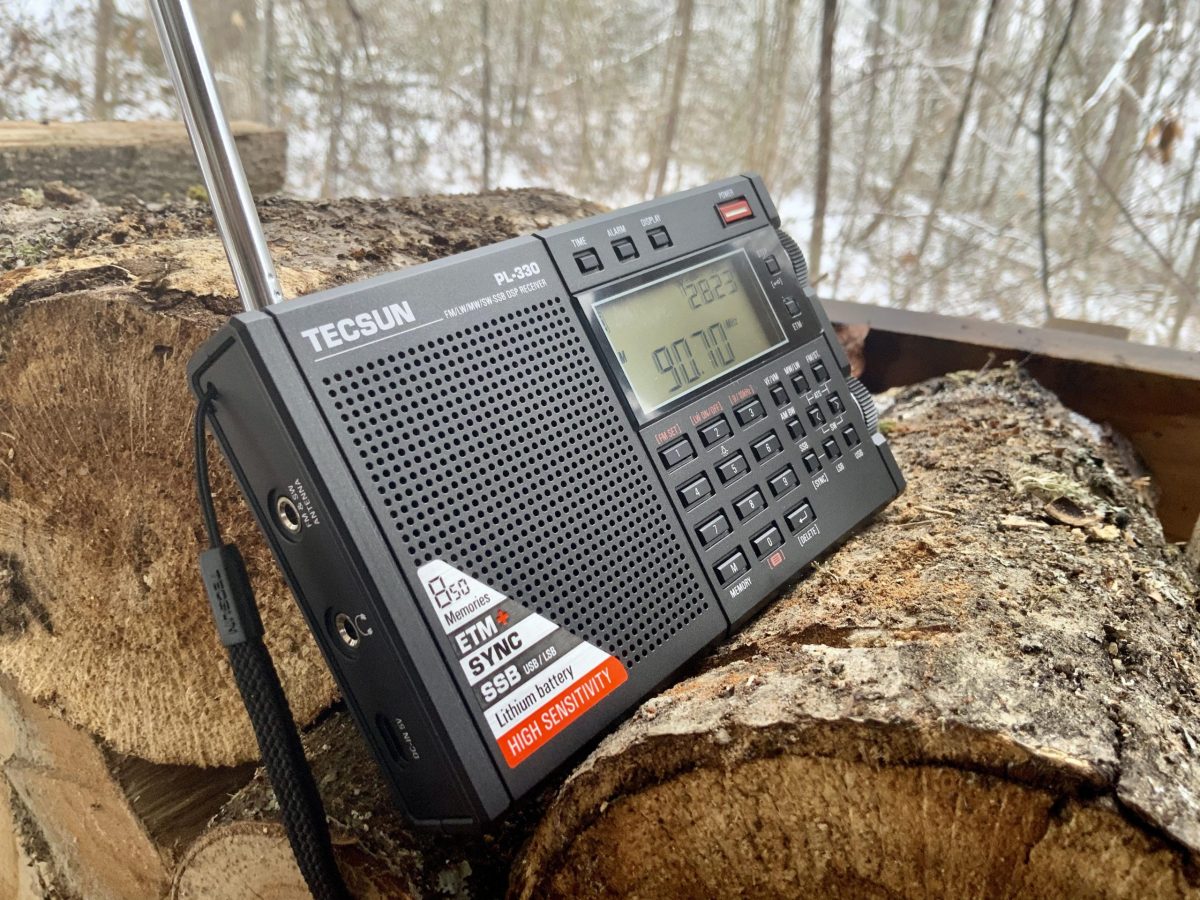
Side note: As I mentioned in my Winter SWL Fest presentation this year, it saddens me when I receive angry emails from readers after I post items that are ham radio related. We’ve upwards of 7,000-10,000 daily readers on the SWLing Post and the number of complaints are a teeny, tiny fraction of our readership. I only receive messages like this about once a month and they typically say something akin to “I don’t like the ham radio stuff, so if you don’t stop posting it, I’m leaving!” (FYI: That’s a real quote taken from the last one I received in January). I can only assume that at some point in the past, a ham radio operator has been a jerk to this and other radio enthusiasts. It’s a shame, too. I hate seeing the negative impact of one loud troll compared with the encouragement and support of much better people. All of my ham radio friends are not only supportive of SWLing, but almost all got their start in radio via the shortwaves. I’m certainly a case in point.

I love all things radio and I believe the SWLing Post is a reflection of that. If it offends you, then it might make sense to surf somewhere else.

Now where was I? Oh yeah…

POTA and SOTA outings have helped to satisfy some of my travel cravings as well. I miss going to radio conventions, hamfests, and especially traveling internationally with my family. We are a family who love national parks, forests, and other wildlife areas. Having an excuse to explore public lands we haven’t visited before has been amazing fun.
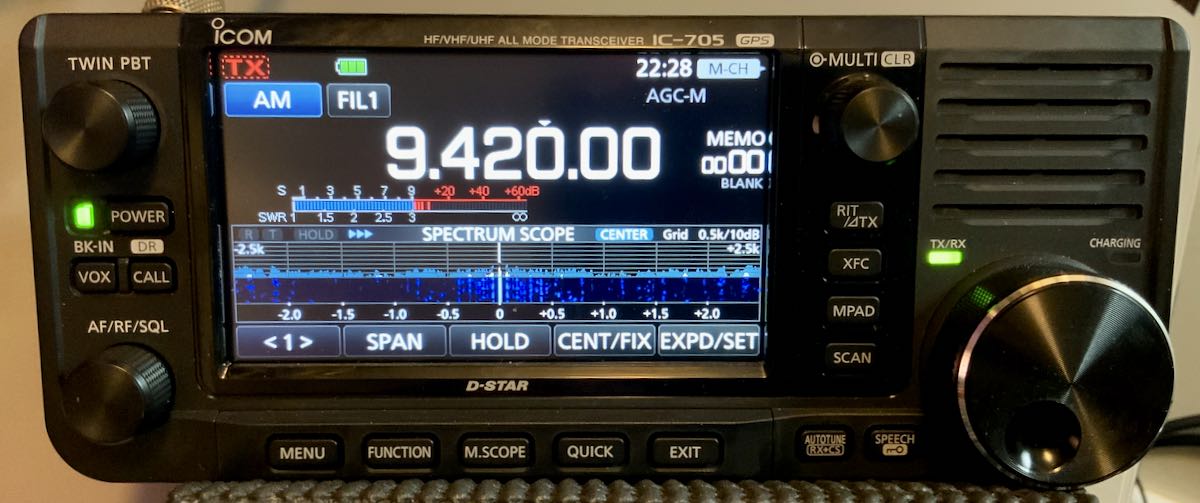
After POTA activations, I’ll often do a little SWLing since I already have an external antenna up and it’s typically connected to a good general coverage transceiver in a spot with zero RFI or QRM. I’ve especially enjoyed my DXing sessions with the superb Icom IC-705.

Listening habits
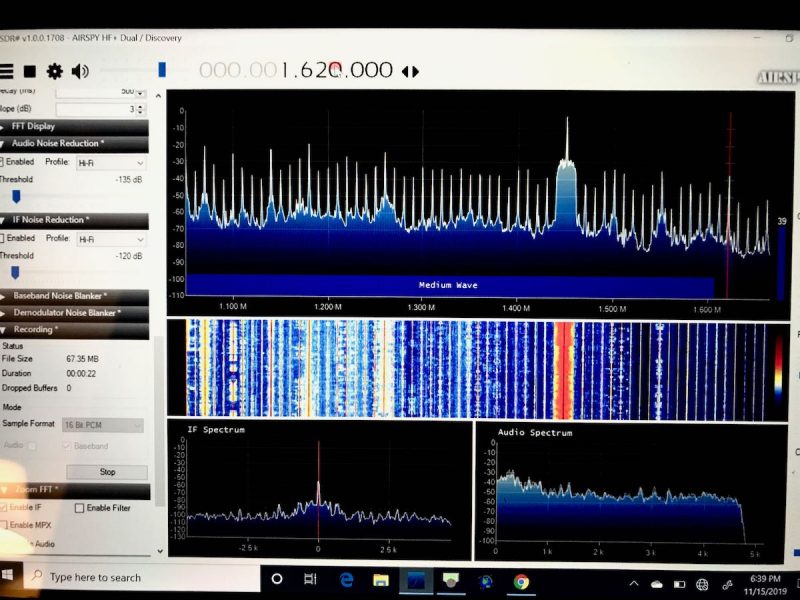
One indicator that I did less radio listening last year was the low number of recordings I made. I checked my audio folder recently and saw that I only made a couple dozen recordings–most were staple broadcasters, not rare or special DX.

At the end of the day, I realize that when I do SWLing sessions I like to have dedicated time–at least an hour or two–with headphones on, losing myself on the radio dial.  I simply haven’t had many opportunities this past year to make that a reality.

That’s okay, though. The great thing about the shortwaves is that they’re always there, patiently waiting for us to dive back in!

Looking forward
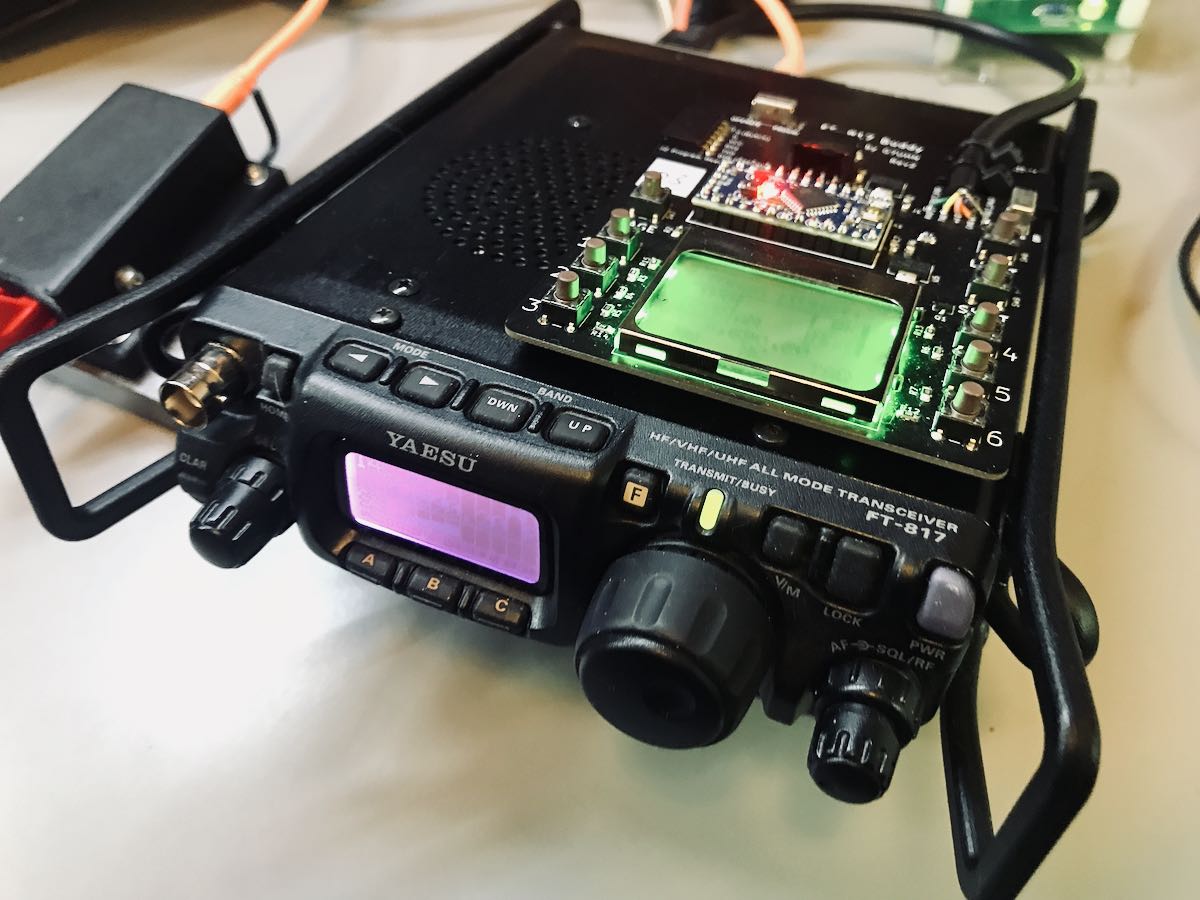
I’m really not sure what’s in store for me this year, but I know it’ll involve a lot of radio time and that pleases me to no end. I’ve made a few fun goals, but my hope is that, by the end of the year, I may even be able to do some proper travel–maybe even take a flight!

I do know this: I have an even more profound appreciation for my radio enthusiasm as I realize it’s the perfect space to travel and explore the world no matter how “locked down” things are. Based on feedback from readers and contributors to this site, I know I’m not the only one who feels this way.

How about you?

Did your radio activity change or pivot this past year? Did you have more or less time to hit the airwaves? Please comment!

Paul Walker featured as a DXer and broadcaster on ABC Newcastle

Our friend and contributor here on the SWLing Post and the Shortwave Radio Audio Archive, Paul Walker, has been interviewed and featured on the ABC Newcastle program Drive with Paul Turton. It’s a great segment! (Congrats, Paul!)

I’ve embedded the audio from this segment below, but you can also listen via the ABC Newcastle website:

1940: When Sears Roebuck sold a wide array of radio gear

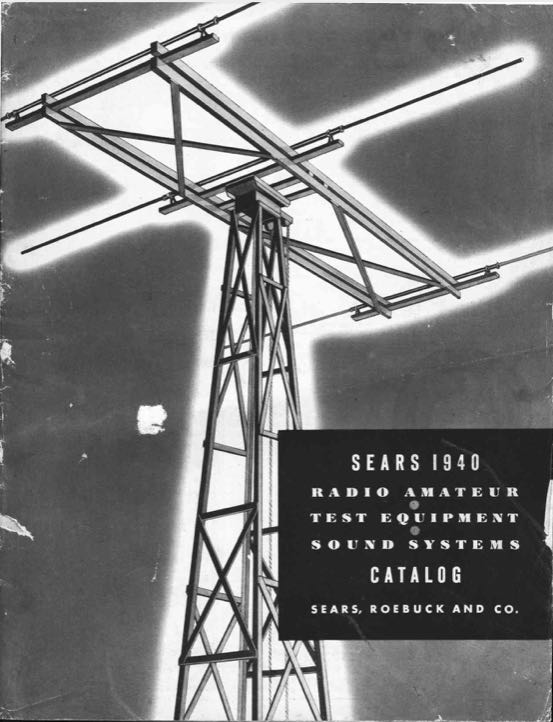
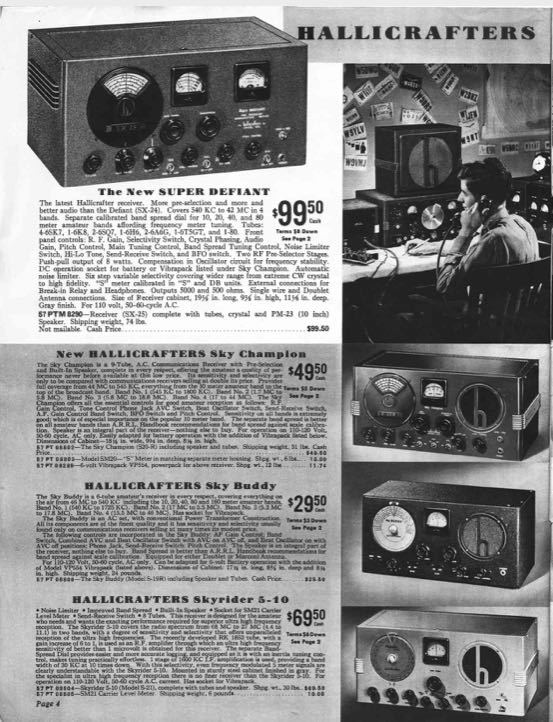
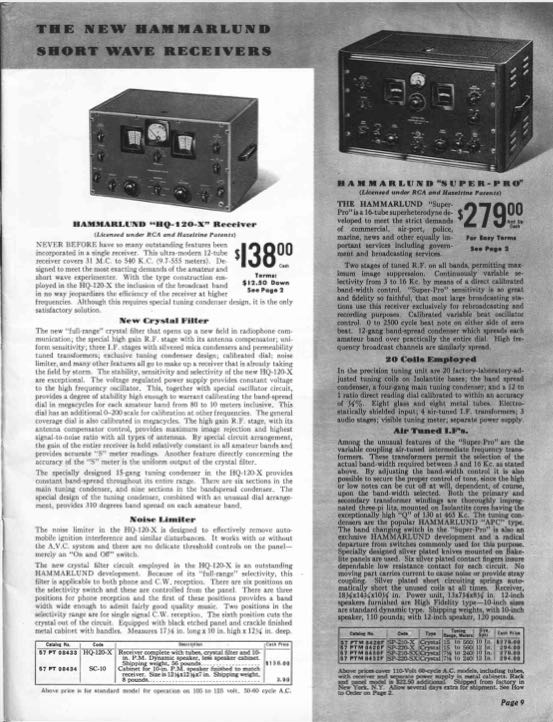
Many thanks to SWLing Post contributor, Charlie (W4MEC), who shares a PDF of the 1940 Sears Roebuck Co. catalog section featuring a wide array of radio gear and test equipment.

This file is hosted on the Pro Audio Design forum and can be downloaded as a PDF (15.8 MB) by clicking here.

It’s a real nostalgia trip reading through the fine Hallicrafters, Hammarlund and National HRO descriptions. Thanks so much for sharing this, Charlie!

Radio Waves: WLW at 100, WWVB Upgrades, Ofcom Radio Amateur Data, and Unlocking the Airwaves

Radio Waves:  Stories Making Waves in the World of Radio

Because I keep my ear to the waves, as well as receive many tips from others who do the same, I find myself privy to radio-related stories that might interest SWLing Post readers.  To that end: Welcome to the SWLing Post’s Radio Waves, a collection of links to interesting stories making waves in the world of radio. Enjoy!

Many thanks to SWLing Post contributors Mike Terry, Dave Zantow, and John Figliozzi  for the following tips:


WLW-AM Begins 100th Year On Air (WVXU)

It wasn’t Cincinnati’s first radio station, but WLW-AM is still the biggest.

Cincinnati industrialist Powel Crosley, Jr. began broadcasting WLW-AM over a 20-watt station from his College Hill home on March 2, 1922 – which means that the station is entering its 100th year today.

WLW-AM wasn’t Cincinnati’s first commercial radio station, but it is the oldest surviving station from the 1920s. WMH was operated by the Precision Instrument Co. from Dec. 30, 1921, to January 1923.  WMH was sold to Crosley and merged into WLW, says Randy Michaels, the former WLW-AM programmer and Jacor/Clear Channel executive who is the best radio historian I know.

In 1934, WLW-AM became “the Nation’s station” when President Franklin D. Roosevelt flipped a switch in the White House to activate the station’s unprecedented 500,000-watt experimental transmitter under its Tylersville Road tower. WLW-AM broadcast at “super power” around the clock for five years, through 1939, and continued the mega-wattage output midnight-2 a.m. until 1943. For years WLW-AM has boasted that the 50,000-watt signal reaches 38 states. (I’ve heard the station in New Jersey, Maryland, North Carolina, Florida, Georgia, Illinois and Missouri.)

For 99 years, WLW-AM has broadcast some of the most popular personalities in town: Jim Scott, Gary Burbank, Bob Trumpy, Marty Brennaman and Joe Nuxhall, Cris Collinsworth, Jim LaBarbara, Bill Cunningham, Mike McConnell and Dale Sommers. Before them came Ruth Lyons, Bob Braun, Doris Day, Rosemary Clooney, newsman Peter Grant, sportscaster Red Barber and comedian Red Skelton.

Although WLW-AM likes to promote itself as “news radio,” it’s perhaps best known for carrying Reds and most Bengals games, plus University of Cincinnati football and basketball and Xavier basketball.[]

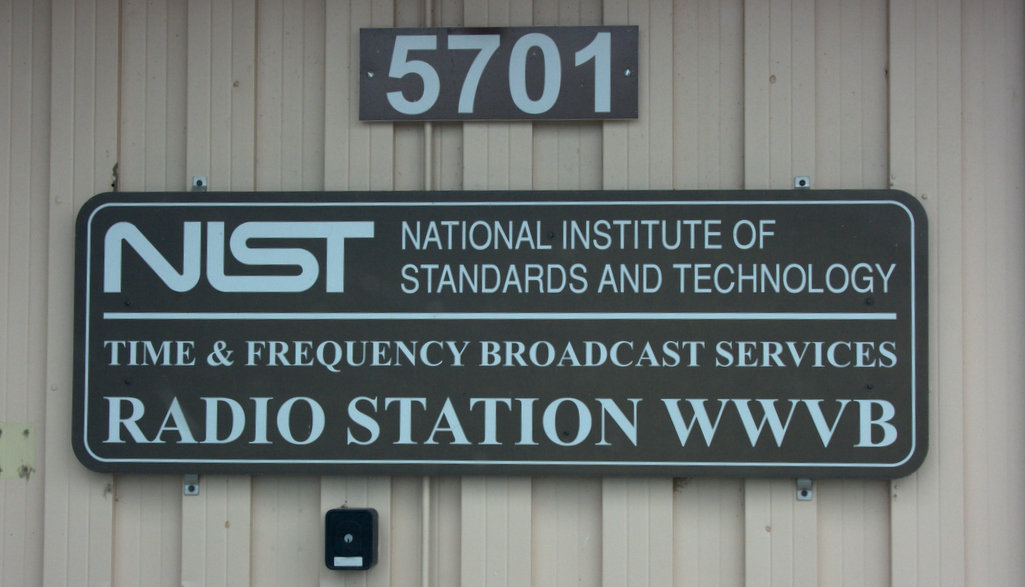
WWVB broadcast system upgrades may include temporary outages (WWV)

The WWVB broadcast system is being upgraded with new equipment to improve the reliability of the signal. In order to install this equipment, beginning on March 9, 2021 the WWVB signal may be operated on a single antenna at approximately 30 kW radiated power for periods up to several days in duration, and may have occasional outages. Periods of reduced power operation lasting longer than 30 minutes will be logged on the WWVB Antenna Configuration and Power web page, and any outage longer than five minutes’ duration will be recorded on the WWVB Outage web page. Upgrades are expected to be complete by March 31, 2021.

Ofcom released age of radio amateurs data (Southgate ARC)

Following a Freedom of Information request about the age of radio amateurs Ofcom said they do not hold Date-of-Birth information for many radio amateurs but released what information they do have

Ofcom say “We do not hold a full breakdown of the age of issued amateur radio licensees as date of birth is not a mandatory field for licence applications.”

In September 2000 the then communications regulator (RA) abolished the ban on people under 14-years-old holding a Full amateur licence, since that time a person’s date of birth has served little regulatory purpose.

The data Ofcom released showed they only had Date-of-Birth information for:
7,312 out of 28,845 Foundation licences
4,104 out of 12,127 Intermediate licences
44,944 out of 54,072 Full licences

As of March 1, 2021 there was a total of 95,044 valid UK amateur radio licences.

Download the FoI reply and the available age data at
https://ofcom.org.uk/__data/assets/pdf_file/0022/214915/age-of-amateur-radio-licensees.pdf

You can submit a Freedom of Information request to Ofcom online at
https://www.whatdotheyknow.com/new/ofcom

Unlocking the Airwaves (UMD)

Unlocking the Airwaves: Revitalizing an Early Public and Educational Radio Collection is a comprehensive online collection of early educational public radio content from the National Association of Educational Broadcasters (NAEB). The forerunner of CPB and its arms, NPR and PBS, the NAEB developed and distributed educational radio programs and accompanying print materials to schools and communities across the United States. What’s more, the NAEB lobbied extensively to unlock the airwaves—to access precious frequency space—in order to bring the voices of poet Robert Frost, architect Frank Lloyd Wright, anthropologist Margaret Mead, and conservationist “Ranger Mac,” among many other individuals, into American homes and classrooms.

The NAEB’s history is the dramatic story of idealists who believed in the utopian possibilities of technology for education and social uplift and who faced considerable challenges in pursuit of those goals, including economic depression, world war, and the scarcity of the electromagnetic spectrum. It’s a story that has much to tell us about 20th century American culture, as well as the 21st century’s environment of online educational technology and podcasting that we live in today.

Despite its historic importance and contemporary relevance, most of the NAEB members’ programs were never heard again after their initial brief moments on the air. The archives for the radio programs and their related paper documentation have been split for over 25 years between two institutions: the University of Maryland and the Wisconsin Historical Society. Unlocking the Airwaves reunites the split collections, finally realizing the potential of the collections of the NAEB for exploration and and the broader public.

Click here to explore Unlocking the Airwaves.


Do you enjoy the SWLing Post?

Please consider supporting us via Patreon or our Coffee Fund!

Your support makes articles like this one possible. Thank you!