Category Archives: Shortwave Radio

2019 Huntsville Hamfest photos: Flea Market

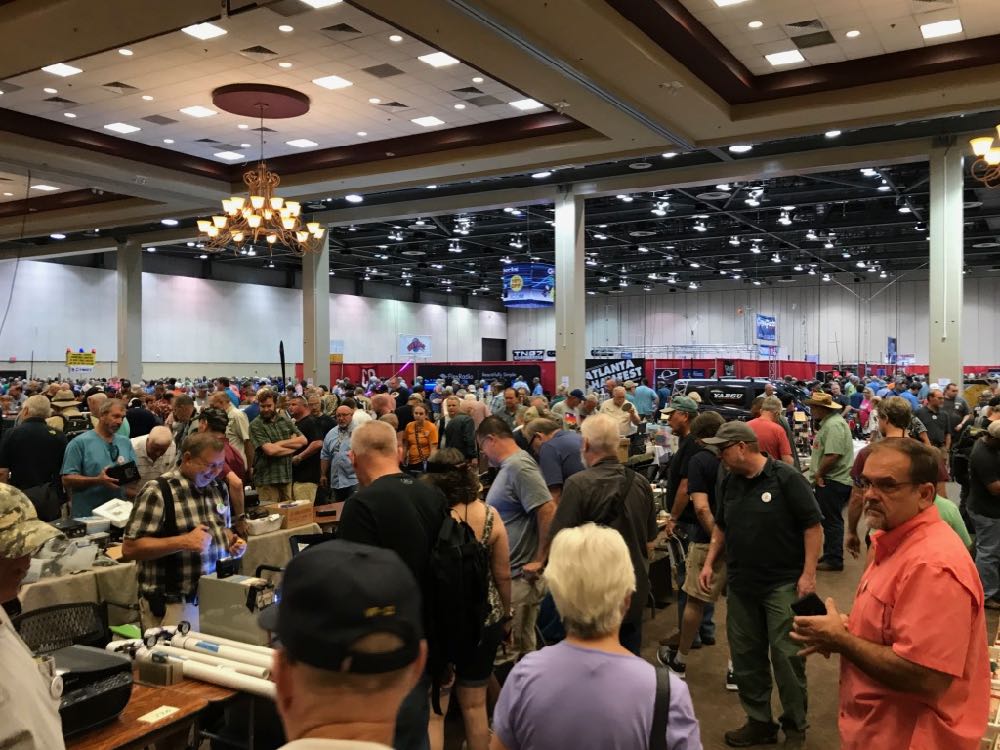
Yesterday (Saturday, August 17), was the first day of the Huntsville Hamfest in Alabama.

Over the years, I’ve heard from a number of friends that Huntsville is a must-see hamfest. And, boy, were they right! Turns out the Huntsville Hamfest is one of the largest hamfests in North America.

The entire event is held in the amazing Von Braun Center and is fully air conditioned–a good thing as temperatures were pushing 100F/37.8C yesterday!

I took a number of. photos in the flea market area of the hamfest. In truth, though, this is only a small sampling of what was there. I told a friend that–in terms of selection and radio density–this was one of the best hamfest flea markets I’ve ever seen. If you were looking for ways to rid yourself of your hard-earned cash, this was the place to do it!

Click on the photos in the gallery below to enlarge each image. Note that I plan to take photos of the vendor/club areas today and hopefully post them tomorrow:


Do you enjoy the SWLing Post?

Please consider supporting us via Patreon or our Coffee Fund!

Your support makes articles like this one possible. Thank you!

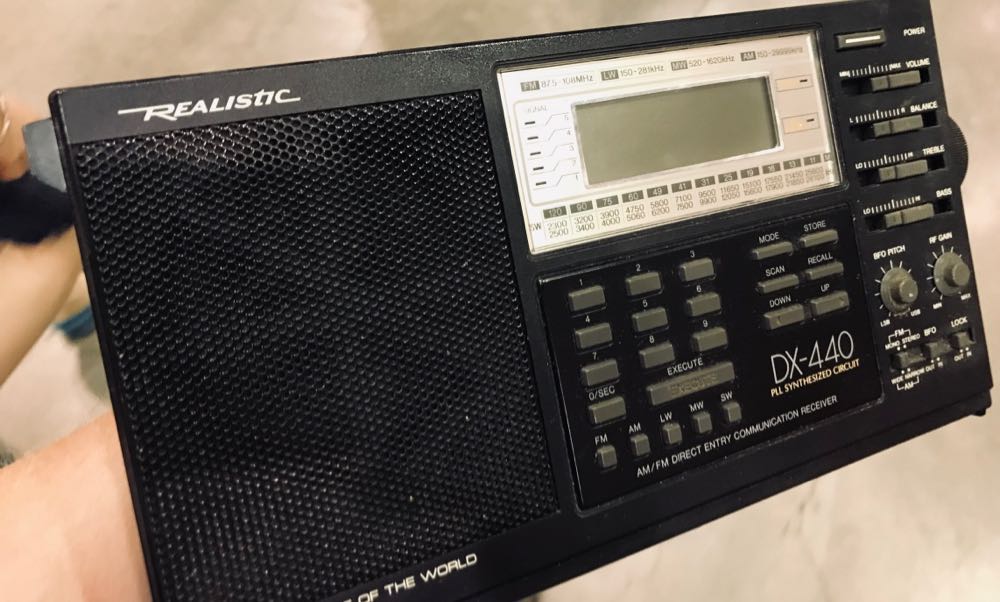
The Realistic DX-440 has landed

I arrived in Huntsville, Alabama, yesterday to set up our booth for ETOW at the 2019 Huntsville Hamfest. The set-up process was smooth and the support staff were incredibly helpful.

After preparing the table, I had a little time to kill so thought I’d search for some friends spotted earlier setting up in the flea market area. Note that I had told my wife earlier “I wouldn’t be bringing radios home on this trip.” Turns out I was destined to be a big fat liar. 🙂

On one of the flea market tables I found this Realistic DX-440 (photo above) a fellow had just set out. It was marked $25–one of the best prices for a ‘440 I’ve seen in a long time.

If you’re a regular SWLing Post reader, you might remember that the DX-440 was my first digital portable and one I used when I lived in France as a teenager. No doubt, it has some serious nostalgic value for me.

I checked this 440 out thoroughly: clean battery compartment, straight antenna, all buttons, pots, and sliders worked, and it sounded wonderful when tuned to FM (AM and SW weren’t easy to check in the Von Braun Center). The chassis needs a little clean up, but it’s in overall good condition and the seller was the only owner.

I suppose I took too long looking it over, so the seller volunteered, “If you give me $20, it’s yours.”

Done!

BBC’s Shortwave Service to Kashmir: “an important lifeline”

(Source: CNN Business)

London (CNN Business) As a communications blackout continues in Kashmir, the BBC is using one of the only ways to reach listeners in the Indian-controlled state: shortwave radio.

The BBC is extending its Hindi radio output by 30 minutes, launching a 15-minute daily program in Urdu, and expanding its English broadcasts by an hour. All are being broadcast via shortwave signals.

“Given the shutdown of digital services and phone lines in the region, it’s right for us to try and increase the provision of news on our shortwave radio services,” Jamie Angus, director of the BBC World Service, said in a statement.

Indian-controlled Kashmir is under a tight security lockdown and total communications blackout. The blackout has included internet and landline phones, and some television channels have been cut. The repressive measures, in place since August 5, were introduced just days before the Indian government announced that it was withdrawing Article 370 of the constitution, reclassifying Kashmir’s administrative status from a state to a union territory. The move took away Kashmir’s semi-autonomous special status.

Pakistan, which also controls territory in the region, reacted angrily to the move by India. The two neighbors have fought three wars over Kashmir, and the region has been the focus of periodic conflict for more than 70 years.

Shortwave radio bands are able travel long distances using very high frequencies, unlike traditional radio waves that need to travel in straight lines.

In an interview with CNN Business, Angus said most people in the region don’t normally use shortwave to listen to their programs. But due to the communications blocks, “we’ve got limited options,” he said.

“The shortwave audience has historically been in decline, but it’s an important lifeline as a way to reach people,” Angus said. “People value the BBC because it’s independent and one step removed from the national heat around these discussions, that’s why people value our reporting.”[…]

Continue reading the full article at CNN Business.

What are your favorite radio apps? Tell us and you might win a prize!

Each year, I spend time going updating our curated list of amateur and shortwave radio apps.

I do my best to keep this list of applications up-to-date and am always on the lookout for new ones. Thing is, new apps are developed every day–certainly a moving target for this editor.

This is where you can help…

Please comment on this post with your favorite radio-related iOS, Android, and Windows Phone applications. Please link to the app and/or mention what operating system you use. Of course, please tell us what you love about your choice apps.

A prize! Woot!

Next Friday (August 23, 2019) I’ll pick one random comment from this post and send the lucky reader a copy of Pirate Radio: The incredible saga of America’s underground, illegal broadcasters by Andrew Yoder. This classic pirate radio history book even includes an audio CD with clips from famous (and infamous!) pirate radio stations.

Many thanks to our friends at Universal Radio who supplied this to us as a gift for our readers.

What apps supplement your radio fun?  Please comment!

Congratulations to Peter Atkinson who won the CC Buds Solo and April who won the Joe Carr Loop antenna book in our last giveaways!


Do you enjoy the SWLing Post?

Please consider supporting us via Patreon or our Coffee Fund!

Your support makes articles like this one possible. Thank you!

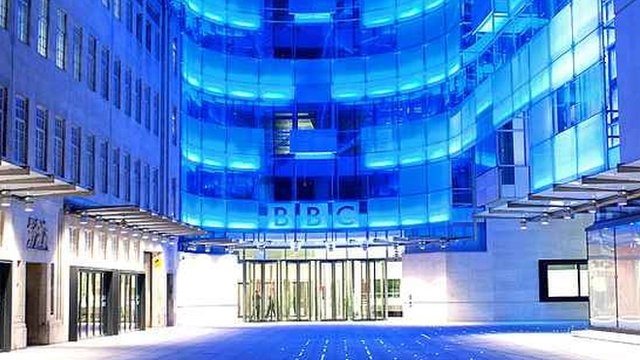
“BBC World Service steps up shortwave broadcasts in Kashmir during media shutdown”

(Image source: BBC)

(Source: BBC Media Centre via @George53419980)

The BBC World Service has extended output on shortwave radio in Indian-administered Kashmir to provide reliable news and information.

The Director of the BBC World Service, Jamie Angus, says: “The provision of independent and trusted news in places of conflict and tension is one of the core purposes of the World Service.

“Given the shutdown of digital services and phone lines in the region, it’s right for us to try and increase the provision of news on our short wave radio services. Audiences in both India and Pakistan trust the BBC to speak with an independent voice, and we know that our reporting through several moments of crisis this year has been popular and valued by audiences who turn to us when tensions are highest.”

BBC News Hindi radio output (9515 and 11995kHz) will be extended by 30 minutes from Friday 16 August. The full one-hour news programme will be on air from 7.30pm to 8.30pm local time.

On Monday 19 August, BBC News Urdu will launch a 15-minute daily programme, Neemroz. Broadcast at 12.30pm local time on 15310kHz and 13650kHz, the programme will focus on news coming from Kashmir and the developments around the issue, and include global news roundup tailored for audiences in Kashmir.

BBC World Service English broadcasts (11795kHz, 9670kHz, 9580kHz, 7345kHz, 6040kHz) will be expanded, with the morning programming extended by an hour, ending at 8.30am local time; and the afternoon and evening programming starting an hour earlier, at 4.30pm local time.

The shutdown has left people with very few options for accessing news at this time. However, news services from the BBC continue to be available in the region – through shortwave radio transmissions in English, Urdu, Hindi, Dari and Pashto. As well as providing an important source of news to the region, the South Asian language services have brought added depth to the BBC’s coverage of the Kashmir story.

The recent introduction of four new languages services for India – Gujarati, Marathi, Punjabi and Telugu, following additional investment from the UK Government – has enabled the BBC to offer a wider portfolio of languages and distribution methods to a region that is geographically diverse as well as politically tense. This year’s Global Audience Measure for the BBC showed that India is now the World Service’s largest market, with a weekly audience of 50m.

LN

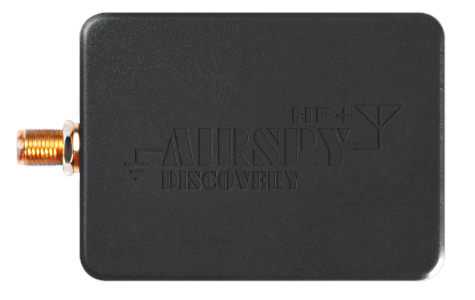
AirSpy HF+ vs. HF+ Discovery: Ivan’s blind daytime propagation comparison

Many thanks to SWLing Post contributor, Ivan NO2CW, who shares the following:

I did this video where I compared the two Airspy editions [HF+ and the new HF+ Discovery] only calling them Receiver 1 and Receiver 2:

Click here to view on YouTube.

Using the same W6LVP loop. 3 PM local time daytime propagation. Testing on Medium Wave and Short Wave, no VHF. AM broadcast signals only.

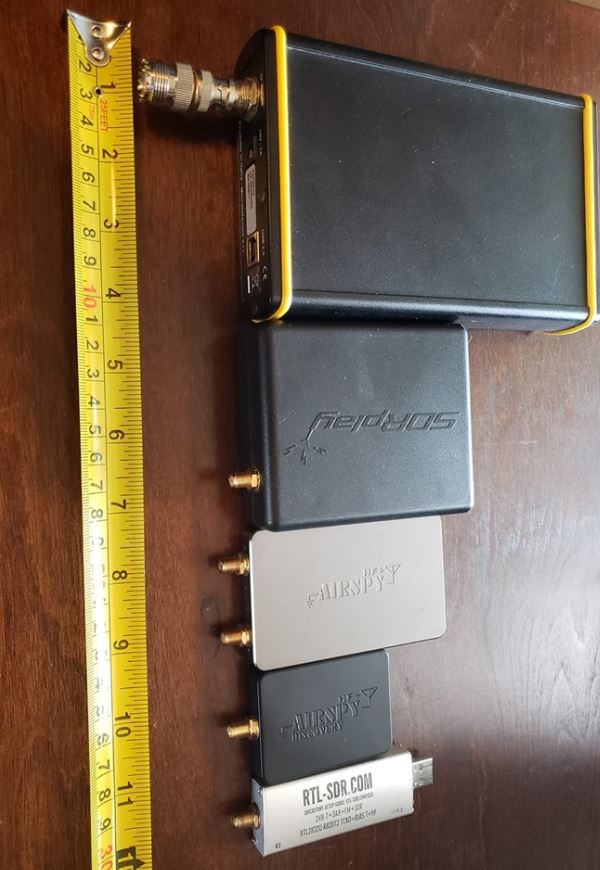
Ivan also included an image comparing the size of the HF+ discovery with other popular SDRs:

From top to bottom: the Microtelecom Perseus, SDRplay RSP, AirSpy HF+, Airspy HF+ Discovery, and the RTL-SDR.com SDR dongle. 

When I demo the AirSpy HF+ to radio clubs, folks are amazed that such a tiny SDR can provide benchmark performance. It’s hard to believe the HF+ Discovery might even provide more performance from an even smaller package!

Thanks, Ivan for sharing these comparisons!

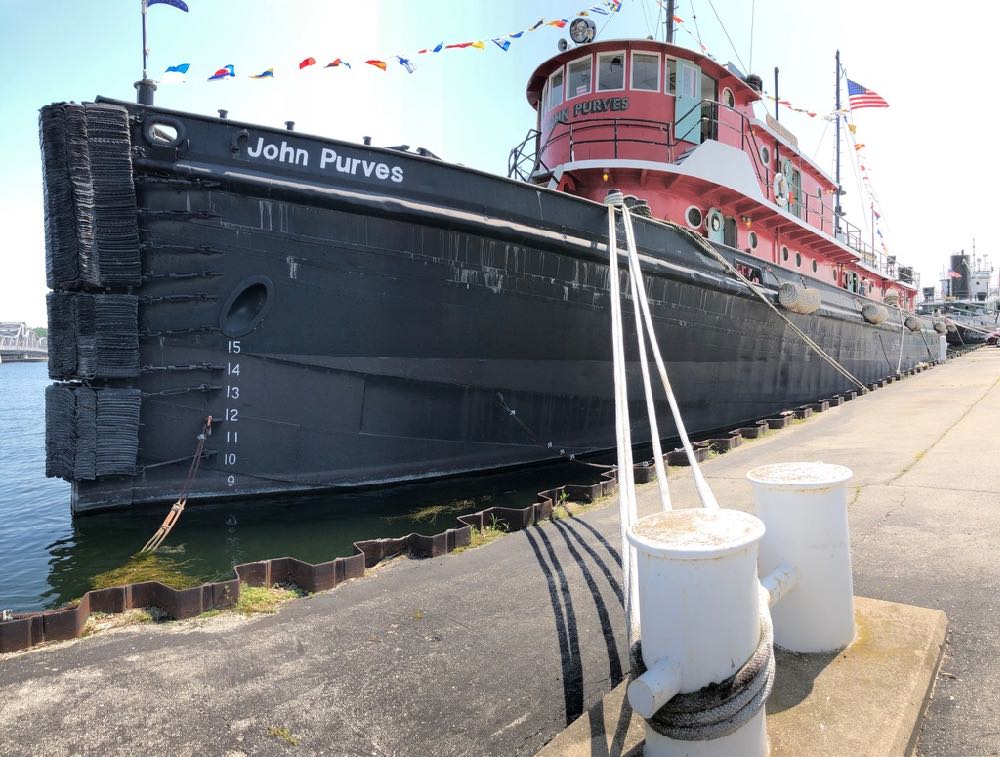
Classic portables onboard a 1919 Great Lakes tugboat

Many thanks to SWLing Post contributor, Phil Ewing, who writes:

I know you’re always on the lookout for trips and visits so I thought of you when we were up in Wisconsin last week. There’s a maritime museum up in Sturgeon Bay, on the peninsula, that includes a 100 year-old tug. You can go aboard and climb all up and down…and they’ve got some great radios in the crew cabins as part of the displays of what life was like back when the ship was working.

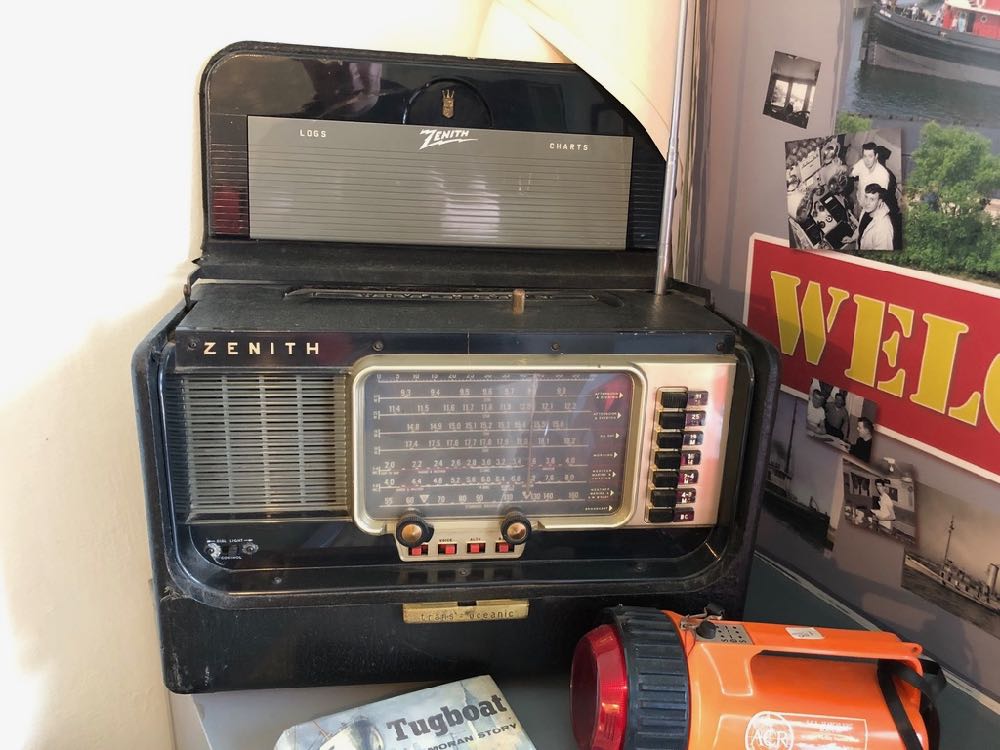
There were a number of standard but interesting normal transistors but what really caught my eye were the Hallicrafters World Wave in the pilothouse and a fantastic pair of Trans-Oceanics in the cabins of the chief engineer and the captain.
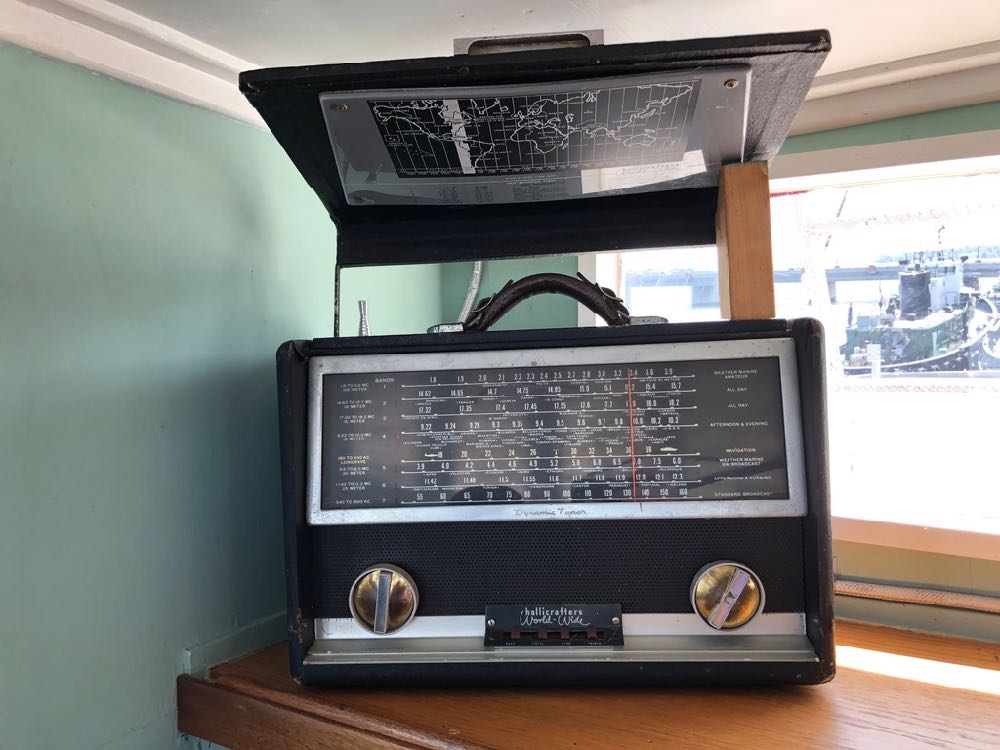
The purpose of the visit really isn’t the radios — it’s about the working life of the Great Lakes and an old ship — so discovering them was a fantastic lagniappe.
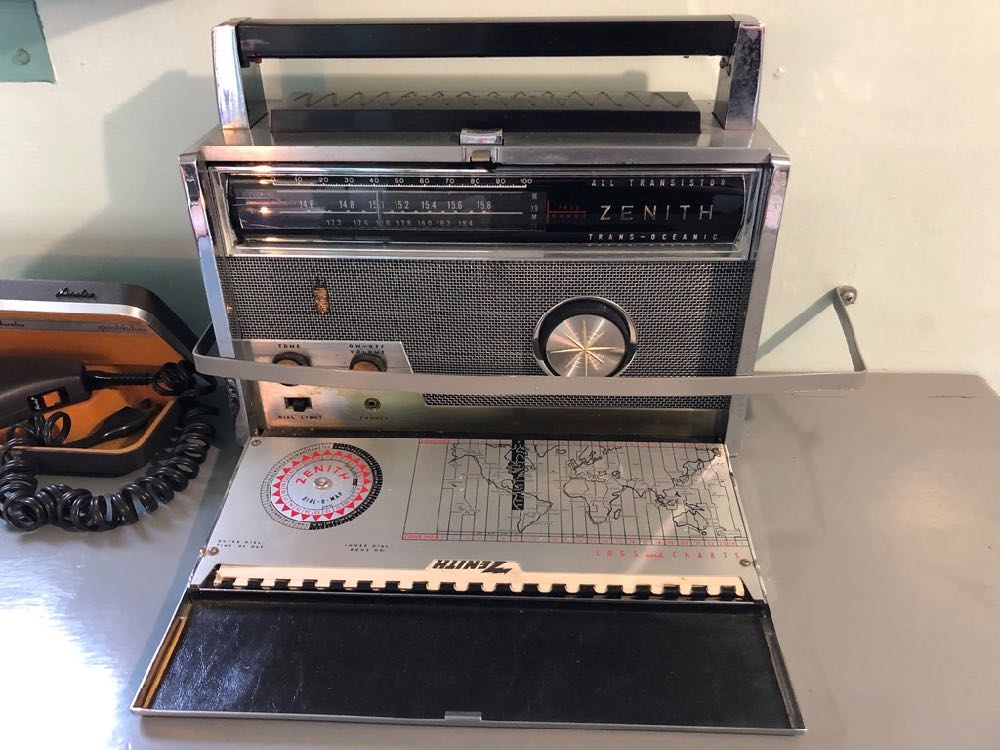
[T]he appeal of shortwave in these circumstances is clear: Imagine you’re in the middle of Lake Superior towing a barge full of logs to be pulped, or some other unglamorous but essential Great Lakes cargo — maybe a barge full of big rocks to build a breakwater in, say, Sheboygan — and you come off watch in the middle of the night. Life on a ship can be deadly monotonous and deeply lonely but then picture yourself tuning in to the international band on your luxurious Zenith set … not bad since the iPad won’t be invented for another 40 or so years.
These pix also depict the engine order telegraph, which the captain in the pilothouse used to signal commands to the engine room. There was one for each of the two main engines, and duplicates in the pilothouse.
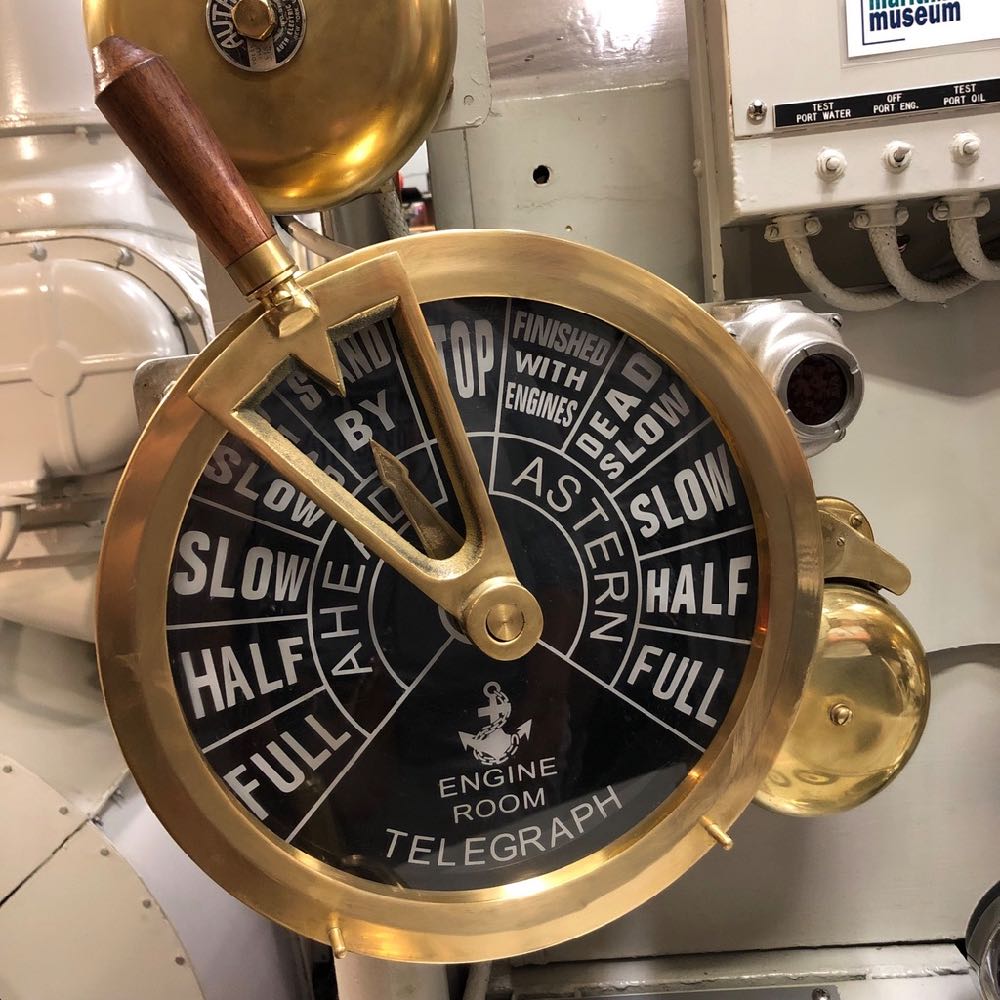
The captain moves the handle so that it indicates the speed he wants (e.g., Ahead Full) and the bottom needle on the telegraph in the engine room moves, ringing a bell. This is why an engineer might report he was ready to sail by saying he was standing by to “answer bells.” The engineers would select the speed on the engines and then move their own handle on their own telegraph to correspond with the captain’s order, signaling to the pilothouse they’d completed the instruction.
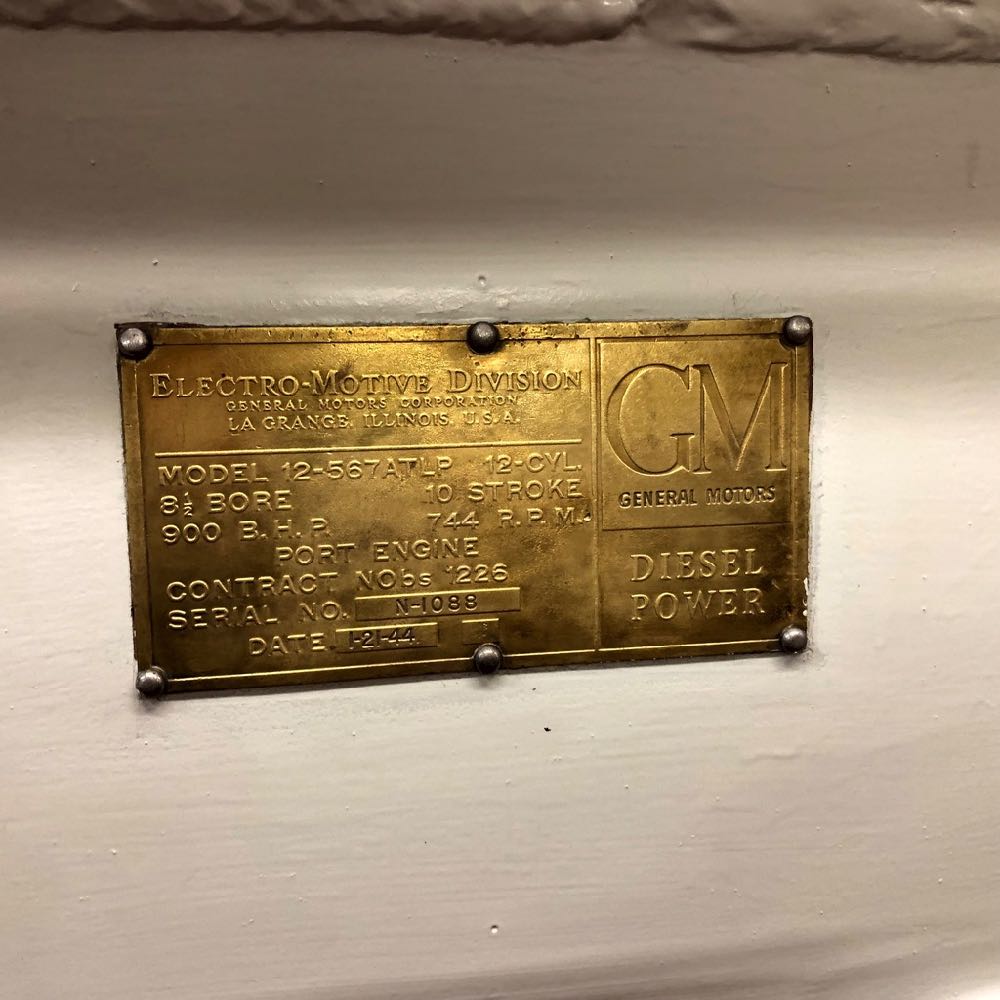
The engines are the white things pictured behind the telegraph and on which was stamped the brass plate also photographed here. The diesel engines were made by the Electro Motive Division of GM and replaced this ship’s original steam propulsion system. EMD is most famous for its pioneering and legendary freight locomotives, which led the way in “dieselization” after WWII in converting many railroads from their romantic but much less efficient and much dirtier steam power. But the company also made marine diesel engines as evidenced here and these served this ship for another three decades or so — just think about that. There also are still EMD GP30 locomotives from the 1960s still in service in some places in the U.S., according to what I read in this month’s Trains magazine.


Fascinating, Phil––what terrific vintage kit! Thanks for sharing those wonderful photos and descriptions with us. 

Yes, I can imagine SWLing would have been a vital entertainment outlet for those on working ships in the Great Lakes. No doubt they had access to a number of strong mediumwave stations on the coast, as well. What a way to while away the off-hours.

Click here to follow @PhilEwing on Twitter.