Category Archives: Shortwave Radio

Bloemendal shortwave station’s final transmission end of March

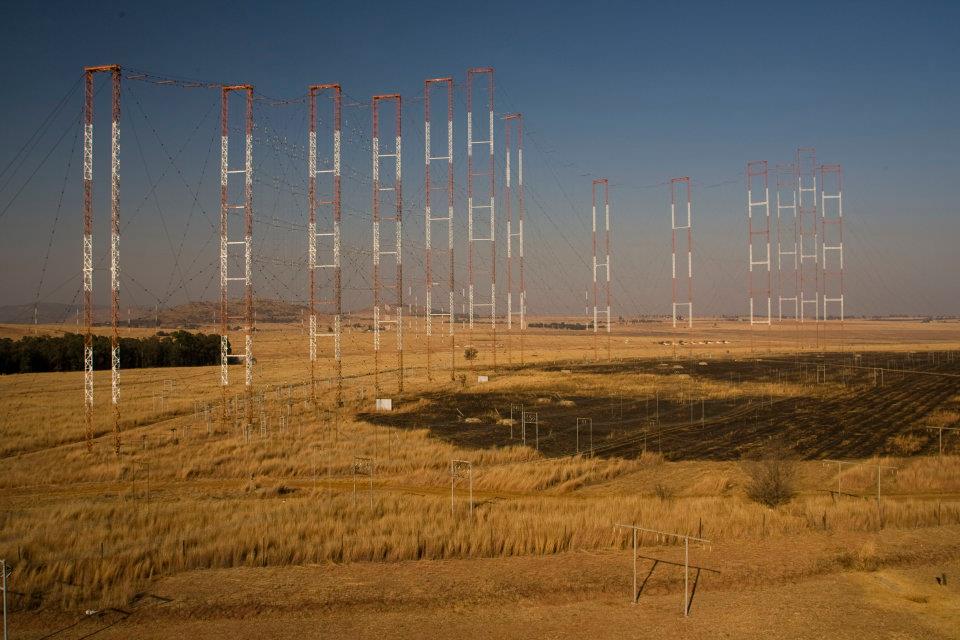
Meyerton Shortwave Station

(Source: Southgate ARC)

The South African Radio League report Sentech will close its Bloemendal Shortwave Broadcasting station on 30 March, which means that today’s Amateur Radio Today will be the last programme to be transmitted on the 7 and 17 MHz broadcast bands.

Amateur Radio Today will however still be available on 7 082 kHz from Durban and on many repeaters around South Africa and from the SARL home page on www.sarl.org.za.

Sentech inherited South Africa’s Bloemendal shortwave radio station near Meyerton when Radio RSA was closed down. Radio RSA started its broadcast on 1 May 1966 and by 1976 the station transmitted for 36 hours a week in twelve languages including English, French, Portuguese, and Afrikaans. The service was discontinued in 1992. The only transmission that survived the close down was a broadcast into Africa, renamed Channel Africa. The SABC also transmits Radio Sonder Grense (RSG) on shortwave to the Northern Cape. Sentech also took over the sponsorship of Amateur Radio Today.

To increase coverage on HF in the Southern African area the SARL is looking at transmitting the programme on 7 MHz from more locations like the Western Cape, Free State and Gauteng to compliment the 7082 kHz transmission by Louis, ZS5LP from Durban. The frequencies being considered are in the band between 7 100 and 7 200 kHz. On Monday evenings 80 metres is also under consideration.

Radio Amateurs willing to offer their services on Sundays at 10:00 CAT and/or on Monday evenings on 80 metres are invited to send their contact details to [email protected].

The SARL could not make this announcement earlier as Sentech was unable to confirm their planned close down and requested the SARL not to announce the closure earlier.

The South African Radio League

Radio World: Koode Radio Aims to Reduce Conflict in Africa

(Source: Radio World via Mike Hansgen)

ABUJA, Nigeria — Koode Radio International, a new shortwave program with considerable goals, has begun broadcasting to much of Western Africa.

With programs in the Fulani (or Fula) language, KRI aims to “educate, enlighten and entertain” its listeners, the Fulbe people. This predominantly Muslim, nomadic herder and farmer group is spread across Africa from Senegal in the west to Lake Chad in the east. Dialects of the language are spoken in some 20 countries and the station chose the name “Koode” because it means “star” in all of the dialects.

Usman Shehu in the KRI studio in Abuja. Photos courtesy of KRI.
While some Fulbe are able to communicate via the likes of WhatsApp and Facebook, others cannot. Because a number of Fulbe are herders, they are not only beyond the range of the internet, but beyond the range of electricity.[…]

Click here to read the full article t Radio World online.

Ghosts In The Airglow: HAARP transmission frequencies and times, March 25-28

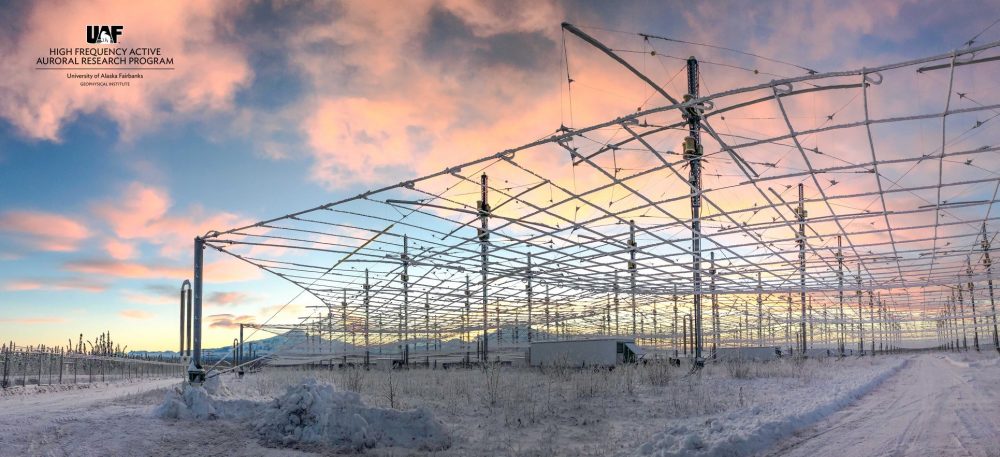
Yesterday, we posted a note about Amanda Dawn Christie’s upcoming transmissions from the HAARP facility in Alaska.

Amanda has just notified me that the frequencies and times of the experiments have been posted on the project’s website: Ghosts In The Airglow.

You should keep the schedule handy during transmissions as there are factors that could influence frequency selection. Amanda notes:

As for Frequencies: Ghosts in the Air Glow has 10 movements, several of which are simultaneously on two different frequencies. In preparation, frequency selections had to be submitted in advance for tuning, so in order to allow for various conditions, three frequency options were prepared (a low, a mid, and a high). Only one will be used on the day of transmission, but it could be any of these three. I am listing them in the order of preference, with the most likely frequency first. All modes are AM.

Click here to view frequencies and times.

I would also suggest you follow Amanda’s Twitter feed during the transmissions as she plans to post live updates. In addition, she has set up a live feed of the transmissions on her website.

No doubt, this will be a unique listening and receiving experiment for all!

Broadcasts of VORW Radio International this Weekend


Hello readers! Here is an updated schedule for the latest broadcasts of VORW Radio International.

For new listeners – VORW Radio International is an hour long show featuring listener requested music. It’s a very diverse show where you are guaranteed to hear music of many genres and eras and some interesting facts about the songs played! Here’s when you can listen:

Friday:
2100 UTC – 5 PM Eastern – 9955 kHz WRMI – Targeting South America

Saturday:
2200 UTC – 6 PM Eastern – 9395 kHz WRMI – Targeting North America
2200 UTC – 6 PM Eastern – 7780 kHz WRMI – Targeting Europe

Sunday:
0100 UTC – 9 PM Eastern Saturday – 5850 kHz WRMI – Targeting North America
2200 UTC – 6 PM Eastern – 7570 kHz WRMI – Targeting Western North America

QSL Reports are encouraged and will be swiftly verified at [email protected]

Happy listening!

Amanda to combine art with HAARP

Many thanks to SWLing Post contributor, Eric McFadden, who notes this piece in the Southgate ARC newsletter about our friend Amanda Dawn Christie who is doing a HAARP experiment like no other:

Concordia transmission artist Amanda Dawn Christie will use the world’s most capable high-power, high-frequency transmitter HAARP in Alaska to send art around the world and into outer space using Slow Scan TV

Concordia News reports:

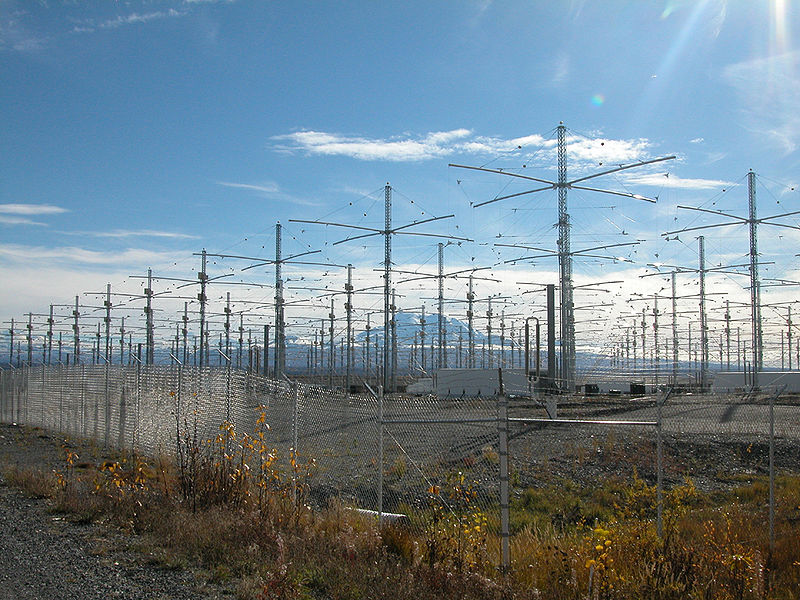
In the shadow of Mount Sanford, surrounded by Alaskan wilderness, you’ll find the most powerful radio transmitter on earth.

On this remote site, scientists use a unique tool called the Ionospheric Research Instrument (IRI) to create radio-induced aurora, also known as airglow. But it’s never been used by a Canadian artist to transmit art — until now.

The IRI’s human-made northern lights inspired interdisciplinary artist Amanda Dawn Christie to create Ghosts in the Air Glow: an upcoming transmission art project that will use the IRI to play with the liminal boundaries of outer space.

“I was so fascinated by these airglow experiments — and the relationship between the ionosphere and radio communications — I felt compelled to create an artwork specific to the site and its history,” says Christie, assistant professor in Concordia’s Department of Studio Arts.

She will be embedding her own encoded SSTV images, audio compositions and propagation tests into IRI experiments from March 25 to 28.

Read the full story at
https://www.concordia.ca/news/stories/2019/03/21/concordia-transmission-artist-launches-a-high-frequency-project-in-alaska.html

Artist made a radio out of a kitchen sink
http://www.southgatearc.org/news/2018/december/artist-made-a-radio-out-of-a-kitchen-sink.htm

Amanda Dawn Christie
http://www.
amandadawnchristie.ca/

https://twitter.com/magnet_mountain

For further info on HAARP HF experiments follow Chris Fallen KL3WX
https://twitter.com/ctfallen

Note that Amanda will share the frequencies and times with us as soon as they are made public. Stay tuned!

Voice of America Museum director to present history of Bethany transmitting station

(Source: Cincinnati.com)

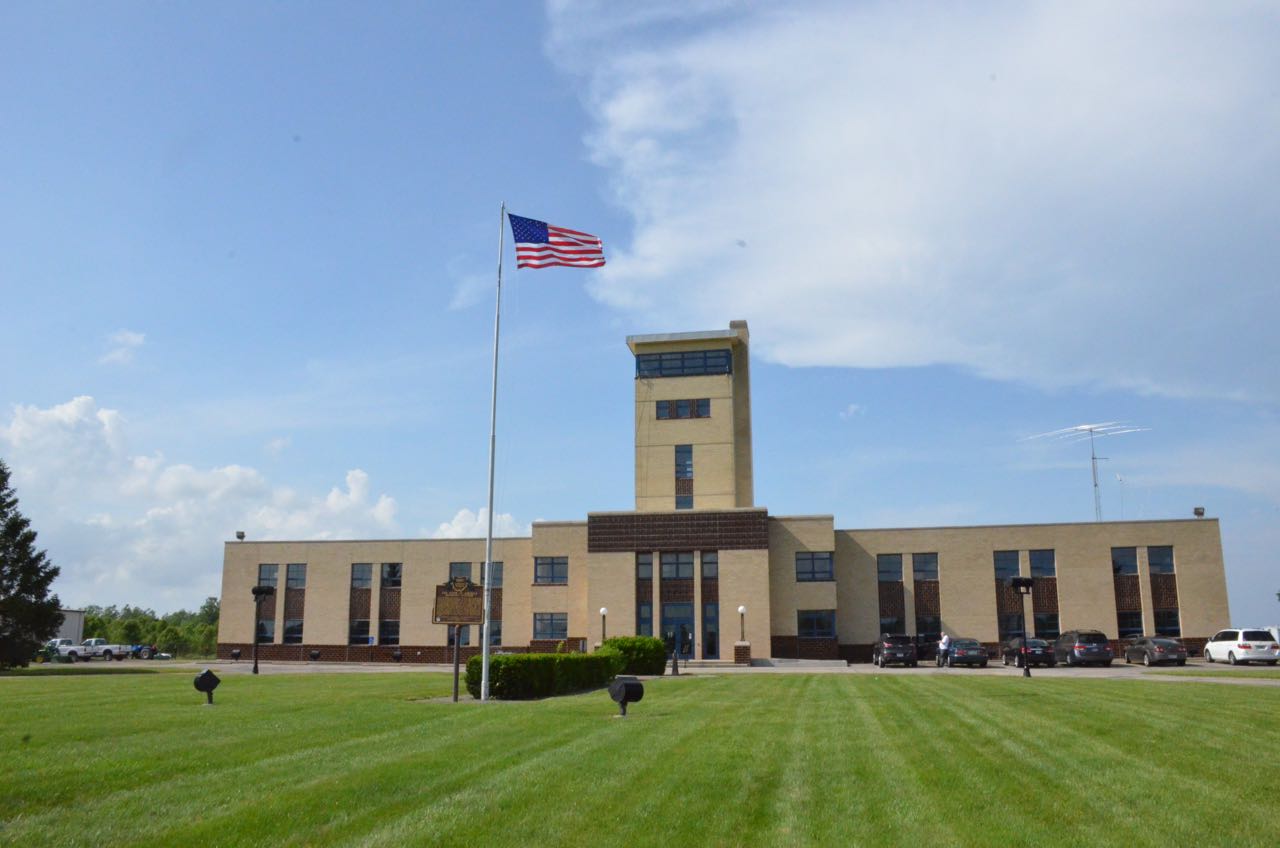
If you’ve ever wondered why the VOA-Bethany Station needed a secured, square mile of land surrounding its 1944 art deco building in West Chester, Jack Dominic has the answer.

Dominic, the National Voice of America Museum of Broadcasting director, will speak on the “History of the VOA-Bethany Station and the VOA Museum Today” Wednesday, April 3, from 7 to 8:30 p.m. at the MidPointe Library in West Chester’s community room.

The free event is the second of a four-part series, “The Voice of Truth in America: Celebrating 75 Years of the VOA Bethany Station,” with the MidPointe Library System.

The VOA museum hosts other free events this year to commemorate the 75th anniversary of the VOA-Bethany Station, which now houses the Cold War-era history and broadcasting museum.

“From World War II through the Cold War, the VOA-Bethany Station played a vastly important role in transmitting real news via shortwave radio to people living in countries that lacked a free press,” said Ken Rieser, VOA museum board president. “And it all started here in Cincinnati, with two brothers who developed the technology that evolved into the commercial radio industry.”[…]

The VOA museum will host its fourth annual “75 Years of Rockin’ the Radio” fundraiser Saturday, Sept. 21, with dinner and dancing. Sponsorships are now available.

Museum hours are 1 to 4 p.m. Saturdays and Sundays at 8070 Tylersville Road. Admission is $5 for adults and $1 for children.

For a complete schedule of 2019 VOA museum events, “The Voice of Truth in America,” series and WCARA events, visit www.voamuseum.org, www.midpointelibrary.org and www.wc8VOA.org.

Read the full new release at Cincinnati.com.

Video demonstrating SDRplay remote operation

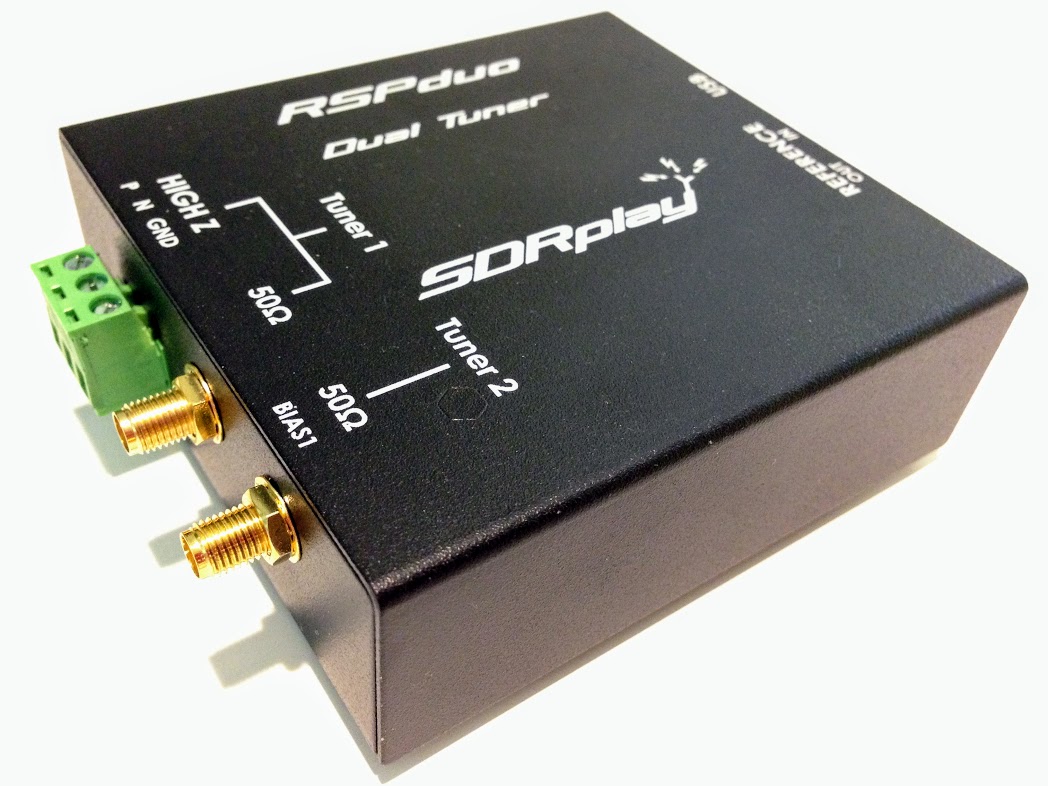
The SDRplay RSPduo

(Source: Jon Hudson at SDRPlay)

This video guide demonstrates the new RSP TCP server software which is now included in the latest Raspberry Pi SD Card image. The video shows how easy it is to set up an RSP at a remote location for access over the internet.

Click here to view on YouTube.

The video uses a Raspberry Pi at the remote location, and a Windows PC running HDSDR back at home base.

We are only demonstrating the Raspberry Pi version of the server here. Also, we are demonstrating extended mode (enabling the full RSP ADC resolution which only works with software which supports an EXTIO interface). Other (non EXTIO compatible) RTL-SDR software will also run via the server on an RSP device – but in “normal mode” meaning that the data resolution will be restricted to 8 bits.