(Source: The Mighty KBC)
Moving frequency!
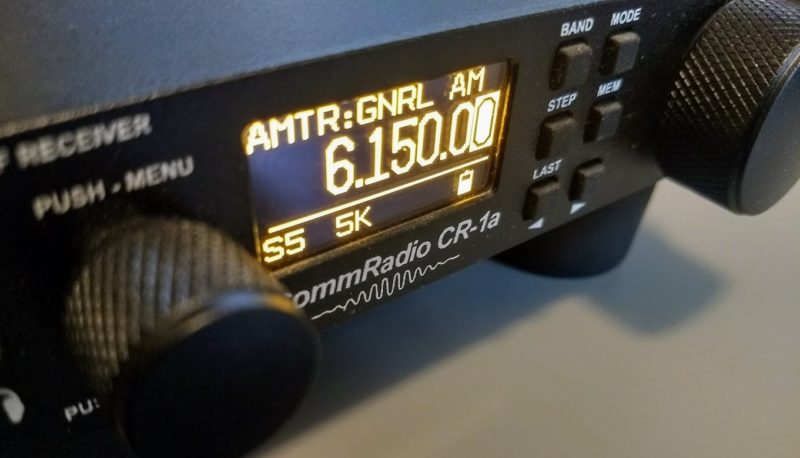
Important news for our listeners across the pond! On December 31 we are moving to 6150 kHz. Sunday 00:00 – 02:00 UTC. Please spread the word.

(Source: The Mighty KBC)
Moving frequency!
Important news for our listeners across the pond! On December 31 we are moving to 6150 kHz. Sunday 00:00 – 02:00 UTC. Please spread the word.
Many thanks to SWLing Post contributor, Larry W, who points out the following announcement on the Overcomer Ministry website:
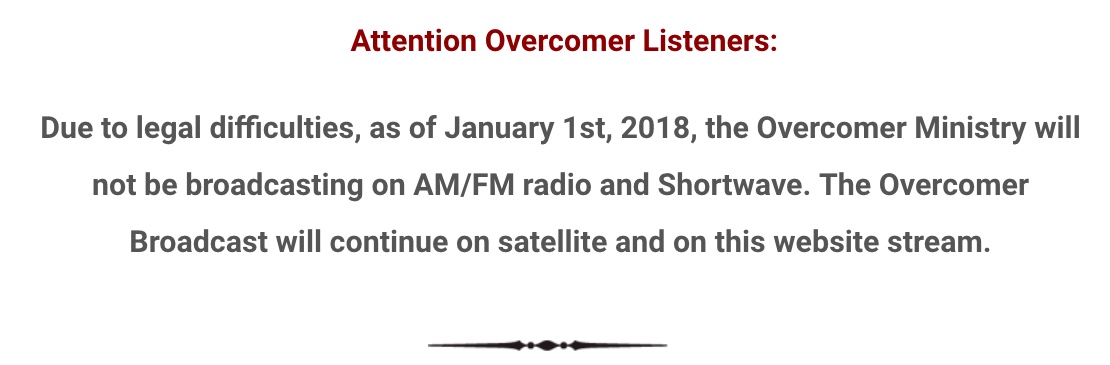 Since Overcomer Ministry leader, “Brother Stair” was arrested on multiple charges including sexual assault, I think many of us assumed his on air programming would soon come to an end.
A number of private broadcasters had already pulled his programming after his arrest last Monday. Now that Overcomer has announced the halt of all radio broadcasting–and the voice of Overcomer, Brother Stair, is in jail–their satellite and online feeds will likely replay old content.
While I’ll certainly not miss Overcomer programming on shortwave, the numerous private broadcasters who had Overcomer as a primary client will feel the loss of revenue in no insignificant way. Indeed, I believe this could even lead to the closure of some private broadcasters this year.
Many thanks to SWLing Post contributor, Ivan Cholakov (NO2CW), who writes:
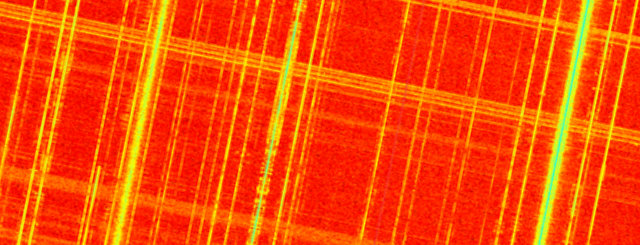
I never got a chance to summarize my results of the AM scans I did during the 2017 total eclipse.
I used an SDR and a 40 foot end-fed antenna located in a park near the Nashville, TN airport.
On the plus side I did notice a spike of AM signals and amateur radio signals especially on 40 meters. On the negative side, my AM scans were adversely affected by the nearby powerhouse WSM transmitter on 650 kHz.
I’ve attached my results in a spreadsheet [embedded] below.
Click here to view this Google Docs spreadsheet in a new window.
Fantastic, Ivan! Thank you for taking the time to go through your recordings and make these notes. No doubt, this log took a few hours to compile. I’ve yet to go through my eclipse spectrum recordings–!
Again, thanks for sharing!
Click here to view Ivan’s previous post which includes a bandscan of the 2017 Eclipse QSO Party.
Note: Jeff Murray and I posted at Christmas in 2014–I thought it would be fun to dig it out of the archives once again. Enjoy!
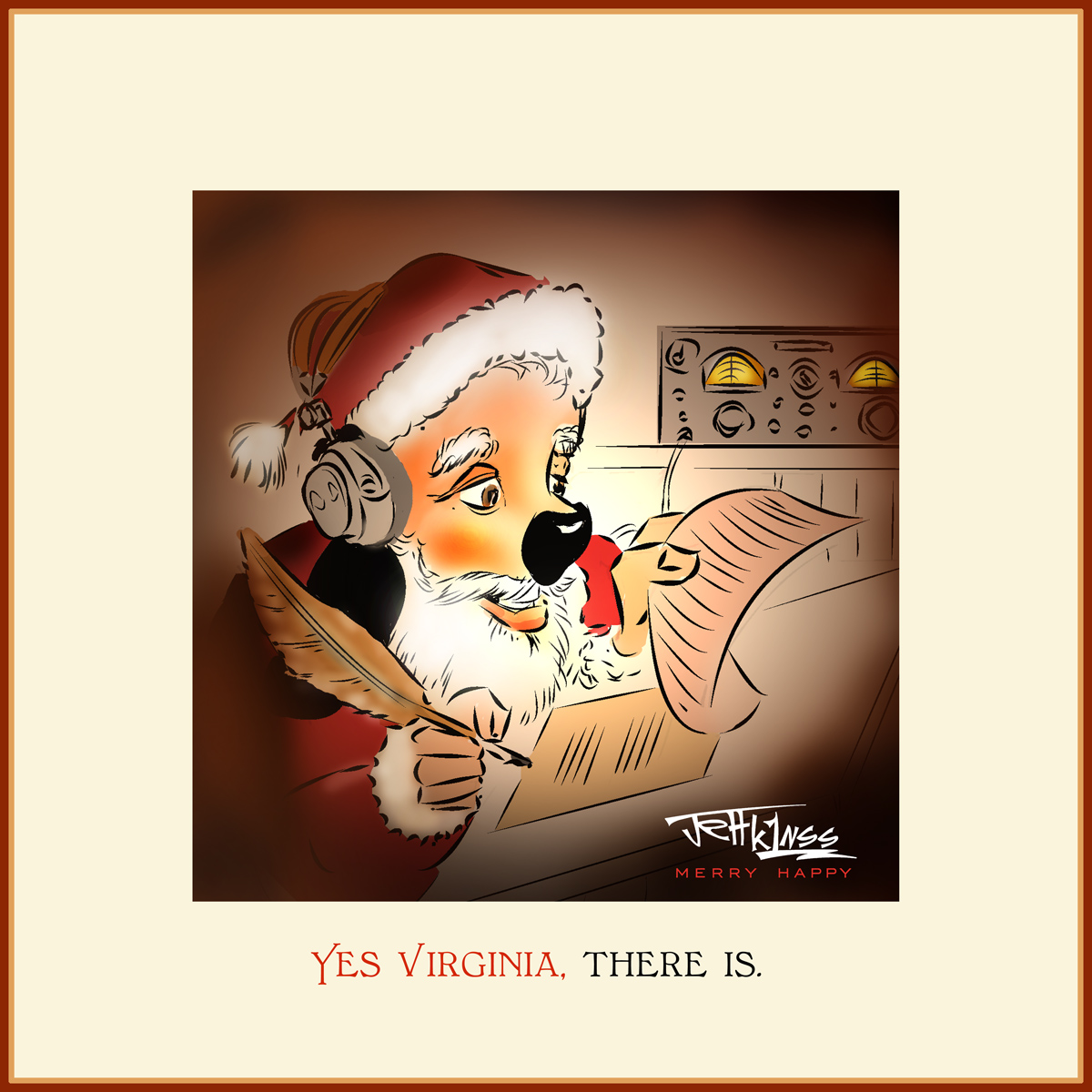
Dear Editor—
I am 8 years old. Some of my little friends say there is no shortwave. Uncle DX Dash! says, “If you see it on the SWLing Post, it’s so.” Please tell me the truth, is there a shortwave?
Virginia E. Layer
330 Independence Ave., S.W.
Virginia, your little friends are wrong. They have been affected by the skepticism of a digital age. They do not believe what can’t be heard or seen on their smart phone. They think that nothing can be which is not comprehensible by Google. They seek credit cards, not QSL cards.
Yes, Virginia, there is a shortwave. It exists as certainly as sound and circuits and tubes exist, and you know that these abound and give to your life its highest beauty and joy. Alas! how dreary would be the world if there were no shortwave! It would be as dreary as if there were no Virginias. There would be no heterodynes, no band openings, no propagation to make tolerable this existence. It would be a world without London Calling.
Not believe in shortwave! You might as well not believe in the ionosphere. You might get your papa to hire men to listen to all of the wi-fi radios of the world, but even if you did not hear shortwave, what would that prove? The most real things in the world are those that neither children nor men can see. Did you ever see ground waves dancing on the lawn? Of course not, but that’s no proof that they are not there. Nobody can casually conceive or imagine all the wonders there are heard and unheard in the listening world. For that, you must wear headphones.
No shortwave! Thank goodness! It lives, and lives forever. A thousand years from now, Virginia, nay 10 times 10,000 years from now, shortwave will continue to make glad the hearts of listeners.
Happy Holidays from your friends at Dashtoons and the SWLing Post!
With apologies to The New York Sun. Our tongue-in-cheek editorial borrows from the timeless classic, “Is There a Santa Claus?” printed in the September 21, 1897, issue of The New York Sun. Click here to read the original.
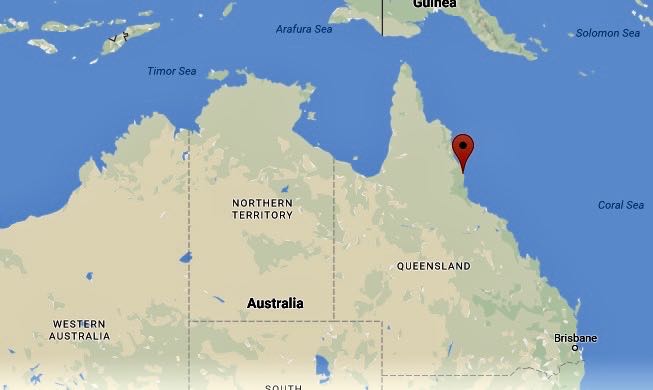
The 4KZ transmitter is located in Innisfail, Australia
(Source: Southgate ARC)
Australian broadcaster celebrating on shortwave
As part of 50th celebrations, radio broadcaster 4KZ in Northern Queensland is now on 5055 kHz and already getting signal reports including from North America and New Zealand.
General Manager of NQ Radio (4KZ, 4AM, 4AY, KIK FM & KOOL FM), Al Kirton announced the decision to SWLing Post in May, and now confirms the transmission began on December 20.
He told the WIA: “Unfortunately we are on half power for a couple of weeks until one of the RF boards can be repaired, then we will go up to I kW.”
The shortwave broadcast is from a site at east Innisfail in Tropical North Queensland. Mr Kirton said the USA-made 1.2 kW transmitter being used is feeding an Inverted V antenna at about 14 metres high at the peak.
The program is from the 4KZ and 4AY AM band transmitters and designed to cover the Cape York area and the northern outback. However the 60m band signal has been heard further away.
He said: “I have had many reception reports, many with audio clips”, some from Queensland, Northern Territory, New South Wales and Victoria, as well as from “Monterey USA, Alberta Canada and New Zealand.”
The transmission hours are about 0500 to 2300 hours UTC. All confirmed reception reports will receive a 4KZ shortwave QSL card. No return postage is required.
Reports by email to Al Kirton ([email protected]) or to Radio 4KZ, PO Box 19, Innisfail Queensland 4860 Australia.
The Australian Broadcasting Corporation stopped its shortwave services to the northern outback in January 2017.
Jim Linton VK3PC
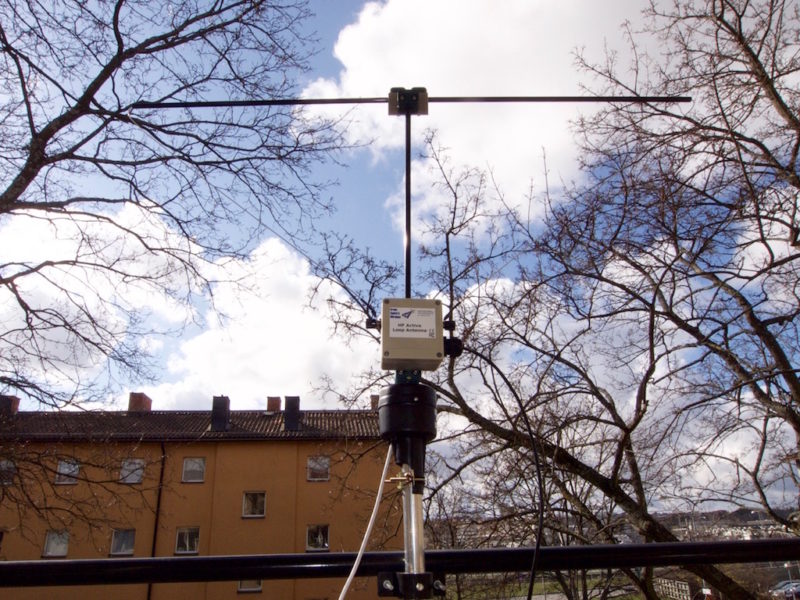
(Source: Sunsdr.eu)
Many thanks to SWLing Post contributor, Mark Fahey, who comments:
My WRTH is still in transit to me, however, Thomas’s comment in the post about the Cross Country Wireless Active Loop sparked my interest and I surfed over to their website. They have a great collection of really innovative antennas. I’m fascinated to see that their designs use balanced pairs within an ethernet cable instead of a coax feedline. Surfing to their website was very dangerous! My fingers are itching to order an antenna, or worst still (for my wallet) more than one of their models.
Has anyone been using one? My interest would be for “on-the-road” field use on MW & SW.
Thanks for your question, Mark! Like you, I’m very curious how portable this loop may be. Readers: please comment if you have any experience with the Cross Country Wireless Active Loop!
 I received my copy of the 2018 World Radio and TV Handbook (WRTH) directly from the publisher yesterday, just prior to my Christmas holiday travels. As I mention every year, I look forward to receiving this excellent staple radio reference guide–and this is their 72nd edition!
WRTH’s team of noted DXers from around the world curate frequencies and broadcaster information by region; while I’m not sure how they orchestrate all of this, the end result is truly a symphony of radio information. In addition to broadcaster listings, WRTH’s radio reviews, feature articles, and annual HF report make for excellent reading.
But the WRTH isn’t just a frequency guide: the publication always devotes the first sixty or so pages to articles relating to various aspects of the radio hobby. Following, I offer a quick overview of these.
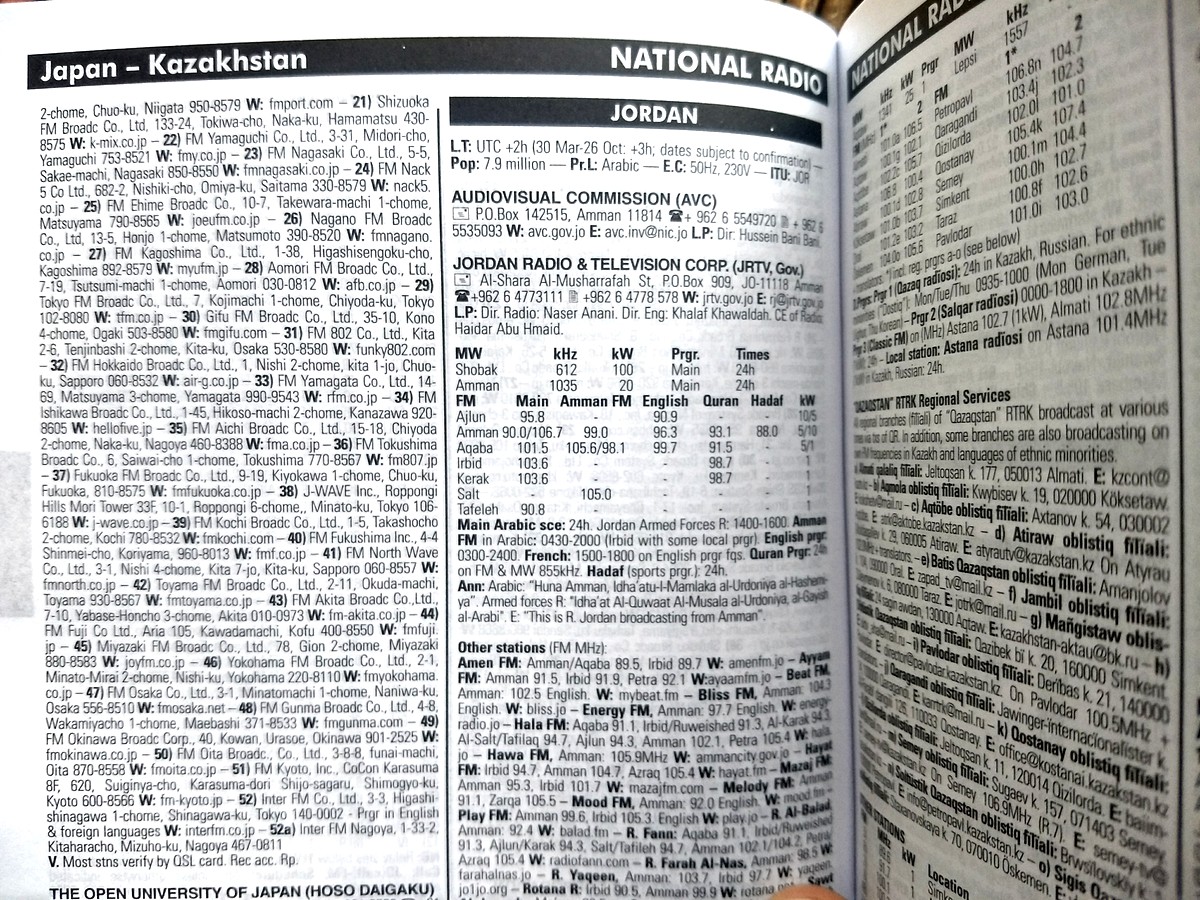
WRTH broadcast listings are incredibly thorough and informative
The first article always features a WRTH contributor: this year, they feature Torgeir Woxen who is the contributor for Norway and editor of the Asia & Pacific frequency list. Reading about how Woxen became interested in radio and DXing reminds me of how I–and many of my radio friends–got their start as well.
The second set of articles is always my favorite: WRTH receiver reviews.
This year, WRTH begins with a review of the Icom IC-R8600 wideband tabletop SDR receiver. They also review the Tecsun PL-880, Tecsun S-8800, Expert Electronics ColibriNano, SDRplay RSP2, and the new AOR AR-DV10 wideband handheld.

(Photo: Cross Country Wireless)
Besides radio reviews, WRTH also includes an evaluation of the Cross Country Wireless Active Loop.
I must admit: the Cross Country sounds like an effective and affordable portable mag loop antenna. I might need to grab one in the future to use on impromptu travels and DXpeditions.
The following article features WRTH contributor, Brian Clark, and his travels from New Zealand to the geographic antipodes of his home: Spain, Portugal and Morocco. Of course, enjoying diverse radio broadcasts was an integral part of his journey!
I was pleased to find that the following feature article, entitled Receiving Noise, explores the radio interference that plagues our hobby. The article mentions several common sources of noise and some of the antennas that most effectively mitigate RFI. Sadly, radio noise/interference is an important topic for most radio enthusiasts.

Following this, WRTH writer, Hans Johnson, features an article on Radio Romania International. RRI is one of my favorite shortwave broadcasters, so this was a treat to find indeed–Johnson’s piece sheds light on the past, present and future of the station.
Next, in A New Voice of Hope in the Middle East, Founder and President of the Strategic Communications Group, John Taylor, writes about setting up a new mediumwave station in Israel.
The following article features Dr. Martin Hadlaw, a former advisor to the Solomon Islands Broadcasting Corporation (SIBC), who explores the history of broadcasting in the South Seas.
Next, WRTH feature their Digital Update which assesses the state of digital broadcasting and–this year a special note about–Digital Radio Mondiale.
The final article–a tradition–is the WRTH HF propagation report/forecast by Ulf-Peter Hoppe. Always an informative read and this year he ends on a positive note despite the fact we’ve hit the solar rock-bottom!
The 72nd is another fantastic edition of the World Radio TV Handbook. As I say every year, I’ve never been disappointed with WRTH. Their publishing standards are such that the quality of their reviews, their writing, and (most importantly) their broadcast listings are simply unparalleled.
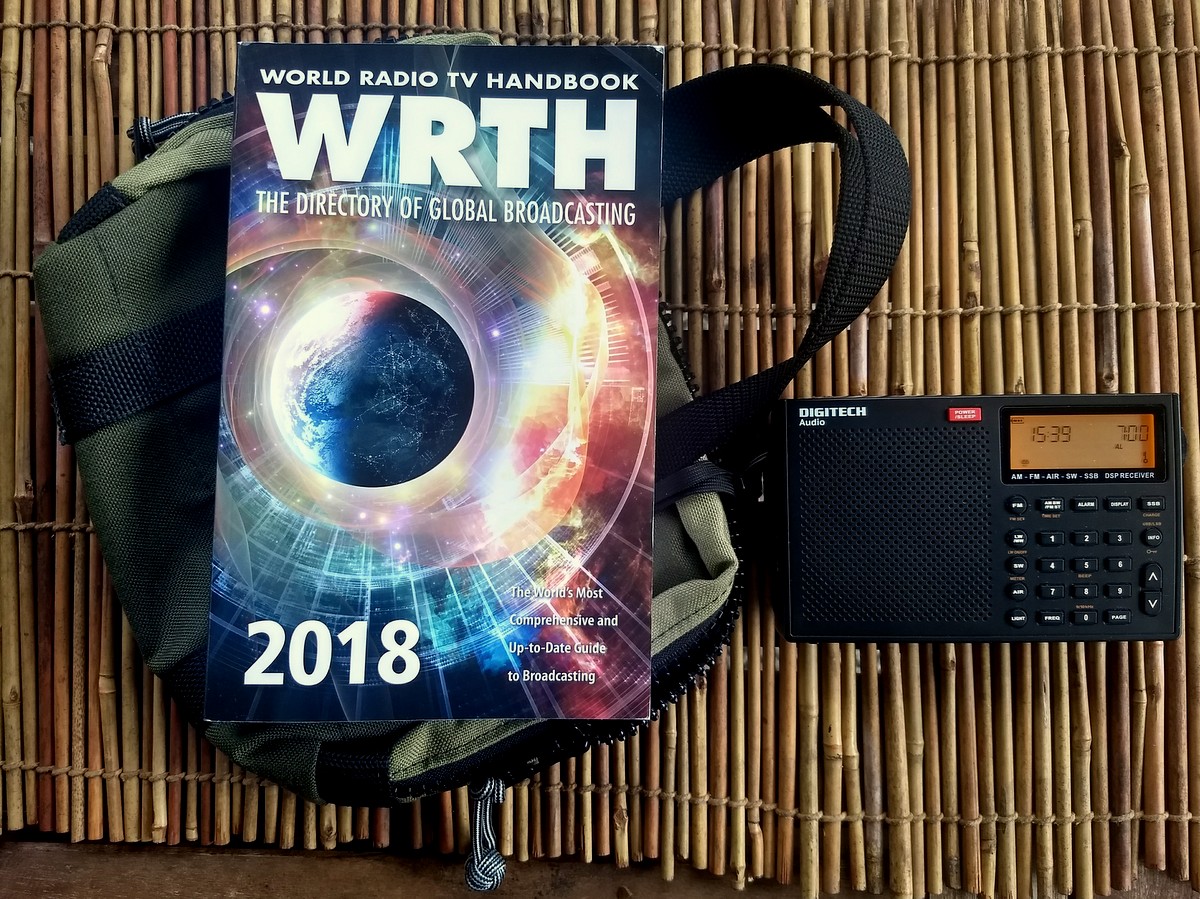
My WRTH 2018 and Digitech AR-1780 fit perfectly in my Red Oxx Lil Roy and are ready for holiday road travel and radio fun!
For DXers who collect QSL cards, you’ll find that broadcaster contact information in WRTH is often more up-to-date than a broadcaster’s own website. When readers contact me asking for QSL information from an obscure broadcaster, the first place I search is the current WRTH. Remember: their information is based on volunteer contributors who specialize in specific regions of the world–the most knowledgeable regional DXers keep this publication accurate.
Purchase your copy of WRTH 2018 directly from WRTH’s publishers, or from a distributor like Universal Radio (US) and Amazon.com (US), Radio HF (Canada), or BookDepository.com (International).