Shortwave listening and everything radio including reviews, broadcasting, ham radio, field operation, DXing, maker kits, travel, emergency gear, events, and more
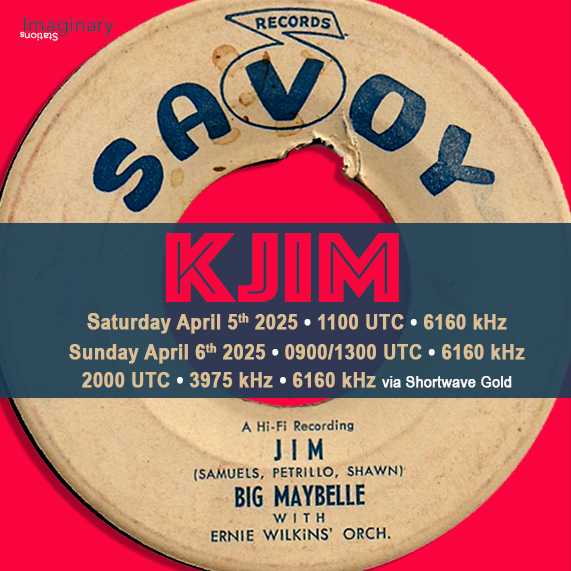
Greetings to all SWLing community. This week in the world of shortwave entertainment, Imaginary Stations bring you more eclectic programming. As part of the 15th year anniversary series we have a transmission of Free Radio Skybird 2. Tune in on Saturday 15th March 2025 at 1200 hrs UTC on 6160 kHz and also on Sunday 16th March 2025 at 1000/1400 hrs UTC on 6160 kHz and at 2100 UTC on 3975 kHz.
As with last week’s show, expect more tunes from the onshore and offshore genre, a mini-feature on the musician Jim Sullivan and lots more interesting stuff during the hour that’s beamed to Europe via Shortwave Gold. Turn on (the shortwave radio) and tune in.
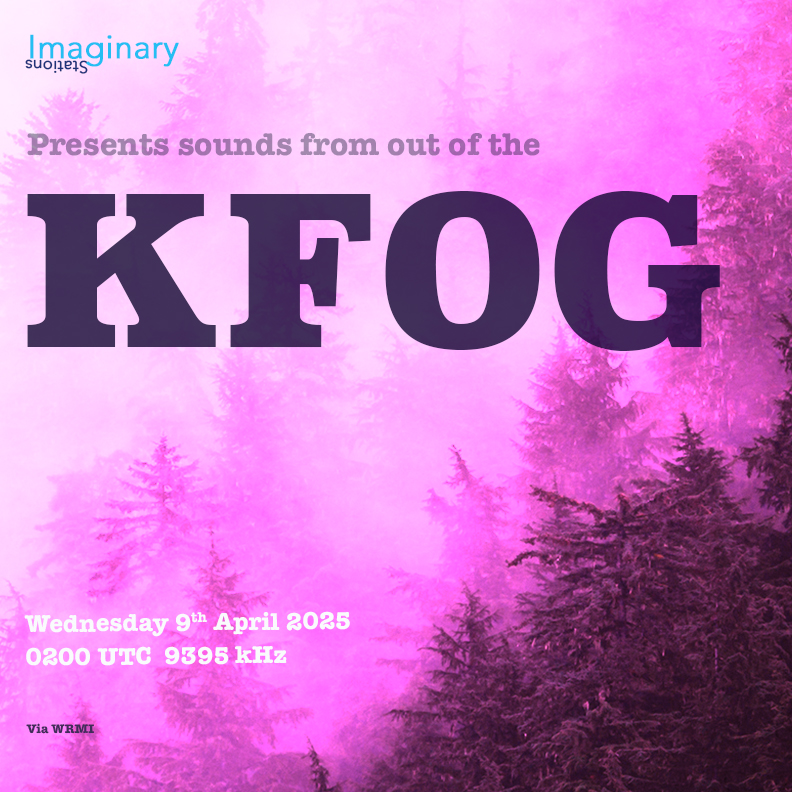
On Wednesday 19th March 2025 at the new time of 0200 UTC via WRMI we bring you another episode of the excellent Shortwave Music Library by DJ Frederick. A show well worth tuning into if you the like all sorts musicwise.
For more information on all our shows, please write to [email protected] and check out our old shows at our Mixcloud page here.
Many thanks to SWLing Post contributor David Iurescia, who shares the following article from Radio Prague (in Spanish), which focuses on the history and relevance of Radio Free Europe. For the past 30 years, the station has been broadcasting from Prague, continuing its mission of providing uncensored news to regions where press freedom is severely restricted. The article explores the station’s enduring role in the fight against authoritarian censorship and the growing challenges it faces in today’s geopolitical landscape.
Many thanks to SWLing Post contributor, Dan Greenall, who writes:
Hi Thomas
I still have warm memories of tuning into Radio Australia on 9580 kHz at sunrise during my early days of shortwave listening. They would sign on with their Waltzing Matilda interval signal and the sound of the kookaburra bird.
While doing some listening on the SDR of my friend Ken (VE3HLS) who has retired to northern Thailand, I have discovered you can still hear the kookaburra on shortwave by tuning into Reach Beyond Australia. Their broadcast to Myanmar in Burmese from 1500 to 1530 UTC on 11900 kHz can be very well heard on this Kiwi. There is a brief English announcement at sign and sign off, as well as a few seconds of “kookaburra chatter.”
Attached are two recordings, the first at sign on (March 7, 2025) and the second at sign off (December 1, 2024).
Also I’ve included a link to Interval Signals Online where you can find the old Radio Australia sign on.
Good day all SWLing community, we’re letting you know what we’ll be sending out across those airwaves this week. The first is a return of all things esoteric when it come to your listening pleasure with Free Radio Skybird. Tune in on Saturday 8th March 2025 at 1200 hrs UTC on 6160 kHz and also on Sunday 9th March 2025 at 1000/1400 hrs UTC on 6160 kHz and at 2100 UTC on 3975 kHz brought to you via the transmitters of Shortwave Gold
Expect some onshore, offshore and all sorts of sounds from the sky (bird). Tune in for your audio treat.
On Wednesday 12th March 2025 at the new time of 0200 UTC via WRMI we bring you more of Radio Ace. Expect more of that DJ Flash Frisbone fellow and all things radio. Enjoy!
For more information on all our shows, please write to [email protected] and check out our old shows at our Mixcloud page here.
Photo Source: Dennis Sylvester Hurd via Wikimedia Commons
Don Moore’s Photo Album:
Guatemala (Part Three) – Guatemala City continued
by Don Moore
More of Don’s traveling DX stories can be found in his book Tales of a Vagabond DXer[SWLing Post affiliate link]. If you’ve already read his book and enjoyed it, do Don a favor and leave a review on Amazon.
When I started DXing in 1971, and for several decades afterwards, the most widely logged Guatemalan shortwave station by DXers was Radio Cultural on 3300 kHz. It was also known as TGNA, the call letters of that 90-meter-band frequency. The medium wave outlet on 730 kHz was TGN. The station also used 5955 kHz and 9505 kHz, but those frequencies were always harder to hear because of interference from more powerful international broadcasters.
Back then this Evangelical broadcaster was owned and operated by the Central American Mission of Dallas, Texas, but only received a portion of its funding from the CAM. Additional funding came from local donations in Guatemala and another important source was selling time to American Evangelical preachers to air their prerecorded English language religious programs. These programs were broadcast late at night, when propagation into North America and Europe was best, and were always preceded by an English station identification. That made it an easier log for DXers who didn’t understand Spanish.
TGNA was the station I most wanted to visit when I arrived in Guatemala City in June 1983. But Guatemala DX Club members informed me that the station had been temporarily closed down because of “philosophical disagreements” with the government. They were off the air and would remain so for several weeks. I made four more visits to Guatemala City over the next year but somehow never found the time to visit the station. It wasn’t until my visit in December 1987 that I finally stepped inside their front door. That visit became the subject of the first article I wrote for Monitoring Times magazine in June 1988.
Wayne Berger, station manager and chief engineer, and missionary Bob Rice gave us a very long tour of the station. Wayne and Bob had built or rebuilt most of the station’s technical equipment and even some of the infrastructure. On the day we arrived they were welding a broken door back on its hinges. Wayne had built the 3300 kHz transmitter, shown in the next picture, out of spare parts.
Main studio control room at TGNA in 1987.
At the time of my visit, TGNA had two pennants. The larger one was mostly reserved for local listeners. The smaller one was sometimes included with QSLs to lucky DXers.
But neither of those compared with these traditional handmade weavings given by listeners for the station’s 37th anniversary in August, 1987. (I just wish my color photos had survived.)
English ID from Radio Cultural, 3300 kHz, as heard in Pennsylvania 23 November 1979 at 0427 UTC:
Radio Cultural, 3300 kHz, as heard in Michigan 23 March 1989 at 1101 UTC:
Easter in Guatemala
Of all the things I’ve seen in my travels, the Easter processions of Guatemala certainly rank near the top. I am fortunate to have been in Guatemala twice for the holiday, in 1982 and 1984, and I plan a return trip in the next few years. Processions take place all over Guatemala during Easter week, but the most elaborate take place on Easter Thursday and Good Friday in Guatemala City and, especially, in Antigua, the old capital twenty kilometers to the west. There are several processions both days in each city and each procession takes several hours. Continue reading →