 David Goren’s Shortwave Shindig will once again broadcast live–in a few moments–from the Winter SWL Fest in Plymouth Meeting, Pennsylvania.
Tune in at 22:00-23:00 EST tonight (that’s 03:00-04:00 UTC, February 28) on 7,570 kHz.

David Goren’s Shortwave Shindig will once again broadcast live–in a few moments–from the Winter SWL Fest in Plymouth Meeting, Pennsylvania.
Tune in at 22:00-23:00 EST tonight (that’s 03:00-04:00 UTC, February 28) on 7,570 kHz.
 SWLing Post reader, David Iurescia, reminds us that February 25th, 2015 was Radio Canada International‘s 70th anniversary.
While we can no longer hear RCI on shortwave, David points out that we can listen to some of the anniversary specials (interviews and programs) online all week:
http://www.rcinet.ca/en/2015/02/26/rci-celebrates-its-70th-anniversary/
Many thanks for the tip, David!
 Many thanks to SWLing Post reader, David Iurescia, who relays this translated message from Radio Taiwan International:
Frequency test for South America between 5 – 7 March, 2015
Looking for alternatives to transmit our programming to South America, Radio Taiwan International will carry out test transmissions frequency to the region from Thursday March 5 until Saturday March 7, 2015 through 11920 kHz frequency in the 0200-0300 UTC .
We request the cooperation of our listeners friends who are in the South American countries , to verify that signal and send us reports of listening to the new test frequency to our e- mail soon: [email protected]
Many thanks for your help!
Many thanks, David! Perhaps some of listeners can help RTI by sending a listener report and also record a broadcast for the SW Radio Audio Archive.
SWLing Post contributor, Moshe, writes:
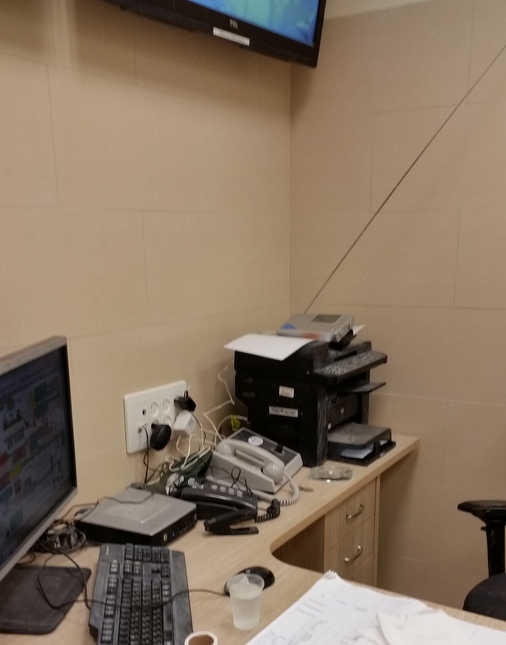
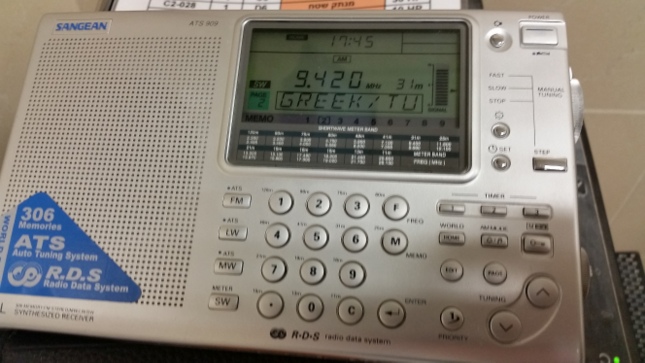
In the attached photos my Sangean receives Elliniki Radiophonia at 9420kHz at my working post. Note the amount of computers, screens and the fact that the radio sits on top of an HP printer.
Still audio is clear and clear reception with only telescopic antenna.
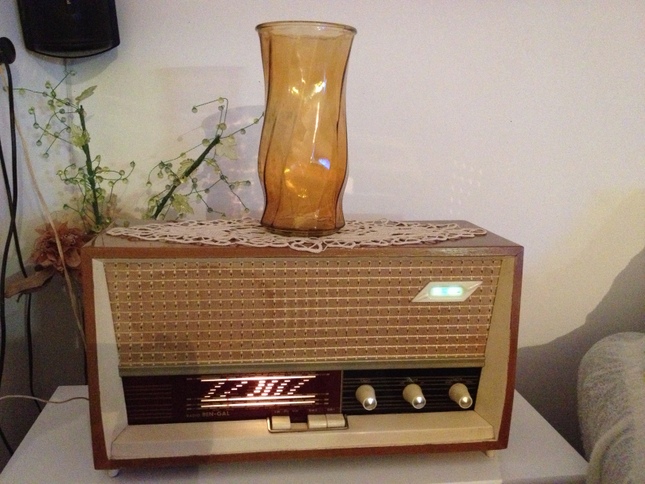
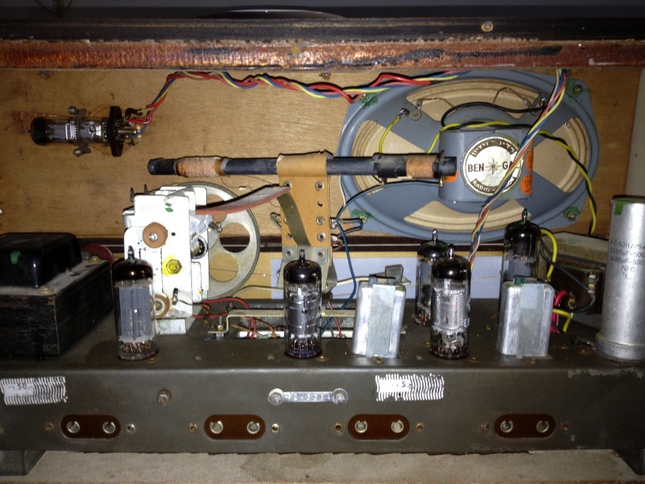
The other radio is my beloved Ben-Gal 1958 tube radio (Israeli made). It looks very much like German radios of the time.
[The Ben-Gal] is in daily use. Anyone seeing this radio loves it, especially when I turn it on!”
Many thanks for sharing these photos, Moshe! Your reception of Elliniki Radiophonia must be exceptional in Israel to overcome all of that office RFI.
The Ben-Gal must produce some rich audio; I bet it’s a champ on medium wave with that large internal ferrite bar! Beautiful set! Thanks again for sharing!
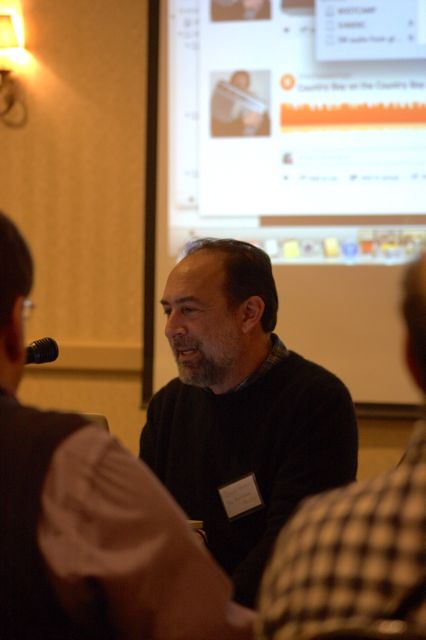
David Goren hosts the annual Shortwave Shindig
I’m happy to relay that David Goren’s Shortwave Shindig will once again broadcast live from the Winter SWL Fest in Plymouth Meeting, Pennsylvania.
Tune in on Friday, February 27, 2015 from 22:00-23:00 EST (that’s 03:00-04:00 UTC, February 28) on 7,570 kHz.
Since I will be at the Winter SWL Fest and even a part of the Shortwave Shindig live broadcast, I’m hoping a few SWLing Post readers will record the show and share with us.
Also, if you’re in the Plymouth Meeting area, please consider joining us at the Winter SWL Fest.
If you would like to hear recordings of the Shortwave Shindig from 2014, click here.
Click here to check out David Goren’s website, Shortwaveology.net.
 For your listening pleasure: Radio Poland.
This recording was made on February 2, 2015 on 9395 kHz starting at 1800 UTC. Although Radio Poland formally left the shortwaves in 2013, their service is now relayed by Global 24 Radio.
Click here to download the recording as an MP3, or simply listen via the embedded player below.
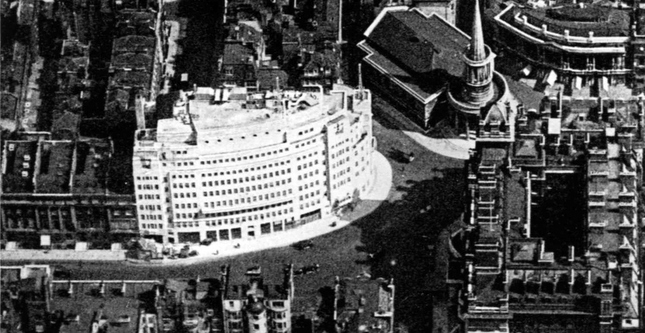 Last week, I discovered this amazing set of photos, via Flashbak.com, of the BBC Broadcasting House from 1932: click here to view the full set of photos.