If you’ve been thinking about purchasing a C.Crane radio, today may be a good time to pull the trigger. C.Crane is offering 10% off sitewide with the promo code CYBER10.


If you’ve been thinking about purchasing a C.Crane radio, today may be a good time to pull the trigger. C.Crane is offering 10% off sitewide with the promo code CYBER10.
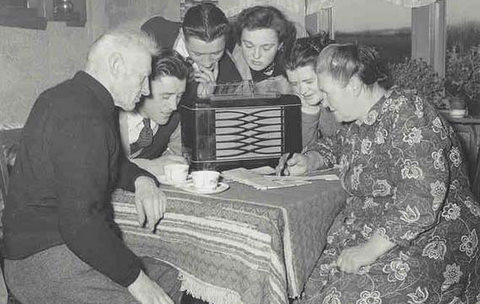 For your listening pleasure: beHAVior Night, a shortwave radio show which showcases music from the first four decades of the 20th Century.
This show was recorded on Friday, November 28, 2014. While beHAVior Night is broadcast all year long via WBCQ, I’m not able to hear them easily at my home during Daylight Savings Time (DST) as the propagation path is not yet open to the south. During the winter months, however, the signal is quite strong as you will hear.
Click here to download the recording as an MP3, or simply listen via the embedded player below:
You can catch beHAVior Friday afternoon/evening at 17:00 EST/22:00 UTC on 7,490 kHz (WBCQ). Check out beHAVior Night on Facebook by clicking here.
 (Source: VOA Radiogram)
Flmsg returns this weekend on The Mighty KBC. See details below.
This week on VOA Radiogram, the “surprise mode of the week” becomes the “bonus mode of the week.” Because many of you have problems with the RSID, I will divulge the bonus mode so that you can make manual adjustment if necessary.
Here is the lineup for VOA Radiogram, program 87, 29-30 November 2014, all in MFSK32 centered on 1500 Hz except where indicated:
1:37 Program preview
2:39 Dimming lights to see the night sky*
11:27 Cambodian rice wins “world’s best” title*
19:53 Color photos of 1963 Soviet Union*
26:29 Closing announcements
27:20 Bonus mode of the week: MT63-2000LPlease send reception reports to [email protected]
VOA Radiogram transmission schedule
(all days and times UTC):
Sat 0930-1000 5910 kHz
Sat 1600-1630 17860 kHz
Sun 0230-0300 5745 kHz
Sun 1930-2000 15670 kHz
All via the Edward R. Murrow transmitting station in North Carolina.The Mighty KBC will transmit a minute of MFSK64 Saturday at about 1230 UTC on 6095 kHz, and Sunday at about 0130 UTC (Saturday 8:30 pm EST) on 7375 kHz. Both frequencies are via Germany. Reports to Eric at themightykbc (at) gmail.com.
This weekend, the MFSK64 transmissions on The Mighty KBC will be in Flmsg format. If you do not have the Flmsg software, download it from the same source as Fldigi: http://w1hkj.com/download.html.
To make Flmsg work with Fldigi, in Fldigi: Fldigi: Configure > Misc > NBEMS > Under “Reception of flmsg files” check both “Open with flmsg” and “Open in browser.” Under that indicate where your Flmsg program is located, for example C:Program Files (x86)\flmsg-2.0.5\flmsg.exe.
If all goes well, the text from The Mighty KBC will pop up on your web browser.

(Source: STF Radio International)
STF Radio International
Broadcast #2November 30 0500-0600 UTC
5110 / 7490 / 7570 / 7730 / 9330 The Americas
9955 The Carribean
17645 Asia
Preshow Warm-up!!
November 30 0400-0500 UTC
7730 Khz The AmericasPLUS! Rebroadcast for EU
November 30, 2014 1600-1700 UTC
6095 kHz EU
“I can see the radio wave.”
Universal Radio has just posted “Black Friday” deals on The Kenwood TS-590SG and a wide range of Icom radios.
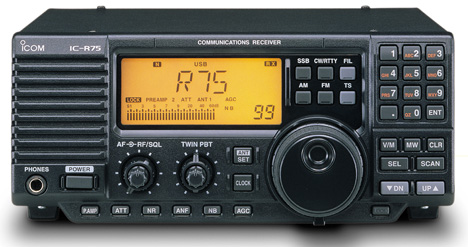
The Icom R75 tabletop receiver is priced at $669.95 with free shipping and a free Grundig G2 portable radio. If you’ve been thinking about pulling the trigger on the R75, this is certainly a good deal.
Below, you’ll find links to each deal:

Today is Thanksgiving Day in the US, my favorite holiday of the year. This day gives us a chance to pause, give thanks, and feel gratitude–for our friends, family, and life. Despite congested roads and airports as folks make the homeward journey, Thanksgiving is a peaceful day, unencumbered by all the commercial baggage that comes along with so many other holidays.
When I mention to non-radio-geek friends and family that I run a website devoted to shortwave radio, they often respond by asking somewhat skeptically, “So, do you have many readers?” Indeed, last night, as I talked with my family, a family member kindly inquired again how many visitors now come to my website. And again I hesitated to answer, as it’s been many months since I’ve opened the full spectrum of web analytics.
For the first time in several months, I took a look at our web statistics…and was amazed.
I remember, a few years ago, when I was surprised and honored when I had over 200 daily pageviews on my site. It was amazing to think that, in a 24 hour period of time, 200 pages of content had been read; thus, how many SWLers must be aspiring to, or enjoying, the hobby–! Over the past few years, that number has grown by leaps and bounds: last night, I found that this site now averages about 172,000 pageviews per month, or 5,700 per day…Wow.

Along with these increased numbers has come increased interactivity–your comments, messages, and guest posts give this site remarkable depth and broaden the scope far beyond my blog posts and reviews. In other words, it’s your participation that makes this site what it is. Our 39,441 users give the SWLing Post a real sense of community. I’ve met so many friends through this site, and this adds a dimension to what could otherwise be a rather solitary hobby. Radio listeners, you’re quite a club.
So I’d like to thank each and every one of you, personally, for being a part of this shortwave radio community. I’d like to wish my best to those of you celebrating Thanksgiving today. And if you’re not celebrating Thanksgiving, let’s still raise a glass together anyway, okay? Cheers!
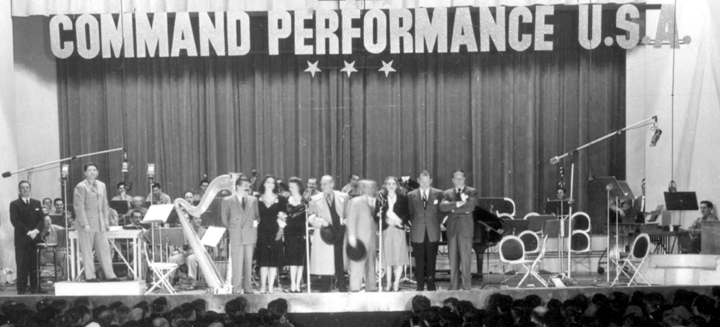
To set the mood, here is a little nostalgia: a Thanksgiving recording from 70 years ago: an old time radio recording of Command Performance broadcast on Thanksgiving Day, 1944. This is the sort of thing I turn to on Thanksgiving. Enjoy:
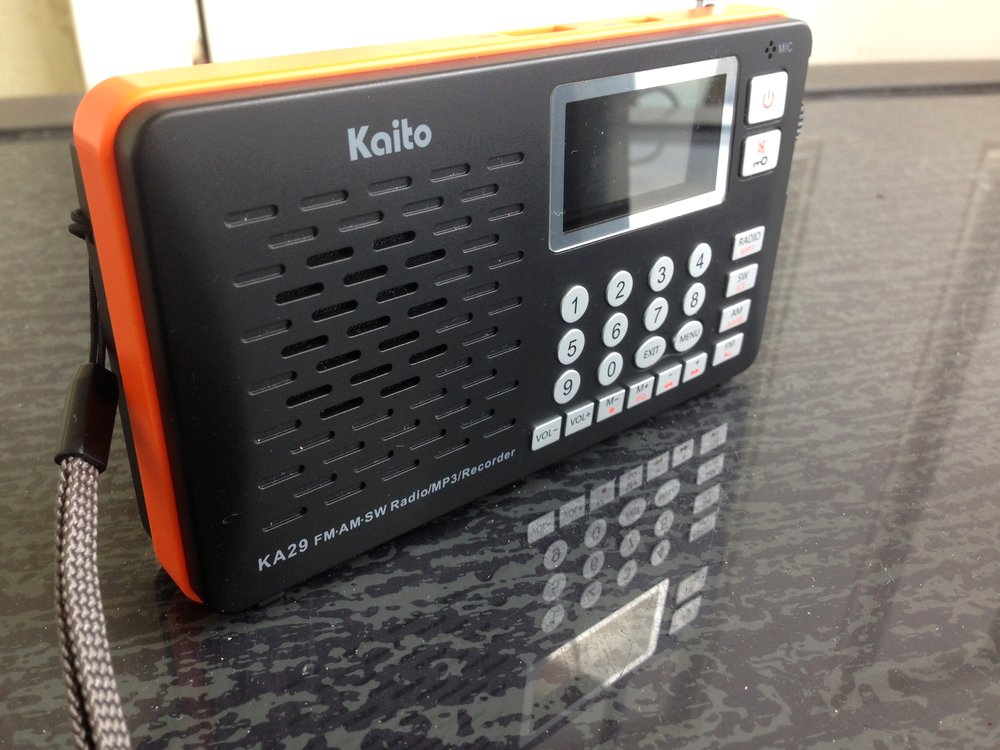
While doing a somewhat random search on Amazon a few weeks ago, I stumbled upon a radio with a model number that I didn’t recognize–the Kaito KA29.
The form factor of the KA29 is very reminiscent of the Degen DE1129 I reviewed two years ago, but it’s smaller and sports a number pad on the front. On a whim, and with possible use of this radio in my charitable work at ETOW, I purchased one. At ETOW we have used similar radios with 16-32 GB Micro SD cards, chock-full of educational audio content. At $35, the KA29 is an affordable MP3 player and radio.
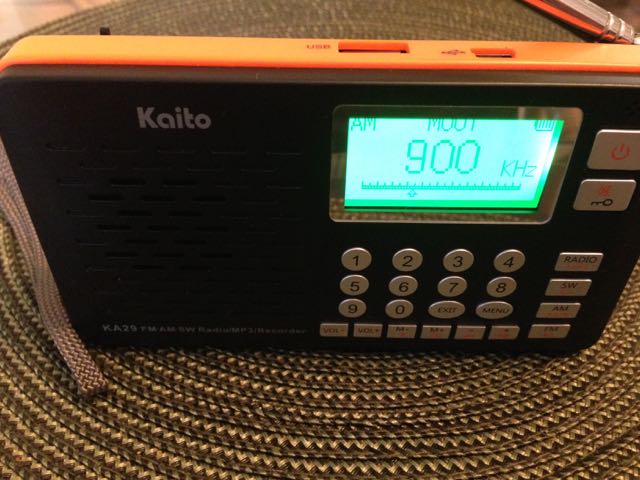
On a side note, I suppose I should mention that I was pretty disappointed with the DE1129 because I had hopes it would make for a great all-in-one portable radio recorder for ETOW. While the DE1129 could record FM/AM and SW radio directly, it had serious problems: it auto-adjusted the volume level during recording (one could not turn off the internal speaker), it degraded audio quality in recording, and medium wave was plagued with a “ticking” sound every 10 seconds. It produced digital hash on various meter bands. My summary of the DE1129: fine concept, poor engineering. Read my full review of the first version of the DE1129 here.
The Kaito KA29 is a cute little portable. Mine has a black body with orange band encircling the diameter. That orange band is actually a nice addition–it helps the radio show up a bit better and makes the ports a little easier to see when lighting is low.
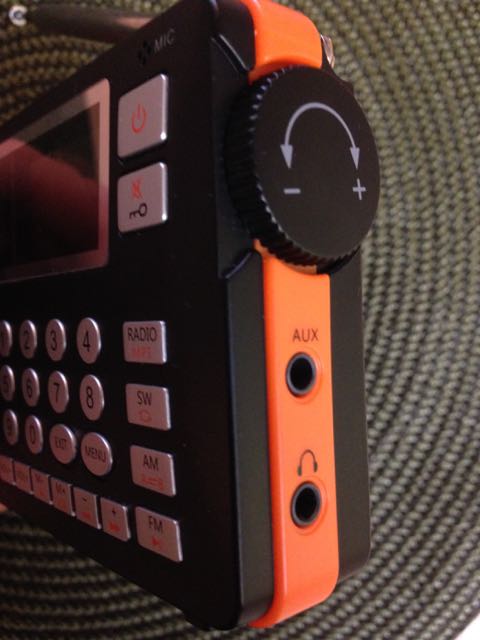
The overall quality of the radio feels fine: the hard plastic body has a smooth matte quality and the buttons have a very tactile response. The telescopic whip antenna is long for the overall radio size, but is still a little on the short side for good HF gain. Oddly, unlike most radios, the antenna cannot swivel at its point of attachment to the chassis; it can only be extended and tipped side-to-side–but not front to back, or back to front. Like the DE1129, the KA29 lacks a back stand–a big negative in my book–but admittedly a back stand would be of little use while SWLing with this rig because the antenna can’t be swiveled or tipped into a useful vertical position. Hm. Also like the DE1129, the KA29 uses a slim rechargeable battery pack.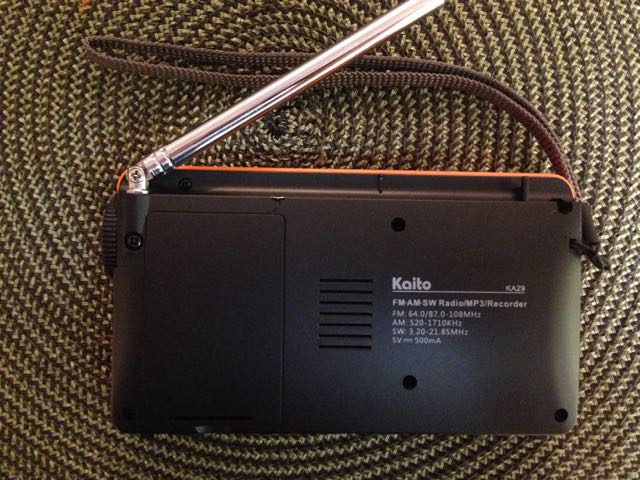
When I first turned on the KA29, I thought I had received a faulty unit: I pressed and held the power button for a second, the display lit up a bright green, I released the power button…and the unit turned off. After a little trouble-shooting, I realized that the KA29 requires holding the power button a full two seconds, until the “Kaito” brand name appears on the display.
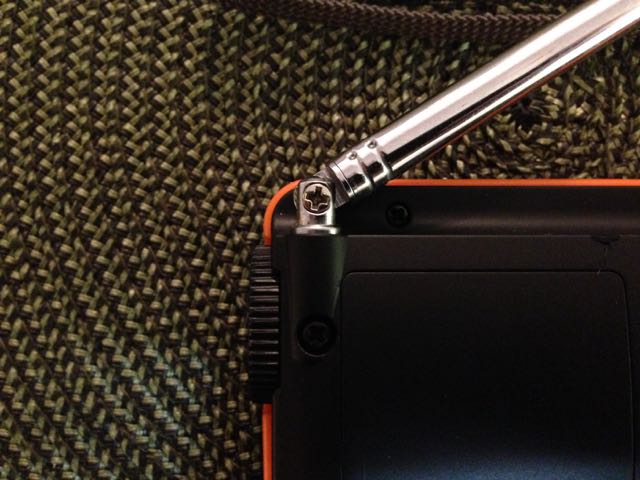
Unfortunately, the KA29 antenna does not swivel.
This sluggish power-up response is truly an indicator of most functions on the KA29. It’s as if every function is controlled by a slow processor–which I’ve no doubt is the case.
As far as I can tell, all the menu functions are the same on the Degen DE1129; obviously, they’re built on the same firmware. Indeed, Kaito is the North American brand for the Chinese manufacturer, Degen; the Degen model number for this radio is DE29. In this sense, most functions are familiar to me.
The one added feature of the KA29 that my version of the DE1129 didn’t have is a number pad, useful for direct entry of radio frequencies. I should note here that I (typically) toss the owner’s manual aside when I first get a radio, in order to test how intuitive its functions are. I spent quality time with the KA29 while traveling a few weeks ago, and as I didn’t bring the manual, I had to learn its functions via trial and error. It wasn’t until I returned that I learned how to use direct frequency entry; the is answer clearly stated in the manual: just key in the frequency, then press the appropriate band (AM/FM/SW) to go to that frequency. Pretty simple, actually. The response time for the radio to start playing the frequency you enter is only about one second.
Use of the tuning knob (located on the right side of the radio) is easy and straightforward–tuning up and down will move the needle 5 kHz steps between frequencies. Unfortunately, as on the DE1129, 5 kHz is the smallest tuning step available. The KA29 briefly mutes between frequency changes, so when tuning slowly it’s very noticeable. If you tune quickly, the KA29 will produce snippets of audio as you pass signals, but I find it often skips over even very strong signals. In short? Though I suppose it could be worse, I do not like tuning the KA29.
I should also mention that the KA29 has no adjustable bandwidth; I’m guessing the AM bandwidth is stuck at around 6 or 7 kHz.
While I no longer have the DE1129 in hand for side-by-side comparison, my impression is that performance between the two radios is very similar.
Audio fidelity
Herein lies the strength of the KA29. It obviously uses the same speaker technology (with an acoustic chamber) that the DE1129 uses. You will be favorably impressed with the audio from this wee radio–it is quite robust for a pocket radio of this size, and in a small room, almost room-filling. It sounds fantastic on FM and AM alike–you can even hear a hint of bass. One day, I tuned the KA29 to a local AM station and listened quite comfortably in another room. Impressive.
But what about receiver performance?
FM
FM performance is quite good. I’ve used the KA29 in two different cities, and found that it could detect most of the same FM stations my other portables picked up.
AM/Medium Wave
I was pleasantly surprised to note the absence of the annoying ticking sound I heard in the DE1129; it appears Degen engineers have succeeded in eliminating this distraction. In general, I believe the KA29 performs acceptably on medium wave for basic local and nighttime clear channel broadcast listening. The AGC circuit is not ideal, though, for any sort of medium wave DXing; don’t consider the KA29 for MW DX.
Shortwave
If the KA29 is better than the DE1129 on the shortwave bands, the improvement is negligible. You’ll be fairly happy with the KA29 while listening to strong shortwave broadcasts. During my review, I listened to the new Global 24 a few hours on 9,395 kHz–an easy catch on the east coast of North America–and the KA29 was fairly stable, producing rich audio.
Here are the cons on shortwave:
Automatic Gain Control
While listening to weak stations, you’ll discover the KA29 to be somewhat sensitive, but again, the AGC circuit is just too active to listen comfortably for very long.
Noise floor
The noise floor is more obvious while listening to weak signals: I believe much of the noise is coming from the internal electronics of the KA29. It produces an audible digital hash sound that makes weak-signal listening a bit of a chore.
Images
Quite often as I tuned around the shortwave bands, I noticed that FM stations bleed through the audio. Check out this audio sample as I attempted to listen to Radio Ryhad:
Indeed, even if the shortwave station has a relatively strong signal (like this recording of Global 24) you can often hear noise:
For comparison, listen to the other radios I recorded at the same time for the ultra portable shoot-out.
Fortunately, several of the recording problems I noted with the DE1129 are no longer an issue with the KA29.
Fixed volume
The DE1129, when recording radio, had the exceedingly annoying habit of automatically setting the internal speaker’s volume to a high level. While recording, this could not be changed.
Fortunately, this problem has mostly been addressed in the KA29, which does not increase the volume while making a recording, but still fixes the volume at the level set at the recording’s start. I didn’t find this to be much of a problem.
Audio quality
The recording performance is better than that of the DE1129, which produced noisy, muffled recordings. The KA29 will produce fair audio recordings on AM, on FM, and on shortwave. One drawback: you will note a low-volume, high-pitched static noise–a hiss, to be specific–inherent in every radio recording, regardless of band. While it’s not too offensive, nor enough to deter me from making direct radio recordings (at least of strong stations), there is still much room for improvement. Obviously, I can use the headphone jack and an external digital recorder to make better radio recordings. But the convenience of an all-in-one recording device plus radio outweighs the slight hiss in the internal recordings it produces.
All in all? I’m reasonably pleased with the radio recording capabilities of the KA29, and the improvements it’s made over its predecessor. If the Degen engineers could lower the KA29’s noise floor and fix the imaging problems, and add 1 kHz tuning increments, this could be a good value all-in-one radio, a real contender.
Ever radio has its pros and cons. The following is a list I made while reviewing the KA29:
Pros:
Cons:
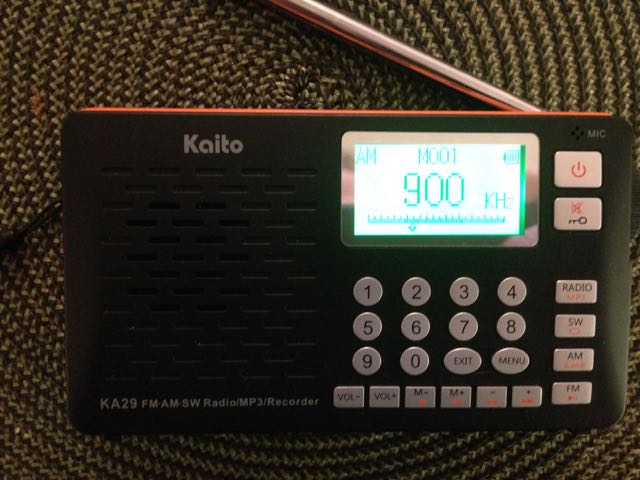
If you’re looking for a pocket radio to make local radio recordings on-the-go, and the quality of your recordings is not a major concern, you might give the KA29 a try; chances are you’ll be fairly pleased with the affordable KA29.
If you’re a shortwave radio hobbyist or DXer of any stripe, however, don’t waste your time or money on the DE1129. Instead, pitch in $10 more and buy a Tecsun PL-310ET–it has no MP3 recording or playback, but it will receive circles around the KA29.