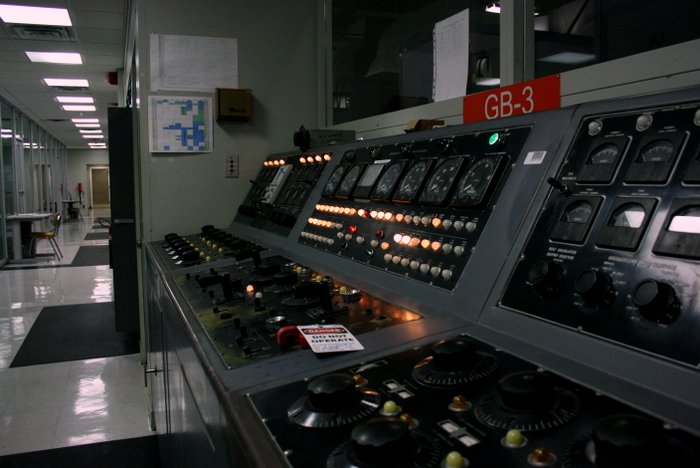
Since posting the article about the American Museum of Radio and Electricity last week, I’ve been listening to their low-powered FM station KMRE online. If you’re into radio nostalgia as I am, you, too, may enjoy listening to their tunes and other historic recordings. Great stuff! Give it a listen:
A review of the Sony SRF-59 — cheap, fun Mediumwave DX thrills
A few years ago, I heard a lot of buzz in AM/Mediumwave radio circles about a small, inexpensive radio called the Sony SRF-59. Discussions were focused on the incredible performance of this diminutive low-cost radio and how it held it own against some real benchmark receivers. Out of curiosity, I did a search on the radio to see what it looked like–I expected some Tecsun PL-like unit–and found that, much to my surprise, it’s a simple, analog, totally unassuming AM/FM walkman. Say, what?
The far biggest surprise came with my price search, however. The SRF-59 is easy to find at $14.95 US. Really, you ask? Oh, yes–and it’s readily available at many online and big box stores.
So–carefully counting my pocket change–I took the plunge, and bought one.
The radio came in a basic plastic blister pack, and it also included headphones. I can’t comment on the headphones as I didn’t even bother unpacking them; instead, I plugged my new SRF-59 into my favorite Sony earbuds.
I have to admit, the AM band on this little radio does indeed shine. Not only is the receiver sensitive and relatively selective (meaning, I don’t hear adjacent signals when tuned in), but it also has excellent audio. Amazingly, it lives up to all of the praise I had heard about it. I’m quite amazed, in fact, at how well this little unit can null out stations by rotating the radio body a few degrees. Most impressive.
Though I’m no major FM radio listener, I can also vouch for its FM performance, which is quite good.
Pros:
- lightweight–indeed, one can safely say, “ultralight”
- very inexpensive, by comparision
- operates almost indefinitely on one AA cell
- simple design, durable construction
- AM (Mediumwave) sensitivity and selectivity comparable to $100 shortwave portables
- because tuning is analog, it works in North America just as well as in Japan (see cons)
- tuning is analog, thus no stations can be saved to memory and there is a noticeable amount of receiver drift if listening over long periods of time
- no fine-tuning mechanism means that tuning in weak stations takes precision skill on the SRF-59’s very small dial
- no built-in speaker (this is a Walkman, after all)
SWLing Book Review–Roger Tidy’s Hitler’s Radio War
Not only am I a long-time radio enthusiast, but I’m also something of a history buff—I have a particular affection for WWII era radios, often experiencing virtual time travel while listening to, for example, my Hallicrafter’s SX-24, or my father’s RCA console radio.
I suppose that’s why I was so intrigued to receive a review copy of Hitler’s Radio War by Roger Tidy. Although I know quite a bit of WWII history, I knew relatively little about Hitler’s radio propaganda machine, which Tidy describes in detail in this recent work.
Hitler’s Radio War (Robert Hale, publisher, 2011) is a comprehensive history of the multi-language, insidious Third Reich initiative to brainwash their perceived antagonists, both prior to and in the aftermath of each invasion.
Tidy’s complex and multi-faceted history unfolds in a very logical and deliberate manner. By placing his emphasis on the broadcasters, or radio talent, Tidy also presents a history of traitors, misguided expatriates, and political opportunists. Personalities such as the infamous Lord Haw Haw and Axis Sally (although there are actually two Sallies, as Tidy reveals) often had a passion for political change or their own self-centered achievement, and allegiances which were known to shift with the wind. Tidy describes how the Third Reich’s Gestapo became particularly adept at hunting this type of personality and turning any discovered talent into the “friendly” voice of Fascism.
Tidy’s comprehensive radio history is made particularly relevant to radio enthusiasts like myself in a number of ways. For example, his text frequently includes large sections of original broadcast transcripts, most fascinating in their revelation of the seductively crafted politicism of Hitler’s war machine. And Tidy’s mention of stations quite often includes specifics such as:
- frequency information (i.e., the meter band),
- a description of the interval signal or theme, and
- the geographical transmission sites of broadcasts, particularly useful in understanding their efficacy.
It is clear that Tidy has spent a great deal of time conducting original research in BBC monitoring archives and listening to recordings of many of these broadcasts first-hand, which significantly enriches his work.
In short, I found Hitler’s Radio War an insightful, thought-provoking, and enjoyable account of WWII radio history. Also of particular interest to current-day radio listeners, Tidy’s book describes the birth of large government international broadcasters, many of which are still on the air today–namely, Voice of America, Radio Free Europe, Radio Free Asia, and the like.
Many thanks to Roger Tidy for writing this fascinating history with radio listeners in mind.
The most durable portable shortwave radios for traveling
I receive a lot of emails from SWLing.com readers, quite often from those who about to embark upon international travel–sometimes to remote locations–and who are looking for a durable travel shortave radio. These travelers are looking for a basic travel radio which, while it might not need to survive being submerged underwater or dropped from a cliff, will hold up in the semi-protected environment of a suitcase or backpack experiencing some rough baggage handling.
I travel a great deal myself, and always carry a shortwave radio with me (actually, I usually take more than one). Here are some considerations I use to determine which radios go in my bag or pack, and thus make good travel companions:
- Rugged enough to withstand typical suitcase/backpack travel conditions
- Lightweight and relatively compact size
- Supplied protective travel case
- Efficient operation on AA cells, the most common batteries found in the world
- Useful travel features, like auto-tuning, alarm/clock functions, sleep timer
- Relatively inexpensive–if you lose your radio or it gets stolen, you don’t want it to ruin your trip
The best shortwave portables for travel
Full-featured portable – The Sony ICF-SW7600GR ($130-150 US)
This Sony shortwave radio is a classic, with solid, time-tested performance, and features to please both the beginner and the seasoned radio enthusiast. It is full-featured, with excellent SSB and exceptional sync detection. I grab the ‘7600GR when I plan to do a little DXing on vacation. It has everything I need.
The Sony ICF-SW7600GR is still made in Japan and the case is metal. It feels like a very high-quality portable when holding it in your hands. The lock button is a sliding switch on the top part of the radio face–easy to turn on and off intentionally, difficult to do so unintentionally. Additionally, it comes with a decent padded case. The ‘7600GR operates on 4 AA cells. The only travel feature the ‘7600GR lacks is an alarm, and that’s okay by me; for the features and durability, I’ll keep the Sony and use my cell phone or watch for an alarm. The instruction manual is comprehensive and easy to read. Read the full review here.
- Purchase from Universal Radio.
- Search eBay for a used Sony ICF-SW7600GR.
Compact portable – The Grundig G8 Traveller II ($25-50 US)
Actually designed with the traveler in mind, the Grundig G8 will make for an excellent companion on your next venture. I’m quite impressed with this radio: shortwave reception is good, and FM reception exceptional. The AM broadcast band does suffer from some images (a type of signal interference in which aural “ghosts” of other broadcasts layer over the one you’re trying to hear), though still quite respectable. The G8’s audio is a little tinny out of the built-in speaker, though quite good for a radio this compact. The customary price for the G8 is $49.95, but occasionally retailers place them on sale for nearly half this price. I especially like the fact that there is a front cover on the G8 which protects many of the controls. The body is somewhat rubberized and the zip case that comes with the radio is padded and perfectly designed for suitcase/backpack travel. The G8 is also smaller than a paperback book.
The G8 does not have SSB capability like the Sony does, but it is a good product for casual broadcast listener. The G8 also has a great alarm clock function and a world time selector switch on the front: simply dial up your time zone as you cross the planet. The G8 uses 3 AA cells.
- Purchase the Grundig G8 from Universal Radio.
- Purchase the G8 from The NPR Shop
- Search Ebay for a Grundig G8.
Pocket portable – CountyComm ETFR ($25 US)
The County Comm Marathon ETFR Emergency Task Force Radio is a very small ultra-portable radio. The ETFR is similar to the earlier County Comm GP-4L, but was produced initially for the Canadian military, thus it features enhanced cold-weather operation. It is very durable–indeed, military-grade durability at least with regards to impact. To my knowledge, it is not waterproof, but it will certainly withstand your airline’s roughest luggage treatment.
The ETFR is no incredible performer, but the price is low and it is quite capable of catching the major international broadcasters–indeed its sensitivity is better than I had anticipated. The tuning is actually analog, though the display is digital, thus you can expect a little receiver drift if you keep this radio on a broadcast for very long. The ETFR operates efficiently on 2 AA cells providing up to 150 hours at 40% volume or 70 hours of illumination from the built-in LED light. The ETFR also has a built-in clock and alarm feature.
In my humble opinion, all frequent travelers should keep a County Comm ETFR in their go-to vehicle and/or travel bag.
Also (I have to admit) this radio looks very cool in the carry case that Universal sells. Together, these make a great bon voyage gift for any traveler.
UPDATE 11 March 2012: Check out our latest post and review of the Grundig G6–a pocket-sized portable ready for the road warrior.

My Tecsun PL-380 and the small Eagle Creek pack that also holds my Zoom H1 recorder, earphones, audio cables, external antenna, spare batteries and Kindle.
UPDATE 23 May 2012: Yes, I’ve also added the incredible PL-380 to the travel list as well. Read the full post here. Thanks for the comment, Alan!
Scrambling to keep VOA China on the air
(Source: Fox News)
Congressional lawmakers are scrambling to prevent America’s international media arm from going off-air in China, arguing that a plan to shift much of its reporting to the Internet won’t do much good in a country notorious for its web censors.
[…]The Broadcasting Board of Governors, which oversees Voice of America, argues that it only makes sense to go digital in a country with the largest Internet-using population in the world. Board officials claim the existing shortwave radio broadcasts don’t have the audience they used to and that the Chinese government is jamming them anyway. In changing platforms, the board projects it will save $8 million and eliminate about 45 positions.
But critics of the move, including Rep. Dana Rohrabacher, R-Calif., say the United States is setting itself up to cede vital territory in the battle of information abroad.
The article goes on to mention that the BBG would like to fuel internet services, citing, “one-tenth of 1 percent of Chinese listen to VOA in Mandarin, with radio ownership on the decline…[a]nother survey showed computer and Internet usage on a steep upswing.”
Internet usage is up everywhere, but even if VOA succeeds in creating proxy servers that would allow Chinese guests to punch through internet censorship in China, there will still be a risk that Chinese authorities could monitor this circumvention and take action against the listener/web guest. With shortwave radio, this is a non-issue. Shortwave radio listeners cannot be traced. In fact, ironically, this strength makes it difficult for the BBG and other international broadcasters to justify shortwave service. They can’t identify who is listening!
VOA China services could receive up to 14 million dollars if lawmakers are successful in their push. The hope would be that the BBG would then allow continued services into China.
One can hope.
BBC Hindi brings Indian and Pakistani artists to talk music and peace
(Source: indiaPRwire)
London, Delhi, London, August 2, 2011 /India PRwire/ — BBC Hindi is launching special programming which will bring together musicians from India and Pakistan. Every day, between 3 and 7 August, the Friendship beyond Borders series on the BBC Hindi FM programming, broadcast via partner FM stations across India, talks to some of the best known singers and musicians from India and Pakistan about music, mutual understanding and peace.
Artistes such as Shafqat Amanat Ali, Arif Lohar, Ali Azmat, Rekha Bharadwaj, Salim-Sulaiman and Mohit Chauhan are talking to BBC Hindi about the role of music in bringing people together from across the borders. Talking on the Friendship beyond Borders series, Salim Merchant of the Indian singer and composer duo, Salim-Sulaiman, says that music has no language: “It is a business of the heart. It has no nationality or religion.” The Pakistani singer, Shafqat Amanat Ali, tells the BBC that visa issues between the two countries should be relaxed so that people can meet their loved ones and families without any obstacles.
[…]The Friendship beyond Borders series will be aired across India by BBC Hindi’s FM partner radio stations. BBC Hindi will also broadcast the series on shortwave in the lead-up to India’s Independence Day on 15 August. The website bbchindi.com will feature special stories based on the series as well as the audio of the music of the profiled artistes.
C.Crane Observer on sale this week for $29.95
I just received an electronic sales ad from C.Crane announcing that they’re selling off their stock of the C. Crane Observer for $29.95.
Though this is not a shortwave radio, I do think this is a superb value. I’ve used the Observer; it is sturdy, has excellent AM reception (it is a C. Crane, after all) and also includes FM and the NOAA weather bands (useful in the US). It also has a flashlight and even a fully functional dial light.
The Observer also has excellent ergonomics, is simple to operate, and–best of all–has the added feature of being self-powered.
What’s more, C. Crane also includes adapters which can be plugged into many cell phones and iPods to charge them using the radio’s crank power–again, a highly useful feature if you lose power and need to place an important cell phone call.
This is a great little radio to have on hand in case of a power outage or severe weather. C. Crane claims that this offer is only good while supplies last; I doubt they will last long. I’m going to hasten this process, and take one from their stock, myself.