Shortwave listening and everything radio including reviews, broadcasting, ham radio, field operation, DXing, maker kits, travel, emergency gear, events, and more
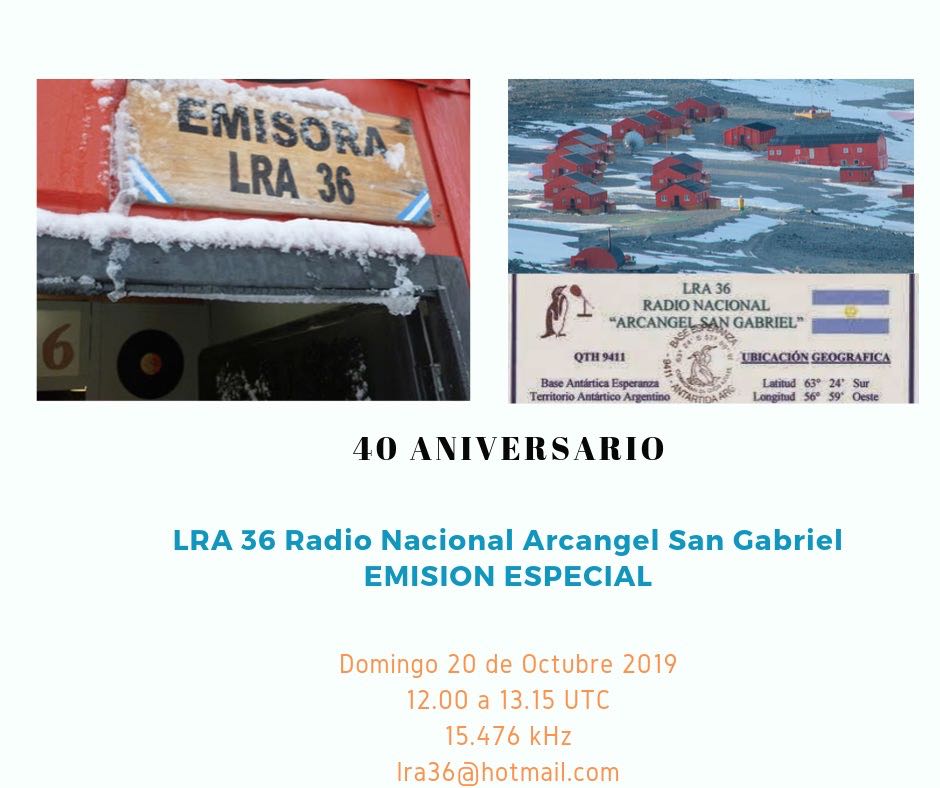
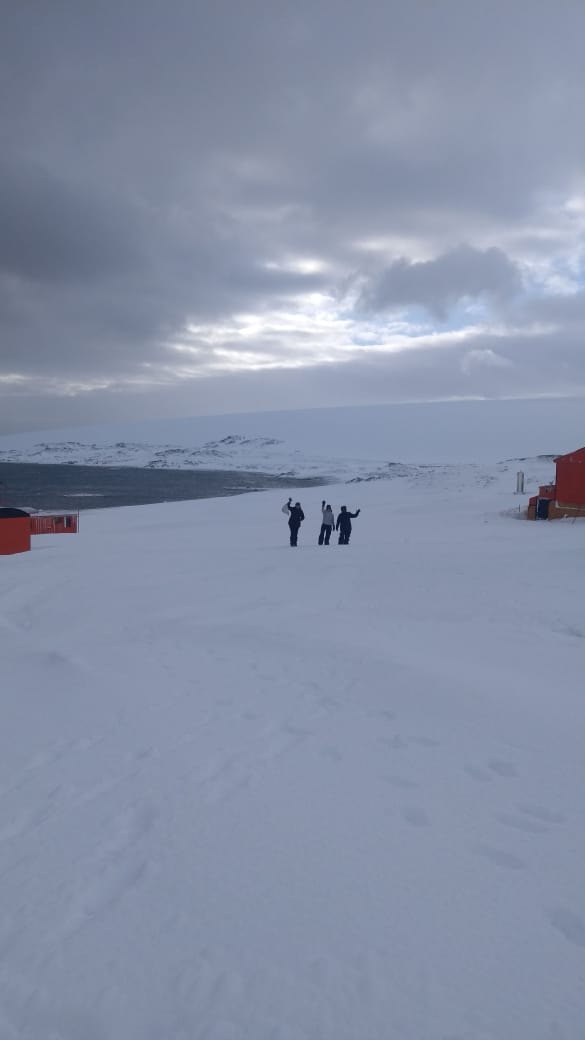
Many thanks to SWLing Post contributor, Adrian Korol, who shares the photo above and video below of the LRA36 crew heading to the broadcast building on the Argentine Antarctic Research Station this morning.
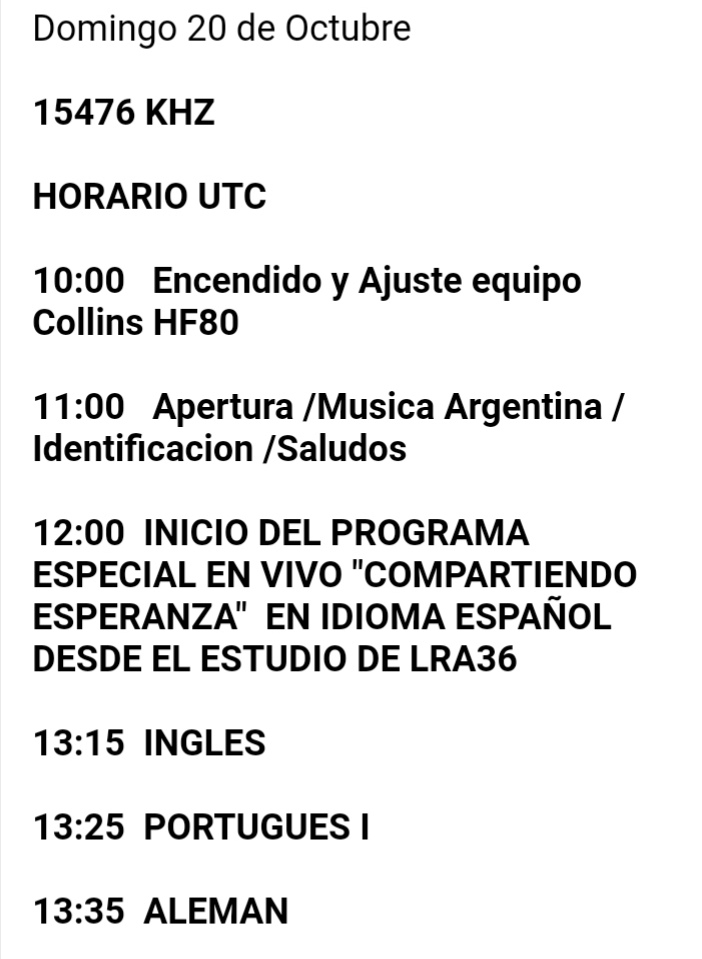
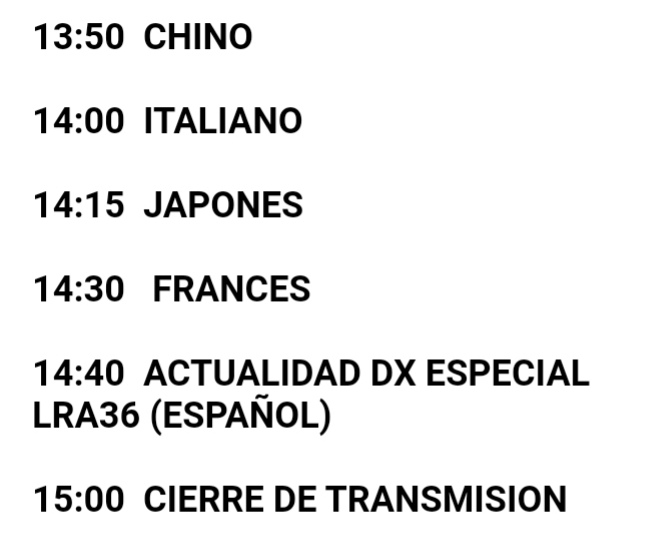
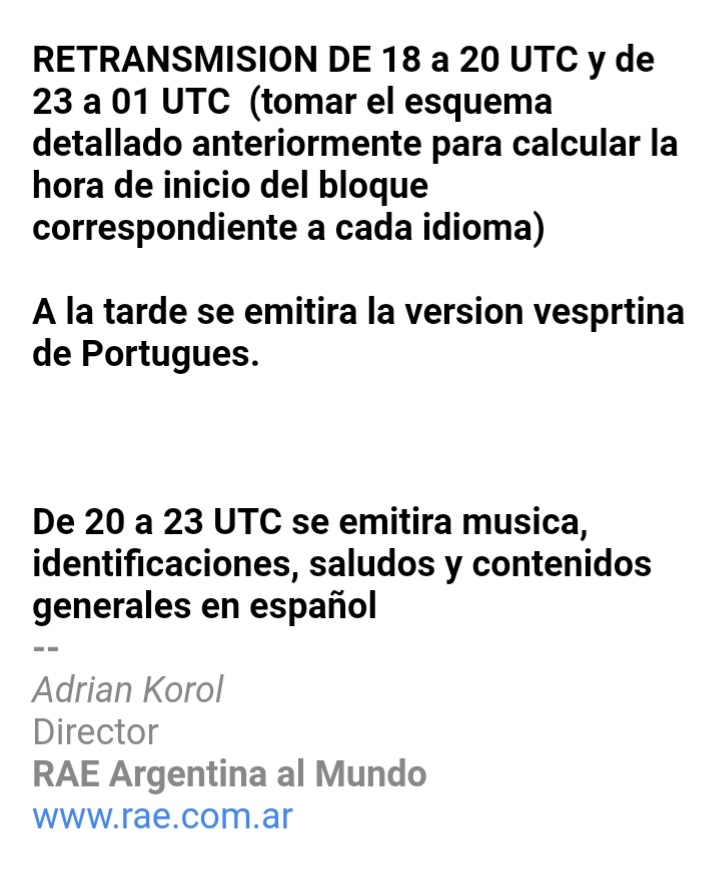
Adrian has also provided the following broadcast schedule (in Spanish) for the anniversary program:
This frequency has not yet opened to eastern North America, but I will be listening today, all day. I have noted that there are few KiwiSDR stations in South America available at the moment. No doubt, listeners are taking up the available seats in hopes of hearing the anniversary broadcast.
I suspect this may be one of the largest audiences LRA36 has broadcast to over its 40 years on the air!
Post Readers: If you manage to capture a good recording of the broadcast, I’d love to post it on the Shortwave Radio Audio Archive.
Many thanks to SWLing Post contributor, Lee, who writes:
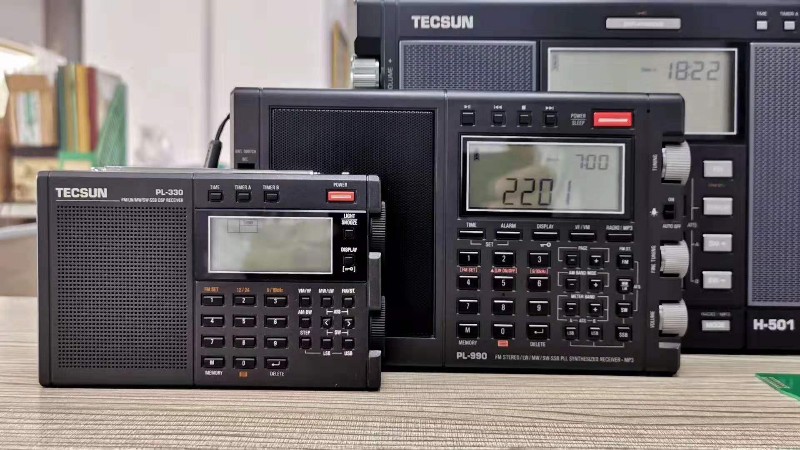
Hi Thomas, I just found this photo [above] on Reddit of three new radios from Tecsun: the PL-330, the PL-990, and the H-501. I knew about the PL-990, but I didn’t realize there was a PL-330 or H-501. Any inside info? 73, Lee
Thanks for your message, Lee. I had not seen the photo of the PL-330 until you sent this one.
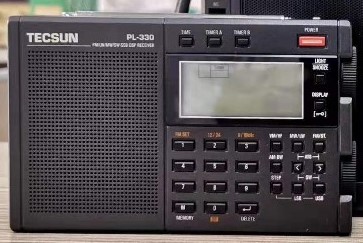
The PL-330, I assume, is the latest in the PL-3XX line which has primarily been DSP-based ultralight broadcast receivers. I believe only one model, the PL-365/CountyComm GP5-SSB, had SSB capabilities. The PL-330 appears to have dedicated LSB and USB mode buttons on the front panel (lower right in photo below).
Since both the Digitech AR-1780 and XHDATA D-808 both have selectable sideband, I’m not surprised the new PL-330 does as well. I’m very curious if the PL-990 will be priced competitively like PL-3XX models have been in the past–perhaps below $80 US.
The PL-330 certainly appears to have taken design cues from the PL-990 in terms of overall control layout.
The Tecsun H-501 is a new model that was previously referred to as the Tecsun S-9900. I believe a pilot run has been made of the PL-990 and H-501–possibly the PL-330 as well.
I will be reviewing each of these radios as soon as they’re available here in the US.
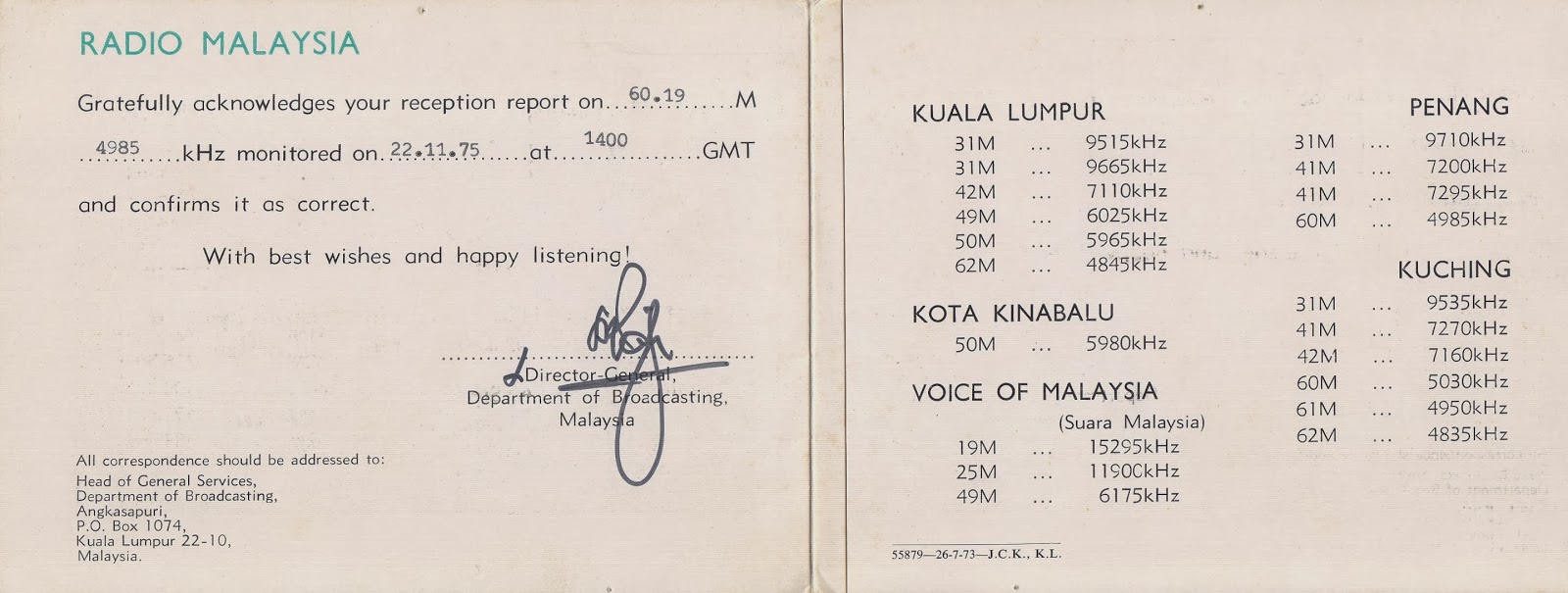
These were the shortwave frequencies RTM used in 1975. This is my QSL card for an RTM transmission originating from Penang, as received on Denver, Colorado. [Click images to enlarge.]
Most MW stations in Malaysia ceased operation after 2000. That said, a 750 kW MW station in Sabah remained operational as late as 2008, if I remember correctly. My guess is FM became more prominent thereafter.
Certainly here in peninsular Malaysia (Kuala Lumpur), particularly in 1987, we had six government FM stations. Sign-off was usually at midnight or 1 am, depending on the station. An annual license (tax) was issued for each radio owned.
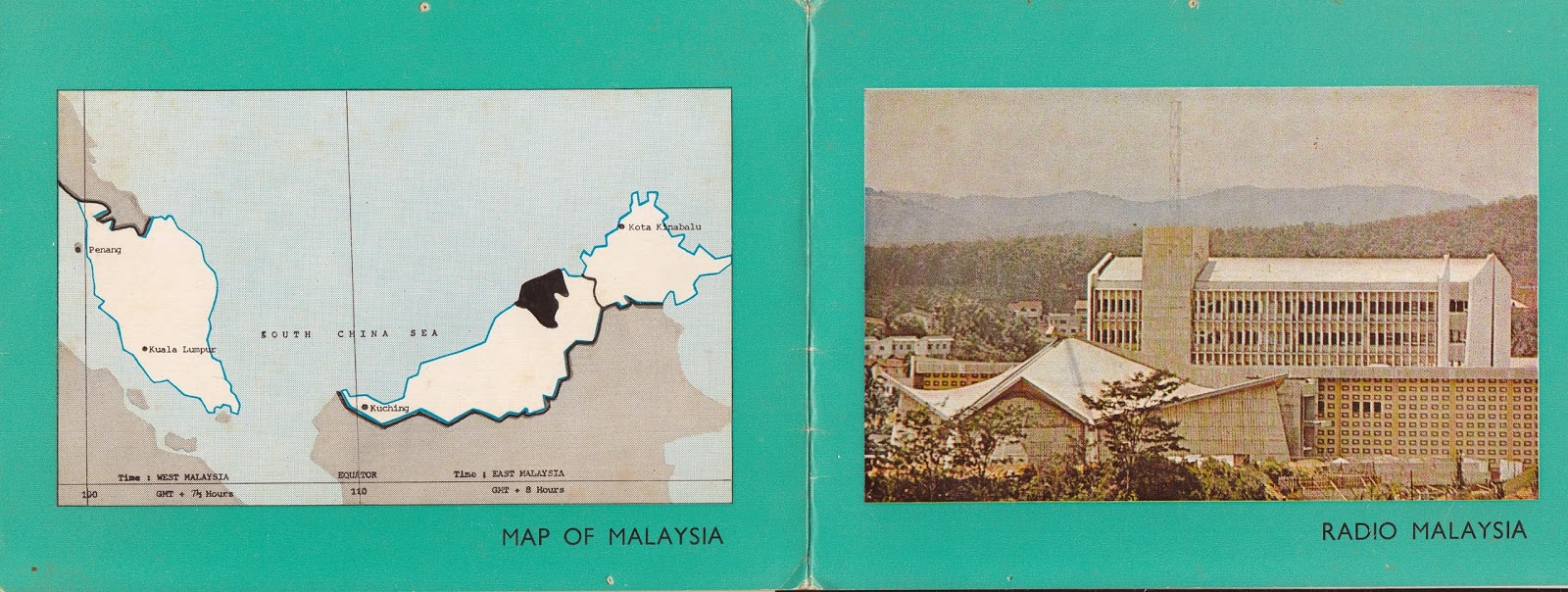
Note, the QSL card [above] appears to have first been printed in 1973, judging by the smaller date printed at the bottom of the card. It was one of the few folded cards I received in my DXing years from 1967 to 1980. It features three sections, folded twice and printed on both sides. The Angkasapuri studio in Kuala Lumpur, map and flag of Malaysia, caption about the country, transmitter sites and frequencies and verification data is depicted on it.
This particular card was issued for a reception report I posted on 22 November 1975, nearly 40 years ago. Unbeknownst to me then I had picked up Radio Malaysia via Penang, according to the frequency legend (4.985 kHz) stated on the card. I assumed it was Kuala Lumpur and, more importantly, I was excited to have logged a new country to my growing list of international broadcasters.
At the time I lived in Northglenn, Colorado — a suburb north of Denver. As I recall Radio Malaysia was usually received in the early morning hours between 5 and 8 am. Reception was always weak, yet music and speech was audible despite atmospheric noise.
The receiver I used was a Zenith Trans-Oceanic H-500, a 5 valve/tube radio originally manufactured in the early 1950s. The antenna was an inverted L, elevated at over 30 feet, spanning approximately 75 feet in length.
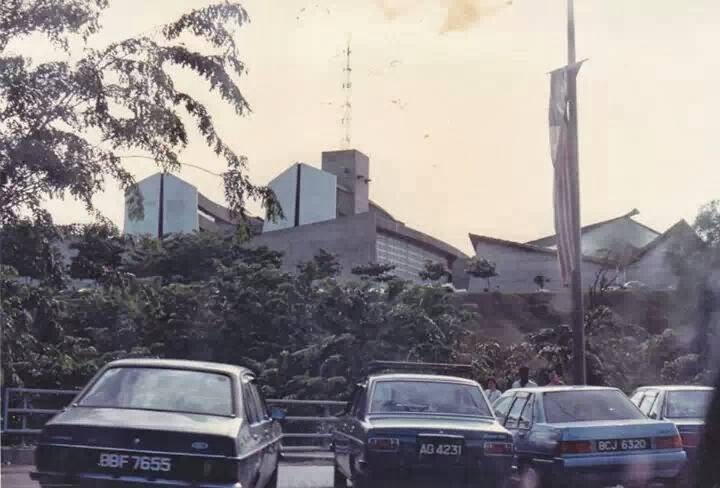
This is a photo of Angkasapuri, the RTM Headquarters in Kuala Lumpur, as it appeared in 1987. The HQ as changed very little since then:
Interestingly, the Australian Armed Forces had a radio station based in Penang in the late 70s-early 80s.
Wow–thank you for sharing your DXing experience with us! It sounds like the Zenith Trans-Oceanic H-500 served you quite well back then! What a classic set.
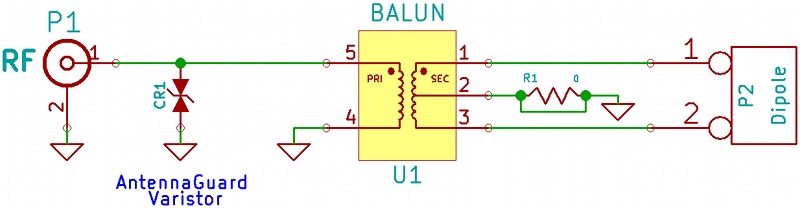
The new balun has the same schematic as the previous one:
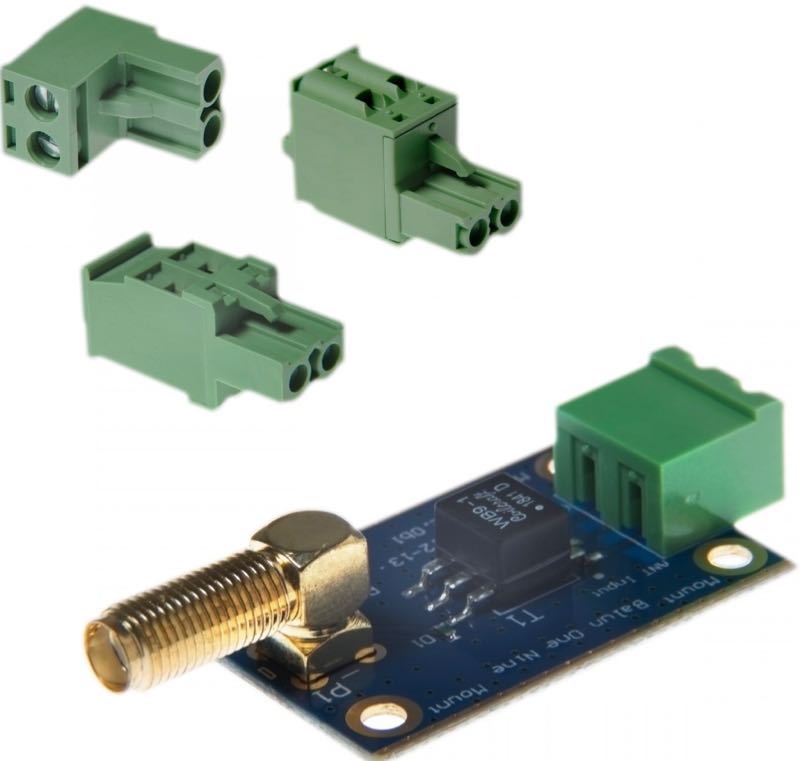
But it is slightly bigger, has a better connector for the antenna wires and (according to NooElec) uses a transformer which allows the tiny balun to work more efficiently from 0 to around 70 MHz (check out the charts found in the downloads section of this link).
The transformer used, judging from the pics, is a CoilCraft WB9-1, whose data can be found here:
As I wrote the reason for this was the fact that a friend of mine reported that he used the (v1) balun with a Loop On Ground (LoG) Antenna !
If you look at the schematic (above) you’ll notice that there’s a “jumper” labeled R1 (zero Ohm resistor). That tiny detail is important, see, leaving the balun as is, it will work fine with a longwire, one just connects contact #1 to the antenna and #2 to a counterpoise or ground system and there he goes, BUT there’s another way to use the balun, that is, CUT the “jumper” (ok, resistor) labeled “R1”. If you cut it, the balun will become a 9:1 isolation transformer and with such a modification will work just fine with the KK5JY “LoG”
antenna: http://www.kk5jy.net/LoG/
According to what my friend reported, the balun works just fine, and although probably the ferrite core used in the V1 isn’t up to par with the original one used by KK5JY, the difference isn’t so huge.
Oh, and I also suspect that the modified balun may work fine with the KK5JY simpler passive loop http://www.kk5jy.net/rx-loop/ which may be a nice antenna for restricted spaces!
I think it may be of interest to people not knowing/willing to wind their own baluns, at that point one may just need an enclosure to protect the balun and putting up a receive antenna will be as easy as 1-2-3.
Thank you for sharing this! Readers: Grayhat has been encouraging me to deploy a LoG antenna at my home and I do plan to do so in the coming months. Please comment if you use a LoG similar to the KK5JY model and what your results have been.
Many thanks to SWLing Post contributor, RonF, who writes:
Hi Thomas,
Thought you might like to give a heads-up to any readers using Yahoo! Groups that they plan to shut them down soon. I know there’s a lot of older hams & SWLs who rely on groups there, and Yahoo! have done a terrible job of notifying group admins and members of the upcoming change – while there’s a banner at the top of group pages announcing the members & admins of the shutdown, there’s been no contact with group admins, and the groups there I’m still on knew nothing of it until I mentioned it to them and pointed them to https://help.yahoo.com/kb/groups/SLN31010.html
Shutdown is due to start on 28th October – but I’ve been told that for European services it’s the 21st of October. Less than a week away…
After the last Yahoo! Groups outage/debacle most groups I followed moved over to Groups.IO. Very similar features, with free & paid service levels depending on the level of service/storage/etc/ required. As far as I know, all the groups I’m on that moved from Yahoo last time are existing happily on the free tier. Not an ad, not a recommendation, just an observation. 😉
Thank you for the heads-up, Ron! If you belong to an active radio discussion on Yahoo! Groups, contact your admin if you haven’t already been moved to Groups.IO.
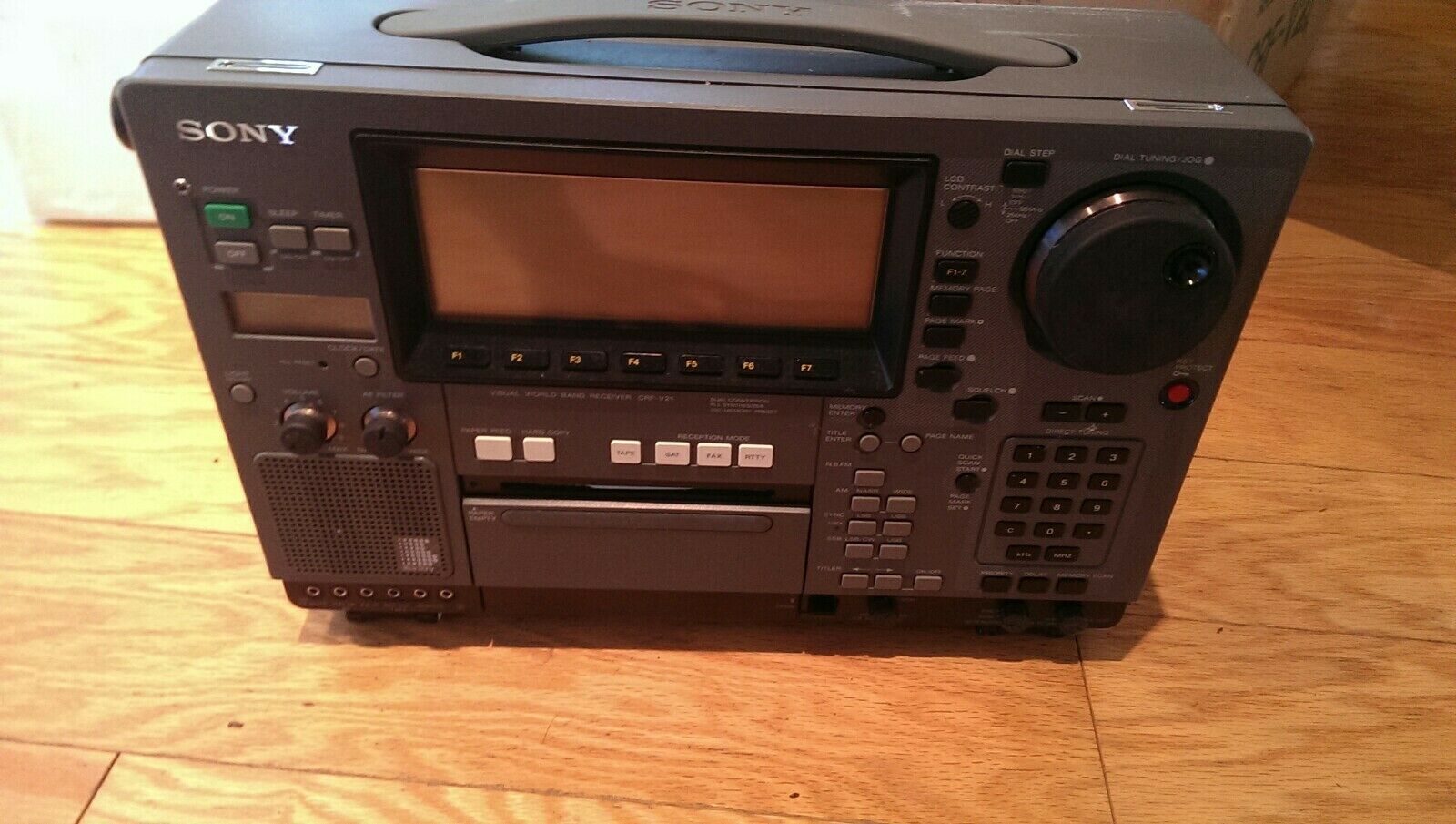
Many thanks to SWLing Post contributor, Dan Robinson, who notes that a Sony CRF-V21, which is essentially “new in box” is approaching a record price with active bidding on eBay. At time of posting, the price is $6,988.00 CDN. How high will it go? We will soon know. Bidding ends at 20:30 EDT (00:30 UTC).

 This frequency has not yet opened to eastern North America, but I will be listening today, all day. I have noted that there are few KiwiSDR stations in South America available at the moment. No doubt, listeners are taking up the available seats in hopes of hearing the anniversary broadcast.