The curious history of the Foxhall Transmission Station

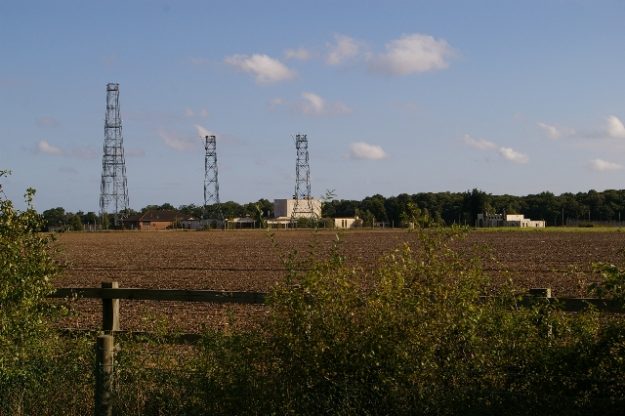
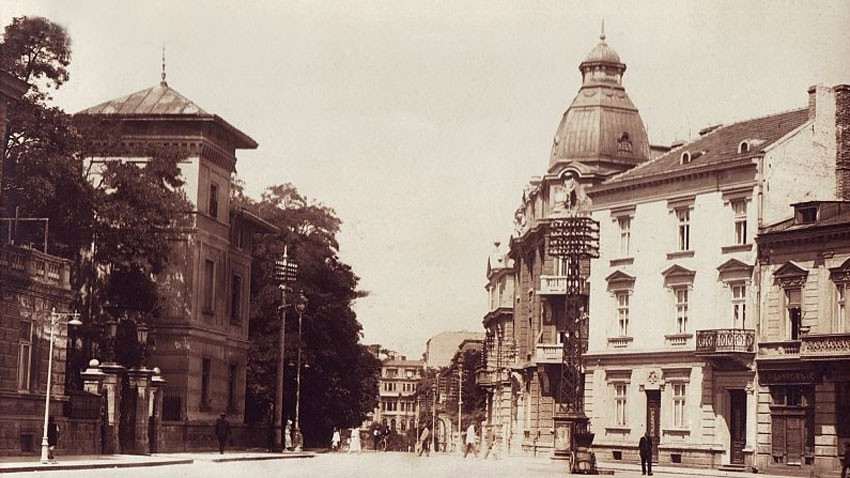
Foxhall Towers (Source: Steve from geograph.org.uk via Wikimedia Commons)

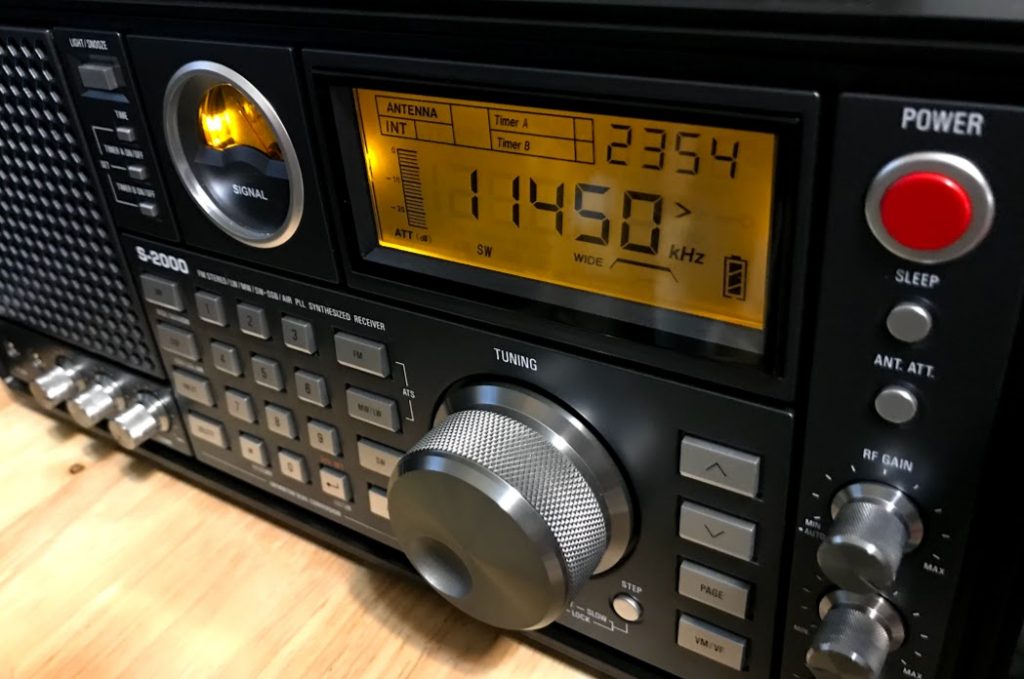
(Source: Southgate ARC)

John Norman writes in the East Anglia Daily Times about the Foxhall transmission site just outside Ipswich which played a key role in WW2 and the Cold War

Getting a coded signal back to the States, both during the Second World War and the Cold War, proved incredibly difficult. The solution was Operation Tea Bag: a scheme to connect telephone switching stations from across Europe, as far south as Italy, to Foxhall for forward transmission across the Atlantic.

Read the article at
https://www.eadt.co.uk/news/ipswich-icons-when-the-cold-war-was-played-out-right-on-our-doorsteps-in-suffolk-1-4947730

Representative from Nuku, PNG asks NBC to reintroduce shortwave

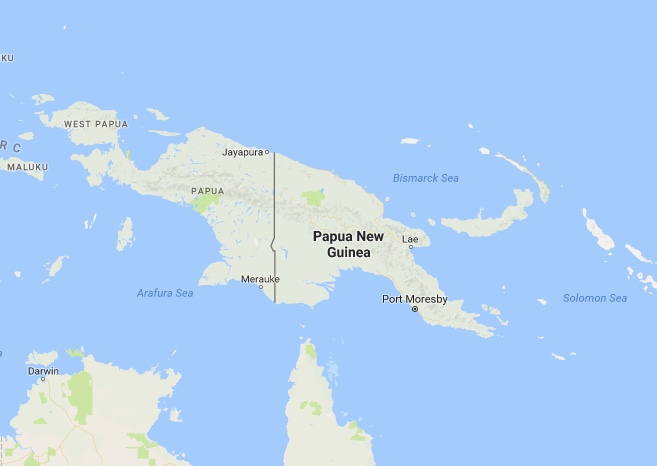
(Source: PNG Post Courier via Michael Bird)

Member for Nuku Joseph Sungi has called in the National Broadcasting Corporation to reintroduce the short wave band to reach the rural people.

Mr Sungi in a series of questions to Minister for Communication and Information Technology Sam Basil said in the late 1980s, the NBC at the time through the provincial radio stations was using the shortwave band.

He said Radio Sandaun in West Sepik could reach districts like Nuku and parts of Telefomin but that was not the case anymore.

“Does the minister and the department have any plans to make sure that same service under short wave band can be replaced by a new one or improvement can be made so that provincial radio stations can be revived and broadcasted straight so that remote parts of PNG can use to get news and update on what is happening around the country?” Mr Sungi said.

Mr Basil, who is also responsible for Energy, said a lot of people in the rural areas were asking the same question because they could no longer have access to NBC radio.

[…]“I have had discussions with the managing director of NBC and I told them that we want that service to return. We are now moving the system at NBC from analogue to digital so I asked them how we can fit in the short wave system when we do the migration.

“They came up with a few ideas. For some places like Bougainville shortwave is available.

“But I asked them how can we asked the shops to start selling shortwave 1 and 2 transistor radios that receive this wireless signal, a lot of shops are not selling, In places like Bougainville we want to import some radios to distribute so that they carry out the awareness.”

“We are now talking about bringing back these services and improvement.

“We will start in Port Moresby first and roll out to provinces, We are trying our very best to bring the service back because most of our people are in rural areas, A lot of our radio stations now invest into FM band which signals of often blocked by barriers like mountains that is why we want to bring back the shortwave band,” Mr Basil said.

Click here to read the full article at the Post Courier.

Frequency coordination news and IRDR updates

Many thanks to SWLing Post contributor, Alan Hughes, who shares this article by WRMI’s Jeff White in Radio World magazine. Besides covering updates in the A19 broadcast season, and Radio Exterior de España’s increased broadcasts, Jeff notes frequencies and updates for the International Radio for Disaster Relief initiative.

For more information about the IRDR, check out the information below taken from this page on the HFCC website:

International Radio for Disaster Relief (IRDR)
Humanitarian Aspects of HFCC Activities

From its infancy since 1920s shortwave radio has been associated with its potential of being a communication tool in emergencies. This use of shortwave radio is still very much present among amateur radio enthusiasts for example, who discovered its long distance properties early in the twentieth century. Amateur radio provides a means of communication on shortwaves and other frequencies “when all else fails”. This role of amateur radio is well recognised, valued and appreciated both by the public and by the world institutions managing and regulating the use of the radio spectrum.

In contrast the huge technical potential of international shortwave broadcasting that operates transmitter facilities tens, or hundred times, more powerful than those of amateur radio, remains almost unused in emergencies. At the moment when local and even regional communication and information networks are needed most, they are destroyed or overloaded and the population suffers from an information blackout. Shortwave radio is capable of remaining the only source of information.

Although the life-saving role of radio broadcasting is widely recognised by the public, and confirmed by surveys conducted after the recent disasters – and even acknowledged by world leaders – no concrete projects have been ever designed and no regulatory framework has been developed.

That is why the HFCC – International Broadcasting Delivery in co-operation with the Arab States and Asia-Pacific broadcasting unions are working on an International Radio for Disaster Relief (IRDR) project that is based on the system of online co-ordination of frequencies managed by the HFCC in accordance with International Radio Regulations.
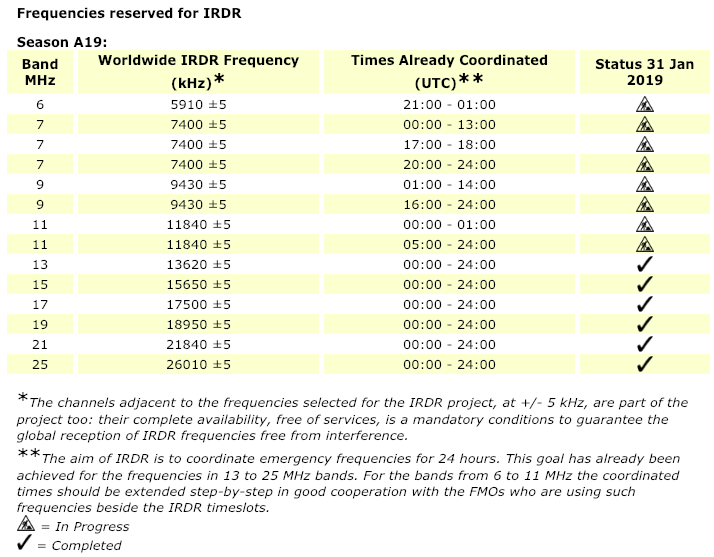
The HFCC is aware of the humanitarian aspects of international broadcasting. It pointed out in 2012 – as the UNESCO partner for the preparation of the World Radio Day – that terrestrial shortwave radio in particular is still considered as a powerful communication and information tool during emergency situations. Read more >>

Receivers are inexpensive and require no access fees. Shortwave radio is important for people living in remote and isolated regions of the world. It reaches across the digital divide to the most disadvantaged and marginalised societies. This is also in keeping with the Declaration and Action Plan of the World Summit on the Information Society.

The annual edition of the World Disasters Report of the International Red Cross and Red Crescent Societies (IFRC) issued in October 2013 stressed again that with only 6 percent of people in low-income countries using the internet in 2011 the digital divide is still stark, and access to low cost media technology is really the key.

The HFCC is a strong advocate for incorporating terrestrial broadcasting permanently on the disaster risk reduction agendas of the ITU and other UN agencies and institutions. It submitted two documents for the ITU-R Working Party 6A November 2013 meeting:

HFCC – The Importance of Terrestrial radio in International Broadcasting
HFCC – The International Radio for Disaster Relief Project

Both documents are annexes in Section 8 of the ITU-R Study Group 6 Report BT.2266 “Broadcasting for public warning, disaster mitigation and relief”. The report can be downloaded via this link.

A workshop was held during the November 2013 meeting addressing these issues. The web site of the Emergency Broadcasting Workshop can be accessed here. The web site also contains copies of all the presentations that were made at the workshop, and a Video interview with Christoph Dosch, Chairman of ITU-R Study Group 6 (Broadcasting service)

The HFCC has applied for membership in the CDAC (Communicating with Disaster Affected Communities) Network in keeping with the conclusion of the debate on emergency communication during the Bratislava B13 Conference. Read more >>

The HFCC is staying in touch with the Information and Communication Sector of the UNESCO agency on the preparation of the World Radio Days that are celebrated each year on February 13th.

Humanitarian aspects of terrestrial broadcasting were also on the agenda of the Global Kuala Lumpur conference in January 2014. Read Opening Remarks.

Updates from Radio Bulgaria

Many thanks to SWLing Post contributor, David Iurescia (LW4DAF), who shares the following:

I’m sending you two interesting articles from the renewed website of Radio Bulgaria:

The Bulgarian National Radio has changed its home four times (01/25/19):

Many attempts have been made to tell the story of the Bulgarian National Radio but usually, in an effort to present a concise version, we fail to mention some curious details that would sparkle the interest of anyone keen on the history of this country. Over the course of its existence, the Bulgarian National Radio has resisted many changes that transformed Bulgaria over the past eight decades.

What is considered to be the official start of radio broadcasting in Bulgaria? It happened in the remote 1929 and consisted in the construction of a 60-watt radio transmitter by a group of engineers. The desire of the enthusiastic members of the radio amateurs club called Rodno Radio (Native Radio) to create a radio program was supported by the state authorities, which allowed them to use a small building on the corner of the central Sofia streets Moskovska and Benkovski.

Soon, however, it became clear that the available equipment was insufficient to reach a larger audience, and a team of local engineers took up the challenging task to build a more powerful transmitter. Another problem arose as the people working on the radio programs increased and the building soon turned out to be too small to accommodate all. Therefore, with the permission of the state, the amateurs moved and occupied an entire floor of a building on 19 Moskovska Street. After radio broadcasting was made a state monopoly with the decree of Tsar Boris III in 1935, the Bulgarian radio began developing at a rapid pace. In addition to the Bulgarian language broadcasts, the year 1936 saw the start of overseas emissions – first in Esperanto, and several months later, also in French, German, English and Italian, the foreign service department of the radio known today as Radio Bulgaria. […]

Read the full story at Radio Bulgaria.

BNR marks its 84 the birthday and 90 years since first radio broadcast in Bulgaria (01/25/19):

Radio Bulgaria reaches users in more than 150 countries through its internet pages in Bulgarian and nine foreign languages, which is an excellent achievement, Boyko Stankushev who works as analysts at the Programme Department of the Bulgarian National Radio pointed out.

Highest number of people using Radio Bulgaria’s web sites is registered in Germany. The users in North Rhine-Westphalia, Bavaria, Baden-Württemberg and Hessen are most active. In the United Kingdom highest number of users is registered in London, followed by Manchester-apparently the people living in these two British cities show specific interest in the information published on the web sites of Radio Bulgaria’s foreign language sections. When it comes to Bulgaria’s neighboring countries Turkey is the undisputed leader in terms of the number of visitors in Radio Bulgaria’s site. I would underline that many people in this country visit the Bulgarian pages of the Bulgarian National Radio, including the Bulgarian web page of Radio Bulgaria. Istanbul is the leader in this ranking, followed by Ankara, Bursa and Izmir. Radio Bulgaria has users in some smaller Turkish towns such as Mu?la and Tekirda?. I believe that the Bulgarians studying at the local universities are regular users of Radio Bulgaria’s content and read both in Bulgarian and Turkish.

In 2018 the interest in Radio Bulgaria’s content by US users increased. The number of visits in publications in English was very high, followed by visits in Radio Bulgaria’s Greek and Spanish page from North and Latin America. In the USA the highest number of visits was registered in Illinois, which is not surprising, because of the huge Bulgarian community living in Chicago. In California huge internet activity was registered in areas with large technological parks and highly-educated people, i.e. we are talking in this case about a very high-quality audience.[…]

Click here to continue reading this full article at Radio Bulgaria.

Thank you, David!

Your message prompted me to find a recording I made of the final Radio Bulgaria broadcast on shortwave which, coincidentally, happened seven years ago today!

Click here to listen to Radio Bulgaria’s final shortwave broadcast.

Sony ICF-SW100: Whip vs. DE31MS active vs. Sony AN-LP1

Click here to view on YouTube.

Guest Post by: Troy Riedel

It’s been a while since I posted a video on my YouTube Channel (but I’ve gotten the urge to make several more videos as I’ve been recently comparing my equipment – 16 portable receivers & many antennas).

I try to tune in to Radio Prague via WRMI on many weekday East Coast USA mornings from 1300-1325 UTC. Yesterday I encountered bad propagation but today was much better.  The video linked to this post is from today – 30JAN2019 recorded around 1310 UTC.

[Sorry, no tripod for this one]

People often ask, “are amplified antennas helpful” – as evidenced by this post from Thomas from a few years ago.

Without repeating the debate, just take a look at this one example.  As stated, reception was pretty good today off the little whip – but – there is an improvement using an amplified antenna.  My question: is there a difference between the two amplified antennas?  And if so, is the difference worth the price?

My TG34 is a clone of the DE31MS – purchased from Tquchina Radio & Component (ebay user: Tao Qu … they used to have an eBay store “Sino Radios” if I recall, but they stopped selling on eBay when the Post started cracking down on shipment of batteries – I actually exchanged an email with a frustrated Tao Qu when they closed the store).

I paid about $21 if I recall for my TG34 (the DE31MS is available today on eBay for as little as $17.28).  I paid over $100 for the Sony AN-LP1 (out of production now and can be listed for as high as $300 on eBay).  So … $21 versus “over $100”.  Is there a difference – and if so – is it 5x the difference – 5x better?!

You be the judge.

P.S. Just a quick slightly over 1-minute video recorded inside my house (sitting in my breakfast nook) … typically “okay” reception but not my usual Listening Post.

FTIOM & UBMP, February 3-9

From the Isle of Music, February 3-February 9, 2019:
This week, our special guest is vocalist Emilia Morales, who will speak with us about her career and share some music from her new album Sentimientos. Also, some charanga for dancing.
The broadcasts take place:
1. For Eastern Europe but audible well beyond the target area in most of the Eastern Hemisphere (including parts of East Asia and Oceania) with 100Kw, Sunday 1500-1600 UTC on SpaceLine, 9400 KHz, from Kostinbrod, Bulgaria (1800-1900 MSK)
2. For the Americas and parts of Europe, Tuesday 0100-0200 UTC (New UTC) on WBCQ, 7490 KHz from Monticello, ME, USA (Monday 8-9PM EST in the US).
3 & 4. For Europe and sometimes beyond, Tuesday 1900-2000 UTC and Saturday 1200-1300 UTC (New CETs) on Channel 292, 6070 KHz from Rohrbach, Germany.

Uncle Bill’s Melting Pot, February 3 and 5, 2019:
Episode 98, Boricuas, presents some wonderful Puerto Rican & Nuyorican music of the 60s and 70s.
The transmissions take place:
1.Sunday 2300-2330 UTC (6:00PM -6:30PM Eastern US) on WBCQ The Planet 7490 KHz from the US to the Americas and parts of Europe
2. Tuesday 2000-2030 UTC on Channel 292, 6070 KHz from Rohrbach, Germany for Europe. If current propagation conditions hold, the broadcast should reach Iceland AND Western Russia due to a long skip.
Also recommended:
Marion’s Attic, a unique program produced and hosted by Marion Webster featuring early 20th Century records, Edison cylinders etc played on the original equipment, comes on immediately before UBMP on Sundays from 2200-2300 UTC on WBCQ 7490 Khz.