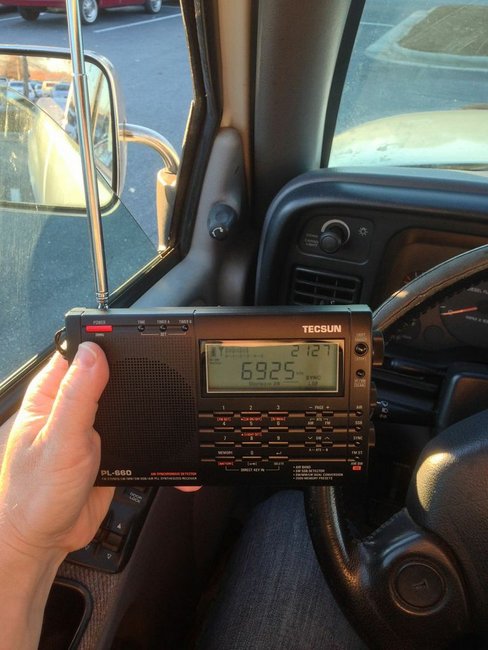
The following article originally appeared on The Radio Kitchen blog by Michael Pool, a.k.a. “The Professor.” In an effort to preserve his writings and recordings, we are republishing The Professor’s archived posts in a special collection here on the SWLing Post.
Note that not all of the original links and recordings could be recovered, but the majority have been.
Of course, all of the views and opinions in this article were those of The Professor.
“Down Under, Up And Over” was originally published on November 30, 2007.

Down Under, Up And Over
by The Professor
When get to fooling around with a shortwave radio I usually don’t have much of an idea of what I might come across, or where the broadcasts I may find will come from. If you happen to be hunting up something originating (or relayed) from a hot nearby transmitter, shortwave listening is almost as predictable and practical as AM or FM However, the real fun in scanning these forgotten bands is hunting for broadcasts from far-flung regions of the globe. It’s all about surfing those skywaves.
Instead of patiently scanning a SW broadcast band, this particular evening last July, I was quickly scanning several bands with my Degen 1103 looking for something, ah… exciting.
Okay, maybe “exciting” is the wrong word. I was fishing to find some exotic broadcast from far away, and preferably one in my native tongue. I’m sure there are other shortwave listeners who know what I mean. What gets my attention right away when 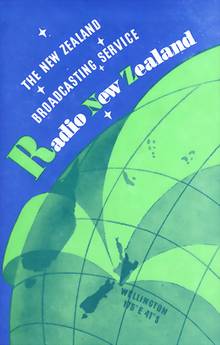 trolling the HF bands is coming across an unfamiliar English language broadcast on a carrier marked by the scars of bouncing off the upper atmosphere a few times. Sure, It’s important that the reception has enough clarity to be understood, but shortwave radio waves from far over the horizon are infused with the sounds of the electrical and magnetic activity surrounding our planet. The audio itself often has an edge, even when listening with agile and fancy receivers. An aquired taste, the sonic anamolies of distant shortwave broadcasts have an inate musicallity, which you may appreciate once your ears adjust to them. And the last time I heard the clear mutated throb of a strong distant transmitter traversing the globe was last July. I was sitting under the stars in the Michigan countryside when from over eight-four hundred miles away, New Zealand came calling.
RNZI (Radio New Zealand International) doesn’t seem to have any worldwide coverage mandate like CRI (China), the BBC or VOA or something. Their main purpose is as a regional service for the South Pacific. Dotted with a scads of far-flung islands, their broadcast zone actually covers a huge swath of the Earth’s surface. So just by making a point of covering this region well, RNZI is a major player in international broadcasting. (And sadly, I can’t remember when I picked up the BBC World Service as well as I heard New Zealand RNZI that evening.)
From my casual and primitive DXing experience, many powerful shortwave stations from around the world can be picked up from Eastern North America, as long as the signal doesn’t originate from anywhere directly blocked by the massive mountains of the top three quarters of the North American Continental Divide.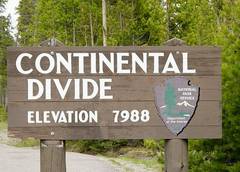 In other words, with a booming transmitter from the closer sections of Europe, Africa, the Middle East and South America are the most likely catches from overseas. Deeper into these zones and continents (and Asia in general) are difficult terrain for DXing rewards from here. That said, with my limited portable equipment I’ve been able to pick up signals from at least three of the major broadcasters from the Southern Orient– India, Australia and New Zealand. I’ve always assumed that these signals ride skywaves over the lower mountains of the Southwest and Central America. But I’m no expert.
I do know that all the overseas states located directly west of the tall Rockies who are serious about reaching US citizens via shortwave rent relay transmitter time from Canada, as well as sites in the Carribean and Europe). In fact, if you happen to come across international broadcasts from Vietnam, China, Japan, South Korea, Taiwan or Thailand on shortwave in Eastern North America, you’re probably hearing a relayed transmission from several hundred miles away. But the recording I’m offering here is of reception from from far across the world. Considering the distance travelled, the reception here is fairly healthy. A little hairy, but practical. And there’s no local RF noise getting in the way. You really can hear the details it if you pay attention.
Radio New Zealand International pt 1 – 9615kHz – 07-07-07 0644 UTC 15:05
 This first bit is an interview with Canadian chemist and author Penny LeCouteur discussing her book about molecules that have changed the world. Of note here– the legacy of how James Cook and ascorbic acid made the south seas safe for European explorers and colonists.
Then the cassette came to an abrupt stop, and the part two of this recording begins with the flip of the the tape. At the onset of this archive the interview is aborted in mid-sentence and a female announcer formally announces that Radio New Zealand International is closing on this frequency. After twice insisting that I “re-tune to six-zero-nine-five kilohertz in the forty-nine meter band” (followed by a clipped “This is New Zealand”), it all sounds so damn official that I felt compelled to follow the instructions. Although I knew that just because RNZI was booming in on 31 meters didn’t necessarily mean it would come in so strong (or might even be heard) on the 49 meter band.
You hear RNZI’s interval signal (the call of the New Zealand Bellbird) after the station ID, and then the signal at 9165kHz goes dead. I then put the tape deck on pause and punch up 6095 kHz on the Degen and release the pause button. And there it was! The call of the Bellbird is quite clear there as well, although a nearby signal is chewing on the edges of the reception a bit.
Radio New Zealand International p2 2 – 9615 & 6095kHz – 07-07-07 0658 UTC 28:55
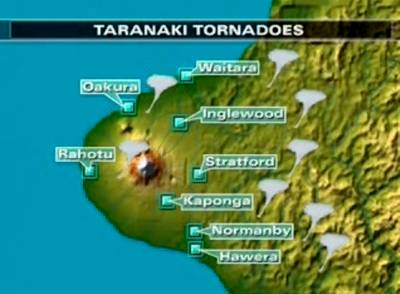 Whoever is running the board down there in the South Pacific was a little sloppy that night. After the interval signal the board-op starts to pot up the interview again (which is still running on one of the channels). But the mistake is corrected in a fraction of second, and it’s the news with Phil O’Brien. The lead story, a nationwide “Drunk Drive Blitz” the night before had netted over two-hundred inebriated kiwis on the highways down there. And an update on the aftermath of an unprecedented swarm of tornados that ravaged the North Island a couple of nights earlier.
After the news, it’s the beginning of a program I can barely believe I’m hearing in 2007. A faux flapper-era theme song launches a “nostalgia packed selection of favorites” that will saturate the skies of Oceania for the next four hours. While I love a lotta old music, the whole idea of “nostalgia” can get a little silly. Although I must say that old Joe Franklin used to pull it off with some charm on WOR here in New York City before he gave up the show a few years back. It’s really an approach to radio that’s all but dead here in the states. But apparently not in New Zealand.
 As you’ll hear if you brave through this chunk of pulsing and buzzy DX radio, there are a couple of corny numbers to wade through. But I gotta tell you, that sitting outside in the middle of the night with an artifact-drenched AM signal from the other side of the world filling my headphones, it felt reassuringly twentieth-century. Maybe you’ll hear what I mean. And the Paul Robeson and Mills Brothers seemed quite appropriate.
I guess a little nostalgia isn’t so bad.