Shortwave listening and everything radio including reviews, broadcasting, ham radio, field operation, DXing, maker kits, travel, emergency gear, events, and more
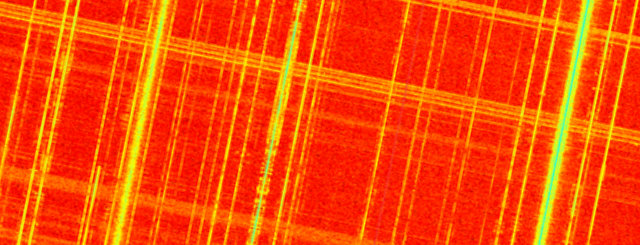
Between 1600 – 2015 UTC on August 21, 2017, as the solar eclipse swept across the nation, I captured much of the lower 2 MHz of the radio frequency spectrum. I used a Microtelecom Perseus SDR, a 130? inverted L with four radials, and lots of disk space. In doing so, I have created a permanent record of this portion of the RF spectrum during the solar eclipse.
I am making the spectrum capture files available for your analysis and research. Each file contains a 5 minute segment. If you download a group of files, they will play in succession.
You can use the demo version of the Perseus software or any other software that can read the Perseus data, such as Linrad or HDSDR. You cannot use just an audio player to play the files, even though they have .wav extentions.
Should you perform any analysis or otherwise make use of the files, I’d like to hear from you in the comments below.
Special thanks to Jav, K4JH, for donating the bandwidth for this effort.
Many thanks, Dan and Jav for making these files available for download! Someday, if I can find the bandwidth and space to upload them, I’ll also share the spectrum recordings I made.
The flea-powered Ozy Radio has begun testing on 5045 kHz in the 60-meter band. First noted here in Australia on August 28, the station has been missing for several years from its former 3210 kHz allocation. The location has been reported as Razorback, New South Wales, but I have not been able to confirm this yet. The transmitter power and the type of antenna are also unknown at this time. Observations by myself and other Australian listeners have noted the station operating between 0600 and past 1300 UTC.
The signal into Mount Evelyn, Victoria (at a guess, about 800 km from the reported transmitter site) is very strong – about 10 dB over S9! This is a much better signal than was ever heard on the old 3210 outlet. Whatever has been done at the station appears to be working very well! I believe there could be a very good chance that Ozy Radio will be heard internationally!
The current programming consists of test transmission announcements, relays of the Australian Independent News service, and continuous antique pop music from the 50s and 60s. Cheekily, the station is also using the Radio Australia interval signal, while the RA kookaburra also fires off every now and again throughout the broadcasts. I’m not sure how the ABC feels about that!!
Here is a short video I prepared of the test announcement and email address given out at 1356 UTC.
Good luck with hearing Ozy Radio!
Rob VK3BVW
UPDATE: The current power output is 500w and the location is confirmed as Razorback, near Camden approx 45 km southwest of Sydney. Thanks to John Wright for the eQSL statement and information. John also reports that reception reports have been received from as far away as Germany.
Rob Wagner, VK3BVW, is the author of this post and a regular contributor to the SWLing Post. He also blogs at the Mount Evelyn DX Report.
My schedule last week made it impossible to carve out the dedicated time I needed to begin an S-8800 evaluation.
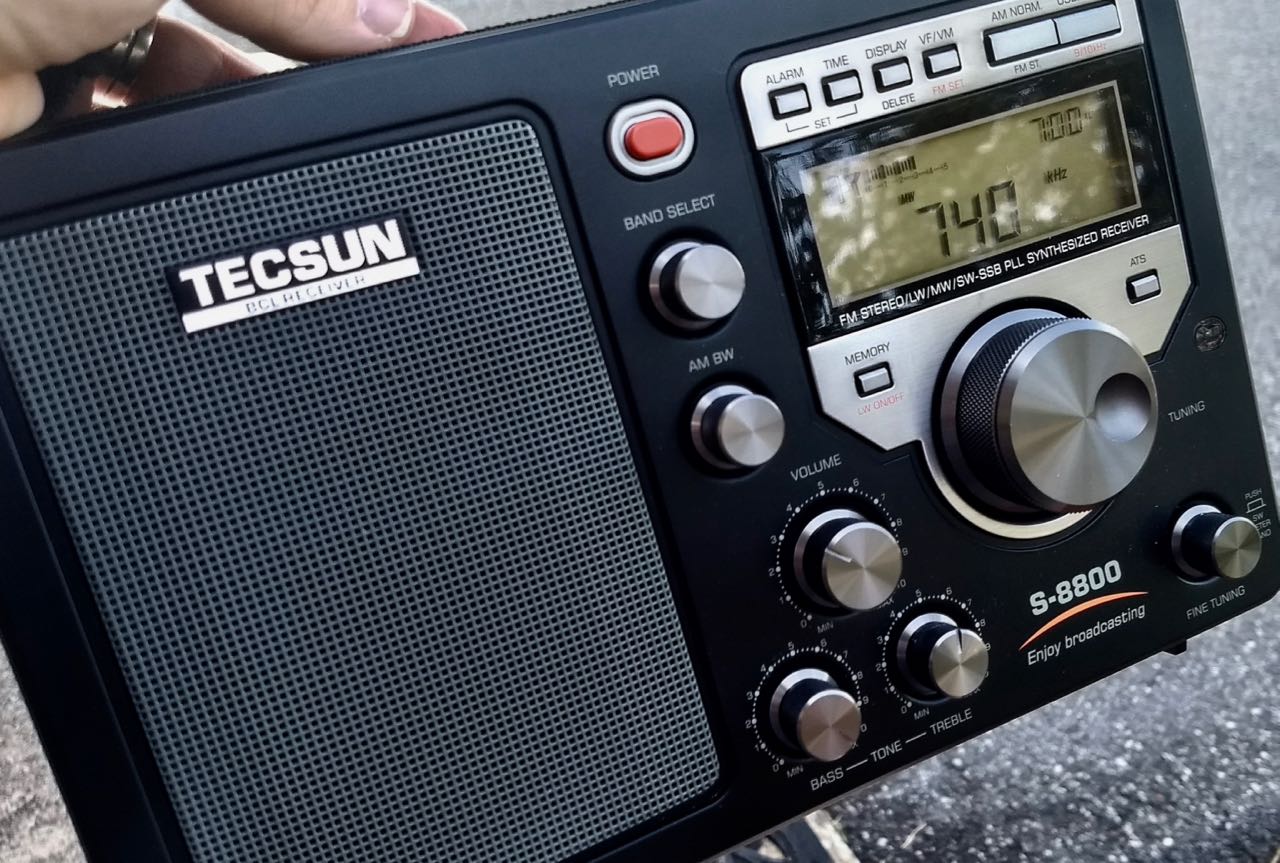
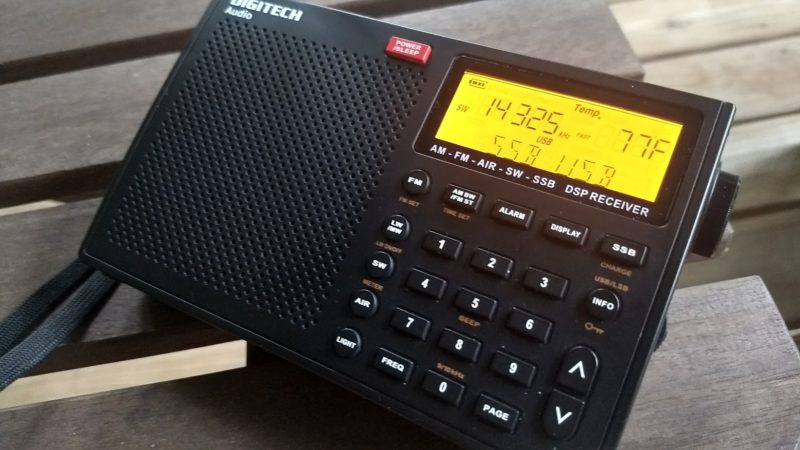
Yesterday, however, I spent the afternoon with my family at Richland Balsam, the highest point on the Blue Ridge Parkway (6,000′ ASL) and a completely RFI-free zone. I brought the Tecsun S-8800 and a few other portables along for the ride–namely the Digitech AR-1780, the C.Crane CC Skywave and the Panasonic RF-2200.
I had just enough available space on my smart phone to record this one short video:
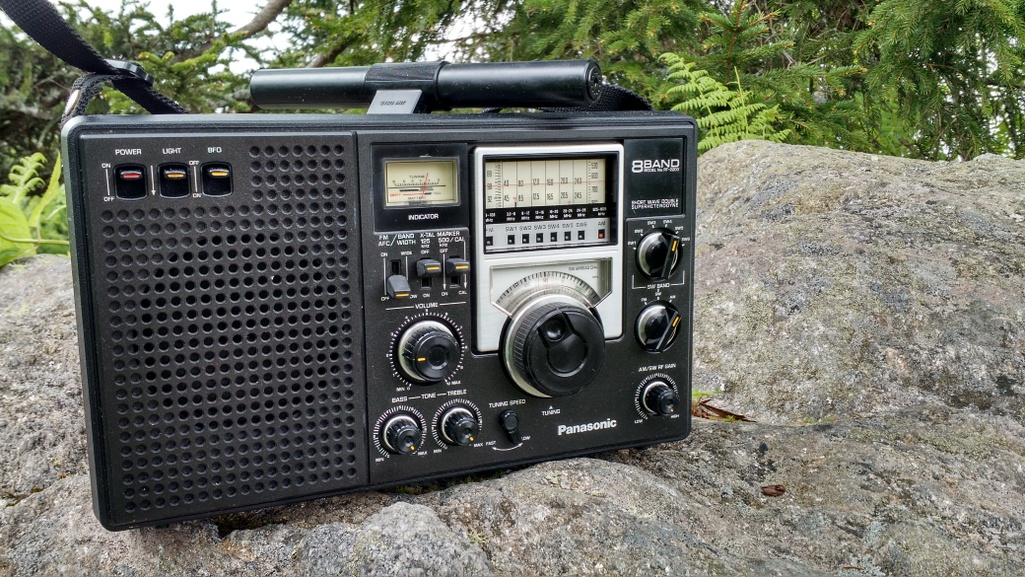
Let’s be clear: comparing any modern radio with the RF-2200 on mediumwave is hardly fair.
For one, the RF-2200 has been out of production for a few decades.
Secondly (what I never finished saying in the video is that) the RF-2200 has a large rotatable ferrite bar antenna that provides excellent gain. The RF-2200 simply wipes the floor with all of my modern portables as their ferrite bar antennas are a fraction of the size.
In other words, the RF-2200 was engineered to rule mediumwave like a boss.
On shortwave, the RF-2200 does a fine job, but isn’t nearly as accurate and stable as modern DSP receivers.
Spoiler alert
Still, as the video indicates, my final review of the Tecsun S-8800 will indicate that it is not a receiver for the serious Mediumwave DXer. It’s been my experience that few shortwave portables are excellent on both HF and MW.
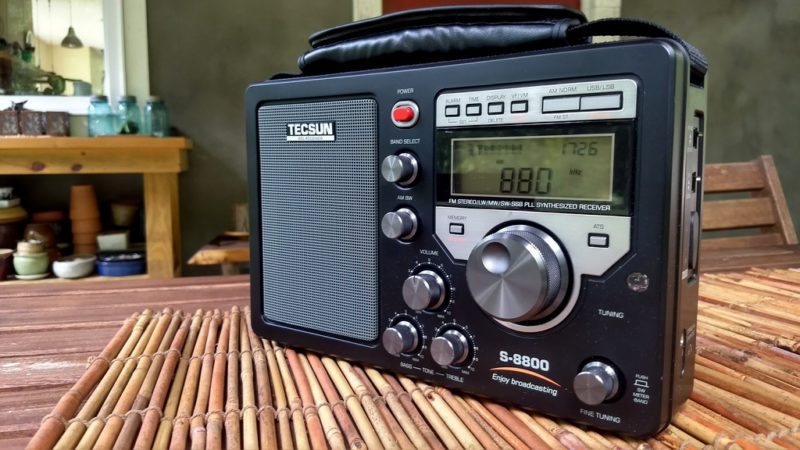
At home, tuned to local station 880 AM.
Of course you can’t tell from the video, but the S-8800 actually sounds brilliant when tuned to a relatively strong/local AM station, but either a lack of sensitivity or internal noise makes MW DXing a challenge.
I spent the better part of two hours yesterday evaluating its daytime MW performance–the video is pretty indicative of my findings. The S-8800 struggles with weak stations, but does a fine job with strong ones. It’s overall audio fidelity almost matches that of the RF-2200 when tuned to a strong broadcast. I’ve yet to test evening MW
The S-8800 still has some birdies on MW, but they’re not the loud warbling kind found on the previous model. Tecsun did properly address this, though in full disclosure, I haven’t fully explored the shortwave bands yet.
Shortwave?
I suspect the S-8800’s performance on shortwave will be much better than mediumwave because the previous S-8800 showed excellent results. As long as sensitivity wasn’t harmed while addressing the DSP birdies, I expect it’ll give the PL-880, PL-680 and Sony ICF-SW7600GR a run for their money.
Still…the lesson learned yesterday?
The Panasonic RF-2200 is the indisputable champion of mediumwave!
There’s a quick and dirty video review of the AR-1780 by Peter VK3YE, which highlights a few interesting quirks (if that’s the right word!) with this receiver. Some birdies, specs that don’t appear accurate, and a query over one of the bandwidth settings. Well worth a look!:
Peter (VK3YE) has done an excellent job indeed summing up the AR-1780–his notes and comments mirror my own. I would have never caught that oddity with the 1.2 to 1 kHz bandwidth reversal.
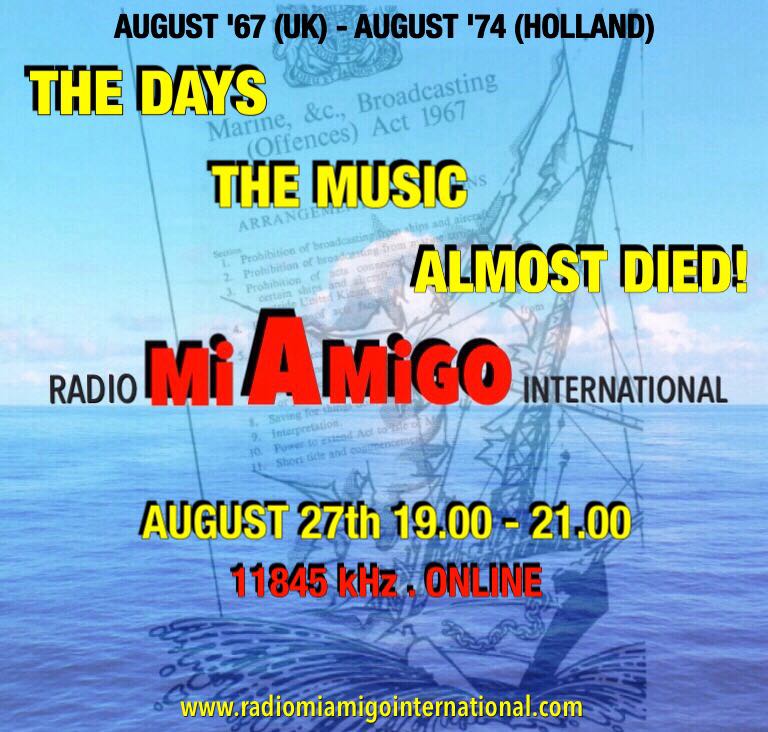
Radio Mi Amigo International presents a very special live broadcast remembering those days ‘the music almost died’. We remember Aug. 1967 (UK) and Aug. 1974 (Netherland) when the MOA (‘Anti-Pirate-Law’) became law in those countries and stopped most of the offshore stations. We remember with the songs from that time and some original recordings.
The show will be aired on August, 27 from 19 – 21 hr CET (17 – 19 hr UTC) on 11845 kHz in the 25m SW-band with 100 kw of power all over Europe and also online on our webstreams.
Man-made RF noise levels have increased dramatically at my place in the past six months. It has become much harder to hear weaker shortwave signals. Even the stronger stations are getting covered in all types of hash from all manner of electrical appliances.
So, I have been looking at ways to reduce the noise problem. I’m currently researching a few possible solutions, including trying a different antenna.
The HF horizontal loop has been around for many years now, but it’s a new antenna for me. I’ve never had a need to try one…..until now! There is some documentation out there praising this antenna’s low noise capabilities. So, it was time to find out for myself and start building an experimental version. So far, the results have been really quite pleasing!
I have prepared a YouTube video (below) in which I discuss the reasons for looking at this antenna, its design, and its installation. I also do some on-air comparisons of my experimental rectangular (!) version of the horizontal loop against my three regular double bazooka (coax) dipoles and the Par SWL End-Fed antenna.
Have you tried this antenna before? Your thoughts and feedback would be most appreciated.
73 and good DX to you all,
Rob VK3BVW
Rob Wagner, VK3BVW, is the author of this post and a regular contributor to the SWLing Post. He also blogs at the Mount Evelyn DX Report.
With travels, solar eclipse events and family activities this week, I’ve had very little time to play radio.
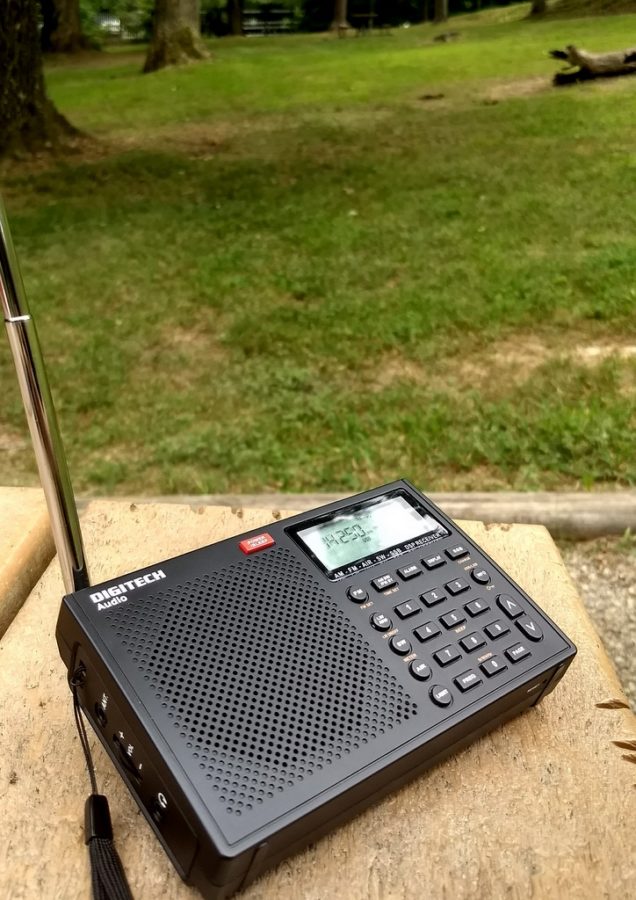
Yesterday was a gorgeous day though, so I took the family to the Blue Ridge Parkway and (of course) packed a couple portable radios.
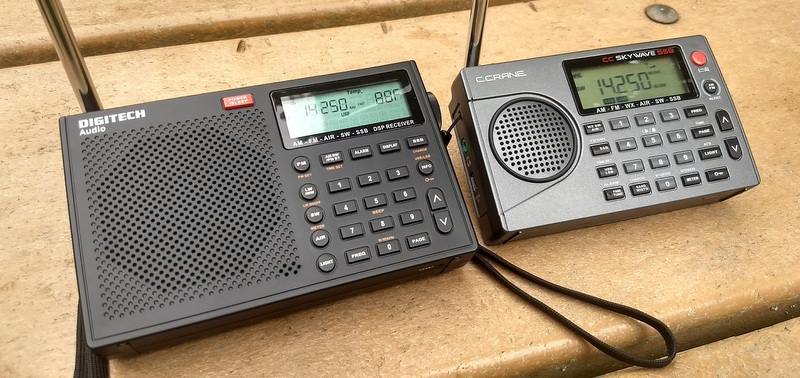
While we all enjoyed a picnic, I pulled out the AR-1780 with the intention of exploring its SSB performance and audio fidelity. I found an Islands On The Air (IOTA) activation with a decent pileup on 14,250 kHz.
Overall, I’m very pleased with the AR-1780 on SSB. The noise floor is pretty low, the filter selections are handy and the overall audio is comparable to slightly larger portable radios.
The dedicated fine tune control is quite handy, even though it’s oddly located on the right side of the radio (where one typically finds a volume control).
I’m putting together a short review of the AR-1780, but will need more air and comp time before I form any firm opinions.
For readers that have made it this far down the post, you might recognize a yet-to-be-released portable next to the AR-1780. Of course, I’m comparing it with the AR-1780 and its predecessor, but it’s not a production run unit (yet!), so I can’t comment on performance. Stay tuned, though, as I will be posting more in the coming days!